The Winter Bird Of The Texas Panhandle You’ll Rarely See Anywhere Else In The State
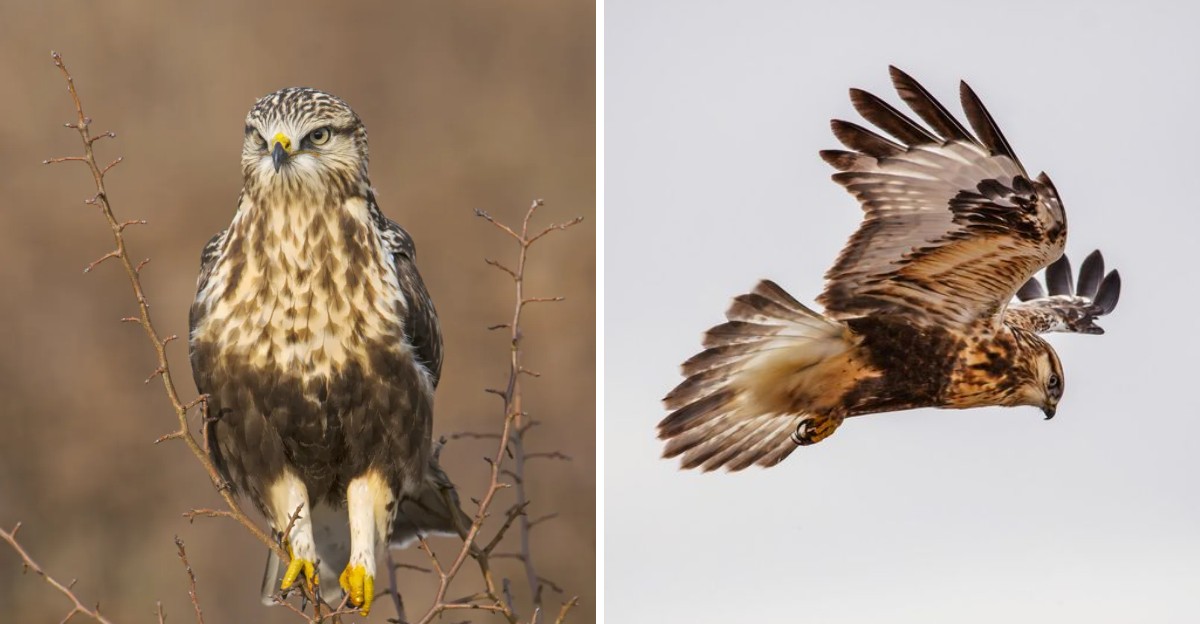
Every winter, a hawk that spends its summers on the Arctic tundra makes its way south to the Texas Panhandle.
It nests near the top of the world, sometimes above the tree line in Alaska and northern Canada, where summer days barely end. For this bird, the windswept plains around Amarillo are a mild winter getaway.
It’s a striking hawk, and once you know what to look for, it’s easy to recognize. Its legs are covered in feathers all the way down to its toes, perfect for staying warm in the far north.
It also has an unusual hunting trick. Instead of waiting on a perch, it often hovers in midair over open fields, wings beating steadily as it scans the ground for mice and voles.
Farther south in Texas, sightings are uncommon. In the Panhandle, though, winter offers a special chance to spot one.
The Rough-Legged Hawk – An Arctic Visitor
Some travelers pack suitcases, but the rough-legged hawk packs nothing at all. It simply spreads its wings and flies from the top of the world to the Texas plains. That trip can cover more than two thousand miles.
Its summer home is the Arctic tundra of Alaska and northern Canada. The tundra is a flat, treeless land where the ground stays frozen deep below the surface. These hawks build their nests on cliff ledges, rocky slopes, and riverbanks there.
Summer in the Arctic is short but busy. The sun stays up almost all day, and small rodents are everywhere. The hawks raise their chicks fast so the young birds can fly before the cold returns.
Once fall arrives, snow covers the ground and food gets hard to reach. So the hawks move south to places with open land and plenty of prey. Many settle in the northern United States, but some keep going all the way to Texas.
In the Lone Star State, the Panhandle is where they show up most reliably. Its wide, flat plains look a lot like the open tundra they know. Farther south in Texas, sightings become rare and exciting.
Bird watchers in Houston or San Antonio may go years without seeing one. That is why Panhandle residents have a real advantage. You might have a bird from the Arctic sitting just down the road from your house.
Here is a fun fact to share with friends. The scientific name of the rough-legged hawk is Buteo lagopus. The word lagopus means hare-footed, because its fuzzy feet look like a rabbit’s paws.
Next time you see a big hawk on a cold day, think about where it might have come from. It could have spent summer near the Arctic Ocean.
When To Look For It
Timing is everything with this bird. Show up in July, and you will find nothing but heat and grasshoppers. Show up in January, and your luck changes a lot.
Rough-legged hawks usually reach the Panhandle in late fall. Most arrive sometime in November, after the first strong cold fronts blow through. A few early birds may appear in late October.
Your Texas Garden Changes Every Week. Your Plan Should Too.
Gardening in Texas changes quickly throughout the season. Every Friday you’ll receive a simple weekly plan showing exactly what to plant, prune, fertilize, harvest, and protect so you never miss the right timing.
Once they land, they stick around for the whole winter. December, January, and February are often the best months to search. During this stretch, the hawks have settled into their favorite hunting spots.
By early spring, they start heading back north. Many are gone by March, and the last ones usually leave by early April. They need to reach the Arctic in time to nest.
Now here is the tricky part. Their numbers can change a lot from year to year. Some winters bring plenty of sightings, while others bring only a handful.
Why does that happen? Scientists think it is linked to food supplies up north and how harsh the winter is. When rodents are scarce or snow is deep, more hawks may push farther south.
A smart tip is to check online bird reports before you head out. Websites like eBird let people share what they see and where. You can find out if hawks have been spotted near your town that week.
Another tip is to go out after a big cold front. Strong north winds can carry new arrivals into the area. Clear, calm mornings after a storm are often great for spotting raptors.
If you miss them one winter, do not give up. Next year could be a big one, and patience pays off with wild birds.
How It Got Its Name
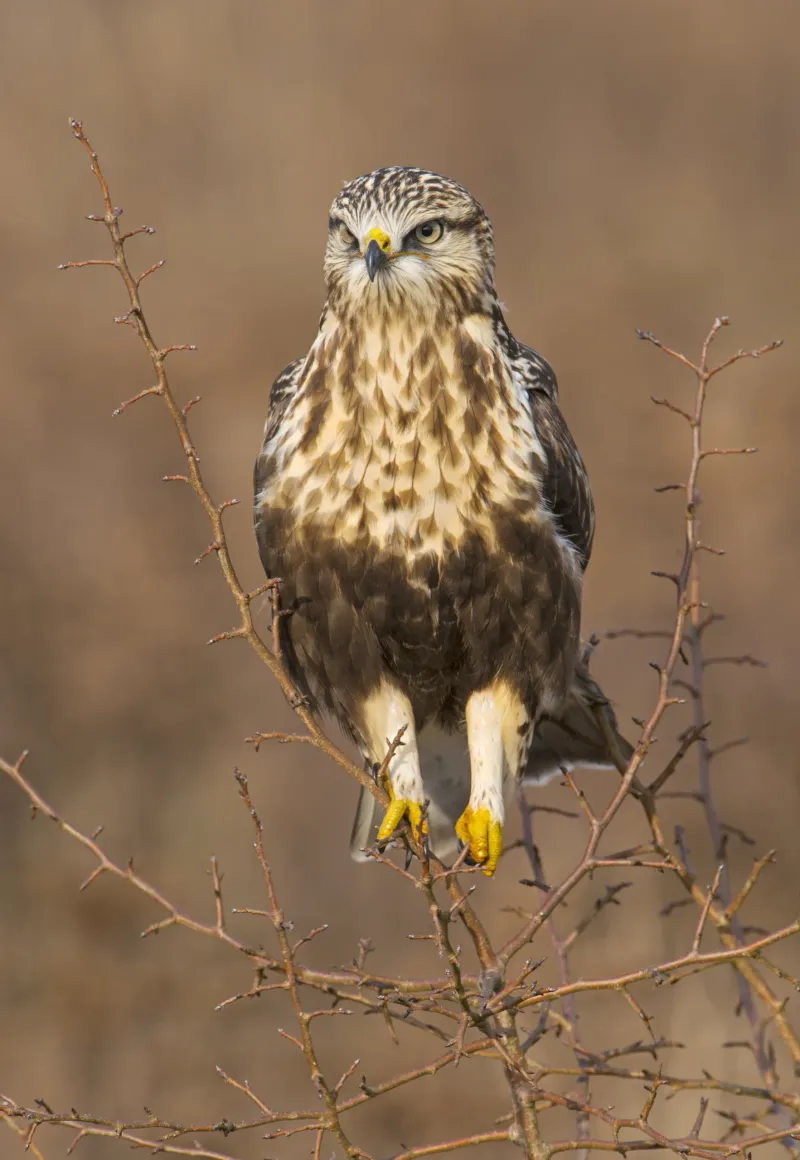
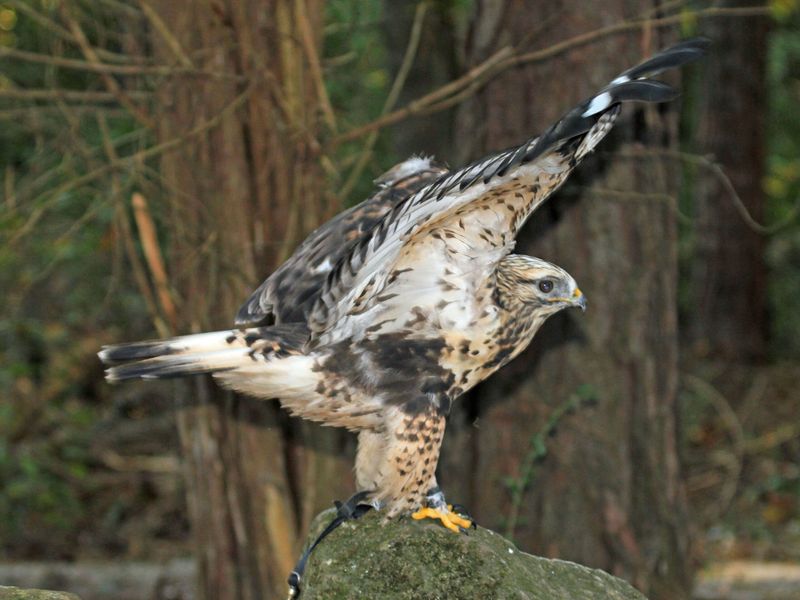
Fuzzy pajamas for your feet sound pretty cozy on a cold night. The rough-legged hawk was born with a built-in pair. Its legs are covered in feathers all the way down to its toes.
That might not sound like a big deal at first. But most hawks have bare, scaly legs, kind of like a chicken’s. Only a few hawks in the world have this feathery look.
The feathers do an important job. In the Arctic, temperatures can drop far below freezing, even in early fall. The extra feathers trap heat and keep the bird’s legs from losing warmth.
Think of it like wearing long socks under your boots. Your feet stay much warmer than they would in bare skin. The hawk gets that same benefit every single day.
Early bird experts looked at those shaggy legs and thought they looked rough. So they called it the rough-legged hawk. In Britain, people call it the rough-legged buzzard, which is the same bird.
Only one other hawk in North America shares this trait. The ferruginous hawk also has feathered legs, and it lives in the Panhandle too. Both birds are built for wide, open, chilly country.
Seeing the leg feathers in the wild can be tough. You usually need good binoculars or a camera with a zoom lens. When the bird perches, look for what seems like baggy pants on its legs.
The feet themselves are quite small for a hawk this size. Scientists believe smaller feet suit its diet of tiny rodents.
Big feet are not needed to grab a mouse. So the name is not just a fancy label. It tells you exactly what makes this bird special.
How To Recognize It
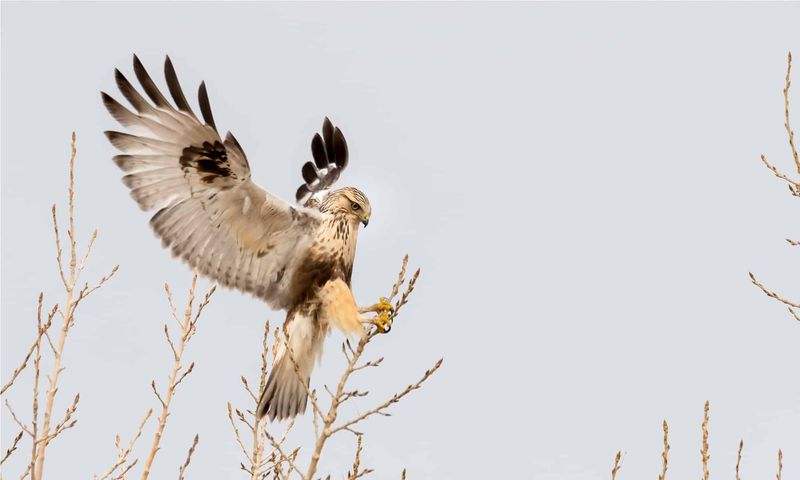
Spotting a hawk is easy in the Panhandle. Knowing which hawk you are looking at is the real puzzle. Red-tailed hawks are everywhere, so you need a few clues.
Start with color. Rough-legged hawks come in two main forms, light and dark. Dark birds look chocolate brown almost all over, while light birds are much paler.
Many light birds wear a dark band across the belly. It looks a bit like a wide belt. Some females have an especially bold belly band.
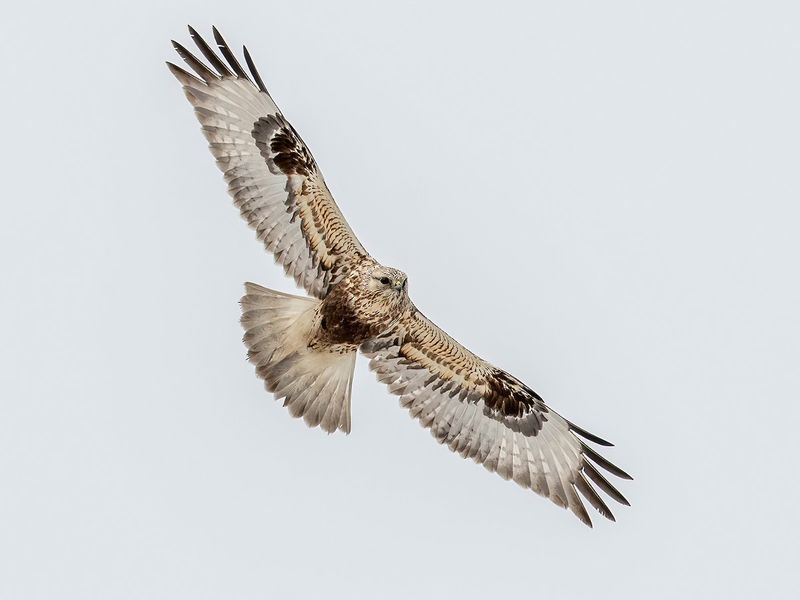
Next, check the wings when the bird flies overhead. Look for dark patches at the bend of each wing, sometimes called the wrist. Those patches stand out like black thumbprints on pale paper.
The tail is another great clue. It is fairly long and has a white base. Near the tip, you will usually see a wide dark band.
When the bird flies away from you, that white base can flash clearly. Few other Panhandle hawks show that pattern. Northern harriers have white rumps too, but they are slimmer and fly low with tipped wings.
Size matters a little as well. Rough-legged hawks are about as big as red-tailed hawks but have longer, narrower wings. Their small beak and head can make them look gentle.
Here is a handy trick for beginners. Take a photo with your phone through your binoculars, even if it is blurry. Later, you can compare it to pictures in a field guide or bird app.
Apps like Merlin can help you check your guess. With practice, you will start to notice these marks in just a few seconds. Soon you will be the expert in your family.
A Hawk That Hovers
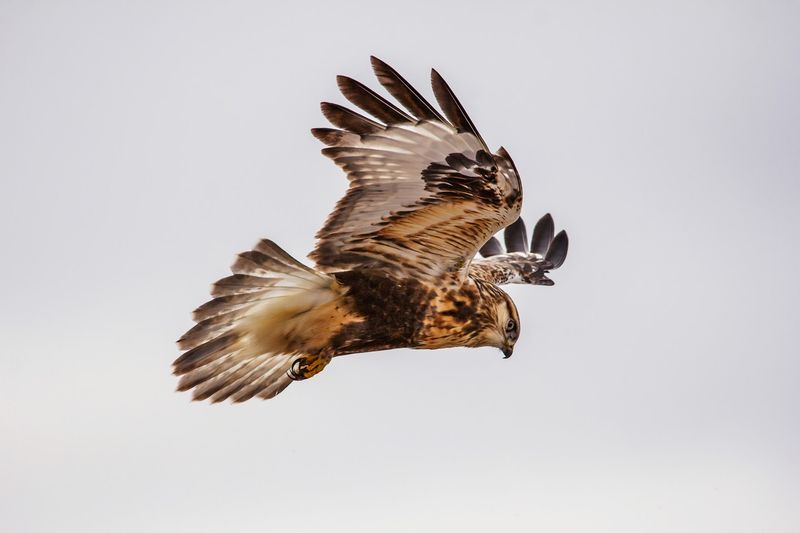
Hang in the air without moving forward, and you have pulled off something most big hawks rarely try. The rough-legged hawk does it all the time. It is one of the coolest tricks you can watch in the winter sky.
When hunting, the bird faces into the wind. It flaps its wings steadily while its head stays almost perfectly still. People sometimes compare it to a kite on an invisible string.
From up there, the hawk stares at the ground below. It is watching for tiny movements in the grass. Its eyesight is many times sharper than ours.
Once it spots a meal, the hawk drops down feet first. Sometimes it dives in stages, pausing to hover again before the final plunge. That patience helps it catch speedy prey.
Its menu is mostly small rodents. Mice and voles make up the biggest part of its diet. In the Arctic, it hunts lemmings, which are small, furry animals that live in the tundra.
That diet makes the hawk a helpful neighbor to farmers. Rodents can eat stored grain and damage crops. Each hawk can catch several of them every single day.
The American kestrel is another hoverer you may notice. Kestrels are much smaller, about the size of a dove. So if a large hawk is hovering, a rough-legged hawk is a smart guess.
Windy days are perfect for watching this behavior. The Panhandle has plenty of those in winter. Pull over safely and watch for a few minutes.
Bring a thermos of hot cocoa and enjoy the show. Seeing a hawk hold still against a strong wind is something you will not forget.
Where To Spot One
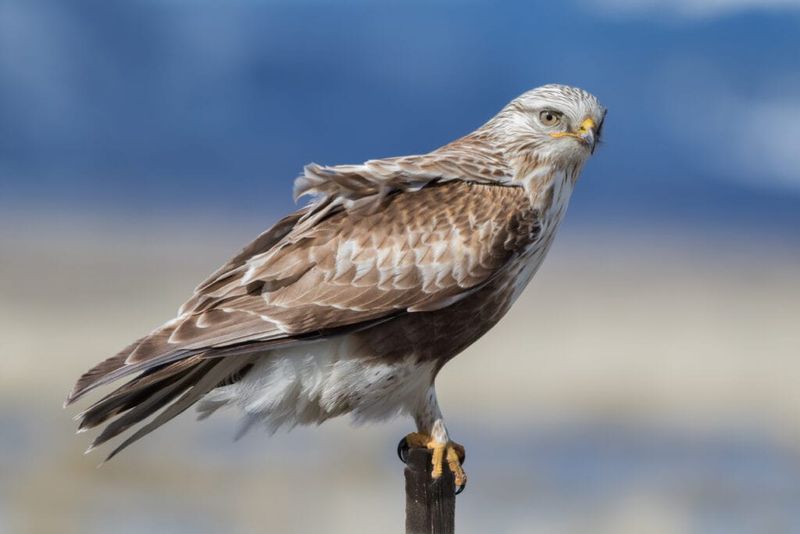
Ask any Panhandle bird watcher their secret, and many will say the same thing. Just drive slowly and look at the poles. It really can be that simple.
Rough-legged hawks love wide, open land. Grasslands, farm fields, and open prairies are their favorite hangouts. They tend to avoid thick woods and busy city centers.
They also like a good lookout. You will often see them perched on utility poles, fence posts, or lone trees. From these high spots, they scan the fields for rodents.
Quiet country roads near Amarillo and Lubbock are great places to start. Roads around Canyon, Dumas, Hereford, and Plainview can also be rewarding. The farmland stretching between towns is full of good habitat.
Buffalo Lake National Wildlife Refuge near Umbarger is worth a visit too. Its open grasslands attract many winter raptors. Rita Blanca National Grassland near Dalhart is another wide open option.
Safety comes first on any birding drive. Pull completely off the road before stopping, and never block a gate or driveway. Stay in your car when you can, since vehicles make good hiding spots.
Hawks often fly off when people step out. Watching from inside the car lets you enjoy the bird longer. Roll the window down slowly and keep your voice low.
Morning and late afternoon are often the best times. Hawks are busy hunting then, and the light is softer for photos. Midday can work on cold, cloudy days as well.
Bring binoculars, a field guide, and a notebook. Writing down each sighting helps you notice patterns over the winter. Before long, you might have a favorite road where your Arctic friend waits every year.