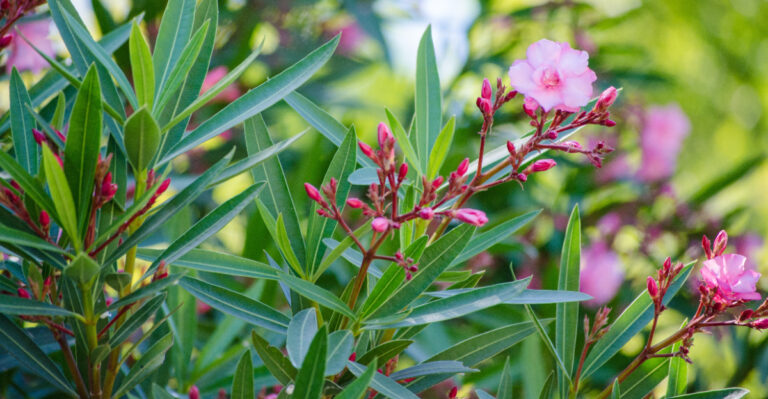
What to Do With Palm Seeds and Fruit Littering Your Arizona Yard
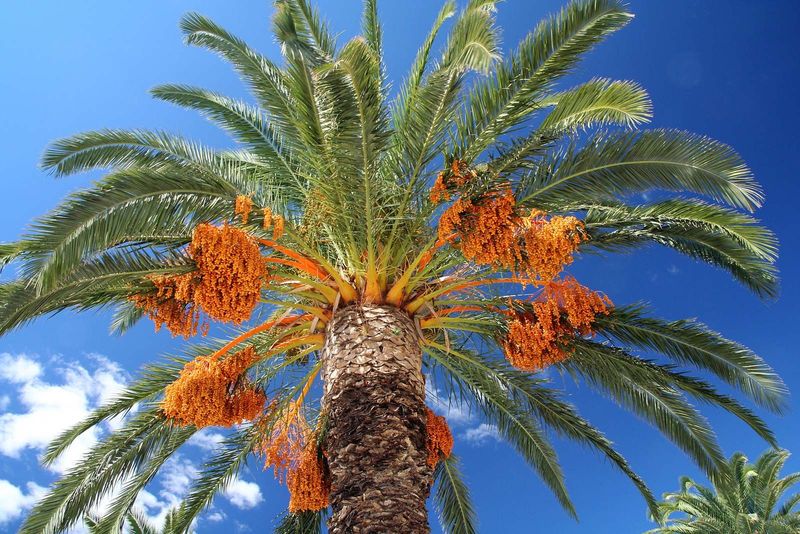
Some palm trees drop thousands of tiny fruits onto patios, pools, and gravel each year. In Arizona, that sticky mess can leave homeowners wondering whether to sweep it, eat it, plant it, or toss it.
The right move depends on what kind of palm is dropping it. Here is a simple order to follow so you can handle the clutter safely.
Identify the Palm Before You Choose

Fallen fruit and seeds alone will not tell you which palm you own. Many palms drop small round fruits that look alike, and a quick glance on the patio can easily mislead you.
That matters because every choice after this depends on the species. Facts about edible fruit or seed sprouting apply to the true date palm, Phoenix dactylifera, and you cannot stretch them to every palm in the neighborhood.
The University of Arizona Arboretum entry for Phoenix dactylifera describes the true date palm, so it is a handy place to compare what you see overhead.
Look at the whole tree instead of the litter. Check the fronds, the trunk, and where the fruit hangs.
If you are still unsure, a photo shared with a local nursery or a certified arborist can settle it.
Palm choice and care also depend on climate and conditions, as University of Arizona palm guidance explains. A palm that thrives in one part of the state may struggle in another, so keep your own yard in mind.
Gather Fallen Dates to Manage Yard Litter
A raked-up pile of dates is a lot easier to live with than a sticky carpet underfoot. Gathering fruit is the simplest step, and it keeps walkways, pool decks, and gravel looking tidy.
There may be another reason to do it. A University of Nevada, Reno Extension guide on the date palm in Southern Nevada recommends cleaning up fallen dates and says they may attract mice and rats.
That is a possibility, not proof that fruit causes an infestation, and it will not play out the same way in every yard.
The same guide notes that birds and other wildlife may eat the fruit. Leaving some on the ground may feed a few visitors, but there is no promise of any particular wildlife benefit.
Try a gloved hand, a rake, or a leaf grabber, and bag what you collect. Do a quick sweep every few days during heavy drop so the mess never builds up.
Eat Fruit Only After Confirming It Is From a Date Palm
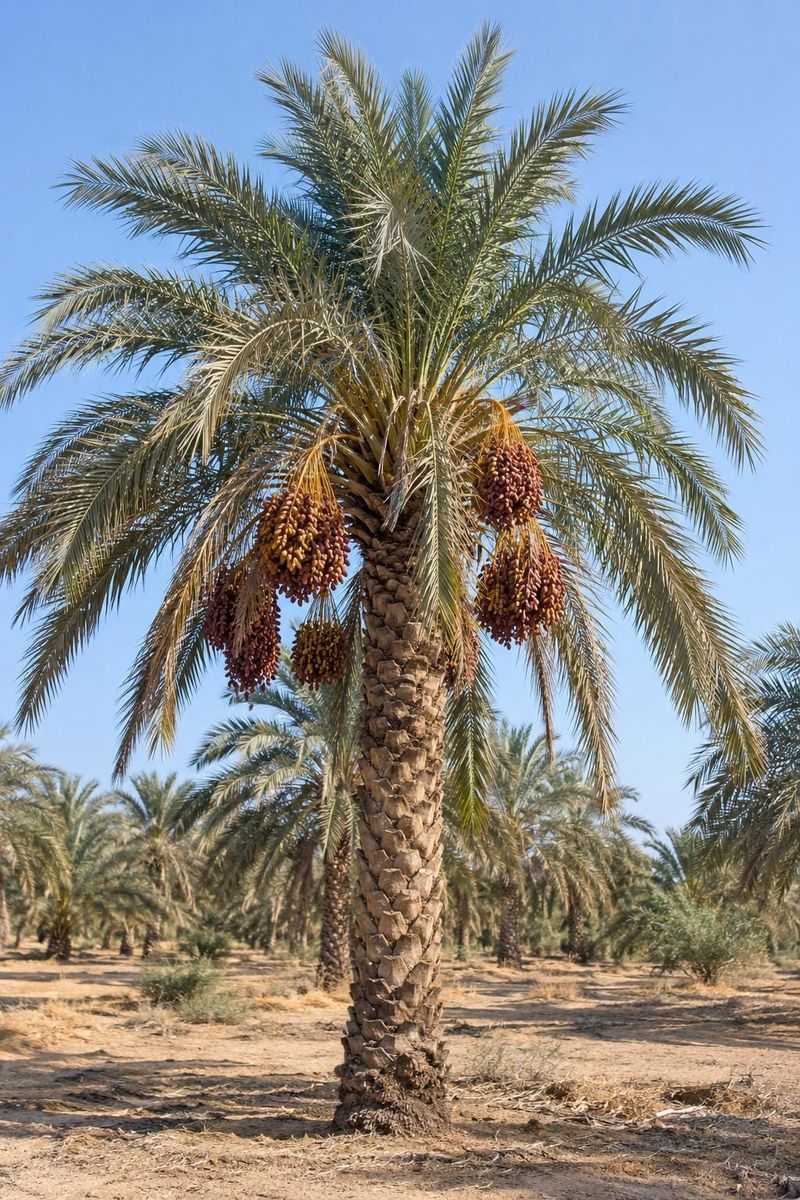
Dates are a real food, but only from the right tree. Fruit from the true date palm is edible, and that is where the safe part of the story ends.
The University of Arizona Arboretum notes that date fruit changes color and texture as it ripens. Those changes are useful background, not an identification tool.
Ripening clues cannot tell you what tree you have.
Fruit from an unidentified landscape palm may not be a good or safe food, and the evidence for dates does not cover it. If you cannot confirm the species, do not taste the fruit.
Once you are certain it is a date palm, wash the fruit well and pick pieces that look fully ripe. Fruit that has hit the ground or sat in the dirt deserves extra caution, so many people prefer fruit gathered before it falls.
When in doubt, skip eating it and simply clean it up.
Treat Seed-Growing as an Experiment
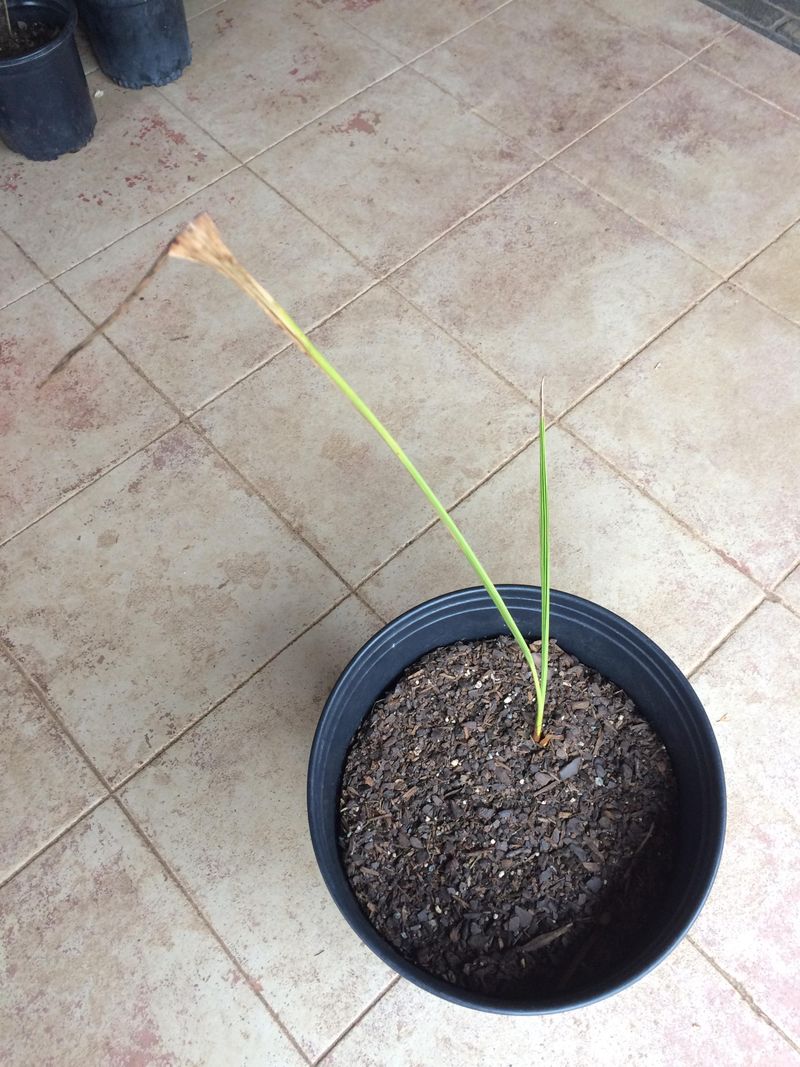
Saving date seeds can be a fun weekend project. Seeds from a confirmed true date palm can germinate, though they need constant moisture to do it.
Treat it as an experiment rather than a plan. According to the University of Arizona Arboretum, germination depends on steady moisture, so a dried-out pot will not give you much.
Set your expectations early. About half of seedlings may turn out to be male, and male palms will not produce fruit.
Seed-grown females may also differ from the parent variety, as covered in this date palm gardening guide.
So do not count on a fruiting palm that matches the tree you started with. Only keep seedlings if you have space and patience to care for them, and be ready to part with extras.
Check Local Rules Before Disposing of Palm Litter

Palm litter is not one single kind of waste. Fruit, seeds, and fronds can each fall under different rules, so sort them before anything goes in a bin.
Local programs show how much the rules differ. Phoenix lists tree fruit and garden debris as acceptable in its curbside green organics program, but palm fronds are excluded.
Mesa leaves out palm fronds and food waste in its green yard waste barrel.
Maricopa County guidance also leaves palm fronds out of green organics. These are local examples, not statewide rules, and fruit and seeds may be handled differently from one provider to the next.
Before you fill a bin, find your own provider’s current accepted-material list. A quick call or a look at their website can save you a missed pickup.
Plan Future Fruit Prevention With a Qualified Professional
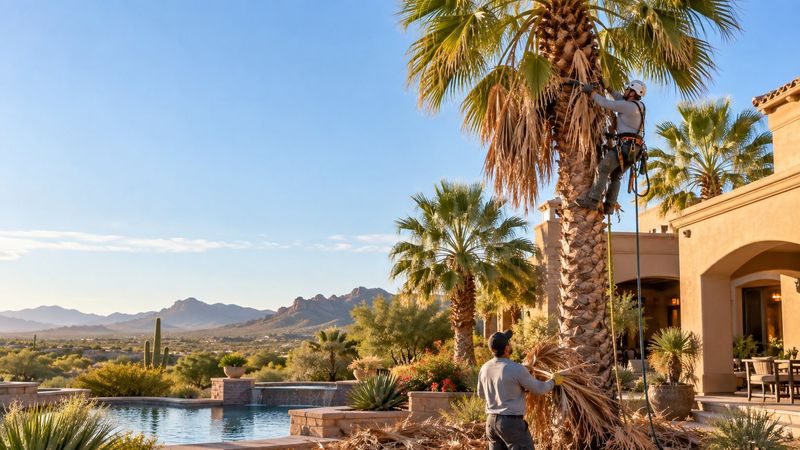
Cleanup deals with fruit already on the ground. Prevention is a separate job that has to be planned for a future pruning window, not tackled during an October sweep.
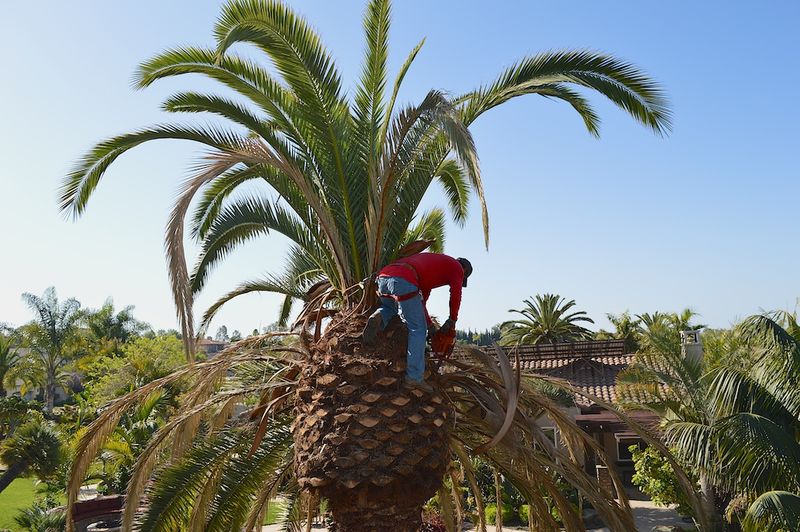
The Nevada Extension guide says fruit formation can be prevented by removing the bloom spike after it opens from its protective sheath. It also warns that cutting the unopened sheath with a power saw can damage the palm and its fronds.
That work happens high in the crown, so it is no job for a ladder or a homeowner with a saw. Do not climb the palm or cut overhead stalks yourself.
Hire a qualified tree-care professional, and use University of Arizona advice on hiring a tree expert to check qualifications and insurance. Ask about the right timing for your palm.
A well-timed visit once a year beats a lifetime of raking.