8 Arizona Native Plants That Turn A Sun-Baked Block Wall Into Shade Before Summer
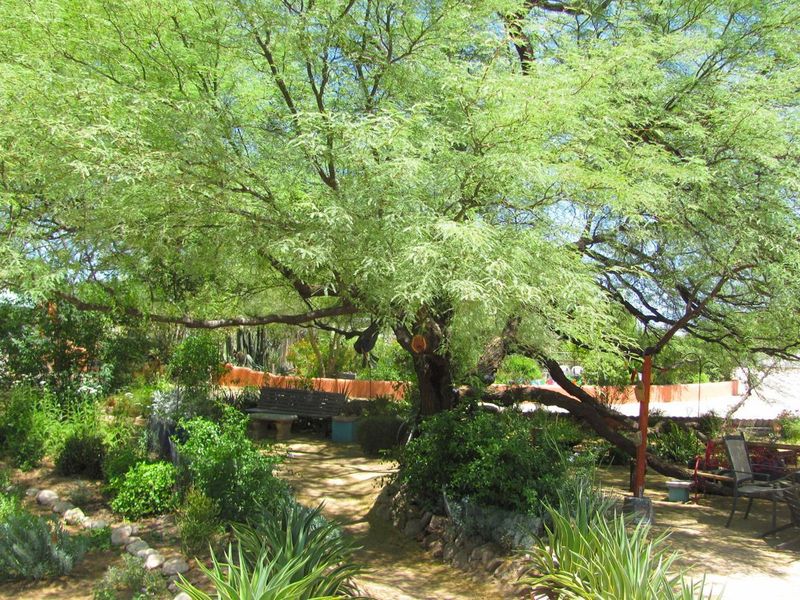
A bare block wall in Phoenix or Tucson can soak up heat all day and then radiate it back at your house long after sunset. The right native plants can soften that glare, cool the air near your windows, and give birds and pollinators a place to hang out.
Most of them sip water once established and shrug off 110-degree afternoons. Get them in the ground this fall or early spring, and they will be ready to work for you when the real heat arrives.
1. Arizona Grape (Vitis arizonica)
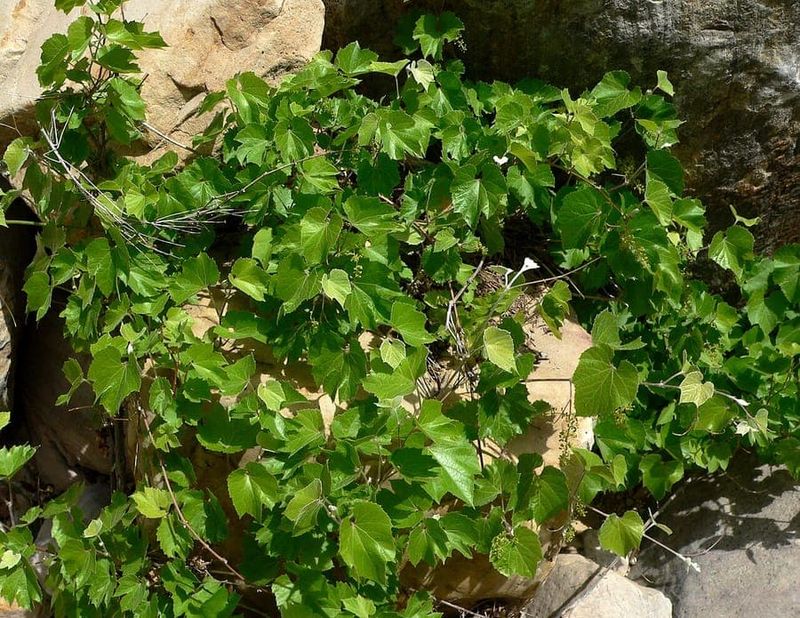
Picture a green curtain hanging between you and a wall that feels like an oven door. Arizona grape is one of the few true native vines tough enough for that job, and it can scramble surprisingly high when given something sturdy to climb.
The trick is placement. Set a strong trellis or wire panel about a foot out from the block, then plant at least that far from the wall and run your drip emitters on the outside.
Roots follow water, so this nudges them away from the footing while the leaves fill the gap and keep direct sun off the masonry.
Once settled, the vine handles drought remarkably well, though a deep soak every week or two in June helps it stay lush. It drops its leaves in winter, which is actually a perk, since the wall can then soak up gentle sun when you want warmth.
Birds treat the small, dark blue berries like a snack bar in late summer. Mockingbirds, finches, and thrashers may show up regularly once fruit forms.
Prune in late winter to keep growth tidy along the trellis, and plant in October, November, or early spring for the strongest start.
2. Desert Willow (Chilopsis linearis)
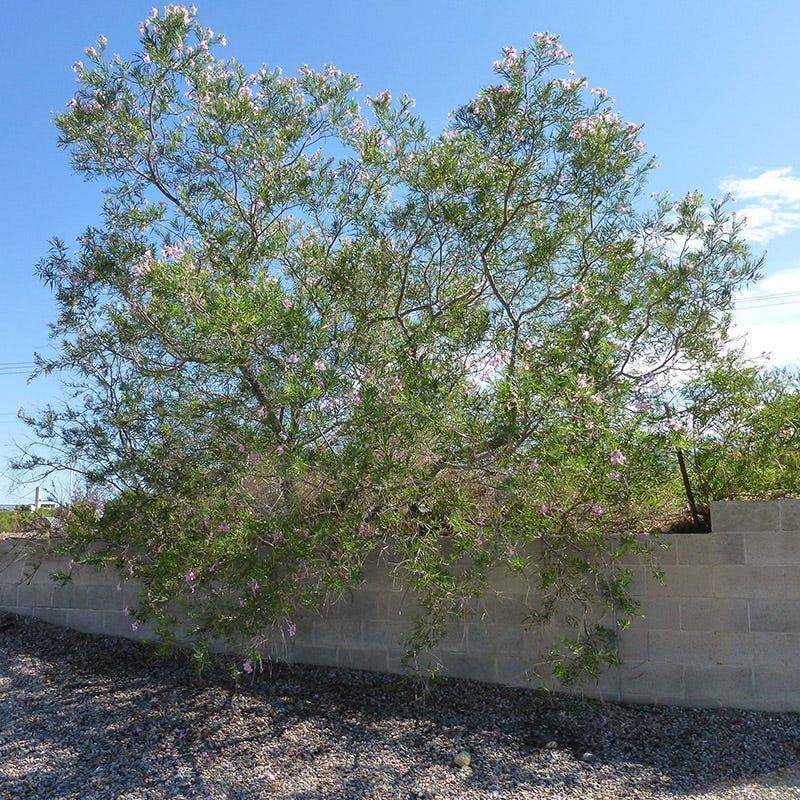
Hummingbirds seem to know exactly when desert willow opens its first trumpet-shaped blooms. One week the branches look ordinary, and the next they are buzzing with visitors from late spring right through the hottest stretch of summer.
Despite the name, it is not a true willow at all. It belongs to the same family as catalpa and trumpet creeper, and its slender leaves simply resemble willow foliage.
That airy canopy casts filtered shade rather than deep shadow, which works beautifully when you want a wall cooled without darkening a nearby window.
Plant it six to eight feet out from the block so the crown can spread over the top edge as it matures. It grows fairly quickly with deep, occasional watering, and full sun suits it just fine.
Reflected heat from a south or west wall rarely bothers it.
Bees, butterflies, and hummingbirds all work the flowers, turning one small tree into a busy pollinator stop. Seedless varieties exist if you would rather skip the long pods.
Fall planting gives roots a full cool season to settle before the first 100-degree day shows up in your forecast.
3. Jojoba (Simmondsia chinensis)
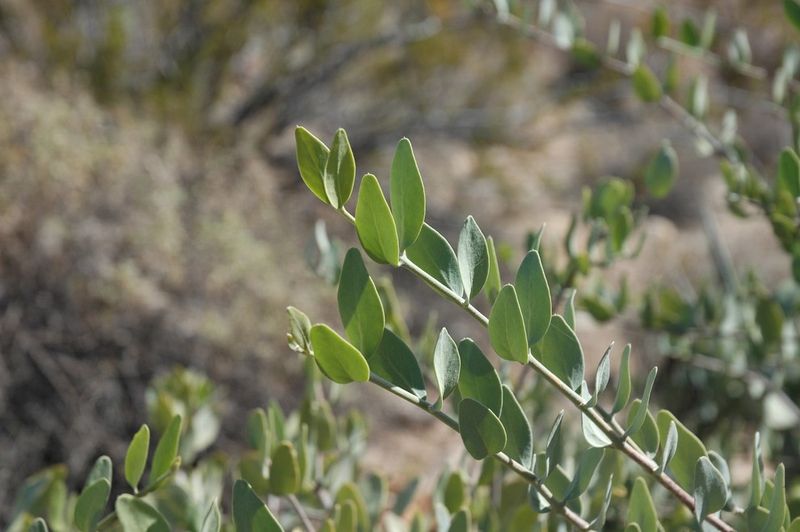
Want green on that wall in January and July alike? Jojoba stays evergreen all year, and its thick, upright leaves are built to tilt edge-on to the sun, which helps the plant save moisture during brutal afternoons.
Your Arizona Garden Changes Every Week. Your Plan Should Too.
Gardening in Arizona changes quickly throughout the season. Every Friday you’ll receive a simple weekly plan showing exactly what to plant, prune, fertilize, harvest, and protect so you never miss the right timing.
Fun fact: the seeds produce a liquid wax prized in shampoos and skin creams. In your yard, though, the real value is structure.
Left alone, jojoba can grow into a dense mound well over head height, and it takes clipping well if you want a neater hedge.
Hot, reflected heat is where it shines. A west-facing wall that cooks other shrubs is often just right for jojoba, and it asks for very little water once established.
Deep, infrequent soaks beat frequent sprinkles every time.
Plant several in a row a few feet out from the block, and over a few seasons they knit together into a living screen. That cooler pocket between shrub and wall creates a small microclimate.
Bees gather pollen from the flowers, and the cover may draw lizards and quail. Aim for fall or late winter planting.
4. Desert Hackberry (Celtis pallida)
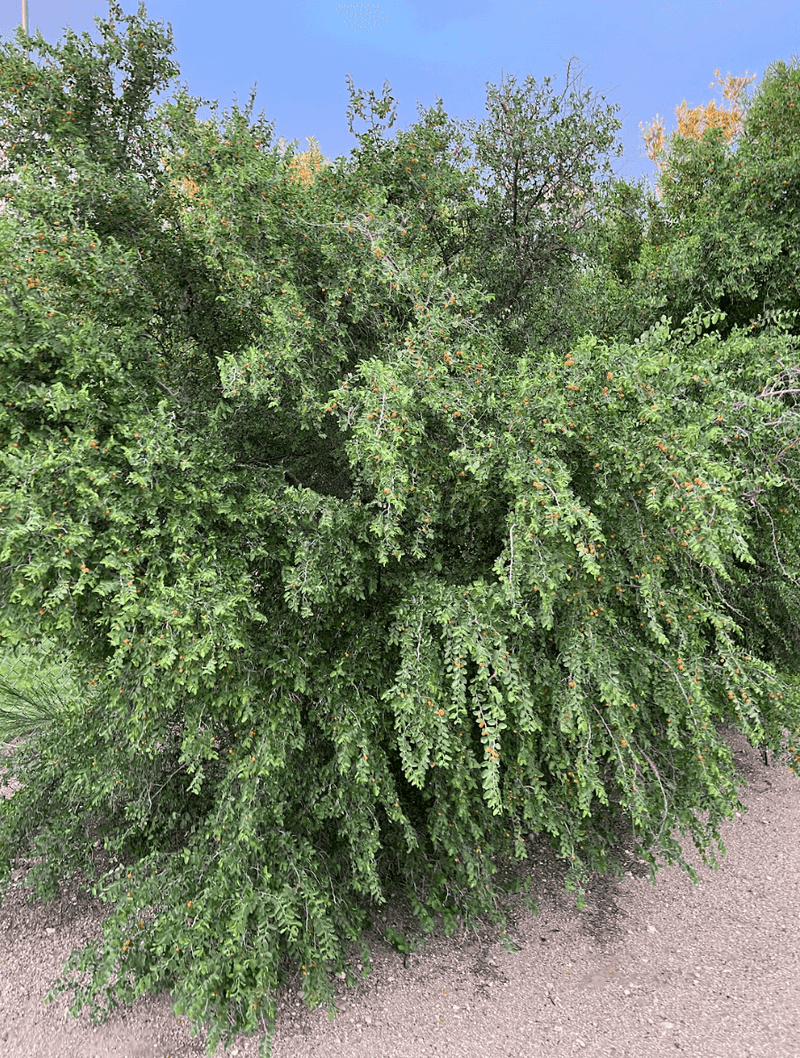
Quail families have a favorite hiding spot, and it often looks a lot like desert hackberry. The tangle of small leaves and thorny zigzag branches gives them cover from hawks and cats while chicks scurry underneath.
For a homeowner, that same density becomes a shade-maker. Mature plants commonly reach ten to fifteen feet tall and wide, forming an informal hedge that blocks sun and blocks the view of the neighbor’s second story.
It stays mostly evergreen in the low desert.
Water needs are tiny. Once established, many hackberries get by on rainfall alone, with only an occasional summer drink during long dry spells.
Reflected heat and rocky, alkaline soil do not seem to faze it.
Then come the berries. Small orange fruits ripen in fall and winter, feeding thrashers, cardinals, and other birds when food runs short.
Butterflies also use the plant. You can prune it into a single-trunk tree or let it stay shrubby along the wall.
Keep it a bit back from walkways because of the thorns, and plant in fall or early spring for best results.
5. Whitethorn Acacia (Vachellia constricta)
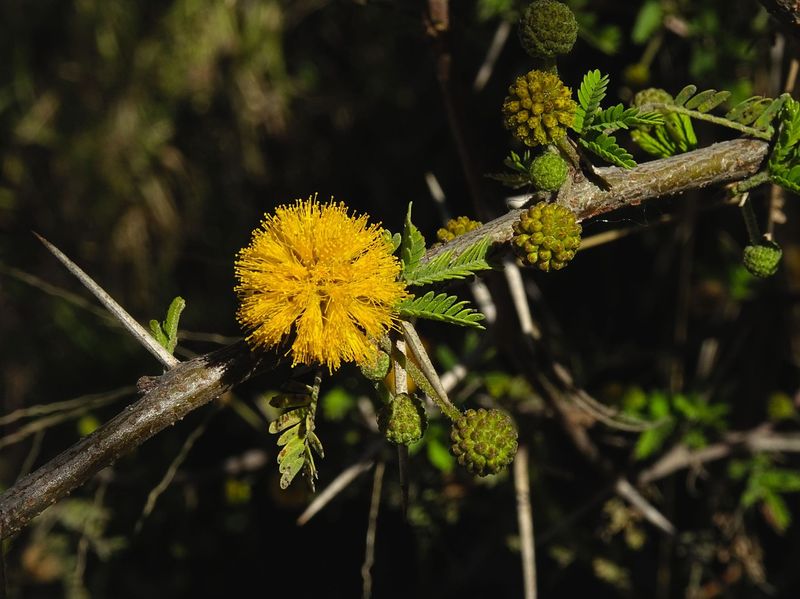
Smell it before you see it. In spring, whitethorn acacia covers itself in little yellow puffball flowers with a sweet fragrance that drifts across the whole yard, and bees and butterflies arrive fast.
The bright white thorns explain the name, and they make this plant a great security feature along a back wall. Few intruders, two-legged or four-legged, want to push through it.
Birds, on the other hand, love nesting in that protected framework.
Growth can reach ten to twenty feet with time, either as a dense thicket or trimmed into a multi-trunk small tree. A tree form planted several feet from the block lets the fine-textured canopy spread over the wall and drop soft shade.
It may lose some leaves in the coldest weeks, then fills right back out.
Watering is simple: deep and infrequent once roots are set. Heat is no problem.
Quail snack on the seed pods, and flowers may return in flushes after monsoon rains. Wear gloves when pruning, place it away from paths, and plant in fall or early spring.
6. Hopbush (Dodonaea viscosa)
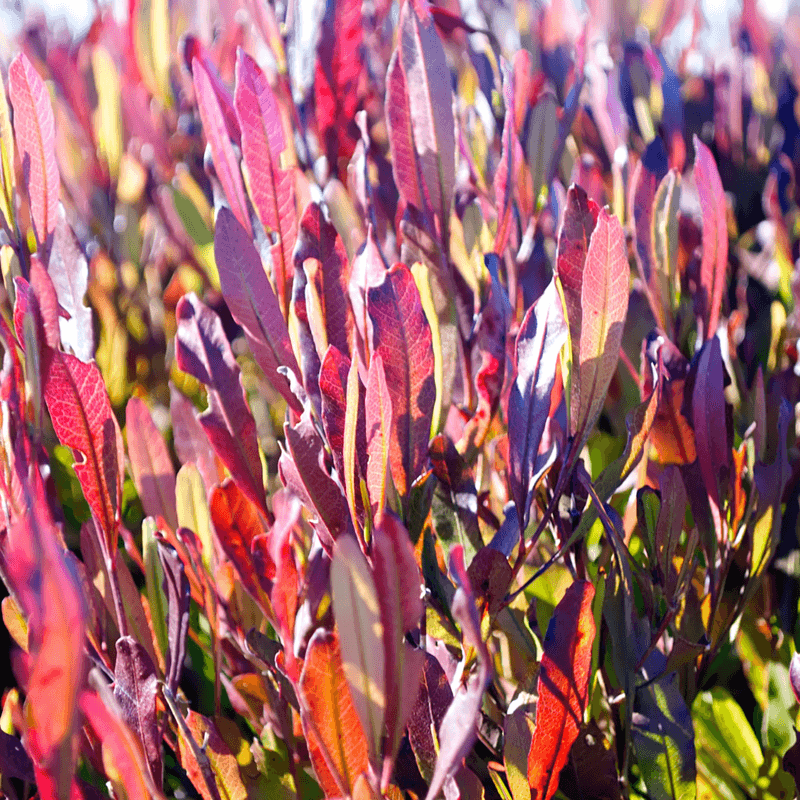
Sometimes you just need a wall to disappear, quickly and without fuss. Hopbush is the landscaper’s go-to for exactly that, growing into a tall, upright evergreen screen that fits narrow strips where wider shrubs would crowd the patio.
Its shape is the selling point. Rather than sprawling sideways, hopbush heads mostly upward, often reaching ten feet or more.
Plant a row three to four feet apart and a couple of feet from the block, and you will have a soft green barrier that shades the masonry and cuts glare.
The glossy, lance-shaped leaves stay on all year. Papery seed capsules that look like hops add a tan or rosy accent in spring, giving the plant its common name.
Purple-leaf forms exist too if you want extra color.
Care stays light. Low water, full sun or partial shade, and an occasional trim keep it happy.
Small birds and lizards may tuck into the dense branches for cover. One tip: avoid heavy shearing in midsummer, which can scorch freshly exposed leaves.
Get it planted in fall or early spring.
7. Catclaw Acacia (Senegalia greggii)
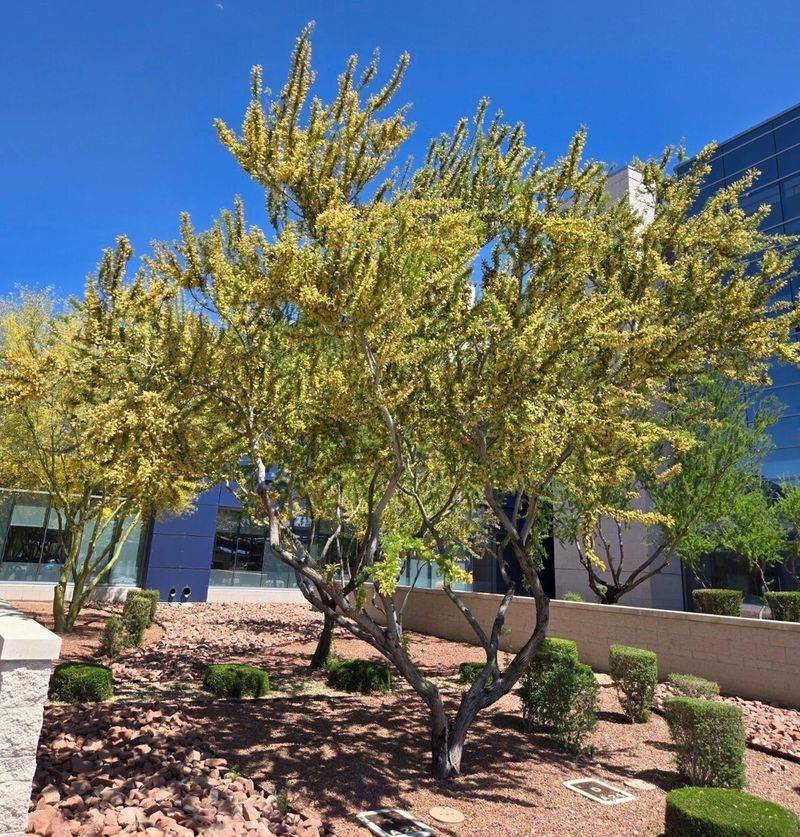
Old-timers nicknamed this one the wait-a-minute bush, because brushing past it means stopping to unhook your sleeve from the curved thorns. That grabby personality, though, is exactly why wildlife adores it.
Small birds such as verdins and sparrows find protected perches and nesting spots inside the thorny branches, safe from many predators. It may make a wall corner noticeably livelier.
The pale yellow, fuzzy flower spikes are fragrant in spring and pull in native bees and other pollinators.
As a shade plant, catclaw works well trained into a small tree. Pick a few strong trunks, remove low limbs over time, and let the canopy arch toward the wall.
It handles severe heat, full sun, and poor soil, and it ranks among the most drought-tough natives you can grow.
Give it room away from walkways, gates, and pool areas, since those thorns are serious. It is a smart pick for the back property line, where it doubles as a natural barrier.
Water deeply while young, then taper off. Fall or early spring planting sets it up to handle summer.
8. Velvet Mesquite (Prosopis velutina)
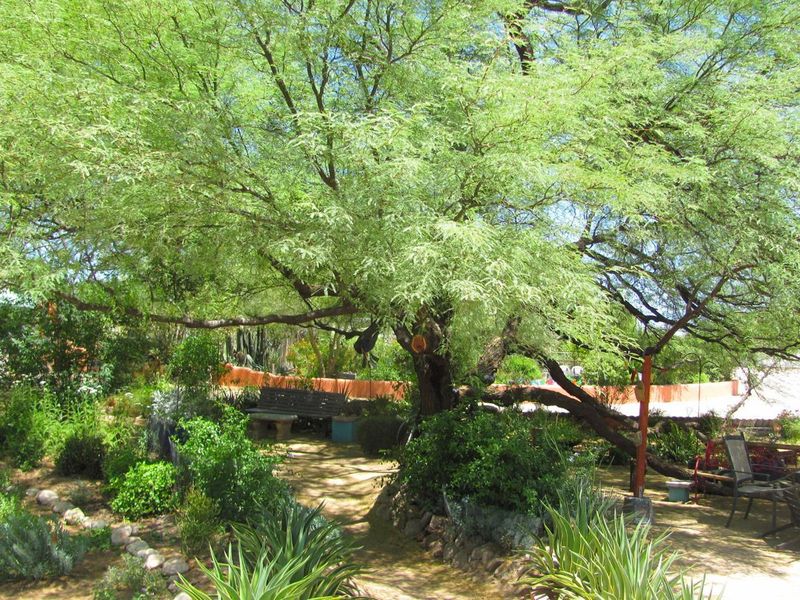
Ask long-time desert dwellers about real shade, and mesquite comes up fast. A mature velvet mesquite spreads a wide umbrella that can drop the surface temperature of a wall dramatically compared to bare, sunbaked block.
Because it becomes a true tree, placement matters most. Plant it at least ten to fifteen feet from the wall and any foundation so the trunk has space while the canopy reaches over.
Choose the west or south side, where afternoon sun hits hardest, for the biggest cooling payoff.
Deep, infrequent watering builds strong roots that anchor well during monsoon winds. Frequent shallow watering does the opposite, so resist the urge.
Thin the canopy lightly before storm season so wind can pass through.
Wildlife rewards you too. Spring catkins feed bees, the sweet pods feed birds and other critters, and the branches host nesting doves.
Fun bit: people across the Southwest have ground those pods into flour for centuries. Fall planting gives the tree a head start, and within a few summers you may find yourself parking a chair under it on purpose.