8 Deep-Rooted Oregon Natives That Almost Never Ask You To Turn On The Hose
Oregon summers expose the plants that never really belonged in this climate.
By mid-July, the rain has stopped, the soil has hardened, and anything planted without much thought already starts sending distress signals.
Meanwhile, a short drive into any dry hillside, rocky slope, or open woodland reveals plants that look completely unbothered by the whole situation.
Those plants are not thriving by accident.
Oregon’s native landscape spent thousands of years adapting to this exact pattern of wet winters and brutally dry summers.
The plants that made it through that process developed root systems that reach far deeper than most garden plants ever attempt, pulling moisture from soil layers the summer sun cannot touch.
Eight of those plants can go straight into a home garden, and once they settle in, they practically manage themselves through the driest months Oregon throws at them.
Some produce fruit. Some bloom when nothing else does. A few are so tough that too much water causes more problems than drought ever would.
The hose stays in the garage. These plants handle summer on their own terms.
1. Oregon White Oak
A broad, gnarled tree standing alone on a golden hillside in August, surrounded by dry grass, with not a drop of irrigation in sight.
That is Oregon white oak doing exactly what it was built to do.
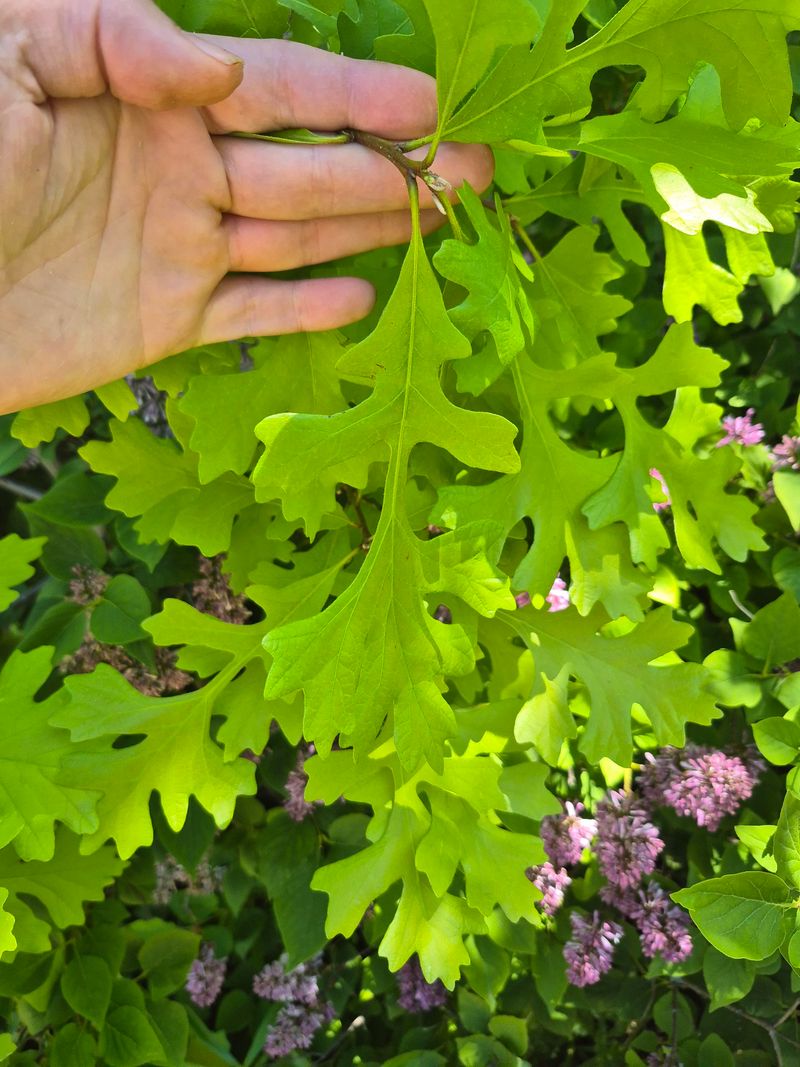
Quercus garryana has adapted over thousands of years to Oregon’s classic pattern of wet winters and bone-dry summers, developing a root system that reaches far deeper than most garden trees ever attempt.
Oregon white oak is native to western Oregon’s valleys, foothills, and dry slopes.
Once established, it pulls moisture from deep soil layers that summer sun cannot touch. That depth is its secret weapon during the long dry season.
Plan ahead before planting one. Oregon white oak needs significant space, often spreading 40 to 70 feet wide at maturity. It grows slowly, so patience is part of the deal.
Young trees need regular water during their first two to three summers while roots push outward and downward.
After that, you can largely step back and let the tree handle summer on its own terms.
Oaks also support an extraordinary web of wildlife. Birds nest in the canopy, acorns feed deer and squirrels, and more than 500 species of insects depend on Oregon white oak at some point in their life cycle.
Planting one is genuinely an investment in the local ecosystem, not just your yard.
2. Pacific Madrone
Gardeners sometimes make a costly mistake with Pacific madrone: they water it like a typical ornamental tree and wonder why it struggles.
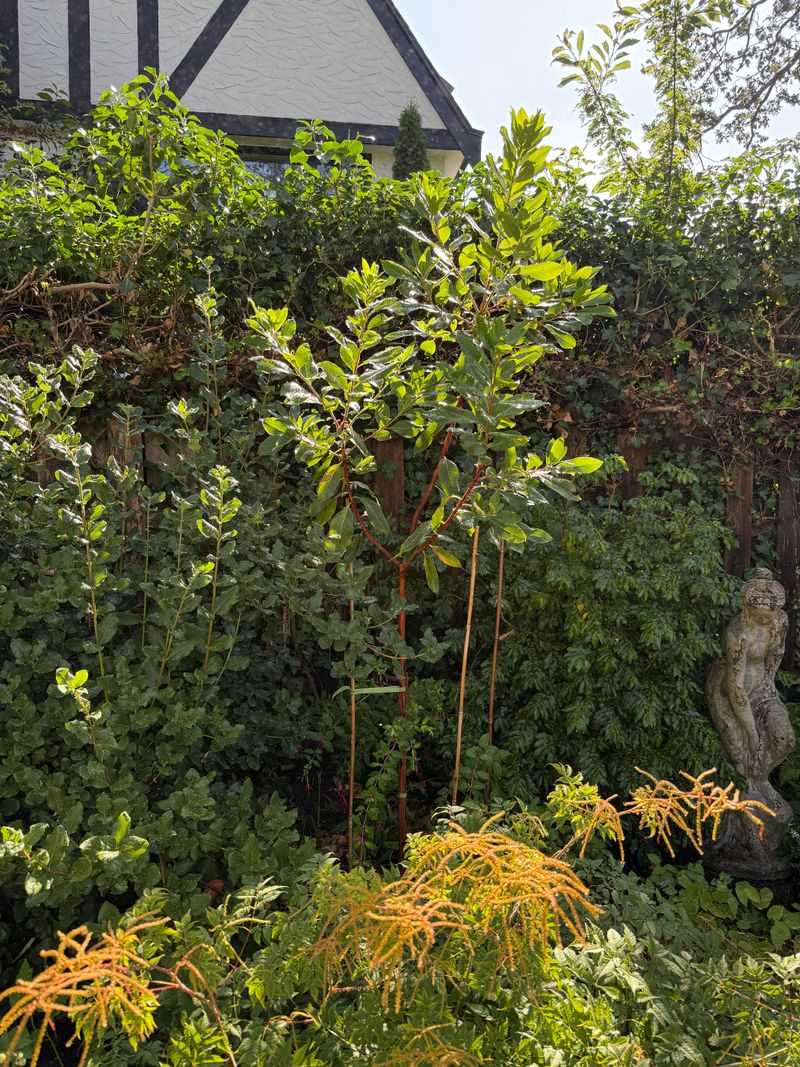
Overwatering is one of the fastest ways to stress this plant, especially during summer. Pacific madrone, or Arbutus menziesii, evolved in dry, rocky, well-drained environments and expects summer drought the same way most people expect summer heat.
What makes madrone remarkable is its combination of beauty and toughness.
The bark peels back to reveal smooth, cinnamon-colored wood beneath, almost like the tree is shedding its skin.
Clusters of small white flowers appear in spring, followed by bright orange-red berries that birds absolutely cannot resist. It is one of Oregon’s most visually striking native trees through every season.
Your Oregon Garden Changes Every Week. Your Plan Should Too.
Gardening in Oregon changes quickly throughout the season. Every Friday you’ll receive a simple weekly plan showing exactly what to plant, prune, fertilize, harvest, and protect so you never miss the right timing.
Pacific madrone roots go deep and wide, seeking moisture in soil layers that dry out last.
It grows naturally on rocky outcrops, coastal bluffs, and dry forest edges, places where most plants simply give up.
Young madrones need careful, consistent watering for two to three years during establishment.
Water deeply but infrequently, encouraging roots to push downward rather than staying near the surface. Once roots are settled, pull back on irrigation and let the tree follow its natural summer-dry rhythm.
Fighting that rhythm with excess water causes root disease far more often than drought does.
3. Manzanita
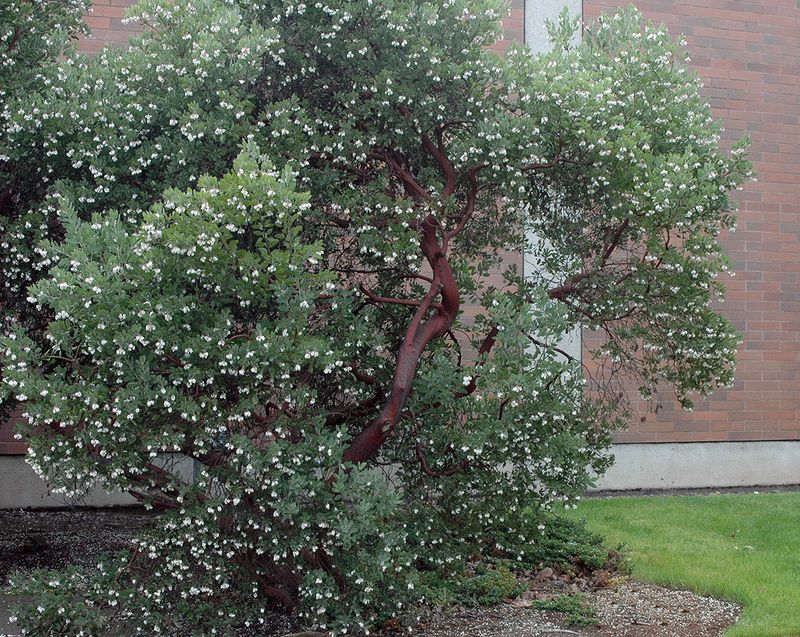
Walk up a sunny, south-facing Oregon hillside in late July and you will likely find manzanita looking completely unbothered by the heat.
While neighboring plants wilt and fade, manzanita stands there with its smooth mahogany bark gleaming and its small leathery leaves reflecting light like tiny shields.
That casual toughness is not an accident. It is the result of deep adaptation to exactly these conditions.
Oregon hosts several native manzanita species, including Arctostaphylos columbiana and Arctostaphylos viscida.
Both thrive on rocky, well-drained slopes with full sun exposure and low soil fertility. Poor, gravelly soil is not a problem for manzanita. In fact, rich amended soil can make it grow too fast and become unstable.
The root system is the real story.
Manzanita sends roots deep into rocky ground, accessing moisture pockets that disappear quickly from the top few inches of soil.
This deep reach allows it to stay green and functional through Oregon’s driest months without any supplemental water once established.
Getting manzanita established takes some attention.
Water it regularly during its first two summers, then taper off dramatically. Avoid overhead irrigation once roots are settled, as wet foliage in warm weather invites fungal problems.
Its berries feed birds and small mammals, and its early-season flowers are a critical nectar source for native bees emerging in late winter and early spring.
4. Kinnikinnick
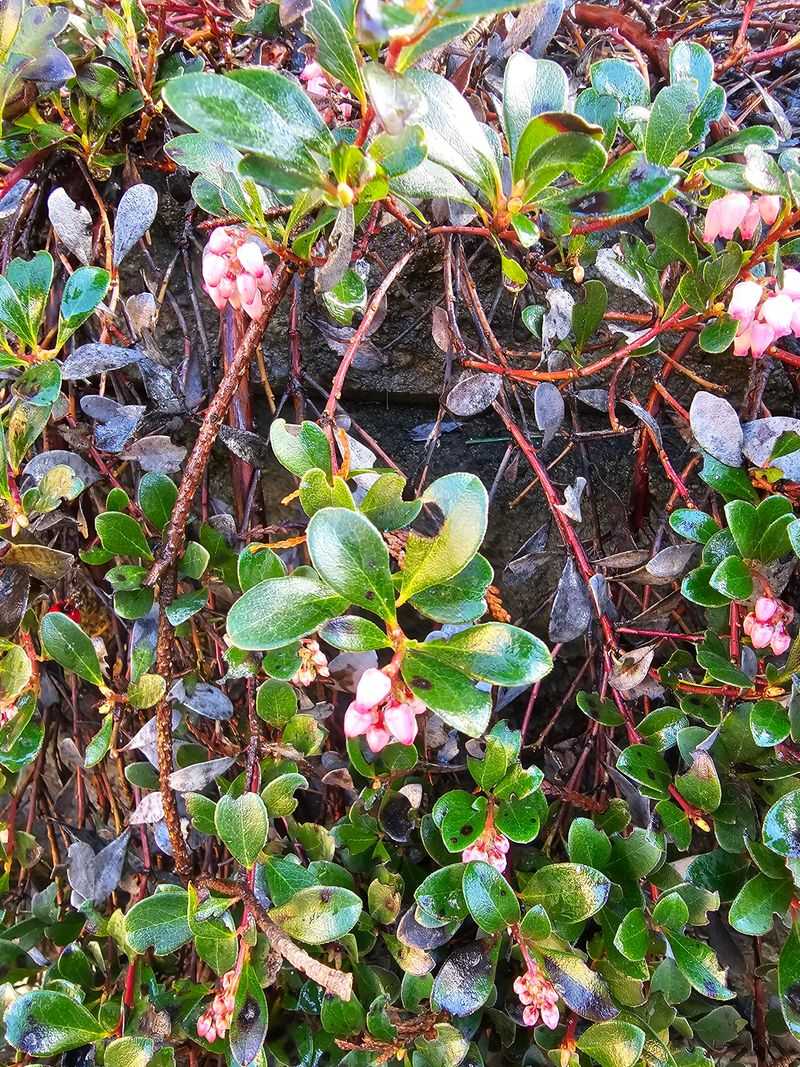
Some plants are showoffs. Kinnikinnick is a worker.
This low, trailing groundcover spreads quietly across dry, sandy, or rocky ground without complaint, stitching together bare patches of soil that other plants refuse to touch.
It grows only a few inches tall but can spread several feet wide, forming a dense mat that suppresses weeds and holds soil in place on slopes where erosion is a real concern.
Arctostaphylos uva-ursi is found naturally in sandy coastal areas, dry forest openings, and rocky mountain ridges across Oregon.
Wherever the soil is lean and drainage is sharp, kinnikinnick finds a way to settle in.
The plant produces small, pink, urn-shaped flowers in early spring that attract native bees when little else is blooming.
Red berries follow in late summer and persist through fall, feeding birds and other wildlife through the months when food gets scarce.
During establishment, kinnikinnick needs regular watering for one to two seasons while its root network spreads.
After that, it handles Oregon’s dry summers with very little help. Plant it in full sun to partial shade with excellent drainage. Avoid clay soils, which hold too much moisture and cause root problems.
Once settled, this quiet groundcover earns its keep without ever asking for much in return.
5. Ocean Spray
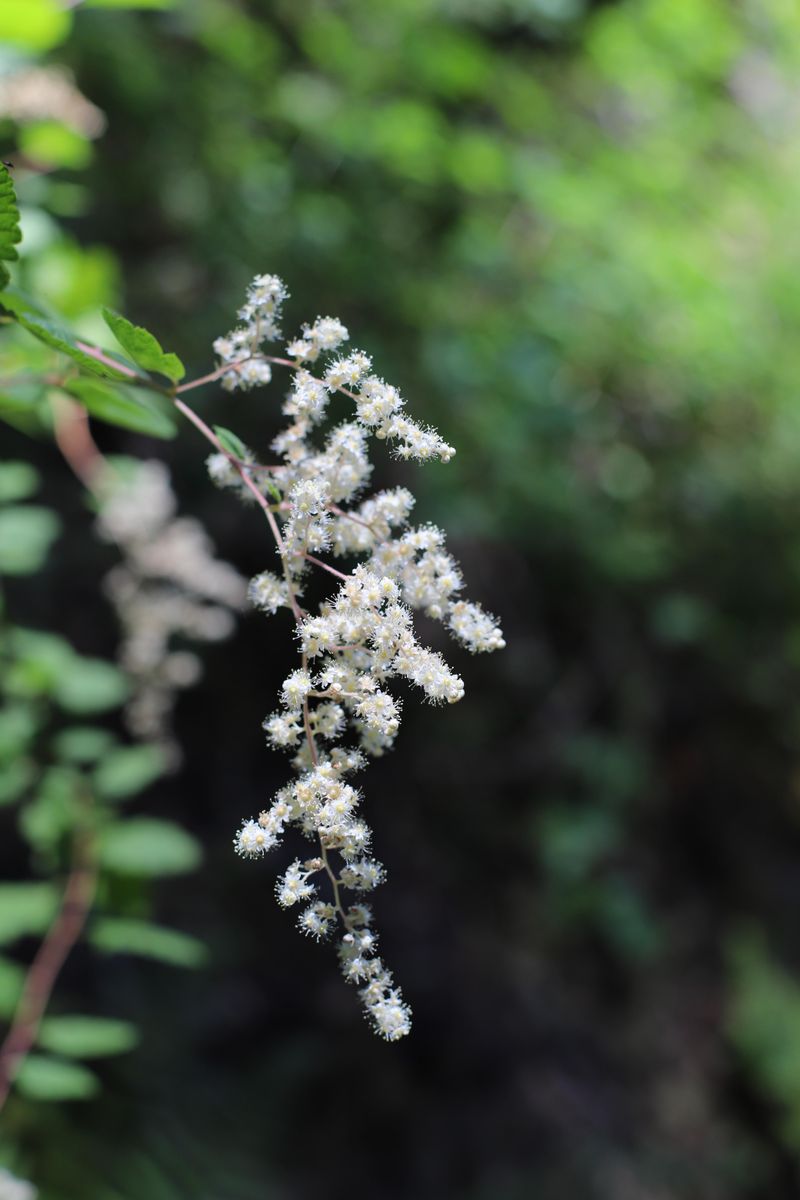
If you have ever hiked a dry Oregon trail in June and spotted a shrub exploding with frothy white flower plumes, you have already met ocean spray.
The name fits perfectly. Those cascading clusters of tiny cream-colored flowers look like sea foam frozen mid-crash, and they appear reliably every summer even when the surrounding hillside is parched.
Ocean spray, or Holodiscus discolor, is a native shrub found across western Oregon and into the Cascades.
It grows naturally on rocky slopes, dry roadsides, open woodlands, and canyon edges where summer moisture is scarce and soils are often thin.
Its root system is fibrous but extensive, spreading wide to capture what little water the soil holds after the spring rains stop.
In the garden, ocean spray works especially well on dry banks and slope edges where erosion is a concern and irrigation is impractical.
It grows 5 to 15 feet tall depending on site conditions, forming a graceful arching shape. After flowering, the dried seed clusters remain on the shrub through fall and winter, giving it continued texture when other plants go quiet.
Water ocean spray consistently for one to two seasons after planting, then reduce irrigation gradually.
It handles dry Oregon summers well once the root system is properly anchored, and deer tend to leave it alone once it matures, which is a practical bonus on rural properties.
6. Serviceberry
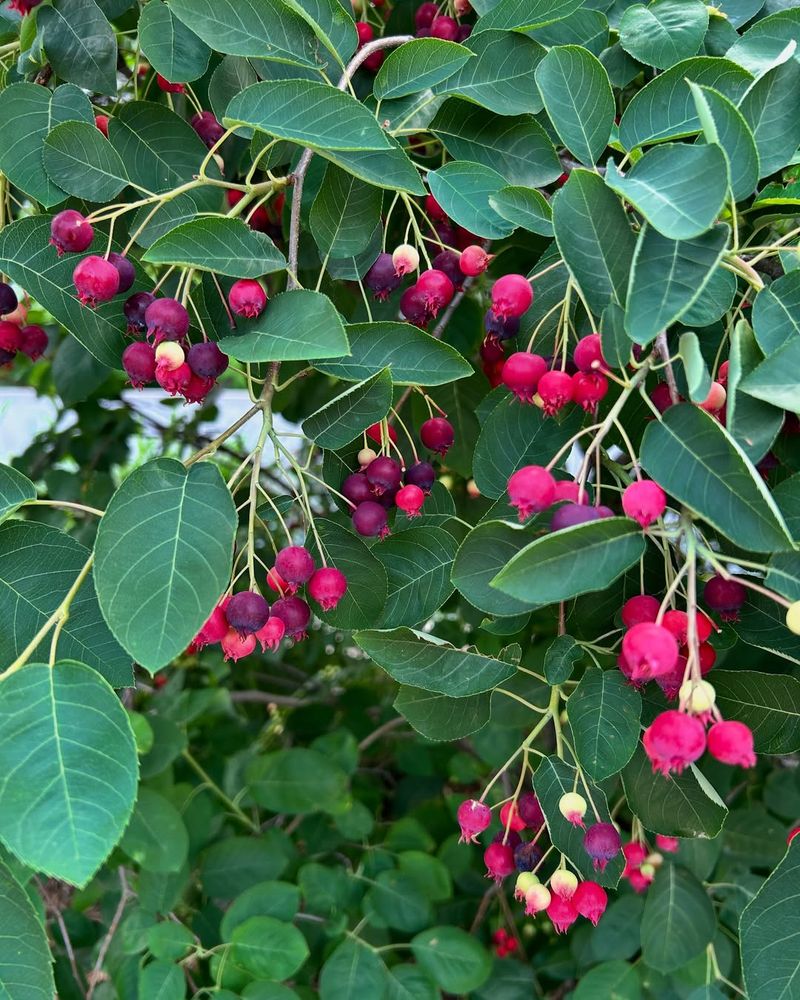
Few native plants pull double duty as gracefully as serviceberry.
It blooms early in spring when the landscape is still waking up, producing clouds of small white flowers that feed native bees before most other food sources are available.
Then, by early summer, it offers sweet purple-blue berries that birds, bears, and humans all compete to enjoy.
All of this happens on a plant that asks for surprisingly little once it finds its footing.
Amelanchier alnifolia, the western serviceberry, grows naturally across Oregon in a wide range of habitats, from moist streambanks to dry, open slopes and rocky ridges.
That flexibility is part of what makes it so useful in the home landscape. It can handle moderate drought once established, though it performs best with some access to soil moisture during the hottest weeks.
Serviceberry grows as a large shrub or small tree, typically reaching 6 to 20 feet depending on the site.
Fall color is a bonus: leaves turn orange, red, and gold before dropping, giving the plant three distinct seasons of visual interest.
Deep, infrequent watering during establishment encourages roots to push down rather than staying shallow.
Once the root system is solid, serviceberry handles Oregon’s dry summers with reduced irrigation.
Its combination of wildlife value, edible fruit, and seasonal beauty makes it one of the most rewarding natives you can add to a Pacific Northwest yard.
7. Bitterbrush
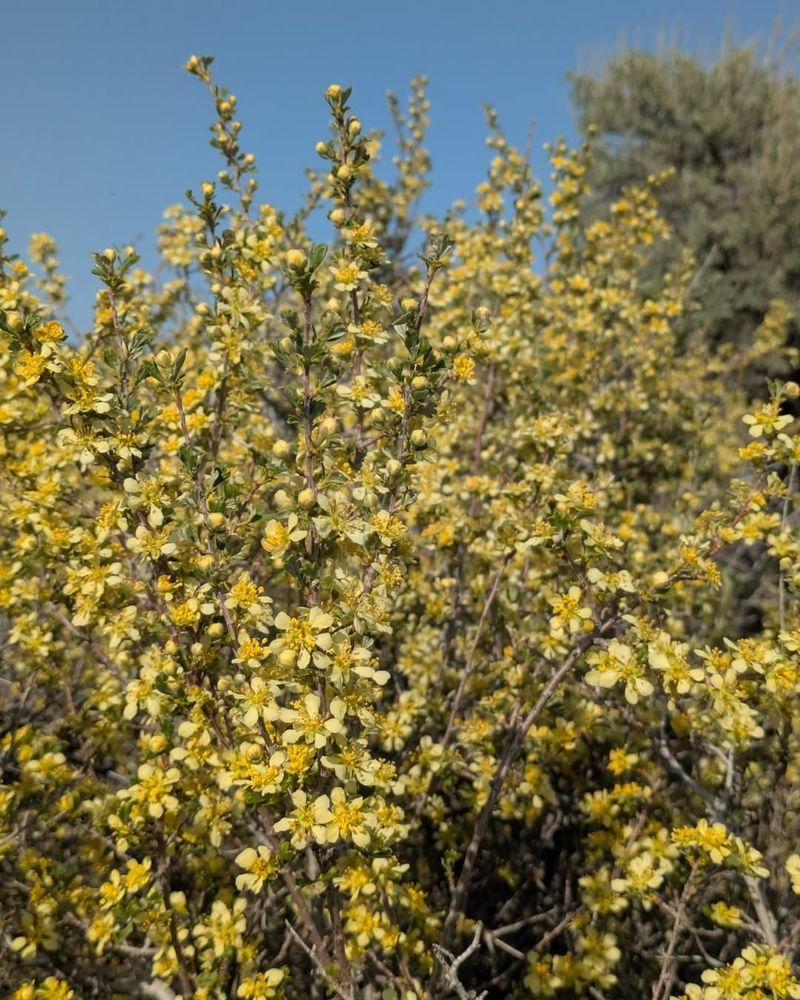
East of the Cascades, where summer temperatures climb past 100 degrees and rain is a distant memory by June, bitterbrush earns its reputation as one of the most dependable native shrubs in the region.
Drive through central or eastern Oregon in late spring and you will see it dotting the sagebrush steppe in every direction, covered in small, bright yellow flowers that smell faintly of honey.
Purshia tridentata, commonly called antelope bitterbrush, is a cornerstone plant of Oregon’s high desert ecosystem.
Its roots go extraordinarily deep, sometimes reaching 20 feet or more into the soil profile to access moisture that surface conditions never reveal. That depth allows it to stay alive and functional through summers that would reduce most shrubs to a crisp.
Wildlife value is exceptional.
Mule deer, pronghorn, and elk browse bitterbrush heavily, particularly in winter when other food sources are scarce. Its seeds are also eaten by birds and small mammals.
In the home landscape on the dry side of Oregon, bitterbrush works beautifully on slopes, open areas, and low-maintenance borders.
It grows 3 to 8 feet tall and wide, forming a mounded, open shape. Water it regularly for the first season or two after planting, then step back.
Once roots are established, bitterbrush asks for almost nothing and gives back far more than you put in.
8. Rabbitbrush
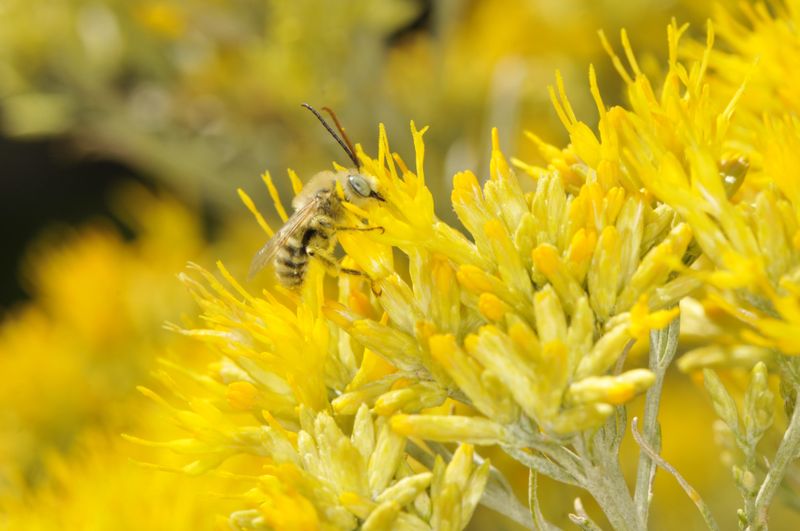
When everything else in the late-summer landscape has gone brown and quiet, rabbitbrush lights up like a small sun.
Its dense clusters of bright golden-yellow flowers arrive in August and September, exactly when pollinators need them most and when most other plants have long since stopped blooming.
That late-season timing alone makes it one of the most ecologically valuable natives in Oregon’s dry regions.
Ericameria nauseosa, known as rubber rabbitbrush, is built for exposure.
It thrives on roadsides, rocky flats, overgrazed rangeland, and harsh sunny slopes where soil is poor, drainage is fast, and summer heat is relentless.
Far from struggling in these conditions, rabbitbrush actively prefers them. Rich, moist garden soil can actually cause problems by encouraging weak, floppy growth.
Its root system is both wide-spreading and moderately deep, allowing it to pull moisture from a large area of dry soil.
This combination makes it highly resilient during Oregon’s long rainless summers, especially in central and eastern Oregon where drought conditions are most extreme.
Native bees, butterflies, and other insects swarm rabbitbrush during its bloom period.
Several specialist bee species depend on it. Birds also use the shrub for cover and eat its seeds through the winter months.
Plant rabbitbrush in full sun with excellent drainage and minimal soil amendment.
Water consistently during the first growing season to help roots establish, then reduce irrigation sharply. After that, this cheerful, tough shrub handles summer on its own and rewards you with gold every fall.