8 Trees And Shrubs Georgia Gardeners Can Plant Around Thanksgiving
Tree roots keep quietly growing in late fall, long after the leaves above them have stopped working for the year.
That hidden underground effort is why many extension experts call autumn the best planting season across Georgia.
Cool air means less stress on young leaves, while warm soil invites fresh roots to spread out and settle in. By the time summer heat arrives, a fall planting has months of head start over spring transplants.
I have to admit that planting between turkey leftovers and holiday lights feels a little odd at first. Still, I love how a muddy afternoon in November turns into a gorgeous yard by the next spring.
You only need a sturdy shovel and one free weekend before the ground gets truly chilly this season. So which four trees and four shrubs deserve a spot in your yard before the year wraps up?
1. Southern Magnolia
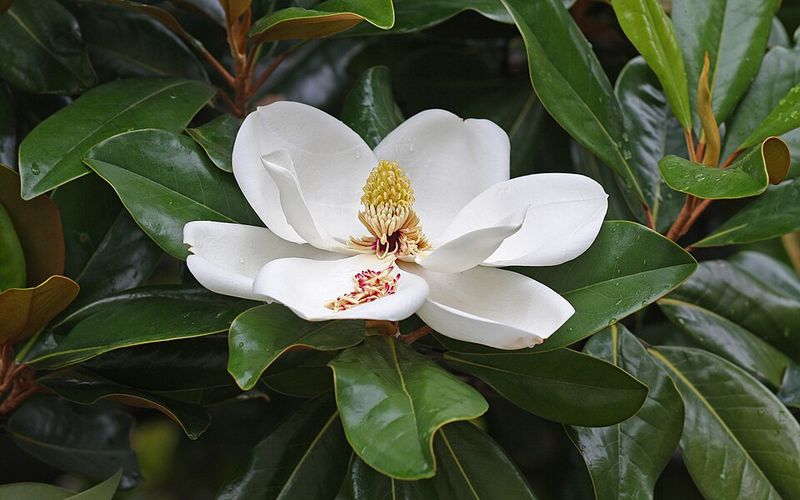
Few trees can match blooms the size of dinner plates, with a lemony scent drifting across the whole yard. Those creamy flowers can reach twelve inches wide, and I still stop on sidewalks just to sniff them.
Glossy evergreen leaves wear fuzzy, rusty-brown undersides, so the tree looks polished even on the grayest winter day.
In fall, chunky cone-like pods split open and reveal bright red seeds that songbirds and squirrels happily snatch.
Size matters with this native giant, since the species can grow 60 to 80 feet tall over time. For smaller lots, look for compact cultivars like Little Gem, which usually stays closer to 20 or 25 feet.
Full sun gives the heaviest flowering, though a little afternoon shade is fine in the hottest parts of the state. Rich, slightly acidic soil is ideal, but magnolias handle sandy ground and red clay better than you might expect.
Dig a hole two or three times wider than the root ball, but keep it no deeper than that. Water deeply once or twice a week through winter dry spells, since that first year sets the tone.
Personally, I let the lower branches sweep the ground, because those big leathery leaves are slow to break down. A skirt of branches hides the litter and gives birds a cozy hiding spot on cold, windy nights.
2. Flowering Dogwood
Those famous white petals on a spring dogwood are not petals at all, but showy leaves called bracts. The real flowers are tiny greenish buttons in the center, and I like pointing that out to visitors.
The Cherokee rose is Georgia’s official state flower, but flowering dogwood remains one of the state’s most recognizable native spring-blooming trees.
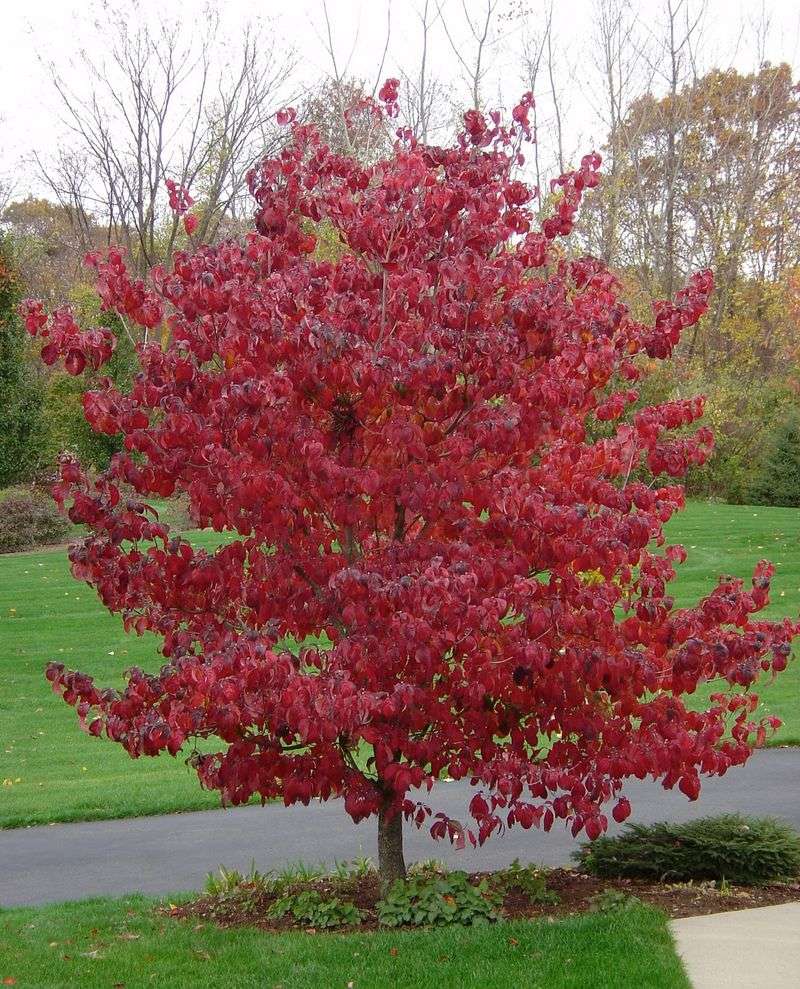
By late fall, the leaves turn deep red and glossy scarlet berries feed hungry robins and bluebirds well into winter.
In the wild, dogwoods grow beneath taller oaks and pines, and they appreciate that same dappled light at home.
Morning sun with afternoon shade keeps the leaves from scorching during brutal July heat in most Southern yards.
Expect a mature size of roughly 15 to 30 feet, which fits nicely near a patio or front walk. Moist, well-drained, acidic soil with plenty of organic matter keeps the shallow roots happy and healthy all year.
Plant slightly high, with the top of the root ball a little above grade, since soggy soil causes trouble. A two to three inch layer of pine straw holds moisture and protects the thin bark from mower nicks.
Over the years, older trunks develop blocky bark that looks a lot like alligator skin up close. I think that rugged texture makes a dogwood just as charming in January as it is in April.
3. River Birch
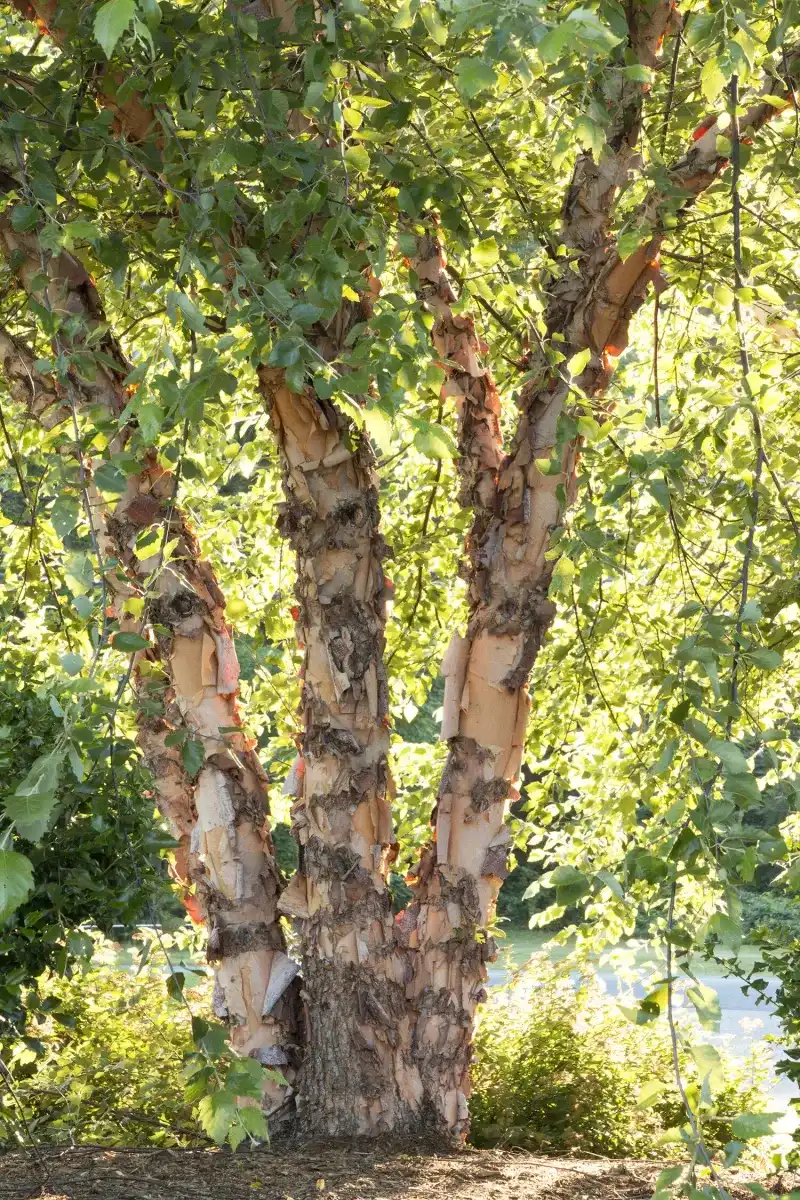
Peeling bark is the star here, curling back in papery sheets of cinnamon and creamy salmon pink. Kids love touching those curls, and the shaggy trunk looks striking against a gray winter sky.
Unlike many birches that sulk in Southern heat, this native thrives along creeks and rivers throughout the Southeast.
It also resists the bronze birch borer, a pest that often troubles white-barked birch species in other regions.
That soggy corner where rainwater puddles after storms might be the perfect home for this tree. River birch tolerates wet feet and heavy clay, and it prefers acidic soil with a pH below 6.5.
Growth is fast, often reaching 40 to 70 feet tall, so give it room away from the house. Multi-trunk specimens are popular, and I think those clumps of several stems show off the bark best.
Full sun to light shade works well, but dry summers can make leaves yellow and drop early. Deep, slow soakings during droughts keep young trees on track, especially in their first two growing seasons.
Fall color is a soft, buttery yellow, and the small catkins add quiet interest in late winter. Because the roots stay shallow and thirsty, keep this tree away from septic lines and vegetable beds.
Planting around Thanksgiving gives those roots several cool months to explore before the spring growth spurt arrives. Personally, I would pick this tree for yards that flood a little but still crave fast shade.
4. Red Maple
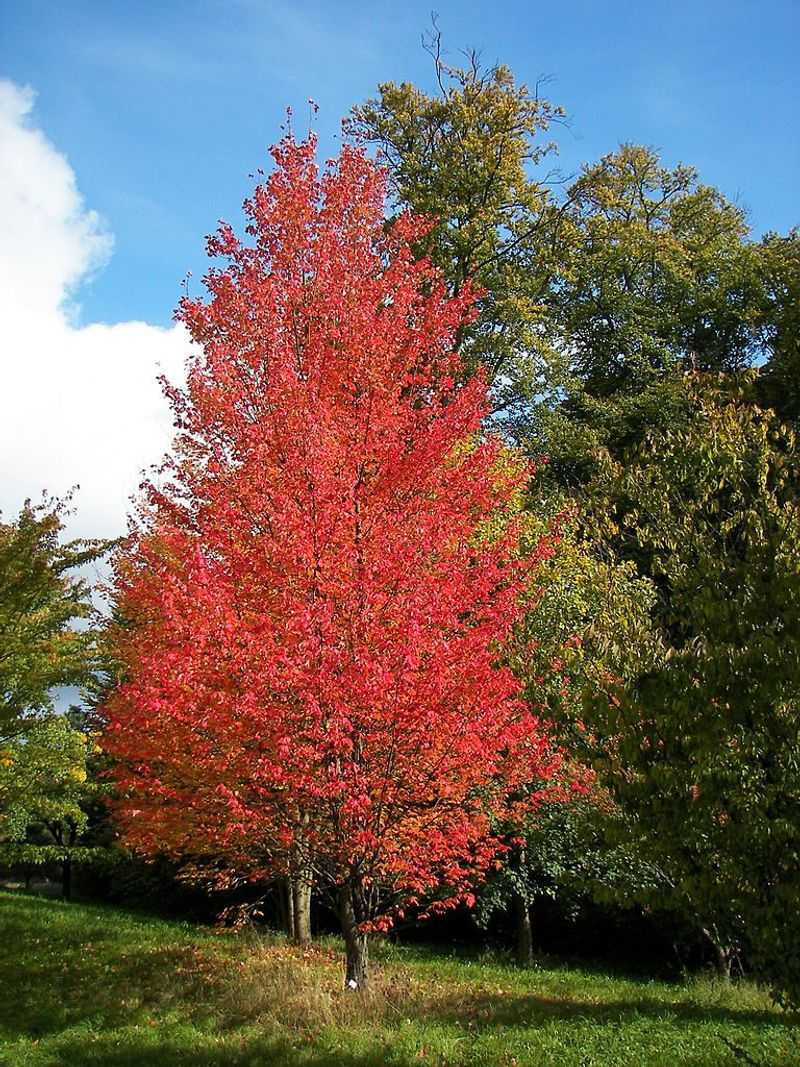
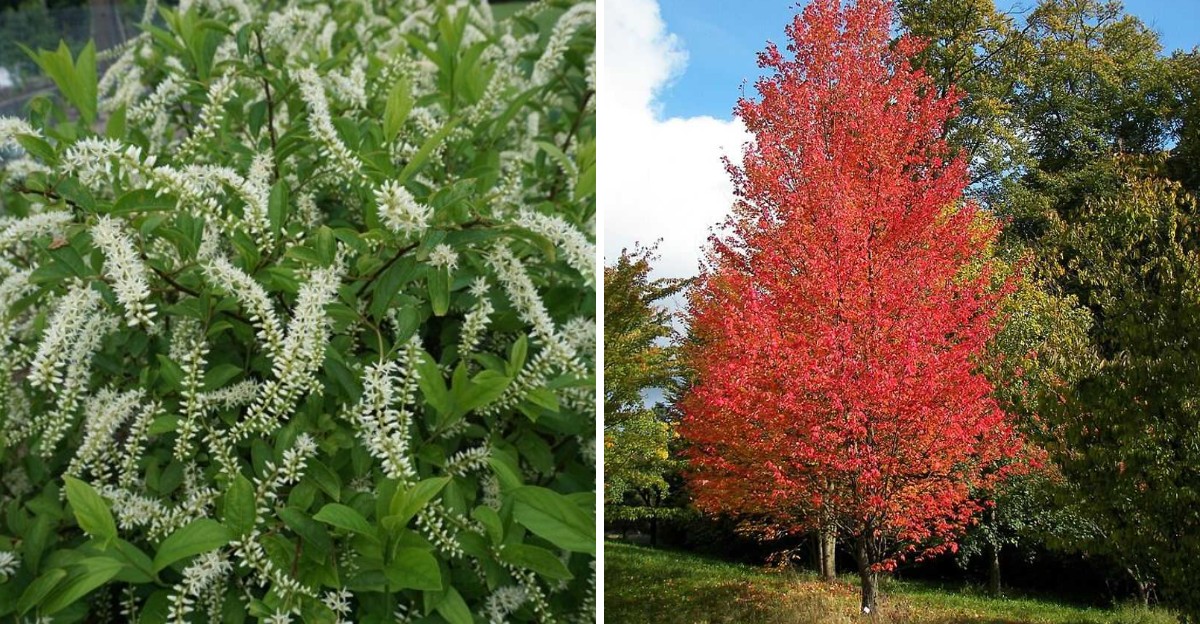
Red maple earns its name in every season, starting with tiny crimson flowers that open in late winter. Those blooms appear before the leaves, and hungry early bees treat them like a welcome snack bar.
Red winged seeds follow in spring, and the new leaf stems often blush red as they unfurl.
Come autumn, foliage can glow scarlet or orange, though some trees lean toward yellow depending on genetics.
Because color varies so much, I suggest shopping for a named cultivar or picking a tree in fall. Varieties like October Glory are known for reliable red color and handle Southern heat quite well.
This native maple tolerates wet ground and even short periods of standing water after heavy rains. It prefers slightly acidic soil, since alkaline soil can cause pale yellow leaves with green veins.
Plan for a mature size of about 40 to 60 feet, with a rounded crown that shades a patio. Full sun brings out the richest fall color, while partial shade usually means a softer display.
Thin bark on young trunks scars easily, so keep string trimmers away and add a wide mulch ring. Roots grow near the surface, which means nearby sidewalks and driveways need plenty of breathing room.
Water newly planted trees weekly during dry winter stretches, then increase soakings once warm weather arrives next spring. I have watched a scrawny sapling become a blazing neighborhood favorite in less than ten years.
5. Oakleaf Hydrangea
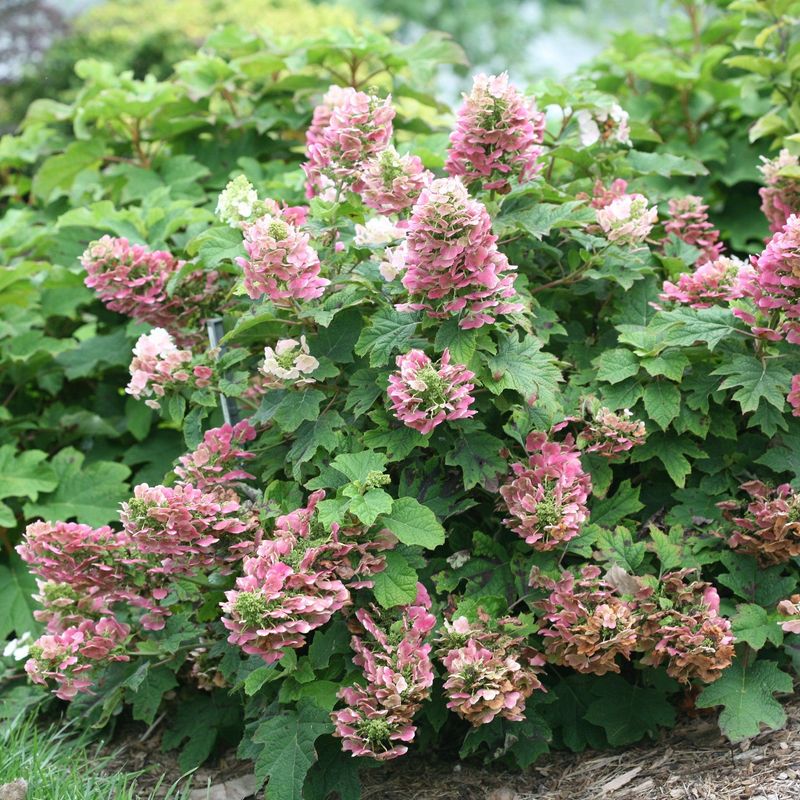
Oak-shaped leaves on a hydrangea sound like a mix-up, yet this Southern native wears them proudly.
Big lobed foliage turns burgundy and bronze in fall, and I swear it glows on cloudy afternoons.
Cone-shaped clusters of white flowers open in late spring, then fade to dusty pink by late summer. Those dried heads often hang on into winter, adding texture long after the leaves have dropped.
Bare stems reveal warm brown peeling bark, so the shrub keeps earning its spot even in January. Unlike bigleaf hydrangeas, flower color stays white to pink no matter what your soil pH happens to be.
Most plants reach 4 to 8 feet tall and wide, though compact picks like Ruby Slippers stay smaller. Morning sun and afternoon shade suit this shrub best, especially in the hotter southern half of the state.
Soggy soil is the real enemy here, because the roots rot quickly when water lingers for days. Mix compost into the planting area and choose a slope or raised spot if your clay drains slowly.
Once established, oakleaf hydrangeas handle dry spells far better than their mophead cousins, which I find refreshing. Prune right after flowering if needed, since next year’s buds form on this year’s growth by late summer.
Pollinators visit the summer blooms, and the shrub fits beautifully along a woodland edge or shady fence line. I believe every Southern yard has enough room for at least one of these four-season showoffs.
6. American Beautyberry
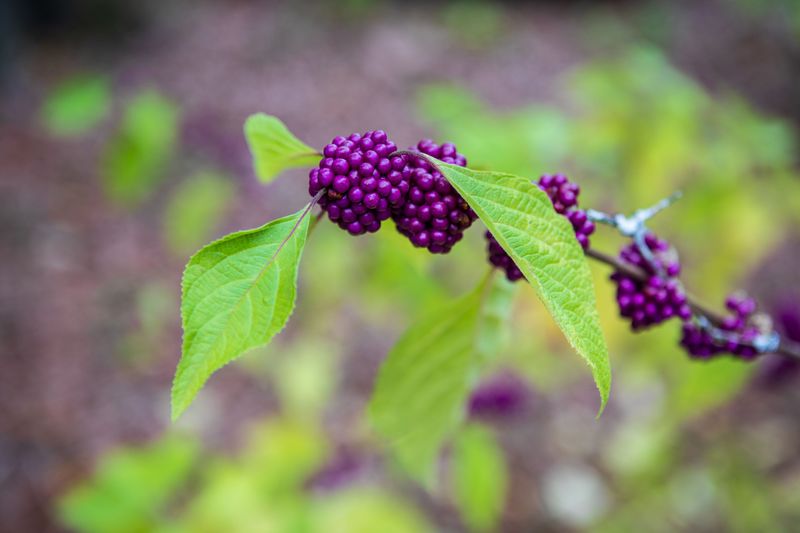
Neon purple berries look almost fake, wrapped in clusters around the stems like beads on a bracelet. The first time I spotted beautyberry in the woods, I honestly thought someone had painted the branches.
Berries ripen in late summer and often linger into fall, depending on how hungry the birds get.
Mockingbirds and brown thrashers enjoy them, and deer browse the leaves and twigs too when food runs short.
Beautyberry usually grows 3 to 6 feet tall, with arching branches that give it a loose, relaxed look. It shrugs off sandy soil and stiff clay alike, so fussy gardeners can finally relax a bit.
Partial shade works, but at least six hours of sun produces the heaviest berry crop by far. Flowers and fruit form on new growth, which makes pruning surprisingly simple and forgiving each year.
In late winter, I cut the whole plant back to about a foot tall before new leaves appear. That hard trim keeps it tidy and encourages more berries along fresh stems the following fall.
Fun fact: crushed leaves have been used as a folk mosquito repellent, and USDA researchers studied the compounds involved. Rub a leaf between your fingers and you will notice a sharp, earthy scent right away.
Planting a group of three or more gives a bigger splash of color along a woodland border. Water regularly through the first winter and spring, then let this tough plant mostly fend for itself.
7. Inkberry Holly
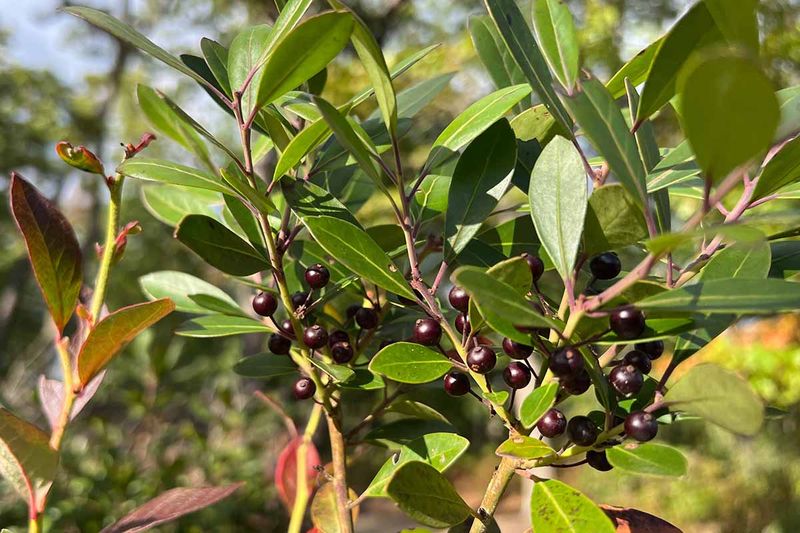
Smooth leaves and shiny black berries make inkberry the holly for anyone tired of prickly fingers. Yes, it really is a holly, even though you can brush against it without wincing at all.
Native to coastal plain bogs and pine flatwoods, it handles wet, acidic soil that many shrubs refuse. I like how it stays green all winter, giving the garden structure when everything else looks bare.
Wild plants can reach 5 to 10 feet tall, and they often spread slowly by underground suckers. For tidy hedges, compact cultivars like Shamrock or Densa stay closer to 3 to 6 feet.
Bees adore the small spring flowers, and inkberry honey, sometimes called gallberry honey, is prized across the coastal South.
Birds pick at the pea-sized berries through winter, though only female plants growing near a male produce them.
Full sun keeps the shrub dense, while too much shade makes the lower branches thin and leggy. If bare legs show up anyway, cut a few older stems near the ground in late winter.
Alkaline soil can turn the leaves yellow, so a quick soil test through your county extension office helps. Keep the roots evenly moist after planting, because inkberry dislikes drying out during its first year.
Personally, I think it makes a fantastic native swap for boxwood along foundations and walkways in Georgia. Planted now, it will look settled and glossy long before your spring flowers start showing off.
8. Virginia Sweetspire
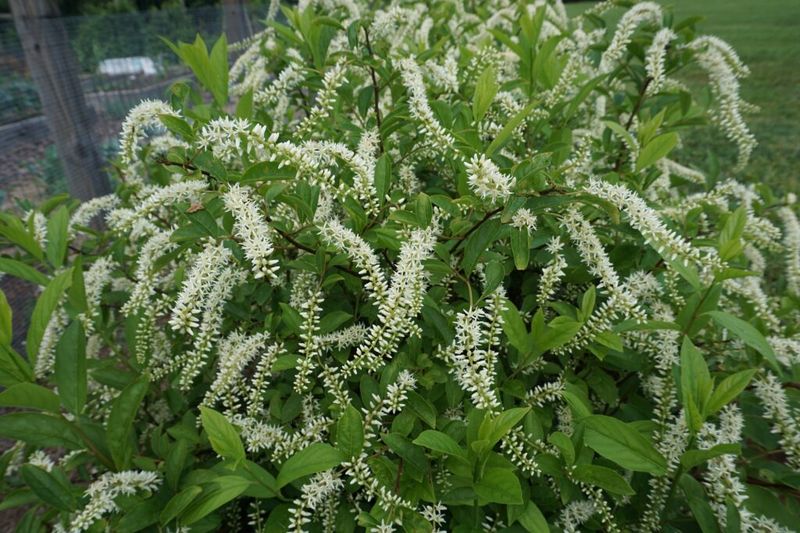
Fall color on sweetspire can rival a maple, with leaves turning ruby red and holding on for weeks.
In mild Southern winters, some of those crimson leaves cling on until new growth pushes through in spring.
Late spring brings drooping white flower spikes that smell sweet and honey-like, which explains the charming common name. Butterflies and native bees crowd those fuzzy wands, and I enjoy watching the traffic from my porch.
Wet ground suits this native perfectly, since it grows naturally along stream banks and swampy woodland edges.
Surprisingly, established plants also cope with drier spots, though they look happiest with steady moisture nearby.
Most sweetspires grow 3 to 6 feet tall and spread by suckers into a loose, friendly colony. If space is tight, the cultivar Little Henry stays around two to three feet with similar fall color.
Full sun gives the brightest red leaves, but this shrub still blooms nicely in partial shade. Henry’s Garnet is another popular choice, known for longer flower spikes and deep reddish purple autumn leaves.
Planting is simple, because sweetspire forgives heavy clay better than most flowering shrubs in my experience. Set the root ball level with the ground, then spread a few inches of shredded leaves on top.
Rain gardens and soggy downspout zones make ideal homes, where suckers help hold soil in place during storms. I can’t imagine a better shrub for fixing that muddy corner everyone else tries to ignore.