What Summer Pine Needle Drop In Georgia Actually Means And The Signs Worth Paying Attention To
Georgia pines know how to cause a neighborhood panic.
One July morning, the driveway looks clean. By dinner, yellow and brown needles cover the grass like the tree emptied its pockets.
Cue the worried stare. Cue the internet search. Cue someone blaming beetles before the tree even gets a fair trial.
The strange part is that many pines do this as part of their normal rhythm, and summer heat can make the show look more dramatic than it really is.
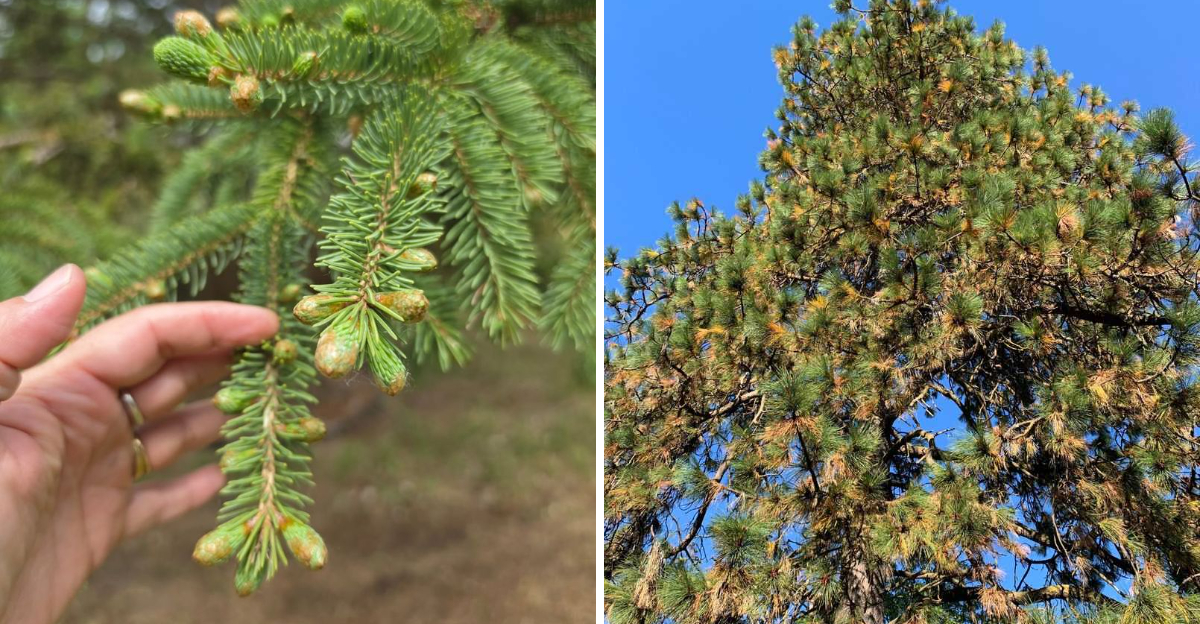
The real clue is not just how many needles fall. It is where they came from, how the branch tips look, and what the canopy is doing above your head.
Is your pine sending a warning, or just clearing out old growth? That difference matters.
A calm walk around the tree can tell you more than the pile by the curb.
Once you know the signs, summer needle drop starts looking less like disaster and more like a message worth reading.
1. Older Interior Needles Are Shedding Naturally
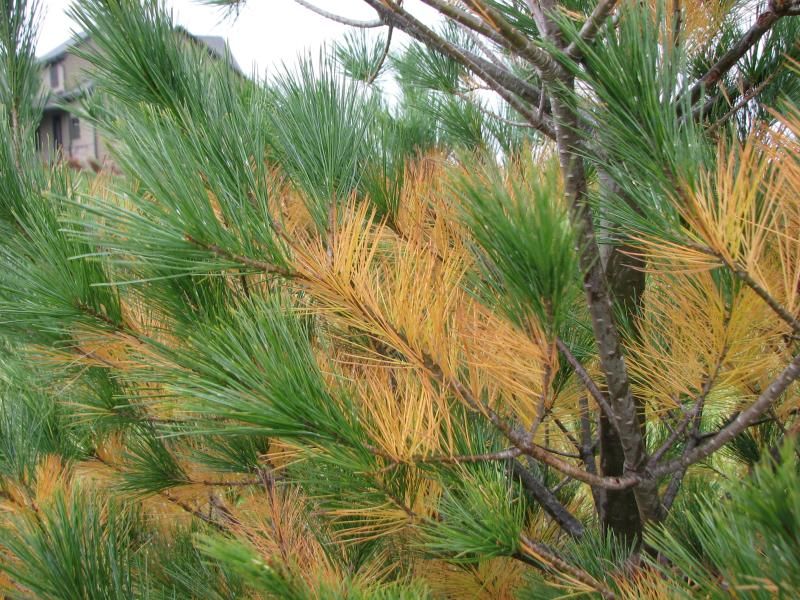
Yellow needles raining down from your pine tree in August might feel like a bad omen, but for most Georgia pines, it is simply the tree doing what it has always done.
Pines are evergreen, but that does not mean they keep every needle forever. Each needle on a pine tree has a lifespan, and when that lifespan ends, the tree lets it go.
For loblolly, longleaf, and slash pines common across Georgia, that lifespan is typically two to three years.
The needles that drop first are the oldest ones, located closest to the trunk on the inner branches.
These interior needles have already done their job of capturing sunlight and producing energy for the tree. By late summer, the tree begins pulling nutrients back from these older needles before releasing them. This is an efficient, healthy process.
UGA Extension confirms that this type of shedding is completely normal and happens every year across Georgia.
What often surprises homeowners is the sheer volume of needles that can fall in a short period. A large pine can drop thousands of needles at once, making the ground look like a rust-colored carpet.
The reassuring thing to check is whether the tips of the outer branches still look green and full.
If they do, your tree is almost certainly in good shape and simply cycling through its natural rhythm right on schedule.
2. Green Branch Tips Bring Reassurance
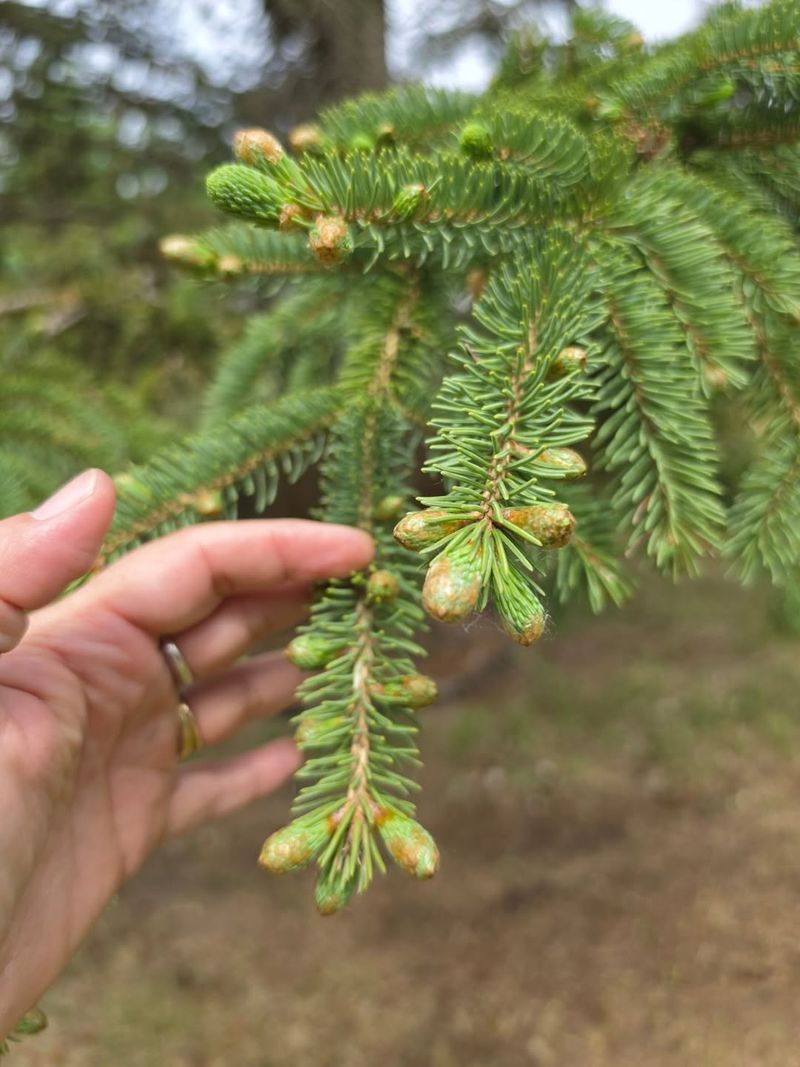
Walk up to your pine tree and look at the very ends of the branches.
If those tips are green, full, and showing new growth, that is one of the best signs you can find. The outer tips of pine branches are where the most recent and active growth lives.
A healthy pine pushes its energy outward, and those tips tell you whether that energy is still flowing.
When a tree sheds its older interior needles while keeping its outer tips green, it is following a completely normal pattern.
Your Georgia Garden Changes Every Week. Your Plan Should Too.
Gardening in Georgia changes quickly throughout the season. Every Friday you’ll receive a simple weekly plan showing exactly what to plant, prune, fertilize, harvest, and protect so you never miss the right timing.
Arborists and forestry specialists often point to green tip growth as the single most reliable visual clue for homeowners checking tree health after heavy shedding.
Georgia pines that are stressed or dealing with a real problem typically show symptoms at the tips first, not the interior.
So if your branch ends look lush and green while the inner areas look sparse and brown, breathe easy. That pattern strongly suggests natural shedding rather than disease or pest damage.
Take a slow walk around the full canopy and check tips on multiple sides of the tree.
Consistent green growth all the way around is a very encouraging sign that your tree is handling summer just fine and staying on track with normal seasonal cycles.
3. Summer Heat Can Speed The Drop
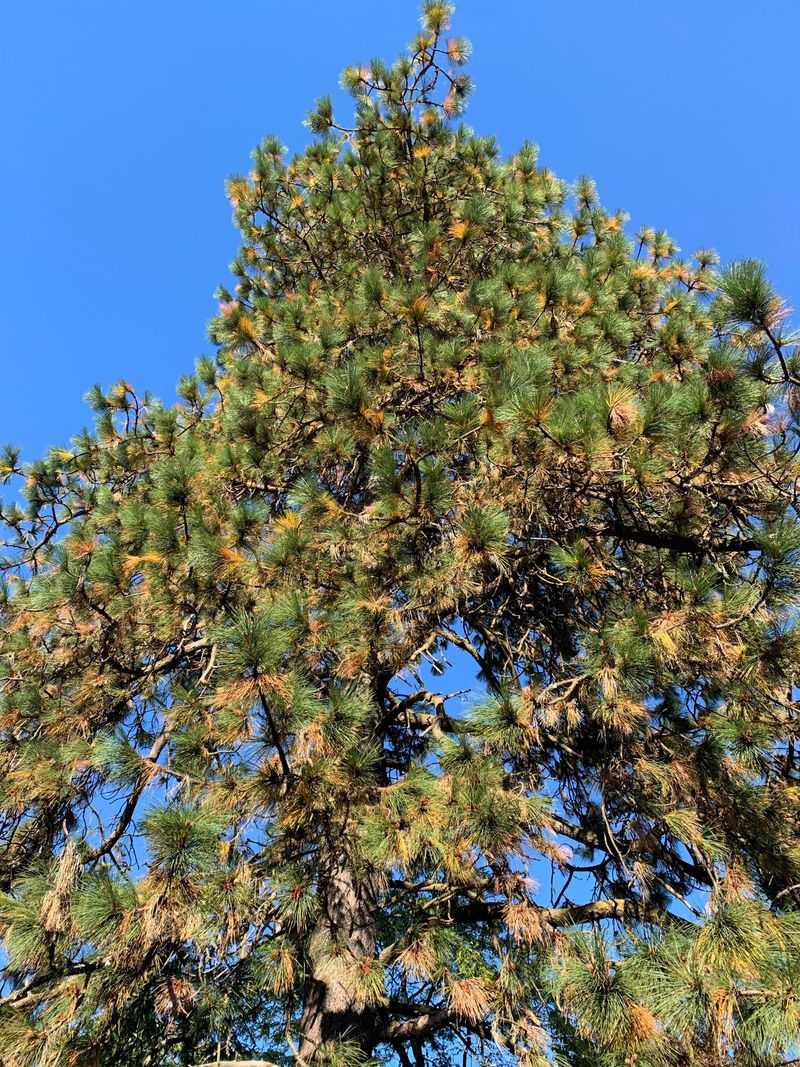
Georgia summers are not gentle.
Temperatures regularly climb above 90 degrees, and stretches of low rainfall can last for weeks at a time. That kind of heat and dryness puts real stress on all trees, including pines that are otherwise perfectly healthy.
One of the most visible effects of that stress is an earlier or heavier-than-usual needle drop during the summer months.
Heat causes pine trees to lose moisture through their needles faster than normal.
When water is scarce in the soil, the tree responds by shedding older needles sooner to reduce the amount of water it needs to maintain.
This is a self-protective response, not a sign of serious illness. The tree is essentially lightening its load so it can survive through the hottest and driest part of the year.
A summer with record heat or an unusually dry stretch may produce a noticeably heavier needle drop than previous years.
You might look at your tree and think something is wrong simply because there are more needles on the ground than you remember seeing before. Comparing one summer to another is not always reliable because weather conditions vary so much.
Instead, focus on how the tree looks right now.
Green tips, steady color in the outer canopy, and no unusual spots or lesions on the bark are all signs that the tree is managing the heat the way nature intended it to.
4. Dry Sites May Shed Earlier
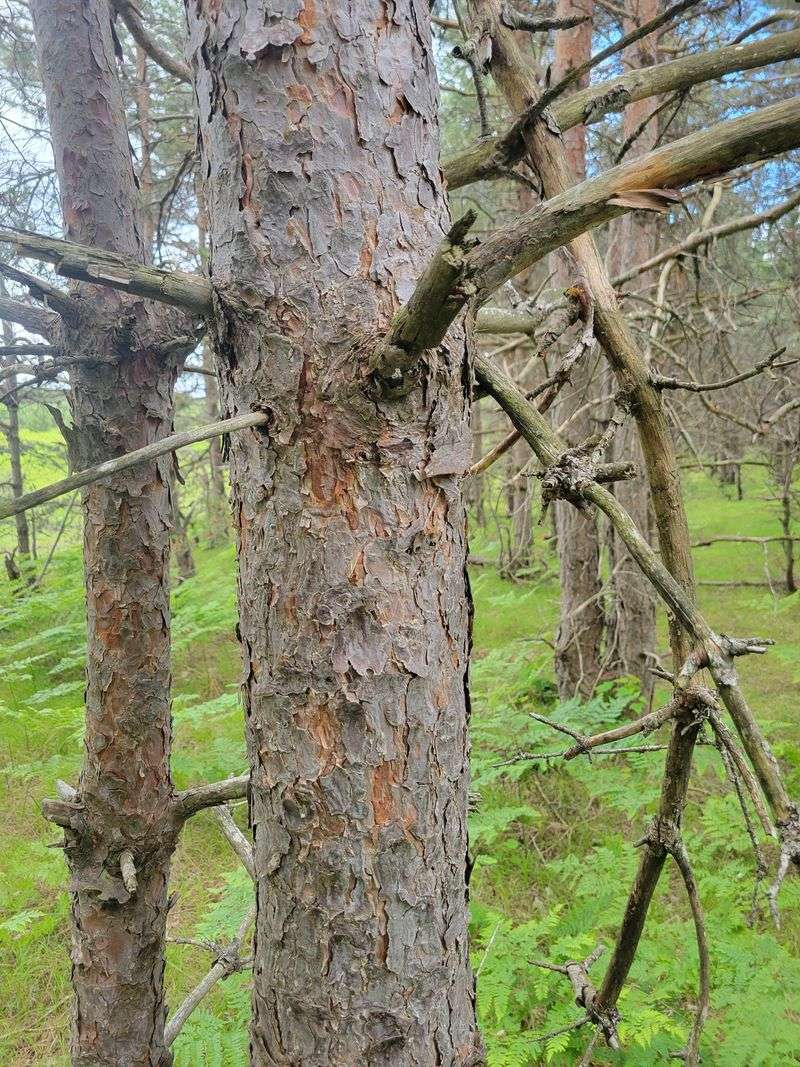
Not all pine trees in Georgia grow in the same conditions, and that difference matters a lot when it comes to summer needle drop.
Trees planted in sandy soils, compacted clay, or open exposed areas without much shade tend to experience water stress sooner and more intensely than trees in better-suited spots.
If your pine sits in a particularly dry or exposed part of the yard, expect it to shed earlier and sometimes more heavily than a neighbor’s tree just a few yards away.
Sandy soils drain water quickly, leaving roots with less moisture to draw from during dry spells.
Compacted soil is another common issue around homes, driveways, and lawns where foot traffic or construction has reduced the soil’s ability to absorb and hold water.
When roots struggle to find moisture, the tree responds by cutting back on the number of needles it has to support.
Homeowners with pines in tough spots can help by watering deeply during dry stretches, keeping mulch around the base to hold soil moisture, and avoiding further soil compaction near the root zone.
A pine in a dry site is not automatically in trouble, but it does need a closer eye during Georgia’s hottest months to make sure stress stays manageable.
5. Uneven Browning Deserves A Closer Look
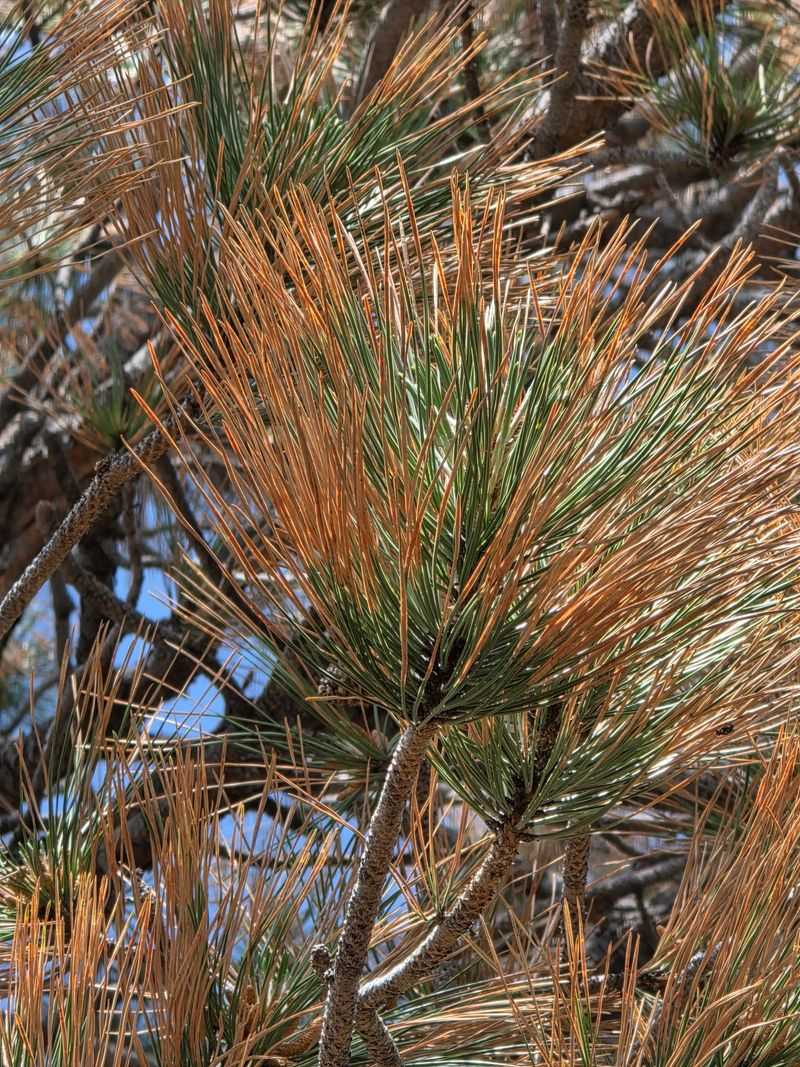
Patchy browning is a different story from the even, inner-needle shedding described above.
When browning appears unevenly across the canopy, concentrated on one side, one section, or in scattered clumps rather than spread evenly through the interior, that pattern is worth investigating more carefully.
Uneven browning is one of the clearest signals that something beyond normal shedding may be happening.
One-sided browning can point to several possible causes.
Root damage on one side of the tree, whether from construction, compaction, or physical injury, can cause the branches above that root zone to struggle first.
Lightning strikes sometimes cause one-sided browning that appears days or weeks after the strike itself.
Pest activity can also cause uneven browning.
Pine bark beetles often attack one section of a tree before spreading further. If you notice browning that seems to be moving or expanding from one area outward, that is a red flag worth taking seriously.
Walk around the full tree and observe where the browning is concentrated.
Check the bark for small holes, sawdust-like material called frass, or sticky resin. Take photos from multiple angles.
Bringing those photos to your local UGA Extension office or a certified arborist gives you a much better shot at identifying the problem early enough to do something about it.
6. Cankers Point To A Bigger Problem
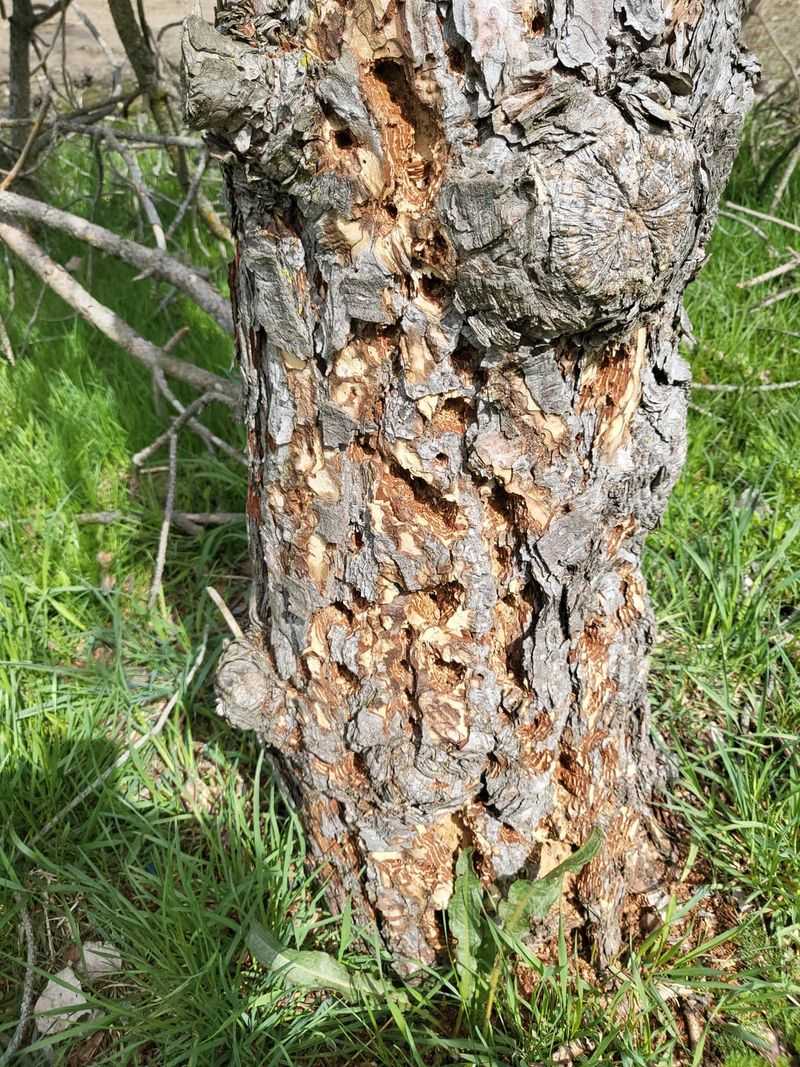
Resin oozing down the trunk of a pine tree might look dramatic, and sometimes it is just the tree responding to a minor wound.
But when that resin is paired with sunken, discolored, or cracked areas of bark, what you may be looking at is a canker.
Cankers are localized areas of damaged bark tissue caused by fungal pathogens or bacterial infections, and they are a serious sign that a tree is fighting something bigger than summer heat.
Pitch canker is one of the most common and damaging canker diseases affecting Georgia pines.
It is caused by the fungus Fusarium circinatum and typically shows up as resin-soaked areas on branches or the main trunk.
Infected areas often look wet, orange-brown, or sunken compared to the surrounding healthy bark. Branches above a canker may turn brown and wilt because the canker is cutting off the flow of water and nutrients through that part of the tree.
Cankers are more likely to appear on trees that are already stressed by drought, poor soil, or physical damage, which is why summer in Georgia can bring them to light.
Spotting one canker does not always mean the tree is beyond help, but it does mean you need professional evaluation quickly.
An arborist or plant pathologist can assess how far the infection has spread and whether the tree can be managed with pruning or other treatments.
7. Tip Browning Changes The Whole Story
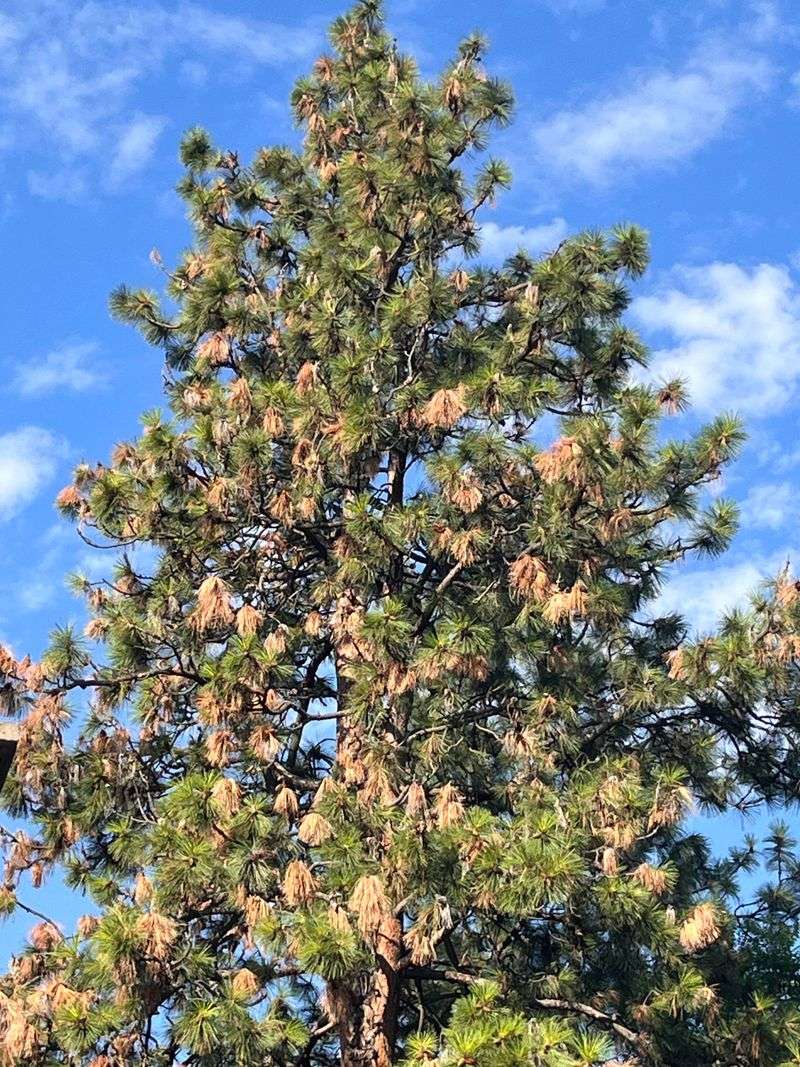
Brown needles falling from the interior of a pine tree are usually normal.
But brown needles appearing at the very tips of branches are a completely different situation. Tip browning is not part of the natural shedding cycle, and it should not be dismissed as summer stress without a closer look.
Diplodia tip blight is one of the most common causes of tip browning on Georgia pines, particularly loblolly pines.
This fungal disease attacks new growth in spring, but the damage often becomes most visible by summer. Infected branch tips turn brown and stop growing while the rest of the branch may still look green.
Left unchecked, Diplodia can spread through more and more of the canopy each year.
Other causes of tip browning include pine tip moth damage, where larvae feed inside the growing tips and cause them to brown and curl.
Environmental factors like herbicide drift or salt spray near roads can also produce tip symptoms.
Tip browning should always be investigated rather than assumed to be normal shedding.
Check multiple branches across different parts of the canopy.
If the tips on many branches are turning brown while the interior looks relatively fine, contact a certified arborist or your county UGA Extension office as soon as possible for an accurate identification and next steps.
8. Fast Canopy Thinning Needs Expert Eyes
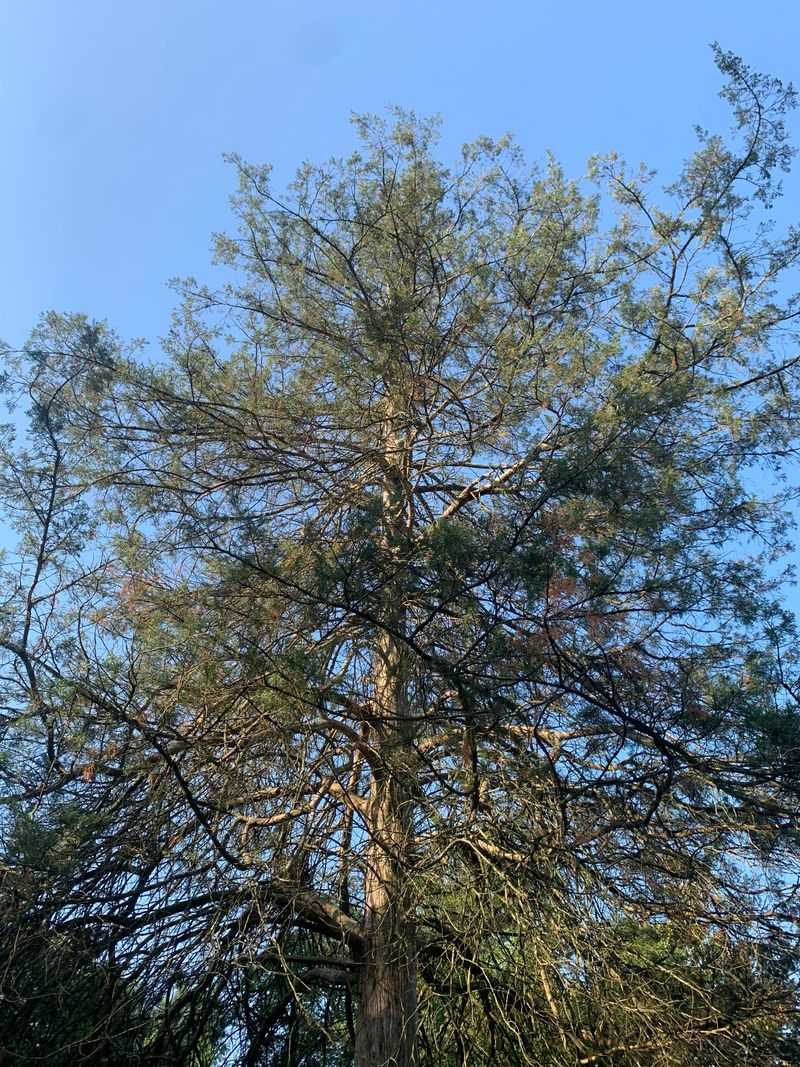
Some changes in a pine tree happen gradually enough that you can monitor them over a few weeks before deciding what to do.
But when a tree’s canopy seems to be thinning out rapidly, losing branches that looked fine just a short time ago, that kind of speed is a reason to call for professional help right away.
Fast canopy thinning is one of the clearest signals that something serious may be happening inside the tree.
Rapid thinning can result from a heavy bark beetle infestation, a severe fungal infection, or root damage that has been building for months or years.
By the time the canopy shows significant thinning, the underlying problem is often well advanced.
Bark beetles in particular can move through a weakened pine surprisingly fast during hot, dry summers, which are exactly the conditions Georgia sees regularly.
Calling a certified arborist is the right move when thinning is rapid or when you are simply unsure what you are looking at.
Your local UGA Extension office is also a valuable free resource, and many offices can help identify problems from photos or refer you to specialists.
Before you worry about a yard full of pine needles, look up.
Find out where those needles are coming from, and let that answer guide your next step.