Why Georgia Lawns Develop Yellow Patches After Extended Summer Rain And What To Do
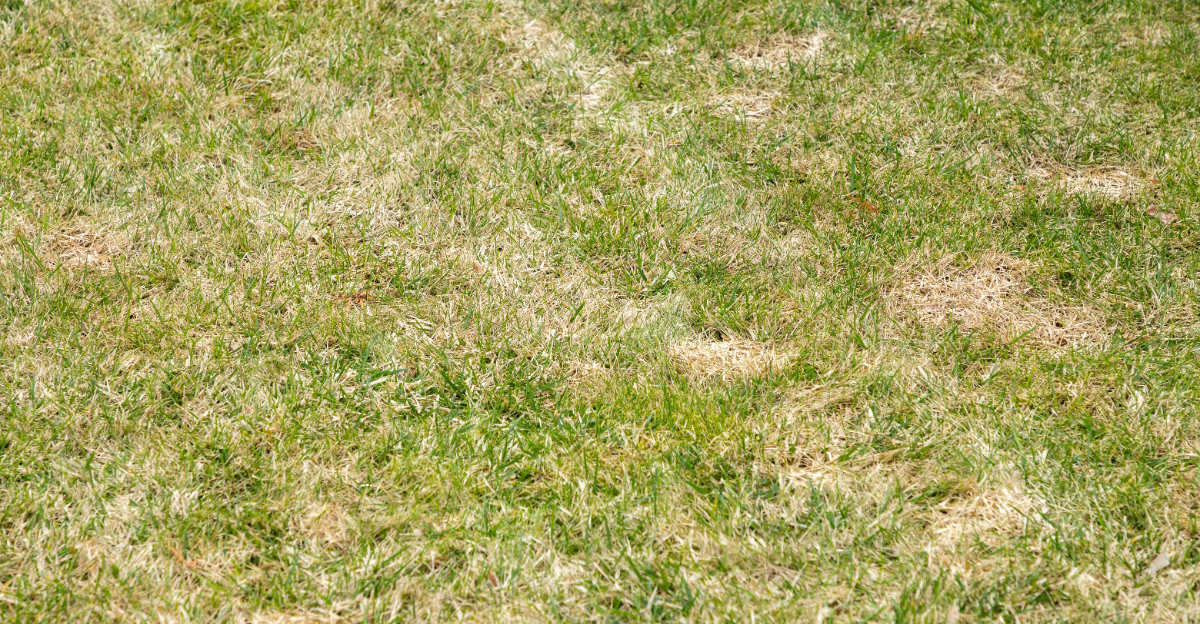
Many lawns look perfectly healthy after a good stretch of rain. The grass greens up, growth speeds along, and everything seems to be moving in the right direction.
Then, almost without warning, yellow patches begin showing up in different parts of the yard. It can be confusing when the lawn has received plenty of water and still starts looking stressed.
Some homeowners assume the problem will disappear once the weather changes, while others worry the grass may be beyond saving.
The truth is that extended rainfall can create several conditions that affect lawn health, and the signs are not always immediate.
What starts below the surface can take days or even weeks to become visible.
For many people in Georgia, yellow patches become a frustrating sight during the summer rainy season. The good news is that the color change does not always point to a serious problem.
Understanding what is causing those patches is the first step toward helping the lawn recover and preventing the issue from spreading further.
1. Saturated Soil Can Reduce Oxygen Around Grass Roots
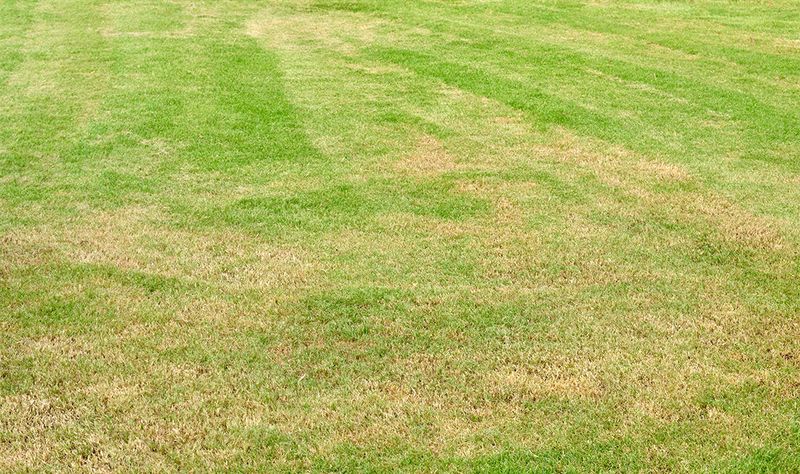
Roots need air just as much as they need water. When rain falls day after day, soil pores fill completely with water and oxygen gets squeezed out.
Grass roots in that environment cannot function properly.
Clay-heavy soils common across many Georgia yards make this problem worse. Clay holds water tightly and drains slowly.
After even a few days of steady rain, the ground can stay saturated for much longer than sandy soils would.
Without oxygen, roots struggle to absorb nutrients. Grass blades start turning yellow because the plant cannot move energy efficiently through a stressed root system.
It looks like a watering problem, but the real issue is the opposite.
Pulling a small plug of soil and checking how wet it feels can tell you a lot. If water drips from it easily, the ground is still too saturated for the roots to recover.
Patience matters here.
Avoid walking on saturated areas. Foot traffic compacts wet soil further, making the oxygen problem even worse.
Give the lawn space to breathe as conditions dry out naturally.
Recovery often begins within a few days once the soil starts to drain and air returns to the root zone.
2. Check Low Areas Where Water Collects After Rain
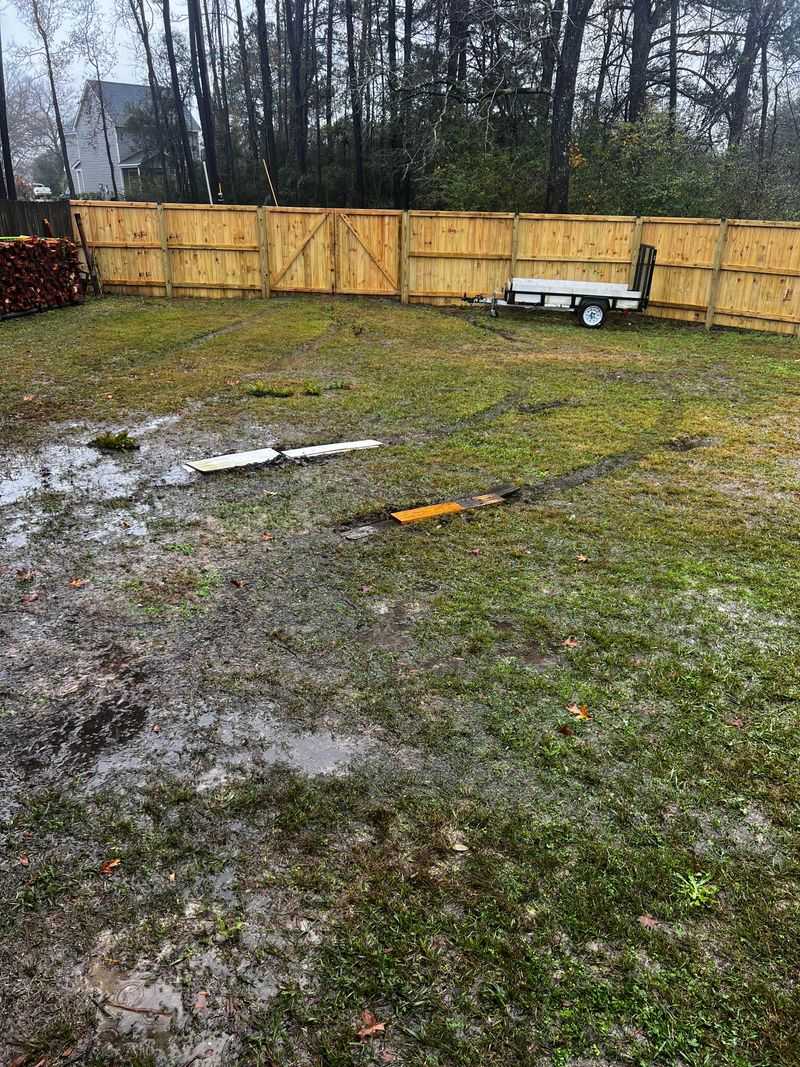
Not every part of a yard drains at the same speed. Low spots collect runoff from surrounding areas and hold water far longer than higher ground nearby.
Grass sitting in those pockets takes the hardest hit after extended rain.
Walk your yard within an hour after a heavy storm. Spots where water still pools visibly are the areas most likely to show yellow patches within days.
Mapping those zones helps you understand where problems will repeat season after season.
Bermuda and Zoysia, two grasses common in this region, handle short wet periods reasonably well. But even tough warm-season grasses will yellow when roots stay submerged for multiple days straight.
Low areas near downspouts or fence lines are frequent trouble spots. Water funnels toward them from multiple directions during storms.
Your Georgia Garden Changes Every Week. Your Plan Should Too.
Gardening in Georgia changes quickly throughout the season. Every Friday you’ll receive a simple weekly plan showing exactly what to plant, prune, fertilize, harvest, and protect so you never miss the right timing.
Identifying those patterns early lets you plan fixes before the next rainy stretch hits.
Sometimes regrading a small section of the yard is the most practical long-term solution. Adding topsoil to raise a low spot slightly can redirect water flow away from the grass.
Even a one or two inch grade change makes a real difference in how quickly water moves off the surface after rain stops.
3. Stop Watering Until The Soil Begins To Dry
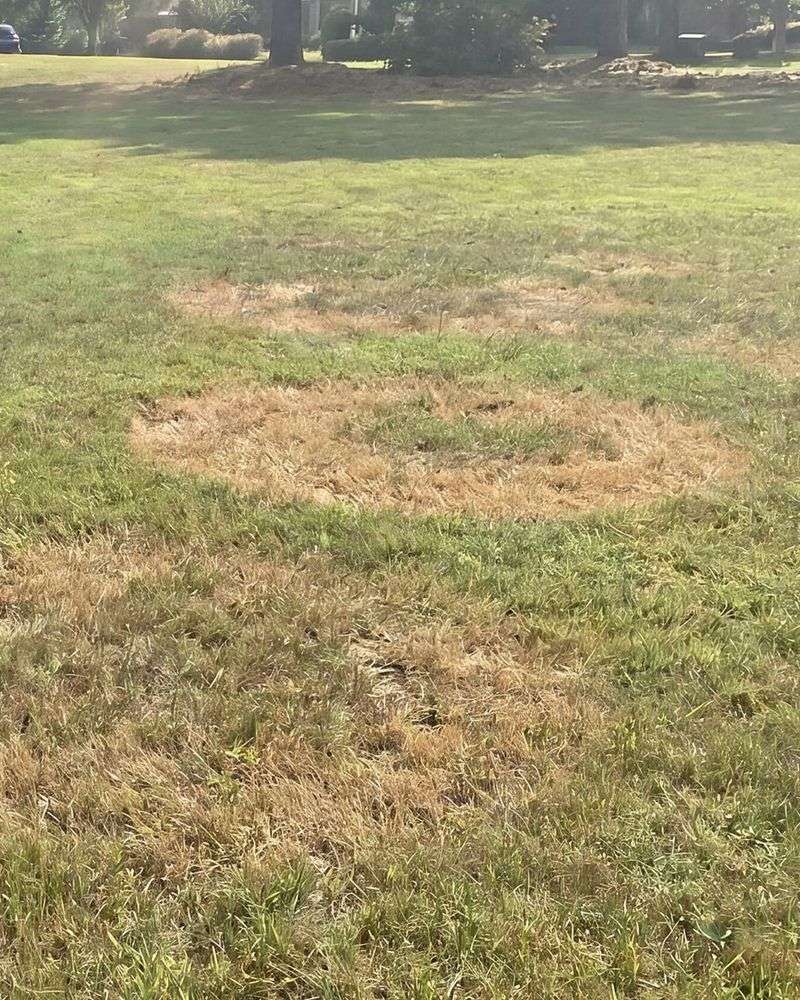
Irrigation systems set on automatic schedules do not know when it has been raining for a week straight. Sprinklers running on top of already soaked ground push moisture levels well beyond what grass can handle.
Shutting the system off is one of the simplest fixes available.
Many homeowners underestimate how long soil stays wet after extended rain. Even when the surface looks dry, a few inches down the ground can still be saturated.
Adding more water before that moisture clears out keeps roots in a stressful environment.
A basic soil moisture meter costs very little and takes the guesswork out of the decision. Push it into the ground in a few spots around the yard.
If readings stay high, hold off watering regardless of what the calendar says.
Rain sensors attached to irrigation controllers are worth installing if the system does not already have one. They pause scheduled watering automatically when rainfall reaches a set threshold.
It is a straightforward upgrade that prevents overwatering without requiring daily attention.
Once the soil begins to dry to a reasonable depth, resume watering only in the early morning hours. Morning watering gives grass time to dry before nighttime, which also reduces the chance of fungal issues developing on already stressed turf.
Timing matters as much as volume when recovering from a wet stretch.
4. Look For Fungal Diseases After Extended Wet Weather
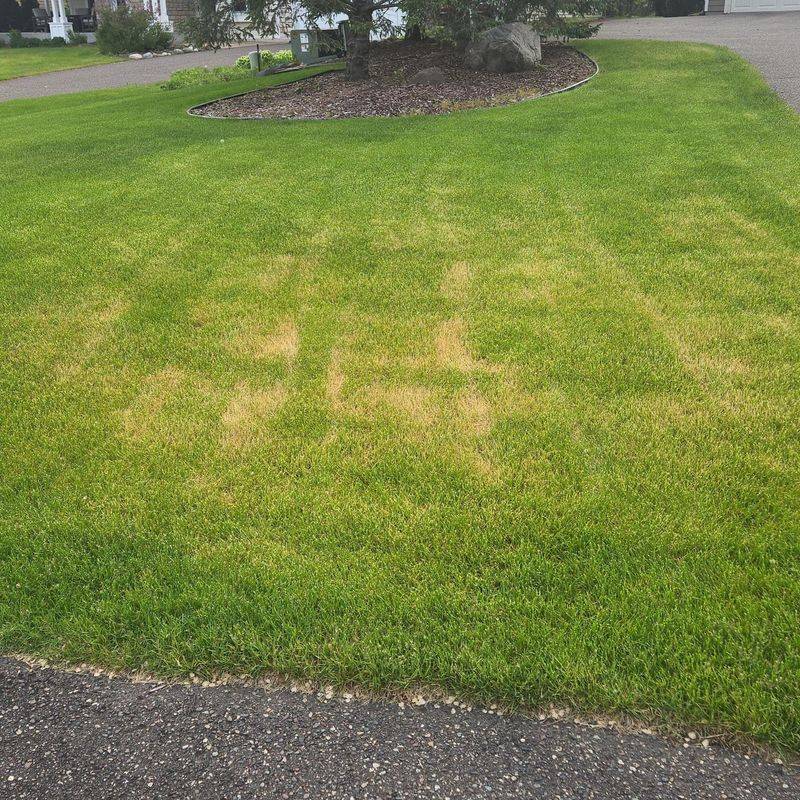
Warm temperatures combined with days of rain create near-perfect conditions for lawn fungus.
Brown patch, dollar spot, and pythium blight are among the most common diseases that flare up across lawns during Georgia summers after prolonged wet spells.
Brown patch typically shows up as irregular circular areas where grass turns yellow or tan from the outside edges inward.
Early morning is the best time to inspect because fungal threads called mycelium are sometimes visible on wet grass blades before the sun dries them off.
Dollar spot leaves smaller, silver-dollar-sized patches scattered across the turf. Each patch may seem minor at first, but they spread quickly in humid conditions if nothing is done.
Catching it early makes treatment far more manageable.
Fungicides labeled for the specific disease can help, but accurate identification matters before applying anything. Using the wrong product wastes money and time.
Local cooperative extension offices often offer free or low-cost identification help if you bring in a sample or clear photos.
Cultural habits also play a big role in prevention. Avoid evening watering, reduce nitrogen fertilizer during wet periods, and mow at the right height for your grass type.
5. Improve Drainage In Areas That Stay Saturated
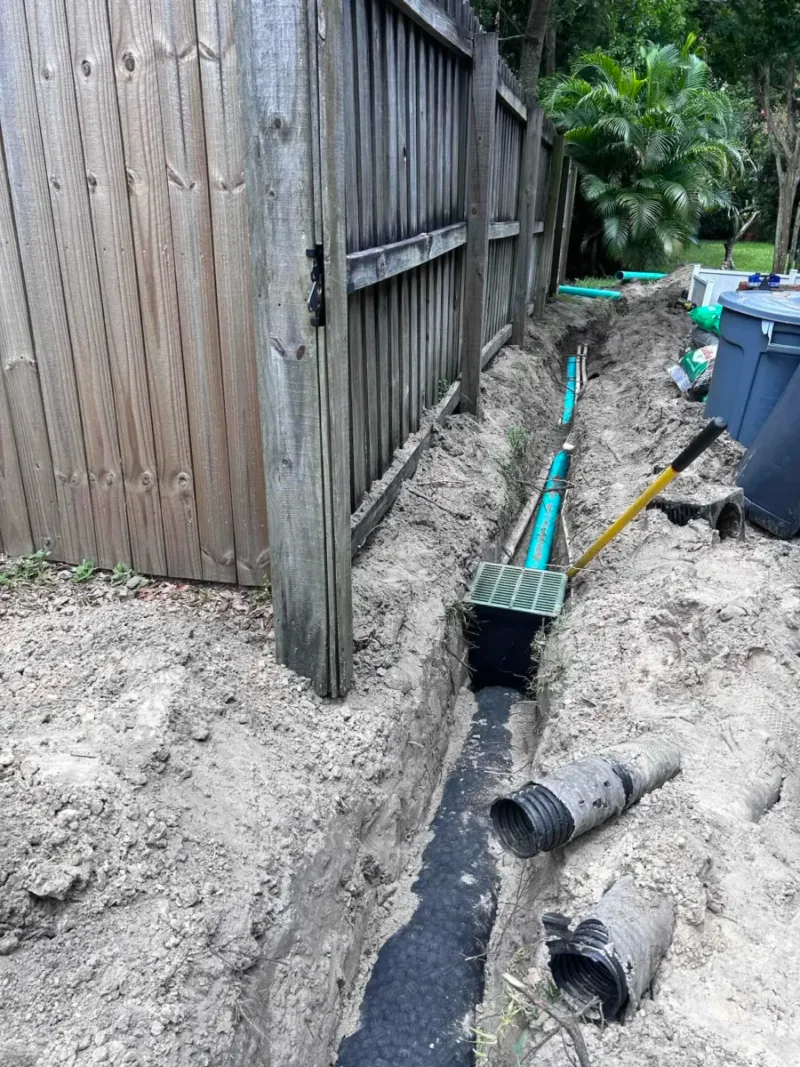
Some yards drain poorly no matter how careful the watering schedule is. Heavy clay soils, compacted ground, or poorly graded lots all contribute to water sitting where it should not.
Improving drainage is a longer-term fix, but it pays off across every future rainy season.
Core aeration is one of the more accessible options for most homeowners. Pulling small plugs of soil from the lawn opens channels that allow water to move downward more efficiently.
Aerating in late summer or early fall gives clay soils a chance to loosen before the next wet period arrives.
French drains offer a more substantial solution for persistently wet zones. A perforated pipe buried in a gravel-filled trench redirects subsurface water away from problem areas toward a more suitable outlet.
Installation takes some effort, but the results are often dramatic in yards that have struggled for years.
Topdressing with a sand and compost mix after aeration can also help break up clay over time. Repeated applications gradually shift the soil structure toward something that drains better.
Improvement happens slowly, but the direction is consistent with each treatment.
Raised planting beds or berms are another option for areas that simply cannot drain well.
6. Remove Excess Thatch That Holds Moisture Near Soil
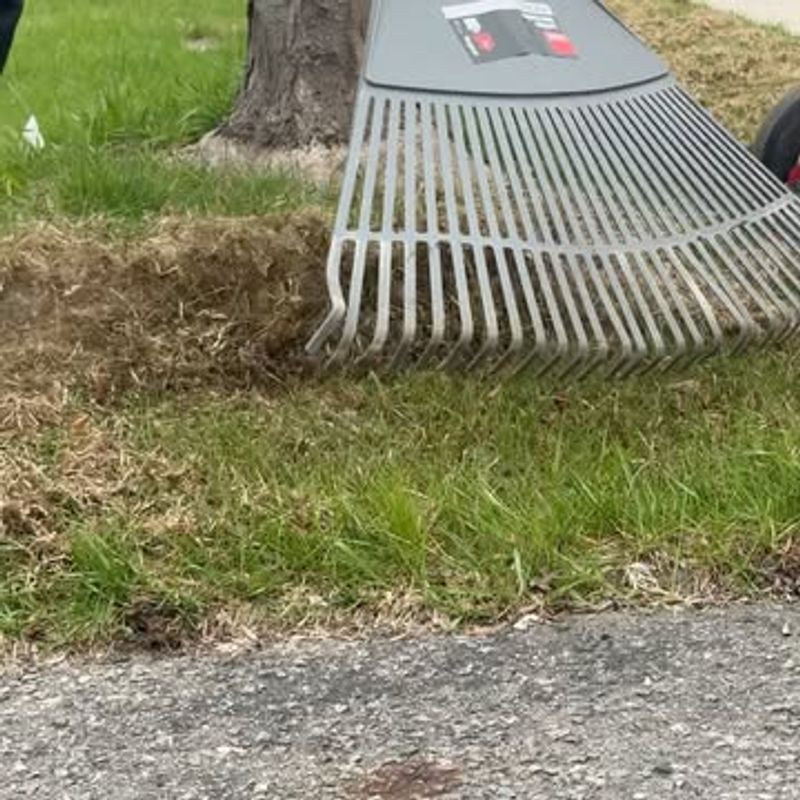
Thatch is the layer of stems, roots, and organic material that builds up between grass blades and the soil surface. A thin layer is harmless and even helpful.
A thick layer becomes a sponge that traps moisture directly against the crown of the grass plant.
After extended rain, a heavy thatch layer stays wet for days longer than exposed soil would. Grass crowns sitting in that constant moisture become vulnerable to rot and fungal pressure.
Yellow patches often trace back to thatch problems that go unnoticed until a wet stretch exposes them.
Checking thatch thickness is easy. Push a finger or a pencil down through the grass to the soil.
Anything over about half an inch of spongy brown material is worth addressing. Thicker than three-quarters of an inch and it is actively working against the lawn’s health.
Dethatching with a rake or a power dethatcher removes the excess material and opens the surface to better airflow and drainage. Late summer into early fall is a good window for warm-season grasses common across this region.
Timing the job right gives grass time to recover before cooler weather arrives.
After dethatching, follow up with aeration if the soil is also compacted. Combining both steps in the same season produces noticeably better results than doing either one alone.
7. Repair Damaged Areas Once Conditions Improve
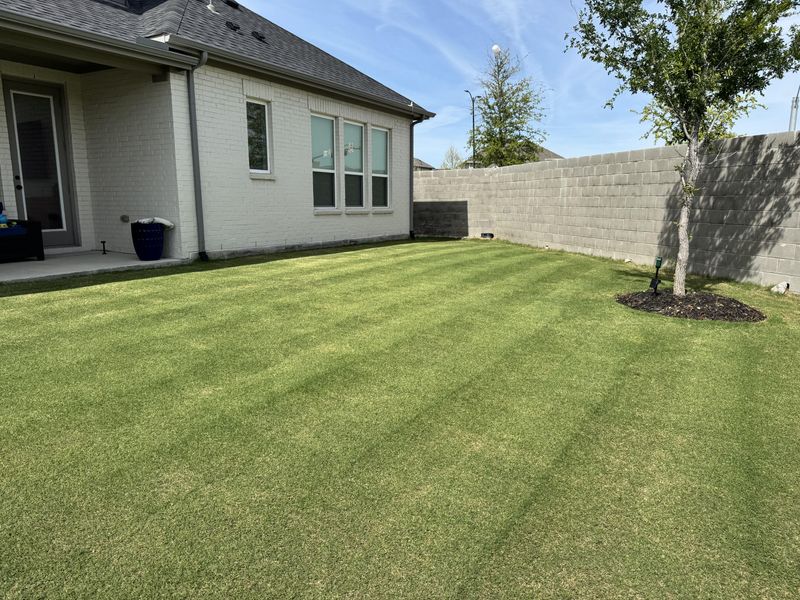
Waiting for the right moment to repair matters just as much as knowing how to do it. Reseeding or patching yellow areas while the soil is still saturated sets the repair up to fail.
Dry conditions need to return first before putting any effort into restoration.
Once the lawn has had time to drain and the weather stabilizes, assess which areas recovered on their own and which ones need hands-on help. Grass that greens back up after a week of dry weather was temporarily stressed.
Spots that stay yellow or bare likely need reseeding or plugging.
For warm-season grasses like Bermuda or Zoysia, sodding or plugging often works faster than seeding. Plugs establish quickly in warm soil and spread to fill gaps within a few weeks under good conditions.
Seeding is slower but more economical for larger damaged areas.
Lightly rake bare spots to loosen the surface before adding seed or plugs. Firm contact between the seed and soil is critical for germination.
Cover lightly with straw or a thin layer of compost to hold moisture without smothering the new growth.
Keep repaired areas consistently moist but not soaked during the first two weeks. Once new growth appears, gradually shift to a normal watering schedule.