9 Container Plants That Never Need Trimming In California
Two patios sit on the same sunny California street, and one owner spends every weekend outside with shears, clipping stems back into shape.
The other patio never needs any of that. A row of pots looks neat all year, and the owner just waters occasionally and sips lemonade without a single trim.
The secret has nothing to do with skill or luck. Certain plants grow slowly or hold a natural, self-contained shape from the moment they’re planted, and that structure never really changes.
Curious which specific plants pull off a permanently tidy look with zero pruning involved? The answer starts with leaves stiff enough to stand at attention forever.
1. Snake Plant Keeps Its Shape On Its Own
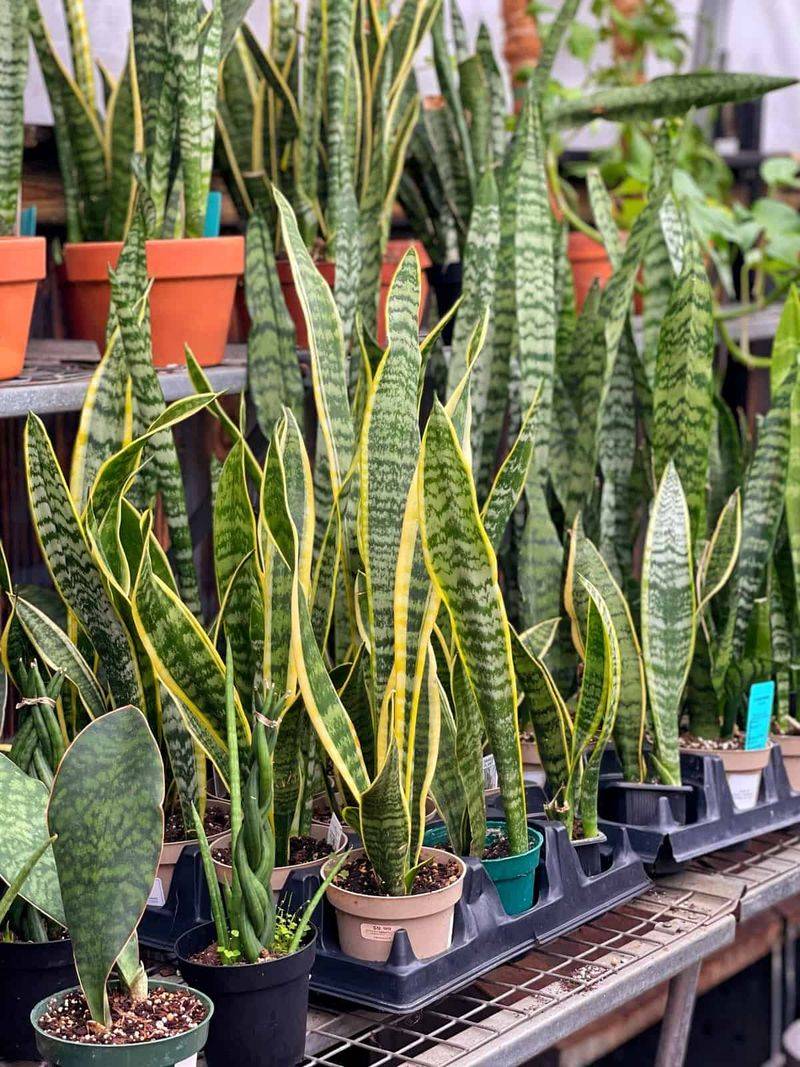
Stiff as a row of green swords, snake plant leaves shoot straight up from the soil and stay that way.
You will never find this plant sprawling across your patio or flopping over the edge of its pot. Its whole growth plan is simple: send up new leaves from underground stems called rhizomes, one at a time.
Because every leaf grows upward from the base, the plant never gets long, messy branches that need cutting.
New leaves just appear beside the old ones, making the clump a little fuller each year. The shape you buy is pretty much the shape you keep, only thicker.
Snake plants, now often listed by scientists as Dracaena trifasciata, come from dry parts of West Africa.
That background makes them a great match for California, where water can be precious. Let the soil dry out completely between waterings, and water even less in winter.
Here’s a smart tip for coastal and inland gardeners alike.
Keep the pot in bright shade or morning sun outdoors, since harsh afternoon heat in places like the Central Valley can scorch the leaves. Bring it inside if frost is expected.
The only cutting you might ever do is removing a leaf that gets damaged. That’s cleanup, not shaping.
2. ZZ Plant Grows Slowly And Neatly
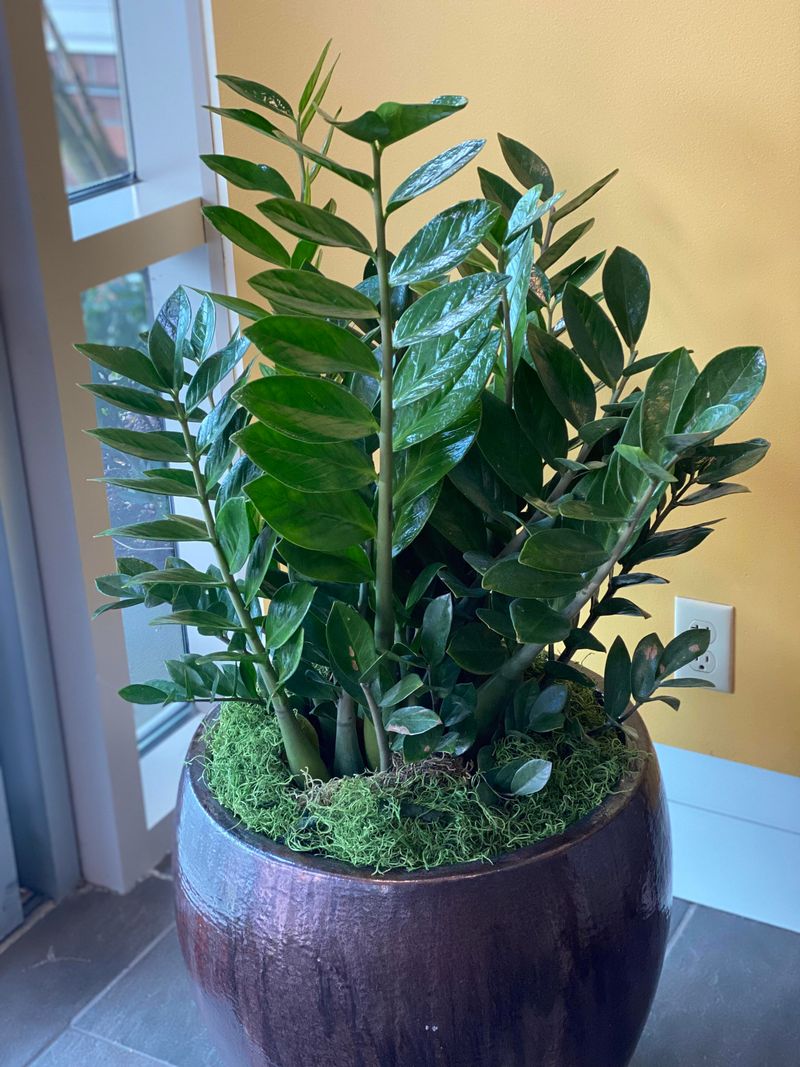
Some plants race. The ZZ plant strolls. Its full name is Zamioculcas zamiifolia, and it’s famous for how slowly it adds new growth.
Each stem rises from a thick, potato-like rhizome under the soil.
The glossy leaflets line up along the stem in neat pairs, like the rungs of a ladder. Since new stems come from below instead of stretching out from the tips, the plant stays tidy on its own.
Those swollen rhizomes store water, which lets a ZZ handle long dry spells.
That’s good news for busy people and for water-wise California homes. Overwatering is the biggest danger, so wait until the soil is fully dry before giving it a drink.
Outdoors, a ZZ likes shade, such as a covered porch or a north-facing balcony in San Diego.
Direct sun can yellow its shiny leaves. Keep it protected from frost, since it’s a tropical plant from eastern Africa.
You might get one or two new stems a season, which means a pot can go years before it feels crowded.
Your California Garden Changes Every Week. Your Plan Should Too.
Gardening in California changes quickly throughout the season. Every Friday you’ll receive a simple weekly plan showing exactly what to plant, prune, fertilize, harvest, and protect so you never miss the right timing.
When it finally does, divide the rhizomes instead of trimming.
3. Haworthia Stays Compact Without Any Help
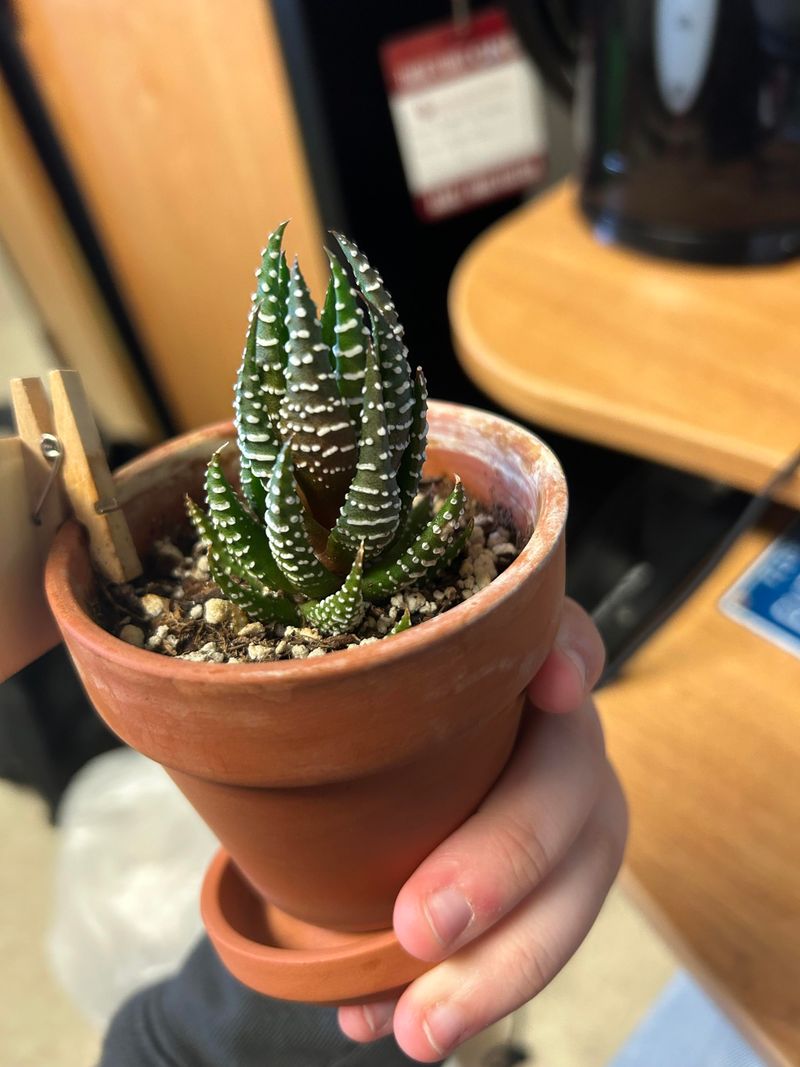
Tiny, tough, and striped like a zebra, haworthia is the pocket-sized hero of the succulent world.
Most kinds stay just a few inches tall for their whole lives. You could fit one in a coffee mug and it would be happy for years.
Haworthias grow as small rosettes, which are circles of thick leaves spreading out from one center point.
As the plant matures, it makes little offsets, or pups, around its base. Instead of growing taller or wider in a messy way, it forms a snug cluster.
That built-in size limit is exactly why shears are never needed.
Nothing gets long, leggy, or out of balance. The plant already knows how big it should be.
In their South African home, many haworthias grow tucked under shrubs or rocks, away from full sun.
So in California, give them bright light but shield them from blazing afternoon rays, especially in Sacramento or Palm Springs. Leaves that turn reddish are a sign of too much sun.
Want more plants for free? Gently pull off a pup with some roots attached and pot it up.
4. Echeveria Holds Its Rosette Form Naturally
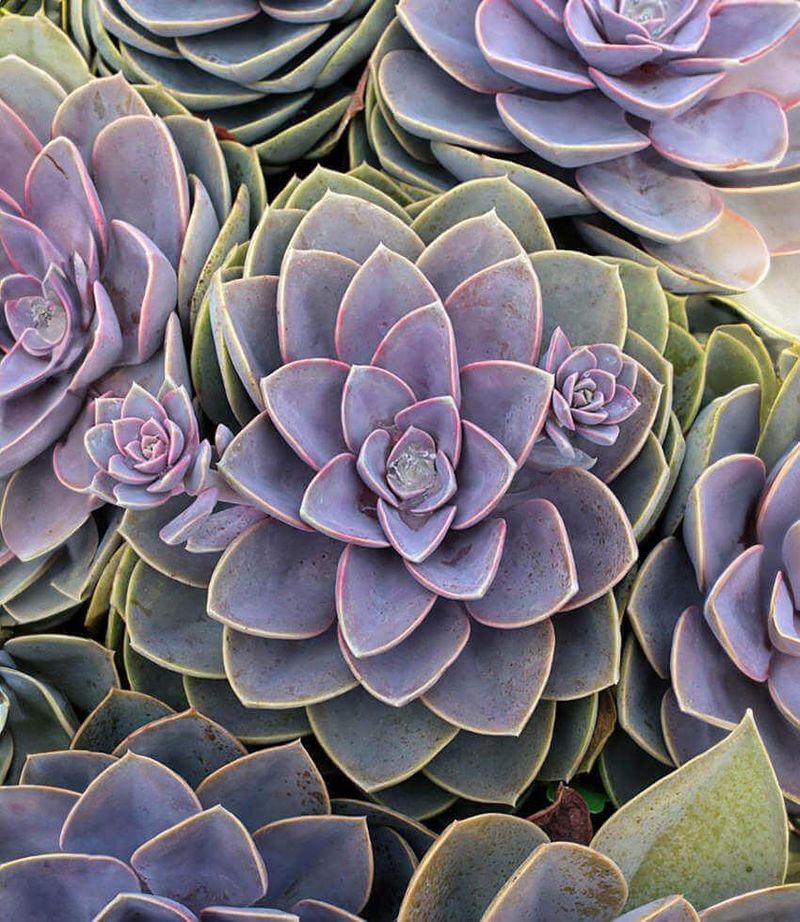
Ever seen a plant that looks like a stone flower? That’s echeveria. Its fleshy leaves spiral out in a perfect rosette, and many gardeners say it looks almost too neat to be real.
The rosette is a fixed growth pattern.
New leaves form in the center, while older ones slowly sit lower on the outside. The plant keeps its round, flat shape instead of branching out in odd directions.
Echeverias come from Mexico and Central America, which explains why they feel right at home in sunny California.
They love bright light and fast-draining soil. A shallow bowl with a drainage hole and cactus mix works wonderfully.
One honest note: if an echeveria gets too little light, it can stretch and lean toward the sun.
Growers call this etiolation. That’s a light problem, not a trimming problem, so move the pot to a brighter spot.
Water when the soil is dry to the touch, soaking it fully, then waiting again.
Over time, echeverias send out small pups around the base, and old bottom leaves can be gently pulled off by hand.
5. Jade Plant Branches Without Guidance
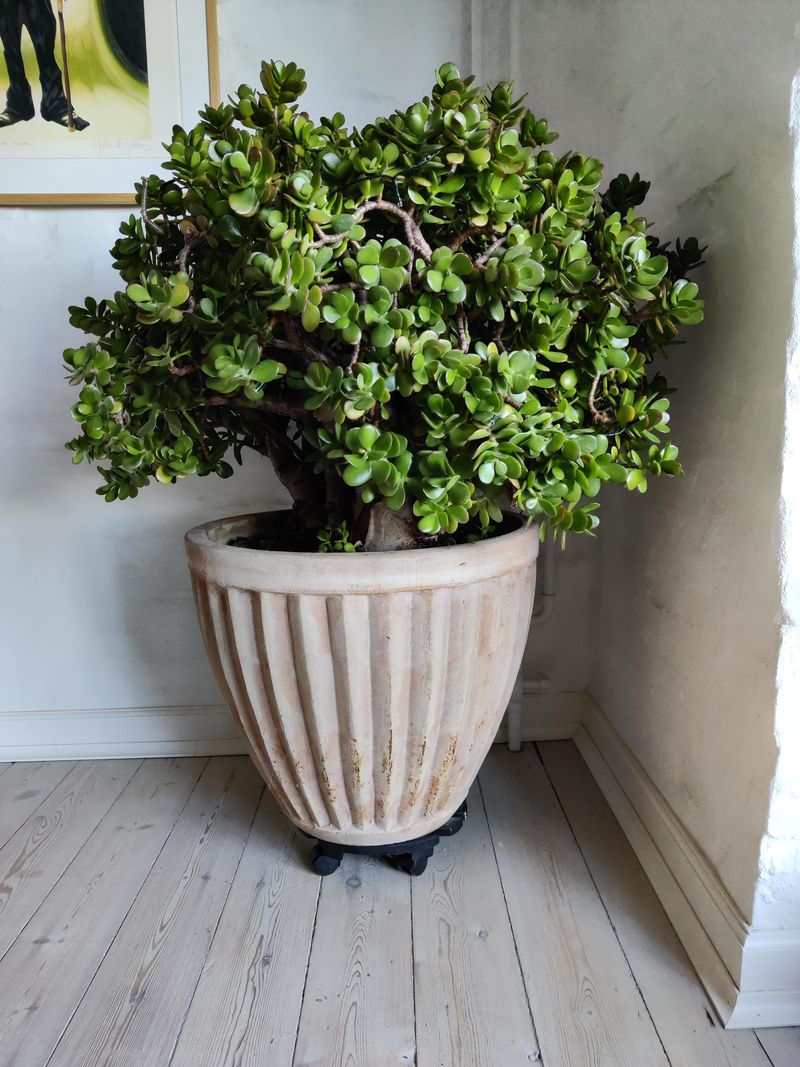
Grandma probably had one. Jade plants are a classic in California homes, and some are passed down through families for decades.
Their thick trunks and round, shiny leaves give them the look of a tiny tree.
Crassula ovata, as scientists call it, grows slowly and forms sturdy branches on its own.
As stems thicken and split, the plant naturally builds a balanced, bushy shape. That’s why many people never touch their jade with shears and still end up with a handsome little tree.
Some gardeners do prune jade to create a bonsai look, but that’s a style choice.
The plant does not need it to stay healthy or attractive. Left alone in good light, it keeps a compact, rounded form.
Light is the key.
Jade loves sun, and along the coast it can take full sun outdoors. Inland, give it some afternoon shade in summer so the leaves do not burn.
Water deeply only when the soil has dried out, and cut back in winter.
Fun fact: jade is sometimes called the money plant, and a single fallen leaf can even root into a new plant.
6. Aloe Vera Needs No Shaping At All
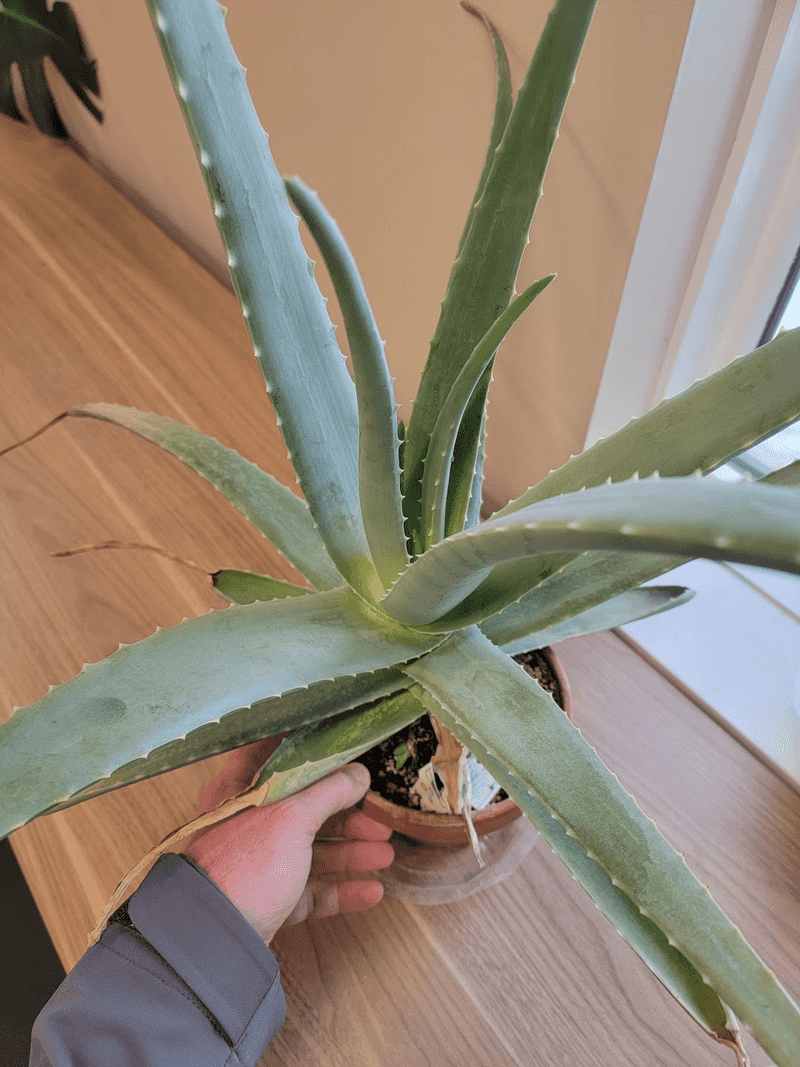
Sunburned after a day at Huntington Beach? Many families keep an aloe vera pot handy for just that reason.
Its thick, juicy leaves hold a clear gel people have used for soothing skin for centuries.
Beyond being useful, aloe vera is wonderfully self-contained.
The leaves grow from a central base in a rosette, pointing up and outward. Instead of sending out long stems, the plant spreads by making pups around the edges.
This clumping habit means the plant gets fuller, not messier.
There are no branches to cut back and no shape to fix. If the pot gets crowded, you can simply lift out the pups and give them their own containers.
Aloe vera thrives in bright light and handles California heat well once settled.
In very hot inland areas, a bit of afternoon shade keeps the leaves plump and green instead of reddish.
Let the soil dry out between waterings, since soggy roots are the main thing that harms aloe.
If you harvest a leaf for its gel, cut it near the base. That’s picking, not trimming for looks.
7. Ponytail Palm Grows At Its Own Steady Pace
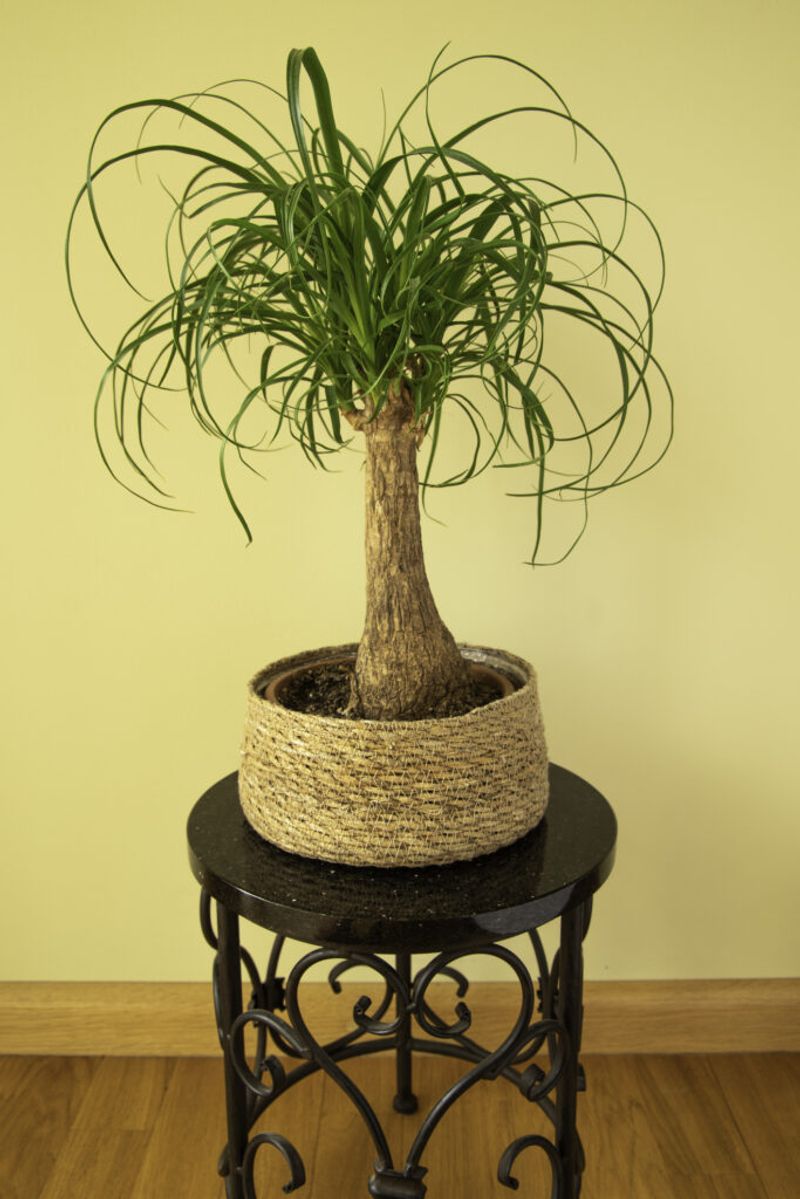
A giant onion wearing a messy hairdo pretty much describes the ponytail palm. Its swollen trunk base stores water, and a fountain of thin, curly leaves spills out of the top.
Here’s a surprise: it’s not actually a palm.
Beaucarnea recurvata is related to agaves and yuccas and comes from dry parts of eastern Mexico. Like its desert cousins, it grows slowly and on a predictable schedule.
In a container, a ponytail palm may take many years to gain just a few feet of height.
Growth happens from a single top point, so the plant keeps the same fun silhouette as it ages, with nothing to cut or reshape.
Keeping it in a snug pot actually helps slow it down even more. It does not mind being a bit root-bound.
Give it plenty of sun, which suits most of California nicely.
Water deeply, then wait until the soil is dry, because that bulb holds a lot of reserve moisture.
Sometimes leaf tips turn brown, often from dry air, but that’s optional cleanup, not real trimming.
8. Cast Iron Plant Simply Fills In Quietly
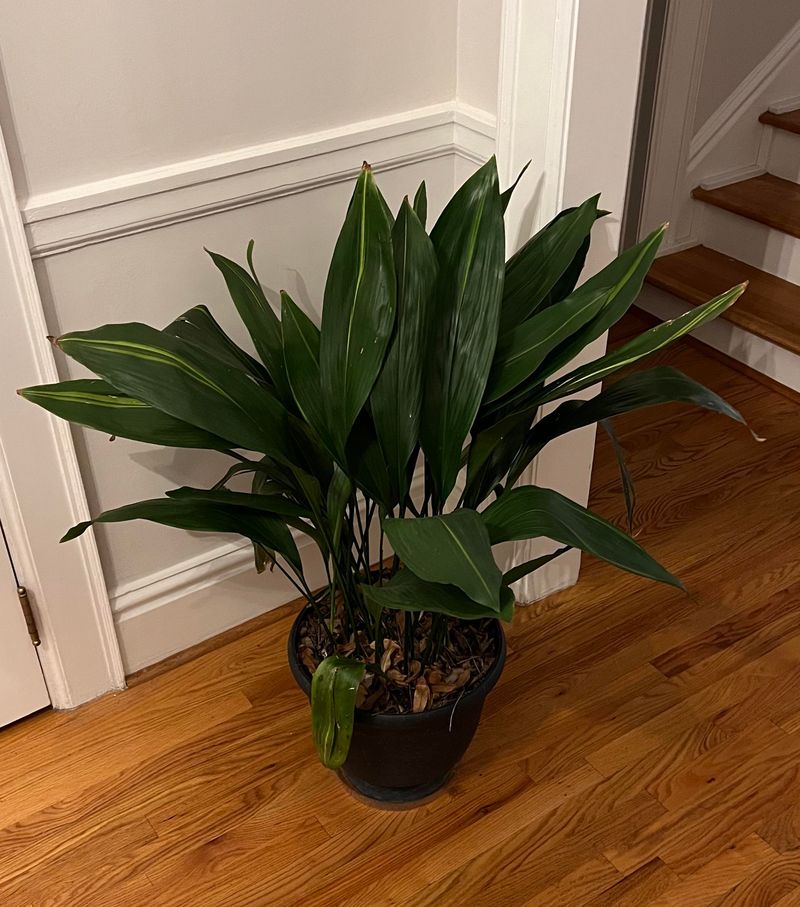
Deep shade, forgotten waterings, chilly nights. Cast iron plant shrugs all of it off, which is how it earned such a tough name.
Victorian families kept it in dim parlors because almost nothing else would survive there.
Aspidistra elatior grows from creeping rhizomes just under the soil.
Each broad, dark green leaf rises on its own stalk straight from the ground. Over time, new leaves pop up nearby, and the clump slowly gets wider and fuller.
The key word is slowly.
You might see only a handful of new leaves each year. Since there are no branches or vines, the plant keeps a neat, upright fountain of foliage without any shaping.
For California container gardens, this is the plant for your shadiest spots.
Think of a north-facing courtyard in San Francisco or under a covered entry in Pasadena. Direct sun will bleach or burn the leaves.
Water when the top inch or two of soil feels dry, and once in a while, pull out an old leaf that turns brown.
9. Air Plants Skip Soil And Trimming Entirely
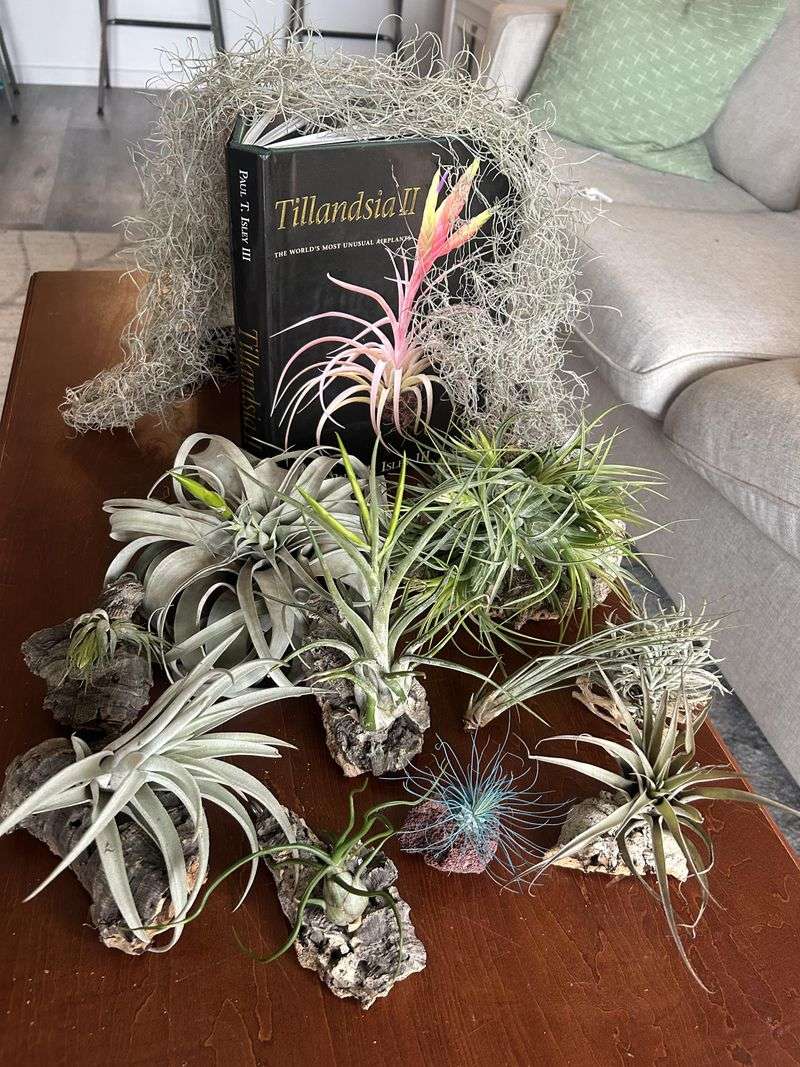
No pot, no dirt, no problem. Air plants, known scientifically as Tillandsia, grow without any soil at all.
In nature, they cling to trees and rocks in parts of the Americas, soaking up water through tiny scales on their leaves.
Because they have no soil to fuel big growth spurts, air plants grow slowly and stay small.
Most form a tight rosette or a spiky tuft that looks the same month after month. There are no stems to stretch out and nothing to shape.
Many will bloom once in their life, often with bright pink or purple flowers.
After that, the mother plant makes pups and slowly fades, keeping the display going without a single snip.
Care is easy but different.
Soak or mist them regularly, and give them bright, indirect light. Dry California air, especially inland, means they may need water more often.
You can set them on driftwood, in shells, or in open glass globes, just avoid closed containers that trap moisture.