8 Tiny California Yard Ideas That Bring Big Oasis Energy
A small yard is not the problem. A small imagination is. California gardeners with the tiniest patios, the narrowest side strips, and the most awkward sun exposure have figured something out that changes how the whole space feels. Their yards look like retreats.
The secret is not a big budget or a landscape designer. It comes down to plant selection, and knowing which plants do the most work in the least amount of space.
California has a remarkable advantage here. The range of microclimates across the state means there are water-wise, wildlife-friendly plants that perform beautifully in almost any small spot.
The right plant in the right container can completely transform how a space feels. Not eventually.
Within almost a single growing season. What makes a tiny yard feel like a genuine oasis is more specific than you might think.
1. Pot California Fuchsia For Hummingbird Drama
A tiny patio can still run a hummingbird show. California fuchsia knows how to deliver one.
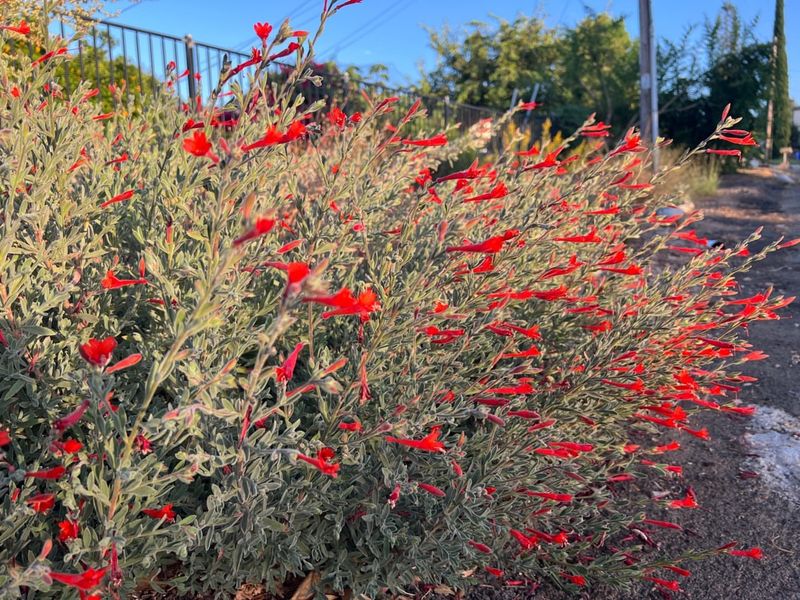
Epilobium canum produces vivid red-orange tubular flowers that hummingbirds find genuinely hard to pass up.
The blooms arrive in late summer and carry through fall, right when most other container plants are winding down. That timing is the real advantage in a small space, right?
A single pot near a seating area can pull hummingbird activity close enough to watch over morning coffee without any special effort.
However, the fall bloom window matters more than people realize. September is when many patio colors quietly give up. California fuchsia is just getting started.
Containers work well for this plant, but drainage is non-negotiable. A pot with at least one large drainage hole and a fast-draining mix are the baseline requirements.
Container soil dries out faster than garden beds, so moisture checks during hot spells are worth building into the routine.
Full sun is where it performs best. A south-facing or west-facing wall creates exactly the warm microclimate this plant prefers.
Compact cultivars like Catalina or Select Mattole tend to stay tidier in pots and need less management through the season. A light cutback after bloom keeps the shape clean and sets up fresh growth for the following year.
For a small space that needs maximum wildlife energy with minimal square footage, this plant punches well above its pot size.
2. Tuck Yarrow Into Sunny Corners For Soft Color
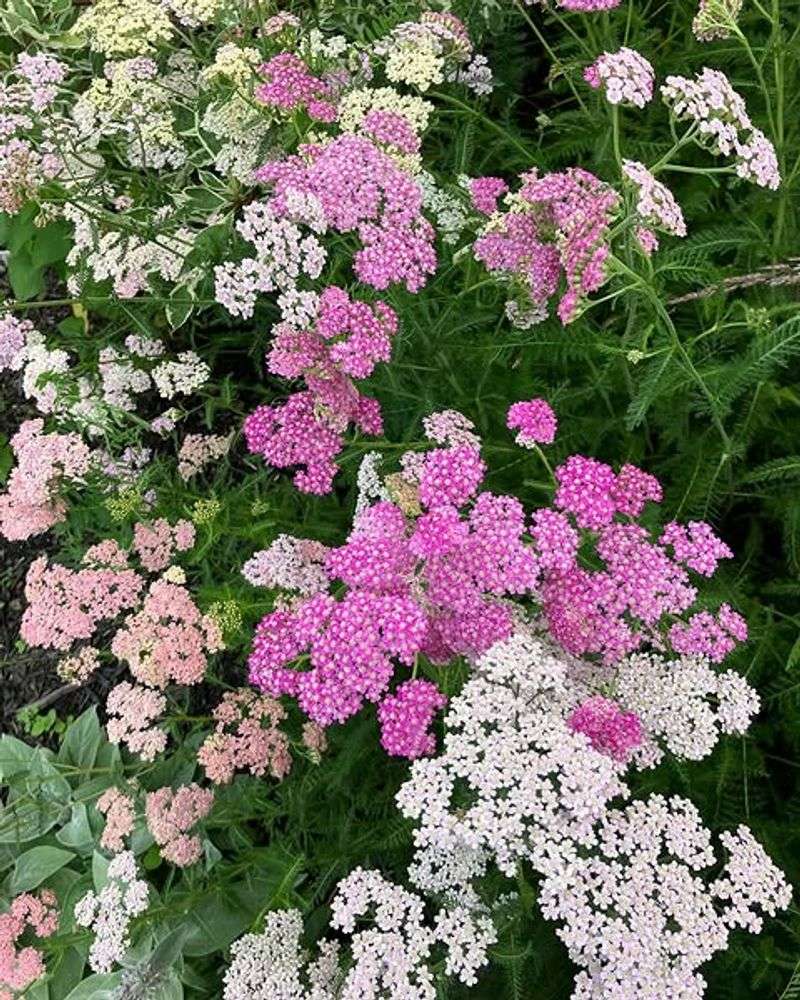
A sunny corner with nothing in it is a missed opportunity. Yarrow has an opinion about that.
Achillea millefolium brings flat-topped flower clusters in white, yellow, pink, and red to spots that would challenge many other perennials. The look is soft and cottage-garden friendly, but the plant itself is considerably tougher than it appears.
Dry soil, lean conditions, and relentless California sun are not obstacles for yarrow. They are practically the job description.
The feathery, fern-like foliage earns its keep even between bloom cycles. The soft gray-green texture adds layering to a compact bed or corner that makes the space feel more considered.
It fills in without getting pushy, which is a genuinely rare quality in a plant that performs this reliably.
Your California Garden Changes Every Week. Your Plan Should Too.
Gardening in California changes quickly throughout the season. Every Friday you’ll receive a simple weekly plan showing exactly what to plant, prune, fertilize, harvest, and protect so you never miss the right timing.
Full sun and good drainage are the two things it asks for consistently. Yarrow in heavy clay or shaded spots tends to flop and look sorry for itself.
Trimming spent flowers encourages a second round of blooms and keeps the plant looking sharp rather than spent. It can self-seed and spread, which suits relaxed naturalistic plantings but may need managing in tighter spaces.
For compact corners, shorter cultivars are worth seeking out. Moonshine stays around eighteen inches and holds its soft yellow color particularly well.
Pair it with buckwheat or coyote mint for a water-wise corner planting that earns its place all season long.
3. Use Coyote Mint To Turn Small Paths Fragrant
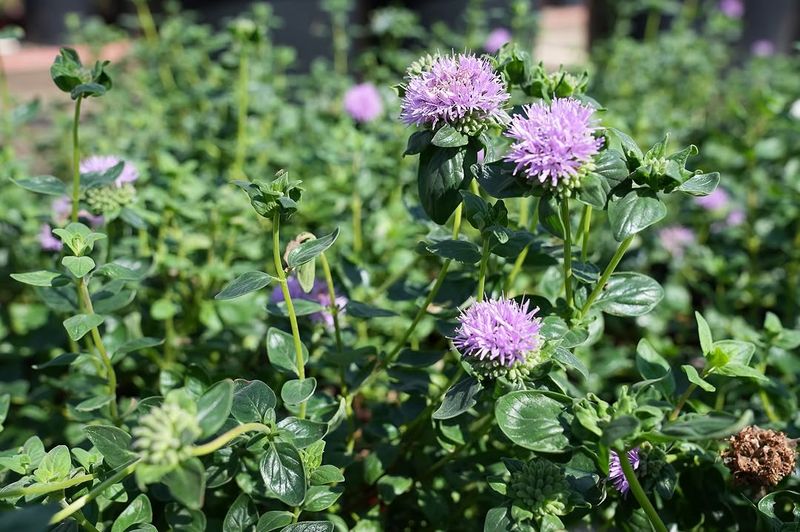
Brush past the right plant and a path suddenly feels intentional. Coyote mint is that plant.
Monardella villosa is a compact California native that releases a sharp, clean minty fragrance whenever leaves are touched or grazed.
It is the kind of sensory detail that turns an ordinary route through a small yard into something that actually feels designed. No expensive hardscape required. Just the right plant in the right spot.
Planted along a stepping stone path, near a seating area, or tucked at the edge of a patio, coyote mint does something many plants can’t.
It engages multiple senses at once. The fragrance does the heavy lifting, but the purple to lavender flower clusters that appear in summer add a visual layer that brings the whole picture together.
The pollinator activity around those blooms is impressive for such a compact plant. Bees and butterflies arrive in numbers that feel almost disproportionate to the size of the mound.
That motion and buzz adds life to a tiny yard without requiring anything extra from the gardener.
However, good drainage is a genuine requirement. This plant is adapted to rocky and sandy soils and can struggle in heavy clay or spots that stay wet after irrigation. Full sun brings out the best growth and the strongest fragrance.
After bloom, a light trim keeps the mound shape tidy and may encourage a second round of flowers.
It typically stays under two feet, which makes it easy to tuck near path edges, container groupings, or low borders without crowding anything nearby. Small plant, outsized personality.
4. Plant Valley Violet Ceanothus For Compact Blue Blooms
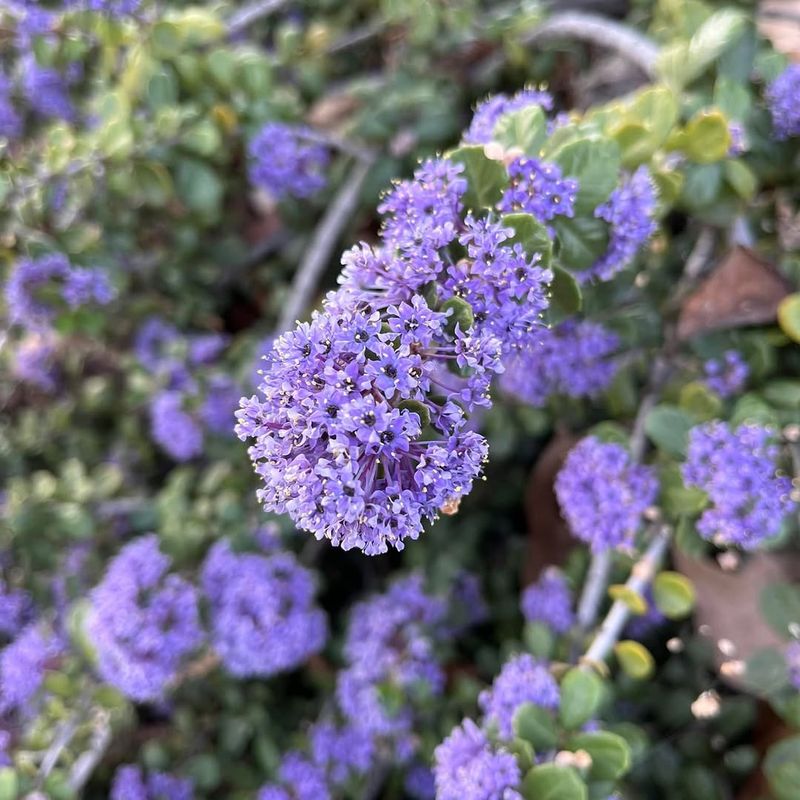
Blue flowers in a small yard do something interesting. They make the space feel cooler and larger at the same time.
Valley Violet ceanothus delivers that effect with real confidence. This cultivar of California lilac produces deep blue-violet flower clusters in spring with a more restrained growth habit than many of its sprawling relatives.
For a small yard that needs structure and seasonal drama without a plant that eventually takes over, it is a genuinely useful option.
Honest spacing matters here. Valley Violet can reach four to six feet wide at maturity under good conditions.
Cramming it into a two-foot gap creates a problem that takes several seasons to fully reveal itself. By then, the plant is established, and the situation is inconvenient to undo.
Given appropriate room along a fence line, a low wall, or as a corner anchor, it delivers. The spring bloom is dense and genuinely eye-catching.
The evergreen foliage holds its good looks after the flowers fade, which matters in a small space where bare or ragged patches are hard to overlook.
Full sun and excellent drainage are the two conditions it needs most. Ceanothus is notably sensitive to summer irrigation once established, and overwatering is one of the most reliable ways to cause problems.
Water regularly through the first couple of dry seasons while roots develop, then pull back significantly. Avoid spots with regular overhead watering or lawn irrigation nearby.
With proper siting and honest spacing, Valley Violet can anchor a small yard with a year-round structure. Easy as that.
5. Let California Buckwheat Bring Pollinator Buzz
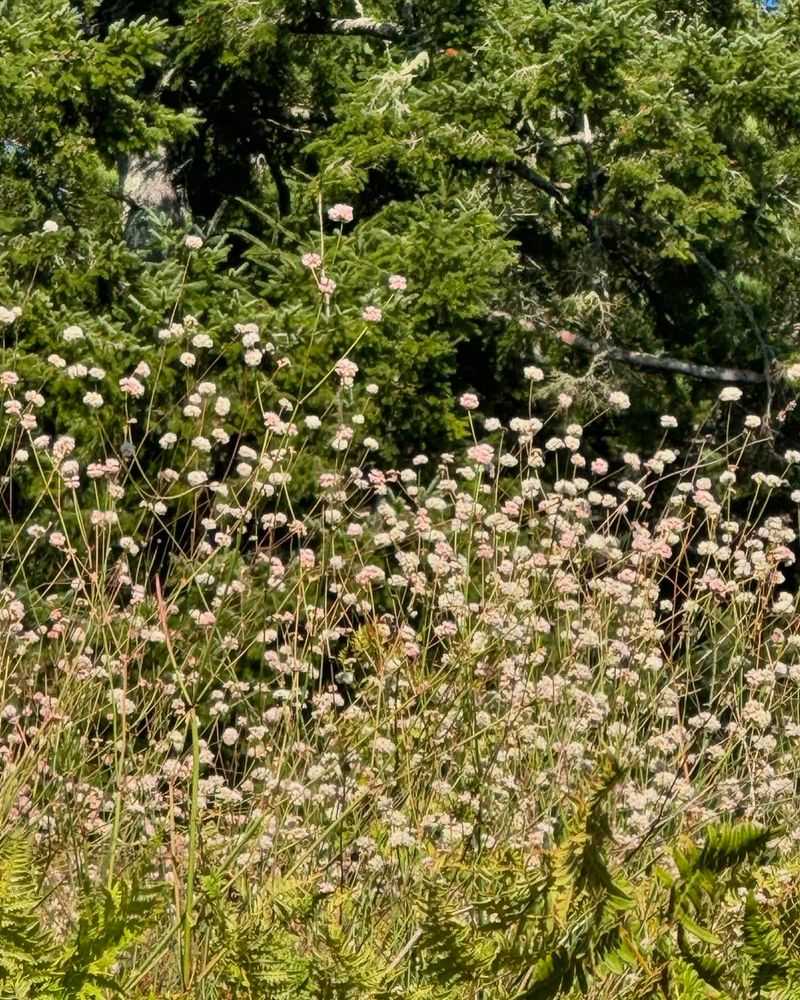
Pollinators do not need a sprawling garden. A well-placed California buckwheat gives them everything they need in a surprisingly compact footprint.
Eriogonum fasciculatum is one of the most ecologically valuable native plants in the state. And it earns that reputation without demanding much water, attention, or square footage in return.
The flower clusters start out creamy white, shift to pink, and then dry to a warm rusty red as the season moves along. That three-stage color transition gives the plant a multi-season look that most garden plants simply can’t match.
Buckwheat works well as a low-growing filler or a mid-border plant with an airy texture that does not block sight lines. Common buckwheat can spread three to four feet wide, so smaller forms or honest spacing along a sunny slope are worth considering.
Full sun is a firm requirement. Buckwheat in shade tends to get leggy and produce noticeably fewer flowers.
Well-drained soil and minimal summer irrigation once established keep it looking healthy. Overwatering is the most common reason it underperforms in garden settings.
A little neglect genuinely suits this plant. For a water-wise small yard that feels alive from summer through fall, buckwheat delivers without asking for much in return.
6. Grow Hummingbird Mint For Patio Color And Motion
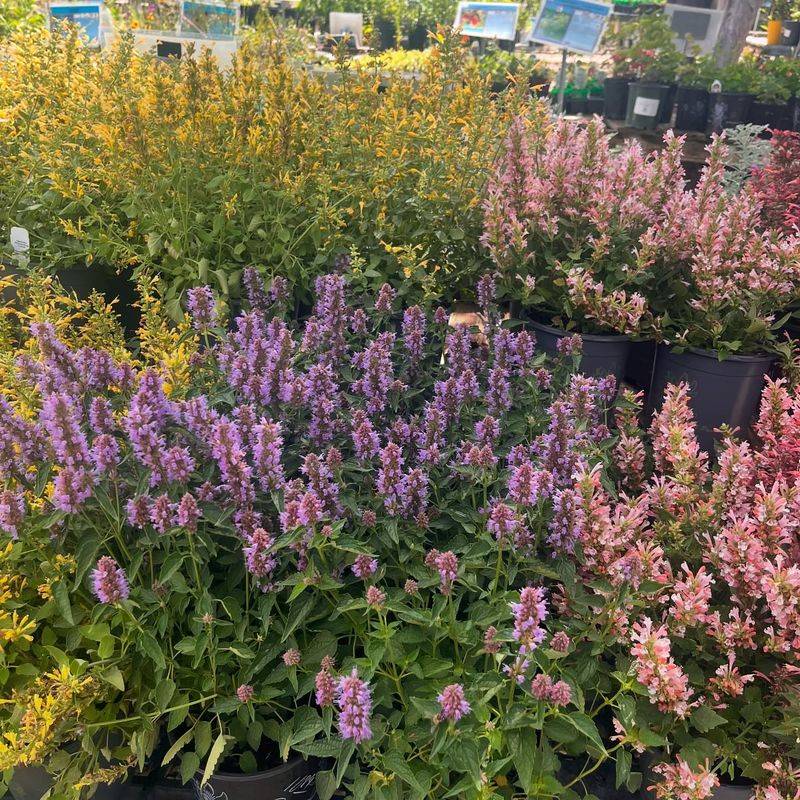
Some plants just have good energy. But Hummingbird mint raises the standard for everyone else.
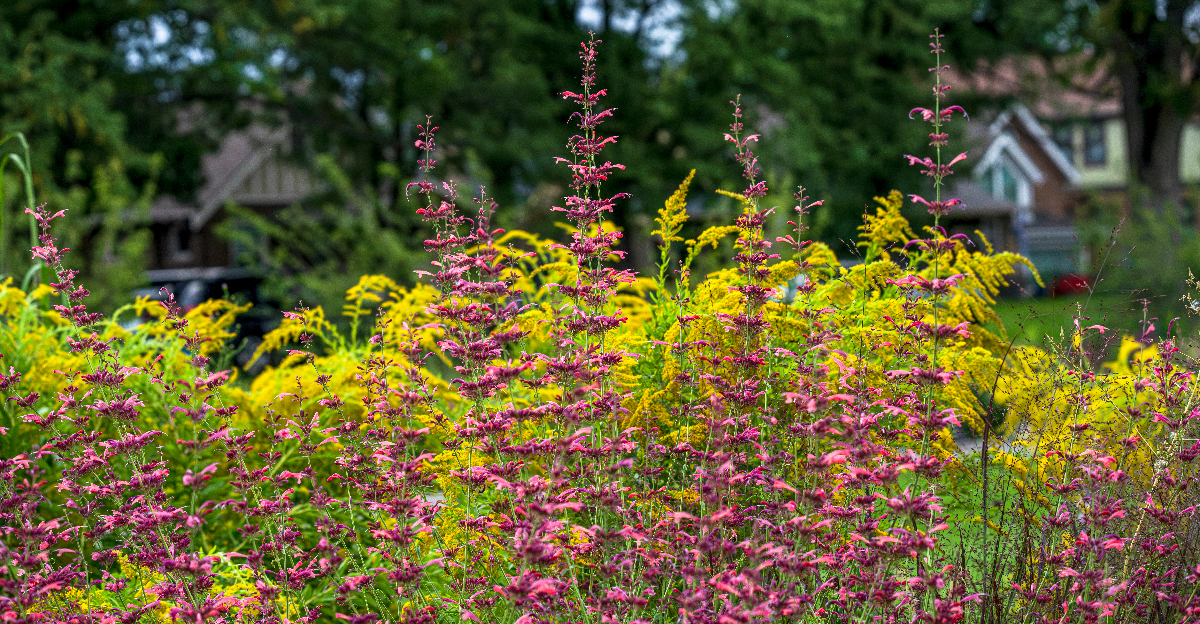
Agastache sends up tall spikes of tubular flowers in orange, pink, coral, and purple from summer into fall. Hummingbirds and bees treat those spikes like a standing appointment.
The activity around a well-established plant on a warm morning is genuinely entertaining to watch from a patio chair.
The upright habit is a practical advantage in small spaces. Hummingbird mint adds vertical interest without spreading sideways and crowding neighboring plants.
A single plant in a large container or a trio in a narrow bed creates height, color, and movement without consuming the space. That combination is harder to find than it sounds in compact garden plants.
Full sun and fast-draining soil are the baseline requirements. Heavy clay or consistently wet spots tend to cause root issues, particularly through cool coastal winters.
For containers, a well-draining potting mix and a large pot are the practical starting points. Containers dry out faster, so moisture monitoring during heat waves is worth the habit.
Popular California cultivars include Coronado Red, Apricot Sunrise, and Blue Fortune, each with slightly different flower color and mature height.
Checking mature size before buying avoids surprises, since some cultivars reach three feet while others stay closer to eighteen inches. Also, trimming spent spikes can push a second flush of bloom further into fall.
For a patio that feels alive from midsummer onward, hummingbird mint delivers color and motion in equal measure. The hummingbirds will find it. They usually do.
7. Use Rosemary To Make Tiny Patios Smell Like Summer
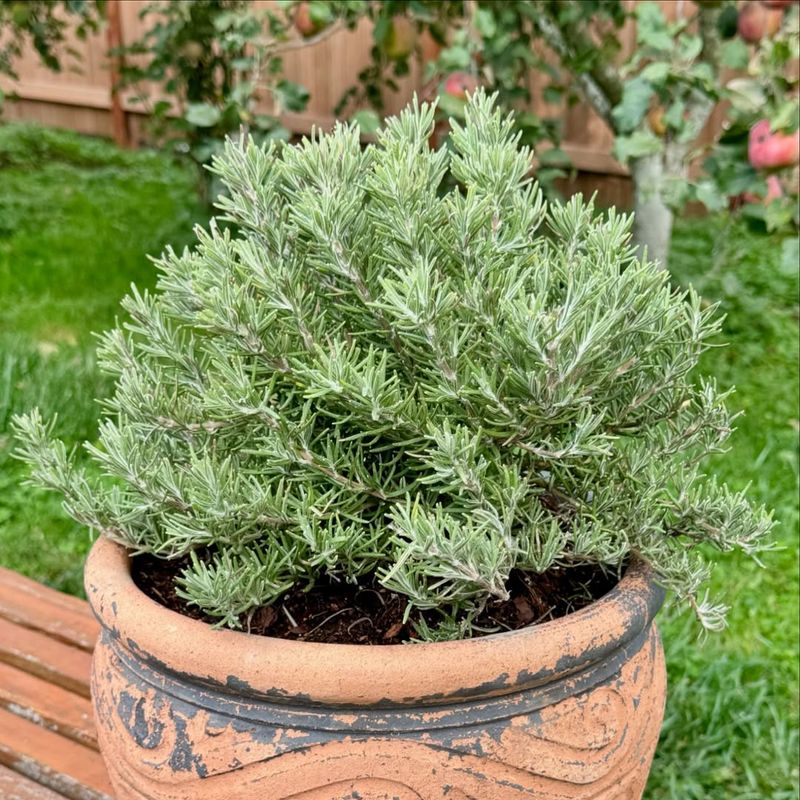
A single pot of rosemary can make a patio smell like somewhere you actually want to be. Salvia rosmarinus is one of the most reliable fragrant plants for California small spaces, and the case for it starts with the scent.
Brush a hand across the foliage, and the whole patio fills with that warm, herbal, Mediterranean fragrance that is genuinely hard to replicate with anything else.
The edible bonus makes it even more practical. Fresh rosemary off a patio pot and into the kitchen is a small luxury that costs almost nothing once the plant is established.
For containers and compact spaces, dwarf or trailing cultivars tend to work better than full-size shrubs. Irene, Huntington Carpet, and Prostratus stay low and spread horizontally, making them useful for spilling over pot edges.
Upright compact forms like Blue Spires add vertical structure without eventually taking over a small planting area.
However, drainage is the one thing rosemary does not compromise on. A pot without drainage holes or soggy soil tends to cause root problems that are difficult to reverse.
A fast-draining mix and at least six hours of direct sun are the practical requirements for container growing.
Light pruning after bloom keeps the shape tidy and encourages fresh growth. Avoid cutting hard into old woody stems, since rosemary does not always recover well from severe cuts.
With the right cultivar and a sunny spot, rosemary anchors a tiny patio with scent, structure, and a genuinely Mediterranean sensibility that feels effortless.
8. Plant Seaside Daisy For Coastal Cottage Charm
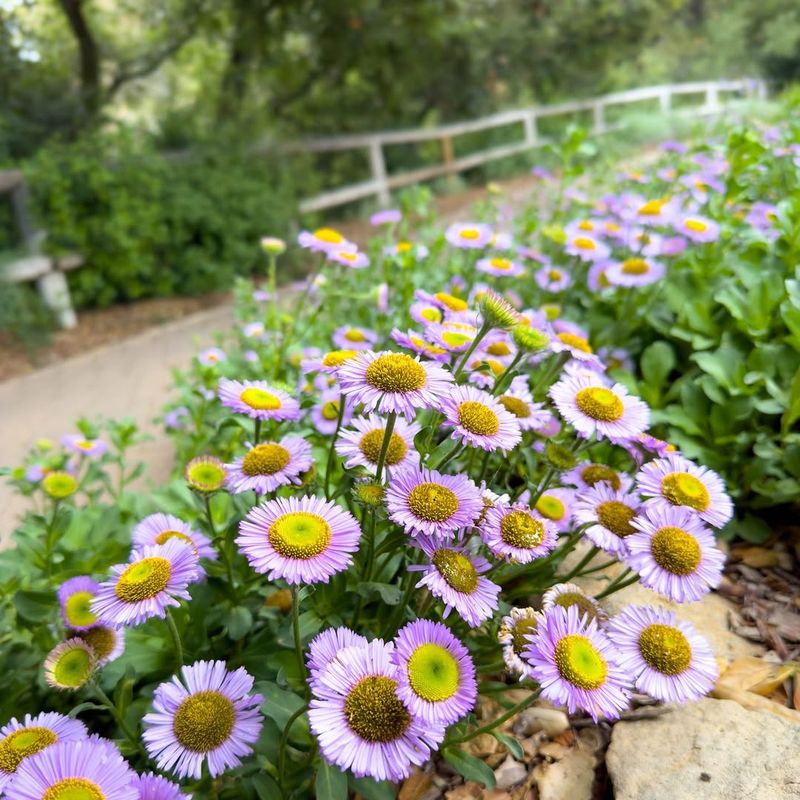
Not every California small yard is a sun-baked challenge. Coastal gardeners have their own microclimate, and seaside daisy was practically designed for it.
Erigeron glaucus produces lavender to pale purple daisy flowers from spring through much of summer. In mild coastal spots, the bloom period can stretch even longer.
That extended window is genuinely valuable in a small yard where every plant needs to justify its square footage across multiple seasons.
The low, spreading habit, usually under one foot tall, makes it a natural fit as a soft-edge plant along paths or low borders. It does not demand attention. It just quietly looks good for a long time.
Fast-draining soil is a consistent requirement. Heavy clay or spots that collect water through winter can cause problems.
A slightly raised bed or a gravelly, amended planting area gives it the drainage it prefers. In containers, a well-draining mix and a pot that does not retain excess moisture keep it comfortable through the wet season.
But placement matters for inland gardeners. Seaside daisy is genuinely adapted to coastal conditions, and intense summer heat combined with dry winds can stress it in inland California valleys.
This is a plant that knows where it belongs, and placing it accordingly makes a noticeable difference in how well it performs.
For coastal zone gardeners, it softens path edges, spills gracefully over low walls, and brings a relaxed cottage-garden feel.
Pair it with coyote mint or yarrow for a low-water coastal combination that looks like it took considerable planning and practically none at all.