9 Desert Flowers That Look Twice As Bold Planted In Drifts Across Your Arizona Yard
One lonely flower in a big gravel yard can look a little lost. Plant that same flower in a sweeping group of five, seven, or more, and suddenly your yard has real color you can see from the street.
The best part is that many native desert bloomers love Phoenix and Tucson heat, sip very little water, and feed hummingbirds, bees, and butterflies. Here are nine tough flowers that look their boldest when you plant them together in drifts.
1. Chuparosa
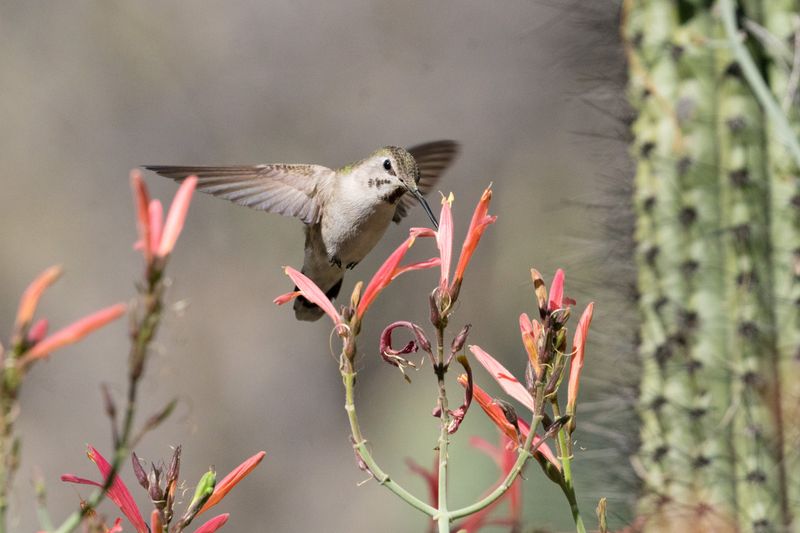
Hummingbirds treat a patch of chuparosa like an all-you-can-eat buffet. Plant one, and you might see a visitor now and then.
Plant a loose row of five along a sunny wall, and the buzzing traffic can turn into a daily show.
Chuparosa is native to Arizona and shrugs off poor soil, blazing sun, and even reflected heat from block walls. Its thin, gray-green stems arch outward in a relaxed way, so a drift creates a soft, airy mass rather than a stiff hedge.
Red or orange tubular blooms can appear for much of the year in the low desert, giving pollinators a steady food source.
Water is where this shrub really shines. Once established, it gets by on deep, infrequent watering, and too much water actually makes it leggy with fewer flowers.
A hard frost in the mid-20s may nip the tips, but it usually sprouts back from the roots once the weather warms.
For the best start, plant in fall or early spring and space shrubs about four feet apart so they knit together. As a bonus, chuparosa also serves as a host plant for the Texan Crescentspot butterfly, adding even more life to your yard.
2. Baja Fairy Duster
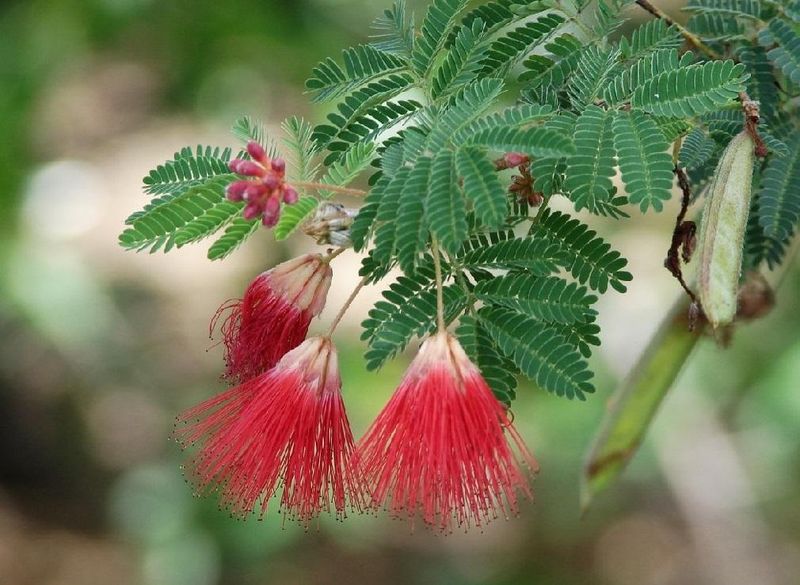
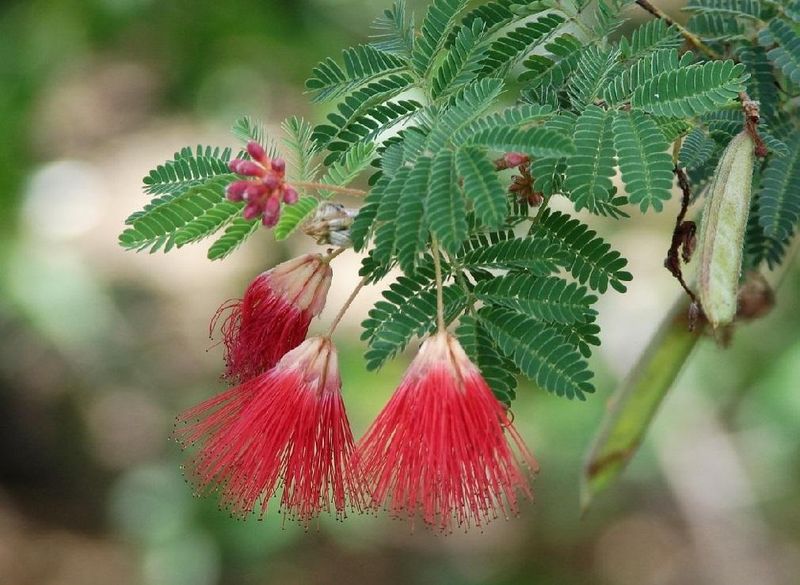
Picture dozens of tiny red pom-poms bobbing in the breeze, and you have the Baja fairy duster in full swing. A single shrub is cute.
A curving line of them looks like fireworks frozen in place.
Originally from Baja California, this shrub feels right at home in Arizona’s low desert. It handles brutal summer sun and reflected heat without fuss, and its fine, lacy leaves keep a soft green look most of the year.
If a cold snap dips below 20 degrees, some leaves may brown, but warm weather usually brings it right back.
Care is simple. Give it a deep soak about once a week in summer, every two weeks in spring and fall, and roughly monthly in winter.
Skip the fertilizer, since well-drained native soil is all it needs.
Those fuzzy blooms are a favorite of hummingbirds, and butterflies stop by too. Larger birds may even snack on the seeds later in the season.
Because it drops very little litter, a drift works well near patios and pools. Plant in fall or spring, spacing about five feet apart, and let the shrubs form their natural vase shape.
3. Desert Marigold
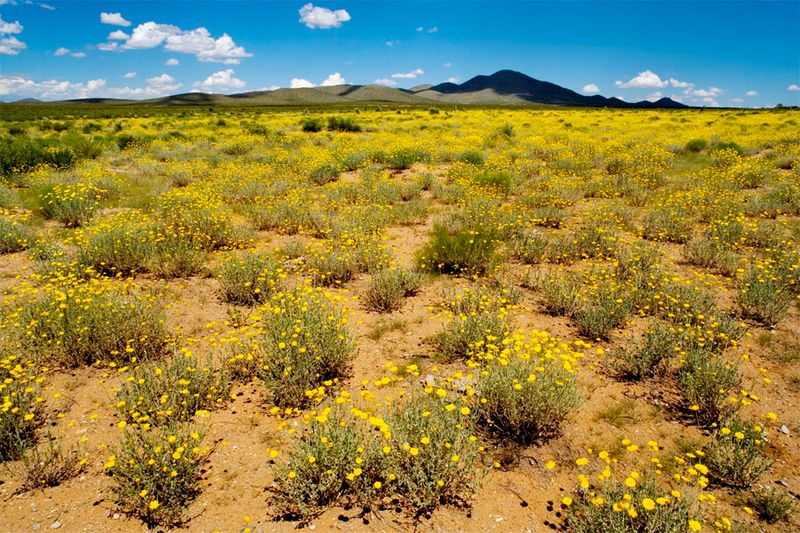
Ever notice those sunny yellow patches along Arizona roadsides in spring? Chances are you spotted desert marigold doing what it does best, spreading cheerful color with zero help from anyone.
Your Arizona Garden Changes Every Week. Your Plan Should Too.
Gardening in Arizona changes quickly throughout the season. Every Friday you’ll receive a simple weekly plan showing exactly what to plant, prune, fertilize, harvest, and protect so you never miss the right timing.
Native to the Sonoran and Chihuahuan deserts, this wildflower forms low mounds of soft, woolly, silver-green leaves. Bright yellow daisies rise above them on silvery stems, often blooming from spring well into fall.
In warmer spots, you may even catch flowers in winter.
Here is the secret to a great drift: desert marigold is short-lived, but it happily reseeds. Start with a handful of plants or scatter seed in fall, and over time the patch tends to fill in on its own.
The silver foliage also brightens the yard after sundown, glowing softly under porch lights.
Watering is a light job. Rocky or sandy soil suits it fine, and overwatering is the most common way people lose it.
Native bees and butterflies visit the blooms often, making a big swath a busy pollinator stop.
Its roots also help hold soil in place, which can be handy on slopes that wash out during monsoon storms. Plant in fall or early spring for best results.
4. Angelita Daisy
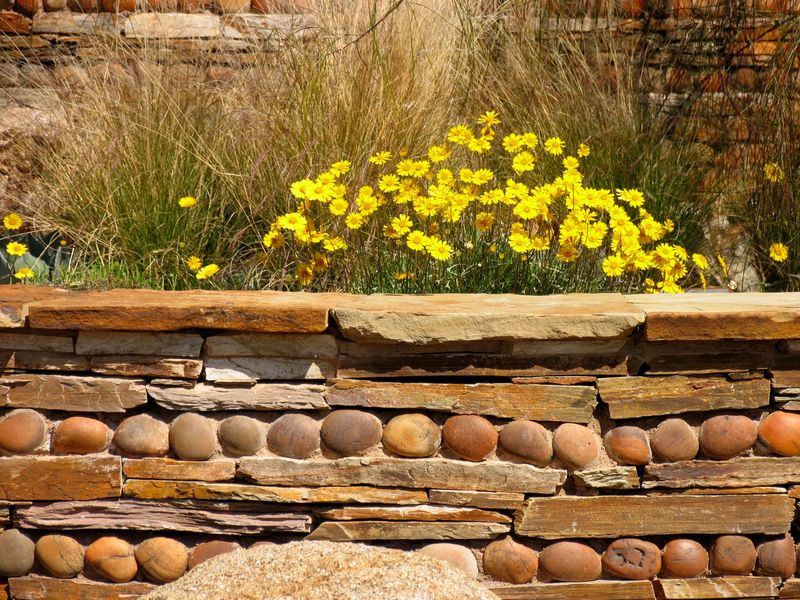
Small but mighty, angelita daisy might be the hardest-working little plant in a desert yard. It barely reaches a foot tall, yet it can bloom nearly all year in mild areas.
The look is simple and sweet. Grass-like foliage forms neat mounds, and bright yellow daisies sway above on thin, wiry stems.
Lined up along a walkway or tucked in a wide band in front of larger shrubs, a drift creates a glowing ribbon of gold that ties the whole yard together.
Angelita daisy is native to the Southwest and handles heat, drought, and frost with ease. Unlike some desert plants, it also stays happy through monsoon humidity, as long as the soil drains well.
Once settled, it can live mostly on rainfall, though a little extra water in summer encourages more flowers.
Butterflies love this plant, and it serves as a host for the Mormon Metalmark butterfly. That means your drift may help raise caterpillars, not just feed adults.
For a full, even look, set plants about 18 inches apart in full sun. Fall or early spring planting gives roots time to settle before the summer heat arrives.
5. Firecracker Penstemon
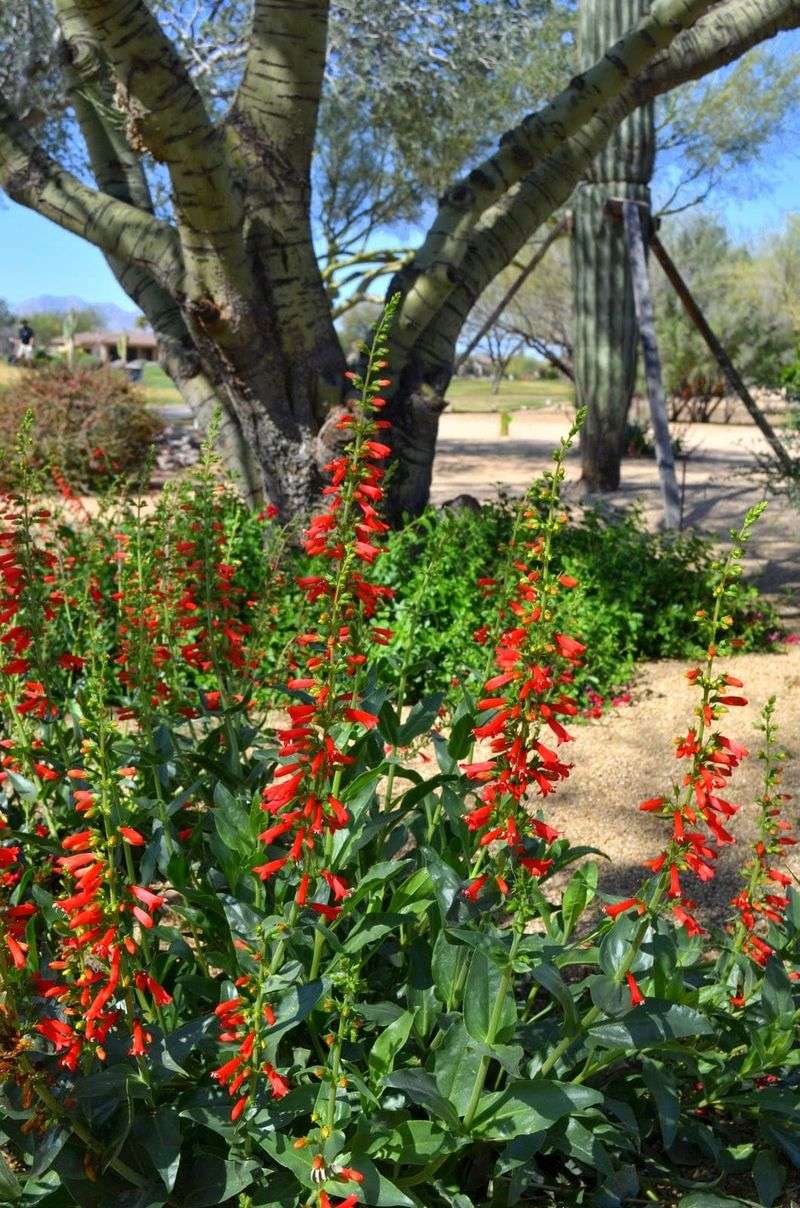
When most of the desert is still waking up in late winter, firecracker penstemon is already shooting off sparks. Tall spikes of orange-red tubular flowers rise up to two feet above its dark green leaves, and a cluster of them looks like a burst of flame.
Planting in drifts matters with this one. Single spikes can look thin, but a group of seven or more creates a bold wall of color that hummingbirds spot from far away.
Bees and butterflies join in too, which is a big deal during the cooler months when nectar is scarce.
This native penstemon is tough. It can handle temperatures down to zero and still push through 100-degree summer days.
Give it full sun and fast-draining soil, and skip the fertilizer completely.
Although it can survive drought, it looks best with a weekly drink in summer and every other week when it cools off. After blooms fade, you can leave a few spikes to drop seed and help the drift spread.
Fall is the time to plant, whether you start with seeds or nursery pots. Fun fact: penstemons are sometimes called beardtongues because of a fuzzy stamen inside each flower.
6. Globemallow
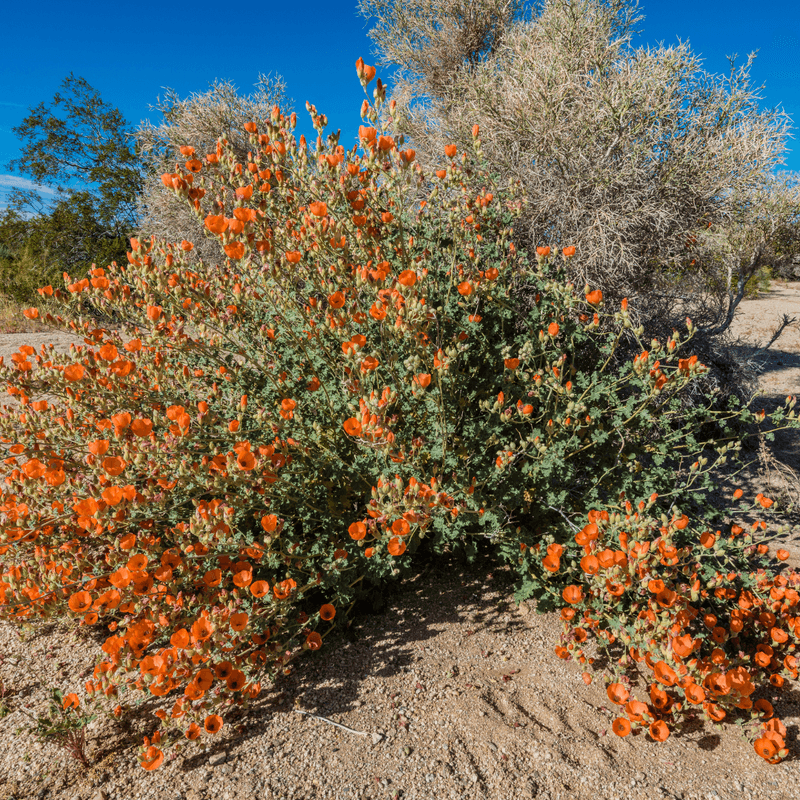
Bright orange cups on gray-green stems give globemallow a color almost no other desert plant can match. It is the kind of shade that pops against tan gravel and blue sky, especially when you plant several together.
Desert globemallow is native to low-desert Arizona, so it already knows how to handle the heat. It forms a mounding shrub that fills out quickly in full sun and well-drained soil.
A group of three to five spaced a few feet apart can turn a bare corner into a glowing orange hillside in spring.
Water use is low, which makes it a smart pick for anyone trying to shrink their bill. Once roots are settled, occasional deep watering during long dry spells is usually enough.
A light trim after the big spring flush can tidy it up and may encourage more flowers later.
What really sets globemallow apart is its pull for native bees, including specialist bees that rely on mallows. Butterflies drop by as well, so a drift can become a lively pollinator hub.
Plan to plant in October or November, or in early spring. Look for pink, red, or lavender varieties if you want to mix things up.
7. Brittlebush
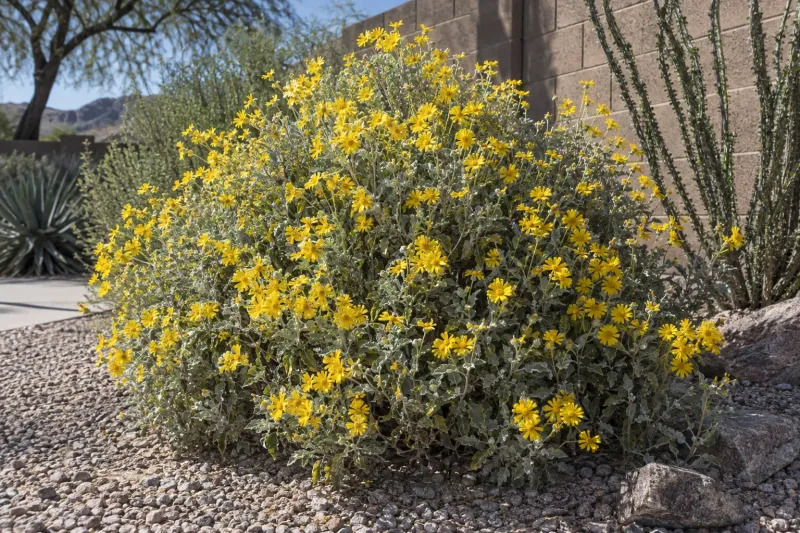
Drive through the Sonoran Desert in March and you will see whole hillsides glowing yellow. That is brittlebush, and it proves nature already knows that drifts look amazing.
This rounded shrub grows two to five feet tall and wide with silvery-gray leaves. The silver color reflects sunlight, helping the plant stay cool in brutal heat.
In late winter and spring, it covers itself in yellow daisies held above the foliage.
Brittlebush is a true survivor. It thrives in rocky, alkaline, poor soil and can live on natural rainfall once established.
A monthly soak during dry summer stretches keeps it looking fresh, but it needs no fertilizer. It is hardy to about 15 degrees.
The wildlife payoff is big. Native bees and butterflies feed on its flowers early in the year, finches snack on the seeds, and the dense branches give small birds and lizards a shady place to hide.
Lizards on patrol may help keep insects in check around your yard.
Plant a loose group of five or more on a slope or along the back of a yard. The roots can help reduce erosion, and you can plant in fall, winter, or spring.
8. Arizona Yellow Bells
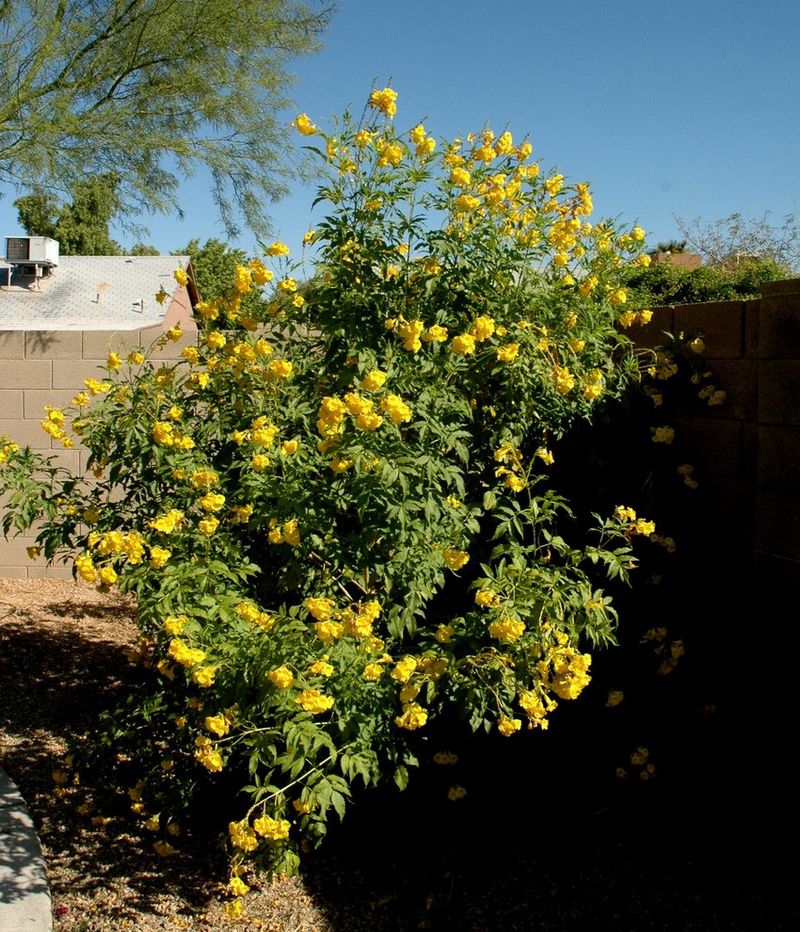
Need privacy and color in one move? Arizona yellow bells can do both, growing into a tall, leafy screen covered in golden trumpets.
The angustata variety is native to the Arizona-Sonora desert region, so it handles our hottest spots with ease. West-facing walls, driveways, and pool decks with reflected heat are where it often looks its best.
Bright yellow flower clusters can appear from April through November, offering months of steady color.
Since these shrubs can reach five to twelve feet tall, a drift works a little differently here. Plant three or more in a staggered line along a fence, and you will end up with a bold yellow backdrop that softens hard edges and blocks views.
Shorter plants like angelita daisy can fill in at their feet.
Hummingbirds, butterflies, and bees all visit the trumpets. In fall, seedpods form and may provide food for songbirds that stick around through winter, so think twice before trimming them all off.
Once established, yellow bells need only minimal water and full sun. They usually stay green year-round in mild winters.
Plant in fall or early spring, and give each shrub plenty of room to stretch out.
9. Blackfoot Daisy
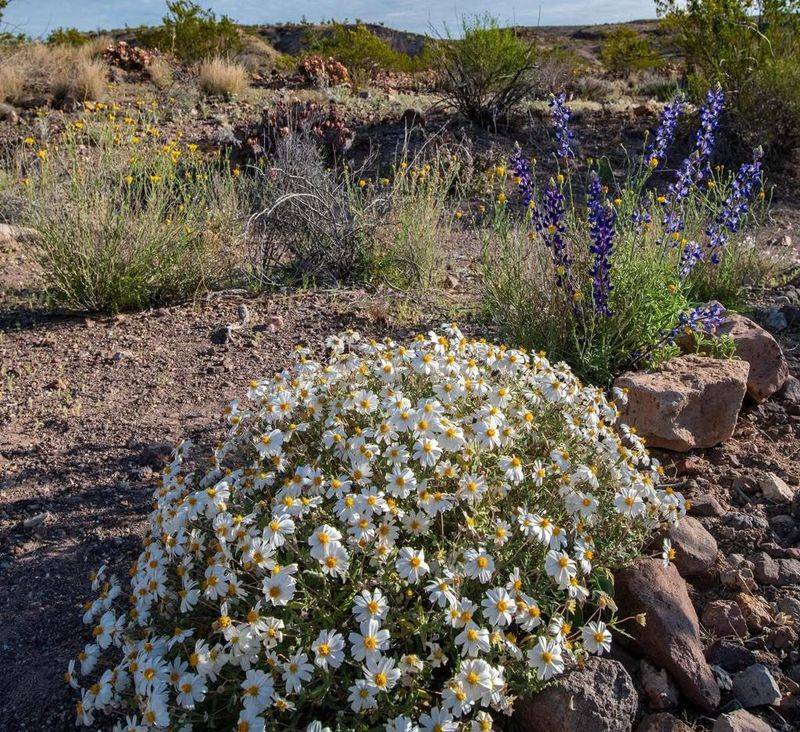
Sometimes the boldest move is a quiet one. Blackfoot daisy brings crisp white flowers to a yard full of reds, oranges, and yellows, and a drift of it reads like fresh snow on the desert floor.
Each plant forms a neat mound about a foot tall, packed with small white daisies with sunny yellow centers. Lean in close and you may catch a light honey scent.
Grouped together along a driveway or in front of boulders, these mounds create a clean, bright edge that cools down a hot-looking landscape.
This native perennial loves the tough stuff, from rocky soil and full sun to reflected heat. It also handles freezing nights.
The one thing it cannot stand is soggy ground, so good drainage and a light hand with the hose are key.
Butterflies and bees visit the blooms, and birds sometimes stop by as well. Deer tend to leave it alone, which helps in yards near open desert.
Its roots can also help hold soil in place.
Plant in fall or early spring, about 18 inches apart. Over time, blackfoot daisy may reseed and fill gaps naturally, making your drift fuller every year.