9 Desert Trees That Shade Your Arizona Driveway So The Car Isn’t An Oven
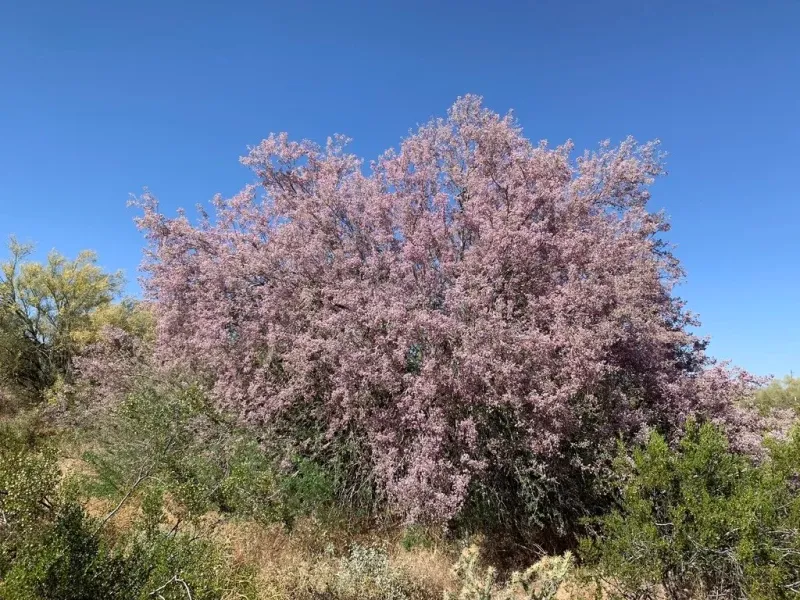
Anyone who has grabbed a steering wheel in July in Phoenix knows the burn is real. A parked car in full sun can turn into a rolling sauna in minutes, and the concrete around it keeps radiating heat long after sunset.
The right desert tree can cool that spot down, sip very little water, and invite birds and pollinators into your yard at the same time. Here are nine tough, low-desert trees that earn their place beside your driveway.
1. Blue Palo Verde
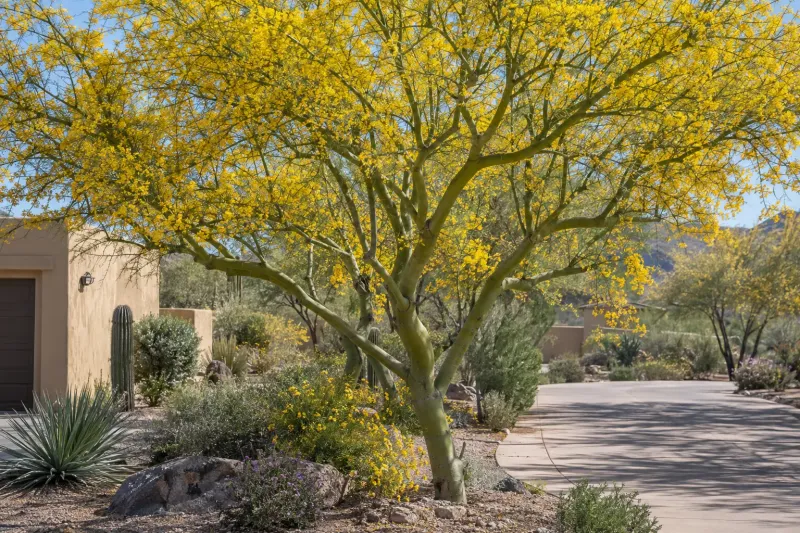
Arizona picked its state tree well. Blue palo verde can handle 120 degree days, reflected heat off pavement, and very little rain without complaint, which makes it a natural fit next to a sunbaked driveway.
Its shade is light and filtered rather than heavy, so the car stays noticeably cooler while you can still grow low desert plants underneath. The blue-green bark does something clever, too.
It photosynthesizes, so the tree keeps making energy even after it drops leaves to save water during dry stretches.
Every spring the whole canopy explodes in bright yellow flowers. Bees, butterflies, and birds show up fast, and songbirds often nest in the branches.
In the wild, these trees even act as nurse plants that shelter young saguaros.
Plant it in fall, between October and November, so roots settle in before summer arrives. Deep, occasional watering for the first couple of years is enough, then it can get by on very little.
One honest heads-up: those flowers and tiny leaflets drop, so expect some sweeping in spring. Set it a few feet off the drive and let the litter fall into gravel, where it simply blends in as natural mulch.
2. Foothill Palo Verde
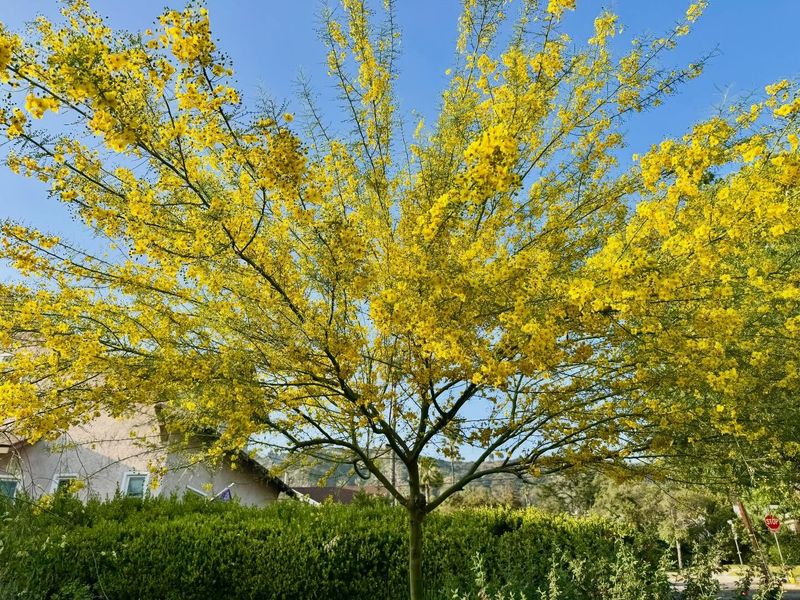
Think of foothill palo verde as the minimalist of the bunch. On rocky Sonoran hillsides it survives on seasonal rain alone, and it needs even less water than its blue cousin once established.
The canopy is open and a bit irregular, casting pale, airy shade that softens the sun on your hood and windshield. It grows slower than other palo verdes, so patience pays off here.
If you want it fuller, a monthly summer soak keeps it looking lush.
Wildlife loves it. Pollinators visit the creamy yellow blooms, and the seeds feed birds and small critters.
The ground beneath becomes a little microhabitat, sheltering lizards and young cactus.
Placement matters with this one. Branch tips end in sharp, rigid spines, so give it room away from car doors, walkways, and spots where kids play.
A corner of the driveway along the west side works well, blocking afternoon sun without brushing anyone who walks by.
For a water-wise homeowner who wants a truly native, set-it-and-forget-it tree, foothill palo verde is hard to beat. Plant in fall, water deeply while it roots in, then mostly let the desert do the work.
3. Desert Museum Palo Verde
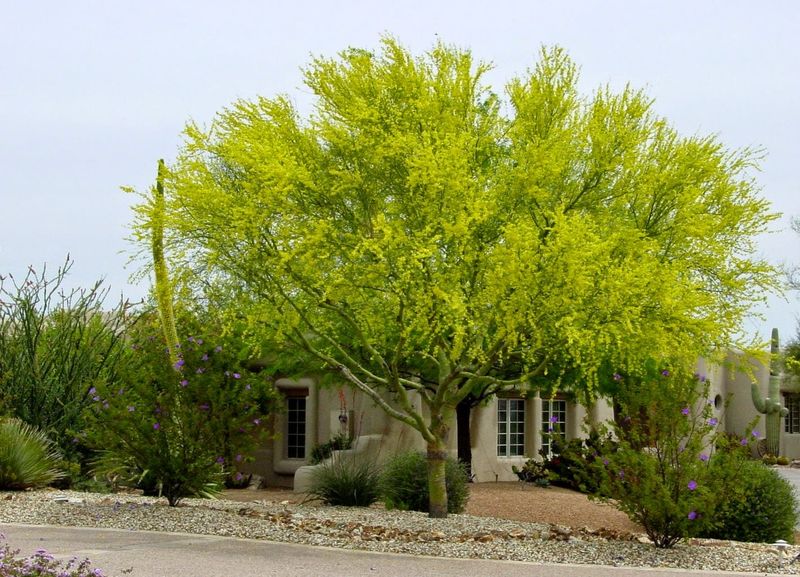
Impatient for shade? Desert Museum palo verde was bred for exactly that kind of homeowner.
Created for the low desert from blue, foothill, and Mexican palo verde, it borrows the best traits of each.
Your Arizona Garden Changes Every Week. Your Plan Should Too.
Gardening in Arizona changes quickly throughout the season. Every Friday you’ll receive a simple weekly plan showing exactly what to plant, prune, fertilize, harvest, and protect so you never miss the right timing.
Growth is fast, and the canopy spreads wider and more open than either parent. That means filtered shade over a parked car sooner, often within a few seasons.
It shrugs off heat and drought once established and asks for little water.
The flower show is the real bonus. Fragrant yellow blooms appear in big numbers in spring and can keep popping up into summer and fall, giving bees and other pollinators a long-running buffet.
Many people also like that it tends to have fewer thorns than wild palo verdes, which makes it friendlier near a driveway where you are loading groceries. Smooth green trunks look striking against stucco, too.
Give it a spot with full sun and decent drainage, ideally in a gravel bed rather than a lawn. Too much water can make it grow floppy and weak.
Water deeply but infrequently, prune lightly after bloom, and you will have a reliable, golden shade umbrella in just a few years.
4. Velvet Mesquite
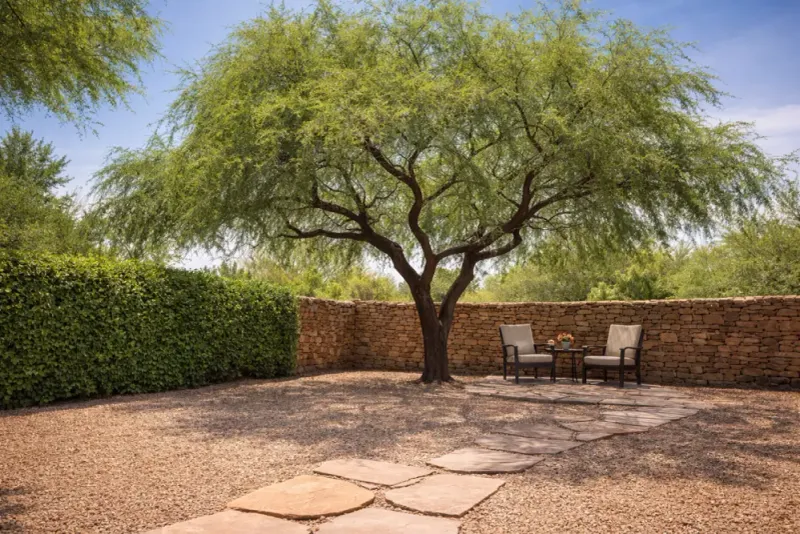
Old ranchers parked under mesquites for a reason. A mature velvet mesquite can spread 30 feet or more, and its twisting branches throw some of the densest shade you will find among native desert trees.
That deep root system is the secret. It reaches far down for moisture, so once established the tree can often get by on natural rainfall, with no fertilizer needed.
Alkaline soil and caliche do not bother it much.
Velvet mesquite is a wildlife magnet. Bees work the fuzzy spring flowers, and the pods feed Gambel quail, songbirds, jackrabbits, and small mammals.
Birds nest in the canopy, and a busy bird population may help keep insects in check around your yard.
Fun fact: mesquite wood is prized for smoky barbecue, so pruned branches are worth saving.
Young trees can carry small thorns that mostly fade with age. It is deciduous, so winter sun warms the driveway when you actually want it.
Give it plenty of room, at least 15 feet from the house and slab, and plant in fall. Thin the canopy before monsoon season so storm winds can pass through instead of snapping limbs.
5. Desert Willow
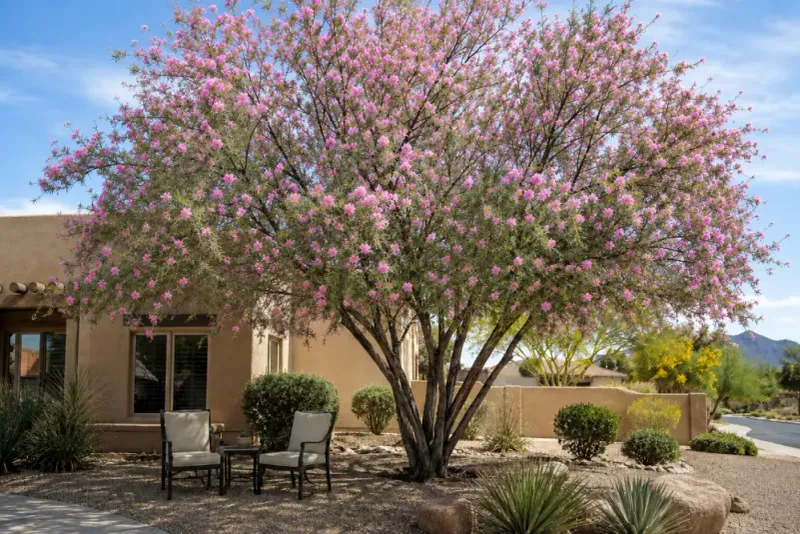
Picture a hummingbird zipping past while you unload the car. That is a normal summer afternoon beside a desert willow.
Despite the name, it is not a true willow. It belongs to the same family as catalpa, and its narrow leaves only look willowy.
From late spring through fall it covers itself in fragrant, trumpet-shaped flowers in pink, purple, and white. Hummingbirds, bees, and butterflies keep coming back, and birds use the branches for cover.
The shade is dappled and gentle, the kind that cools without making the yard feel gloomy. Plant it on the west or south side of the driveway to catch the brutal afternoon sun.
In winter the leaves drop and let warming light through.
Care is refreshingly simple. It handles poor soil and needs no fertilizer, just occasional deep watering in summer once established.
Expect some long, skinny seed pods to fall, and know that the open canopy gives lighter coverage than a mesquite. Pairing two desert willows, or choosing a seedless variety, can solve both issues.
For a smaller lot that wants color, pollinators, and relief from heat, it is a charming, easygoing choice.
6. Desert Ironwood
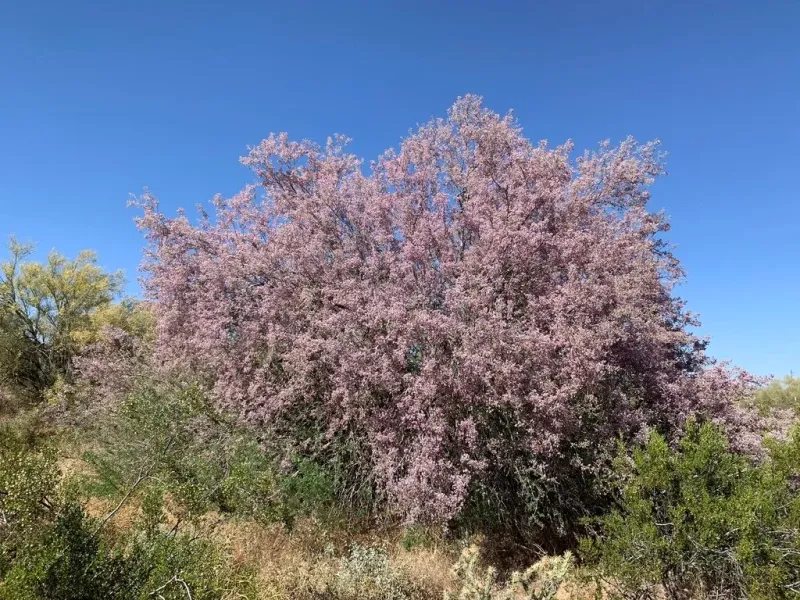
Few trees do more for the Sonoran Desert than ironwood. It supports hundreds of species, and its presence has been linked to far more bird variety in the areas where it grows.
For your driveway, the headline is dense, nearly year-round shade. Unlike many desert trees, ironwood usually holds its leaves through winter, only dropping them during severe drought or hard freezes.
That steady canopy cuts heat for your car and for plants growing underneath.
Late spring brings soft purple and lavender flowers that draw bees and hummingbirds. Later, seeds feed birds and small mammals.
The thorny, low branches give quail and other birds a safe hideout, which can make your yard a busier, more balanced little habitat.
The tradeoff is speed. Ironwood grows slowly, so think of it as an investment in your yard’s future.
Buy the largest container size your budget allows to jump-start shade.
Water deeply while it establishes, then very little. Trim off spent or crossing branches and raise the canopy so thorns stay clear of car doors.
Plant in fall in full sun with good drainage, and this wildlife-rich native can shade the same driveway for generations.
7. Willow Acacia
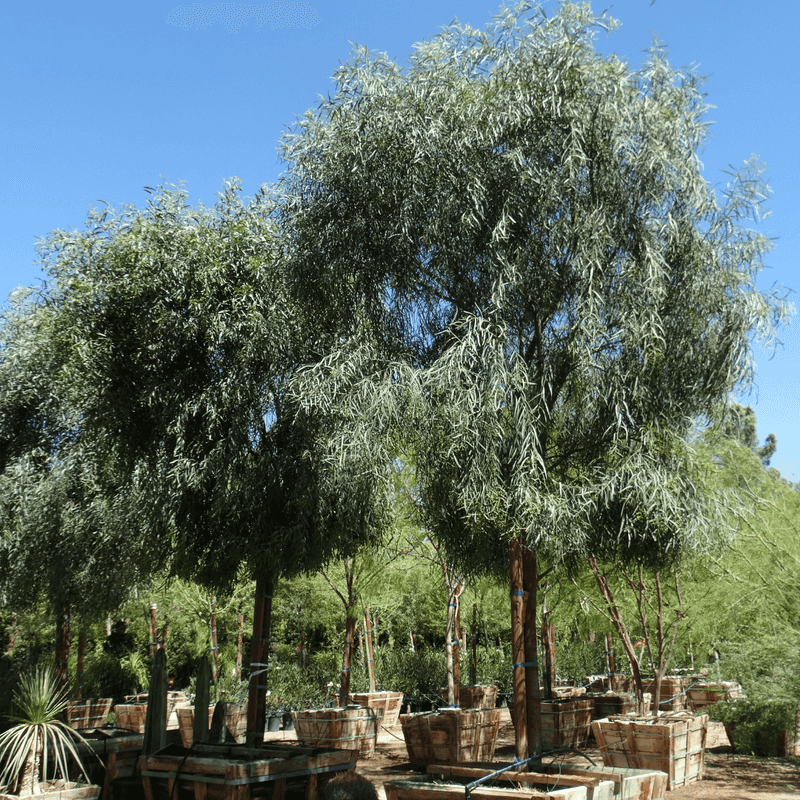
Need something evergreen, thornless, and quick? Willow acacia checks all three boxes, which is why it lines so many Phoenix streets and parking lots.
Originally from Australia, it has proven itself across the low desert, from Tucson to Yuma. Long, drooping leaves sway in the slightest breeze, creating moving, filtered shade that keeps a windshield from turning into a griddle.
It tends to stay green through warm winters, so the screening stays put all year.
Thornless branches make it pleasant near walkways and car doors. It tolerates alkaline soil, needs no extra fertilizer, and handles long dry spells once its roots are settled.
Cream-colored puffball flowers carry a sweet scent and pull in bees and other pollinators. It is not native, so mixing it with native shrubs underneath helps keep your yard friendly for local wildlife.
Fair warning, it can be moderately messy. Narrow leaves, flowers, fine twigs, and seed pods drift down over time, so a leaf blower helps.
Plant it in a gravel strip beside the drive rather than directly over a pool. Deep, infrequent watering encourages strong roots that stand up better to monsoon gusts.
8. Chitalpa
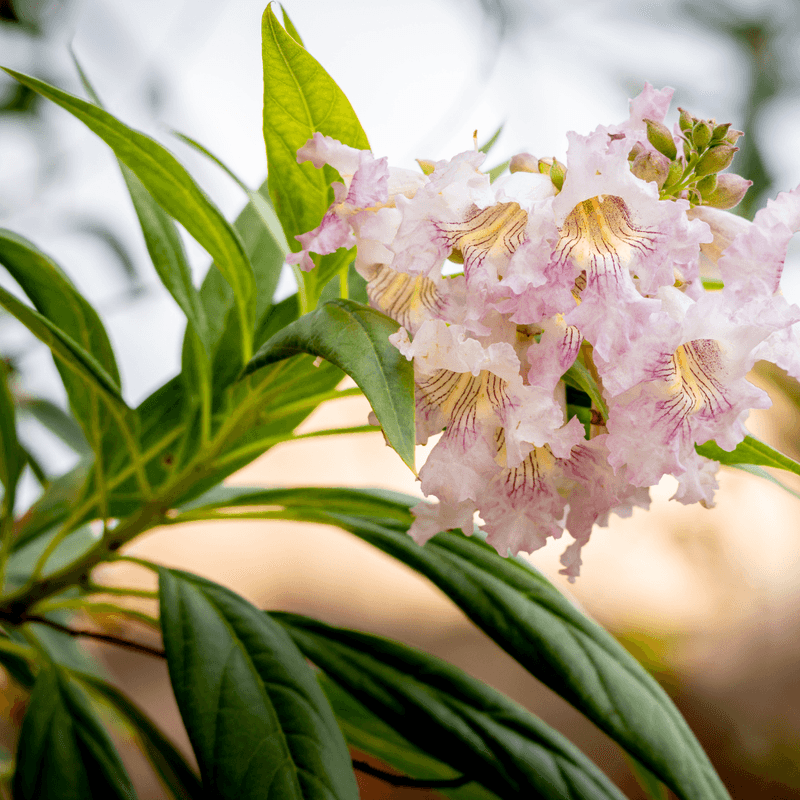
Half desert willow, half catalpa, chitalpa is a garden mashup that turned out surprisingly practical. You get desert toughness plus wider leaves, which means more useful shade.
It grows quickly, spreading a broad, dappled canopy over driveways, patios, and seating areas. Reflected heat from walls and pavement does not faze it much once established, and it rides through Arizona summers with modest care.
Big ruffled clusters of pink or lavender trumpet flowers show up through the warm season. Hummingbirds and bees treat them like a snack bar, adding life and motion to the front yard.
Here is a perk for tidy types: chitalpa usually does not set viable seed, so there are no pod showers on your car. It is thornless, too, and its roots spread moderately rather than aggressively, which makes it reasonably safe near walkways with proper spacing.
Leaves drop in winter, letting the sun warm things up in the cool months. Some trees can show leaf spotting if overwatered or crowded, so give it airflow and water deeply but not daily.
Plant in early spring or fall, and you could be parking in its shade within a few summers.
9. Cascalote
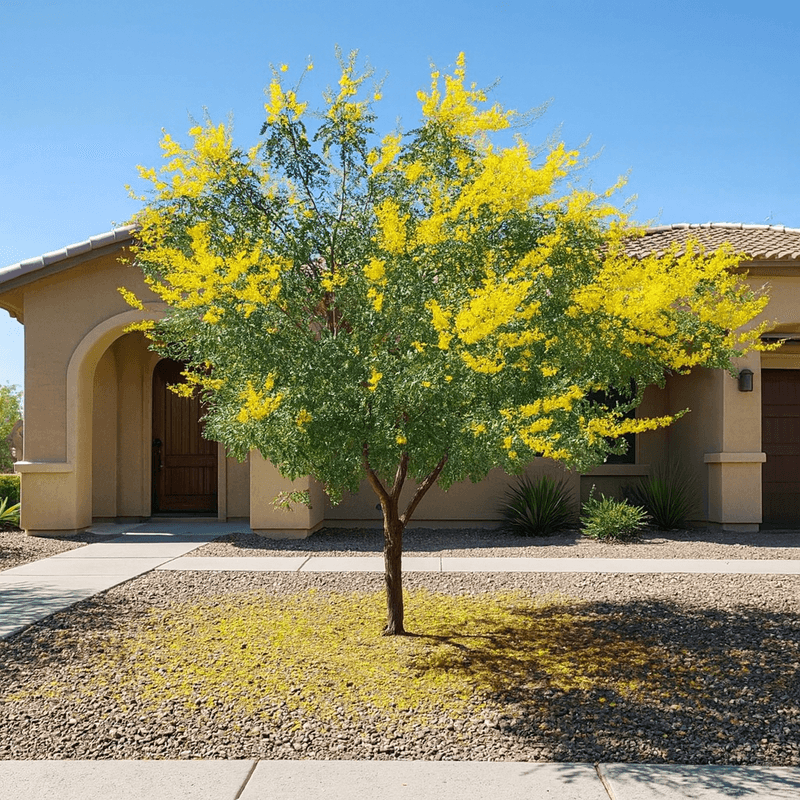
Most trees go quiet in winter. Cascalote does the opposite, lighting up with golden-yellow flower spikes from roughly October through March, right when pollinators have slim pickings.
Native to the Sonoran Desert in Mexico, it feels right at home in Phoenix. The rounded, fairly dense canopy creates excellent filtered shade, and it stays semi-evergreen to evergreen in the low desert, so coverage holds up much of the year.
Full sun and reflected heat suit it fine. Once established, it needs little water and very little fussing, which is exactly what busy homeowners want.
Choose the thornless Smoothie variety for a driveway. The original species can carry thorns, but Smoothie is safe for patios, walkways, and family yards where people brush past branches daily.
Bees and hummingbirds appreciate the cool-season blooms, giving your yard activity long after summer bloomers fade. Flower clusters and seed pods do drop, so a gravel bed underneath keeps cleanup easy.
Since it can be a little frost-tender when young, plant in early spring after cold snaps pass, or in early fall with frost cloth ready. Give it a sunny corner and enjoy shade in summer plus gold in winter.