These Florida Spring Containers Will Last Into Summer With A Few Easy Tweaks
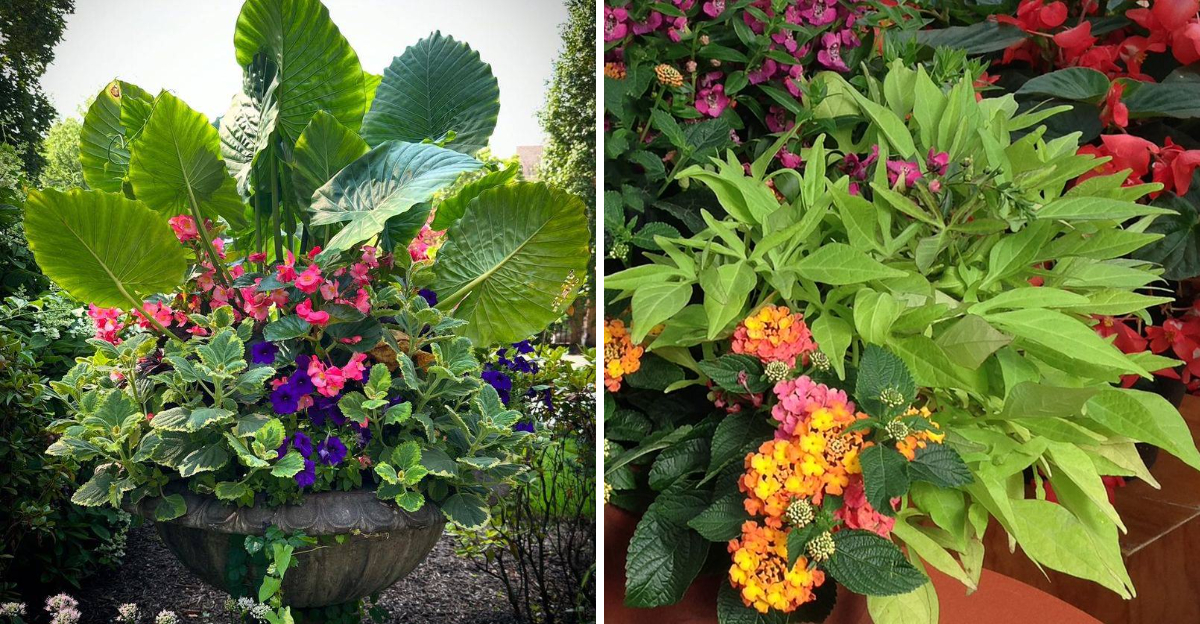
Florida spring does not tiptoe in. It explodes in color, heat, and humidity that can humble even confident gardeners.
One week your containers look lush and vibrant, the next they appear tired under the rising sun. The secret to planters that thrive past spring break and power straight into summer is not luck.
It is smart plant choices and a few strategic swaps before the real heat settles in.
Picture front porches dressed in bold blooms that refuse to fade by May, poolside pots that stay glossy and full through blazing afternoons, and entryways that feel like a tropical escape long after Easter décor disappears.
With the right foundation and simple tweaks, spring containers can stretch their beauty deep into summer without a full replant. Strong structure, heat-tolerant color, and quick refreshes turn short lived displays into season spanning showstoppers built for Florida’s relentless sun.
1. Summer Refresh Inviting Duo
Picture your front porch in late April, looking fresh and colorful, and then imagine it still looking just as good in July. That is exactly what a well-planned spring-to-summer duo can do for you.
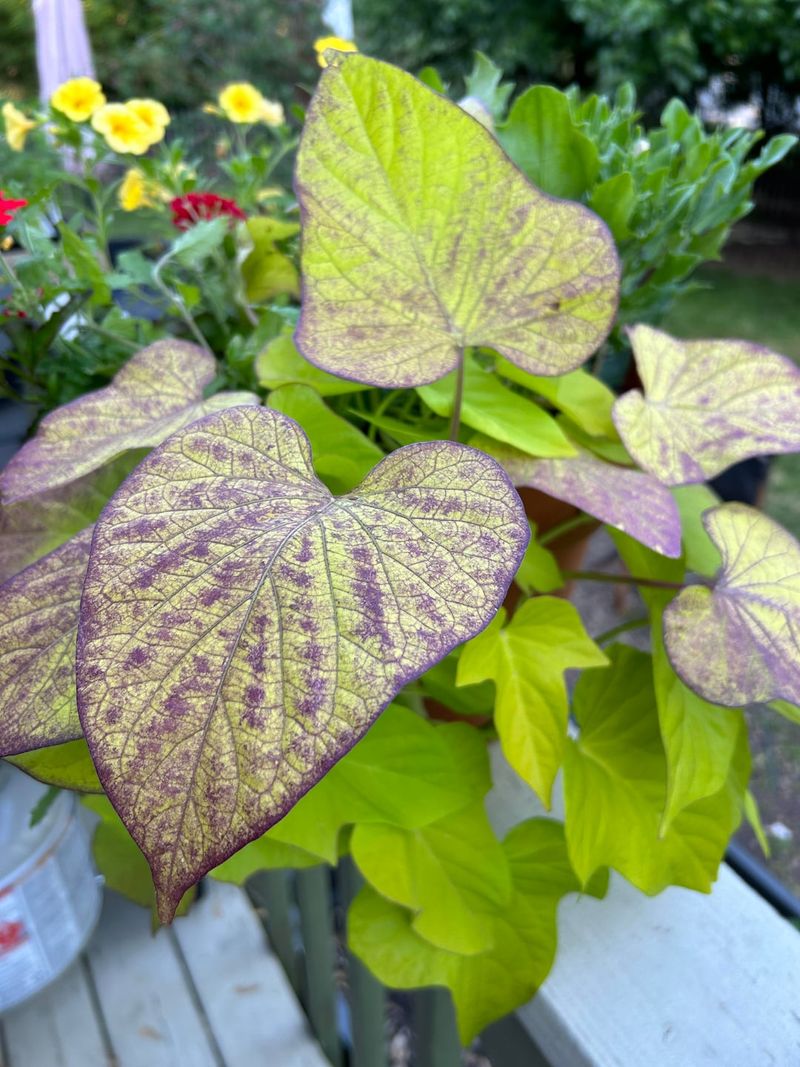
Pairing caladium with sweet potato vine gives you a combination that genuinely thrives in Florida’s warm, humid conditions without much fuss.
Caladiums love the bright, indirect light that filtered Florida shade provides, and their bold pink, red, or white leaves bring serious drama to any pot. Sweet potato vine, especially the deep purple or chartreuse varieties, spills beautifully over the container edges and handles Florida heat like a champ.
These two plants actually complement each other because the vine fills in gaps while the caladium draws the eye upward.
According to UF/IFAS Extension, caladiums perform best in Florida when protected from harsh afternoon sun, so choose a spot with morning light and afternoon shade. The easy summer tweak?
Swap out any fading spring fillers like pansies with heat-tolerant SunPatiens or pentas to keep color popping without missing a beat. Water consistently, and your container will stay vibrant all season long.
2. Sun-Kissed Tropical Breeze Planter
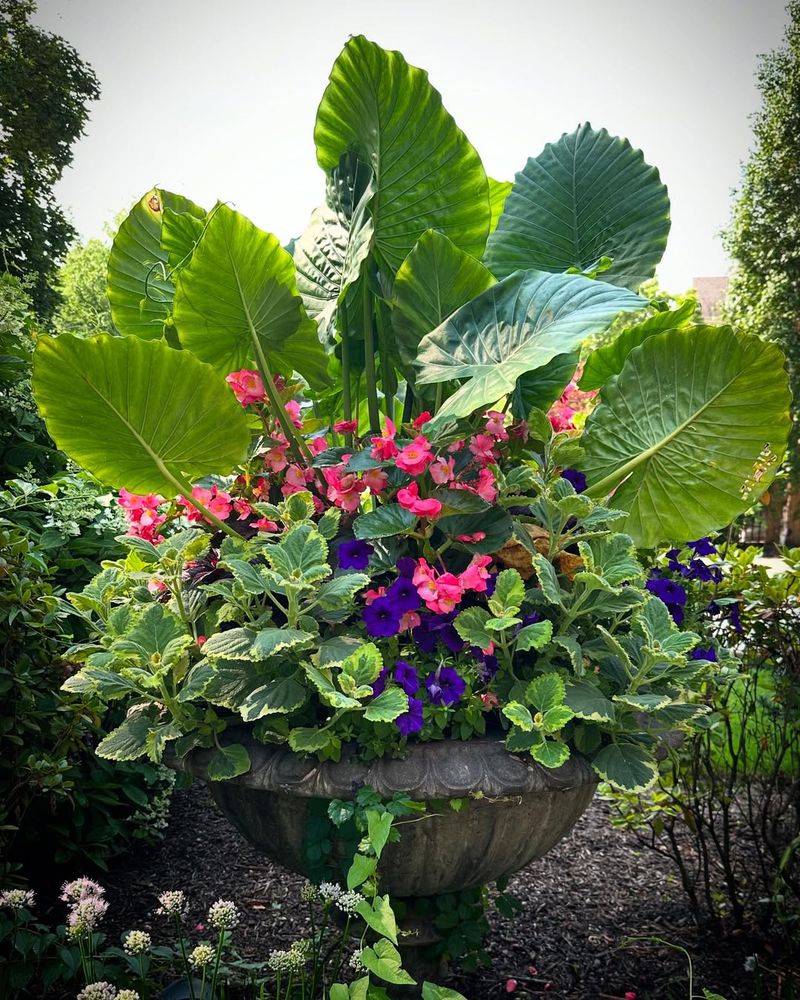
Step outside on a hot Florida morning and you can almost feel the tropics in the air. That feeling is exactly what this container combination brings to your patio or lanai.
Bold, textural, and unapologetically colorful, this tropical-inspired planter was made for Florida’s intense summer sun.
Croton is the star of this show, offering fiery orange, yellow, and red foliage that actually gets more vivid in bright light. Pair it with a dwarf ixora or hibiscus for bursts of bloom color, then let blue daze trail softly over the container edges for a cool contrast.
Cordyline adds vertical drama and holds up beautifully through Florida’s humidity and afternoon rain showers.
Placement matters here. These plants love full sun but appreciate some airflow, making a breezy lanai or open patio ideal.
UF/IFAS Extension recommends grouping heat-tolerant tropicals together to reduce watering stress and improve overall plant performance in Florida’s summer conditions. The simple tweak to carry this planter into summer?
Your Florida Garden Changes Every Week. Your Plan Should Too.
Gardening in Florida changes quickly throughout the season. Every Friday you’ll receive a simple weekly plan showing exactly what to plant, prune, fertilize, harvest, and protect so you never miss the right timing.
Trim back any leggy hibiscus stems by about one-third in June to encourage fresh, bushy growth and a new round of blooms that will carry you through August and beyond.
3. Butterfly Haven Bloom Bowl
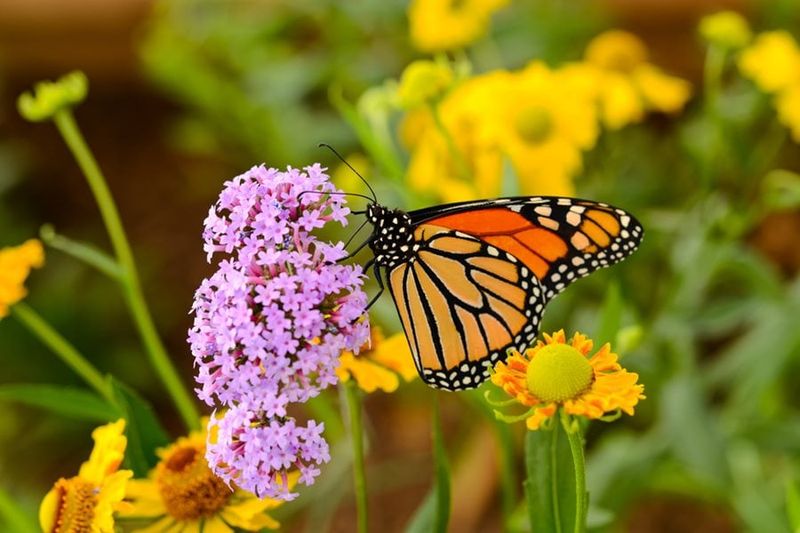
Butterflies do not just happen to show up in your garden. They are drawn by specific plants that offer nectar, shelter, and a reason to stay.
Building a container around their favorites is one of the most rewarding things a Florida gardener can do, and it looks absolutely beautiful in the process.
Lantana is a Florida-Friendly Landscaping superstar that monarchs, swallowtails, and skippers simply cannot resist. Pair it with pentas, which blooms almost nonstop in Florida’s heat, and add some firebush or salvia for height and structure.
Blanket flower rounds out the mix with cheerful yellow and red daisy-like blooms that hold up through summer’s worst heat waves.
According to Florida-Friendly Landscaping guidelines supported by UF/IFAS, choosing native and Florida-adapted plants for containers reduces the need for chemical inputs and supports local pollinators year-round. The key tweak for summer longevity?
Deadhead spent blooms on pentas and salvia every week or two to encourage continuous flowering. Also, lantana can get woody by midsummer, so trim it back by about half in late June to refresh its shape and trigger a fresh flush of color that butterflies will absolutely flock to all the way into fall.
4. Coastal Color Pop Container
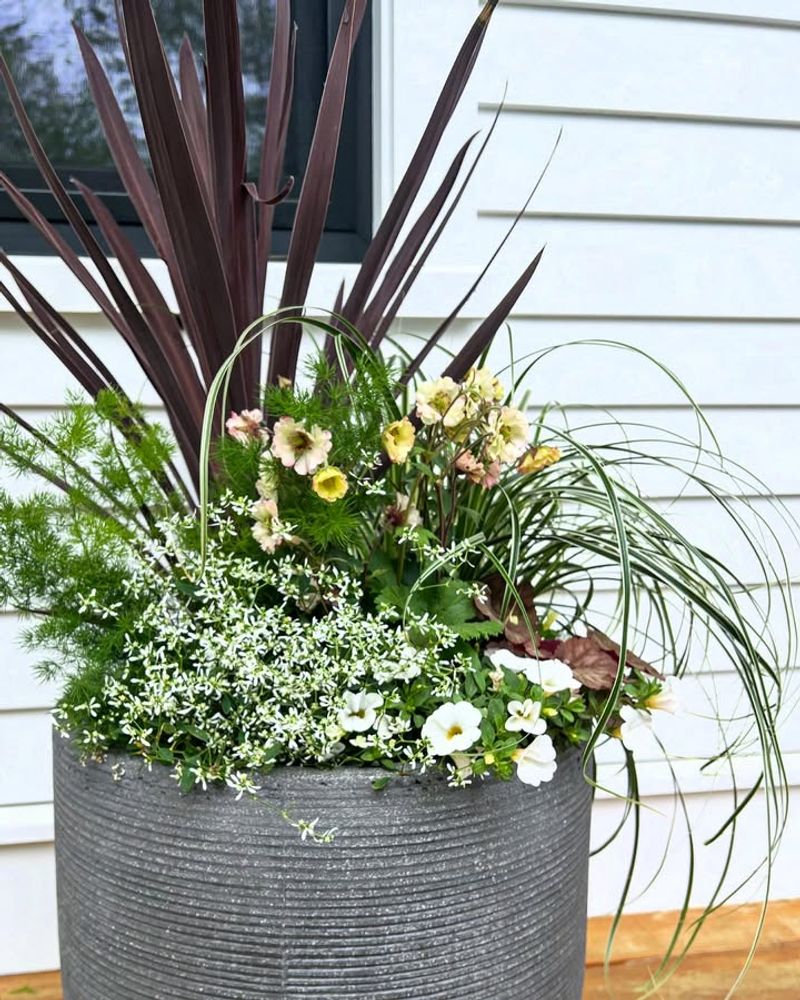
Gardening near Florida’s coast comes with a unique set of challenges that inland gardeners never have to think about. Salt spray, intense reflected heat from sand and pavement, and strong Gulf or Atlantic breezes can stress out plants that would otherwise do just fine.
Choosing the right team for your coastal container makes all the difference.
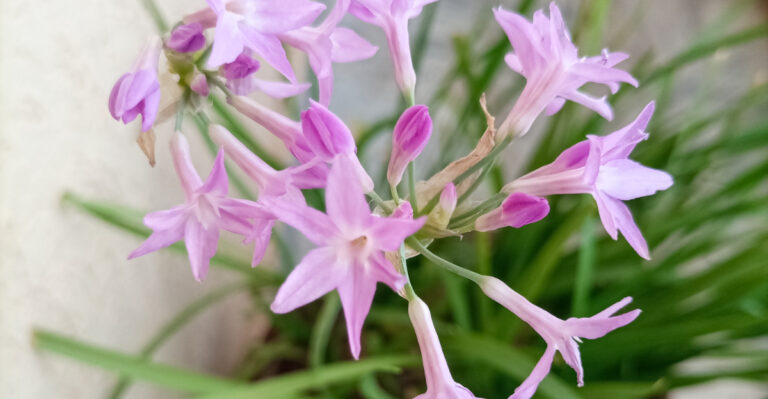
Society garlic brings soft purple blooms and grassy texture while tolerating salt air surprisingly well. Silver buttonwood, with its gorgeous silvery-green foliage, is practically built for coastal Florida conditions.
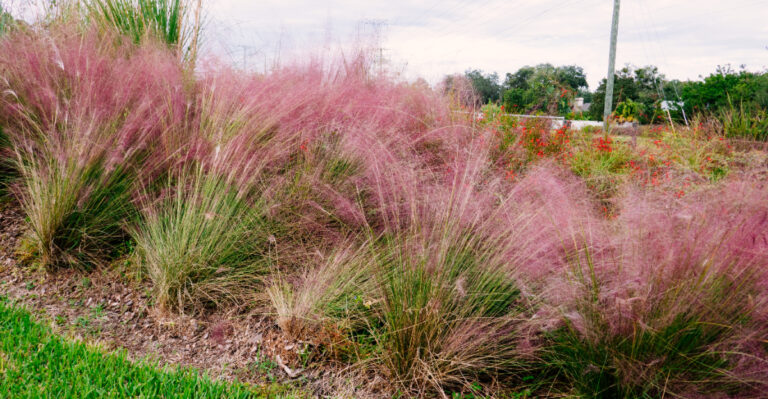
Tuck in some portulaca or purslane at the base, and you have a low-water, high-color combination that laughs at heat and humidity. Ornamental grasses like muhly or blue fescue add movement and a beachy feel to the whole arrangement.
Florida Extension resources recommend selecting salt-tolerant species for coastal landscapes and containers to reduce plant stress and maintenance needs. For placement, keep containers slightly sheltered from the harshest afternoon wind if possible, which helps reduce moisture loss.
The summer refresh tweak? Replace any spent portulaca with fresh transplants in July, since portulaca reseeds but can thin out by midsummer.
A fresh planting every six to eight weeks keeps coastal containers looking full, bright, and completely on point through the hottest months.
5. Heat-Loving Sunset Mix
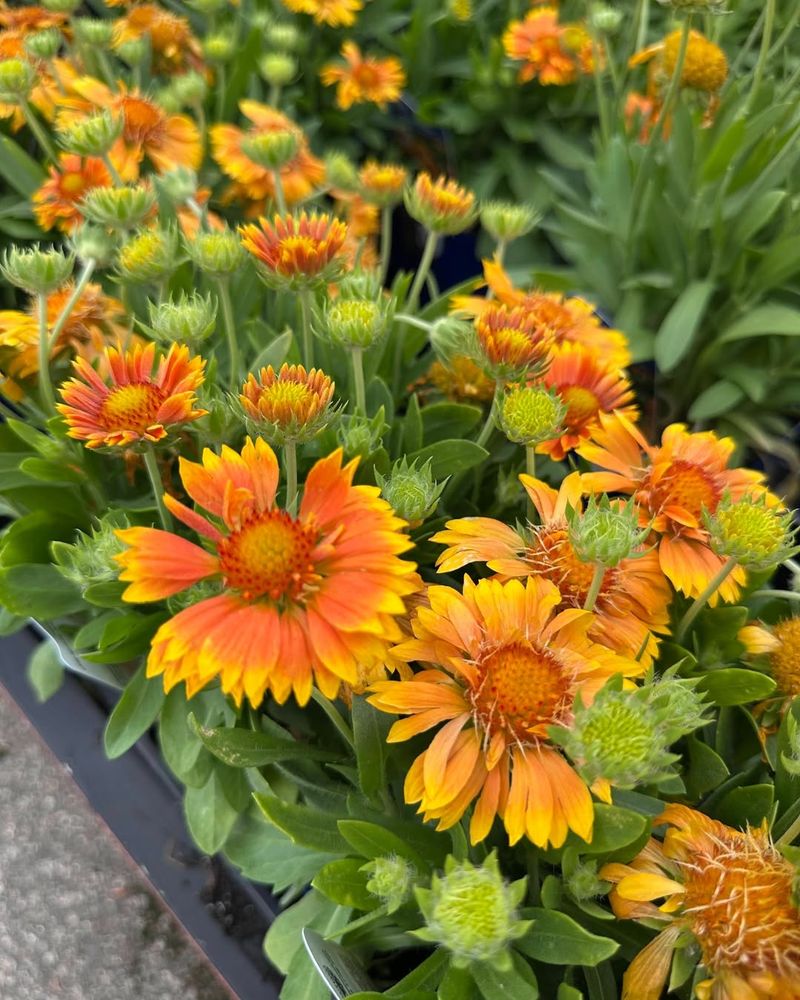
Some containers wilt the moment July arrives in Florida. This one is built for exactly that moment.
The Heat-Loving Sunset Mix leans into the season instead of fighting it, using full-sun bloomers that actually perform better as temperatures climb past ninety degrees.
Angelonia, sometimes called summer snapdragon, is a Florida gardener’s secret weapon. It blooms nonstop in heat and humidity with almost no fuss.
Pair it with gaillardia, coreopsis, or verbena for a sunset palette of reds, oranges, and yellows that looks like a Florida sky at dusk. Zinnias fill in beautifully and attract butterflies as a bonus.
Soil matters a lot for this mix. According to UF/IFAS Extension, using a high-quality, well-draining potting mix with added perlite prevents root issues caused by Florida’s heavy summer rainfall.
Water deeply but allow the container to drain fully between waterings to avoid soggy roots. The summer pruning tweak is simple but powerful: cut angelonia and verbena back by one-third in late June to encourage fresh branching and a stronger second half of the season.
Fertilize every three to four weeks with a slow-release balanced fertilizer to keep blooms coming strong through September without overfeeding tender summer roots.
6. Palm Patio Paradise Pot
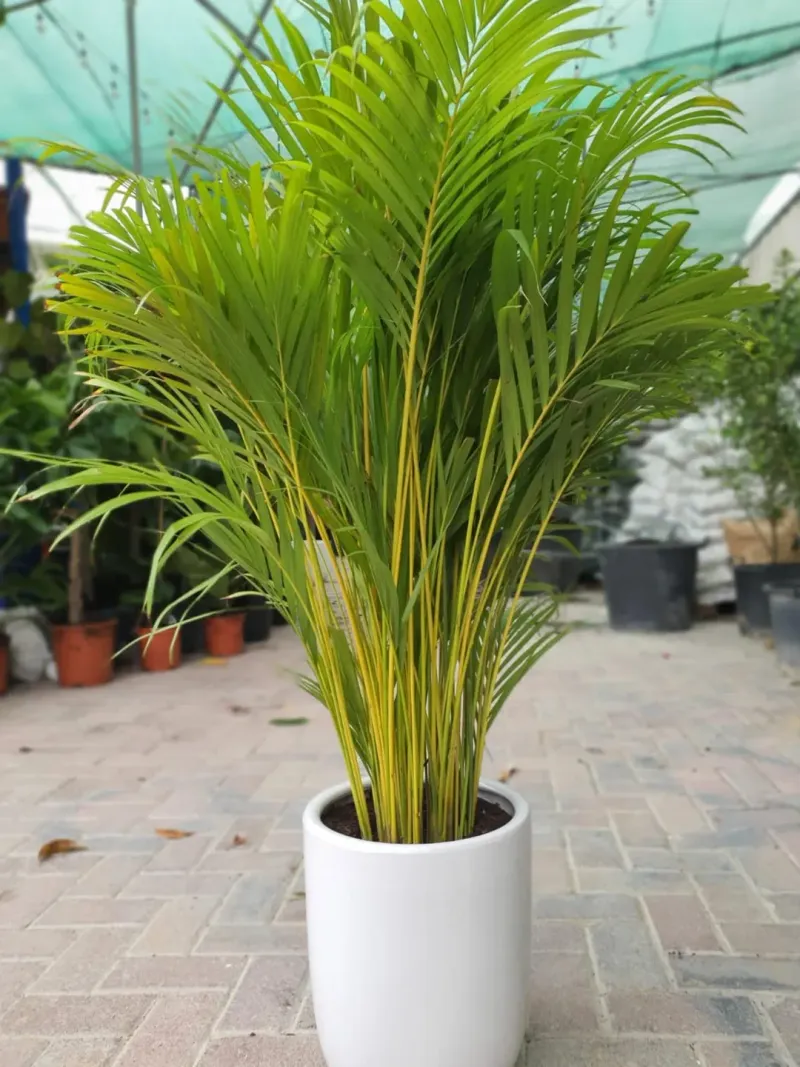
Nothing says Florida like a palm tree, and the good news is you do not need a yard to enjoy one. Dwarf varieties work beautifully as thriller plants in large containers, turning an ordinary patio into a genuine tropical retreat that neighbors will absolutely notice.
An areca palm or pygmy date palm serves as the dramatic centerpiece, providing height and that unmistakable tropical silhouette. Surround the base with foxtail fern for feathery texture, then tuck in caladium or coleus for pops of color underneath the fronds.
This layered approach creates a full, lush look that feels like a resort garden rather than a simple pot.
Container size is critical here. Florida’s summer heat dries out small pots quickly, so choose a container that holds at least fifteen gallons to maintain moisture and root stability.
Good drainage holes are non-negotiable, especially during hurricane season when rainfall can be extreme. Fertilize palms separately with a palm-specific fertilizer that includes magnesium and manganese, as recommended by UF/IFAS Extension for Florida palms.
The easy summer tweak? Swap out any spring coleus that gets leggy with fresh cuttings or new transplants in June, keeping the understory of your palm pot looking full and vibrant through the most intense summer months ahead.
7. Pollinator Party Planter
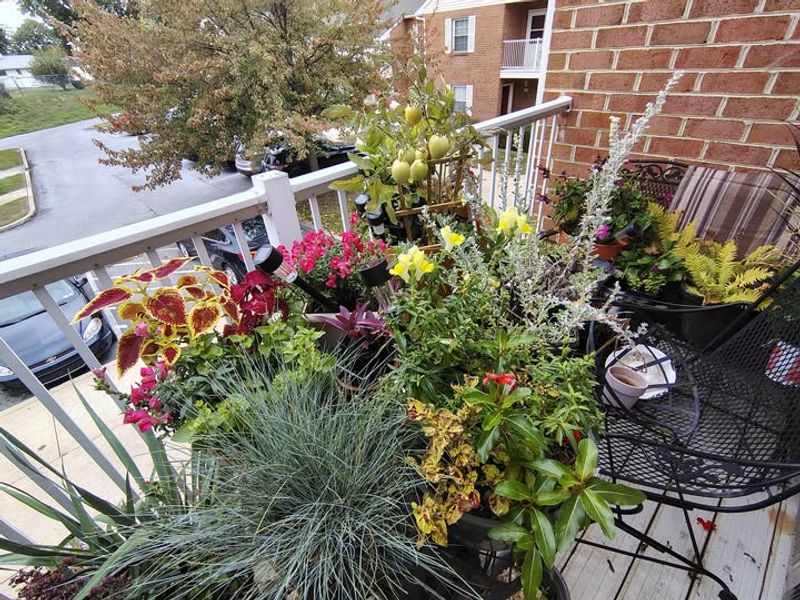
Florida is home to hundreds of native bee species, dozens of butterfly species, and countless other pollinators that depend on specific plants to survive. Creating a container designed around their needs is not just a feel-good choice; it is genuinely impactful for local ecosystems, and it requires surprisingly little effort to maintain.
Native milkweed, particularly the Florida-native Asclepias tuberosa or Asclepias incarnata, is essential for monarch butterflies and should be a part of every Florida pollinator planter. Add tickseed, which is Florida’s state wildflower, for cheerful yellow blooms that bees adore.
Blue porterweed and muhly grass round out the container with color, texture, and movement that feels completely at home in a Florida landscape.
UF/IFAS Extension and the Florida-Friendly Landscaping Program strongly encourage using Florida-native or Florida-adapted plants in home gardens to support biodiversity and reduce water and fertilizer use. Avoid tropical milkweed, which can interfere with monarch migration patterns according to Florida Extension resources.
The summer tweak for this planter? Allow spent blooms to remain on tickseed and porterweed a bit longer in summer, since seed heads provide food for birds.
Trim back milkweed stems by half in late summer to encourage fresh growth that supports late-season monarch migration through Florida.
8. Bold & Bright Summer Spillover
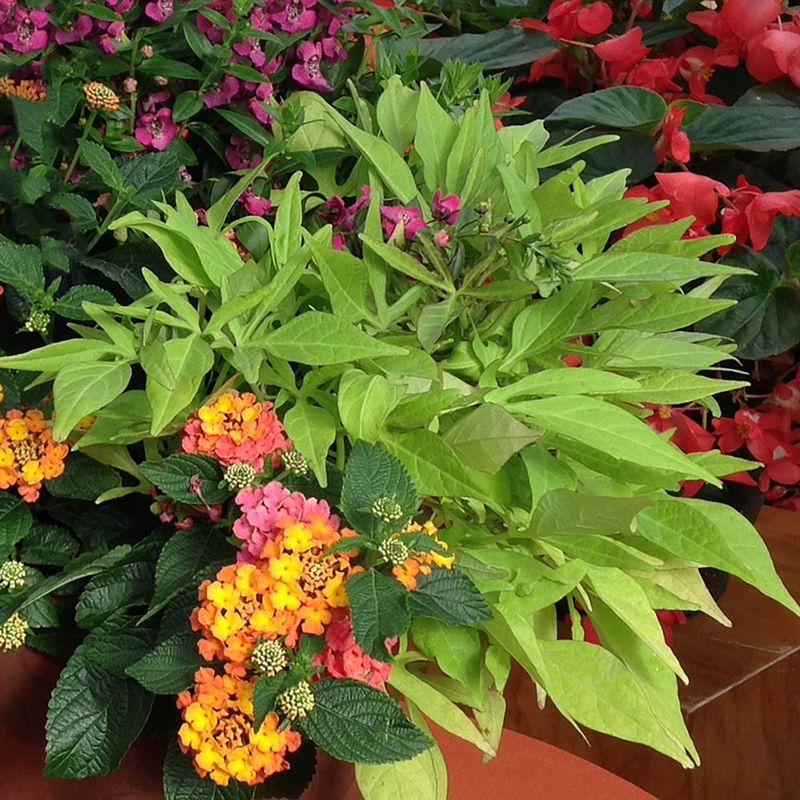
There is something almost theatrical about a container that spills and cascades over its edges with total abandon. The spillover effect is one of the most eye-catching things you can create in a container garden, and in Florida’s humidity, trailing plants truly hit their stride during the hottest months of the year.
Sweet potato vine is the undisputed king of Florida spillers, growing aggressively in summer heat and offering bold chartreuse or deep purple foliage that contrasts beautifully with almost anything. Trailing lantana adds bursts of color while drawing butterflies from across the yard.
Dichondra Silver Falls brings a cool, metallic shimmer to the mix, and evolvulus adds tiny blue flowers that pop against all that green and purple.
Humidity is actually a friend to most trailing plants, helping them root quickly and spread lush growth throughout the container. The key maintenance habit for Florida’s summer?
Trim sweet potato vine every two to three weeks to prevent it from overwhelming its neighbors. According to Florida gardening experts, a mid-July refresh is ideal for spillover containers: remove any yellowing stems, give the pot a light feeding with liquid fertilizer, and add a fresh trailing plant or two to fill any gaps that develop during the season’s most intense heat.