The Best Texas Container Plants For Covered Patios With Almost No Sun
Covered patios in Texas can be surprisingly tricky spots for a garden. While the shade feels great to us, the roof blocks direct sunlight, heat builds up fast, and limited airflow can leave many popular plants struggling to survive.
It’s frustrating to see lifeless pots in a space meant for relaxation. Fortunately, a handful of tough, shade-loving plants are built for exactly these conditions.
They thrive in indirect or reflected light, bringing bold color, texture, and greenery to even the darkest corners of your patio.
Choosing these desert-hardy, shade-tolerant alternatives is the secret to a lush outdoor retreat that survives the Texas heat without needing a single ray of direct sun.
1. Cast Iron Plant Handles Deep Shade With Ease
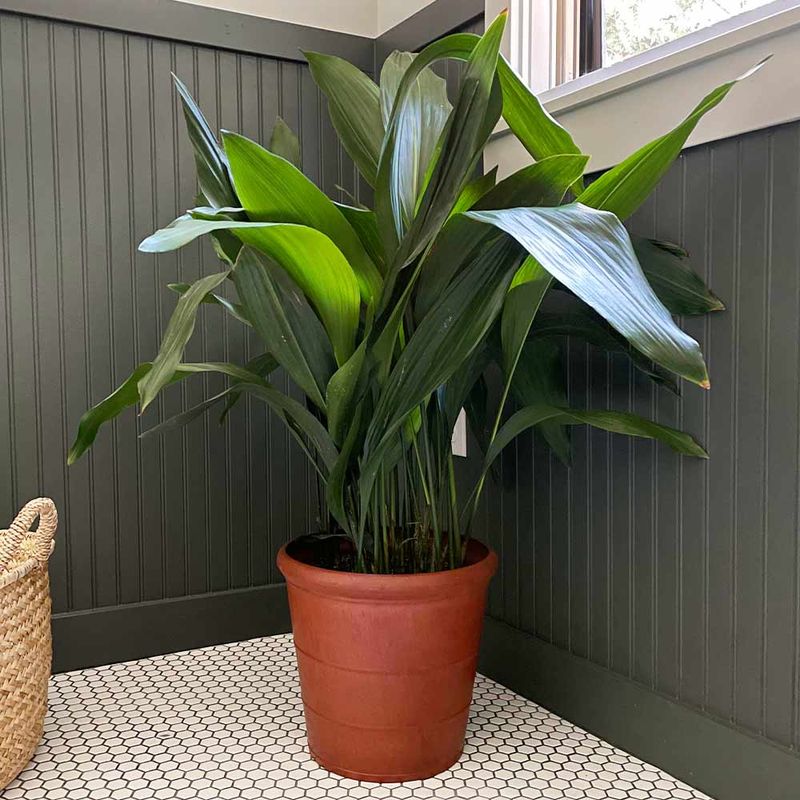
On a covered Texas patio where barely any light filters through, most plants would struggle to survive a full summer. The cast iron plant earns its name honestly, shrugging off heat, low light, and inconsistent watering without much complaint.
Its broad, deep green leaves stay attractive through the hottest Texas months, making it one of the most dependable choices for shaded container gardening in the state.
Growing a cast iron plant in a container is fairly straightforward. Choose a pot that is at least 10 to 12 inches wide with solid drainage holes, since waterlogged roots are one of the few things that can set this plant back.
A rich, well-draining potting mix works well, and adding a bit of organic matter helps retain just enough moisture without staying soggy.
Watering once or twice a week during the warmer Texas months is usually enough, though always check the top inch of soil before watering again. This plant grows slowly, so do not expect rapid changes in size.
Fertilizing lightly once in spring with a balanced slow-release fertilizer encourages healthy new growth throughout the season.
The cast iron plant handles the heat buildup common on covered Texas patios surprisingly well, and its low-maintenance nature makes it a smart pick for beginners and experienced gardeners alike.
2. Snake Plant Thrives In Low Light Corners
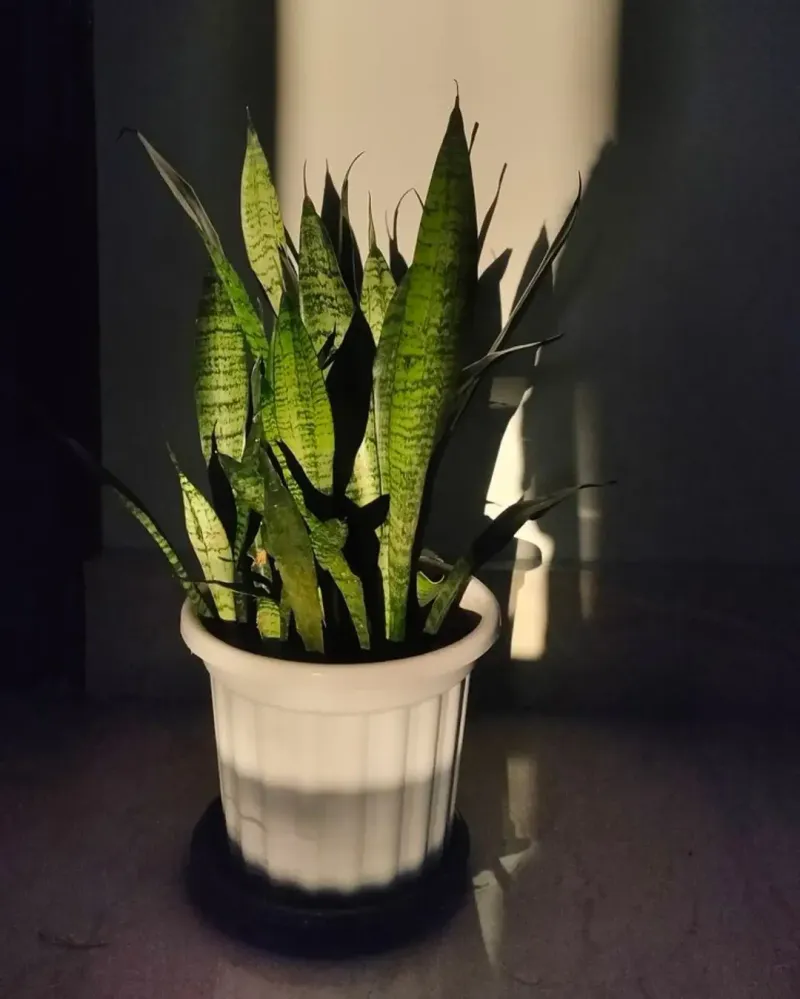
Shaded corners on Texas patios often feel like forgotten spaces, too dark for most plants and too hot for comfort during summer afternoons. Snake plants, however, treat those dim corners like prime real estate.
Their tall, upright leaves with bold green and yellow patterning add strong visual structure to spaces that would otherwise look empty and dull.
One of the most practical things about growing snake plants in containers outdoors in Texas is how little water they need.
During the hottest parts of summer, watering every 10 to 14 days is often enough, and in cooler months you can stretch that even further.
Overwatering is a bigger concern than underwatering with this plant, so always let the soil dry out fairly well between sessions.
Choose a container with excellent drainage and use a fast-draining potting mix, ideally one formulated for succulents or cacti blended with standard potting soil. A 10 to 14 inch pot gives roots enough room to grow without holding excess moisture.
Your Texas Garden Changes Every Week. Your Plan Should Too.
Gardening in Texas changes quickly throughout the season. Every Friday you’ll receive a simple weekly plan showing exactly what to plant, prune, fertilize, harvest, and protect so you never miss the right timing.
Snake plants are also known to handle the humidity swings common to Texas patios without developing fungal issues, which is a real advantage in a state where summer humidity can spike quickly.
A light feeding in early spring with a diluted balanced fertilizer is usually all the nutrition this plant needs for the whole growing season.
3. ZZ Plant Grows Well With Minimal Light
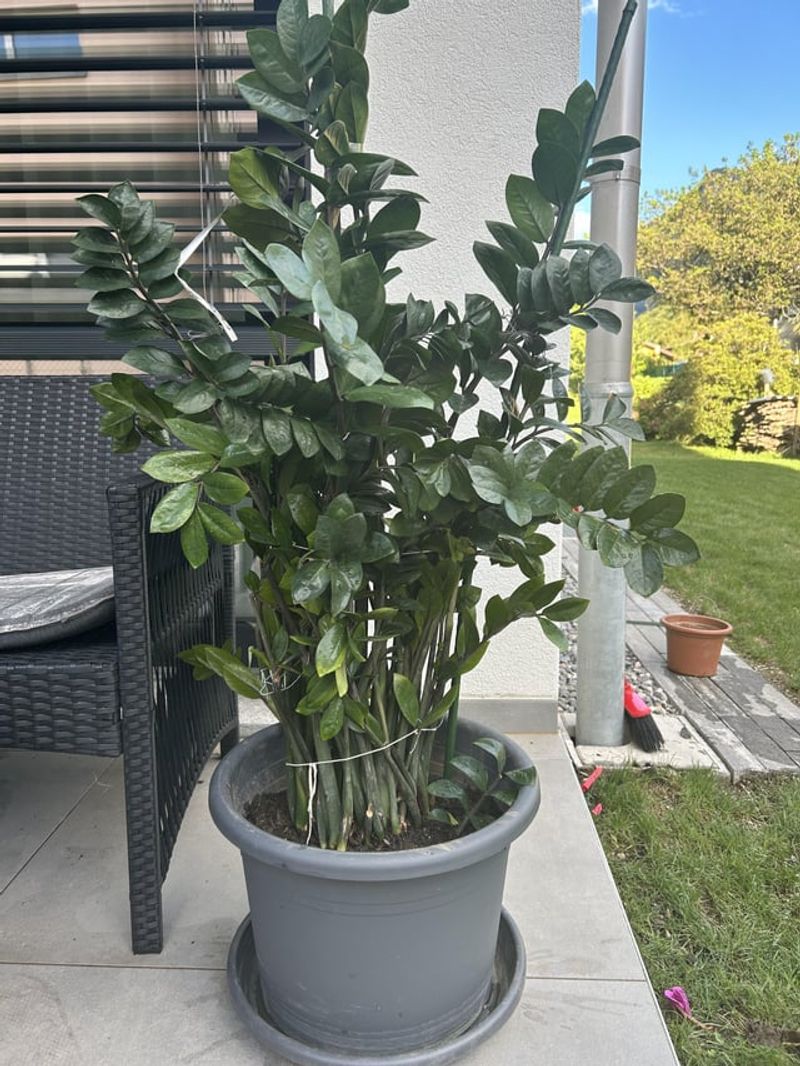
Waxy, glossy leaves that practically glow even in dim light give the ZZ plant a polished, modern look that works beautifully on covered Texas patios.
Unlike many tropical plants that sulk without sun, the ZZ plant stores water in its thick rhizomes underground, allowing it to handle dry spells and low-light conditions that would stress most other plants.
For Texas gardeners dealing with covered patios that get little to no direct sunlight, the ZZ plant is genuinely reliable. It tolerates the reflected heat that often builds up under patio roofs during summer without showing much distress.
Watering every two weeks during the growing season is a reasonable starting point, though adjusting based on how quickly your specific container dries out is always a smart move.
Use a container that is wide enough to accommodate the plant’s spreading rhizomes, typically a 10 to 12 inch pot, and fill it with a well-draining potting mix.
Adding perlite to the mix improves drainage and reduces the risk of root rot, which is the main threat to ZZ plants in humid Texas summers.
Avoid fertilizing heavily since this plant is a slow grower that does not need much encouragement.
A single application of balanced slow-release fertilizer in early spring supports steady, healthy growth through the season without pushing the plant to grow faster than its roots can handle.
4. Peace Lily Adds Soft Blooms In Indirect Light
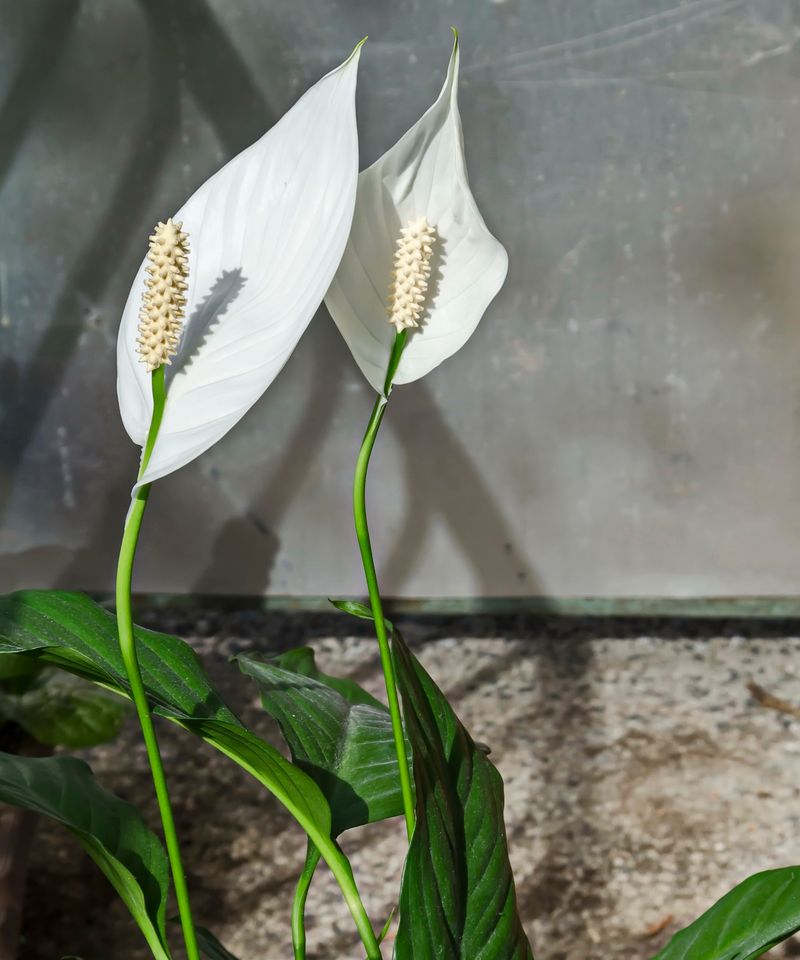
Few plants manage to bring both lush foliage and actual blooms to a deeply shaded Texas patio, but the peace lily does exactly that.
Its white, sail-shaped flowers rise above dark green leaves and can appear multiple times a year under the right conditions, making it one of the more rewarding shade plants for outdoor containers in Texas.
Peace lilies prefer consistently moist soil, though not waterlogged. On a covered Texas patio, where evaporation slows down compared to open sun areas, watering two to three times per week during summer is usually enough.
The key is checking the soil regularly and adjusting based on the heat and airflow around your specific patio setup. If the leaves start to droop slightly, that is a reliable signal the plant is ready for water.
Humidity is something peace lilies genuinely appreciate, and Texas summers naturally provide plenty of it.
However, covered patios with limited airflow can sometimes trap moisture in ways that encourage fungal problems, so make sure the container has good drainage and that water never sits in the saucer for long.
A 10 to 14 inch pot filled with a rich, moisture-retaining potting mix suits this plant well.
Feeding with a diluted balanced liquid fertilizer every four to six weeks during the growing season encourages both leaf growth and those signature white blooms that brighten shaded spaces beautifully.
5. Boston Fern Brings Lush Green Texture To Shade
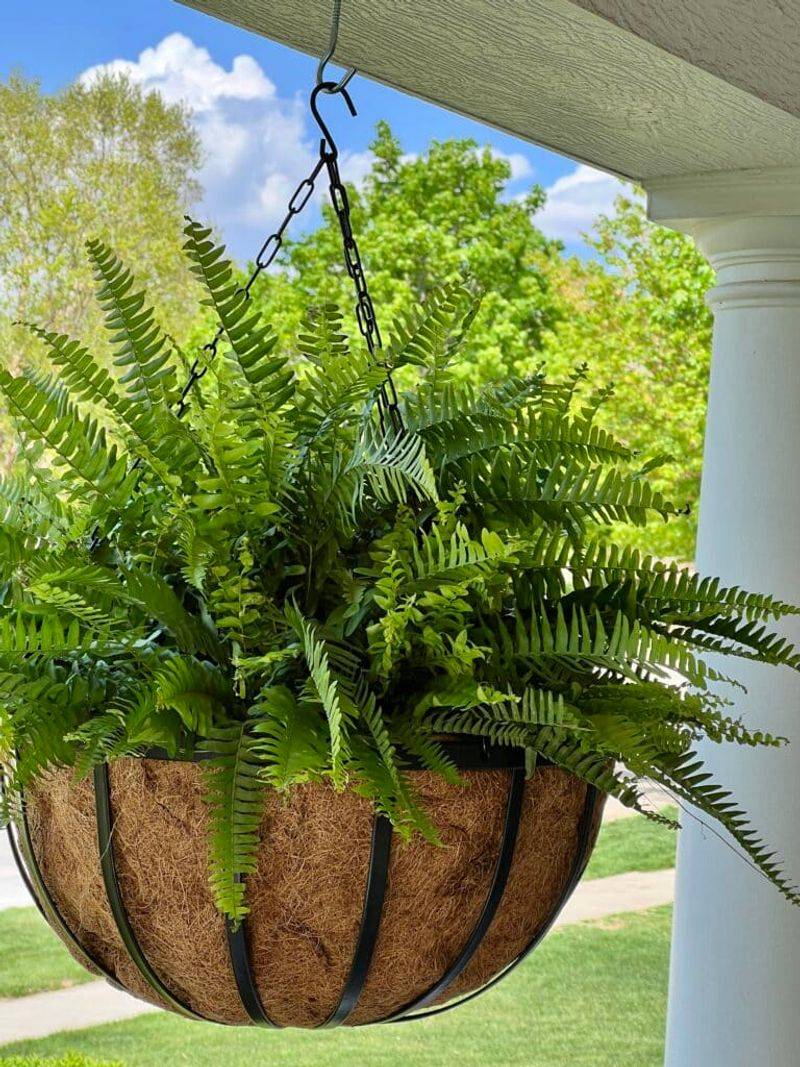
Arching fronds that spill over the edges of a pot like a waterfall of green make Boston ferns one of the most visually striking plants you can add to a covered Texas patio.
They bring a lush, almost tropical feel to shaded spaces and respond well to the naturally humid conditions that Texas summers often deliver, especially in the eastern and coastal parts of the state.
Keeping a Boston fern happy in a container requires consistent moisture. The soil should stay evenly moist but not soaking wet, which means checking it every day or two during the hottest Texas months.
These ferns do not tolerate drying out well, and fronds can turn yellow and drop quickly if the plant goes without water for too long. Grouping containers together on the patio can help raise local humidity levels slightly, which benefits ferns noticeably.
Choose a wide, shallow container rather than a deep narrow one, since fern roots tend to spread outward. A 12 to 14 inch pot with drainage holes and a quality moisture-retaining potting mix is a solid starting point.
Misting the fronds during hot afternoons can help the plant cope with heat buildup under a covered patio roof.
Feed with a diluted balanced liquid fertilizer every three to four weeks from spring through early fall to keep the fronds full, bright green, and actively growing throughout the Texas growing season.
6. Caladium Brightens Dark Spaces With Color
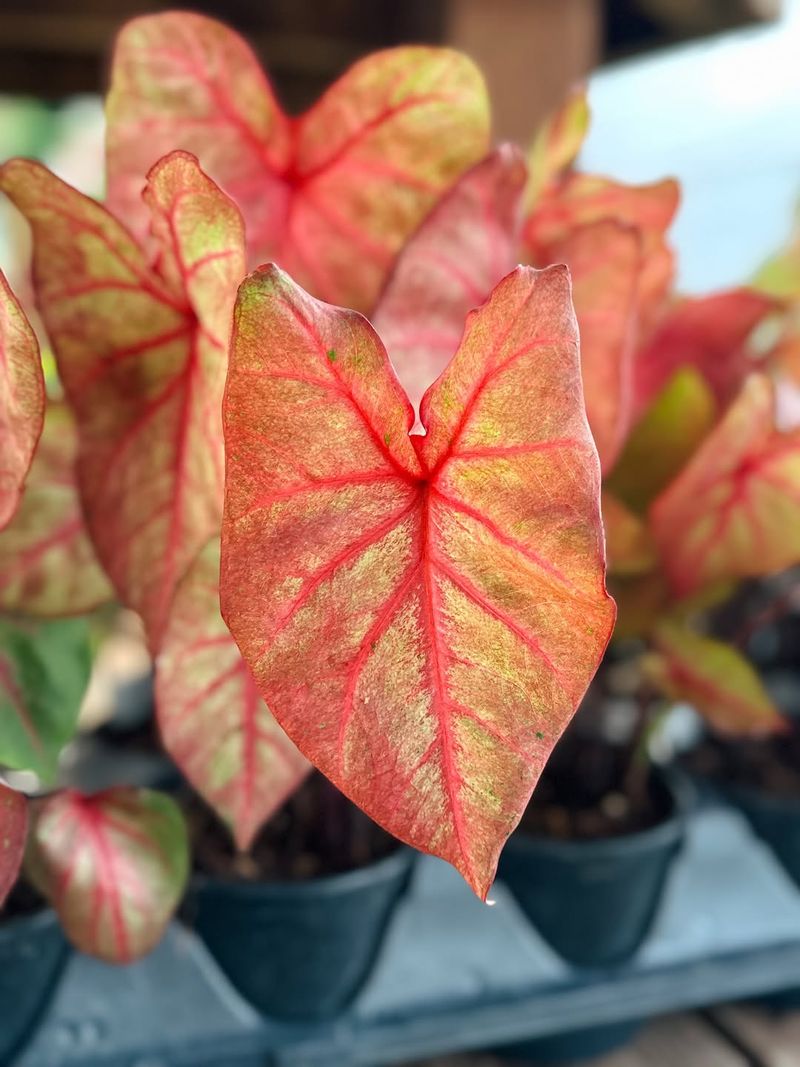
Walking onto a covered Texas patio decorated with caladiums feels like someone turned up the brightness in a dim room.
Their heart-shaped leaves come in bold combinations of pink, red, white, and green, delivering the kind of color that most flowering plants can only offer in full sun.
Caladiums flip that expectation entirely, thriving in the low-light conditions common on covered Texas patios.
Native to tropical South America, caladiums are well suited to the heat and humidity of Texas summers.
They prefer warm temperatures and actually slow down or go dormant when temperatures drop below 60 degrees Fahrenheit, so they are best treated as seasonal container plants in most Texas regions.
Plant the tubers in spring after the last cold snap, and they will fill out quickly as temperatures rise through summer.
Soil moisture is important for caladiums since they prefer consistently moist but well-draining conditions. Watering two to three times per week during the peak Texas summer heat is usually appropriate, though always check the soil first.
A rich, organic potting mix in a 10 to 12 inch container gives the tubers plenty of room to develop.
Fertilize every three to four weeks with a balanced liquid fertilizer to support the intense leaf color these plants are known for.
Avoid placing caladiums where reflected heat concentrates heavily, as extreme heat can sometimes cause leaf edges to brown even in low-light conditions.
7. Coleus Adds Bold Foliage Without Direct Sun
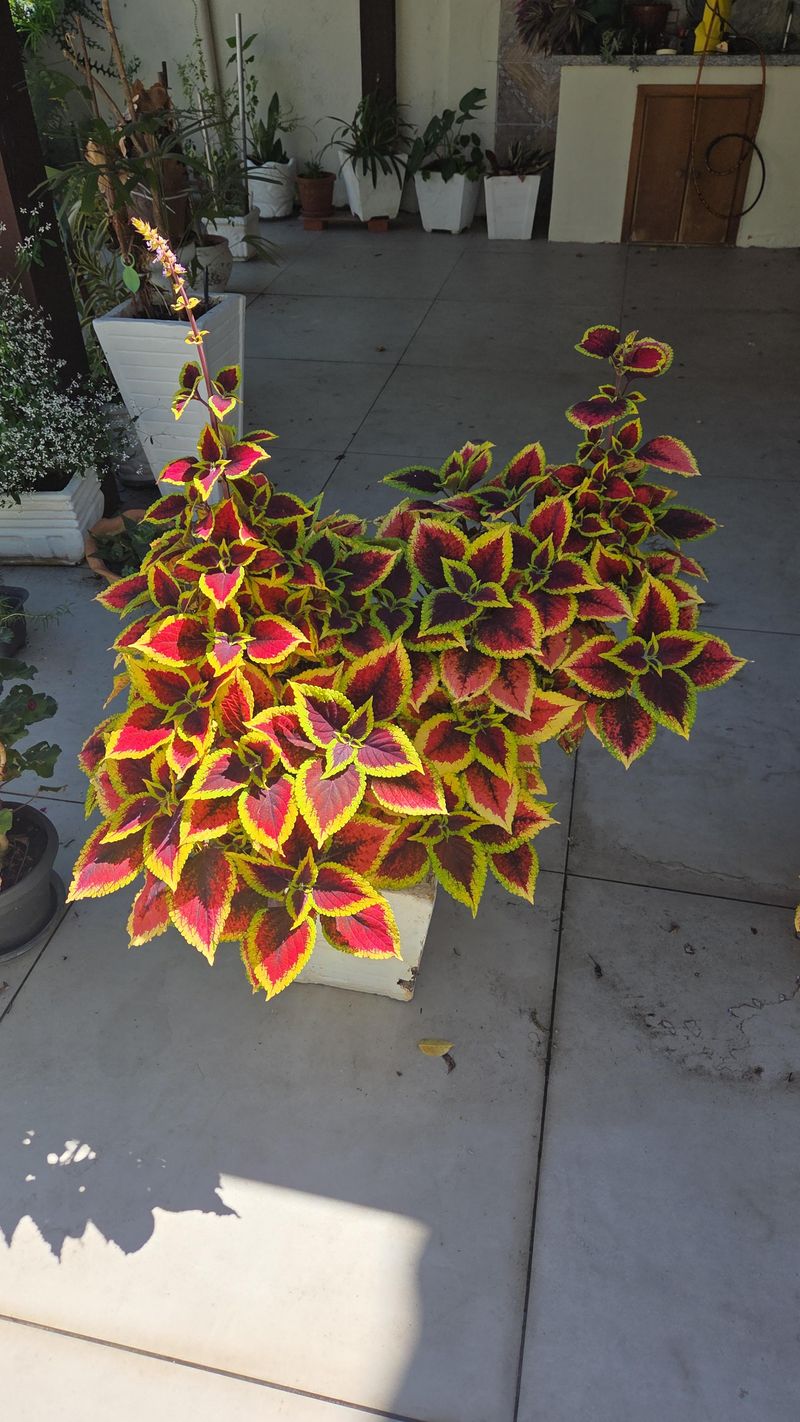
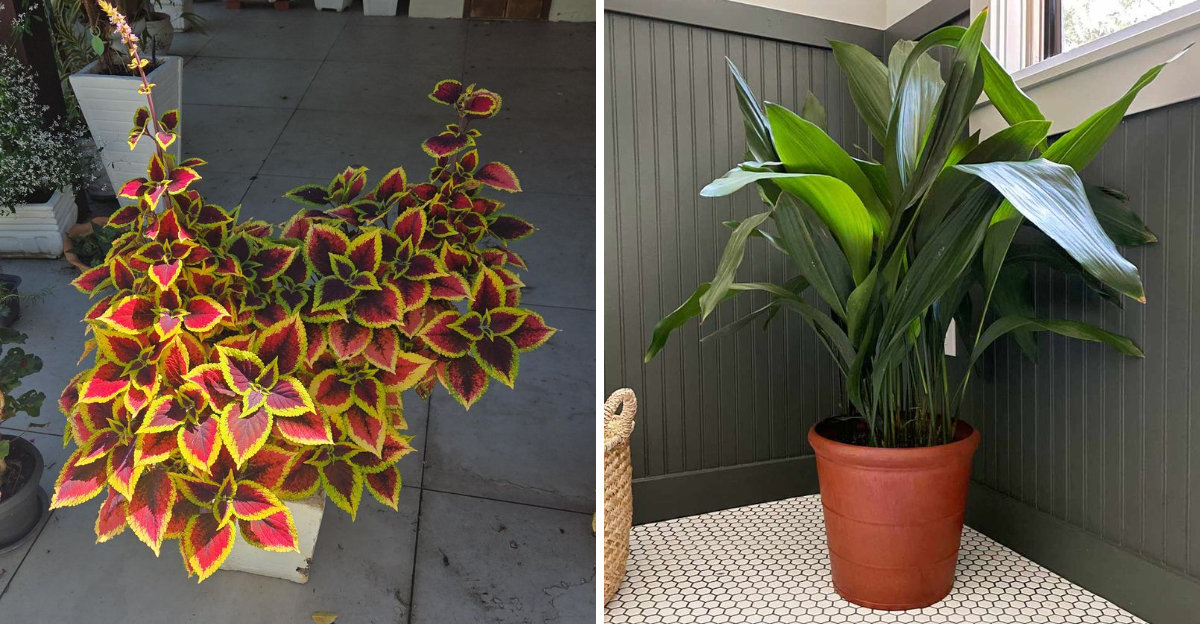
Bold, multicolored leaves in shades of burgundy, lime green, deep purple, and bright red make coleus one of the most eye-catching foliage plants available for shaded Texas patios.
Unlike plants that rely on blooms for their appeal, coleus delivers constant color through its leaves from the moment you plant it until the first cool snap of fall signals the end of the season.
Coleus plants prefer partial to full shade and actually tend to hold their richest colors when they are not exposed to harsh direct sunlight.
On a covered Texas patio, where light is filtered and indirect, coleus foliage tends to stay vivid and saturated throughout the summer.
Heat tolerance is solid, though consistent watering is essential since coleus wilts quickly when the soil dries out in the intense Texas summer heat.
Water coleus containers when the top inch of soil feels dry, which during peak Texas summer heat may mean watering every day or every other day depending on pot size and airflow.
Smaller pots dry out much faster than larger ones, so choosing a 10 to 12 inch container helps extend the time between waterings.
Pinching off flower buds as they appear encourages the plant to put more energy into producing lush, colorful leaves rather than going to seed.
Feed every two to three weeks with a balanced liquid fertilizer to support vigorous, healthy leaf growth throughout the season.
8. Begonia Keeps Color Going In Shaded Pots
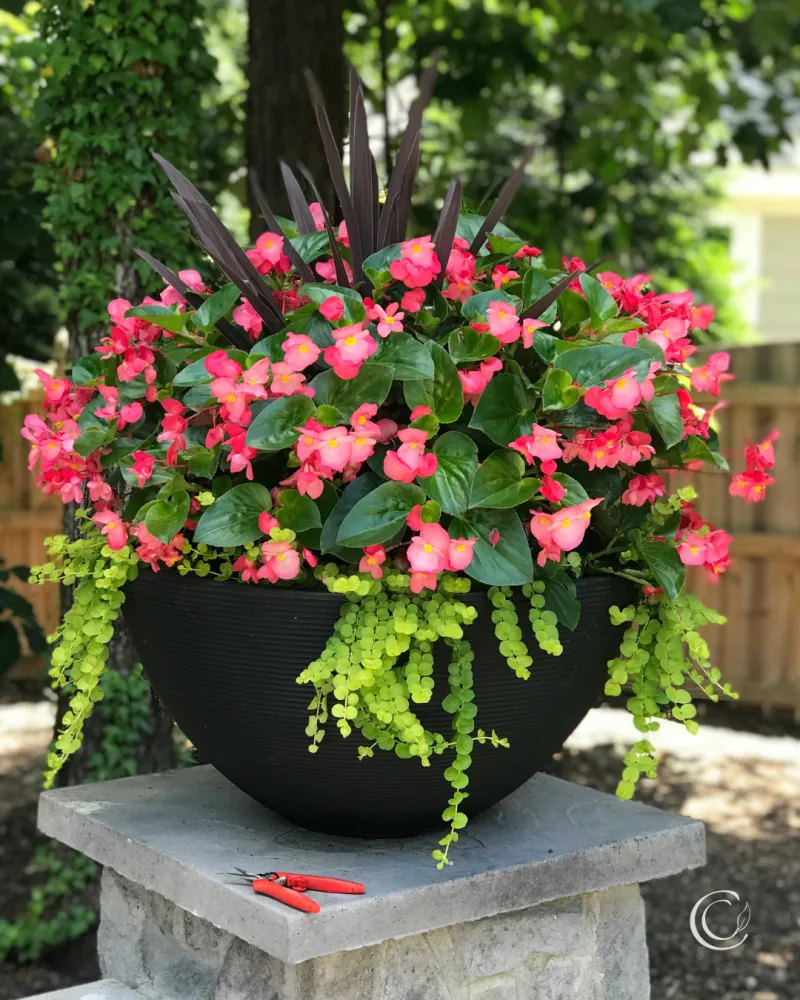
Long after many flowering plants have faded under the Texas summer heat, begonias keep producing blooms with impressive consistency.
Whether you choose wax begonias for their compact, waxy leaves and cheerful flowers or tuberous begonias for their larger, more dramatic blooms, both types perform well in the low-light conditions that covered Texas patios typically offer.
Wax begonias are especially well suited to Texas conditions because they tolerate heat better than many other begonia types. They bloom in shades of red, pink, and white, and their glossy leaves add texture even when the plant is between bloom cycles.
Tuberous begonias prefer slightly cooler temperatures and may slow down during the absolute peak of a Texas summer, but they often rebound beautifully as temperatures ease in late August and September.
Begonias do best in containers with excellent drainage since soggy soil leads to root problems quickly in the humid Texas climate. A 10 to 12 inch pot with a quality well-draining potting mix is a reliable setup.
Water when the top inch of soil feels dry, which typically means every two to three days during the hottest months.
Avoid wetting the leaves when watering to reduce the chance of fungal spots, which can develop in the low-airflow environment of a covered patio.
Feed every two to three weeks with a balanced liquid fertilizer to keep blooms coming steadily through the season.