Creative Birdhouse Ideas Arizona Gardeners Can Easily Make
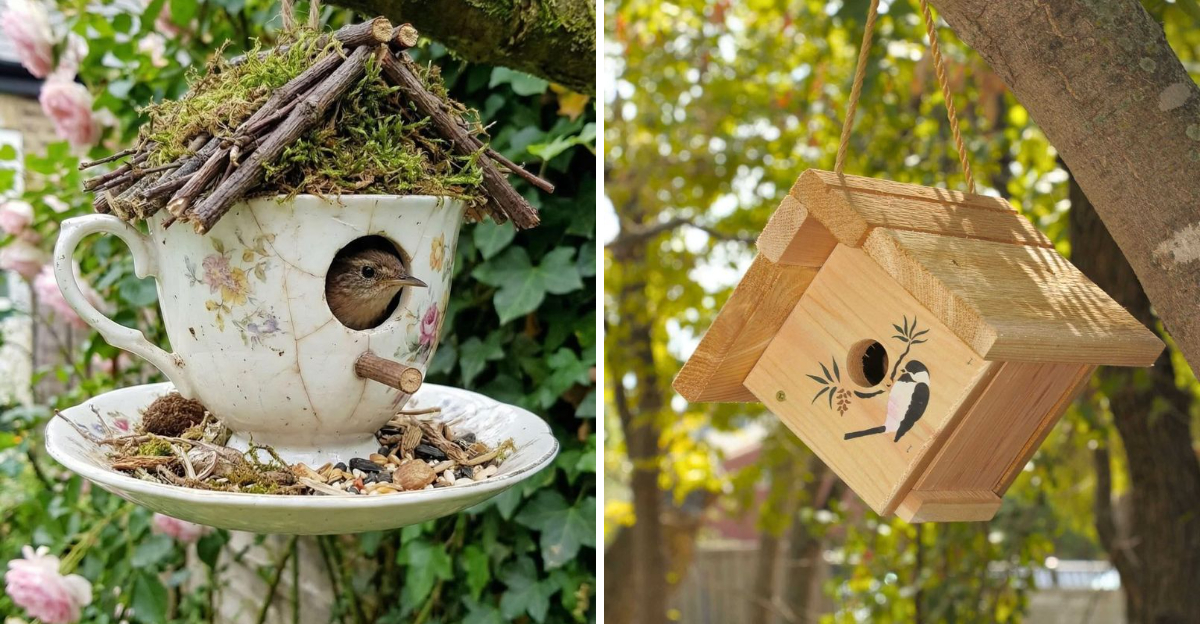
Arizona yards already have a ton of character, with sun-baked gravel, sculptural desert plants, and patios that heat up before your morning coffee is finished.
Adding a birdhouse is one of those small projects that brings big personality, and it is surprisingly easy to get started.
You do not need a full workshop or a long weekend, just a few materials and a bit of creativity. Once a birdhouse goes up, things get interesting fast.
You might spot house wrens checking things out, or catch a western bluebird perched nearby like it owns the place. Even quiet corners of the yard can turn into busy little hangouts.
The best part is how easily a birdhouse can match your space. Clean and modern, rustic and natural, or colorful and fun, there is something that fits right in with your Arizona style.
1. Basic Wooden Birdhouse For Backyard Birds
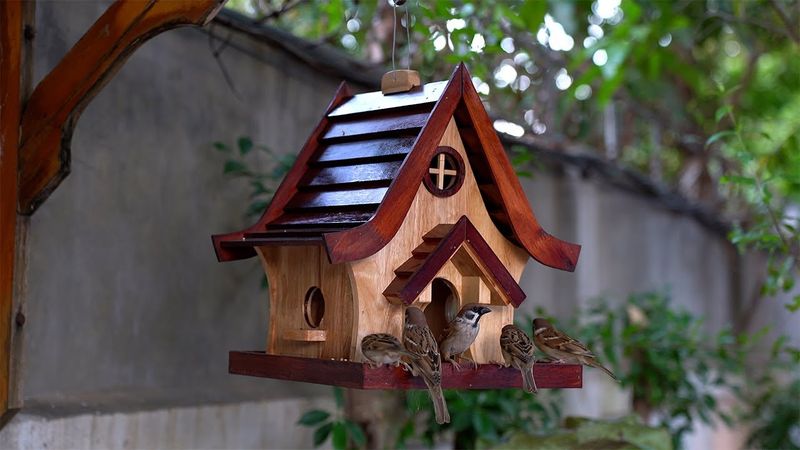
Backyard birds in Arizona are always looking for safe nesting spots, and a basic wooden birdhouse gives them exactly that. Cedar and redwood are among the best wood choices for Arizona because both resist warping and cracking in dry, intense heat.
A simple box shape with a sloped roof, a small entry hole, and a few ventilation gaps near the top is all you really need to get started.
For most small birds common to Arizona, an entry hole between 1.25 and 1.5 inches works well. Avoid adding a perch below the hole, since perches can actually make it easier for predators to access the nest.
Untreated wood is a smart choice because it breathes naturally and does not release chemicals that could bother nesting birds.
Mount your wooden birdhouse on a smooth metal pole or wooden post at least five feet off the ground. Placing it near a tree or shrub gives birds a sense of security without making it too easy for cats or squirrels to reach.
In Arizona, positioning the entry hole facing north or east can help reduce heat buildup inside during the hottest months of summer.
2. Modern Minimalist Birdhouse For Clean Landscapes
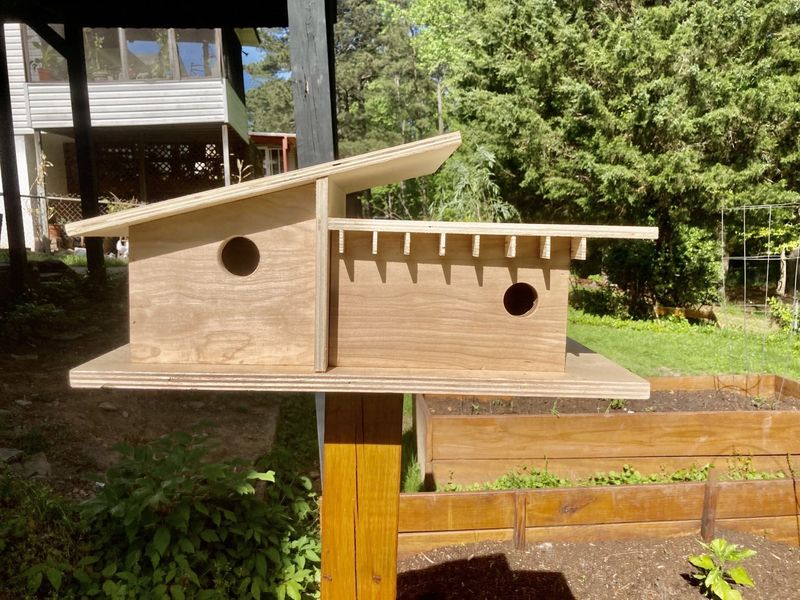
Clean lines and simple shapes are trending in Arizona outdoor design, and a modern minimalist birdhouse fits right in with that style.
Think flat roofs, smooth surfaces, neutral colors like white, gray, or taupe, and a boxy silhouette that looks intentional rather than rustic.
These birdhouses look especially sharp when placed near concrete pavers, gravel beds, or low-growing succulents.
Building a minimalist birdhouse is straightforward. Use smooth-cut pine or plywood, sand the edges well, and apply an exterior-grade paint in a muted tone.
A flat or slightly angled roof sheds rain during Arizona monsoon season and keeps the inside dry. Leave the inside unfinished so birds feel comfortable and safe.
One practical tip for hot Arizona summers is to add small ventilation holes near the top of the side walls. These allow heat to escape without letting in rain or predators.
A minimalist birdhouse with proper ventilation can stay several degrees cooler inside than one without it, which matters greatly during July and August in Arizona.
Your Arizona Garden Changes Every Week. Your Plan Should Too.
Gardening in Arizona changes quickly throughout the season. Every Friday you’ll receive a simple weekly plan showing exactly what to plant, prune, fertilize, harvest, and protect so you never miss the right timing.
Place it in a spot that gets morning sun but afternoon shade for the most bird-friendly environment possible.
3. Painted Birdhouse Adds Color To Arizona Yards
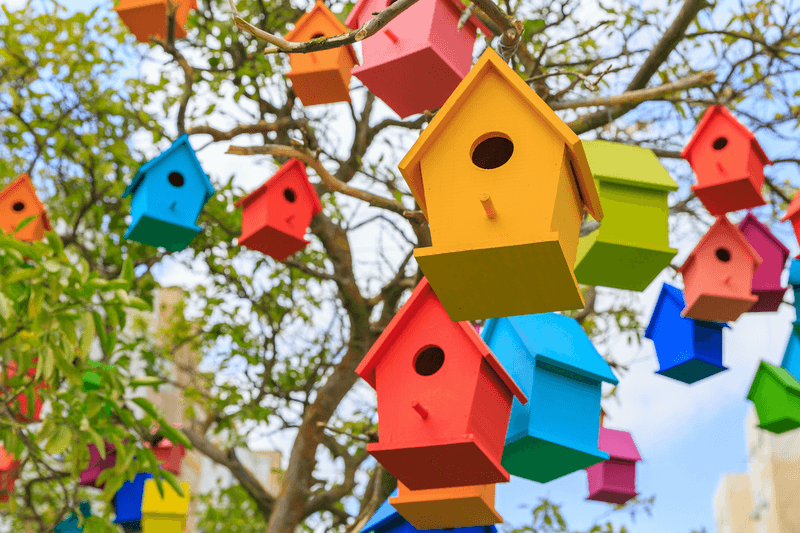
Color can completely transform an outdoor space, and a painted birdhouse is one of the easiest ways to add a pop of personality to an Arizona yard. Bright turquoise, warm terracotta, sunny yellow, and deep coral all complement the desert palette beautifully.
Painting a birdhouse is also a fun weekend activity for kids and adults alike.
When choosing paint, stick with exterior latex or acrylic paints that are rated for outdoor use. These hold up well against Arizona sun and monsoon rain without peeling quickly.
Lighter colors on the roof and sides can help reflect heat and keep the inside of the birdhouse cooler during summer. Avoid painting the inside or around the entry hole, as birds tend to prefer natural wood surfaces in those areas.
You can go bold with geometric patterns, floral designs, or even painted cactus motifs that celebrate Arizona style.
Sealing the painted surface with a clear exterior sealant adds an extra layer of protection against UV fading and moisture.
Hang your painted birdhouse from a sturdy tree branch or fence post where it can be seen and enjoyed. It becomes both a functional nesting spot and a small piece of outdoor art.
4. Rustic Log Birdhouse Blends Into Desert Gardens
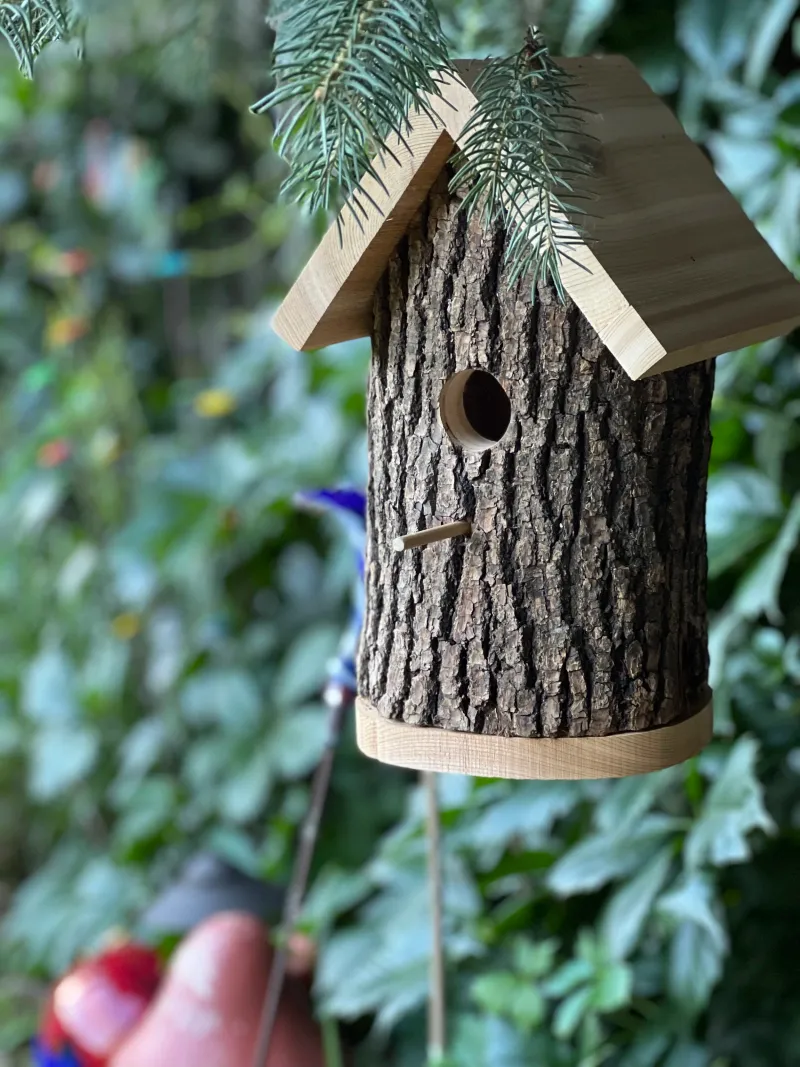
Few birdhouse styles feel as naturally at home in an Arizona desert garden as one made from a hollowed log. The rough bark exterior and earthy tones blend seamlessly with saguaro cacti, boulders, palo verde trees, and sandy soil.
Birds that nest in natural tree cavities, like woodpeckers and small owls, may respond well to log-style housing.
You can create a log birdhouse by hollowing out a section of dry, untreated wood using a drill and chisel. Cedar logs work especially well in Arizona because the wood naturally resists insects and moisture.
Drill a round entry hole appropriate for the bird species you hope to attract, and add a few small drainage holes in the floor so rainwater from monsoon storms does not pool inside.
Mounting a log birdhouse on a post or attaching it to a sturdy fence gives it stability during Arizona’s windy spring months.
Because the bark and wood grain create natural texture, the birdhouse looks like it belongs in the landscape rather than sitting on top of it.
Over time, the log will weather to an even richer tone, making it look more and more like a natural part of your desert garden.
5. Upcycled Teapot Birdhouse Creates A Unique Look
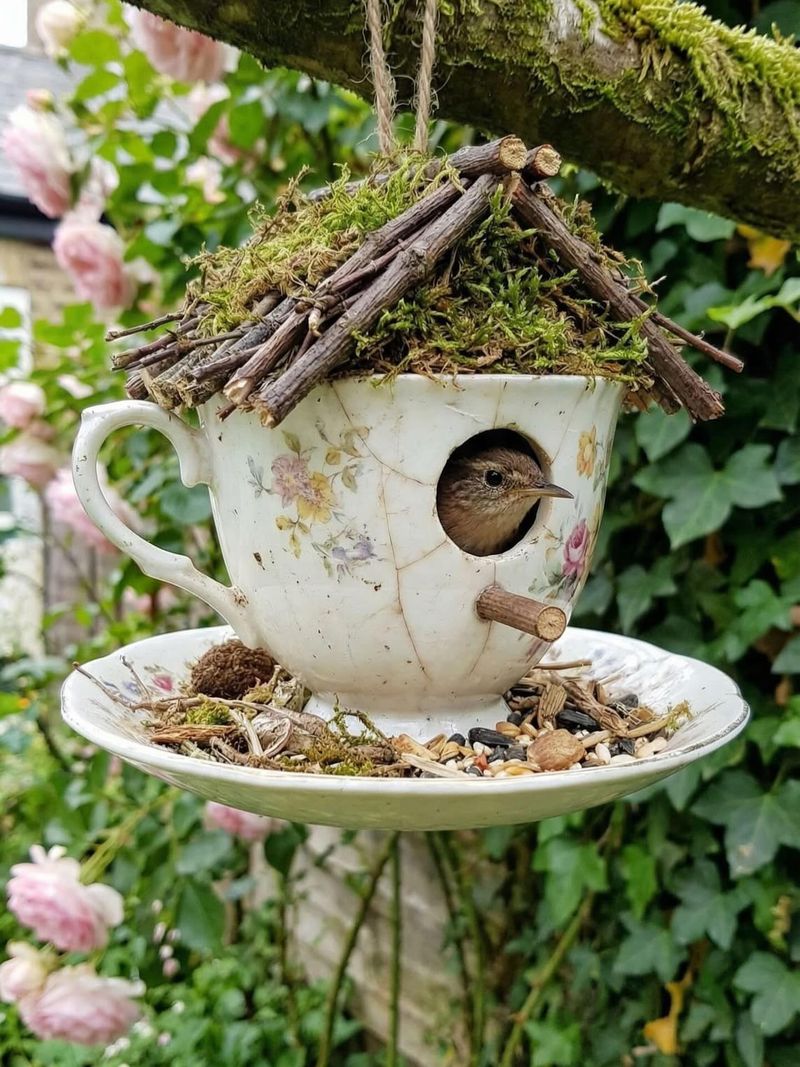
Repurposing old items into something new is one of the most creative approaches to DIY birdhouses, and a vintage teapot makes for a charming and unexpected choice.
The spout naturally serves as an entry point for small birds, and the rounded body provides a cozy nesting chamber.
Teapot birdhouses have a whimsical quality that adds instant personality to any Arizona patio or garden corner.
To set one up, find a ceramic or enamel teapot at a thrift store or garage sale. Mount it sideways on a wooden post or bracket using a sturdy bolt through the base.
Make sure the teapot is secured tightly so it does not shift in the wind. Remove the lid or drill a small drainage hole in the base so any moisture can escape after monsoon rains.
Ceramic teapots hold heat, so placement matters in Arizona. Choosing a spot with afternoon shade can make the interior more comfortable for birds during the hottest parts of the day.
Smaller birds like house wrens may find the teapot size just right for nesting. Painting the outside with heat-resistant outdoor paint lets you customize the look while also reflecting some of Arizona’s intense summer sun.
6. Stone Covered Birdhouse Adds Natural Texture
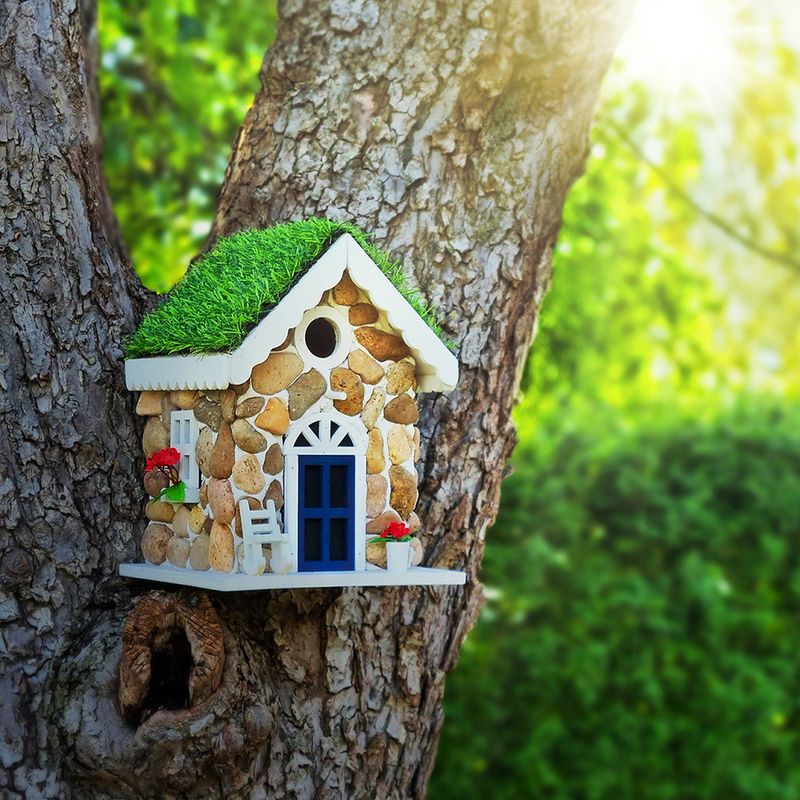
River rocks and flat pebbles are easy to find at Arizona garden centers and hardware stores, making a stone-covered birdhouse a practical and beautiful DIY project.
The stone exterior gives the birdhouse a natural, earthy texture that fits right into a desert landscape.
It looks as though it grew out of the ground alongside your cacti and ornamental grasses.
Start with a basic wooden birdhouse frame and use exterior-grade adhesive or mortar to attach small flat stones to the outside. Work in small sections so the adhesive does not dry before you place the stones.
Choose stones in warm tones like tan, rust, and gray to match the natural color palette of Arizona desert soil and rock formations.
Stone adds mass to the birdhouse, which can actually help moderate temperature swings inside. During the day, the stone absorbs heat, and in the cooler evening air, it releases that warmth slowly.
This thermal quality can make the interior slightly more stable in temperature than a plain wood birdhouse.
Mount your stone-covered birdhouse on a sturdy post that can support the extra weight, and place it in a part of your yard that gets some natural shade during peak afternoon hours in summer.
7. Penny Roof Birdhouse Adds A Decorative Touch
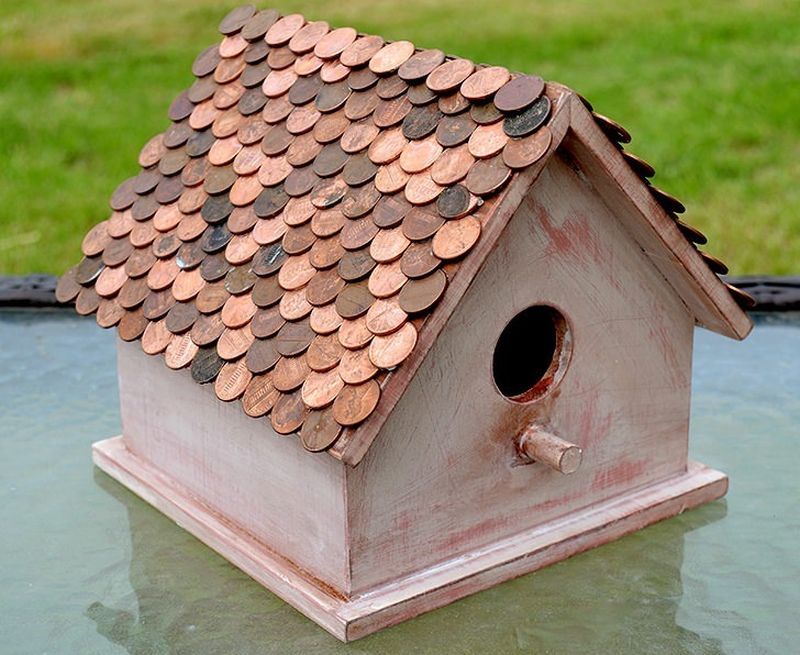
Covering a birdhouse roof with pennies is a clever and eye-catching craft idea that gives a plain wooden box a surprisingly polished look. The copper surface catches sunlight and develops a warm patina over time as it weathers outdoors.
In Arizona, where sun is abundant nearly year-round, a penny roof glows beautifully in the afternoon light.
Building one starts with a standard wooden birdhouse and a handful of pennies, which you can collect gradually or buy in bulk.
Use waterproof exterior adhesive to attach the pennies in overlapping rows, starting from the bottom edge of the roof and working upward like shingles.
This layered approach helps direct rain away from the seams and keeps the interior dry during monsoon season.
Over time, pennies exposed to Arizona weather will shift from shiny copper to a muted brown or greenish patina, which many gardeners find even more appealing than the original finish.
The copper material is also naturally resistant to some outdoor wear.
Keep the birdhouse interior unpainted and add small ventilation holes near the roofline to help manage interior heat. Hang or mount your penny roof birdhouse in a visible spot where its unique surface can be admired up close.
8. Hanging Birdhouse Works Well In Small Spaces
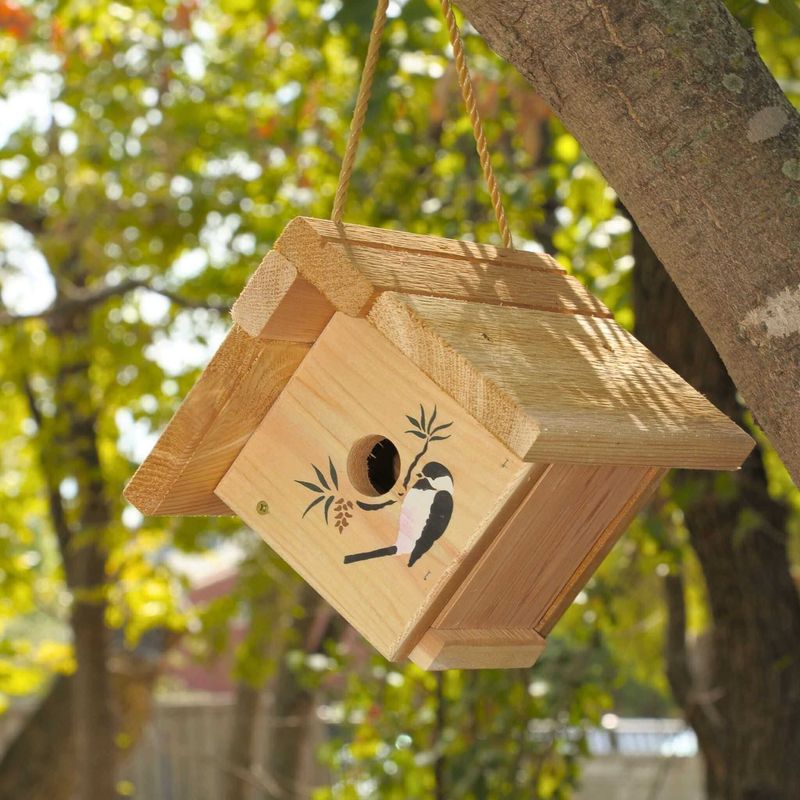
Not every Arizona yard has wide open space for large post-mounted structures, and that is where a hanging birdhouse becomes a smart solution.
Compact and versatile, a hanging birdhouse can be suspended from a patio beam, a tree branch, a pergola, or even a sturdy shepherd’s hook.
It works especially well in smaller yards, townhome patios, or rental homes where permanent installations are not practical.
Keep the design lightweight so it swings gently without putting too much strain on whatever it hangs from. A small cedar or pine box with a simple roof and a single entry hole is all you need.
Use a braided wire or heavy-duty rope rated for outdoor use, and attach it securely through the roof peak so the birdhouse hangs level and stable.
One thing to watch in Arizona is how much the birdhouse swings in the wind. Spring in Arizona brings gusty conditions, so adding a small anchor or placing the birdhouse in a somewhat sheltered spot can help keep it from rocking too much.
Birds tend to prefer a stable home. A hanging birdhouse painted in muted desert tones or natural wood finish looks relaxed and charming in any small outdoor space.
9. Post Mounted Birdhouse Adds Stability In Windy Areas
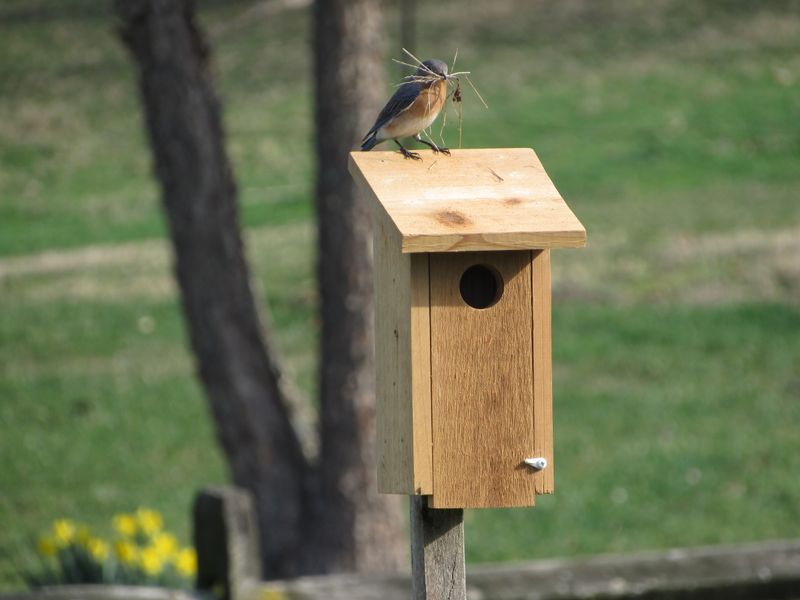
Open Arizona yards can get surprisingly windy, especially in spring when dust storms and strong gusts roll through the desert.
A post-mounted birdhouse handles those conditions better than a hanging or fence-attached option because the post anchors it firmly in place.
Birds also tend to feel more secure in a birdhouse that stays steady rather than one that sways in the breeze.
Setting up a post-mounted birdhouse starts with choosing the right post. Metal conduit pipe or a treated wooden post at least two inches in diameter works well in Arizona soil.
Dig the post at least 18 to 24 inches into the ground so it does not shift during monsoon winds or heavy soil saturation. Attach the birdhouse to the top of the post with screws or a mounting bracket for a firm hold.
Position the birdhouse in an open area away from dense shrubs where predators could hide and climb. A smooth metal post is harder for cats and squirrels to scale than a rough wooden one.
Facing the entry hole away from the direction of prevailing winds helps keep the interior dry and draft-free. Post-mounted birdhouses are a reliable, low-maintenance choice that suits the wide, open character of many Arizona outdoor spaces.