8 Easy-Care Plants For Pennsylvania Garden Borders That Thrive On Neglect
Most people get into gardening with the best intentions and a very optimistic idea of how much time they’ll actually have to maintain everything they plant.
Then real life shows up, the weekends fill up fast, and suddenly those high-maintenance border plants are looking a little rough around the edges because nobody had two hours to spare on a Saturday afternoon.
Pennsylvania gardeners know this feeling well. Between the unpredictable springs, the humid summers, and the winters that test everything you’ve put in the ground, maintaining fussy border plants can start to feel like a losing battle before the season even hits its stride.
The good news is that a stunning garden border has nothing to do with how much time you pour into it.
The right plant choices do the heavy lifting on their own, coming back reliably, handling neglect without complaint, and looking genuinely good through whatever Pennsylvania’s seasons decide to throw at them.
1. Black-Eyed Susan
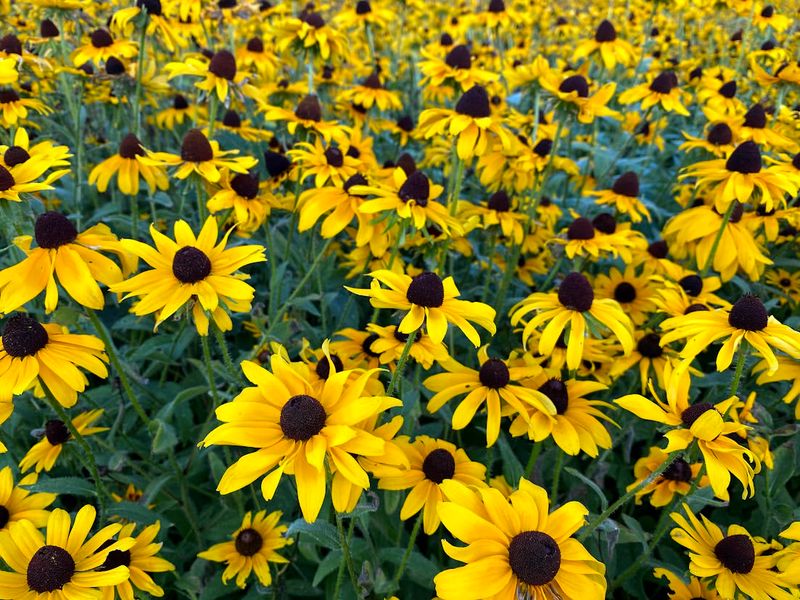
Few flowers shout summer quite like the Black-Eyed Susan. Those bold yellow petals surrounding a rich, dark brown center are instantly recognizable, and they light up garden borders across Pennsylvania from July through September.
Best of all, this plant does not ask for much in return. Black-Eyed Susans are native to North America, which means they are perfectly adapted to Pennsylvania’s climate. They thrive in full sun and actually prefer poor, dry soil over rich, moist ground.
Overwatering or over-fertilizing can do more harm than good here. Once established, these plants handle summer drought without any extra help from the gardener. Planting is simple. You can start from seed or pick up transplants at a local nursery.
Space them about 18 inches apart in a sunny border and let them do their thing. They self-seed freely, so you will likely see new plants popping up nearby each year, slowly filling in gaps and spreading naturally.
Pollinators absolutely love Black-Eyed Susans. Bees, butterflies, and goldfinches are regular visitors, making your Pennsylvania garden border feel alive and buzzing with activity.
Leaving the seed heads in place after blooming gives birds a late-season food source. This cheerful, low-fuss plant earns its spot in any easy-care garden.
2. Daylilies
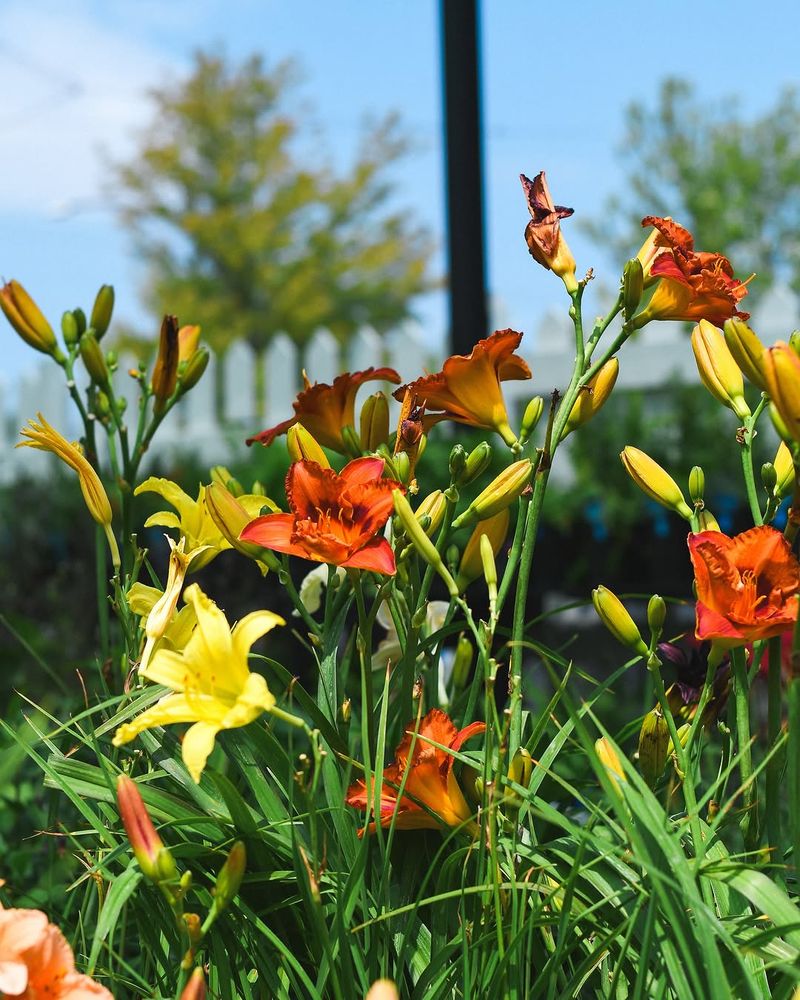
Daylilies are the workhorses of the perennial garden. Gardeners across Pennsylvania have relied on them for decades because they are nearly impossible to neglect into failure.
Heat, drought, poor soil, and occasional flooding? Daylilies handle all of it with barely a complaint.
Each individual flower lasts only one day, which is where the name comes from. But do not let that fool you.
Each plant produces dozens of buds on tall stems, so the blooming show goes on for weeks. Depending on the variety, you can have color from late spring all the way into early fall.
Mixing early, mid, and late-season varieties keeps your Pennsylvania border looking great for months.
Daylilies spread by forming clumps that slowly get larger each year. Every three to four years, you can divide those clumps in early spring or fall to keep them vigorous and to share divisions with neighbors or other parts of your yard.
Your Pennsylvania Garden Changes Every Week. Your Plan Should Too.
Gardening in Pennsylvania changes quickly throughout the season. Every Friday you’ll receive a simple weekly plan showing exactly what to plant, prune, fertilize, harvest, and protect so you never miss the right timing.
Division is easy and actually encourages even better blooming. They grow well in full sun to partial shade, making them flexible enough for many border situations. Minimal watering, no regular fertilizing, and zero spraying for pests are all part of the deal.
In Pennsylvania gardens, daylilies are a reliable, colorful, and wonderfully carefree choice that rewards gardeners generously for almost no effort at all.
3. Coneflower
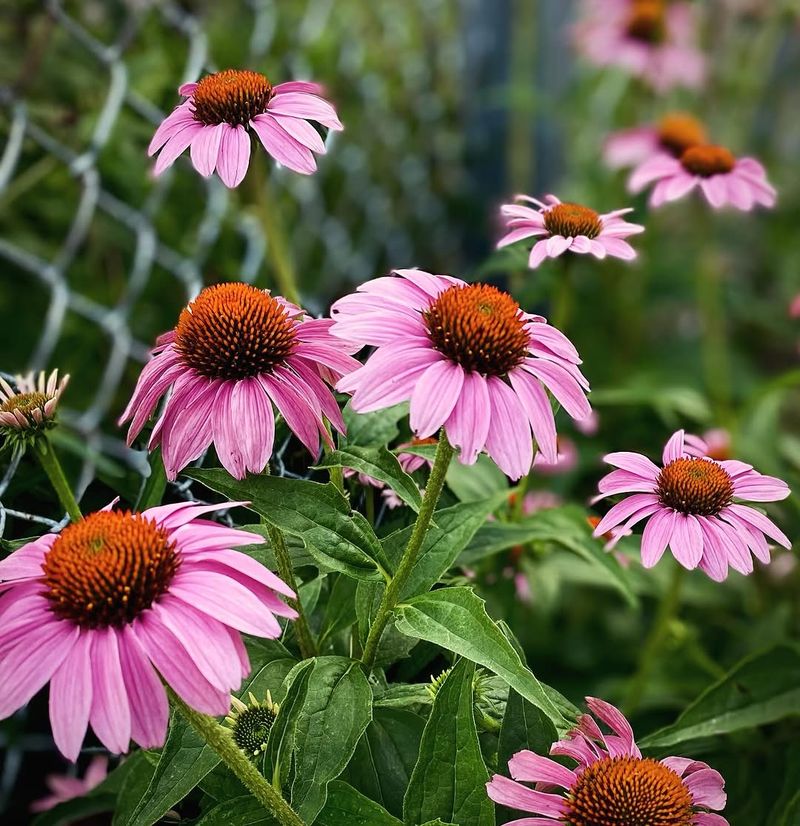
Native to the eastern United States, purple coneflower is one of the most dependable plants you can put in a Pennsylvania garden border.
It grows naturally in meadows and open woodlands, which means it already knows how to handle the local climate without any extra coddling from you.
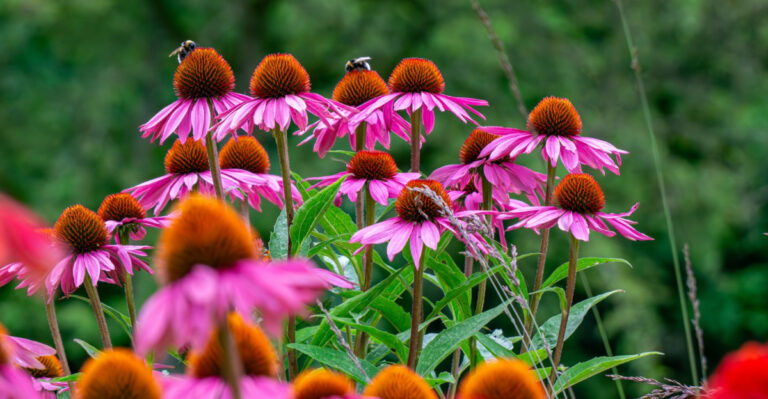
Coneflowers bloom in mid to late summer, producing distinctive rosy-purple petals that droop slightly around a spiky, cone-shaped center. The blooms last for weeks, and once the petals fade, the seed heads remain attractive well into fall and winter.
Goldfinches and other seed-eating birds flock to those seed heads, turning your border into a lively feeding station during the colder months.
This plant thrives in average to poor soil with good drainage. Rich, overly fertile soil actually encourages floppy growth.
Full sun is ideal, though coneflowers tolerate a bit of afternoon shade without much trouble. Watering during the first season helps them get established, but after that, supplemental watering is rarely necessary even during Pennsylvania dry spells.
Coneflowers return reliably each spring and also self-seed, gradually increasing their numbers in the border. You can deadhead spent blooms to encourage more flowers, or simply leave everything in place for a naturalistic, wildlife-friendly look.
Either way, Echinacea earns its reputation as one of Pennsylvania’s most effortless and rewarding perennials.
4. Sedum / Stonecrop
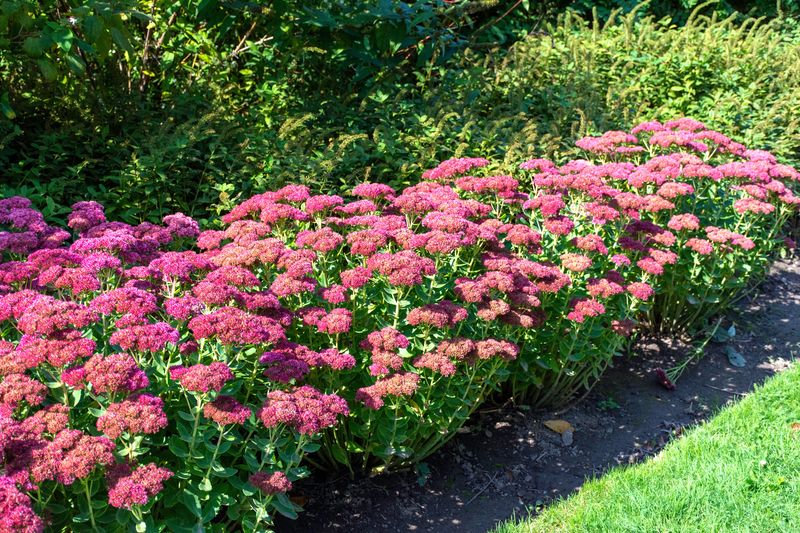
Sedum, now officially known as Hylotelephium for the taller varieties, is the plant you want when your garden border gets blazing sun and almost no rain. Stonecrop stores water in its thick, fleshy leaves, giving it a built-in drought survival system that most plants simply do not have.
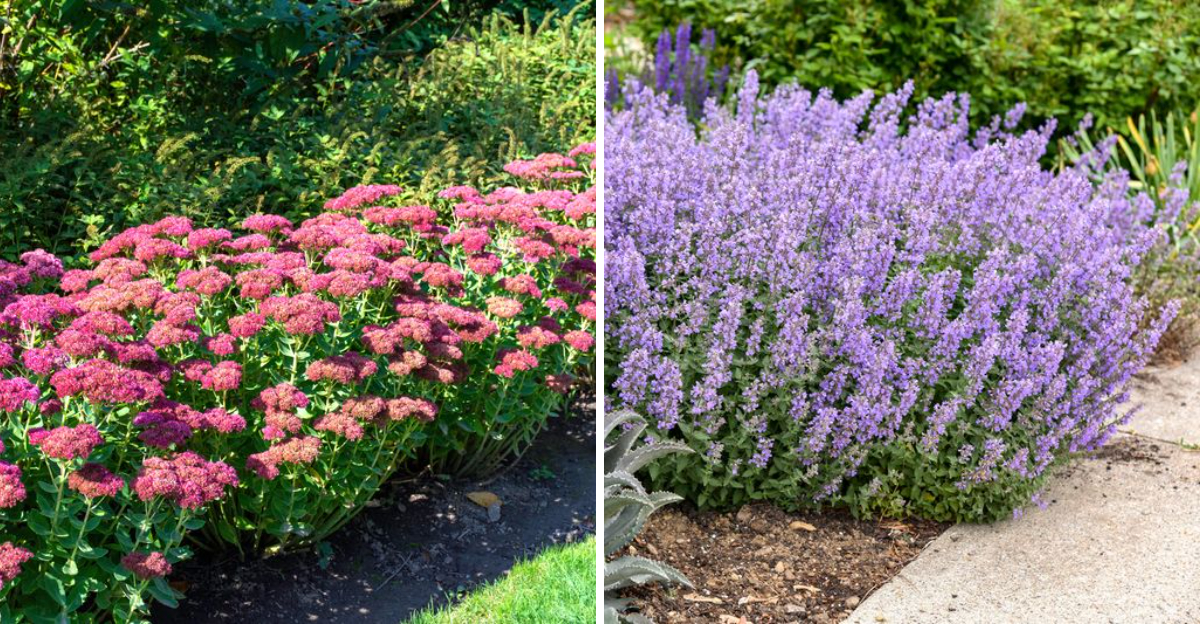
The taller varieties, like the beloved Autumn Joy, are especially popular in Pennsylvania gardens. They produce large, flat-topped flower clusters that open rosy-pink in late summer and gradually deepen to a rich copper-red by fall.
That late-season color is genuinely hard to match. The sturdy stems hold up well through winter, giving the border structure even after frost arrives.
Sedum asks for very little. Plant it in full sun with well-drained soil, and it will largely take care of itself. Poor, rocky, or sandy soil? Even better.
Wet, heavy clay is really the only condition that causes problems. If your Pennsylvania border has decent drainage and plenty of sunshine, sedum will reward you year after year with almost zero attention required.
Butterflies, especially monarchs and swallowtails, adore sedum blooms. Watching them feed on those flat flower clusters in late August and September is one of the quiet joys of having this plant in your yard.
Divide clumps every few years in spring to keep plants compact and vigorous. Truly one of the easiest plants around.
5. Catmint
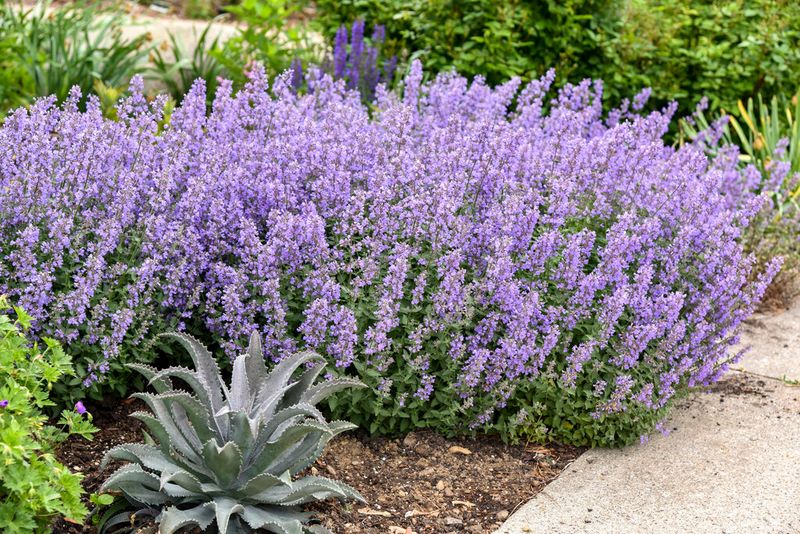
Catmint is the kind of plant that makes a garden border look professionally designed without requiring any professional-level effort.
Its soft, mounding shape and long-lasting lavender-blue flower spikes create a relaxed, cottage-garden feel that works beautifully along the front edge of Pennsylvania borders.
Blooming begins in late spring and continues well into summer. After the first flush of flowers fades, simply cut the plant back by about one-third and it will rebloom reliably in late summer.
That second wave of color is one of the things that makes catmint such a standout performer in Pennsylvania gardens. Few plants give you two long bloom periods with almost no effort.
Dry, sunny conditions suit catmint perfectly. It handles drought far better than it handles wet feet, so well-drained soil is a must.
Sandy or average garden soil works great. Rich, moist soil tends to make plants flop open in the center, which ruins that tidy mounding habit that makes catmint so attractive as an edging plant.
Cats are famously drawn to catmint, though not quite as intensely as they are to catnip. Bees and hummingbirds love it too, making it a pollinator magnet throughout the growing season.
The silvery-green foliage stays attractive even when the plant is not blooming. In Pennsylvania, catmint is a dependable, low-maintenance beauty that earns its place in any easy-care garden.
6. Yarrow
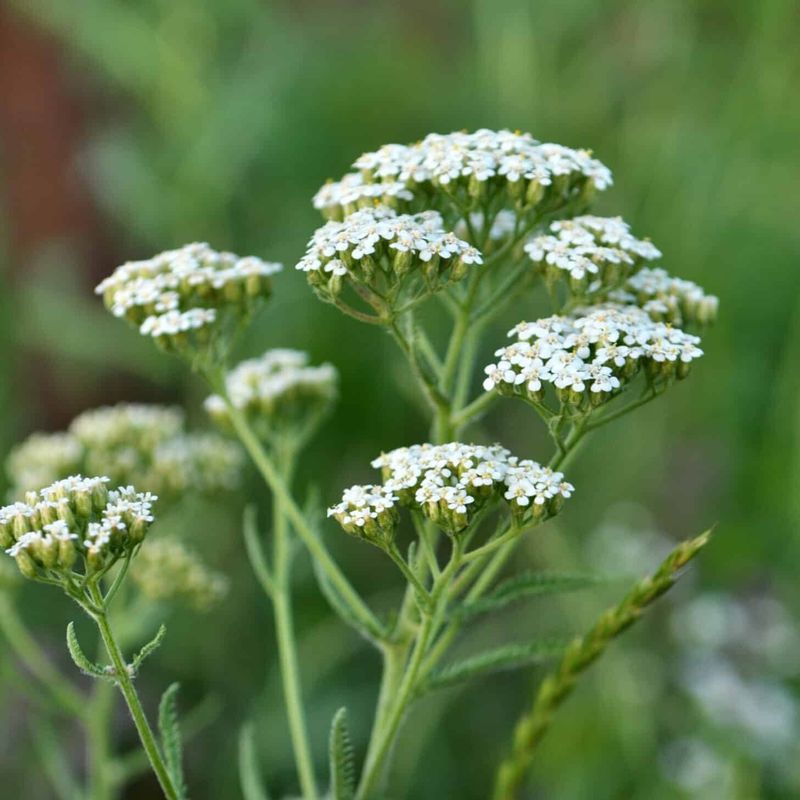
Yarrow has been growing in fields and roadsides across Pennsylvania for centuries, and that wild toughness is exactly what makes it so valuable in garden borders.
This plant has seen drought, poor soil, and summer heat, and it just keeps on blooming. If you want reliable summer color with almost zero input, yarrow delivers.
The flowers grow in wide, flat-topped clusters that come in shades of yellow, white, pink, red, and salmon depending on the variety. Blooming starts in early summer and, with light deadheading, continues for months.
The feathery, fern-like foliage is attractive even between bloom cycles, giving the border a soft texture that contrasts nicely with bolder plants nearby.
Full sun and well-drained soil are the two main requirements. Yarrow actually performs better in lean, dry soil than in rich, amended beds.
Fertilizing is unnecessary and can cause the stems to become tall and floppy. In Pennsylvania’s variable summer weather, yarrow holds its own without any supplemental watering once established.
One thing to know: yarrow spreads by underground runners and can get pushy over time. Dividing clumps every two or three years keeps it tidy and invigorates blooming.
Those divisions transplant easily, making yarrow a generous plant to share with fellow gardeners. Pollinators swarm the flat flower heads all season long. Yarrow is truly one of Pennsylvania’s most hard-working, low-maintenance perennials.
7. Russian Sage
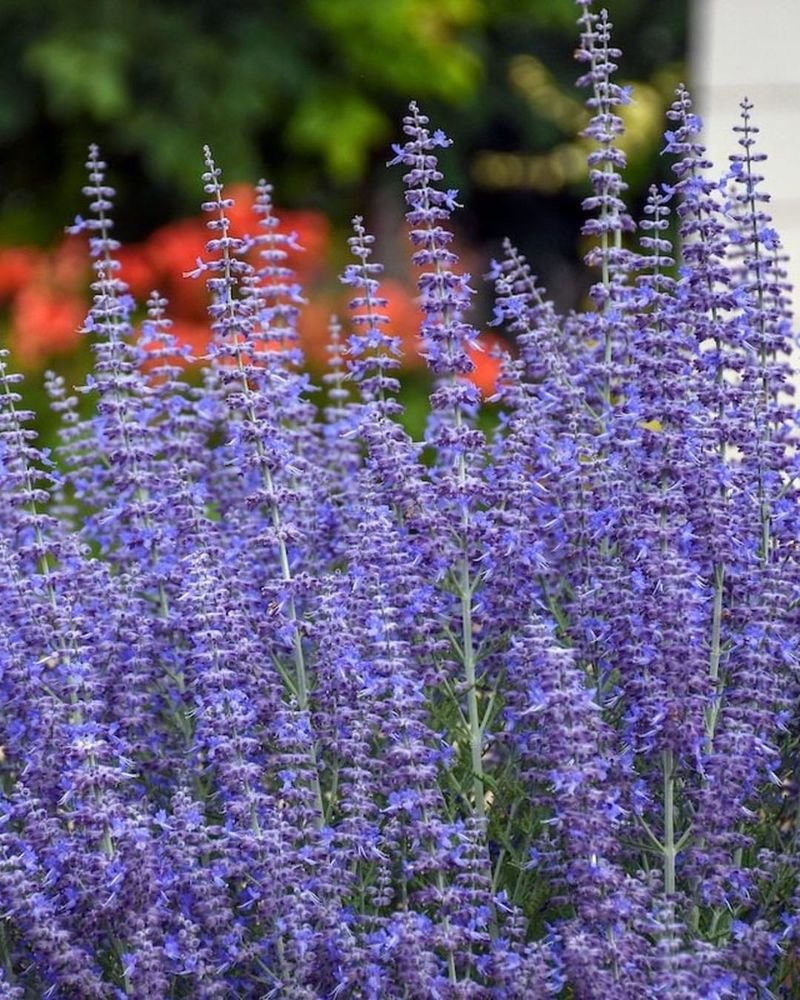
Walk past a planting of Russian sage on a warm summer afternoon, and you will notice two things immediately: the haze of violet-blue flowers floating above the border, and the clean, herbal scent that drifts through the air.
Russian sage is genuinely one of the most striking plants you can grow in a Pennsylvania garden, and it practically takes care of itself.
Despite the name, Russian sage is not actually a sage. It is a member of the mint family, native to Central Asia.
It was introduced to American gardens in the late 20th century and quickly became a favorite for its heat tolerance and drought resistance. In Pennsylvania, where summers can swing between humid and dry, that adaptability is a major asset.
Plant it in full sun with well-drained soil and then step back. Russian sage does not want rich soil or frequent watering.
It thrives on neglect. The silvery stems and finely cut, silver-green leaves look attractive even before the blooms open, and the plant stays interesting well into fall.
By late June or early July, the tall, branching stems are covered in tiny lavender-purple flowers that attract bees and butterflies by the dozens.
Cut plants back hard in early spring, right down to about six inches from the ground. New growth emerges quickly, and the plant fills in beautifully by summer.
Russian sage pairs especially well with ornamental grasses and yellow-flowering perennials in Pennsylvania borders.
8. Hostas
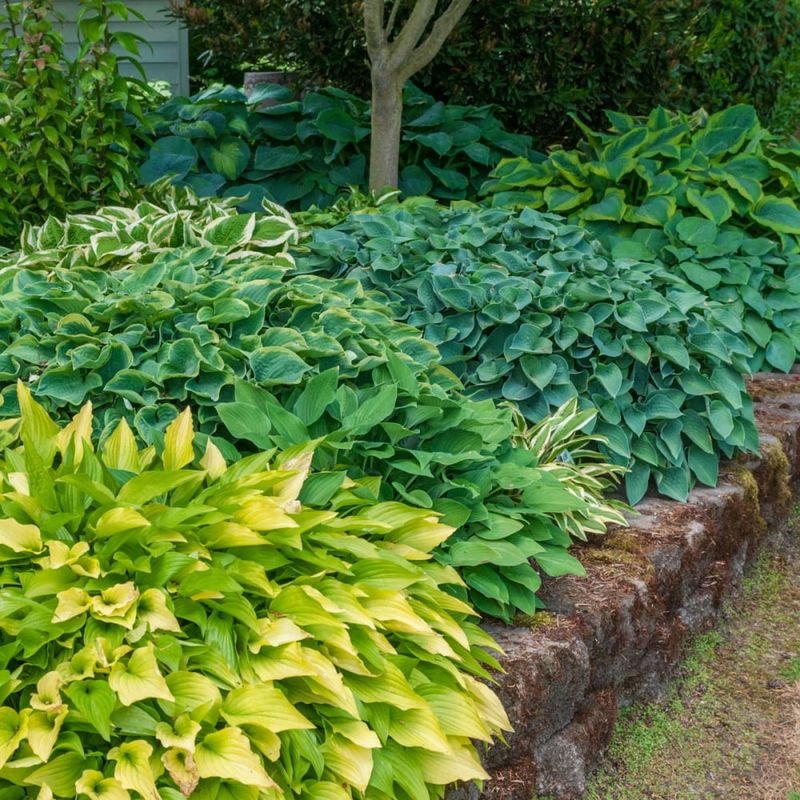
Shady spots in Pennsylvania gardens can be tricky to fill with color, but hostas make it look effortless.
These bold, leafy perennials are famous for their low-maintenance nature, and once they settle in, they come back reliably every spring with almost no help from the gardener.
If you have a shaded border under trees or along a north-facing fence, hostas are your answer.
The leaves are the real attraction here. Hostas come in an enormous range of sizes, shapes, and colors, from tiny, compact mounds a few inches tall to giant varieties with leaves as big as dinner plates.
Colors range from deep forest green to blue-green, chartreuse, gold, and striking combinations of green and white or green and yellow. Mixing different varieties creates a layered, textural look that holds visual interest all season long.
Hostas prefer moist, well-drained soil and do best in partial to full shade. Morning sun with afternoon shade works well in many Pennsylvania gardens.
They are not heavy feeders, but a light application of balanced fertilizer in spring gives them a nice boost. Once established, they tolerate dry conditions reasonably well, especially in shaded spots where soil moisture stays more consistent.
Slugs can occasionally be an issue, especially in very wet springs. A layer of mulch around the base helps retain moisture and keeps the root zone comfortable.
Hostas rarely need dividing but respond well to it every five years or so. Truly a dependable, no-fuss classic for Pennsylvania shade gardens.