Why Your Dieffenbachia Is Drying In Texas (And How To Save It Fast)
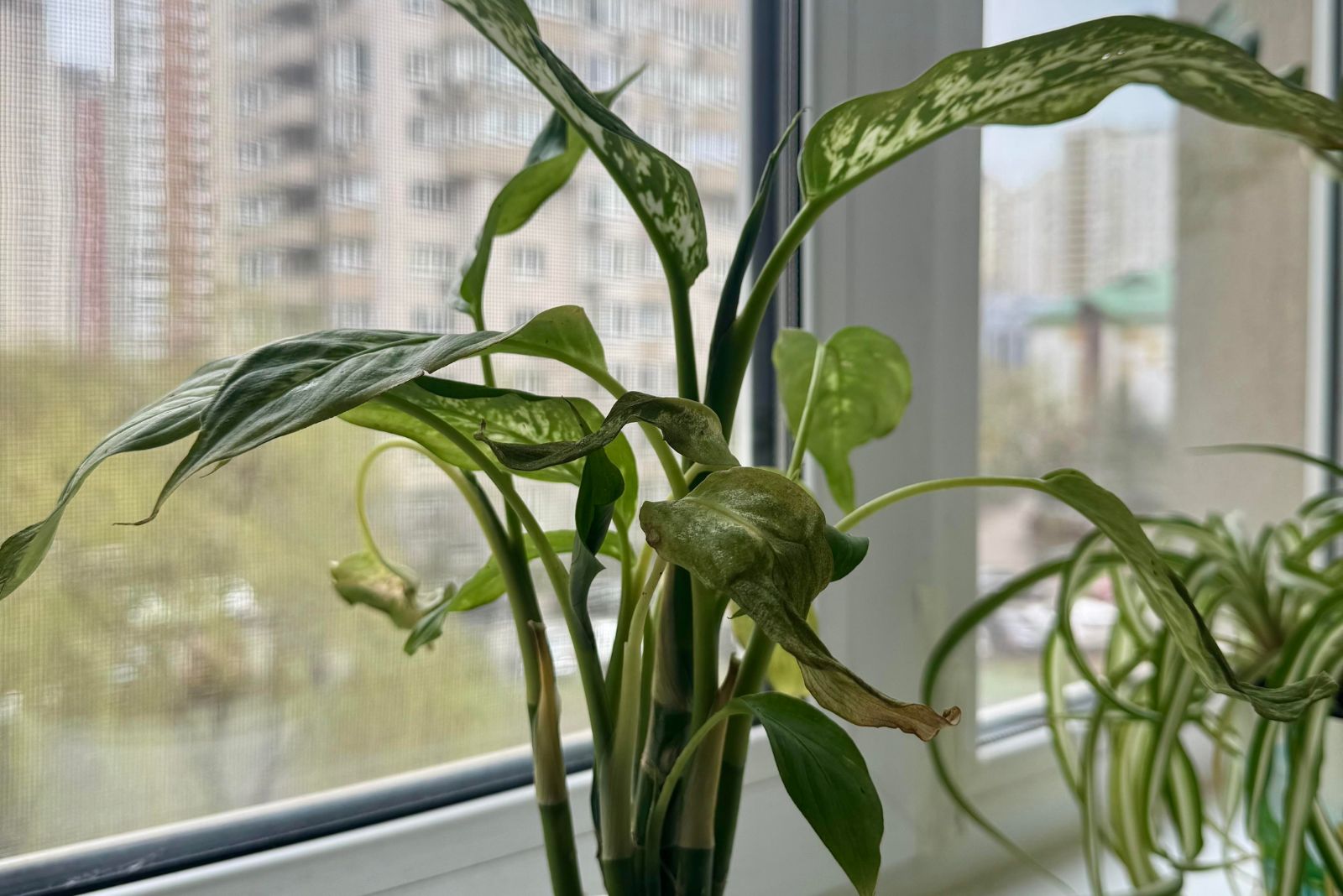
Dieffenbachia is supposed to be one of the easy ones. That’s practically its whole reputation – a bold, beautiful houseplant that tolerates low light, forgives the occasional missed watering, and generally asks very little in return for looking good in your living room.
So when it starts drying out and looking rough, it feels like a personal failure on a plant that was supposed to be beginner-proof. Here’s the thing though.
Dieffenbachia drying out in Texas isn’t usually about bad plant parenting. It’s about a specific set of conditions that Texas homes create, particularly during summer and winter, that this plant genuinely struggles with when nobody accounts for them.
The combination of air conditioning running constantly, low indoor humidity, intense light coming through south-facing windows, and hard tap water creates a environment that works against this plant in ways that aren’t immediately obvious.
The good news is that once you identify the actual cause, turning things around happens faster than you’d expect.
1. Too Much Direct Sunlight
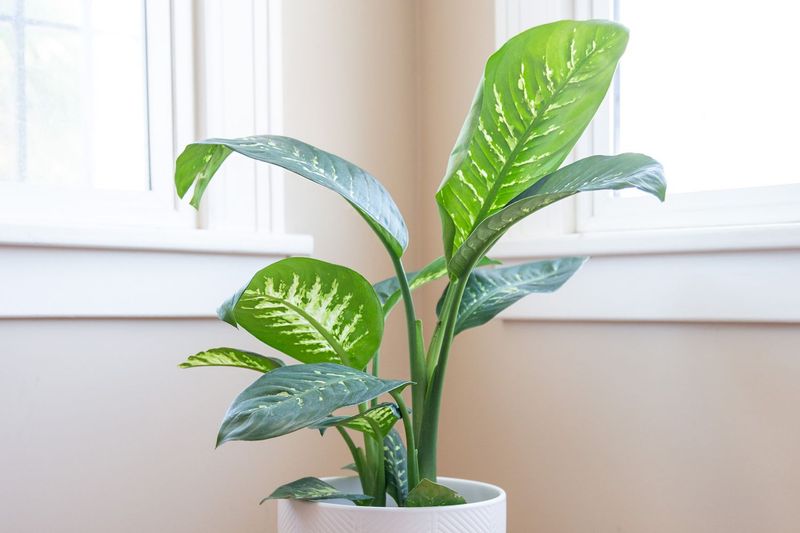
Picture this: your Dieffenbachia is sitting right next to a south-facing window in your Texas home, soaking up what feels like full desert sun all afternoon. Within days, the leaves start fading, developing pale yellow patches, and then turning crispy brown at the edges.
That is classic sun scorch, and it happens fast in Texas where the sun is seriously intense, especially during summer months.
Dieffenbachia is a tropical plant that naturally grows under the shade of tall trees in rainforests. It loves bright light, but it absolutely cannot handle direct sunlight hitting its leaves for hours at a time.
The harsh Texas sun is much stronger than what this plant is built for, and those beautiful variegated leaves are the first to show damage.
Moving your plant to a spot with bright, indirect light is the best fix. Try placing it a few feet away from a window, or use a sheer curtain to filter the sunlight coming in.
East-facing windows work really well because the morning sun is gentler and less intense than the afternoon rays. North-facing spots can also work if the room gets decent ambient light throughout the day.
Once you move the plant, give it a little time to recover. Trim off the badly scorched leaves with clean scissors so the plant can focus its energy on growing fresh, healthy foliage.
With the right light conditions, your Dieffenbachia should start looking much better within a few weeks.
2. Overwatering And Root Rot
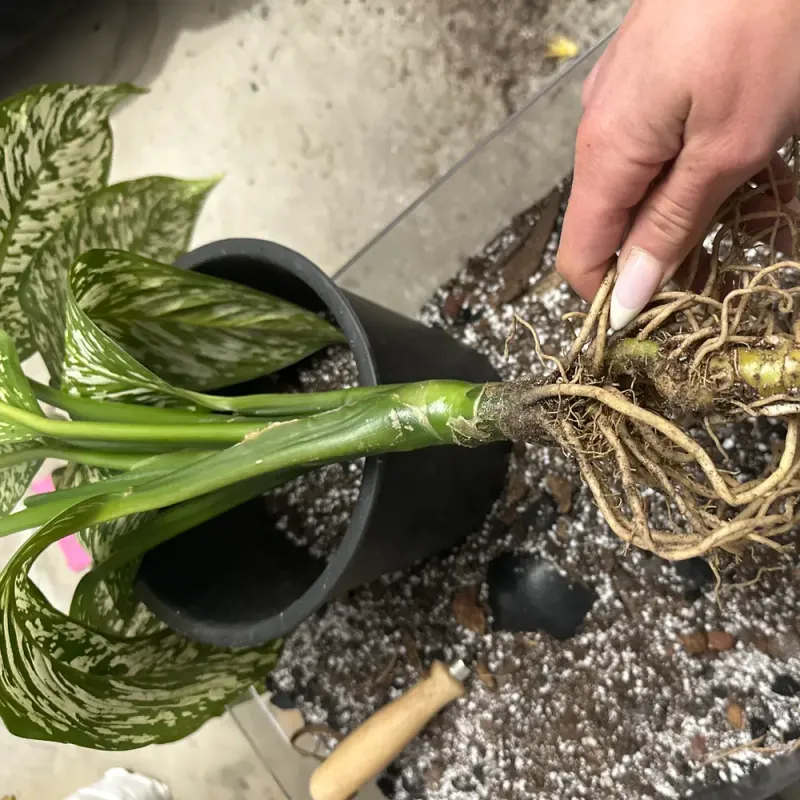
Overwatering is one of the most common mistakes plant owners make, and in Texas, it can sneak up on you quickly.
You might think you are being a caring plant parent by watering your Dieffenbachia every couple of days, but too much water actually suffocates the roots and creates the perfect environment for root rot to set in.
Yellowing leaves and a soft, mushy stem base are the biggest warning signs to watch for. Root rot happens when the soil stays wet for too long and roots cannot get the oxygen they need. Fungal growth takes over, and the roots start breaking down.
Your Texas Garden Changes Every Week. Your Plan Should Too.
Gardening in Texas changes quickly throughout the season. Every Friday you’ll receive a simple weekly plan showing exactly what to plant, prune, fertilize, harvest, and protect so you never miss the right timing.
Once the roots are damaged, the plant cannot absorb water or nutrients properly, which makes things worse fast. Texas summers are hot, but indoor air conditioning can actually slow down soil drying, which increases the risk of overwatering even more.
The fix starts with checking your soil before you water. Stick your finger about one inch into the soil.
If it still feels damp, wait another day or two before adding more water. Make sure your pot has drainage holes at the bottom so excess water can escape freely.
If you suspect root rot has already started, gently remove the plant from its pot, trim away any dark or mushy roots with clean scissors, and repot it in fresh, well-draining potting mix.
A soil mix designed for tropical plants or one that includes perlite works great for improving drainage and keeping roots healthier long-term in the Texas indoor environment.
3. Underwatering In Dry Heat
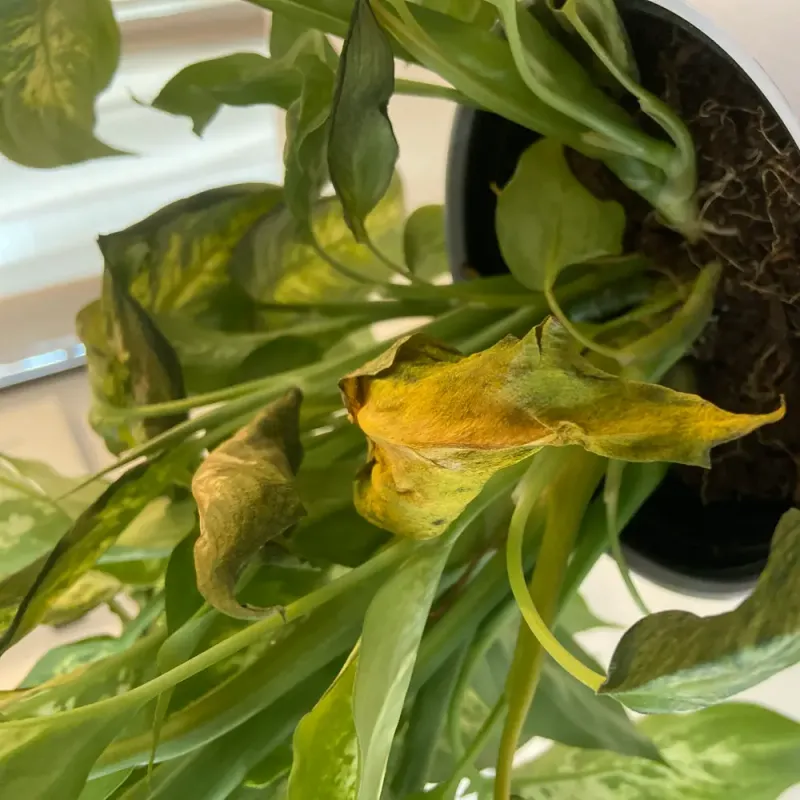
Texas heat is no joke. During peak summer, outdoor temperatures can soar past 100 degrees Fahrenheit, and even indoors, the air can get incredibly dry.
If your Dieffenbachia is drooping, has crispy brown edges on its leaves, and the soil feels bone dry when you touch it, underwatering is likely the culprit. This plant needs consistent moisture to stay healthy, and dry heat speeds up how fast the soil loses water.
A lot of plant owners in Texas swing too far in the opposite direction after hearing about root rot. They get so nervous about overwatering that they barely water at all, which creates a whole different set of problems.
Dry soil stresses the plant out, causes the roots to shrink back, and makes it impossible for the leaves to stay firm and green. You might notice the whole plant looking limp and sad, even when it is getting decent light.
The best approach is to water your Dieffenbachia consistently, using the top-inch rule as your guide. When the top inch of soil feels dry to the touch, it is time to water.
Water deeply and slowly until it drains out the bottom of the pot, then let the soil dry out again before the next watering session. During the hottest months in Texas, you may need to water more frequently than in cooler seasons.
Using a moisture meter is a smart and affordable tool that takes the guesswork out of watering, especially for beginners learning to care for tropical plants in a hot Texas climate.
4. Low Humidity Indoors
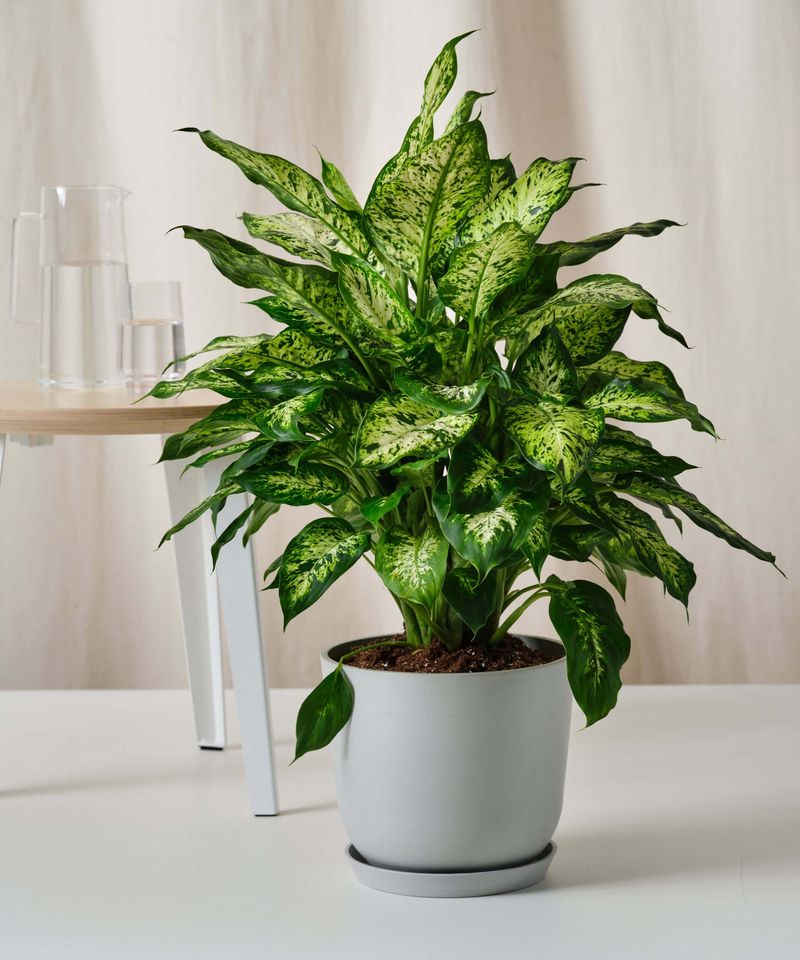
Here is something a lot of Texas plant owners do not think about right away: indoor air conditioning seriously dries out the air inside your home.
While the AC keeps you cool and comfortable during those brutal Texas summers, it strips moisture from the air, creating conditions that tropical plants like Dieffenbachia absolutely struggle with.
Brown, crispy leaf tips are one of the first signs that your plant is not getting enough humidity.
Dieffenbachia originally comes from tropical regions where humidity levels stay high year-round. It thrives when the air moisture level is somewhere between 60 and 80 percent.
Most Texas homes, especially with the AC running all day, hover around 30 to 50 percent humidity or even lower. That gap is enough to cause the plant to slowly lose moisture through its leaves faster than it can replace it, leading to browning tips and slowed growth.
Boosting humidity does not have to be complicated or expensive. One simple method is to place your plant on a shallow tray filled with small pebbles and a little water.
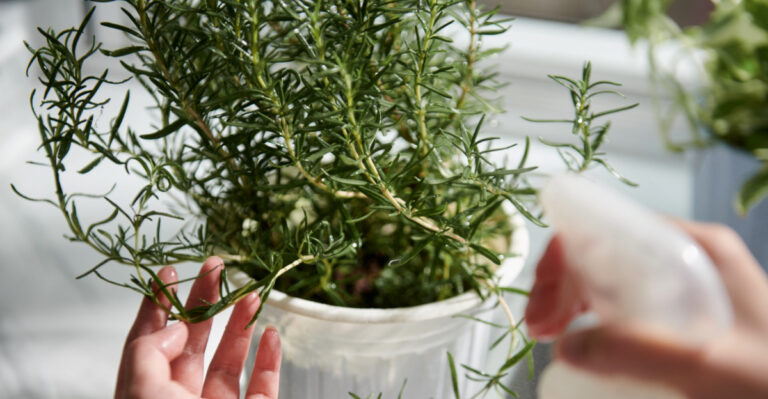
As the water evaporates, it creates a small humid zone right around the plant. You can also lightly mist the leaves a few times a week using a spray bottle filled with room-temperature water.
For the best results, consider placing a small humidifier nearby, especially during the driest months in Texas. Grouping your Dieffenbachia with other houseplants can also help, since plants naturally release moisture into the air around them as they breathe.
5. Temperature Stress
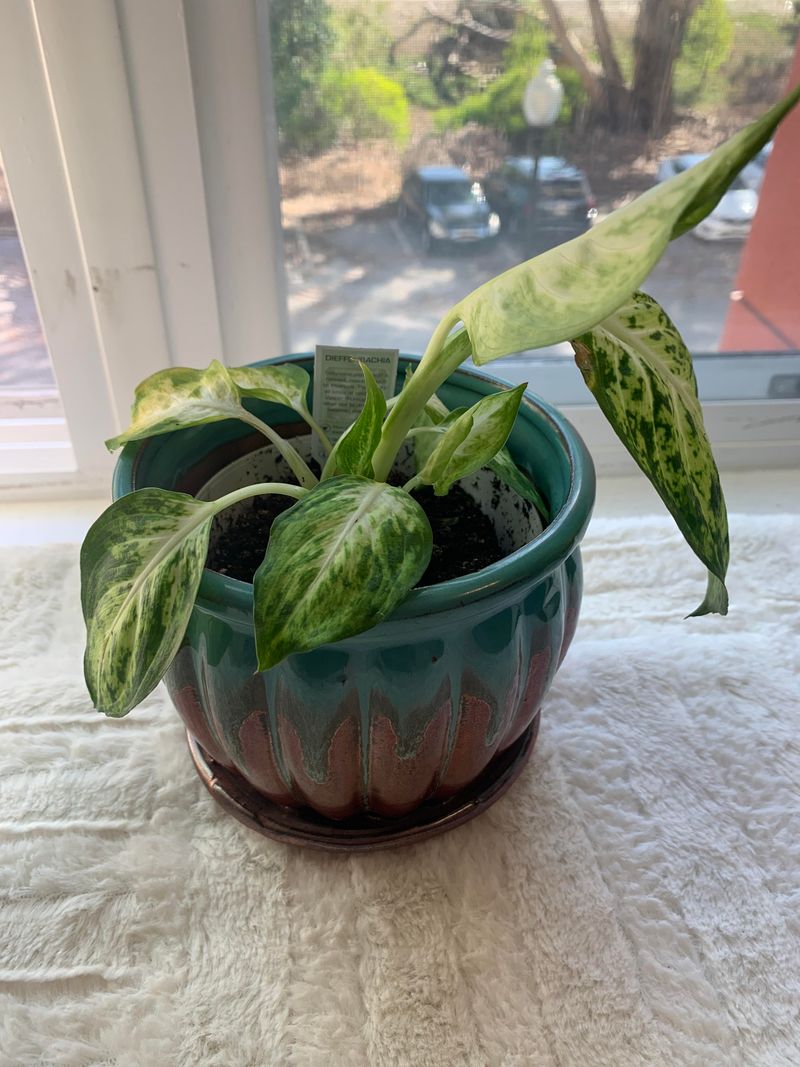
Sudden temperature swings are a real problem for Dieffenbachia owners in Texas. You might not even notice it happening, but if your plant is sitting near an air conditioning vent, a drafty window, or close to a heating unit, it is likely experiencing temperature shock on a daily basis.
Leaf drop, curling leaves, and general weakness are all signs that your plant is reacting badly to inconsistent temperatures.
Dieffenbachia is a warm-weather tropical plant that prefers temperatures between 65 and 80 degrees Fahrenheit. Anything below 60 degrees can cause visible damage, and cold drafts from AC vents are a sneaky source of stress that many plant parents overlook.
In Texas, where air conditioning runs almost constantly from spring through fall, this is a surprisingly common issue that catches people off guard.
Walk around your home and pay attention to where your Dieffenbachia is placed. Is it near a vent blowing cold air?
Is it sitting beside a window that lets in cold drafts at night? Even brief exposure to cold air repeatedly throughout the day can add up and cause the plant to react poorly.
Moving it just a few feet away from the problem source can make a noticeable difference almost immediately.
Find a stable spot in your home where the temperature stays consistent throughout the day and night. A central area of the room, away from windows, vents, and exterior doors, tends to work best.
Stability is what this plant craves, and once it finds a comfortable spot in your Texas home, it will reward you with lush, steady growth.
6. Poor Soil Or Lack Of Nutrients
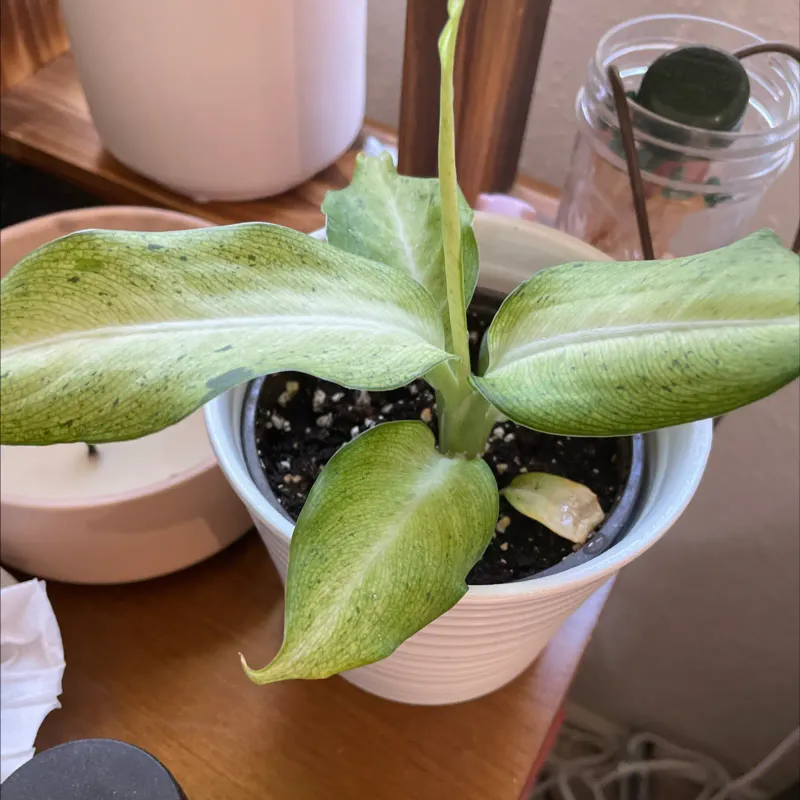
Old, worn-out soil is something plant owners forget about way too often. If your Dieffenbachia has been sitting in the same pot with the same soil for more than a year or two, that soil has likely lost most of the nutrients it once had.
Pale leaves, slow or stunted growth, and a generally weak-looking plant are all signs that the soil is no longer giving your plant what it needs to thrive in your Texas home.
Potting soil breaks down over time. It becomes compact, loses its ability to drain properly, and gets depleted of the minerals and nutrients that fuel healthy plant growth.
Nitrogen, phosphorus, and potassium are all essential for keeping a Dieffenbachia vibrant and full. Without them, the plant struggles to produce new leaves and maintain the rich green and white coloring that makes it so attractive.
Repotting your Dieffenbachia every one to two years is one of the best things you can do for its long-term health. Choose a fresh tropical potting mix or make your own by combining regular potting soil with perlite for better drainage.
Go up just one pot size to avoid overwhelming the roots with too much extra space, which can lead to moisture problems.
During the growing season, which runs from spring through early fall in Texas, feed your plant with a balanced liquid fertilizer diluted to half strength every four to six weeks. Avoid fertilizing during winter when the plant naturally slows down.
Light, consistent feeding keeps the foliage looking bold, healthy, and full of life throughout the year.