These 9 Plants Grown Under Cucumbers Can Seriously Boost Your Michigan Garden Yields
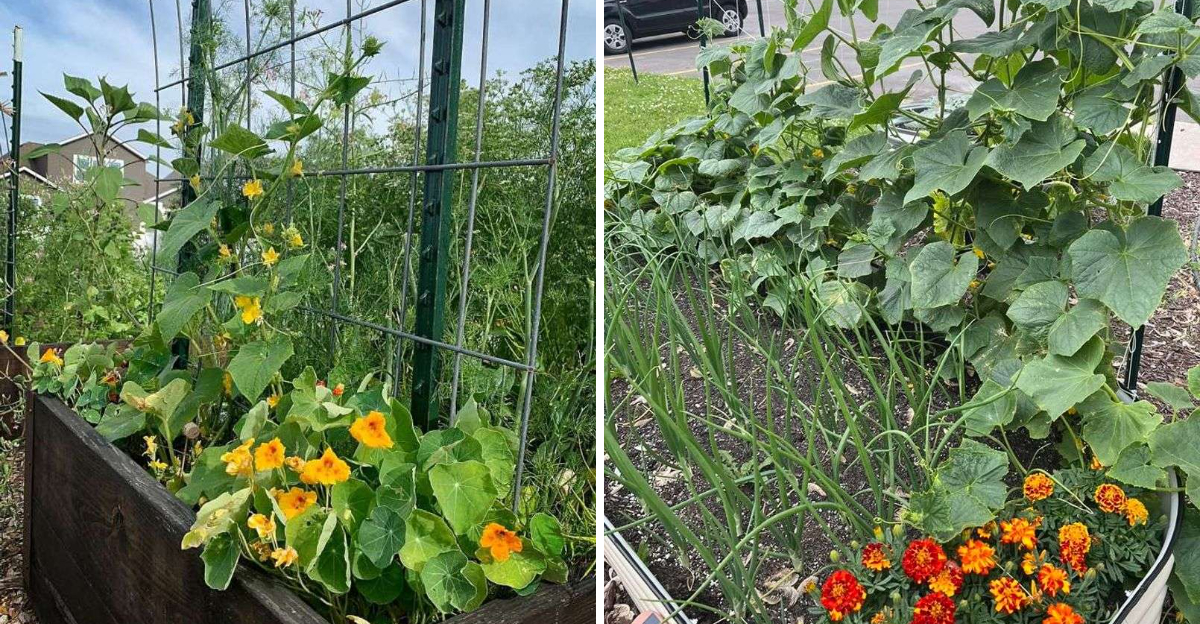
Most Michigan gardeners think about vertical space when they plant cucumbers, training vines up a trellis to save room and improve airflow. What fewer people consider is what could be growing in the space directly underneath.
That shaded ground beneath a cucumber trellis is not wasted space, it is actually an opportunity.
Certain plants respond really well to the filtered light and slightly cooler conditions that cucumber canopy creates, and some of them actively benefit the cucumber plants growing above them at the same time.
This kind of layered planting makes the most of limited garden space, which matters a lot in Michigan where the growing window is shorter than most gardeners would like.
Getting more productivity out of every square foot becomes part of the strategy when you are working against a seasonal deadline.
These nine plants were chosen because they work well in exactly the conditions under a cucumber trellis and because their presence in your garden tends to make everything around them perform a little better too.
1. Lettuce (Lactuca sativa)
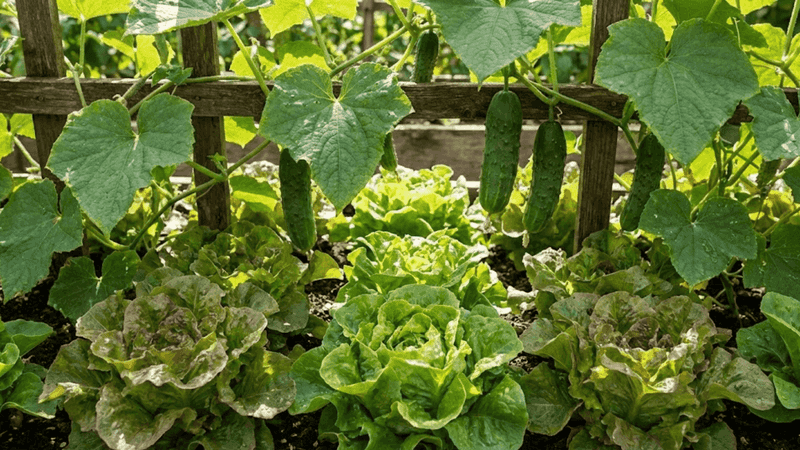
Tucking lettuce under your cucumber vines is one of the smartest moves a Michigan gardener can make. Cucumbers grow tall and spread their broad leaves across the garden, creating natural shade below.
Lettuce absolutely loves that cooler, shaded environment, especially as summer temperatures start climbing across the state.
In Michigan, summer heat can arrive fast and push lettuce into bolting, which means it sends up a flower stalk and turns bitter.
Planting lettuce beneath your cucumber canopy slows that process down by keeping the soil and air temperature lower right where it counts. You get a longer harvest window without doing anything extra.
Beyond temperature benefits, this combination also makes great use of vertical and horizontal space at the same time. Cucumbers climb up while lettuce fills in below, so you are essentially growing two crops in the same footprint.
That kind of efficiency is a big win in smaller Michigan garden beds where every inch matters.
Varieties like Black Seeded Simpson or Buttercrunch work particularly well in this setup. They stay compact and do not need full sun to produce well.
Start your lettuce transplants early in spring, then let the cucumbers take over above as the season heats up and the lettuce finishes its run.
2. Spinach (Spinacia oleracea)
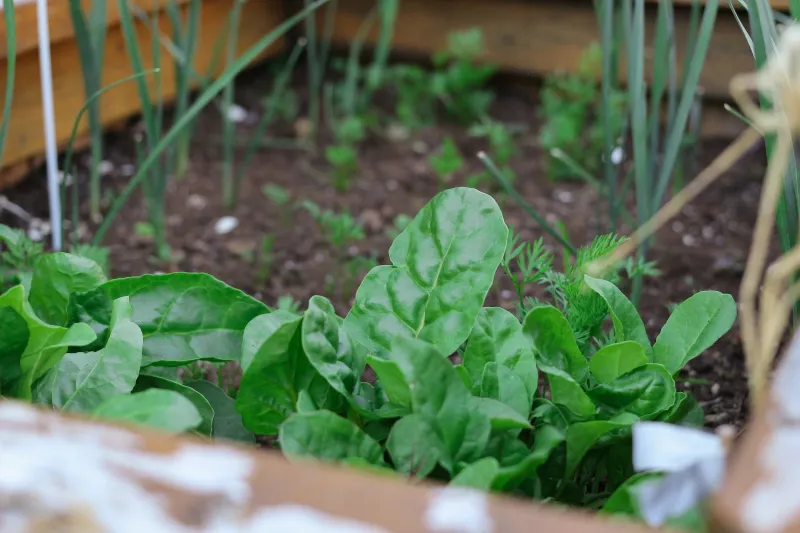
Spinach is one of those crops that seems almost too easy to grow, until summer rolls around and the heat shuts it down fast. Planting spinach under cucumber vines gives it a fighting chance to keep producing well into the warmer months.
The shade from the cucumbers acts like a natural buffer against the intense Michigan sun.
Early in the season, before cucumbers really take off, spinach thrives on its own with plenty of light and cool temperatures. As the cucumber vines expand and start shading the bed, spinach transitions smoothly into that lower-light environment.
It is a natural handoff that keeps your garden productive without any extra planning.
Spinach is also a shallow-rooted plant, which means it does not compete with cucumbers for deep soil moisture or nutrients. Both plants can coexist comfortably in the same bed without crowding each other out underground.
Your Michigan Garden Changes Every Week. Your Plan Should Too.
Gardening in Michigan changes quickly throughout the season. Every Friday you’ll receive a simple weekly plan showing exactly what to plant, prune, fertilize, harvest, and protect so you never miss the right timing.
That is a big deal when you are trying to keep multiple crops happy in one space.
Michigan gardeners who plant spinach varieties like Bloomsdale Long Standing or Tyee tend to get the best results in this setup. These varieties hold up better in warmer conditions than standard types.
Start seeds in early May, and you will have fresh spinach well into June and possibly July with the cucumber canopy helping to cool things down.
3. Radishes (Raphanus sativus)
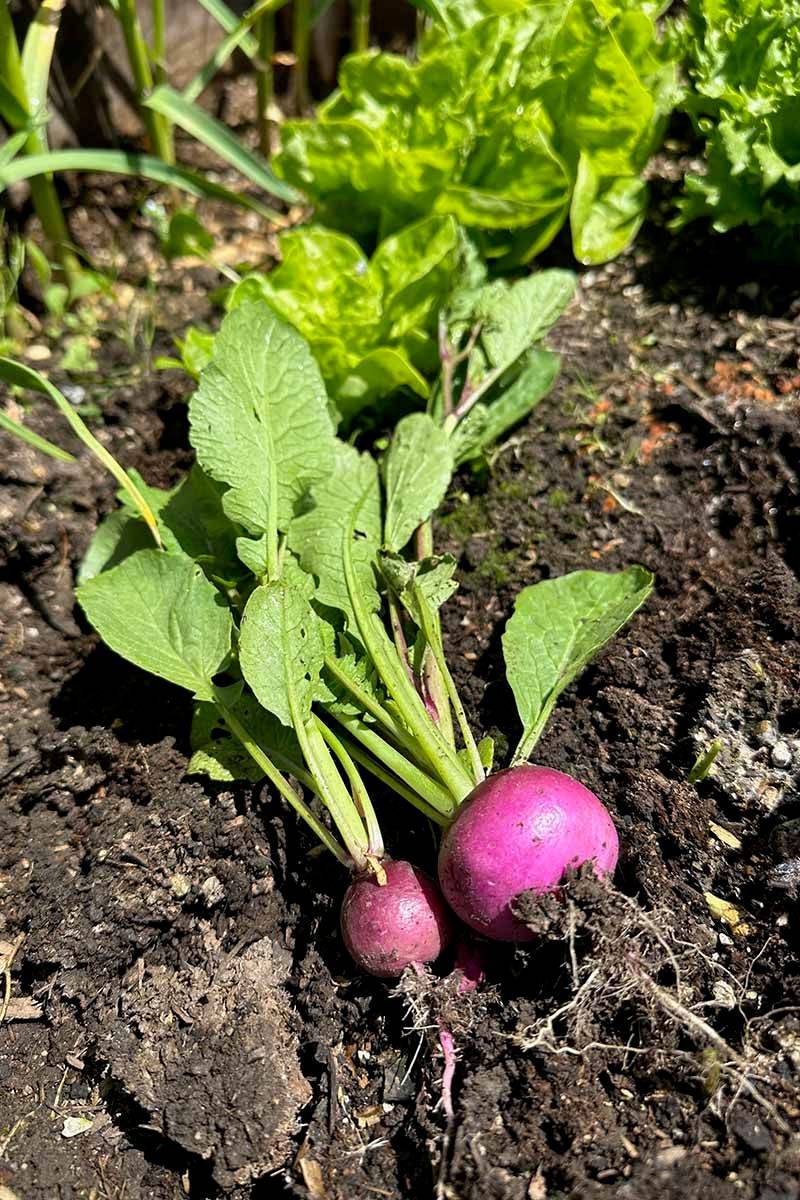
Radishes are the sprinters of the vegetable garden, and that speed is exactly what makes them such a clever choice under cucumbers.
Most radish varieties go from seed to harvest in just 25 to 30 days, which means they are completely done before cucumber vines even think about spreading out fully.
You get an entire extra crop in the same space without any competition.
In Michigan, where the growing season runs roughly from late May through September, timing matters a lot. Radishes planted in late May or early June will finish up right as your cucumbers start hitting their stride.
It is a perfect relay race between two completely different crops sharing the same patch of ground.
Radishes also do something useful below the surface. Their roots break up compacted soil as they grow, which can improve drainage and aeration for the cucumber roots that come in later.
Think of them as a natural soil loosener that also puts food on your table before they finish the job.
Cherry Belle and French Breakfast are two varieties that work especially well in Michigan garden beds. They mature quickly, taste great fresh, and take up almost no space above ground.
Sow seeds directly into the bed about two weeks before your cucumber transplants go in, and you will have radishes ready to pull before the cucumbers need the room.
4. Bush Beans (Phaseolus vulgaris)

Bush beans and cucumbers have a long history of growing well together in home gardens, and Michigan gardeners have been pairing them for generations.
Unlike pole beans, bush varieties stay low and compact, so they do not compete with cucumbers for vertical space or trellis room.
That makes them easy to tuck along the edges of your cucumber rows without causing any crowding issues.
One of the biggest benefits bush beans bring to the partnership is their ability to fix nitrogen in the soil. Beans work with bacteria in the ground to pull nitrogen from the air and store it in their roots.
Over time, that extra nitrogen becomes available to nearby plants, giving your cucumbers a gentle, natural nutrient boost without any added fertilizer.
It is worth noting that the nitrogen benefit builds slowly and may be most noticeable in the second year if you rotate crops back to the same area. Still, even within a single growing season, healthy soil biology around beans tends to support stronger overall plant growth nearby.
Michigan clay soils especially benefit from the organic matter beans leave behind.
Provider and Contender are two bush bean varieties that perform reliably in Michigan summers. They handle heat and humidity without fussing, and they produce heavily over several weeks.
Plant them about 12 inches from your cucumber base so both crops get enough airflow and light to stay healthy and productive all season long.
5. Dill (Anethum graveolens)
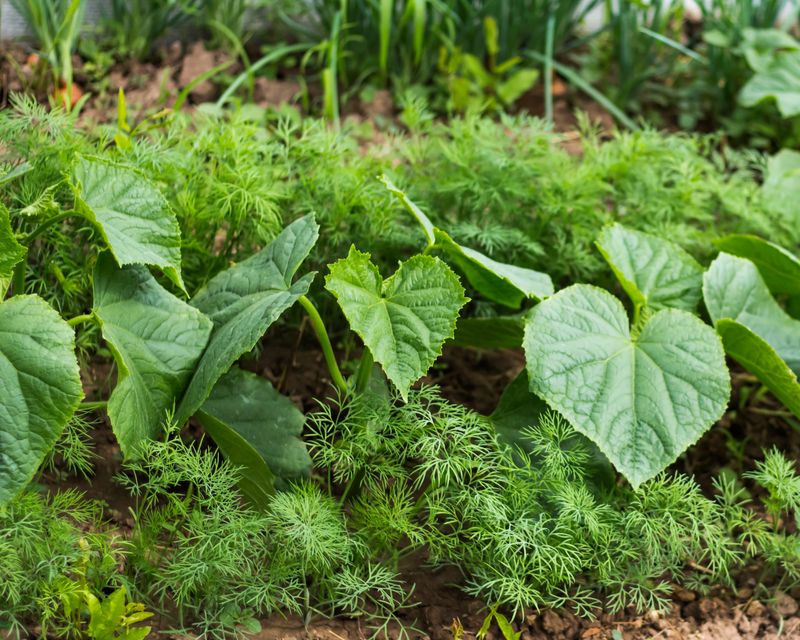
There is something almost magical about planting dill near cucumbers, and it goes well beyond the obvious culinary connection of pickles.
Dill is a powerhouse for attracting beneficial insects, particularly predatory wasps and hoverflies that feed on common cucumber pests like aphids and cucumber beetles.
Having those helpful bugs around your Michigan garden can make a noticeable difference in how healthy your plants stay.
Dill also brings in pollinators like bees and butterflies with its flat-topped yellow flower clusters. More pollinators visiting your garden means better cucumber fruit set, which directly translates to higher yields.
In a Michigan summer, when cucumber plants are pumping out flowers fast, strong pollinator activity can really push your harvest numbers up.
One thing to keep in mind is that mature dill can sometimes stunt cucumber growth if planted too close. The general rule is to keep dill at least 12 to 18 inches away from your cucumber base, or plant it at the edges of the bed where it can do its beneficial insect work without interfering.
Young dill is generally fine nearby, but once it flowers, give it a little space.
Bouquet dill is a popular choice for Michigan gardens because it produces lots of flowers quickly and thrives in the warm summers the state offers.
Start seeds directly in the ground after the last frost, and you will have blooming dill right when your cucumbers need the pollinator support most during the peak of the growing season.
6. Nasturtium (Tropaeolum majus)
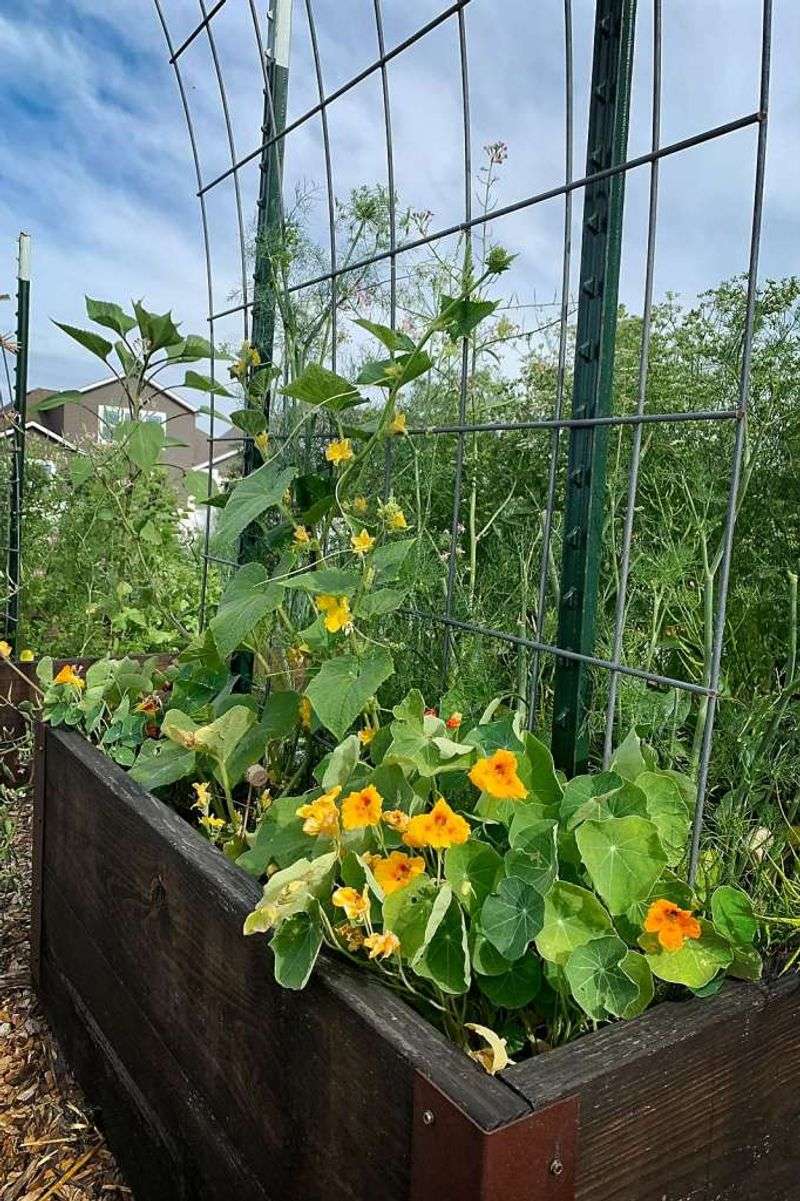
Nasturtiums are one of those cheerful, no-fuss plants that earn their keep in a Michigan garden in more ways than one. Their bright orange, yellow, and red flowers are eye-catching and beautiful, but they also serve a very practical purpose near cucumber plants.
Aphids are strongly attracted to nasturtiums, which means these flowers can act as a natural trap crop, pulling pests away from your cucumbers and toward themselves instead.
Think of nasturtiums as the decoy in your pest management strategy. When aphids swarm onto the nasturtium leaves and flowers, you can spot them easily and remove the affected parts before the population spreads.
This keeps pest pressure lower on your cucumbers without reaching for any sprays or chemicals, which is a big win for organic gardeners across the state.
Nasturtiums also stay low and trailing, so they fill in the bare ground around cucumber plants beautifully. That ground cover effect helps reduce weeds and keeps the soil from drying out too quickly during Michigan’s sometimes dry midsummer stretches.
Fewer weeds and more moisture in the soil means less work for you and healthier cucumbers overall.
Alaska and Whirlybird are two nasturtium varieties that do particularly well in Michigan. They are compact, flower quickly from seed, and handle a range of soil conditions without complaining.
Direct sow seeds after your last frost date, which in most parts of Michigan falls between late April and mid-May, and you will have flowers blooming right alongside your cucumber vines all summer.
7. Green Onions (Allium fistulosum)
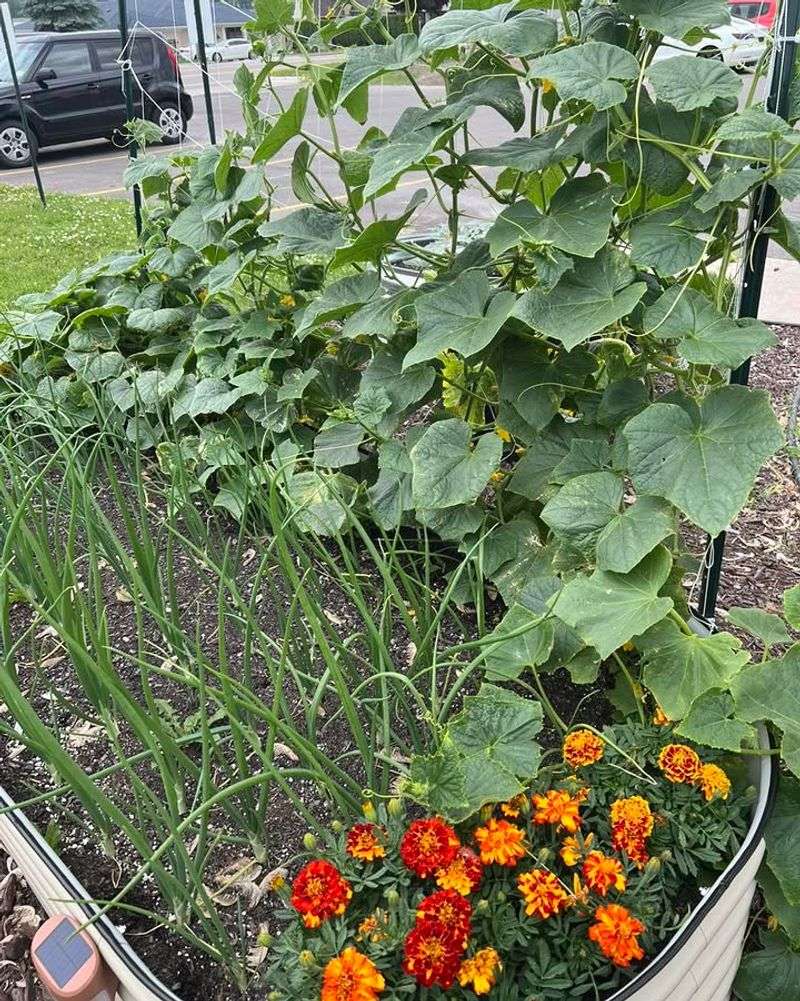
Green onions are one of the most underrated companion plants in the vegetable garden, and Michigan gardeners who use them near cucumbers often wonder why they waited so long to try it.
Their slim, upright growth takes up almost no horizontal space, making them ideal for tucking along the edges of cucumber rows without crowding anything out.
They are like polite neighbors who keep to themselves but still contribute to the neighborhood.
One of the most talked-about benefits of planting alliums like green onions near cucumbers is their potential to repel certain pests.
The strong scent that green onions release can confuse or deter cucumber beetles and other insects that navigate by smell when searching for host plants.
While no plant is a guaranteed pest barrier, green onions add another layer of protection that costs almost nothing to set up.
Green onions are also incredibly fast and low-maintenance. In Michigan, you can succession plant them every three weeks from early May through July and have a continuous harvest running alongside your cucumbers all season.
They pull easily from the soil without disturbing nearby roots, so harvesting them never disrupts the cucumber plants growing close by.
Evergreen Hardy White and Parade are two varieties well suited to Michigan growing conditions. Both handle cool spring temperatures and summer heat with ease.
Plant them about six inches from your cucumber base, and water them in well. They will grow quietly and steadily, keeping your garden neat, productive, and naturally a little more pest-resistant all season.
8. Basil (Ocimum basilicum)
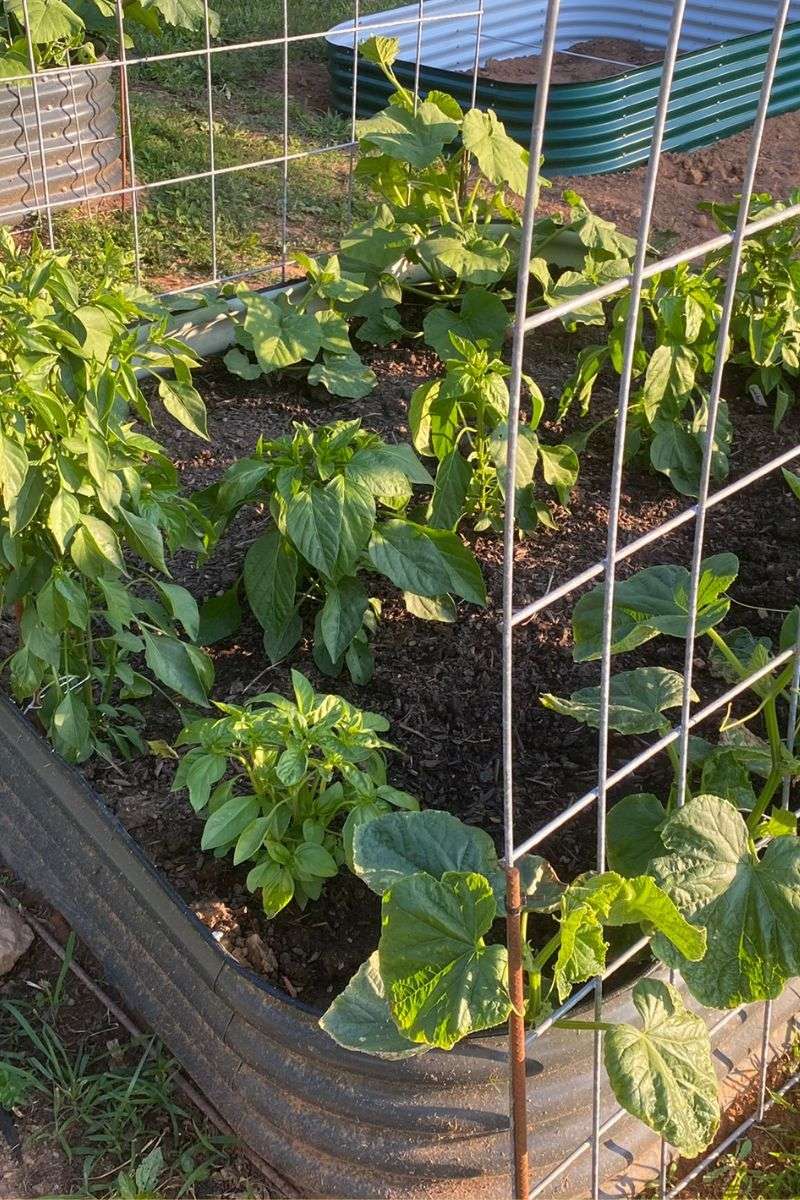
Basil and cucumbers are a classic kitchen pairing, so it makes perfect sense to grow them side by side in the garden too. Beyond the convenience of having both crops within arm’s reach at harvest time, basil brings a few real benefits to the cucumber patch.
Its strong aromatic oils are believed to repel certain insects, including aphids and spider mites, that can bother cucumber plants during Michigan’s warm midsummer weeks.
Basil is also a magnet for pollinators when it flowers, and more pollinators in your garden means better fruit set on your cucumber plants.
Bees are especially drawn to basil blooms, and since cucumbers need bees to transfer pollen between male and female flowers, having basil nearby can quietly improve your harvest numbers.
It is a small thing that adds up over an entire growing season.
One important thing to keep in mind is that basil needs full sun to thrive, so plant it at the edge of your cucumber bed rather than directly underneath the dense canopy.
Michigan summers give basil the warm temperatures it loves, but shading it out under heavy cucumber vines will stunt its growth quickly. Give it a sunny spot with good airflow and it will reward you generously.
Genovese and Sweet Basil are the most popular choices for Michigan gardens and perform reliably from late May through September.
Start transplants indoors about six weeks before your last frost date, then move them outside once nighttime temperatures stay above 50 degrees.
Pinch off flower buds regularly to keep the plant bushy, productive, and pumping out that pest-deterring fragrance all season.
9. Marigolds (Tagetes patula)
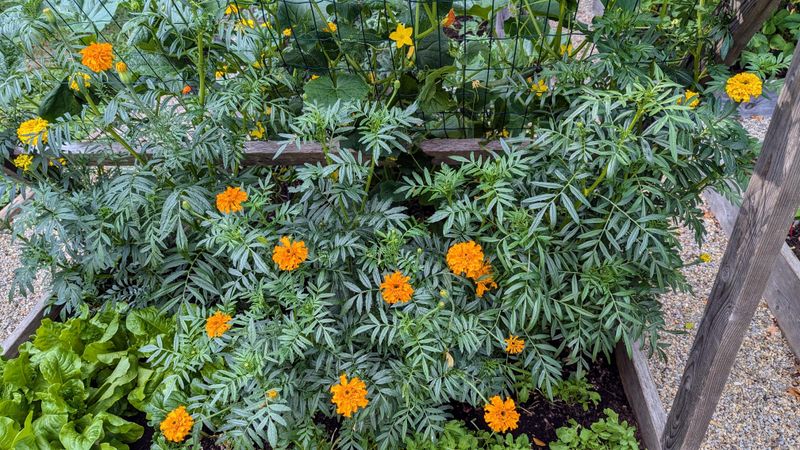
Marigolds are probably the most famous companion plant in the entire gardening world, and for good reason.
Their bold orange and yellow flowers brighten up any Michigan garden bed, and their strong, pungent scent is genuinely off-putting to a wide range of common garden pests.
Planting them around your cucumber rows creates a fragrant border that many insects would rather avoid altogether.
French marigolds, in particular, have been studied for their ability to suppress certain soil nematodes, which are microscopic worms that attack plant roots.
In Michigan soils where nematode pressure can be a problem, planting marigolds densely around cucumbers for a full season can help reduce their numbers over time.
The effect is gradual but real, especially when marigolds are used consistently year after year in the same beds.
Marigolds also attract beneficial insects like lacewings and parasitic wasps that feed on common cucumber pests.
Having those natural predators active in your garden throughout the summer creates a more balanced ecosystem where pest populations stay lower without you having to intervene constantly.
That kind of natural balance is something every Michigan gardener should aim for.
Petite French marigold varieties like Disco or Lemon Drop stay compact and work well at the base of cucumber plants without taking over the bed.
Sow seeds directly into the ground after your last frost, or start transplants indoors four to six weeks early for earlier blooms.
Either way, once marigolds start flowering, they keep going strong right through Michigan’s first fall frost with very little care needed from you.