Ornamental Grass Varieties To Grow In Florida Containers
Your patio is a blank canvas, and ornamental grasses are the brushstroke most Florida gardeners completely overlook. Everyone reaches for the same hibiscus, the same bougainvillea, the same safe picks.
But grasses? They bring something totally different to the table. Movement. Texture.
That effortless, editorial look that makes a container garden feel intentional rather than thrown together.
And the best part? Florida’s heat doesn’t scare them off. While other plants tap out by August, the right ornamental grasses are just hitting their stride.
They sway in the breeze, catch the light in a way that’s almost hypnotic, and pair beautifully with just about anything growing nearby.
Got a tiny balcony? A sprawling lanai? There’s a grass variety that fits your space and actually thrives in Florida’s conditions.
We rounded up the best ones worth growing in containers right now, and a few of them might just surprise you.
1. Grow Muhly Grass For Pink Fall Drama
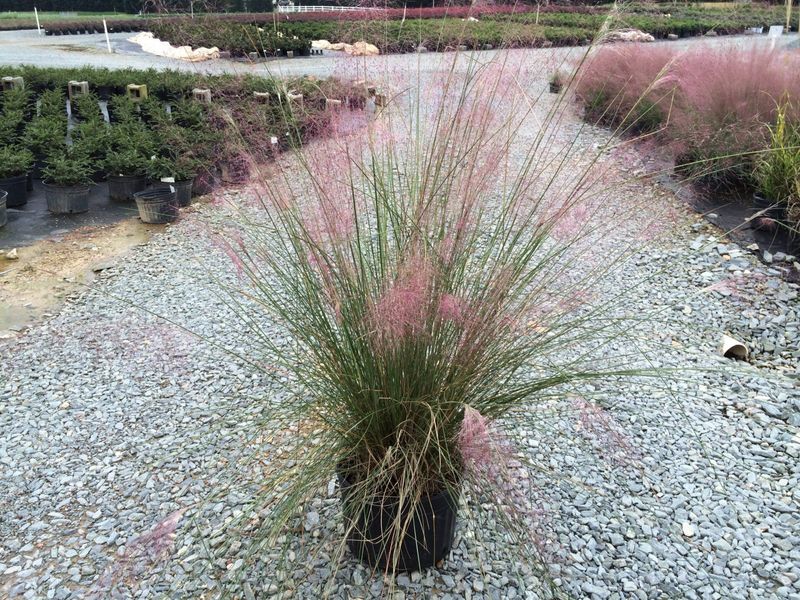
Few native Florida plants put on a fall show quite like muhly grass, and most people are genuinely surprised to learn it thrives in a container.
Muhlenbergia capillaris is a Florida-native clumping grass that earns its keep all year with fine, arching green blades, then absolutely delivers in October and November when those signature pink to purple flower plumes emerge and catch the light like a soft cloud.
Full sun is non-negotiable for muhly grass. It needs at least six to eight hours of direct sunlight daily to produce its best plume display, so a south- or west-facing patio, sunny entryway, or poolside spot is ideal.
A medium to large container, at least 14 to 18 inches wide and deep, gives the root system enough room to establish and keeps the plant from drying out too fast in Florida’s summer heat.
Drainage matters more than almost anything else with this grass. Use a well-draining potting mix, avoid heavy clay-based soils, and make sure your container has solid drainage holes.
Muhly grass is drought-tolerant once established, so let the soil dry out between waterings rather than keeping it consistently moist.
When sourcing muhly grass, buy from a reputable Florida native plant nursery. The clumping habit of true Muhlenbergia capillaris means it is not considered invasive in Florida and does not spread by runners the way some aggressive grasses do.
UF/IFAS lists muhly grass as a Florida-native ornamental grass for landscapes, and its clumping habit makes it one of the more practical native grasses to adapt to a sunny container. Mailbox planters and sunny porch urns are excellent spots to let it shine.
2. Choose Elliott’s Lovegrass For Airy Texture
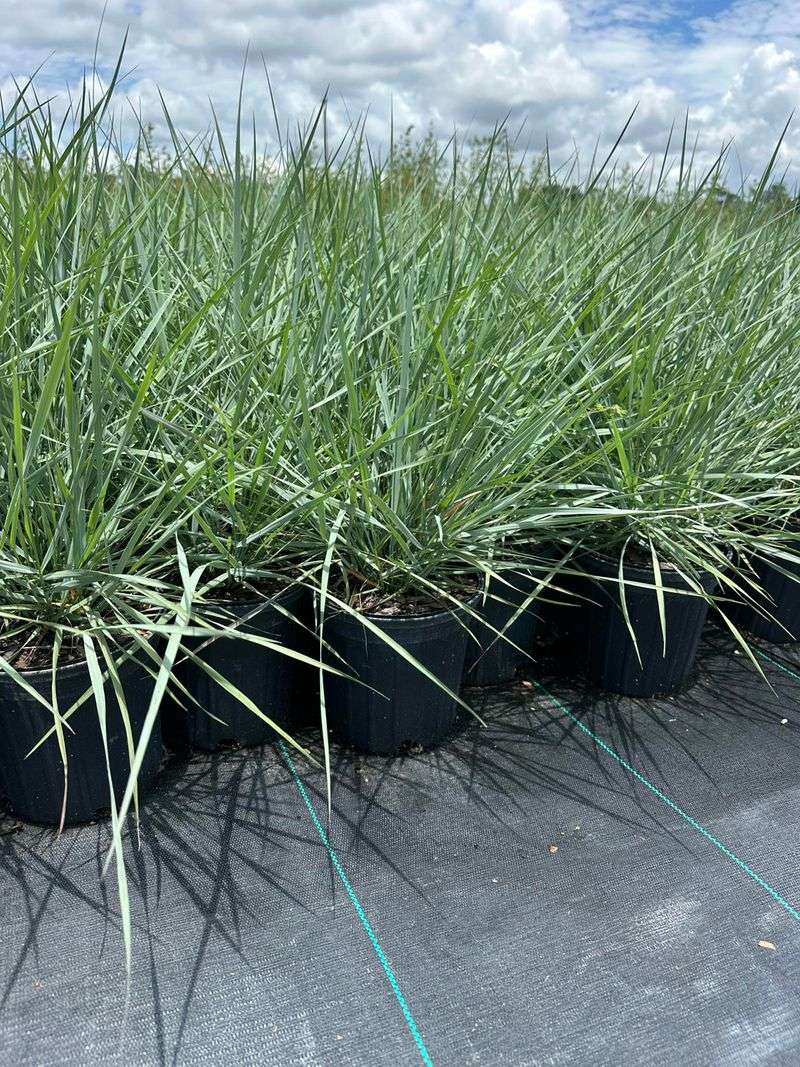
Some grasses command attention through sheer size, but Elliott’s lovegrass earns its place through pure refinement. Eragrostis elliottii is a Florida-native grass that brings a soft, almost feathery quality to containers without taking over the whole patio.
The fine-bladed, blue-green foliage moves with even the lightest coastal breeze, and the airy seed heads that appear in late summer add a quiet seasonal shift that feels natural rather than flashy.
Your Florida Garden Changes Every Week. Your Plan Should Too.
Gardening in Florida changes quickly throughout the season. Every Friday you’ll receive a simple weekly plan showing exactly what to plant, prune, fertilize, harvest, and protect so you never miss the right timing.
This grass is built for Florida’s punishing summer sun. Full sun and well-drained, even sandy soil suit it perfectly, which makes it a strong candidate for containers filled with a gritty, well-draining mix rather than heavy potting soil.
A medium container in the 12 to 16 inch range works well for a single plant, and the compact size of Elliott’s lovegrass means it does not overwhelm a planter the way larger species can.
Drought tolerance is one of its real strengths. Once the roots establish over a few weeks, this grass handles dry spells without complaint.
Water it deeply but infrequently, and avoid keeping the container sitting in a saucer full of water, which can cause root rot in Florida’s humid conditions.
Visually, keep the planter design simple so the fine blades do not disappear against a busy background. Plain concrete pots, simple clay containers, or clean white planters let the grass read clearly.
UF/IFAS recognizes Elliott’s lovegrass as a Florida native with solid ornamental value, and pairing it with low-growing native wildflowers like sunshine mimosa at the base gives the container a finished, layered look without competing with the grass itself.
3. Plant Purple Lovegrass For A Soft Haze
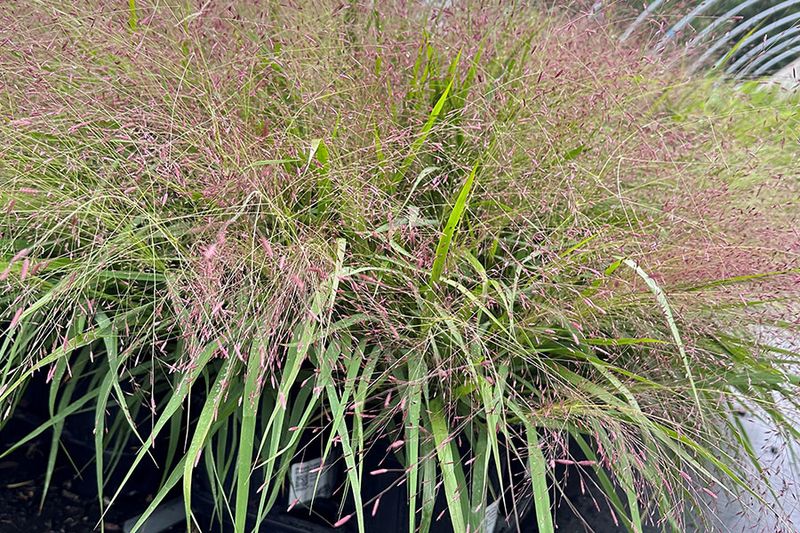
There is a moment in late summer when purple lovegrass blooms and the whole plant looks like it is wrapped in a soft lavender mist.
Eragrostis spectabilis is a Florida-native grass with one of the most distinctive bloom displays of any native ornamental, producing a billowing haze of tiny reddish-purple flowers that float above the compact green foliage on thread-like stems.
The effect is genuinely meadow-like, and it translates well into a container setting when you work with the plant’s natural character rather than against it.
Full sun and well-drained soil are the basic requirements. Purple lovegrass is naturally found in sandy, open areas across Florida, so a gritty, fast-draining potting mix suits it far better than a dense, moisture-retaining blend.
A medium container with solid drainage holes is the right starting point, and placing it where it gets uninterrupted morning and afternoon sun keeps the plant compact and blooming well.
One honest note about this grass is that outside its bloom window, the foliage is fairly quiet. The green blades are tidy but not particularly showy, which means container placement and companion planting carry more weight for the off-season months.
Pairing purple lovegrass with a low native groundcover or a compact native wildflower in a nearby pot helps fill the visual gap when the bloom haze fades.
This grass fits naturalistic and informal container designs far better than clipped, formal arrangements.
According to UF/IFAS, Eragrostis spectabilis is a well-adapted Florida native, and its airy seed heads and native status also make it a better ecological fit than many nonnative ornamental grasses.
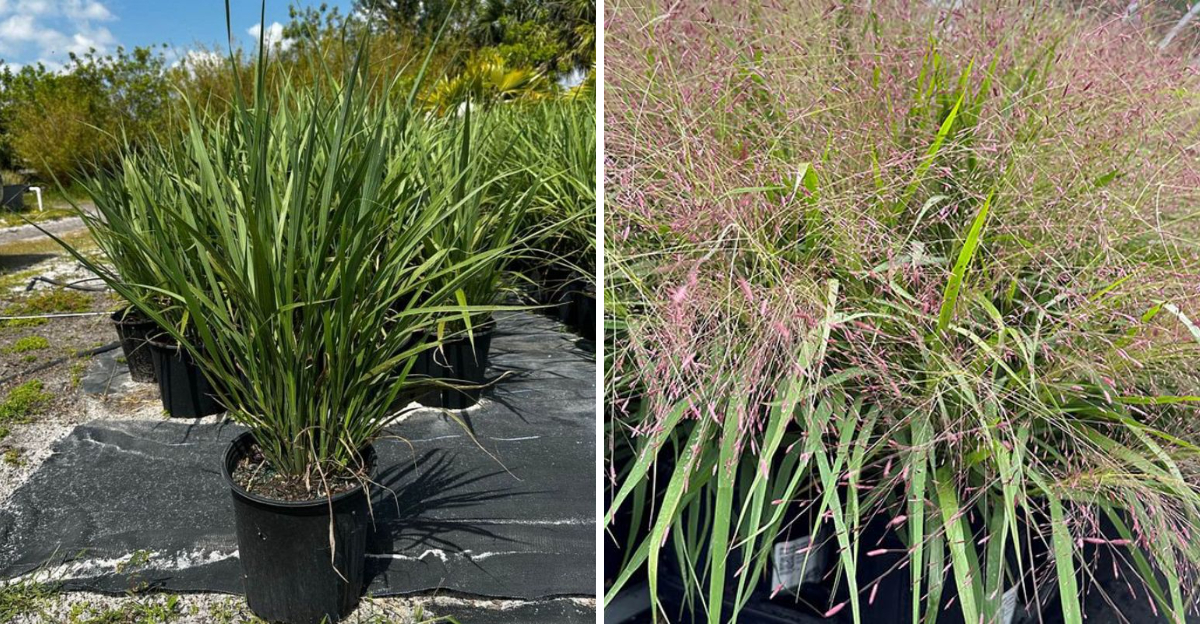
4. Use Dwarf Fakahatchee In Patio Pots
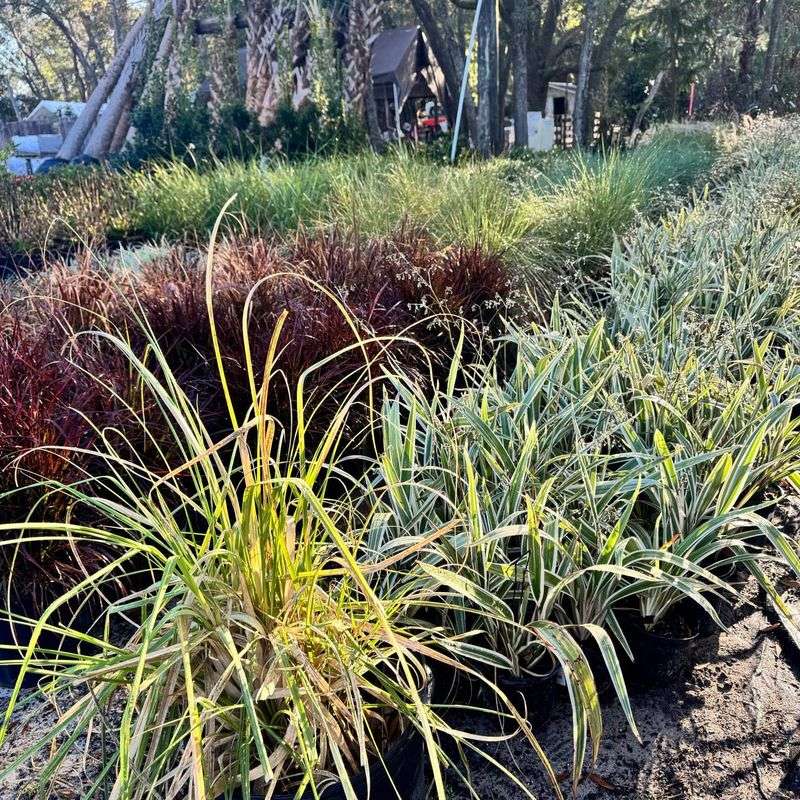
Bold, strappy foliage without the footprint of a full-sized native grass is exactly what dwarf Fakahatchee brings to a container.
Tripsacum floridanum, commonly called dwarf Fakahatchee grass, gives patios and entryways a clean, tropical-looking presence that reads as architectural without needing constant maintenance.
The wide, arching blades have a confident visual weight that works well in pots positioned near doorways, along covered patios, or flanking wide porch steps.
One of the practical advantages of the dwarf form over the full-sized species is that it stays genuinely manageable in a container setting. Full sun to part shade both work, making this one of the more flexible native grasses for Florida containers.
Morning sun with afternoon shade suits it well in South Florida’s most intense summer heat, while Central Florida containers can handle more direct exposure.
Container size matters with this grass. Go with a roomy pot, at least 16 to 20 inches wide, to give the root system space and prevent the plant from drying out too quickly between waterings.
A well-draining potting mix with some organic matter supports healthy growth without waterlogging. Water regularly during the growing season, and ease off slightly in cooler months when growth slows.
UF/IFAS lists Tripsacum floridanum as a Florida native with good ornamental potential, and it appears on several Florida native plant nursery lists as a container-worthy option.
Gardeners who want a native grass with a clean, tropical look without the aggressive size of the larger Fakahatchee species will find the dwarf form hits that balance well.
Always source from a reputable nursery to confirm you are getting the true dwarf form.
5. Let Giant Fakahatchee Anchor A Large Planter
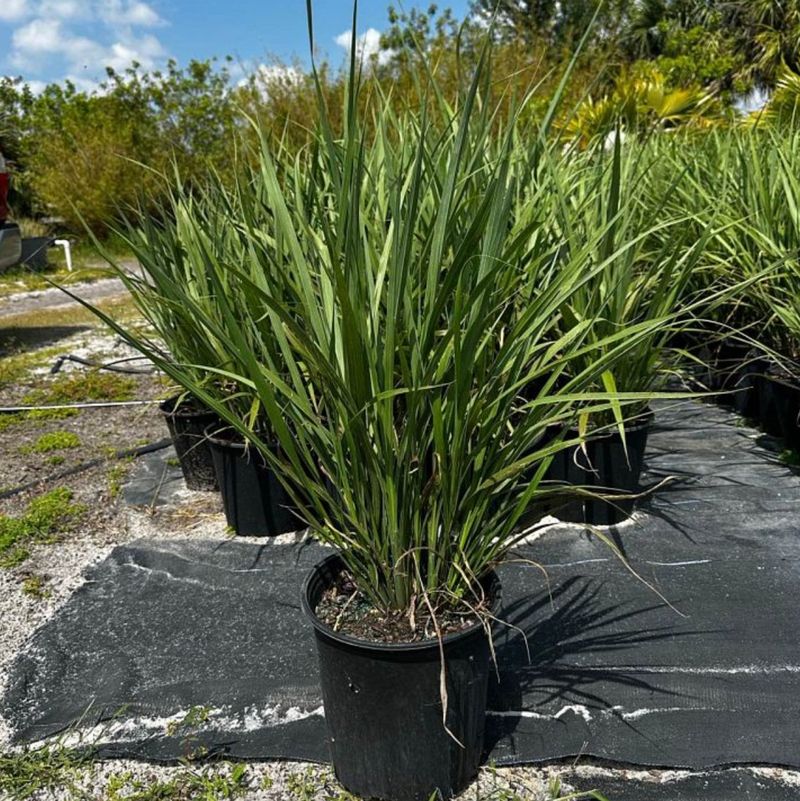
Some plants are built to make a statement, and regular Fakahatchee grass does exactly that when given the right stage.
Fakahatchee grass, commonly listed as Tripsacum dactyloides in UF/IFAS resources, is a large-scale Florida-native grass with broad, arching, strap-like blades that can reach four to six feet tall and wide at full maturity.
In an oversized container, it serves as a striking vertical anchor and a genuinely Florida-native alternative to the large non-native ornamental grasses that cause serious ecological problems in this state.
The critical word with this grass is large. A standard 14-inch patio pot will not cut it.
You need a very large, heavy container, think half-barrel size or a substantial concrete planter, to give the root system room and keep the plant stable in Florida’s afternoon thunderstorms and coastal winds.
Drainage must be excellent, because standing water at the root zone will cause problems even for a tough native grass.
Placement decisions matter as much as container size. Giant Fakahatchee can easily overwhelm a small balcony, narrow walkway, cramped doorway, or tight mailbox area.
Use it where there is genuine open space around the pot, such as a wide pool deck, a large entryway with room to breathe, or a sprawling patio corner where its scale reads as intentional rather than crowded.
Think of it as a specimen plant rather than a supporting player. UF/IFAS recognizes Tripsacum dactyloides as a Florida native with strong ornamental and ecological value.
When used as a single bold container piece in the right setting, it carries a visual authority that few other native grasses can match. Buy from a verified Florida native plant nursery to ensure you are getting the correct species.
6. Try Sand Cordgrass For Coastal Toughness
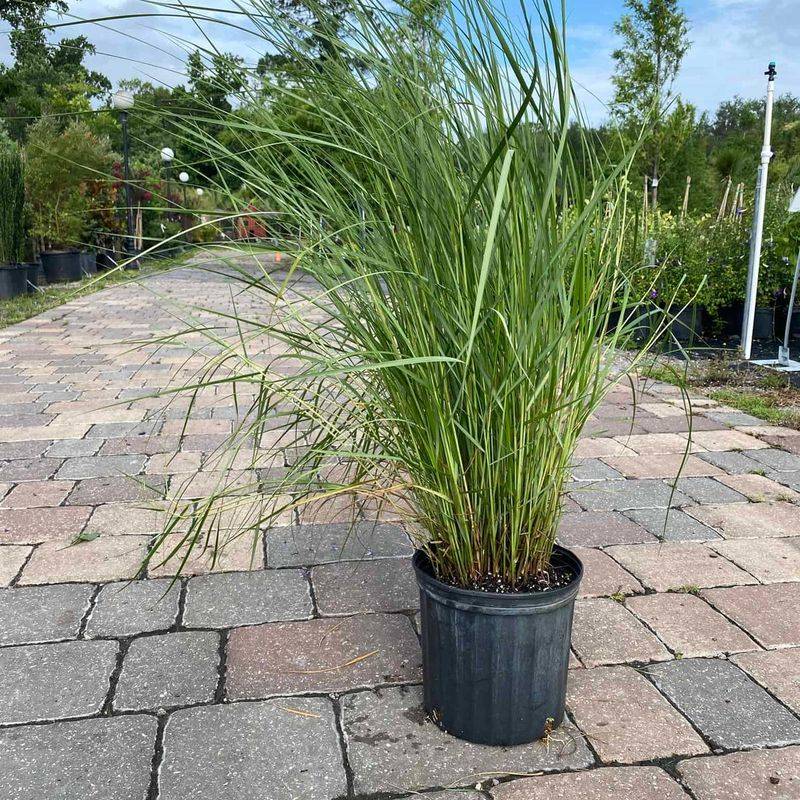
If you have ever watched a Florida coastal garden take a beating from salt spray, wind, and punishing summer sun, you start to understand why sand cordgrass is genuinely worth knowing.
Spartina bakeri is a Florida-native grass that handles coastal exposure with a durability most ornamental plants simply cannot match.
Salt tolerance, drought tolerance, and the ability to manage both wet and dry spells make it one of the toughest native grasses available for Florida container gardeners near the coast.
The upright, stiff blades give containers a strong, grassy silhouette that reads well in exposed locations. This is not a delicate, fine-textured grass.
It has presence and weight, which suits wide open spaces like pool decks, driveway borders, beachfront patios, and sunny entryways where smaller ornamental plants would struggle to hold up visually against the surrounding landscape.
Container size is important here. Sand cordgrass can form a broad clump and is described by UF/IFAS as having aggressive spreading potential in landscapes, so use it only in a large container where its growth can be contained and monitored.
Full sun is the standard requirement, and once established, it needs far less irrigation than most container plants in Florida’s summer heat.
UF/IFAS recognizes Spartina bakeri as a Florida native with strong ecological and ornamental value, particularly in sunny coastal, roadside, and wet-to-dry landscape settings.
For gardeners near Florida’s coastline who have struggled to find a container grass that holds up to salt air and full sun without flinching, sand cordgrass is a reliable, low-fuss native option that earns its container space every single season.
7. Pick Beach Panic Grass For Sandy Spots
Not every container grass needs to be lush and tropical-looking.
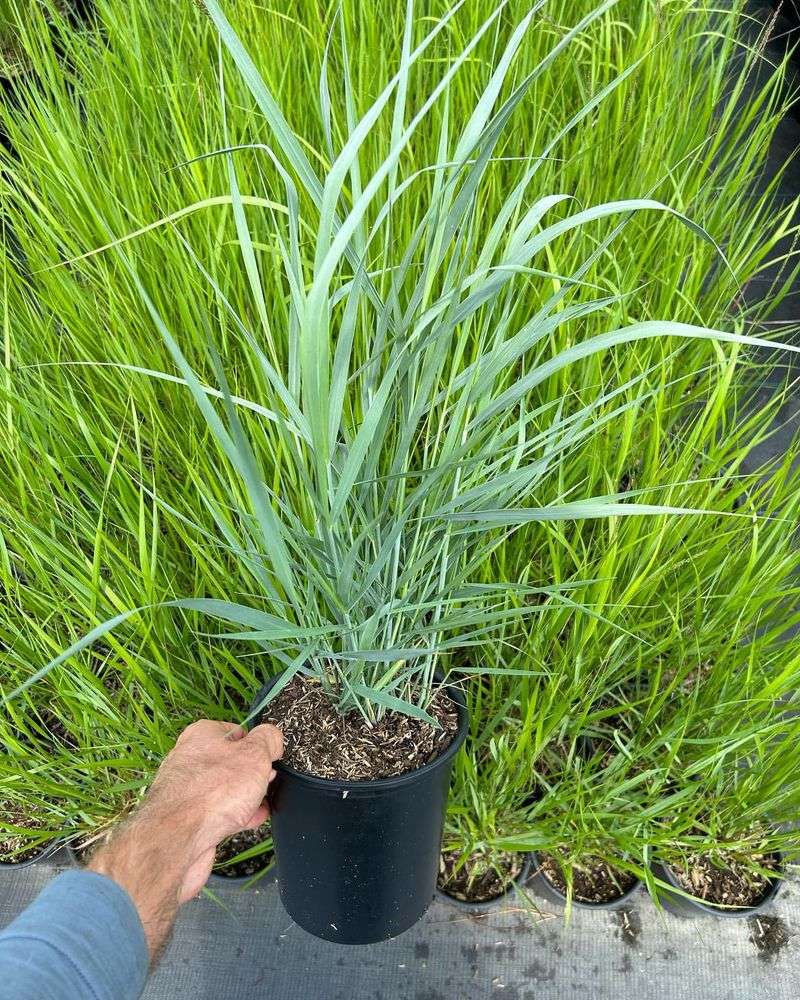
Beach panic grass, Panicum amarum, is a specialized Florida-native grass that suits coastal, naturalistic container designs with a relaxed, sandy-shoreline quality that feels completely at home near Florida’s beaches and barrier islands.
Its upright, blue-green blades and open, airy growth habit give large containers a beachy, wind-swept look that works especially well for seaside homes, coastal condos, and properties where the surrounding landscape already has that natural dune character.
This grass is not the most widely available ornamental in Florida nurseries, which is worth knowing before you go shopping. Always buy nursery-propagated plants from a reputable Florida native plant source.
Never collect beach panic grass from wild dunes or coastal areas, where it plays a real ecological role in stabilizing sandy shorelines. Removing it from those environments causes genuine harm, and collection from natural areas may violate state regulations.
Sandy, well-drained soil is the foundation this grass needs. A large container with excellent drainage, filled with a gritty, low-nutrient mix, closely mirrors the natural conditions where Panicum amarum thrives.
Full sun is essential, and once established, the grass handles drought and salt spray with minimal fuss. Avoid rich, moisture-retaining potting mixes that hold too much water, which can cause root problems in Florida’s humid climate.
Pairing beach panic grass with other nursery-grown coastal natives in nearby pots can create a cohesive coastal container garden. Avoid collecting any dune plants from the wild, including sea oats, which are protected in Florida.
UF/IFAS and the Florida Native Plant Society both recognize Panicum amarum as a legitimate Florida native with real value in appropriate coastal settings.