Native North Carolina Joe Pye Weed Attracts An Unexpected Number Of Butterflies And Moths
Joe Pye weed does not always get the attention it deserves in North Carolina gardens, partly because it is large and unruly by conventional standards and partly because it blooms late in the season when many gardeners have already shifted their focus.
What happens around this plant when it finally flowers in late summer and early fall is genuinely worth seeing.
The number and variety of butterflies and moths that descend on it goes well beyond what most native plants can claim, and for a state as rich in butterfly diversity as North Carolina, that is a meaningful distinction.
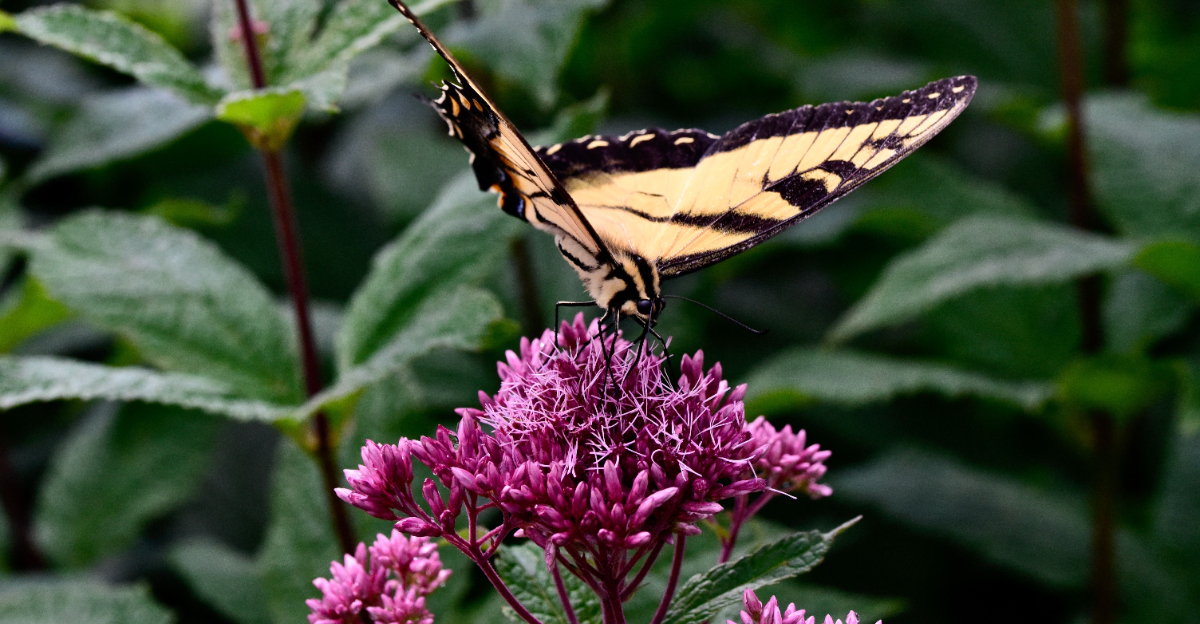
Swallowtails, fritillaries, skippers, and sphinx moths all treat Joe Pye weed as a major late season resource at a time when other nectar sources are winding down.
Growing it native to North Carolina means it is already perfectly adapted to local conditions, asking very little while giving back an outsized amount to the ecosystem around it.
Once you see it in full pollinator season, it becomes very difficult to leave out of the garden.
1. Hollow Joe Pye Weed Is The Most Common Native Species In North Carolina
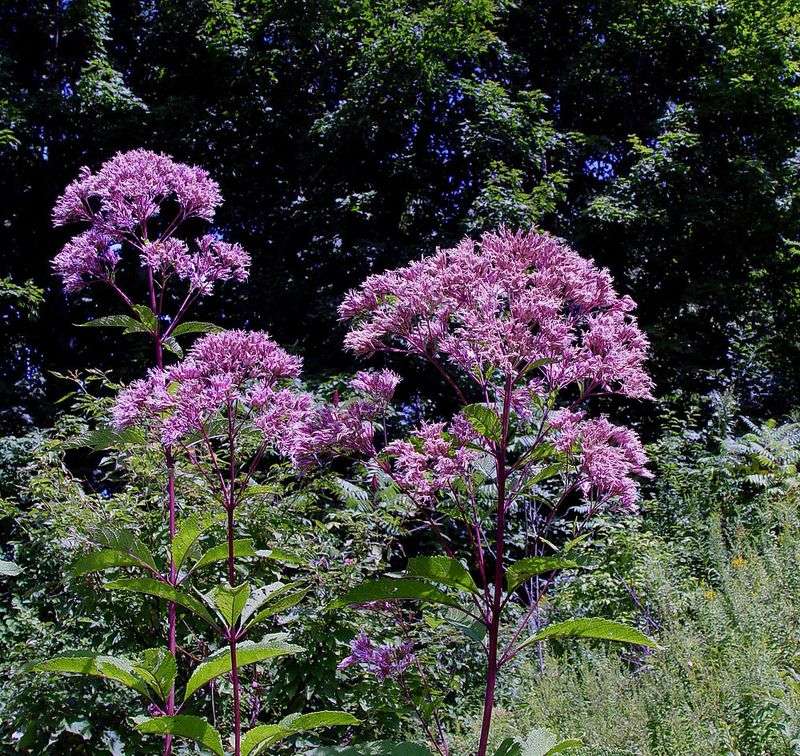
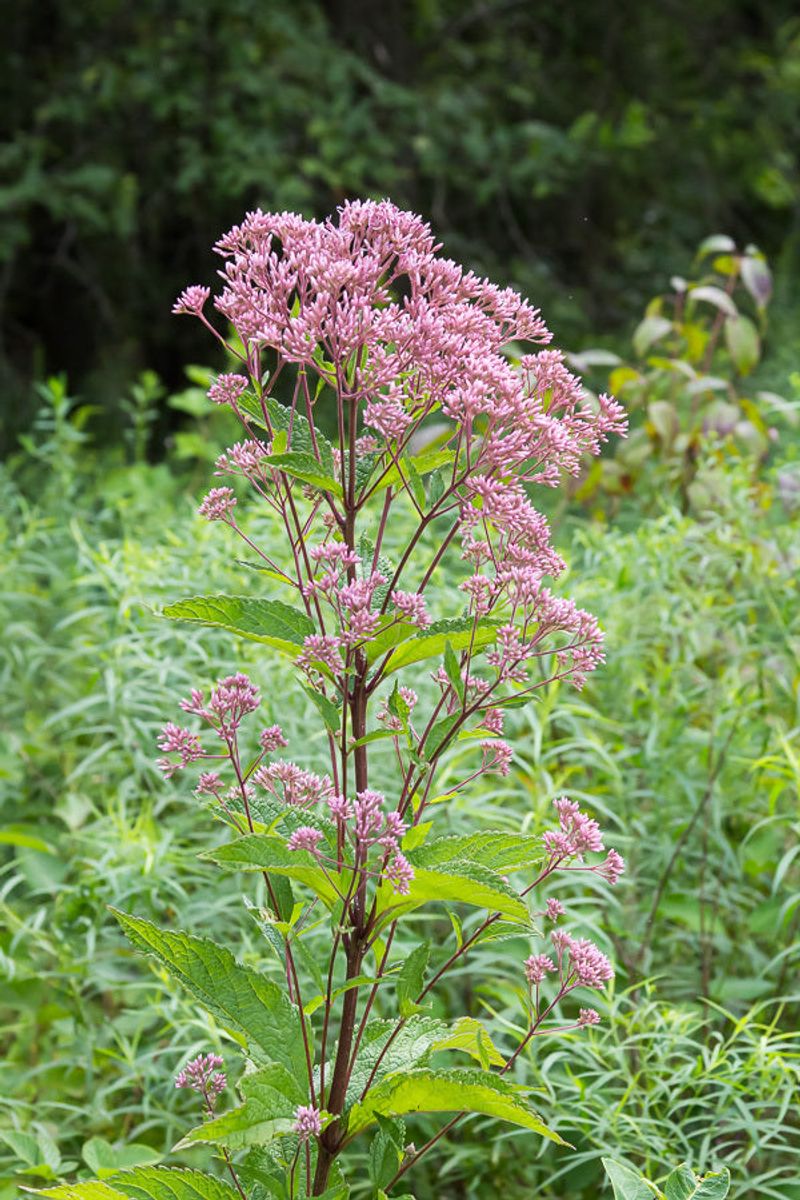
Walk through almost any moist meadow or stream edge in North Carolina during late summer, and you will likely spot Eutrochium fistulosum, commonly called hollow Joe Pye weed.
The name comes from the plant’s hollow stem, which you can actually feel if you gently press it.
That small detail sets it apart from its close relatives and makes it easy to identify once you know what to look for.
Hollow Joe Pye weed is perfectly suited to the humid, warm growing conditions found across much of North Carolina.
It thrives in moist, fertile soil and loves full sun, growing anywhere from five to twelve feet tall in ideal conditions.
Because of its impressive height, it works beautifully at the back of a native planting bed or along a rain garden edge where it has room to stretch.
Gardeners who are new to native plants often overlook this species simply because of its size.
Once established, though, it requires very little care and rewards you generously with weeks of blooms.
Pollinators absolutely swarm the flowers from July through September, turning any garden corner into a lively, buzzing habitat.
Planting hollow Joe Pye weed is one of the easiest ways to add serious wildlife value to a North Carolina yard without a lot of extra effort.
2. Adult Butterflies Flock To Joe Pye Weed For Its Rich Nectar
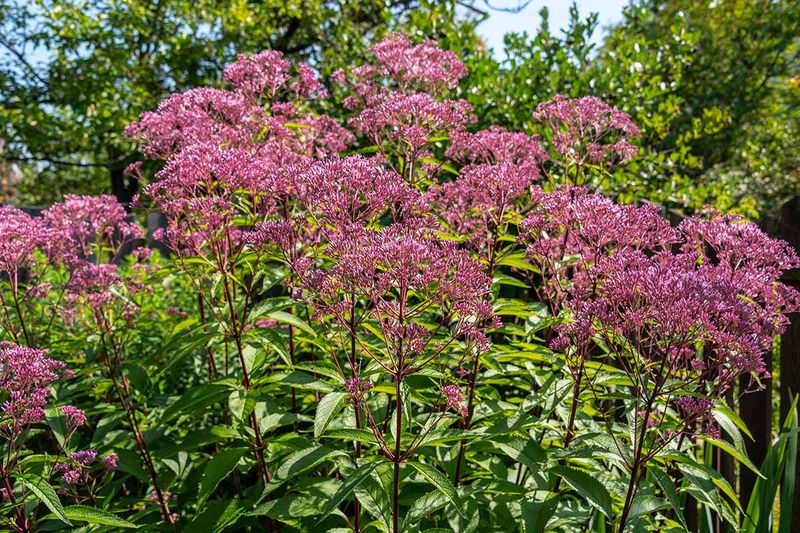
Few plants in the native garden can match Joe Pye weed when it comes to pulling in butterflies.
The large, domed flower clusters are packed with tiny individual florets, and each one offers a steady supply of nectar that adult butterflies simply cannot resist.
Blooming from midsummer into early fall, the timing could not be better for North Carolina pollinators that are at peak activity during those warm months.
What makes this plant especially useful is that it fills a gap in the late-season nectar calendar.
Your North Carolina Garden Changes Every Week. Your Plan Should Too.
Gardening in North Carolina changes quickly throughout the season. Every Friday you’ll receive a simple weekly plan showing exactly what to plant, prune, fertilize, harvest, and protect so you never miss the right timing.
Many spring-blooming plants have long finished by the time Joe Pye weed opens up, so butterflies that are still active in August and September depend heavily on plants like this one.
North Carolina gardens that include Joe Pye weed essentially become reliable fuel stations for traveling and local butterfly populations alike.
Watching butterflies feed on Joe Pye weed is genuinely entertaining. They land, probe the flowers, and linger for long stretches rather than darting away quickly.
That behavior means you get extended, close-up views of species you might otherwise only glimpse briefly.
For anyone who wants to attract more butterflies to a North Carolina pollinator garden, planting Joe Pye weed near a seating area or a window is a simple, rewarding strategy that pays off every single season.
3. Swallowtail Butterflies Are Frequent Visitors To Joe Pye Weed Blooms
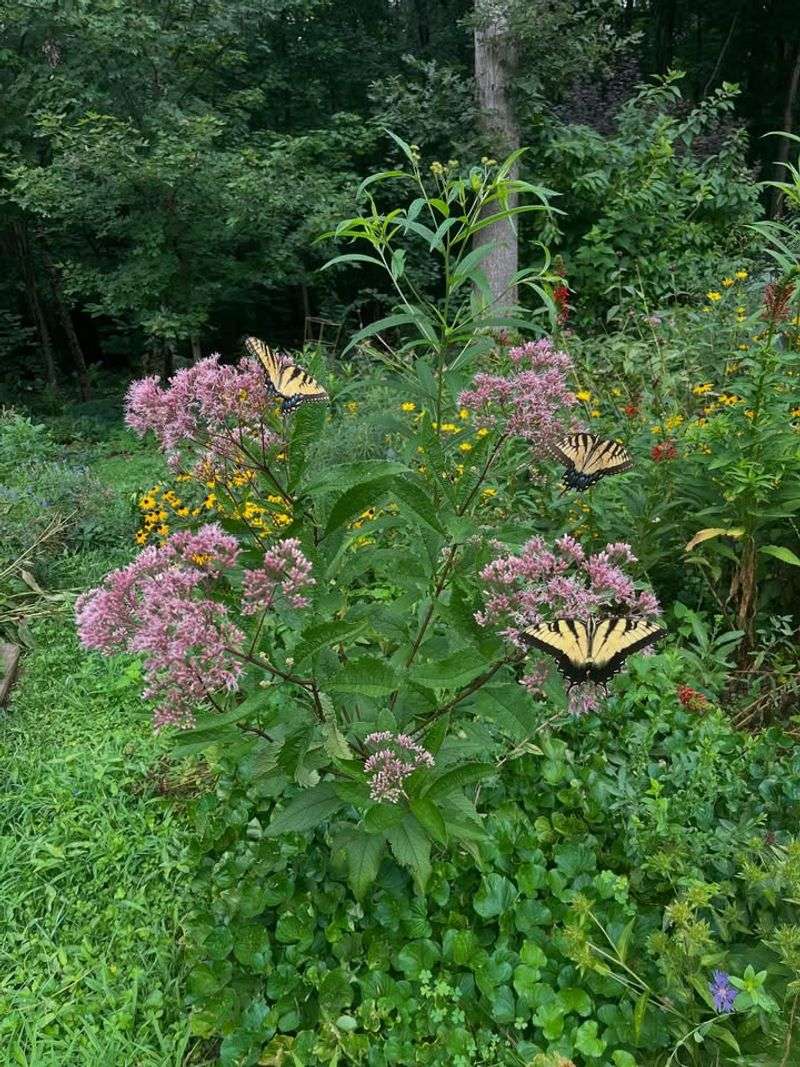
Spotting a large, boldly patterned swallowtail butterfly is one of summer’s great garden moments, and Joe Pye weed makes it happen regularly.
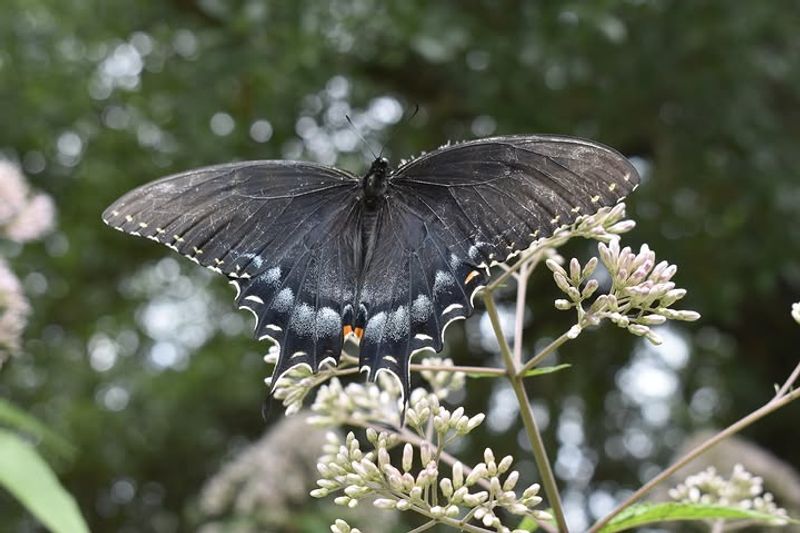
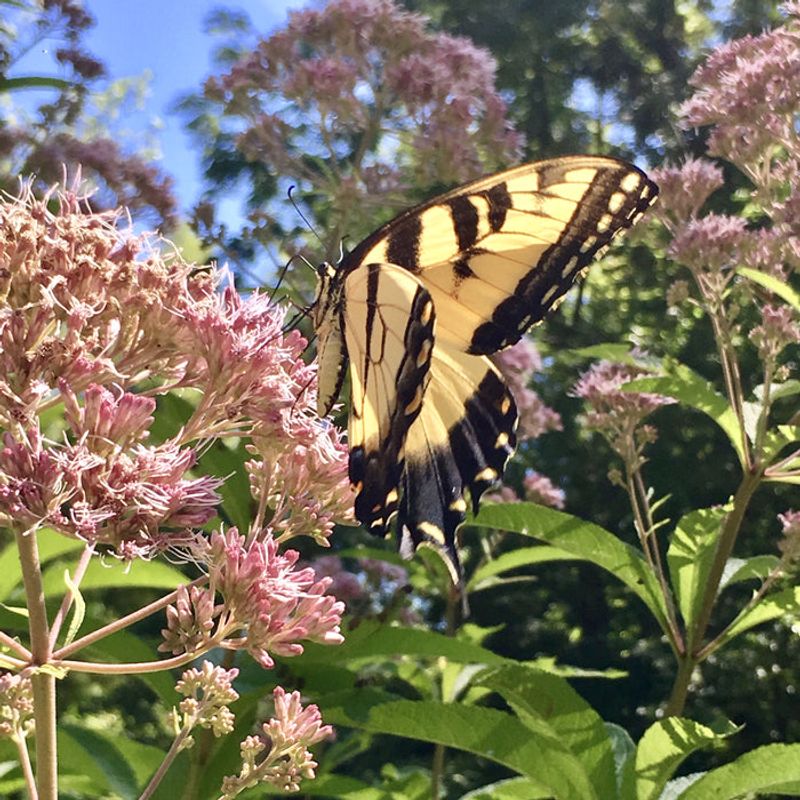
Eastern tiger swallowtails and spicebush swallowtails are especially drawn to the tall, fragrant flower clusters, and they are a common sight in North Carolina gardens where this plant grows.
Their wingspan can reach four to five inches, so when one lands on Joe Pye weed, it is hard to miss.
Swallowtails prefer large, open flower heads that give them plenty of room to land and feed comfortably.
Joe Pye weed’s broad, rounded clusters are practically designed for butterflies of this size. The flowers also produce a faint vanilla-like fragrance that seems to act as an extra attractant, drawing swallowtails in from a surprising distance across the garden.
It is worth pointing out that Joe Pye weed does not host swallowtail caterpillars. Those larvae feed on entirely different plants, such as tulip poplar and spicebush.
However, the nectar support Joe Pye weed provides for adult swallowtails is genuinely valuable, helping them build the energy reserves they need to find mates and lay eggs on their actual host plants.
For North Carolina gardeners who want to see more swallowtails, pairing Joe Pye weed with host plants like spicebush creates a truly complete butterfly habitat in one yard.
4. Monarch Butterflies Use Joe Pye Weed As A Late Summer Fuel Source
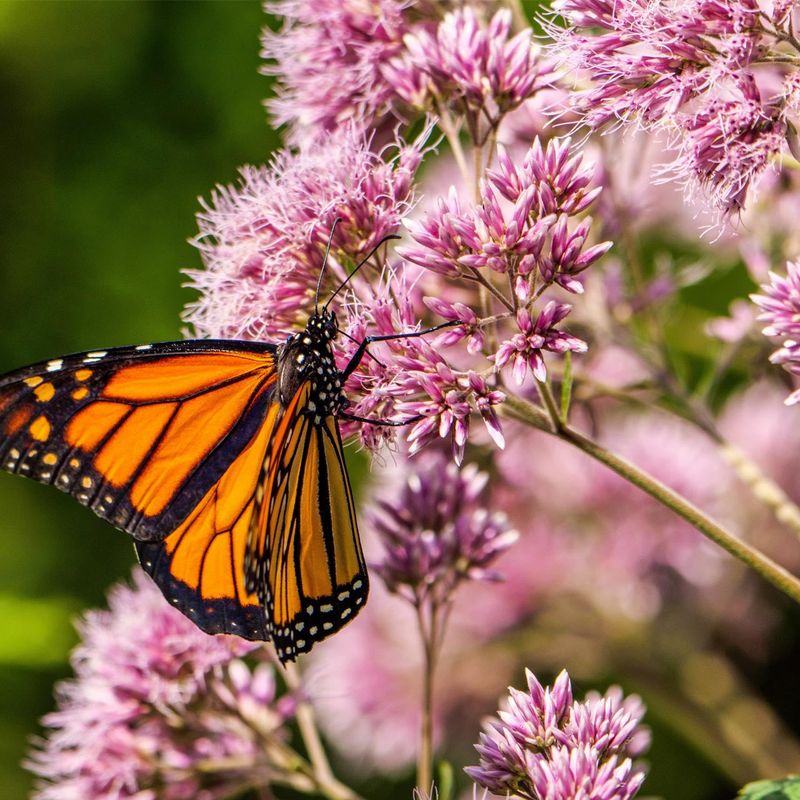
Every fall, monarch butterflies begin their incredible journey south toward their overwintering grounds in Mexico, and North Carolina sits right along one of their main travel corridors.
During this migration, monarchs need reliable nectar sources to keep their energy up across hundreds of miles of flying.
Joe Pye weed blooms at exactly the right time to help, offering rich nectar through August and into September when monarchs are passing through.
It is important to be clear about what Joe Pye weed does and does not do for monarchs. It is not a milkweed, so monarch caterpillars cannot feed on it or complete their life cycle using it. Only milkweed species serve that role.
But for adult monarchs already on the wing and burning through energy reserves, a patch of blooming Joe Pye weed in a North Carolina garden can be a genuinely important refueling stop.
Gardeners who want to support monarchs fully should pair Joe Pye weed with native milkweed species such as butterflyweed or swamp milkweed, which host the caterpillars. Together, these plants cover both stages of the monarch’s needs in one garden space.
Seeing a monarch pause on Joe Pye weed blooms, slowly opening and closing its wings in the warm late-summer sun, is one of those garden experiences that stays with you long after the season ends.
5. Pearl Crescent Caterpillars Actually Feed On Joe Pye Weed Leaves
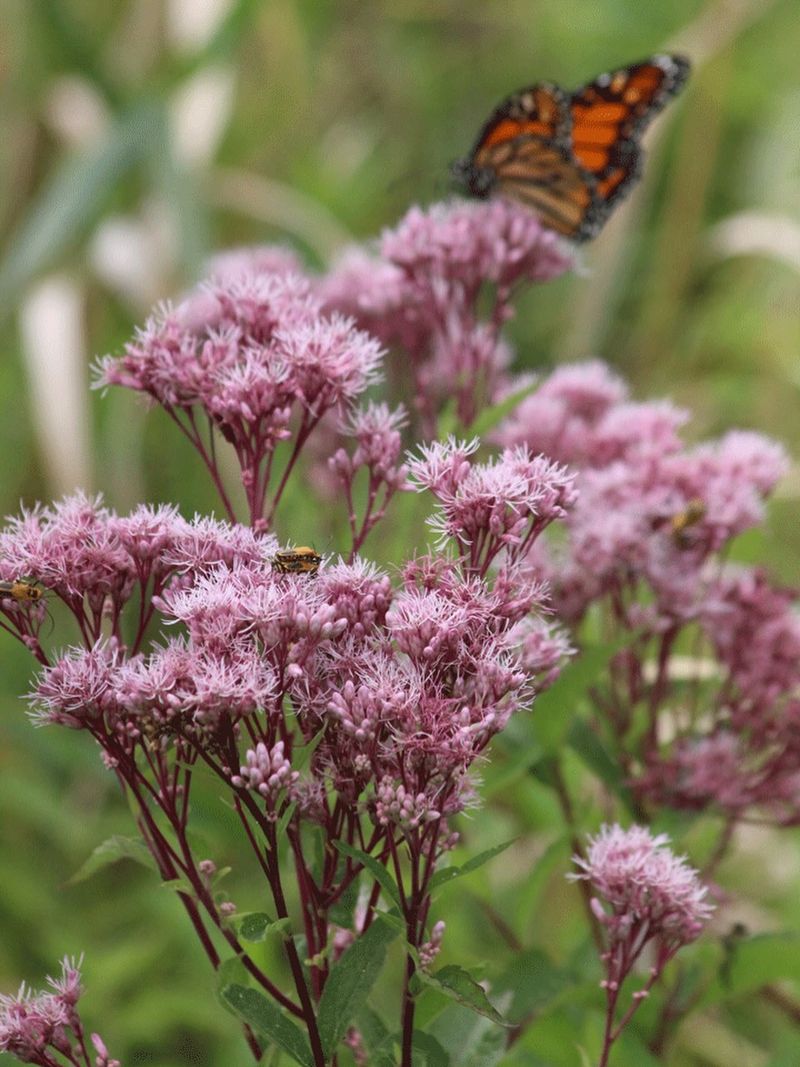
Most people think of Joe Pye weed purely as a nectar plant, but it goes further than that for at least one butterfly species.
Hollow Joe Pye weed is recorded as a larval host plant for the pearl crescent butterfly, known scientifically as Phyciodes tharos.
That means the caterpillars of this species can actually feed on the plant’s leaves, making Joe Pye weed a true host rather than just a nectar stop.
Pearl crescents are small, lively butterflies with warm orange and black patterned wings. They are common across North Carolina and tend to fly low and fast, often pausing on flowers or sunny patches of ground.
Because they are relatively small, gardeners sometimes overlook them in favor of showier species, but they are a consistent and charming presence in native plantings throughout the state.
Knowing that Joe Pye weed supports pearl crescent caterpillars changes how you might approach leaf damage on the plant.
A few chewed leaves are actually a sign that the garden is working exactly as it should. Healthy caterpillar populations feed birds, support the food web, and eventually become the next generation of butterflies.
Embracing that cycle rather than worrying about imperfect foliage is one of the most important mindset shifts a North Carolina native gardener can make, and Joe Pye weed makes it easy to practice.
6. Clymene Moths Use Joe Pye Weed As A Host Plant For Their Caterpillars
Here is something most gardeners never know about Joe Pye weed: it hosts the caterpillars of the Clymene moth, scientifically named Haploa clymene.
This striking moth has bold black and white wing markings that form a cross-like pattern, making it one of the more visually impressive native moths in North Carolina.
Spotting one near a Joe Pye weed planting is a sure sign that your garden is supporting wildlife beyond the obvious visitors.
Clymene moth caterpillars feed on the foliage of Joe Pye weed and related plants in the Eutrochium genus.
The adult moths are primarily nocturnal, so you may not see them as often as you see the butterflies, but they are very much present.
Setting up a simple porch light or a white sheet with a black light near a Joe Pye weed planting on a warm summer night in North Carolina can reveal a surprising number of these moths resting nearby.
The fact that Joe Pye weed hosts moth caterpillars in addition to supporting adult butterfly nectar needs is what separates it from many ornamental plants.
Caterpillars are a critical food source for nesting birds, especially during the weeks when parents are feeding young chicks.
Every caterpillar that a Joe Pye weed plant supports contributes to a broader chain of wildlife benefits that ripple through a North Carolina garden ecosystem season after season.
7. Several Other Native Moths Are Closely Tied To Joe Pye Weed
Beyond the Clymene moth, Joe Pye weed is connected to several other native moth species that most gardeners never think about.
The three-lined flower moth, the eupatorium borer moth, and the ruby tiger moth are all associated with Joe Pye weed and its close relatives.
These species are part of a hidden layer of wildlife activity that happens in and around the plant, often at night or in the early morning hours when fewer people are watching.
The eupatorium borer moth is particularly interesting because its caterpillars actually bore into the stems of Joe Pye weed plants.
While that might sound alarming, healthy, established plants handle this kind of activity without serious trouble.
North Carolina gardeners who notice small holes in the stems should recognize this as evidence of a functioning native ecosystem rather than a problem that needs fixing.
Ruby tiger moths are another standout species. They have fuzzy, reddish-orange bodies and patterned wings that make them genuinely beautiful up close.
Attracting species like these requires more than just planting flowers. It means choosing native plants that have real ecological relationships with local insects, which is exactly what Joe Pye weed offers.
Adding this plant to a North Carolina garden does not just brighten a border; it quietly builds a web of connections between plants, insects, and the birds and animals that depend on them every single year.
8. Moist, Fertile Soil Is The Secret To Joe Pye Weed Thriving In North Carolina
Soil conditions matter more than almost anything else when it comes to growing hollow Joe Pye weed successfully in North Carolina.
This plant performs best in consistently moist, fertile soil and truly struggles in hot, dry, or compacted clay sites where water drains away too quickly.
Choosing the right spot from the start saves a lot of frustration and gives the plant the foundation it needs to grow tall and bloom abundantly.
Rain gardens, pond margins, low-lying moist beds, and stream edges are all excellent placements across North Carolina properties.
These are spots where water naturally collects or where irrigation is easy to maintain through the driest summer stretches.
Even in wetter parts of the state, during prolonged dry spells, a little supplemental watering during the first growing season helps the plant establish a deep, strong root system that sustains it for years to come.
Once hollow Joe Pye weed settles in and finds its footing in the right conditions, it becomes a remarkably self-sufficient plant.
It spreads gradually by rhizomes and self-seeds modestly, slowly building into an impressive, wildlife-rich colony over several seasons.
For North Carolina gardeners who are building pollinator gardens, native meadows, or habitat borders, starting with the right soil and moisture conditions is the single best thing you can do to ensure this plant reaches its full, stunning, butterfly-attracting potential year after year.