7 Ornamental Grass Varieties To Grow In Ohio Containers
Container gardening in Ohio has a reputation for playing it safe, petunias, geraniums, the usual suspects rotating through every porch in the neighborhood. Ornamental grasses in containers?
That is where things get genuinely interesting. Most Ohio gardeners have never considered it, and that is exactly why the ones who do end up with yards that look like they hired a professional.
These are not your grandmother’s container plants, they move with the breeze, they add height and drama, and they look sharp from spring all the way into the first hard frost.
Ohio’s climate is actually a sweet spot for several ornamental grass varieties that thrive in pots without demanding constant attention.
Some of them deserve a permanent spot on your patio, your deck, or flanking your front door. Container gardening just got a serious upgrade, and your neighbors are going to want to know exactly what you planted.
1. Anchor Big Pots With Northwind Switchgrass
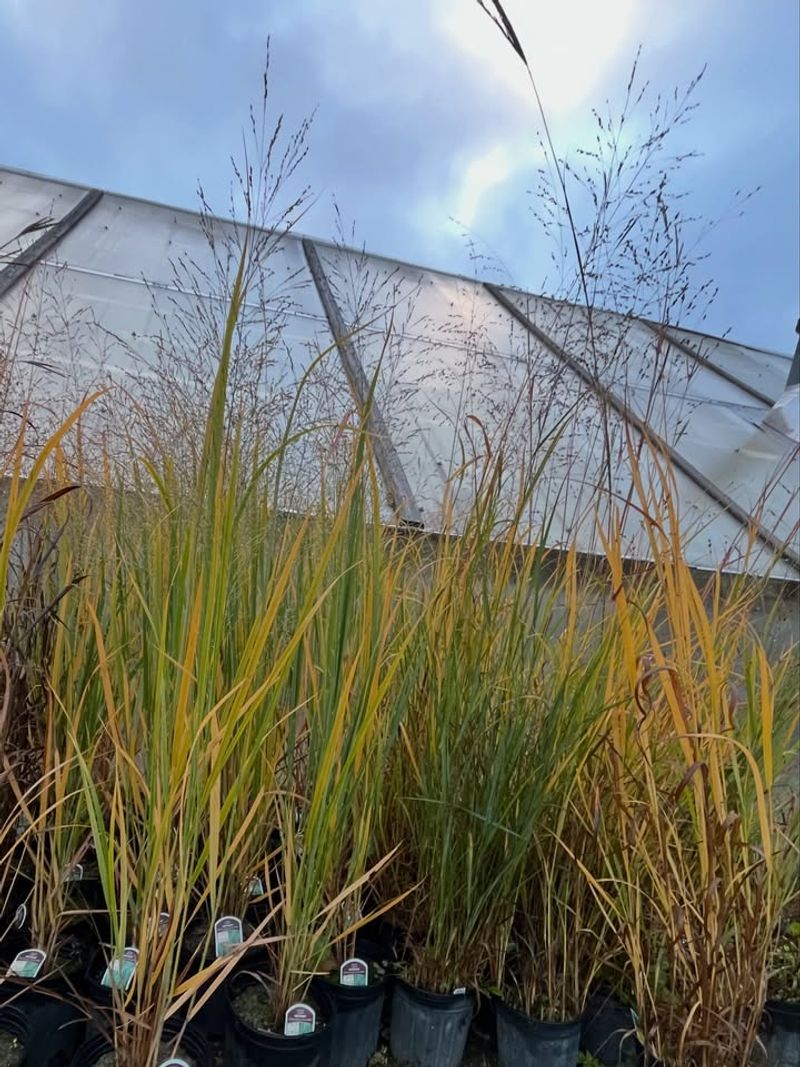
Picture a tall, steel-blue column of grass standing upright on a sunny Ohio patio, barely moving in the summer breeze while everything around it sways.
That is Northwind switchgrass, a cultivar of Panicum virgatum, which is a grass native to Ohio and much of the eastern and central United States.
Northwind is prized for its exceptionally upright habit, which makes it a strong architectural choice for large containers.
In a container, Northwind can reach four to five feet tall, so it belongs in large, heavy pots rather than small decorative planters. A wide, deep pot with a diameter of at least 18 to 24 inches gives the root system enough room and helps prevent tipping on breezy days.
Blue-green summer foliage transitions to golden yellow in fall, and airy seedheads add a soft, feathery look from late summer through winter.
Full sun is non-negotiable for strong growth and the best upright form. Good drainage matters just as much, because switchgrass can handle dry spells but struggles in waterlogged containers.
A quality potting mix with perlite added improves drainage significantly.
Ohio winters present a real challenge for container plants. Freeze-thaw cycles stress roots more in a pot than in the ground, so choosing a frost-resistant container material like thick fiberglass or heavy resin helps reduce cracking.
Moving the pot to a sheltered spot near a wall during the coldest months can reduce exposure to harsh wind and repeated freeze-thaw cycles. Cut old growth back to a few inches in early spring to encourage fresh new blades.
2. Add Upright Drama With Karl Foerster Feather Reed Grass
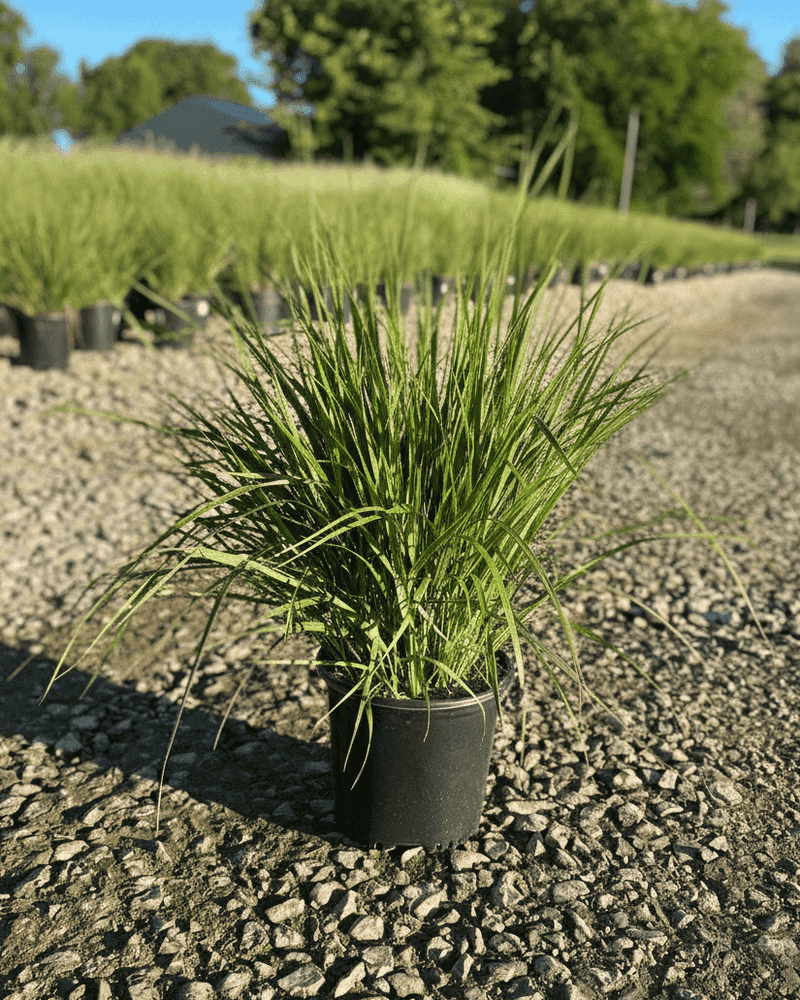
Not every Ohio gardener wants a wide, sprawling grass taking over the patio. Karl Foerster feather reed grass, Calamagrostis x acutiflora Karl Foerster, earns its place in containers precisely because it grows tall without spreading wide.
The narrow, columnar shape makes it a natural choice for porch planters, formal entry designs, or anywhere height is needed without bulk.
This clump-forming ornamental grass is a hybrid and is generally not known for aggressive reseeding, which is helpful for container gardeners who want a tidy plant. It is not the same plant as invasive reed canary grass, despite the similar wording in the common name.
Your Ohio Garden Changes Every Week. Your Plan Should Too.
Gardening in Ohio changes quickly throughout the season. Every Friday you’ll receive a simple weekly plan showing exactly what to plant, prune, fertilize, harvest, and protect so you never miss the right timing.
Karl Foerster produces feathery pinkish plumes in early summer that mature to a warm tan and hold through much of the winter, giving containers a structured, architectural look long after summer annuals have faded.
Full sun to light shade suits this grass well in Ohio. Regular moisture and good drainage keep it performing at its best, so avoid letting the container sit in standing water.
A pot that is at least 14 to 18 inches deep supports the root system properly and reduces the risk of the plant tipping in wind.
Choose a container heavy enough to stay stable, especially if the planter sits near a doorway or on an exposed balcony. During Ohio winters, the tan plumes add visual interest even in cold months.
Protect the container from repeated hard freezes by moving it to a sheltered location or wrapping the pot with burlap or bubble insulation. Cut the grass back to about three to four inches in late winter or early spring before new growth emerges.
3. Bring Blue Texture With Blue Fescue
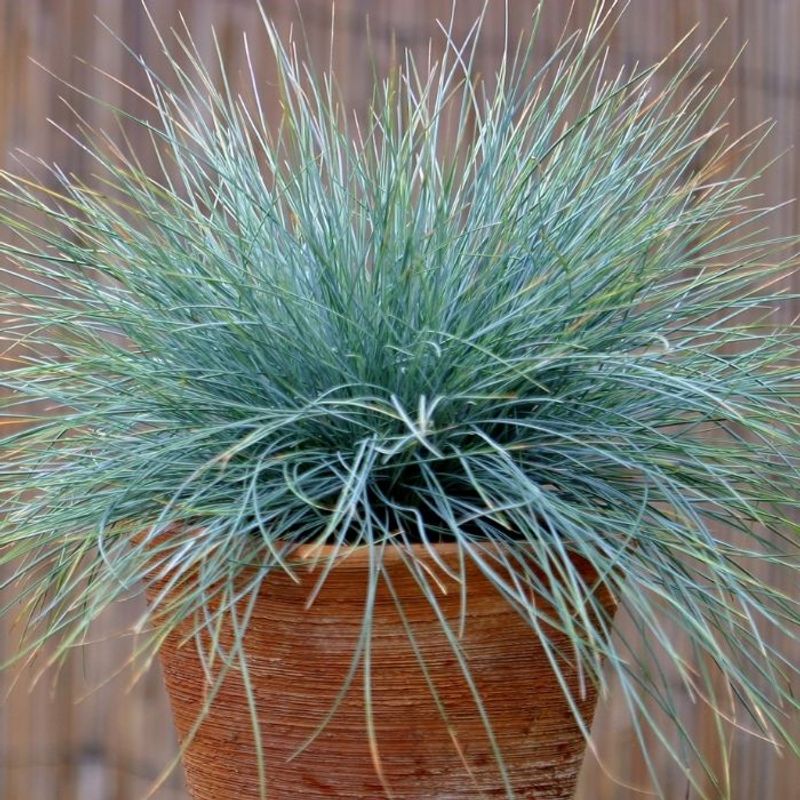
Small but striking, blue fescue makes an impression out of proportion to its size.
Festuca glauca is a cool-season ornamental grass that forms tight, rounded mounds of blue-gray foliage, and compact cultivars like Elijah Blue, Beyond Blue, and Boulder Blue are particularly well-suited to Ohio container gardening.
At roughly eight to twelve inches tall, these selections fit beautifully along container edges, in window boxes, or grouped in clusters for a bold textural contrast.
Blue fescue shines as an accent plant beside flowering annuals or perennials in mixed containers. The cool silver-blue color pairs well with warm tones like orange marigolds or deep purple petunias.
It also works as a standalone specimen in smaller pots where one plant can carry the whole design.
Drainage is the single most important factor for success. Blue fescue dislikes wet, soggy soil at any time of year, but Ohio’s humid summers and wet spring conditions can be especially problematic.
Use a gritty, well-draining potting mix and make sure the container has adequate drainage holes. Full sun encourages the best blue color and the tightest mound shape.
As a cool-season grass, blue fescue looks its best in spring and fall. Summer heat can cause the center of the clump to thin out or look tired.
Trimming back tatty foliage and giving the plant a little extra shade during the hottest weeks can help it recover. After a few seasons, plants may decline in the center, and replacing them refreshes the container display.
In Ohio containers, protect roots from repeated freeze-thaw cycles by moving pots to a sheltered spot during the coldest stretches.
4. Soften Shady Containers With Japanese Forest Grass
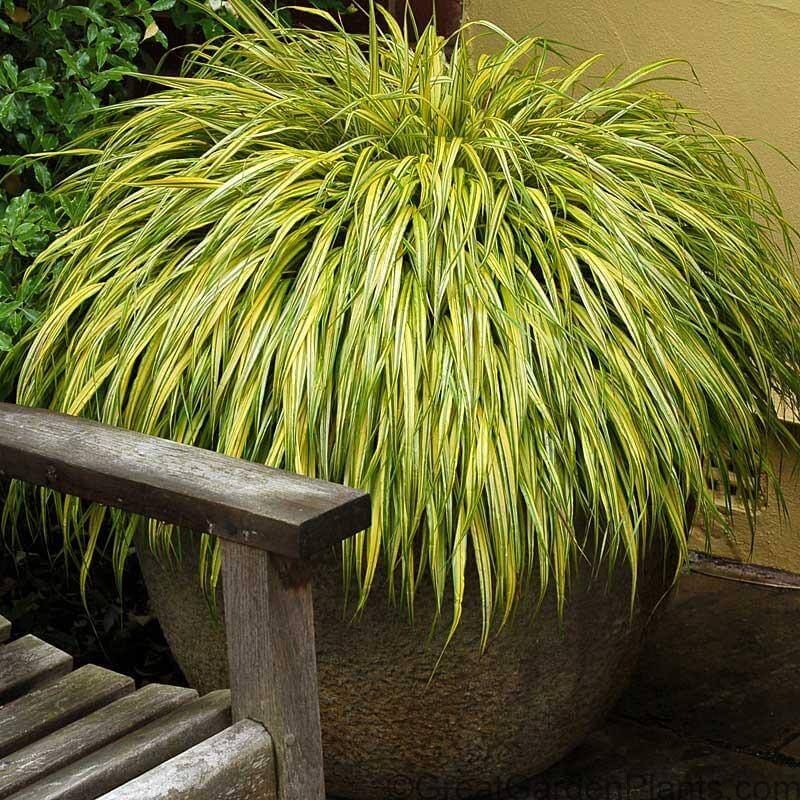
Shady Ohio porches and north-facing entryways often feel like a design puzzle, but Japanese forest grass solves it beautifully. Hakonechloa macra, commonly called hakone grass, is one of the most graceful ornamental grasses available for low-light container situations.
Its cascading, arching habit creates a soft waterfall effect that looks especially elegant spilling over the edge of a glazed pot or a wooden planter box.
Popular cultivars like Aureola, with its bright gold and green striped leaves, All Gold, which glows a warm yellow-green, and Albo Striata, with white and green variegation, bring light and color into shady corners where most plants struggle.
These selections work beautifully alongside hostas, heucheras, ferns, and shade-tolerant annuals like impatiens or begonias in mixed containers.
Consistent moisture is important because Japanese forest grass does not handle drought well, especially in a container where soil dries out faster than in the ground. At the same time, the potting mix needs to drain freely because sitting in waterlogged soil will weaken the plant.
A high-quality, moisture-retentive potting mix works well, paired with a container that has reliable drainage holes.
Honestly, this is not a tough, drought-resistant grass. It needs some attention to watering and benefits from afternoon shade in Ohio’s hotter months.
Container roots are more exposed to temperature swings than in-ground roots, so moving the pot to a protected location before hard Ohio winters arrive gives the plant a better chance of returning the following spring.
Cut back old foliage in early spring to make room for fresh new growth.
5. Create Airy Movement With Little Bluestem
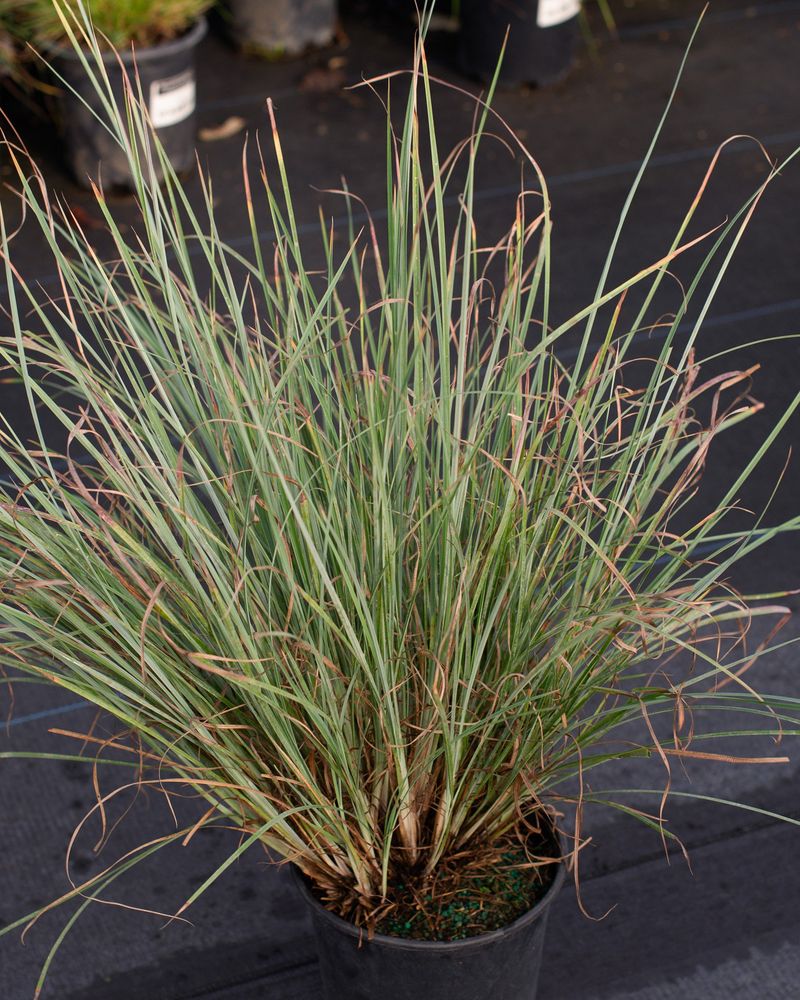
Few native grasses deliver as much seasonal drama as little bluestem. Schizachyrium scoparium is native to Ohio and much of North America, and it earns its spot in containers by cycling through a stunning range of colors across the growing season.
Blue-green or silvery-blue summer foliage shifts to brilliant copper, orange, and reddish-bronze in fall, and fluffy white seedheads catch the light like tiny sparks through autumn and into winter.
Cultivars like The Blues, Standing Ovation, Blue Heaven, and Smoke Signal are particularly valued for their compact size, strong color, and improved upright habit compared to the straight species.
These selections stay tidier in containers, which matters when you want a polished look on a patio or balcony.
Most reach two to four feet tall depending on conditions, making them a solid mid-height choice for medium to large pots.
Full sun and excellent drainage are essential. Little bluestem is adapted to lean, well-drained sites, so overly rich potting mixes and heavy watering schedules can work against it.
Overly fertile or consistently wet conditions cause the stems to flop outward, which ruins the upright, airy effect. Use a well-draining potting mix and water only when the top inch or two of soil feels dry.
Skip heavy fertilizing entirely. A light application of a slow-release fertilizer in spring is more than enough.
Native plant enthusiasts and pollinator-friendly gardeners love little bluestem because the seedheads attract birds through the winter months.
In Ohio containers, protect roots from the worst freeze-thaw cycles by sheltering the pot near a building wall, and cut back old stems in late winter before new growth begins.
6. Brighten Edges With Evergold Sedge
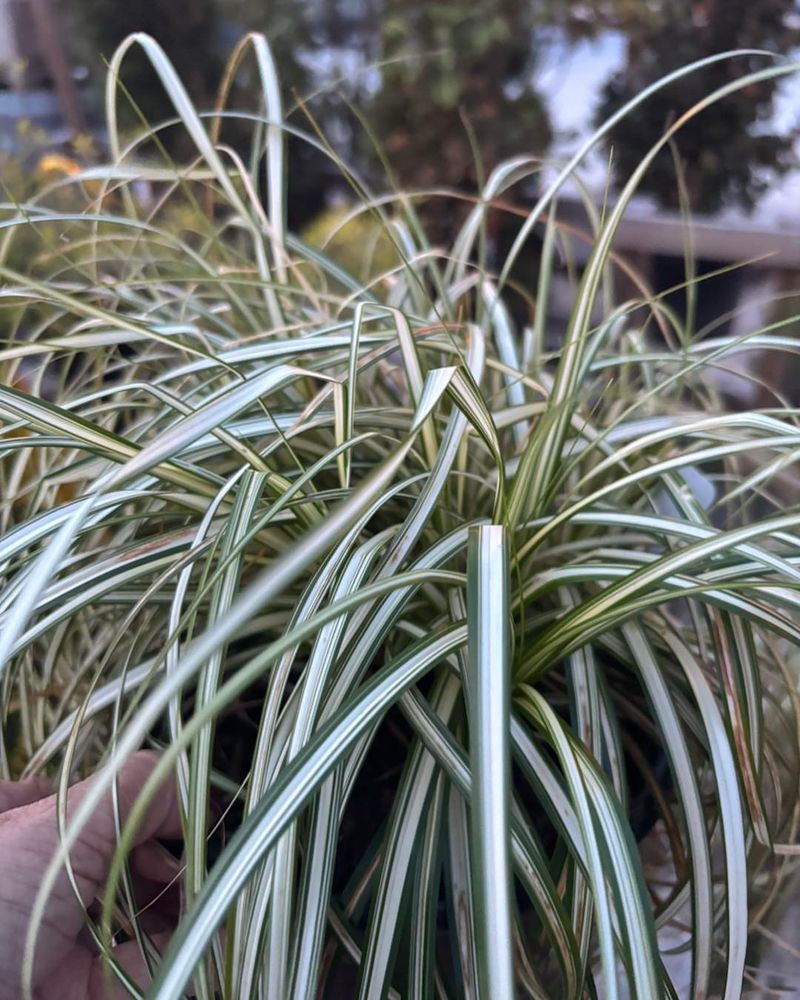
Sedges often get overlooked in the ornamental grass conversation, but Carex oshimensis Evergold deserves a spot at the top of the list for Ohio container gardeners working with shade.
Technically, sedges are not true grasses, but they are grouped with ornamental grasses in container design because of their grass-like appearance and similar uses.
Evergold is a popular and eye-catching sedge selection, with arching foliage striped in creamy yellow down the center and rich green along the edges.
The compact, mounding habit makes Evergold sedge ideal for spilling over the sides of mixed container planters, window boxes, and porch pots.
At roughly ten to fourteen inches tall, it fits comfortably at the front or edge of a larger arrangement without crowding out neighboring plants.
It pairs well with shade-loving companions like heucheras, small hostas, and trailing ivy, creating a layered, full look even in low-light spots.
Part shade to full shade suits Evergold best in Ohio. Direct afternoon sun can scorch the foliage and bleach out the bright yellow coloring that makes this sedge so appealing.
Evenly moist but well-drained potting mix keeps it healthy through the growing season. Avoid letting the container dry out completely, especially during warm summer stretches.
Container roots have less insulation than roots planted in the ground, so Ohio winters require a thoughtful approach.
During harsh cold snaps, move the pot to an unheated garage, covered porch, or sheltered corner to reduce exposure to repeated freezing and thawing.
Evergold sedge is commonly listed for zones 5 to 9, which covers much of Ohio, but container plants need extra winter protection.
7. Add Native Flair With Prairie Dropseed
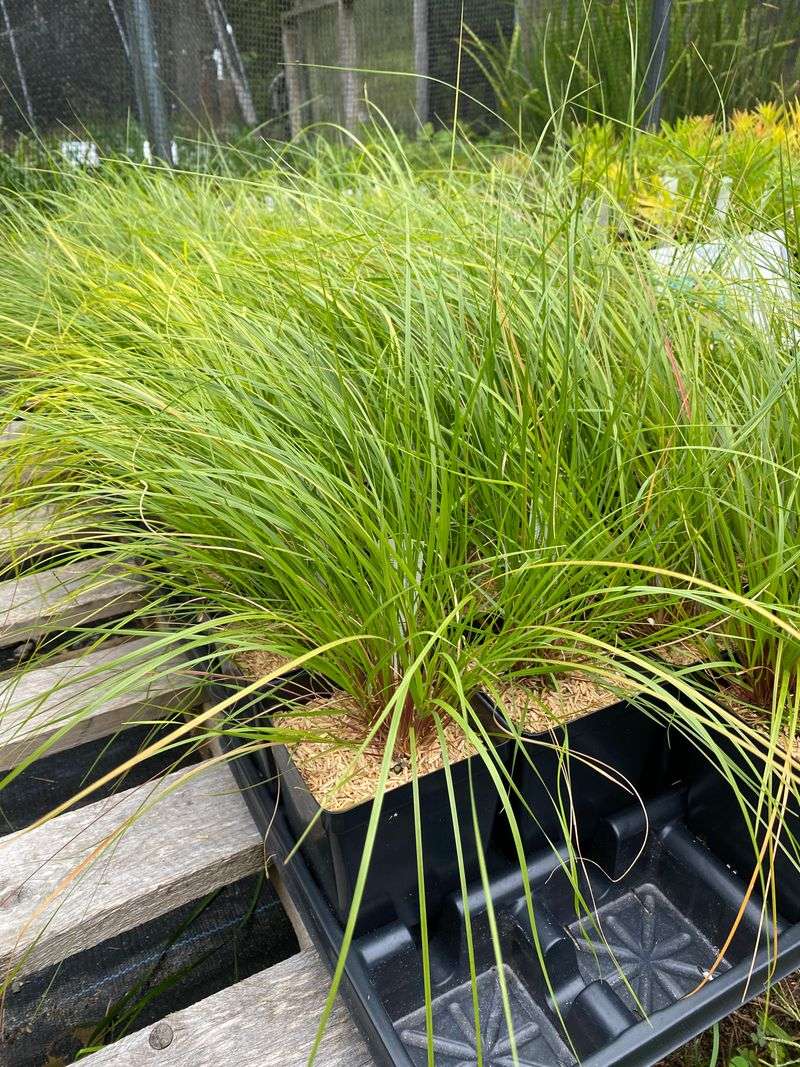
Prairie dropseed has a quiet elegance that rewards patient gardeners. Sporobolus heterolepis is a native prairie grass that can be grown in Ohio gardens where sun and drainage are right.
The foliage is extremely fine-textured, almost hair-like, and it arches outward in a graceful mound that moves with even the lightest breeze.
Growth is slower than some ornamental grasses, so do not expect a fully filled-out container display in the first season.
By the second or third year, prairie dropseed develops into a beautifully rounded clump that earns its place in any native plant display or pollinator-friendly patio design.
Airy seedheads appear in late summer, and some gardeners notice a distinctive, pleasant fragrance from the flowers, sometimes described as buttery or popcorn-like.
Full sun and lean to average soil conditions suit prairie dropseed best. Avoid rich, heavily amended potting mixes that hold too much moisture, because soggy roots weaken this grass over time.
A well-draining potting mix with perlite blended throughout helps reduce waterlogging. Avoid relying on a gravel layer at the bottom, since drainage works best when the whole container mix drains evenly.
Choose a wide pot rather than a tall, narrow one to give the spreading root system enough horizontal room.
Water moderately and allow the soil to dry slightly between waterings. Skip heavy fertilizer applications because too much nitrogen encourages lush but floppy growth.
In fall, the foliage shifts to warm golden and orange tones that complement the late-season garden beautifully. During Ohio winters, shelter the container from the harshest freeze-thaw cycles by moving it to a protected location.
Cut back old stems in late winter or early spring before fresh growth resumes.