8 Arizona Cacti That Fill Desert Gardens With Bright Pink Blooms
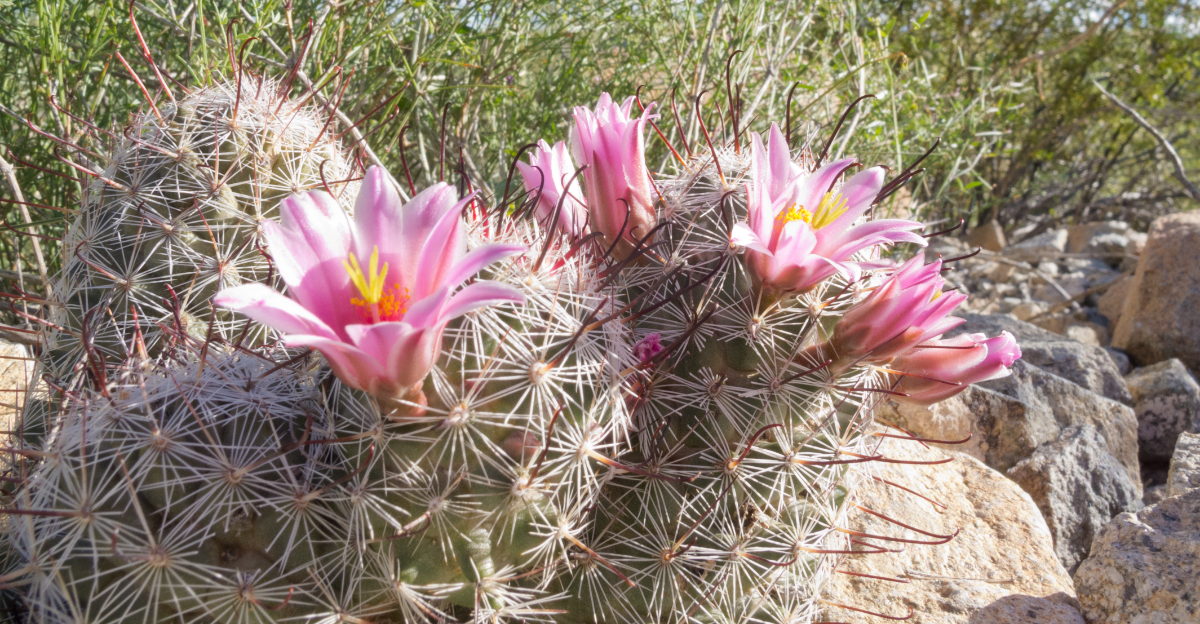
Arizona deserts can look harsh and colorless from a distance, which makes bright cactus blooms feel even more dramatic once they suddenly appear.
Pink flowers standing out against gravel, spines, and dry landscapes instantly change the entire look of a yard, especially during bloom season when certain cacti start putting on a much bigger show than people expect.
Some cactus blooms almost look unreal the first time they open. Bright shades of pink, massive flowers, and clusters of color can completely steal attention from everything around them for days or even weeks depending on the variety.
Desert gardens feel far more alive once blooming cacti become part of the landscape instead of relying only on green plants and rock.
Arizona has several cactus varieties that produce striking pink flowers, and some of them bloom so heavily that the plants barely look covered in spines once flowering season fully kicks in.
1. Beavertail Cactus Produces Large Pink Flowers In Spring
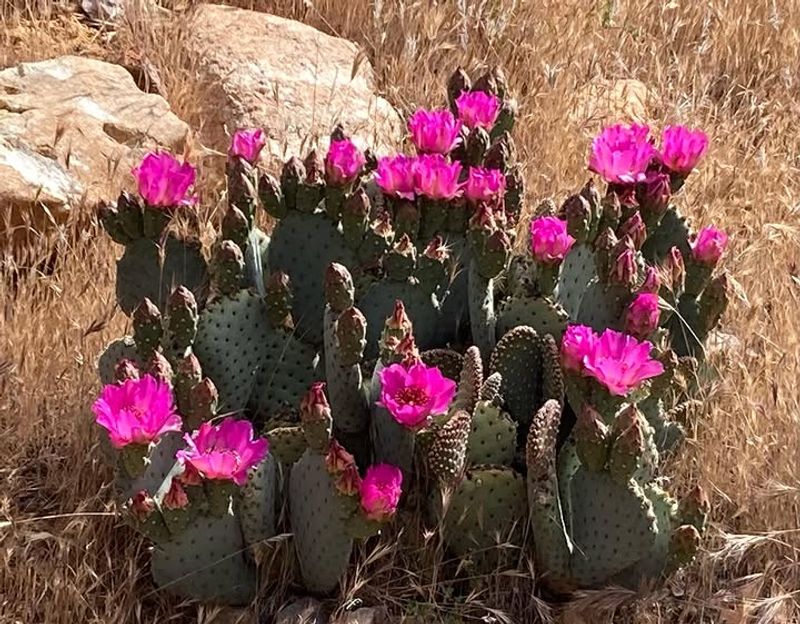
Flat, paddle-shaped pads and a lack of large spines make the beavertail cactus one of the most approachable plants in the Arizona desert.
Found across rocky slopes and sandy washes throughout the Sonoran and Mojave regions, it tends to grow low to the ground in spreading clumps that can stretch several feet wide.
When spring arrives, usually between March and May, the pads push out brilliant magenta-pink flowers that can reach nearly three inches across.
Each bloom only lasts a few days, but a healthy plant produces so many that the color seems to go on for weeks. Pollinators absolutely love these flowers, and you will often spot native bees and cactus wrens working the blooms early in the morning.
The lack of traditional spines is a nice bonus in a garden with foot traffic, though the tiny glochids can still irritate skin, so handle with care.
Beavertail cactus thrives in well-draining, gritty soil and asks for very little water once established in an Arizona landscape. Full sun is a must.
It handles heat extremely well and stays relatively compact, making it a smart choice for raised desert beds or rockery plantings. Give it space to spread naturally, and it will reward you with reliable spring color year after year without much fuss.
During especially wet winters, reducing supplemental water helps prevent pads from becoming soft or developing rot near the base.
2. Strawberry Hedgehog Cactus Brings Bright Pink Blooms To Dry Gardens
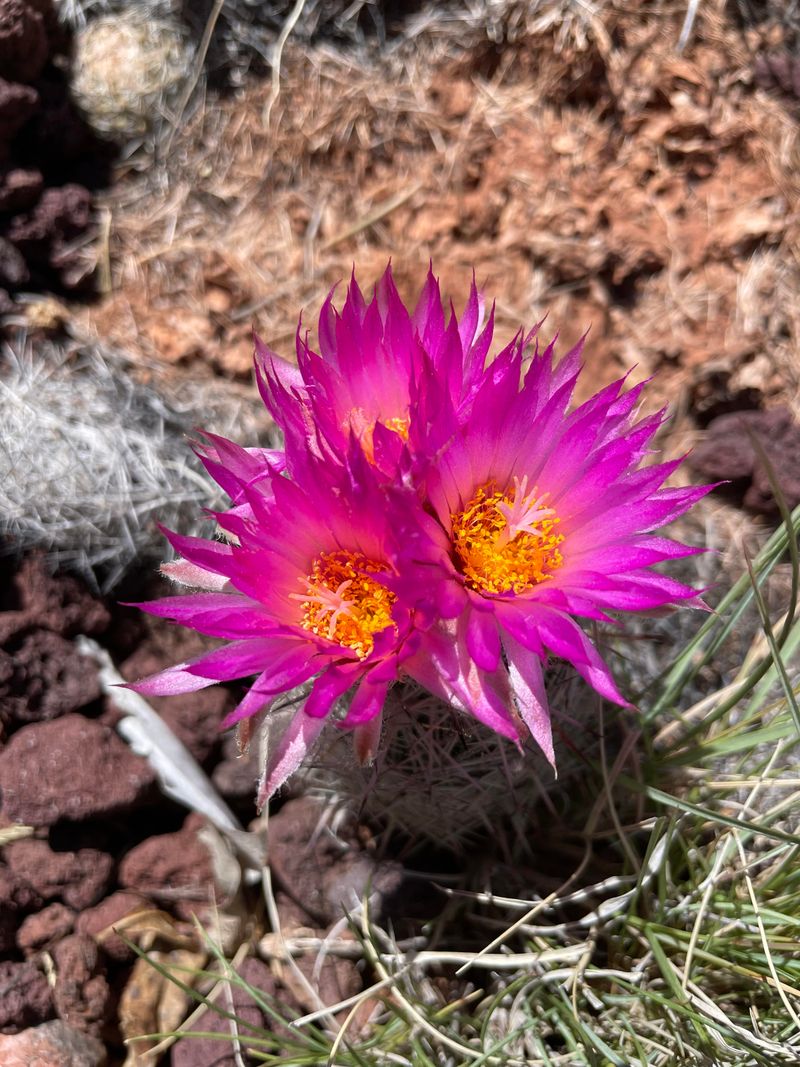
Walk through almost any rocky hillside in central or southern Arizona and you are likely to spot a strawberry hedgehog cactus doing exactly what it does best: looking spectacular in spring.
Echinocereus engelmannii, as it is scientifically known, grows in tight clusters of ribbed cylindrical stems that stay under two feet tall.
From March through May, the tips of those stems explode with deep pink to magenta flowers that can reach three inches wide.
What makes this cactus particularly exciting is the sheer number of blooms a single cluster can produce at once. A well-established clump might open dozens of flowers in the same week, creating a display that stops people in their tracks.
Your Arizona Garden Changes Every Week. Your Plan Should Too.
Gardening in Arizona changes quickly throughout the season. Every Friday you’ll receive a simple weekly plan showing exactly what to plant, prune, fertilize, harvest, and protect so you never miss the right timing.
The flowers attract native bees, hummingbirds, and occasionally butterflies, making it a functional addition to any pollinator-friendly Arizona garden.
After flowering, small red fruits develop that actually taste sweet, earning the plant its common name. Planting is straightforward since this cactus prefers gravelly, fast-draining soil and full sun exposure.
It handles Arizona summers without complaint and rarely needs supplemental watering once it has settled in. Spacing a few clusters among boulders or native grasses creates a naturalistic look that feels right at home in a Sonoran Desert landscape.
Patience pays off here because older plants bloom more generously.
3. Dwarf Chin Cactus Produces Soft Pink Flowers Above Small Rounded Stems
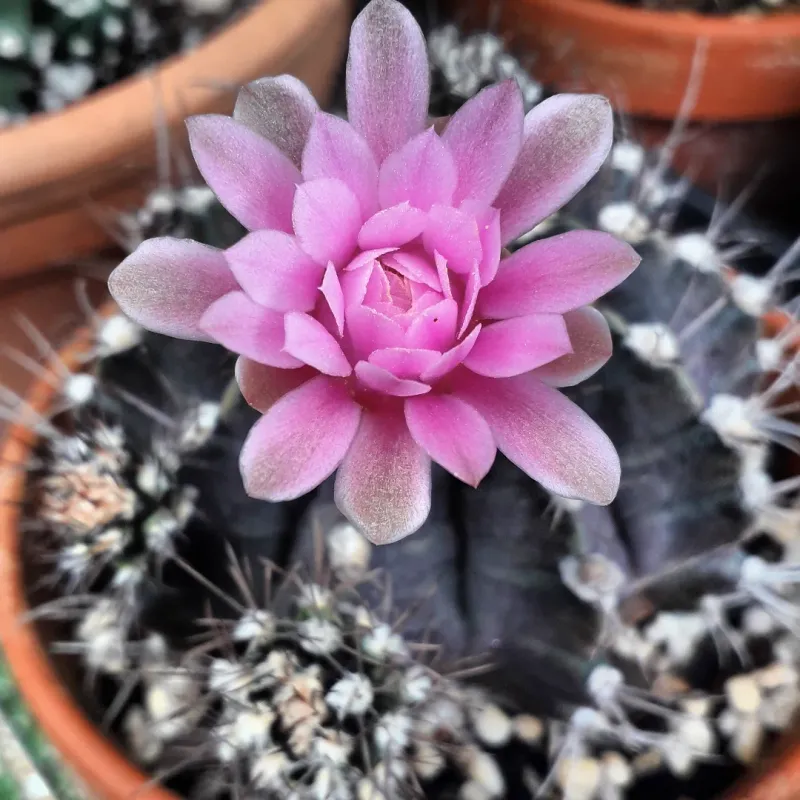
Dwarf Chin cactus may stay small compared to many Arizona desert plants, but the bright flowers easily make it one of the most noticeable cacti once blooming season begins.
Rounded blue green stems covered with curved ribs and short spines give the plant a compact appearance through much of the year, though that changes quickly once vivid pink flowers begin opening above the cactus body.
Blooms usually appear during spring and early summer when temperatures start warming across Arizona. Healthy plants can produce several flowers at once, and the blossoms often look oversized compared to the small rounded cactus underneath.
Soft pink petals create a strong contrast against the darker cactus body, making the flowers stand out clearly in gravel gardens, raised beds, and container displays.
Many gardeners like Dwarf Chin cactus because it stays manageable in smaller outdoor spaces while still producing dramatic color.
Mature plants rarely become large or overwhelming, which makes them useful for patios, rock gardens, and xeriscape landscapes where space may be limited.
Dwarf Chin cactus grows best in sharply draining soil with plenty of sunlight through most of the day. Some afternoon shade can still help during periods of extreme Arizona summer heat, especially for container grown plants exposed to reflected heat from walls or gravel.
Light watering during active growth is usually enough, while excessive moisture can quickly lead to root problems or rot around the base of the cactus.
4. Arizona Rainbow Cactus Produces Vivid Pink Flowers After Warm Weather
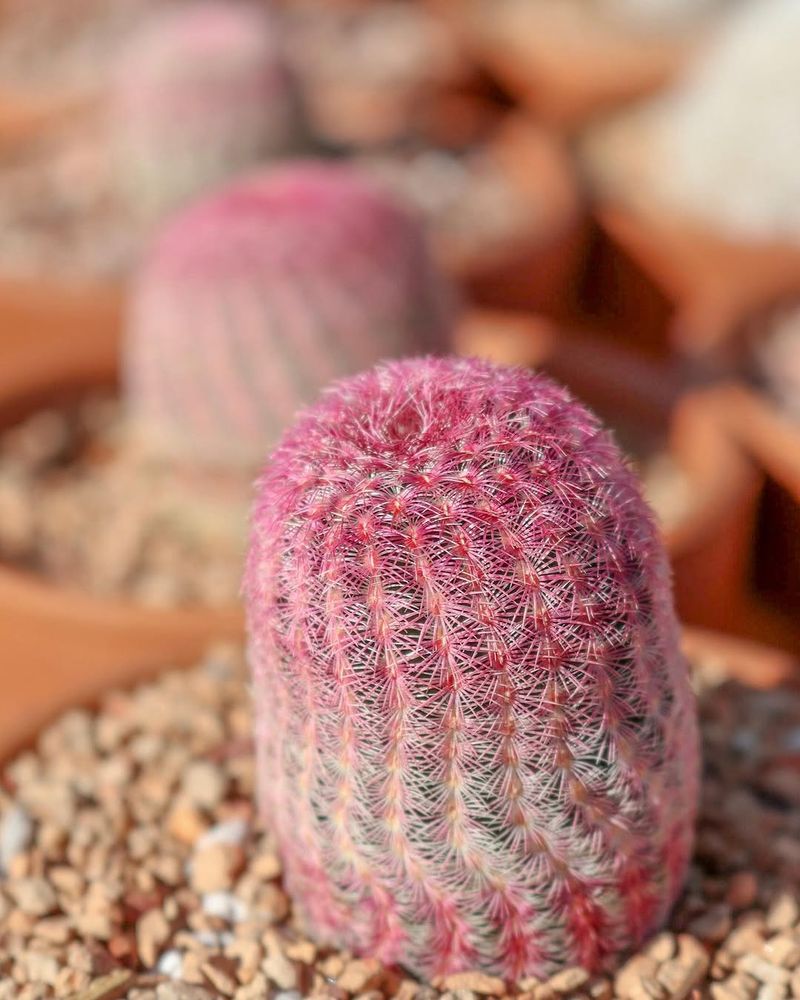
Striped spines in alternating shades of red, white, and tan give the Arizona rainbow cactus its unforgettable name before it even blooms.
Echinocereus pectinatus var. rigidissimus is native to southeastern Arizona and northern Mexico, where it grows as a solitary column rarely exceeding a foot in height.
The real payoff comes in late spring or early summer when warm temperatures trigger large, funnel-shaped flowers in vivid shades of pink and magenta.
Those blooms can span up to four inches across, which is remarkable for such a compact plant. Up close, the flowers have a satiny texture and a pale throat that creates a beautiful contrast against the deep outer petals.
The entire display usually lasts one to two weeks and tends to be most generous on plants that received good sun exposure through winter and early spring.
Growing Arizona rainbow cactus in a home garden is genuinely rewarding because the plant is ornamental even without flowers. The banded spine pattern is striking enough to earn a spot in any xeriscape design.
Plant it in coarse, mineral-rich soil with excellent drainage and position it where it gets direct sun for most of the day. Overwatering is the main thing to avoid in Arizona gardens.
With proper care, this native cactus lives for decades and blooms reliably each season.
5. Ladyfinger Cactus Produces Rings Of Bright Pink Flowers In Spring
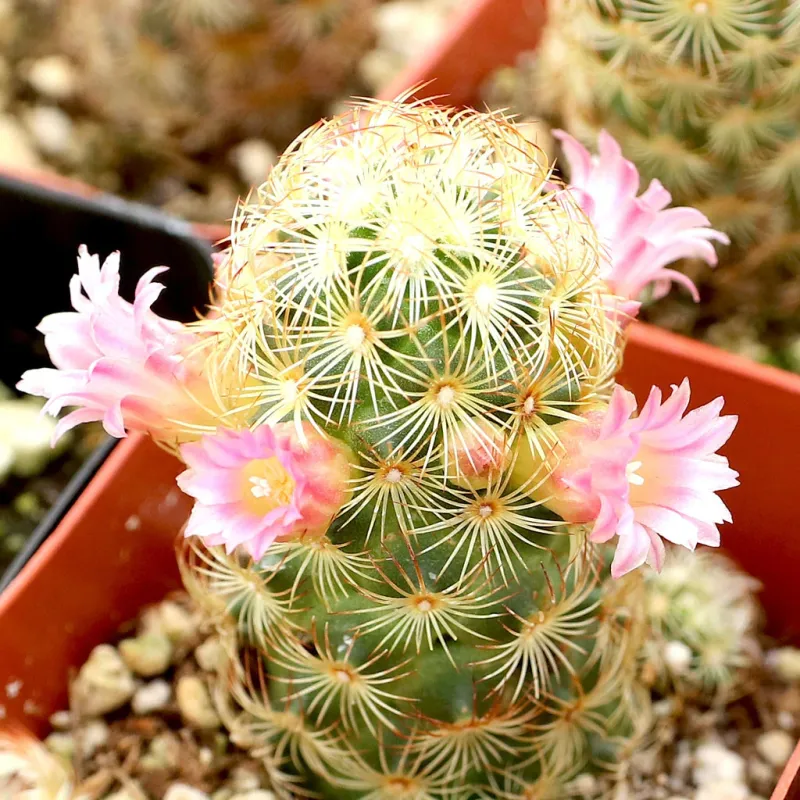
Ladyfinger Cactus may stay small compared to many desert cacti, but the flower display easily steals attention once spring arrives in Arizona landscapes.
This cactus grows in tight clusters of slender cylindrical stems covered with short white spines that give the entire plant a soft textured appearance from a distance.
During bloom season, those stems suddenly become surrounded by vivid pink flowers that form neat rings near the tops of the cactus segments, creating a colorful display that looks almost unreal against dry desert gravel and rock.
Spring is when Ladyfinger cactus puts on its biggest show, especially once warmer temperatures settle across southern and central Arizona.
Flowers usually appear between March and May, and healthy established plants can produce heavy bloom flushes that nearly cover entire clumps in bright color for days at a time.
Pollinators frequently visit the flowers during morning hours, especially native bees searching for nectar in dry desert landscapes where colorful blooms can sometimes be limited later in the season.
Ladyfinger cactus thrives in full sun and sharply draining soil, making it an easy fit for Arizona rock gardens, raised beds, and xeriscape landscapes. Once established, it handles extreme heat and drought very well with minimal supplemental watering.
Smaller growth also makes it useful in tighter garden spaces where larger cacti would quickly become overwhelming or difficult to manage safely around walkways and patios.
6. Easter Lily Cactus Opens Massive Pink Blooms That Stand Out In Desert Gardens
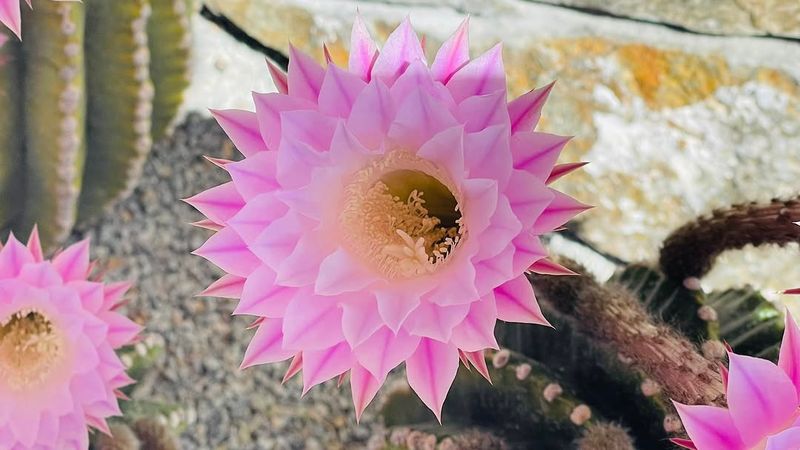
Easter Lily cactus easily becomes one of the most eye catching plants in an Arizona desert garden once blooming season begins.
The cactus itself stays relatively compact with rounded green stems covered in rows of sharp spines, though the flowers quickly become the main attraction once temperatures start warming in spring.
Large funnel shaped blooms open in shades of bright pink to soft blush tones, and some flowers grow several inches across, making them look enormous compared to the cactus body underneath.
Blooms often begin appearing from late spring into early summer across many Arizona gardens, especially once warmer daytime temperatures settle in consistently.
One of the biggest reasons gardeners love Easter Lily cactus is the dramatic contrast between the delicate flowers and the tough desert plant beneath them.
Bright pink blooms almost appear tropical when fully open, especially during early morning hours when flowers spread wide in direct sunlight.
This cactus thrives in rocky fast draining soil and handles Arizona heat very well once established. Full sun encourages the best flowering, though some afternoon shade can help protect plants during periods of extreme summer heat in lower desert areas.
Overwatering causes far more problems than drought, so light irrigation is usually enough for healthy growth. Smaller mature size also makes Easter Lily cactus a strong choice for raised beds, container gardens, and compact desert landscapes where bold seasonal color is needed without planting large shrubs or thirsty flowering plants.
7. Fishhook Pincushion Cactus Brings Bright Flowers To Rocky Gardens
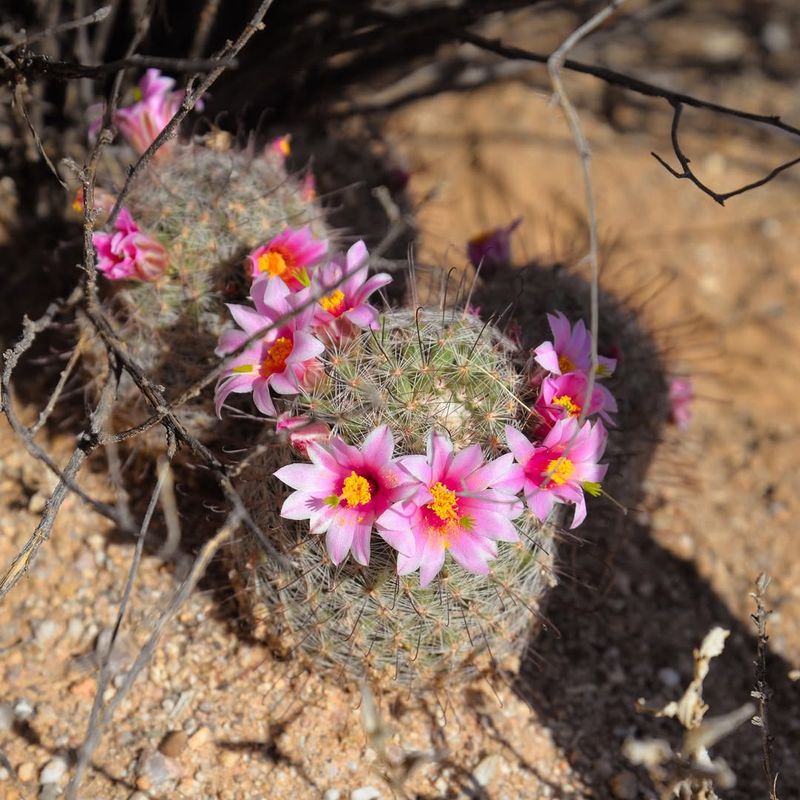
Hooked central spines that curve like tiny fishing hooks give this small but fierce-looking cactus its memorable name.
Mammillaria grahamii, the Graham fishhook pincushion, is native to rocky hillsides across central and southern Arizona, where it grows as a solitary globe or in small clusters tucked between boulders and gravel.
For most of the year it blends quietly into the desert floor, but spring changes everything.
From April through June, a neat ring of bright pink flowers with paler centers emerges around the upper crown of the plant. Individual flowers are small, only about half an inch wide, but the circular arrangement creates a striking halo effect that draws the eye immediately.
After blooming, slender red fruits appear and persist well into summer, adding another season of color to a plant that earns its keep year-round.
Rocky garden beds in Arizona are where this cactus truly shines. Gritty, mineral-heavy soil with sharp drainage keeps it healthy, and full sun encourages the best flowering.
Supplemental watering is rarely needed once the plant is established, though a light drink during prolonged dry spells in spring can support better bloom production.
Its small size makes it easy to tuck into gaps between larger rocks or alongside other native desert plants.
Group three or five together for a more dramatic spring display that feels naturalistic rather than planted.
8. Santa Rita Prickly Pear Combines Pink Blooms With Purple Tinted Pads
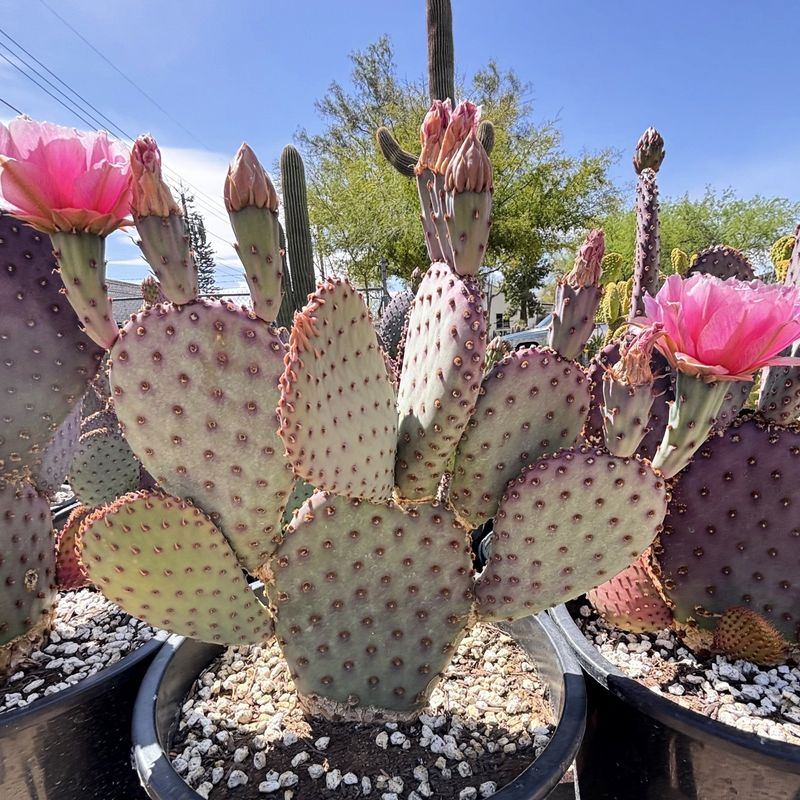
Purple pads and pink flowers on the same plant sounds almost too good to be true, but the Santa Rita prickly pear delivers exactly that.
Opuntia santa-rita is native to southern Arizona, particularly the grasslands and desert scrub around the Santa Rita Mountains south of Tucson.
Its flat pads turn a deep violet-purple during cooler months or when water is limited, then shift back toward blue-green in summer heat, creating a plant that changes with the seasons.
Spring flowers are bright yellow with pink to rose-tinted edges and appear along the upper margins of the pads in April and May. The color combination of purple pads and warm-toned blooms is genuinely striking and photographs beautifully.
After flowering, deep reddish-purple fruits develop and are edible, with a sweet flavor that has made them popular for making juice and syrup across the region.
Growing Santa Rita prickly pear in an Arizona garden is straightforward once you understand what it needs. Full sun intensifies the purple pad color, which is one of the main reasons gardeners choose this species.
Well-draining soil is essential, and established plants rarely need watering beyond what monsoon rains provide. It reaches six feet tall and equally wide at maturity, so plan accordingly when choosing a planting spot.
Used as a living privacy screen or a bold focal plant, it adds year-round structure alongside seasonal color that few other cacti can match.