5 Common Florida Garden Products That Backfire In Sandy Soil (And 4 Things To Use Instead)
Walk into any Florida garden center and the shelves are stocked with products that look perfectly reasonable. Familiar brand names, promising labels, advice that sounds solid coming from someone who clearly knows plants.
So gardeners buy them, take them home, and follow the instructions to the letter. Then the results come back flat.
Or worse, the garden takes a step backward. Sandy soil changes the rules in ways that most garden product labels never account for.
Florida’s soil drains fast, holds almost nothing, and behaves completely differently from the ground that the majority of gardening products are formulated with in mind.
What works reliably in other states can wash straight through Florida soil before a plant ever gets the benefit.
The frustrating part is that none of these products are bad exactly. They just have no business being in a sandy Florida garden.
And once you understand why, the better alternatives become obvious pretty quickly.
1. Heavy Clay Soil Mix Can Turn Planting Holes Into Bathtubs
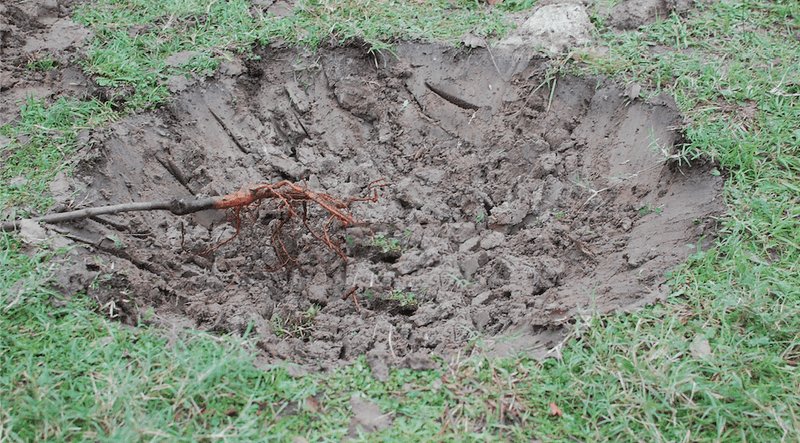
Picture digging a planting hole in your sandy Florida yard, filling it with a rich, moisture-holding bagged mix, and then watching your new shrub struggle through the summer.
That frustrating scenario happens more often than most gardeners expect, and the reason comes down to soil texture contrast.
When you drop a dense, clay-heavy mix into a hole surrounded by fast-draining sand, you create what soil scientists sometimes call a “bathtub effect.”
Water moves easily through the sandy soil outside the hole, but slows down or pools inside that dense pocket. Roots sitting in that wet zone can suffer, especially during Florida’s heavy summer rains when the ground is already saturated.
UF/IFAS Extension notes that amending individual planting holes with materials that differ sharply from surrounding soil can interfere with root establishment rather than help it.
A smarter approach is to improve a broader area of the bed rather than one isolated pocket.
Choose plants that are matched to your site conditions, and if you want to add organic matter, work it through the whole planting area. Right plant, right place makes a bigger difference than any single bag of soil mix dropped into a hole.
2. Quick Release Fertilizer Can Vanish Before Plants Use It
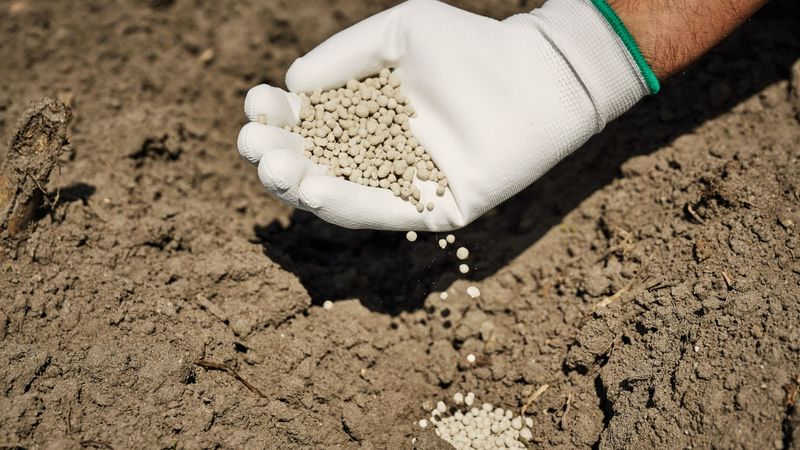
Sandy soil and quick-release fertilizer are not always a great match, especially in a state where summer rainstorms can dump several inches of water in a single afternoon.
Nutrients from quick-release products move fast through sandy soil, and when heavy rain follows shortly after application, a good portion of that fertilizer can leach below the root zone before plants absorb much of it at all.
This is not just a waste of money.
Excess nutrients washing off or leaching through sandy soil can contribute to water quality problems in nearby lakes, rivers, and coastal areas, which is why many Florida counties have fertilizer blackout ordinances during the rainy season.
UF/IFAS recommends following label directions carefully, avoiding applications before rain events, and matching fertilizer type to the plant’s actual needs.
Your Florida Garden Changes Every Week. Your Plan Should Too.
Gardening in Florida changes quickly throughout the season. Every Friday you’ll receive a simple weekly plan showing exactly what to plant, prune, fertilize, harvest, and protect so you never miss the right timing.
Quick-release fertilizer is not completely off the table for every situation, but it requires careful timing and realistic expectations in sandy Florida soil. Applying smaller amounts more frequently, rather than one heavy dose, can help.
Always check your county’s local fertilizer rules before applying anything, because regulations vary across Florida and exist to protect local waterways from nutrient runoff.
3. Fresh Manure Can Overload Sandy Beds Too Fast
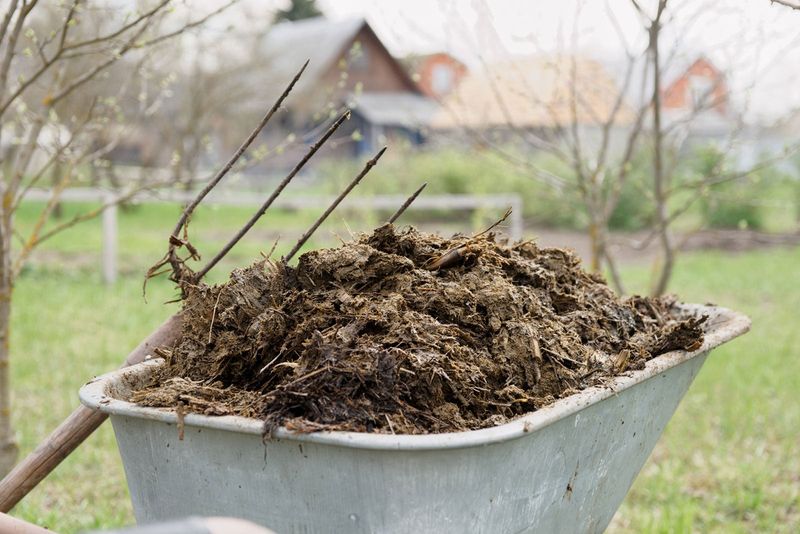
Fresh manure carries a certain old-school gardening appeal, and in the right situation it can be genuinely useful.
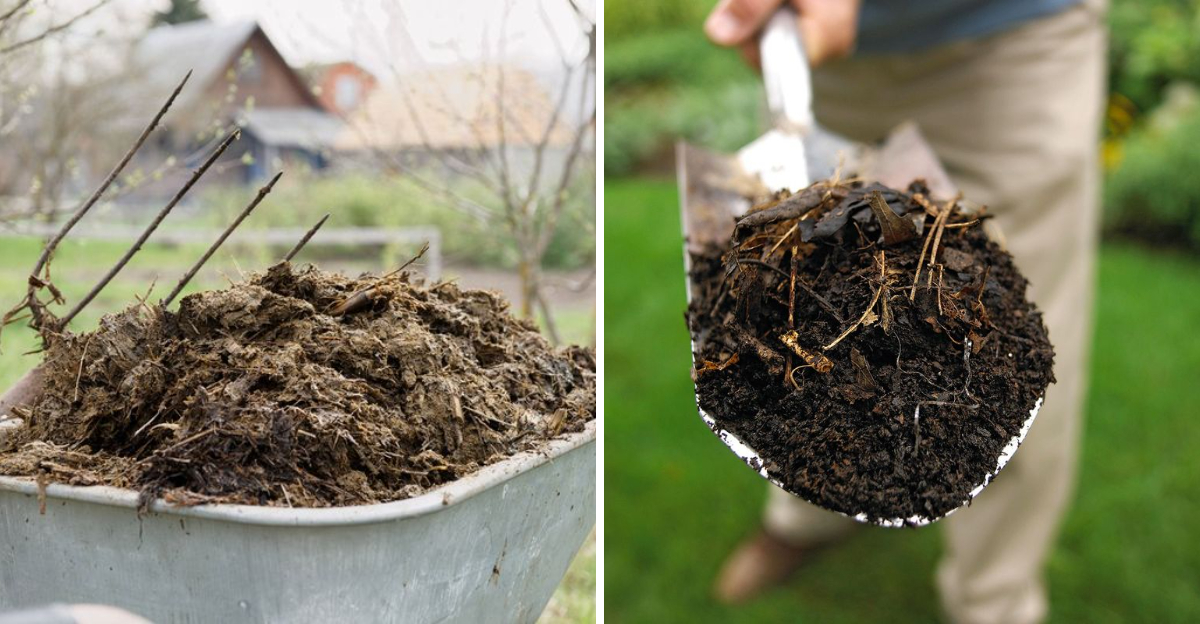
But in a Florida vegetable bed built on sandy soil, using raw or improperly aged manure can cause more problems than it solves, and the sandy ground makes those problems move fast.
Sandy soil does not buffer nutrients the way heavier soils do.
When fresh manure releases a concentrated burst of nitrogen and salts, those compounds can flush right through the root zone during irrigation or rain, potentially stressing young plants or creating uneven nutrient levels in the bed.
Fresh manure also carries a risk of pathogens, particularly in edible gardens, which is why UF/IFAS Extension recommends using only properly composted manure in vegetable and herb beds.
Composted manure that has gone through a full breakdown process is a safer, more stable choice. It releases nutrients more gradually, adds organic matter, and is far less likely to overwhelm sandy soil with a sudden salt or nitrogen surge.
Look for products labeled as composted and aged, not just “aged” without verification. Pairing composted manure with other compost sources gives sandy vegetable beds a steadier, more reliable foundation for growing food.
4. Landscape Fabric Can Trap Heat And Block Soil Improvement
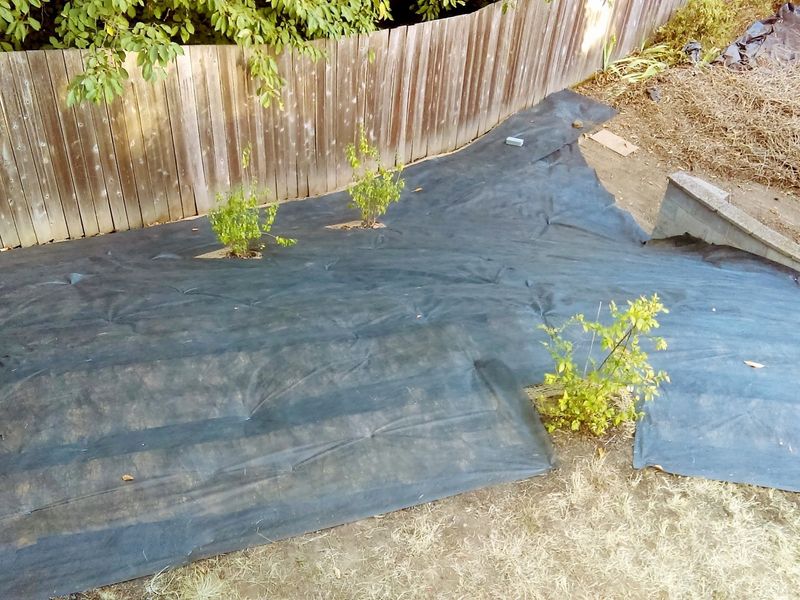
Landscape fabric gets sold as a low-maintenance solution, and that promise is hard to resist when you are staring at a weedy shrub border in the middle of a Florida summer.
Unfortunately, what works well in a catalog photo often creates real headaches in a living Florida garden bed over time.
In sandy soil, landscape fabric can block the gradual addition of organic matter that the ground genuinely needs.
Florida’s heat accelerates organic matter breakdown, which means sandy beds need regular replenishment from decomposing mulch and natural debris.
When fabric sits between the mulch layer and the soil, that beneficial breakdown cannot reach the root zone where it matters most.
Weeds also have a habit of rooting into the debris layer that collects on top of fabric, making removal messier than it would have been without the fabric at all.
Florida-Friendly Landscaping guidance consistently points toward organic mulch as a preferred ground cover for garden beds rather than synthetic weed barriers.
A few inches of pine bark, pine straw, or wood chips suppresses weeds reasonably well, moderates soil temperature, conserves moisture, and gradually improves sandy soil as it breaks down.
Fabric may have a limited role in some hardscape or pathway situations, but it is rarely the best long-term solution for living garden beds.
5. Thick Rubber Mulch Leaves Sandy Soil Hungry
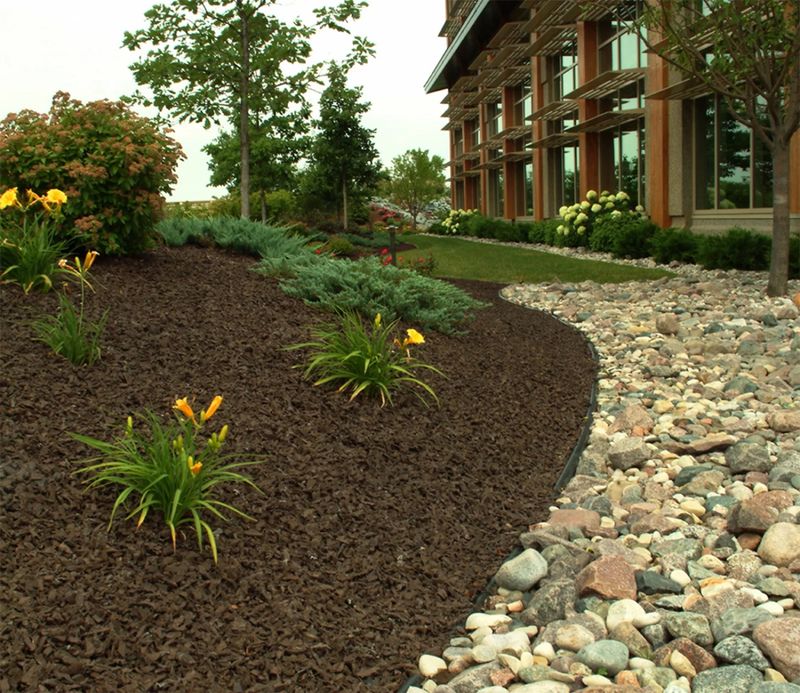
Rubber mulch has a tidy look and a reputation for lasting a long time without needing replacement. Those qualities attract a lot of Florida gardeners who are tired of refreshing organic mulch every season.
But when it comes to sandy Florida soil, rubber mulch skips the most important benefit that mulch is supposed to provide.
Sandy soil in Florida is naturally low in organic matter, and one of the best ways to gradually improve it is by letting organic mulch break down slowly into the ground over time.
Pine bark, pine straw, and wood chips all feed the soil in a quiet, steady way that rubber mulch simply cannot replicate.
Rubber does not decompose, does not add nutrients, and does not improve soil structure.
Research from UF/IFAS and other horticulture sources also raises concerns about rubber mulch retaining heat, which in a state that already deals with intense summer temperatures is not a minor issue for plant roots near the surface.
For Florida garden beds, ornamental plantings, and vegetable areas, organic mulch remains the recommendation from UF/IFAS Extension and Florida-Friendly Landscaping programs.
A two-to-three-inch layer of appropriate organic mulch, kept away from plant stems and trunks, gives sandy soil the moisture retention, temperature moderation, and slow organic feeding that rubber mulch simply cannot offer.
6. Compost Worked Through The Whole Bed Helps Sandy Soil Hold Moisture Longer
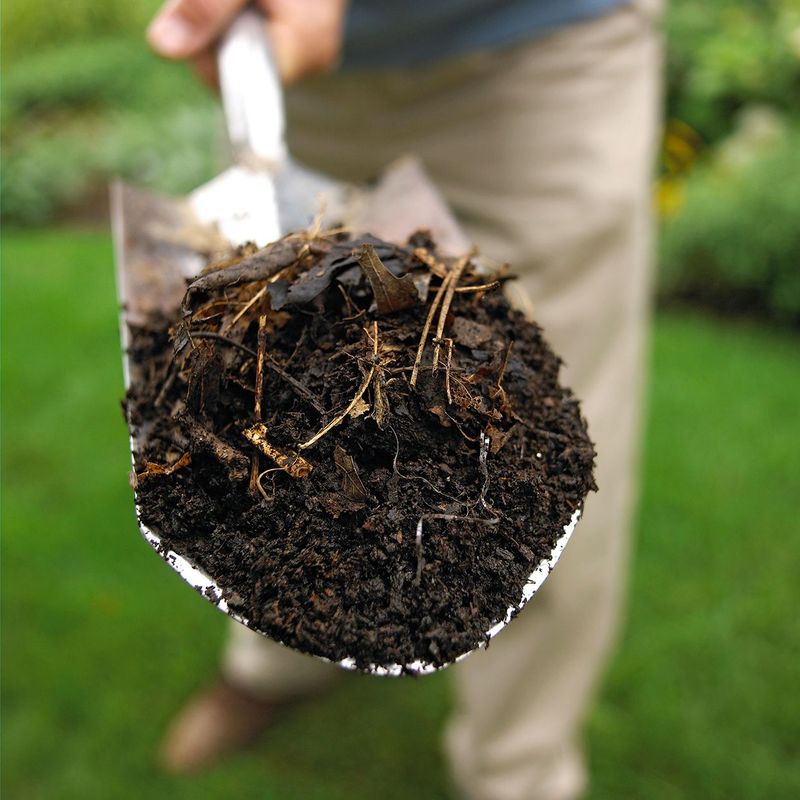
A bag of compost does not look nearly as dramatic as a rich planting mix, but in sandy Florida soil, it is usually the better long-term move.
The key is how you use it.
When compost is worked through the whole planting area, it helps sandy soil hold moisture and nutrients more evenly instead of creating one isolated pocket of improved soil.
That matters because Florida sand drains fast, and roots need a reason to spread outward into the surrounding bed rather than stay confined to a single amended hole.
UF/IFAS Gardening Solutions recommends adding a 2-to-3-inch layer of organic matter to an empty planting bed and mixing it into the soil with a shovel, digging fork, or tiller.
They also recommend doing this at least a few weeks before planting when possible, so the bed has time to settle before roots move in.
The regional nuance is important. Deep sandy soils in many parts of central and coastal Florida need steady organic matter replenishment because heat and rainfall break it down quickly.
But in parts of South Florida, especially where soils are alkaline because of limestone, marl, shell, or construction debris, compost will not magically change the soil pH for long.
UF/IFAS notes that Florida soil pH varies widely, with alkaline soils common in coastal areas and mineral soils of South Florida.
That does not make compost pointless. It just means compost should be treated as a soil conditioner, not a miracle fix.
Use finished compost across the bed, not a dense scoop dropped into one planting hole. Then keep feeding the system from the top with organic mulch.
Sandy soil improves slowly, but it improves much more reliably when the whole bed gets attention instead of one small hole around each plant.
7. Slow-Release Fertilizer Gives Plants Time To Use The Nutrients
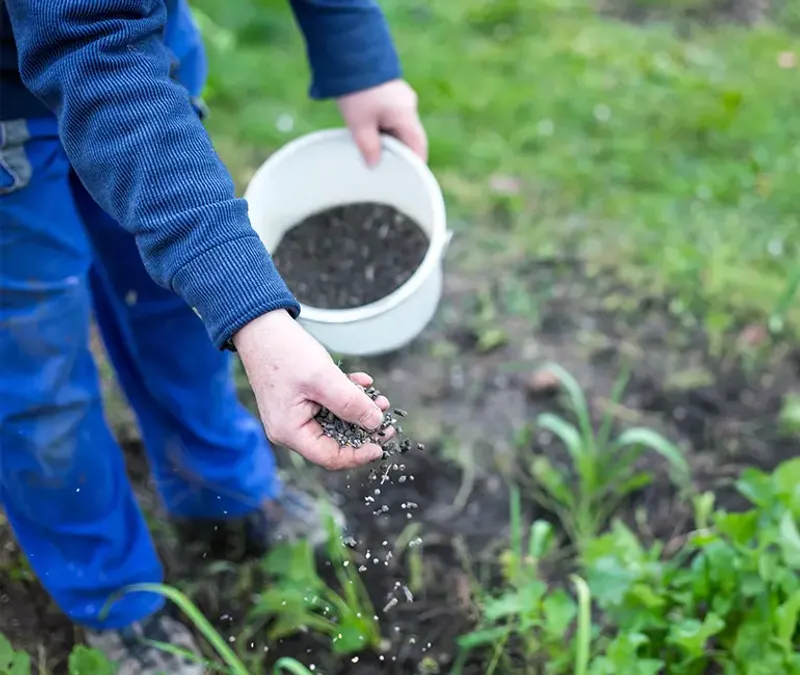
In sandy Florida soil, fertilizer timing matters almost as much as the fertilizer itself.
A quick blast of nutrients may look helpful on the label, but Florida’s rain and irrigation patterns can move soluble nutrients below the root zone before plants use them.
That is especially true in deep, fast-draining sands where water passes through the soil profile quickly.
Slow-release or controlled-release fertilizer is a better fit for many Florida landscapes because it feeds more gradually.
Instead of giving plants one sudden flush, it stretches the nutrient release over time, which can reduce waste and give roots a better chance to take up what is applied.
UF/IFAS guidance on sandy, permeable Florida soils warns that repeated rainfall or irrigation can leach soluble nutrients below the root zone, turning fertilizer into both an economic loss and a potential groundwater concern.
UF/IFAS also notes that many Florida fertilizer ordinances are tied to the rainy season because summer bans are intended to reduce fertilizer washing into water bodies when rain is frequent.
This is where regional rules really matter. Some Florida counties and municipalities require a minimum percentage of slow-release nitrogen, restrict phosphorus unless a soil test shows a deficiency, or ban nitrogen and phosphorus fertilizer during rainy-season windows.
Brevard County’s UF/IFAS Extension page, for example, lists local rules that include rainy-season bans and slow-release nitrogen requirements in many municipalities.
So the better replacement is not just “buy slow-release fertilizer and relax.”
Choose a slow-release product suited to the plant, apply it at the label rate, avoid fertilizing before heavy rain, and check your county rules before spreading anything. Sandy soil does not forgive overapplication.
It simply moves the mistake somewhere else.
8. Organic Mulch Protects Sandy Soil And Feeds It As It Breaks Down
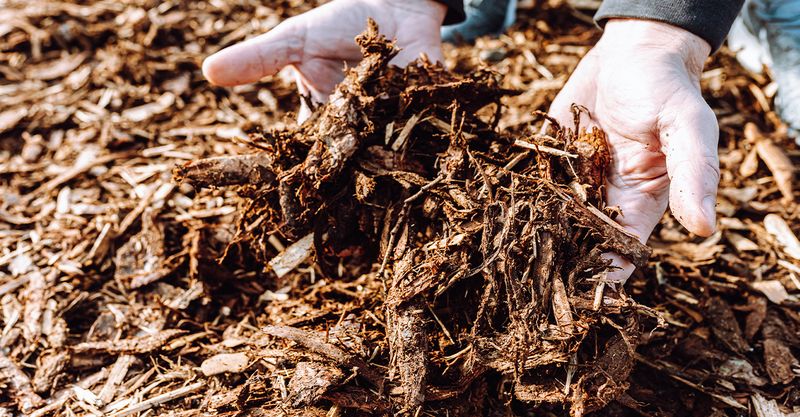
If sandy soil had a favorite garden product, organic mulch would be near the top of the list.
It does several jobs at once. It shades the soil, slows evaporation, suppresses some weed germination, softens temperature swings around shallow roots, and gradually adds organic matter as it breaks down.
That last part is especially important in Florida, where heat, rain, and microbial activity can burn through organic matter quickly.
Florida-Friendly Landscaping recommends a 2-to-3-inch layer of organic mulch, replenished as needed, and pulled back from the base of plants.
The program notes that mulch helps retain soil moisture, inhibit weeds, moderate soil temperatures, and improve soil structure as organic mulch decomposes.
Good choices include pine bark, pine straw, leaves, wood chips, and other recycled plant-based materials.
Florida-Friendly guidance also encourages using mulch byproducts and cautions against cypress mulch when its source is uncertain because it may be harvested unsustainably.
There are regional details worth calling out. In coastal or South Florida landscapes with alkaline soils, shell, limestone, or light-colored stone can raise pH or reflect heat, which can increase plant stress.
Florida-Friendly model guidance notes that shell, crushed stone, and pebbles do not add nutrients, organic content, or water-holding capacity, and that limestone and shell can raise soil pH and reflect heat.
That does not mean stone has no place anywhere. It can work in paths, dry areas, or carefully designed hardscape zones.
But for living beds in sandy soil, organic mulch does more.
Keep it a few inches deep, keep it off trunks and stems, and refresh it as it thins. In Florida sand, mulch is not just decoration.
It is part of the soil-building system.
9. Florida-Friendly Plants Work With Sandy Soil Instead Of Fighting It
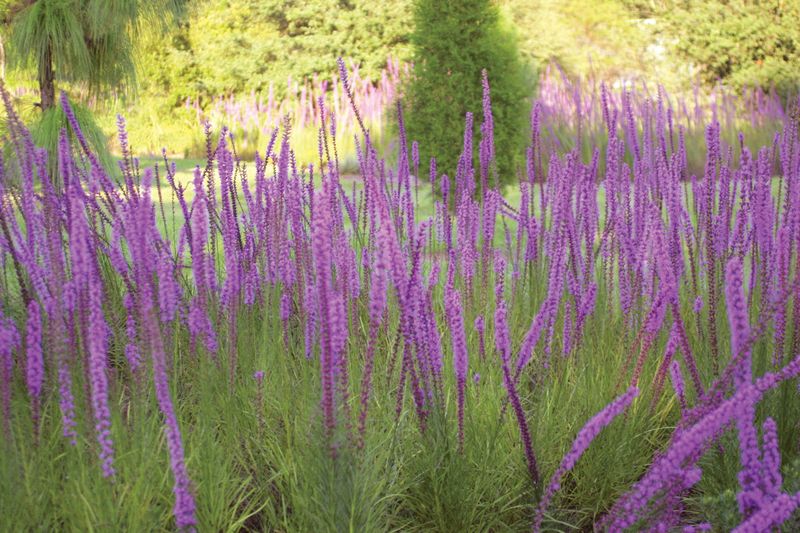
Sometimes the best soil fix is not a product at all.
It is choosing plants that actually want to live where you are planting them.
Florida gardeners can spend a lot of money trying to turn sandy, hot, fast-draining ground into something it will never quite be. A plant that wants rich, consistently moist soil is always going to need more help in a dry sandy bed.
A plant adapted to the site can settle in with far less drama.
Florida-Friendly Landscaping’s first principle is Right Plant, Right Place, which means choosing plants and turfgrass that match the site’s soil, light, water, and climate conditions.
That principle is especially useful in sandy soil because it shifts the goal from forcing the ground to behave differently to matching the plant to the conditions already there.
This does not mean every Florida yard should use the same plant list. A sandy inland yard in north or central Florida is not the same as a coastal yard with salt exposure.
A South Florida landscape on alkaline limestone-influenced soil is not the same as an acidic pine flatwoods site. UF/IFAS notes that Florida soils vary widely, from acidic pine flatwoods soils to alkaline coastal and South Florida mineral soils.
So the better replacement is not just “buy native plants,” although native plants can be excellent choices.
The better replacement is to choose plants matched to your actual site: sun or shade, dry or seasonally wet, acidic or alkaline, inland or coastal, salt-exposed or protected.
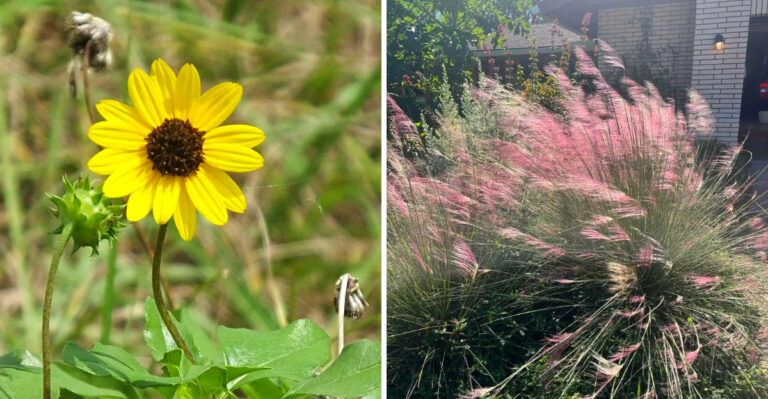
In many sandy Florida beds, options such as muhly grass, coontie, blanket flower, dune sunflower, firebush, beautyberry, Simpson’s stopper, and certain Florida-Friendly groundcovers may perform better than thirsty plants that need constant correction.
Before planting, check mature size, water needs, salt tolerance if you are near the coast, and cold hardiness if you are in North or Central Florida. Right plant, right place will not make sandy soil disappear, but it can make the whole garden feel like much less of a fight.