This Is Why Your Florida Crape Myrtle Looks Worse Every Year After You Trim It
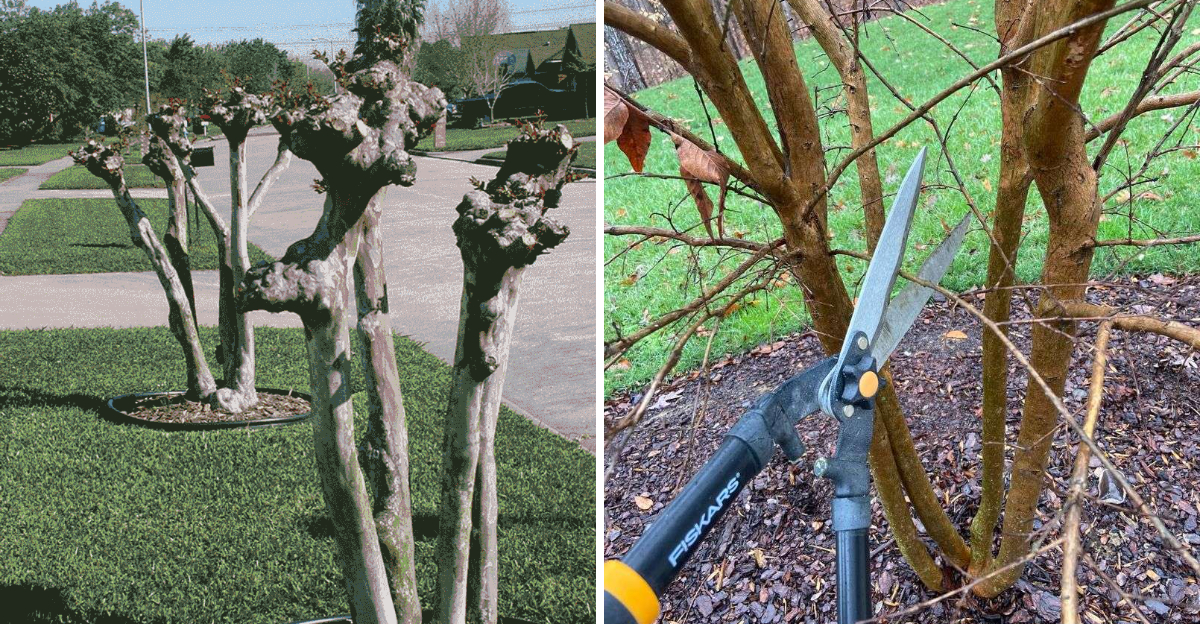
Crape myrtles are one of the most recognizable trees in Florida landscapes, and they are also commonly mistreated. Drive through almost any Florida neighborhood in late winter and the evidence is everywhere.
Thick trunks topped with blunt, stubby cuts, knobby fists of regrowth where graceful branching structure used to be, trees that look more like hat racks than the elegant flowering specimens they were always meant to become.
The people doing this are not trying to cause harm.
Most of them genuinely believe they are helping. The trimming happens every year because every year the tree sends up that familiar flush of thick, congested regrowth, and that regrowth looks like exactly the kind of thing that needs to be cut back.
So it gets cut back. And the cycle continues, each year leaving the tree a little more misshapen and a little further from what it could be.
What most Florida homeowners do not realize is that the regrowth they keep cutting is a direct consequence of the cut itself. The tree is not producing that growth despite the trimming.
It is producing it because of it. Understanding that loop is what changes everything about how a crape myrtle gets managed, and how good it ultimately looks year after year.
1. Stop Topping Your Crape Myrtle Every Winter
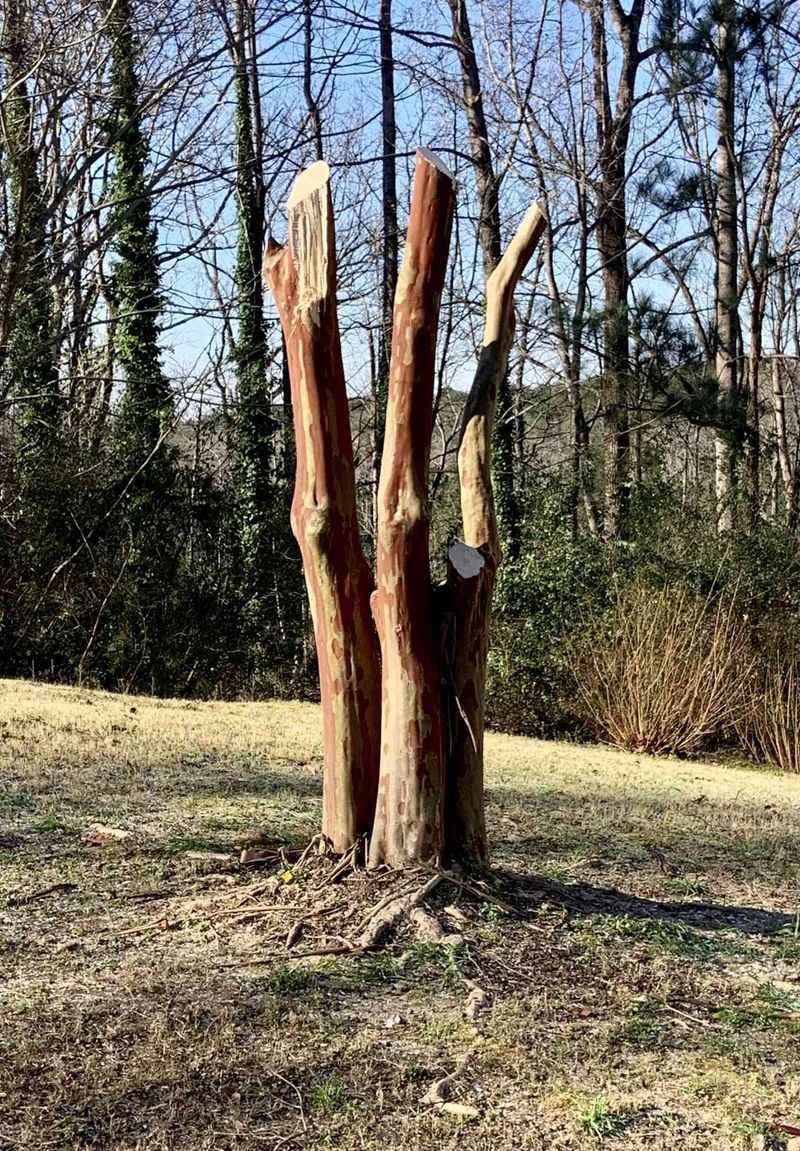
Walk through almost any Florida neighborhood in January and you will spot them: crape myrtles cut back to thick, blunt stubs with no branches left at all. Horticulture professionals have a name for this practice.
They call it crape murder, and it is widely discouraged by UF/IFAS and other credible arboriculture sources across the state.
Topping means removing the main trunks or large structural branches and cutting them back to the same flat height every year. Homeowners often assume this keeps the tree smaller or produces more blooms.
Neither is accurate. The tree responds by pushing out many fast-growing, weakly attached shoots from each stub, and those shoots look crowded and awkward from the very first season.
Over several years, the stubs grow larger and the regrowth gets denser. The elegant trunk structure and attractive peeling bark that make crape myrtles so appealing in landscapes get buried under a tangle of thin, whippy stems.
The natural vase shape disappears completely.
UF/IFAS guidance consistently recommends against topping crape myrtles. Proper pruning focuses on removing only what is necessary for structure, safety, or access.
The goal is to work with the plant’s natural growth habit, not fight against it every single winter. Skipping the saw entirely is often the best move.
2. Learn Why Hard Cuts Create Weak New Growth
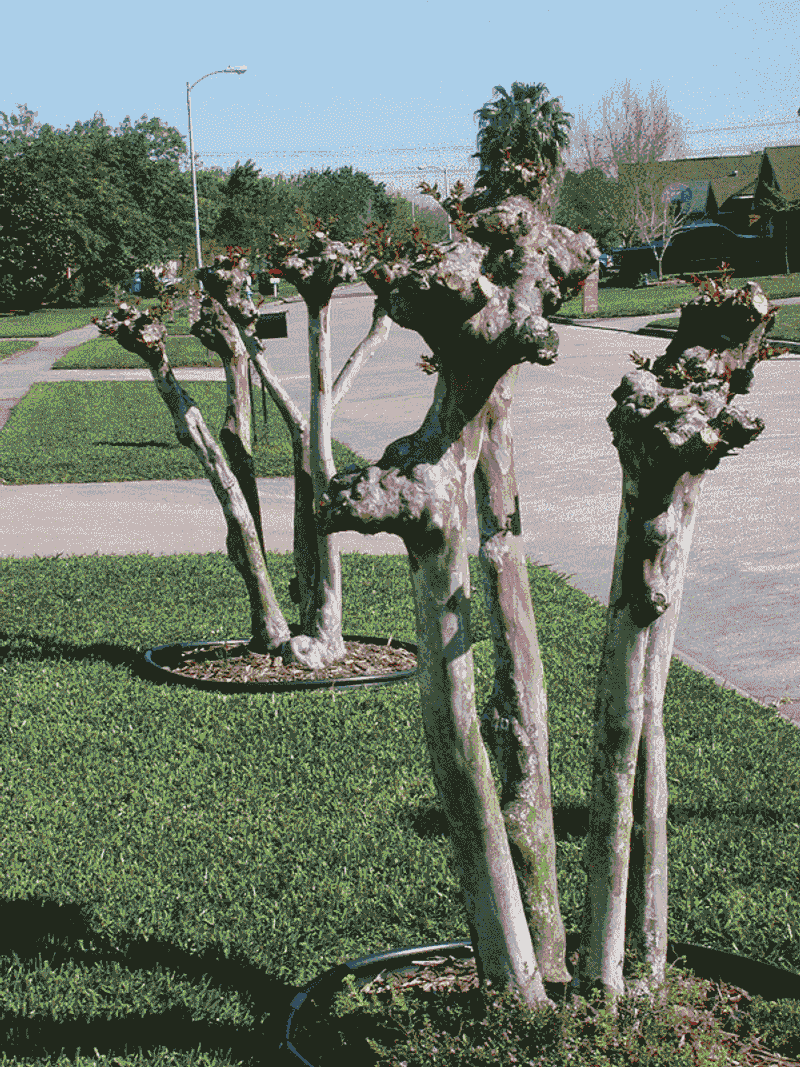
Grab a magnifying glass and look closely at a crape myrtle that has been cut back hard for three or four years in a row. What you will find is not a healthier tree.
What you will find is a cluster of thin, crowded stems all pushing out from the same rough stub, each competing for space and light.
Your Florida Garden Changes Every Week. Your Plan Should Too.
Gardening in Florida changes quickly throughout the season. Every Friday you’ll receive a simple weekly plan showing exactly what to plant, prune, fertilize, harvest, and protect so you never miss the right timing.
Hard cuts trigger a survival response in the plant. When a large amount of growth is removed all at once, the crape myrtle pushes energy into producing as many new shoots as possible from the wound site.
Those shoots grow fast, but they are not as strongly attached as naturally formed branches. They are more likely to bend, rub against each other, or break under the weight of Florida summer storms.
The problem compounds every year. Each round of hard pruning adds another layer of stubs and weak regrowth.
The canopy may look bushy and full from a distance during summer, but the branch structure underneath becomes increasingly tangled and graceless. Flowers may still appear, but the overall form of the tree looks less refined each season.
Selective pruning, where you remove only specific problem branches rather than cutting everything back, produces much better results over time. The crape myrtle keeps its natural structure and the new growth that forms is properly spaced and stronger.
3. Prune In Late Winter Before Fresh Growth Starts
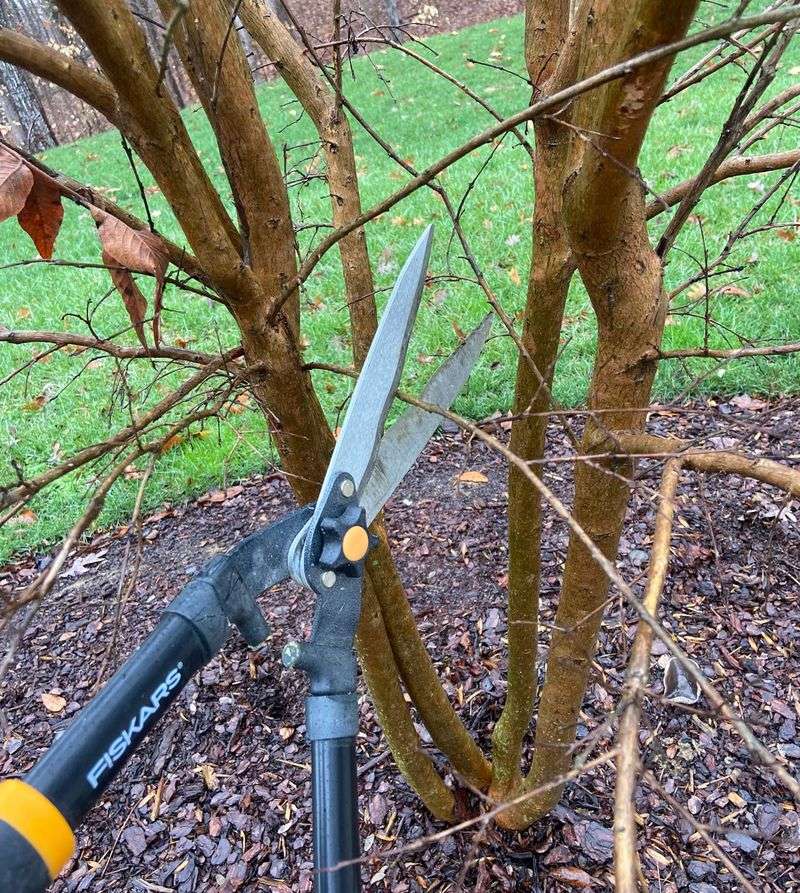
Timing matters more than most homeowners realize when it comes to pruning crape myrtles. Late winter, before new growth begins to push out, is the preferred window recommended by horticulture professionals.
Pruning during this period allows the plant to put its energy into fresh, healthy growth rather than trying to recover from cuts made during an active growing phase.
Florida’s geography makes this a little complicated. North Florida, which includes areas around Tallahassee and Gainesville, tends to have cooler winters and a more defined dormant period.
Homeowners there often have a clearer late-winter window, typically late January through February, before warm weather returns.
Central Florida, from Orlando south toward Tampa, has a longer warm season with occasional warm spells in winter that can blur the timing.
Watching the plant itself for signs of swelling buds is a more reliable guide than following a fixed calendar date.
South Florida presents its own challenge. The warm season there extends much further into winter, so the traditional dormant pruning window shrinks considerably.
Local UF/IFAS Extension offices and county horticulture agents are your best resource for region-specific timing guidance.
Pruning too late in the season, after new growth has already flushed out, removes developing buds and can stress the plant unnecessarily. Getting the timing right is one of the simplest ways to support a healthier, better-looking crape myrtle year after year.
4. Remove Suckers Crossing Branches And Seed Pods Carefully
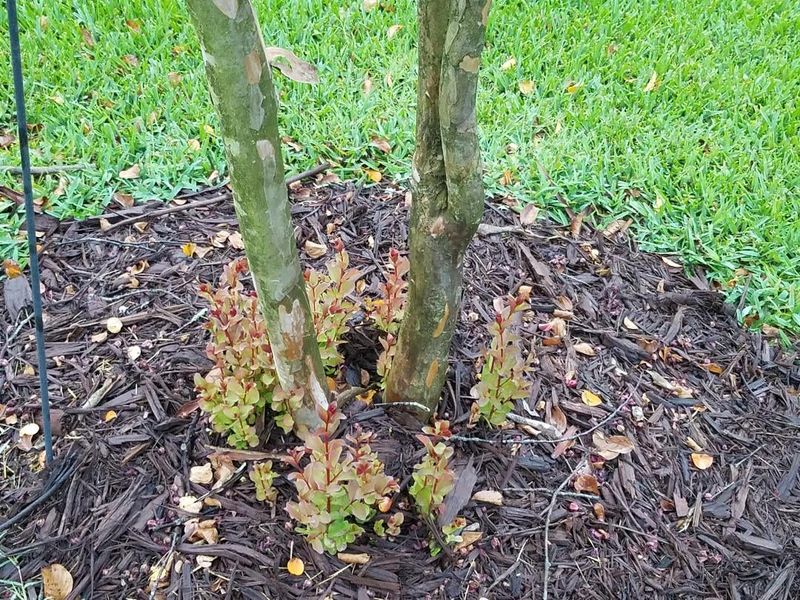
Not all pruning is harmful. There is a kind of crape myrtle maintenance that genuinely helps the plant look and perform better, and it is much more modest than what most homeowners do each winter.
The key is being selective about what you actually remove.
Suckers are shoots that grow from the base of the trunk or from the roots. They clutter the base of the plant, compete with the main trunks for resources, and make the crape myrtle look messy.
Removing them cleanly at the point of origin, rather than just snapping them off at soil level, keeps the base tidy and reduces how often they return.
Crossing or rubbing branches are another good target. When two branches grow against each other, the friction can wound the bark and create an entry point for pests or pathogens.
Removing one of the two branches early prevents a bigger problem later. Diseased or damaged twigs from storm exposure or cold snaps can also be removed cleanly without harming the overall structure.
Seed pods are a more optional task. Some homeowners remove them after bloom to encourage a second flush of flowers.
Others leave them for winter texture or because the tree does not need that level of grooming. Either choice is fine, but removing seed pods should never become an excuse to cut large limbs.
Snipping small spent flower clusters is very different from sawing back major branches. Keep the work small and intentional, and the crape myrtle will reward you.
5. Keep The Natural Shape Instead Of Forcing A Round Canopy
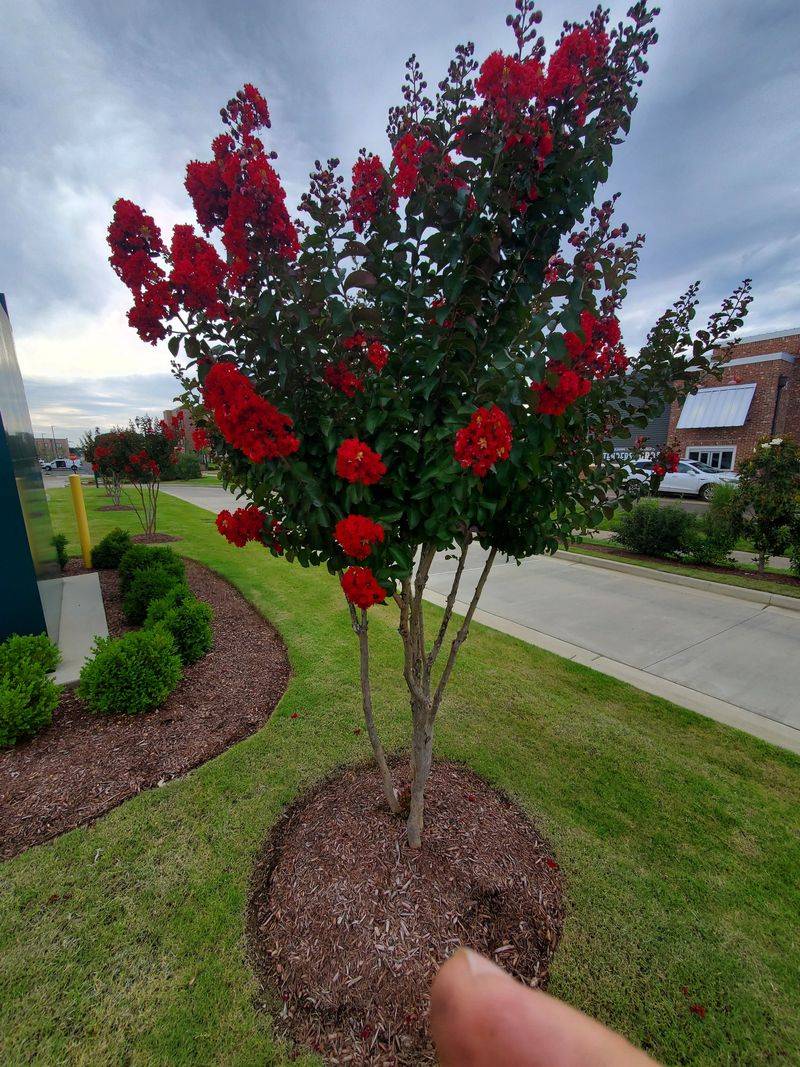
One of the most overlooked qualities of a crape myrtle is its natural architecture. Left to grow with minimal interference, a healthy crape myrtle develops an elegant multi-trunk or vase-shaped form with smooth, peeling bark in shades of cinnamon, gray, and cream.
That bark and branch structure are part of what makes the plant genuinely attractive in the Florida landscape, not just during bloom season but year-round.
Forcing a crape myrtle into a perfectly round ball or a flat-topped shape works directly against that natural beauty.
Shearing the canopy into a geometric form requires repeated cutting throughout the growing season, which removes new growth before it matures and disrupts the plant’s natural branching pattern.
Over time, the outer layer of the canopy becomes a dense shell of stubby growth while the interior stays thin and bare.
Before you pick up any tool, step back and look at the whole plant. Ask yourself what is actually bothering you about its current shape.
A branch that extends too close to a walkway or blocks a window may be worth addressing. But if the tree looks full and graceful overall, the most helpful thing you can do is put the pruners away.
Less pruning consistently produces a better-looking crape myrtle in landscapes. The tree is not asking to be reshaped every year.
It is asking to be left alone to do what it naturally does well.
6. Choose A Smaller Cultivar Instead Of Fighting The Tree
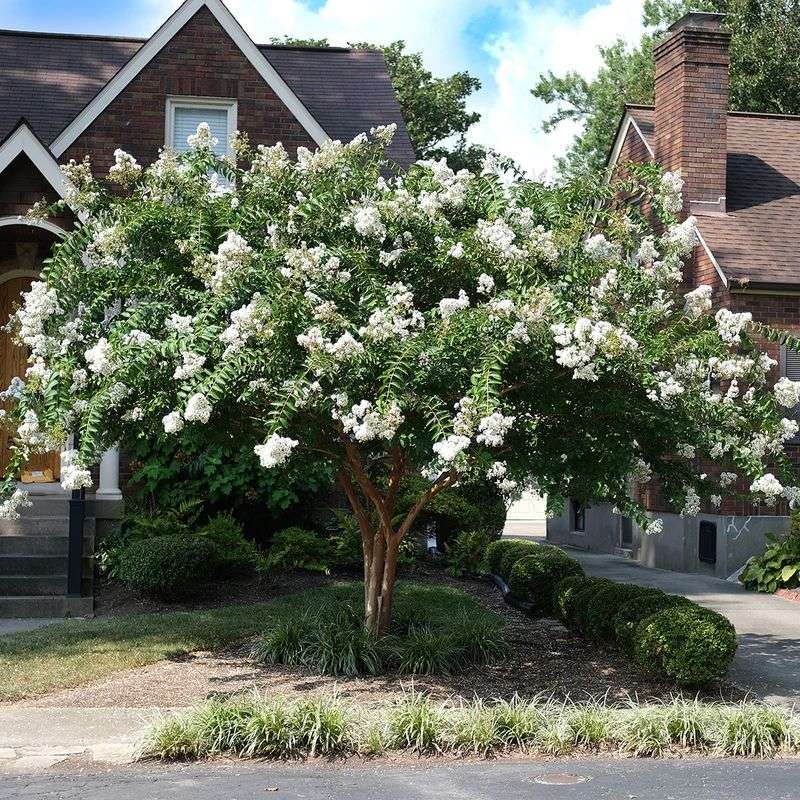
Sometimes the real problem has nothing to do with how you prune and everything to do with which plant you chose for that spot.
Crape myrtles come in a wide range of mature sizes, from compact dwarf forms that stay under three feet tall to large tree-form cultivars that can reach twenty-five feet or more at full maturity.
That range matters enormously when you are trying to fit a plant under a window, beside a driveway, or near a roofline.
A large-growing cultivar planted in a tight space will always outgrow that space. No amount of annual pruning changes the plant’s genetic drive to reach its mature size.
Every hard cut just triggers more regrowth, and the cycle repeats indefinitely. UF/IFAS consistently recommends selecting a cultivar whose mature size matches the available space rather than relying on pruning to keep an oversized plant in check.
Dwarf and semi-dwarf crape myrtles are genuinely different plants from tree-form varieties. They are not simply smaller versions of the same thing.
Their growth rate, branching habit, and mature height are all different. Reading the plant tag at the nursery or checking a reliable source before purchase can save years of frustration.
If a crape myrtle in your yard is constantly blocking a roofline, crowding a walkway, or brushing against your house, the most practical long-term solution may be replacing it with a cultivar that actually fits.
One smart plant choice beats ten years of hard pruning every time.
7. Watch For Powdery Mildew Aphids And Bark Scale After Stress
Pruning mistakes are not the only reason a crape myrtle can look rough after a few seasons.
Florida’s warm, humid climate creates conditions where certain pests and diseases can move in quickly, especially on plants that are already stressed or growing in poor conditions.
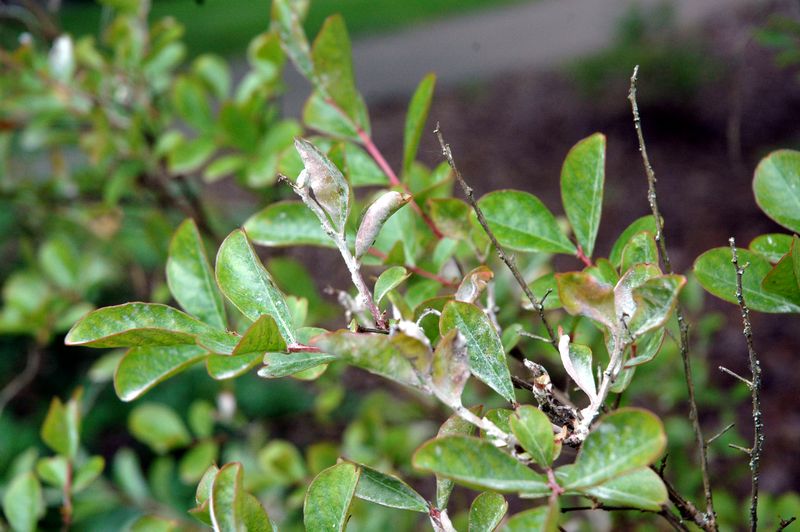
Powdery mildew is a fungal problem that shows up as a white, dusty coating on new leaves and buds. It tends to be worse on susceptible cultivars, in shaded spots, or anywhere airflow is limited.
Crape myrtles planted too close together or crowded by nearby structures are more vulnerable.
Choosing a mildew-resistant cultivar and making sure the plant gets full sun and good air circulation are the most reliable ways to reduce this problem without reaching for a spray bottle.
Aphids are another common issue. They cluster on new growth and release sticky honeydew that drips onto leaves and surfaces below.
That honeydew feeds a black fungus called sooty mold, which coats the leaves and makes the plant look dark and unhealthy. Crape myrtle bark scale is a more recent concern in some parts of Florida.
It appears as white or gray crusty patches on bark and can be easy to confuse with normal bark texture. Correct identification before any treatment is essential.
UF/IFAS and your local county Extension office are the most reliable resources for identifying what is actually affecting your crape myrtle and determining whether any treatment is warranted.
8. Fix Placement Problems Before Another Bad Trim
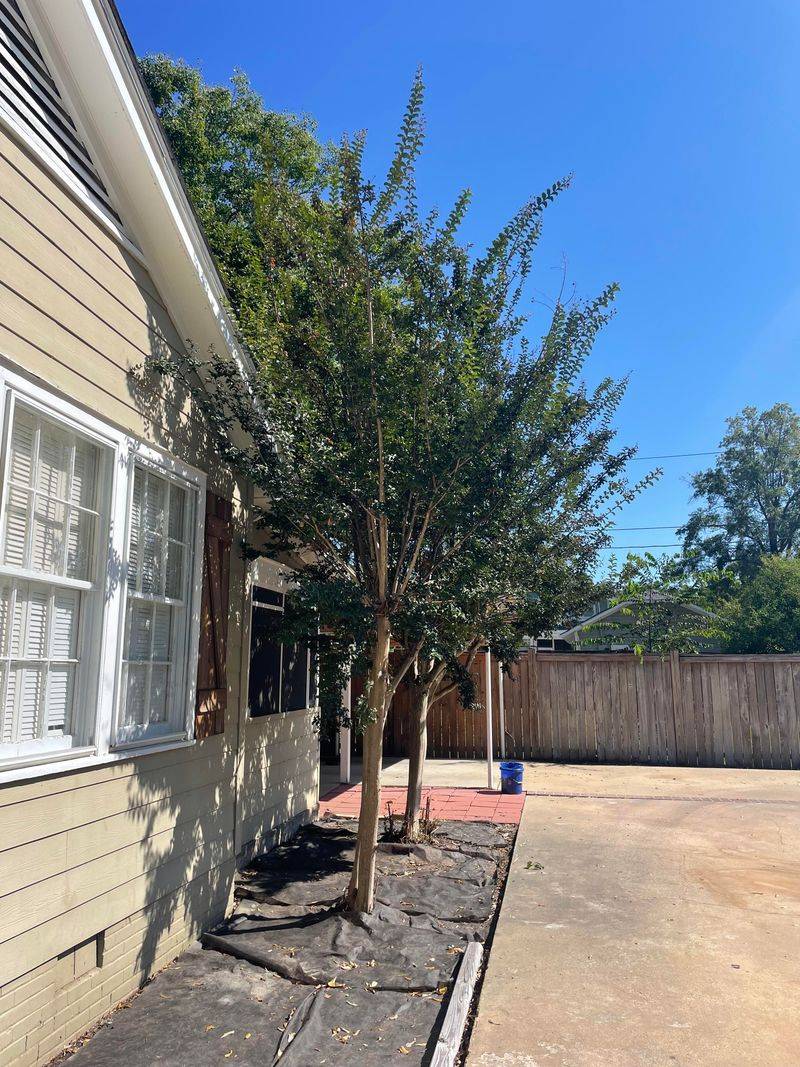
Here is a scenario that plays out in yards constantly: a crape myrtle gets planted near the front of the house because it looks manageable at the nursery.
Five years later it is brushing the gutters, shading out the shrubs beside it, and sending roots toward the driveway edge.
The homeowner responds with a hard annual trim, and the cycle of bad pruning begins.
Poor placement is one of the most common root causes of repeated crape myrtle problems in Florida landscapes. Plants placed too close to structures, utility lines, fences, or other trees will always create conflict as they mature.
The plant is not doing anything wrong. It is simply growing the way it was designed to grow, just in the wrong spot.
Before reaching for the pruning saw again this winter, take an honest look at the whole situation. Does the plant have enough room to reach its mature size without interfering with the house, walkway, or neighboring trees?
Does it get full sun and reasonable airflow? Is the soil drainage adequate for a Florida landscape?
If the answers point to a placement problem rather than a pruning problem, consider your real options. A young plant may be transplantable to a better location.
An established but poorly placed tree might be replaced with a smaller cultivar that genuinely fits the site. Making one good decision now is far more effective than repeating the same hard trim every single year and hoping for a different result.