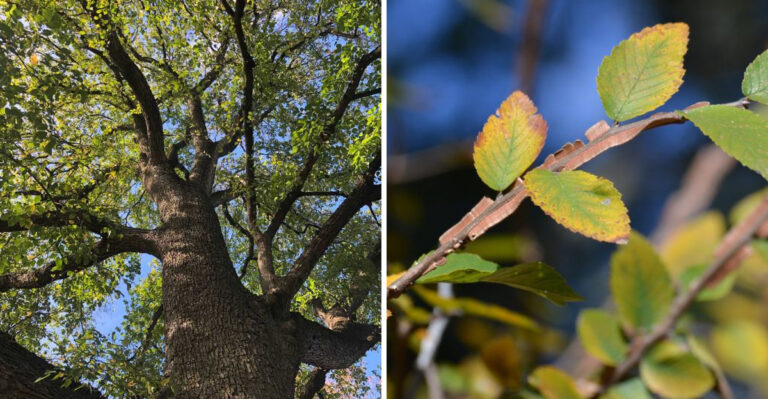
These Native Texas Trees Give Real Summer Shade Without Cracking Sidewalks
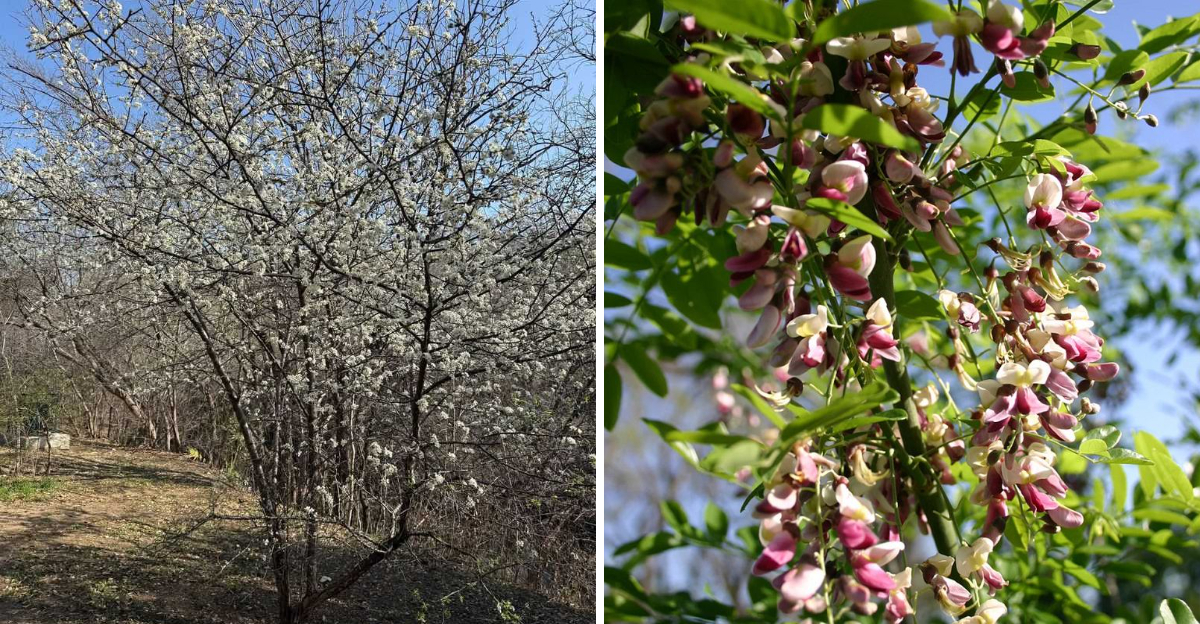
Shade trees are one of the most valuable things you can add to a Texas property, and in a state where summer temperatures routinely push past the point of comfortable outdoor living, the right tree in the right spot genuinely changes how usable your yard is from June through September.
The problem is that a lot of the trees people reach for when they want shade fast come with root systems that have no respect for driveways, sidewalks, or underground utilities.
Native Texas trees solve that problem in a way that imported shade trees often don’t. They developed alongside the Texas landscape over thousands of years, which means their growth habits and overall size tend to be better matched to real residential conditions than fast-growing non-natives that prioritize quick coverage over everything else.
The native trees on this list deliver genuine, meaningful shade through the brutal Texas summer without the infrastructure damage that turns a beautiful yard tree into an expensive long-term problem.
1. Cedar Elm
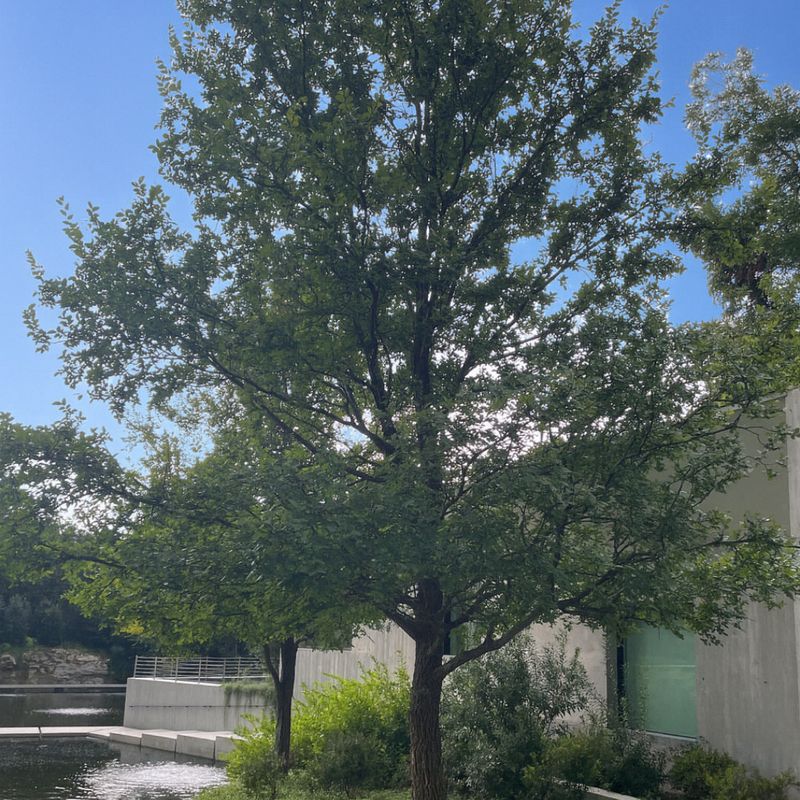
Walk through almost any older Texas neighborhood and you will likely spot a Cedar Elm without even knowing it. This tree has been quietly doing its job for generations, offering dense, reliable shade during the hottest months of the year.
It is one of the toughest native trees in the state, and it earns that reputation every single summer.
Cedar Elm grows to about 50 to 70 feet tall, but its root system tends to go deeper rather than spreading out aggressively near the surface. That deeper root habit makes it a much safer choice near sidewalks and driveways compared to many other large shade trees.
You still want to give it some distance from pavement, but it is far less likely to cause cracking problems over time.
The leaves are small, rough, and dark green, turning a pretty yellow in fall before dropping. Cedar Elm is also semi-evergreen in milder winters, which means you might get some greenery year-round depending on where you live in Texas.
It handles both drought and occasional flooding, which is a rare and useful combination in unpredictable Texas weather.
Planting one in a spot where it gets full sun will give you the best canopy growth. Young trees benefit from occasional deep watering during the first couple of years.
After that, they are largely self-sufficient and incredibly low maintenance. For homeowners who want a big, beautiful shade tree that respects the infrastructure around it, Cedar Elm is one of the most dependable choices you can make in Texas.
2. Mexican Plum
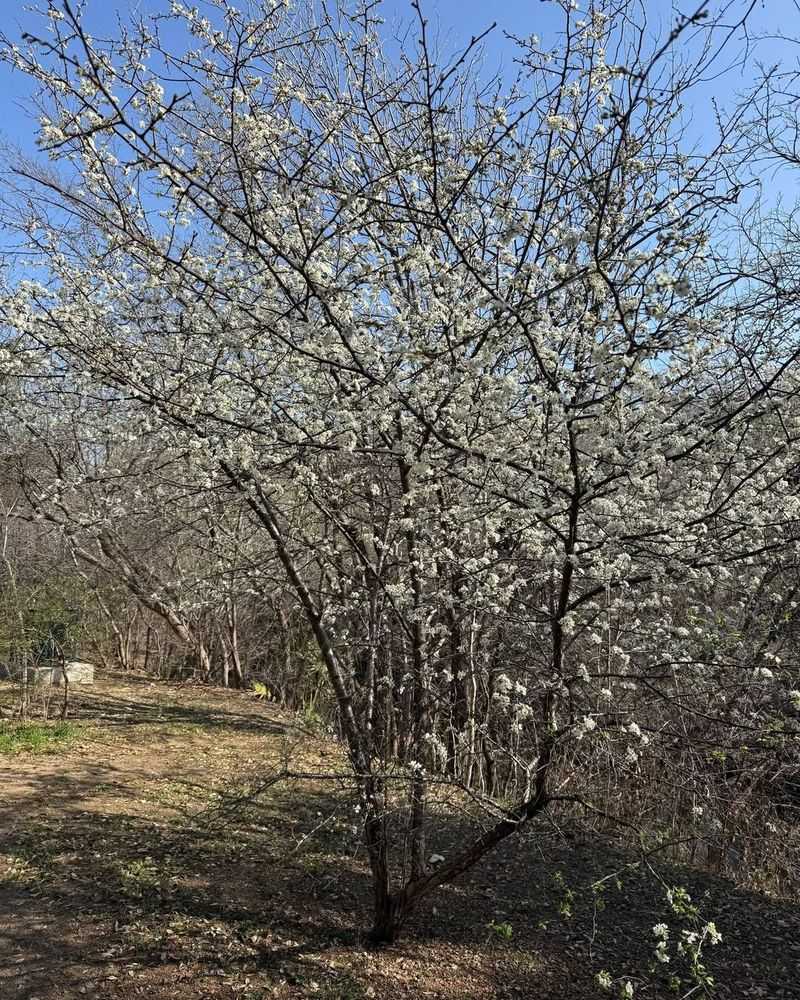
Every spring, something magical happens in Texas yards that have a Mexican Plum. Before the leaves even appear, the entire tree explodes into clusters of white flowers that smell faintly sweet and look absolutely stunning.
It is one of the earliest blooming native trees in the state, and it never fails to turn heads in the neighborhood.
Mexican Plum stays relatively small, usually reaching between 15 and 25 feet tall. That modest size makes it a fantastic choice for residential landscapes where space near sidewalks or patios is limited.
Your Texas Garden Changes Every Week. Your Plan Should Too.
Gardening in Texas changes quickly throughout the season. Every Friday you’ll receive a simple weekly plan showing exactly what to plant, prune, fertilize, harvest, and protect so you never miss the right timing.
Its root system is manageable and not known for aggressive surface spread, which means your walkways and foundations have much less to worry about compared to larger shade trees.
After the spring bloom fades, small reddish-purple plums develop in summer. Birds absolutely love them, and wildlife gardeners often plant Mexican Plum specifically to support local bird populations.
The fruit is edible for humans too, though it is quite tart on its own. Some people use it for jelly or jam, which is a fun bonus from a tree that was already earning its keep with shade and beauty.
This tree thrives in full sun to partial shade and handles dry, rocky Texas soils without much fuss. It is a single-trunk or multi-trunk tree that looks elegant in both formal and casual landscape styles.
Watering young trees during dry stretches helps them establish quickly. Once rooted in, Mexican Plum is drought-tolerant and needs very little intervention to stay healthy and attractive through the seasons.
3. Texas Redbud
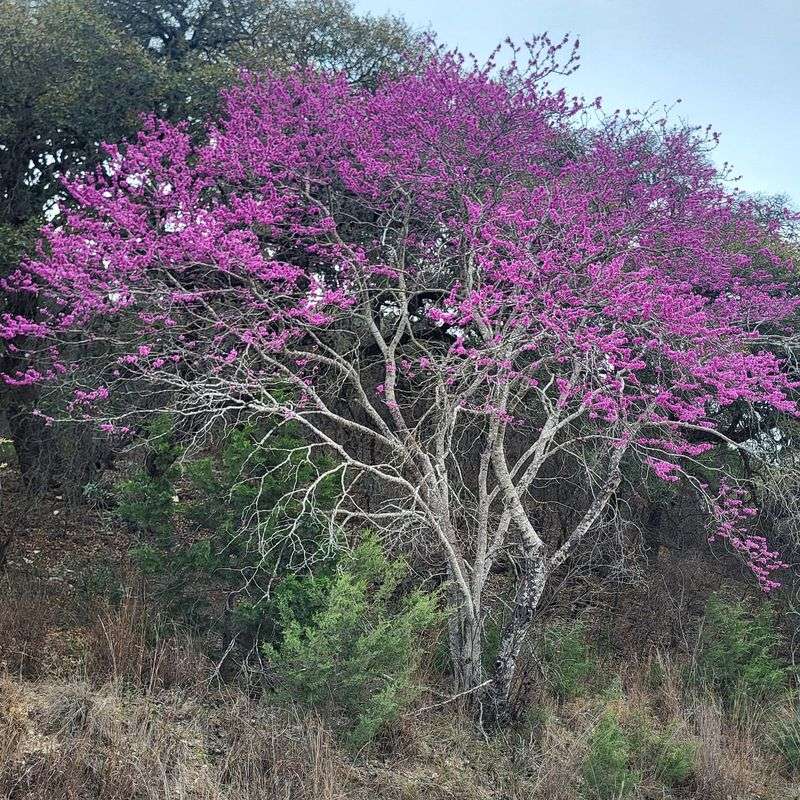
If you have ever driven through the Texas Hill Country in March and seen those brilliant bursts of pink-purple flowers along the roadsides, you already know what a Texas Redbud looks like in its prime.
This native tree is one of the most visually striking options for residential landscapes, and it delivers that show-stopping color right when winter starts to feel old and tired.
Texas Redbud stays compact, usually topping out between 12 and 20 feet tall. That smaller stature makes it ideal for planting near patios, walkways, and garden beds where a massive canopy would feel overwhelming.
The root system is not aggressive, and the tree naturally fits into tighter spaces without pushing against pavement or underground utilities.
The heart-shaped leaves that follow the spring bloom are attractive all season long, providing filtered shade that feels cooling without being too dense. In fall, those leaves turn yellow before dropping, giving you one more seasonal display to enjoy.
The tree looks great as a standalone specimen or planted in small groupings along a fence line or driveway edge.
Texas Redbud prefers well-drained soil and full to partial sun. It handles Texas heat well once established but appreciates some supplemental watering during its first summer in the ground.
Pruning is rarely needed beyond removing any crossing branches to keep the canopy tidy. Compared to its cousin the Eastern Redbud, the Texas variety is better adapted to the drier, rockier soils common in central and western parts of the state.
It is a genuinely low-effort tree that rewards you with beauty every single year.
4. Possumhaw Holly
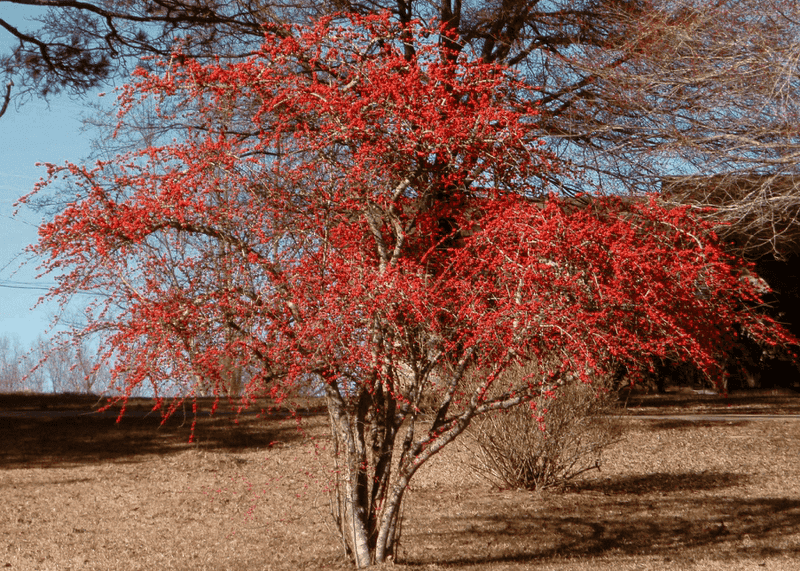
Most trees put on their best show in spring or summer, but Possumhaw Holly saves its spotlight moment for winter. Once the leaves drop in late fall, the branches become loaded with tiny, brilliant red or orange berries that stay on the tree for months.
On a gray January day in Texas, a Possumhaw Holly in full berry looks almost unreal, like someone decorated it on purpose.
This native holly typically grows between 7 and 15 feet tall, which keeps it well within the manageable range for most residential yards.
Its roots are not known for spreading aggressively near pavement, making it a solid choice for planting near sidewalks, borders, or garden paths.
The lighter canopy also means less competition for nearby plants and grass. Beyond the winter berry display, Possumhaw Holly provides value to wildlife throughout the year. Birds flock to the berries in winter when other food sources are scarce.
The dense branching also offers shelter and nesting spots for small birds during warmer months. Planting one near a window gives you a front-row seat to a lot of backyard bird activity.
Possumhaw Holly grows well in full sun to partial shade and tolerates a wide range of soil types, including clay and occasionally wet conditions. It is also quite drought-tolerant once established.
For the best berry production, plant at least one male plant nearby to pollinate female plants, since this species is dioecious. Most nurseries will label plants by sex, so just ask when you are shopping.
It is a low-maintenance native that earns its place in any Texas yard with very little effort required from you.
5. Eve’s Necklace
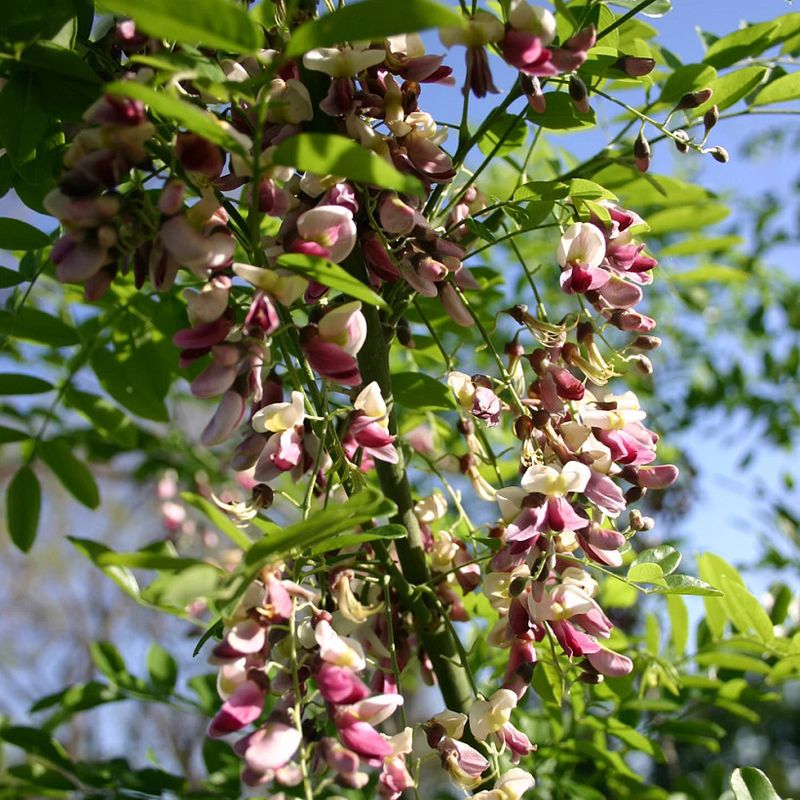
Not many people outside of Texas know about Eve’s Necklace, and that is honestly a shame. This native tree has a quiet charm that grows on you fast.
In spring, it produces hanging clusters of soft pink flowers that look delicate and smell faintly sweet. By fall, long black seed pods form in a shape that gave the tree its unforgettable name, and those pods rattle gently in the breeze.
Eve’s Necklace usually reaches between 10 and 25 feet tall, keeping it on the smaller end of the shade tree spectrum. That size makes it a smart fit for tighter spaces in the yard, especially areas close to walkways or outdoor seating where a giant tree canopy would feel out of scale.
Its root system is not particularly aggressive, which is great news for anyone worried about pavement damage.
Drought tolerance is one of this tree’s strongest selling points. Once established, Eve’s Necklace handles dry Texas summers without much supplemental watering.
It thrives in full sun and adapts well to the rocky, thin soils found across much of central Texas. You do not need rich garden soil or a complicated fertilizer routine to keep it happy.
The tree is also a host plant for certain native moth species, adding ecological value beyond its good looks. The filtered shade it provides is comfortable for sitting under without making the area feel dark or closed in.
For urban or suburban yards where space is at a premium, Eve’s Necklace offers a combination of beauty, drought toughness, and sidewalk-friendly roots that is hard to beat among Texas natives. Give it a try if you want something a little unexpected and genuinely rewarding.
6. Lacey Oak
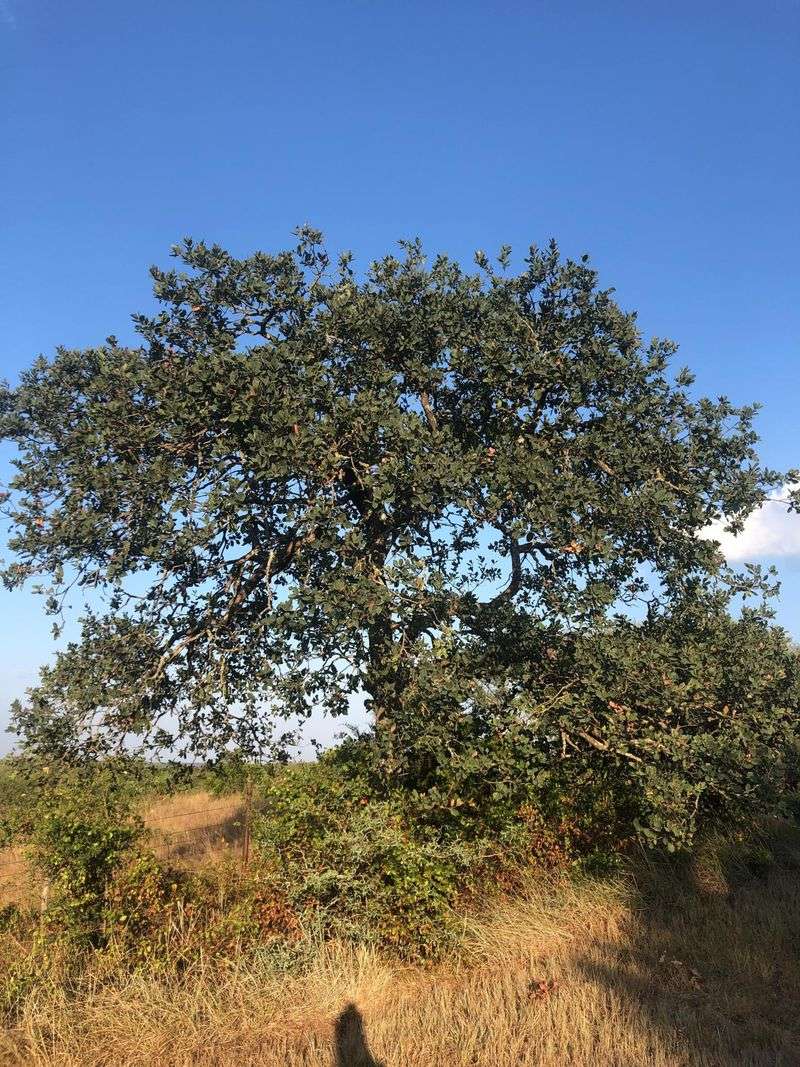
Lacey Oak might be the most underrated shade tree in all of Texas. It has a soft, blue-green leaf color that looks almost powdery in bright sunlight, giving it a cool, distinctive appearance that stands out from the typical green of most shade trees.
In fall, those leaves turn a range of salmon, peach, and orange tones that are genuinely beautiful and surprisingly showy for a smaller oak.
Compared to Live Oak or Texas Live Oak, Lacey Oak stays much more manageable in size, typically growing between 20 and 35 feet tall. That smaller profile makes it a realistic choice for yards where a full-sized oak would eventually overwhelm the space.
Its root system, while sturdy, does not have the same aggressive surface-rooting habit that causes sidewalk and driveway problems with larger oak species.
Lacey Oak is native to the Edwards Plateau region of Texas, which means it is built for rocky, shallow, well-drained soils. It handles drought conditions with remarkable ease once established and does not need a lot of fertilizer or soil amendments to thrive.
Full sun is where it performs best, and it rewards that sunlight with a full, rounded canopy that casts solid shade through the summer months.
Young Lacey Oaks do benefit from regular deep watering during their first two summers to help the root system anchor properly. After that, they are largely self-reliant.
The wood is strong and resistant to storm damage, which matters a lot in a state where severe thunderstorms are a regular summer event.
For anyone who loves the look of oaks but needs something smaller and less pavement-aggressive, Lacey Oak is the answer you have been looking for.