8 Herb Pairings Georgia Gardeners Should Avoid Around Rosemary
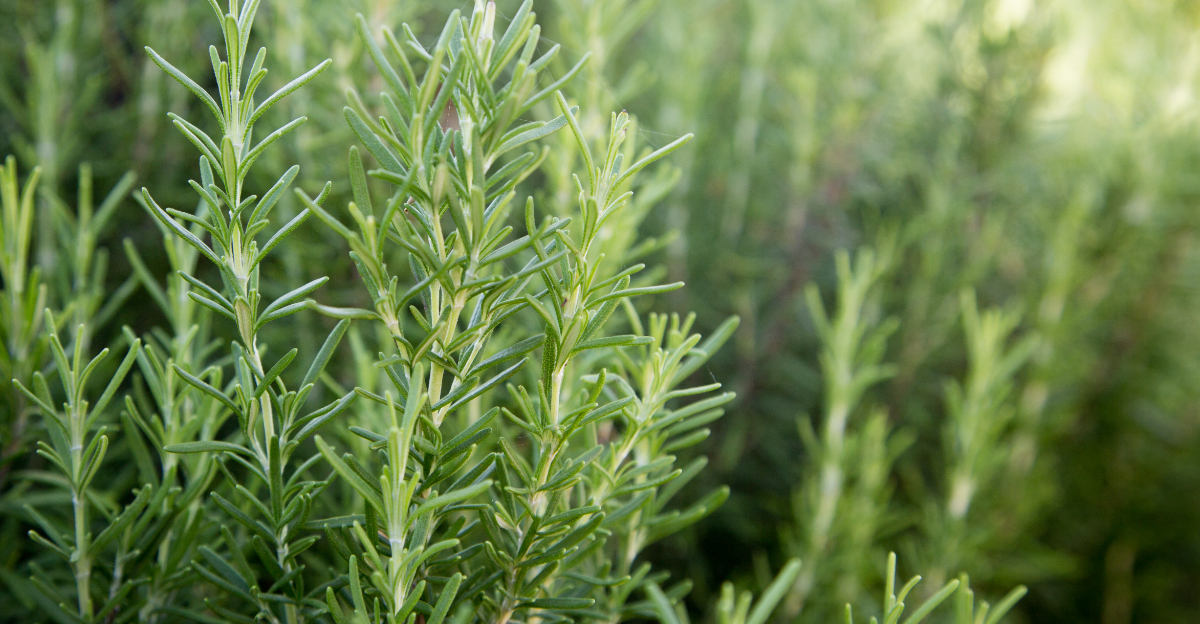
Rosemary usually seems easygoing in the garden until certain herbs get planted too close to it.
Plenty of Georgia gardeners end up confused when one plant suddenly struggles even though the watering and sunlight looked perfectly fine the whole time.
The problem often starts with herb pairings that sound good on paper but grow very differently once heat and humidity settle in. Rosemary likes conditions that can make nearby herbs unhappy surprisingly fast.
Some herbs compete too heavily around rosemary while others need completely different moisture levels to stay healthy.
That mismatch becomes a lot more noticeable once summer weather pushes everything harder in the garden.
1. Mint Spreads Fast And Overpowers Rosemary Roots
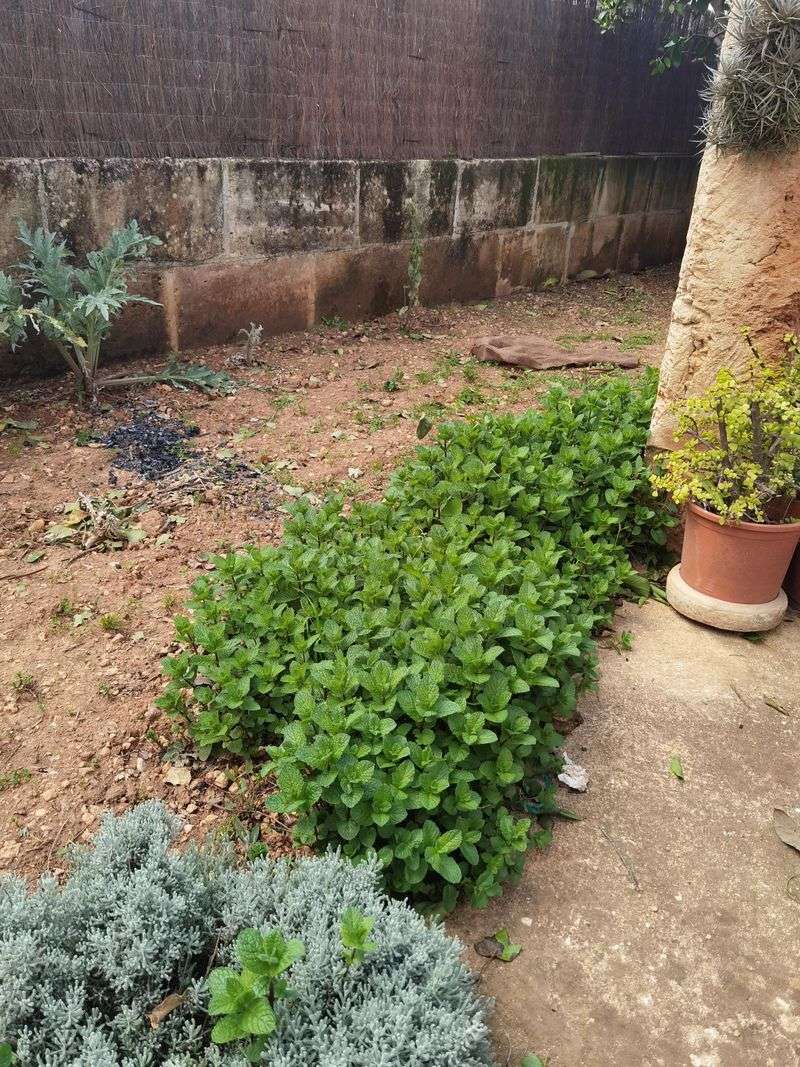
Mint is basically the uninvited guest that never leaves. Once it gets going in a Georgia garden, it spreads underground through runners called rhizomes, and it does not slow down for anything, including your carefully planted rosemary.
Rosemary grows at a measured, steady pace. Mint, on the other hand, can double its footprint within a single growing season.
In Georgia’s warm climate, that spread happens even faster because the soil stays warm well into fall, giving mint extra time to push outward.
When mint roots tangle with rosemary roots, competition for nutrients and water gets intense. Rosemary prefers lean, dry conditions, while mint constantly pulls moisture into the surrounding soil.
That moisture imbalance can stress rosemary over time, making it more vulnerable to root rot, especially during Georgia’s humid summer months.
Keeping mint in containers is the most practical solution most Georgia gardeners rely on. A buried pot or a raised planter with solid walls can contain the spread without sacrificing the herb entirely.
Just make sure the container sits at least two feet away from any rosemary plants.
Many gardeners do not notice the problem until rosemary starts looking thinner or weaker despite regular care and watering.
2. Basil Needs More Moisture Than Rosemary Tolerates
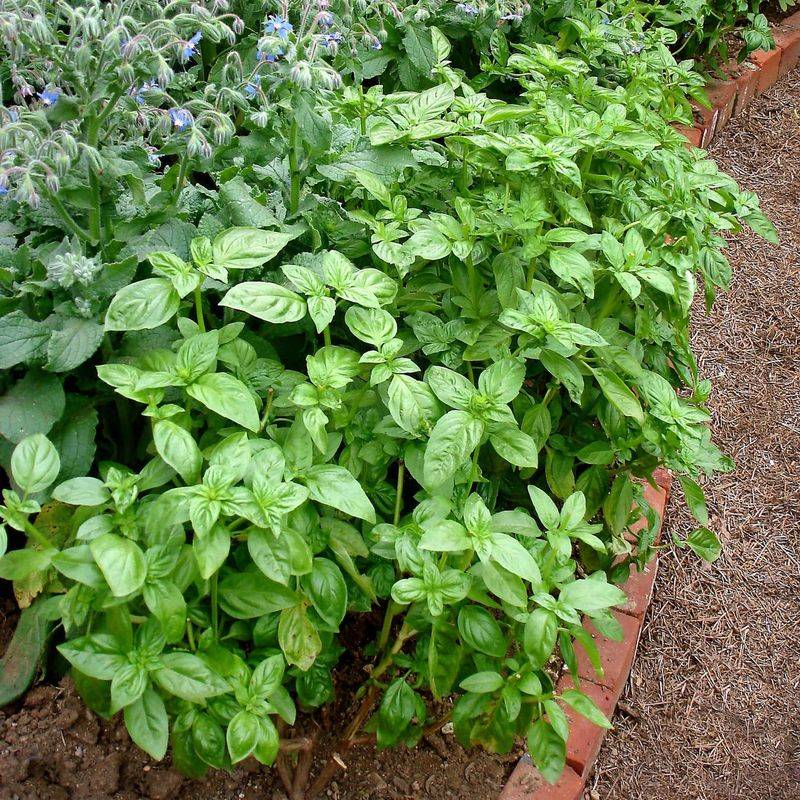
Basil and rosemary look like natural companions on a kitchen shelf, but out in a Georgia garden, they want completely different things from the soil. Basil is thirsty.
Rosemary is not. Trying to satisfy both at once usually means one of them struggles.
Basil needs consistently moist soil to stay lush and productive. In Georgia’s summer heat, that means watering frequently, sometimes every day during dry stretches.
Rosemary, however, does best when its soil dries out between waterings. Overwatering rosemary can lead to root rot, which is one of the most common reasons rosemary plants decline in Georgia gardens.
When you plant basil right next to rosemary, you face an impossible watering decision. Water enough for the basil and the rosemary gets too much.
Cut back for the rosemary and the basil wilts. Neither plant reaches its full potential under those conditions.
Soil drainage also becomes a problem. Basil benefits from soil amended with organic matter that retains some moisture.
Rosemary prefers sandy or gritty soil that drains quickly. Trying to create one soil type that works for both usually ends up being a poor compromise for each.
Your Georgia Garden Changes Every Week. Your Plan Should Too.
Gardening in Georgia changes quickly throughout the season. Every Friday you’ll receive a simple weekly plan showing exactly what to plant, prune, fertilize, harvest, and protect so you never miss the right timing.
Keeping basil in a separate raised bed or container allows you to water and amend the soil specifically for its needs.
Rosemary can then stay in its preferred dry, sunny spot without interference, which is exactly how Georgia gardeners get the best results from both herbs.
3. Cilantro Bolts Quickly In Dry Conditions
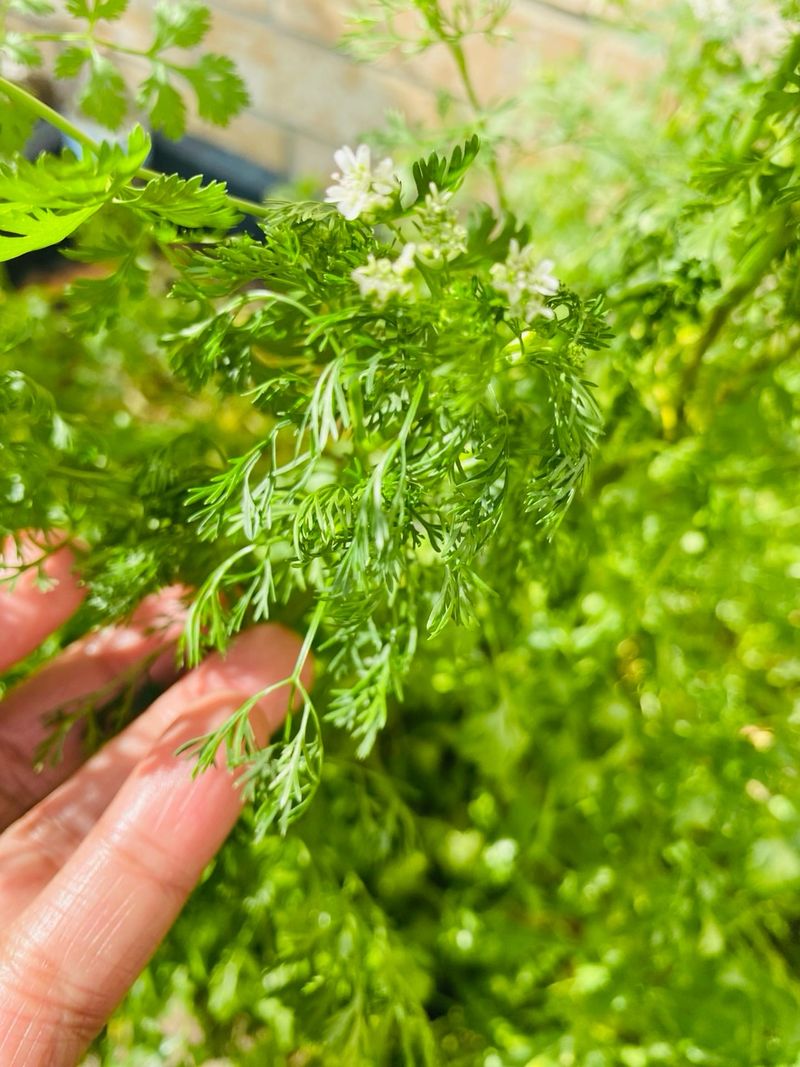
Cilantro has a reputation for being difficult, and in Georgia, that reputation is well earned. It bolts, meaning it rushes to flower and seed, faster than almost any other herb when temperatures climb.
Planting it near rosemary puts it in exactly the wrong spot.
Rosemary thrives in full sun with dry, well-drained soil. Those are the precise conditions that send cilantro into bolt mode almost immediately.
Once cilantro bolts, the leaves turn bitter and sparse, making the plant far less useful for cooking. Georgia summers, which arrive early and hit hard, accelerate this process significantly.
Beyond the bolting issue, cilantro and rosemary have conflicting water needs similar to basil. Cilantro prefers evenly moist soil, especially during its early growth stages.
Watering to keep cilantro happy in a shared bed will consistently oversaturate the rosemary’s root zone.
Cilantro also has a relatively short root system compared to rosemary’s deeper, woodier roots. When planted close together, cilantro can struggle to access nutrients because rosemary roots are already established in that layer of soil.
Cilantro ends up looking pale and stressed without an obvious cause.
Georgia gardeners who love cilantro typically have better luck growing it in early spring or late fall when temperatures are cooler. A separate container or shaded bed away from rosemary gives cilantro a fighting chance.
Rosemary stays healthier too when it is not surrounded by plants that need a completely different care routine.
4. Chives Can Crowd Slow Growing Rosemary
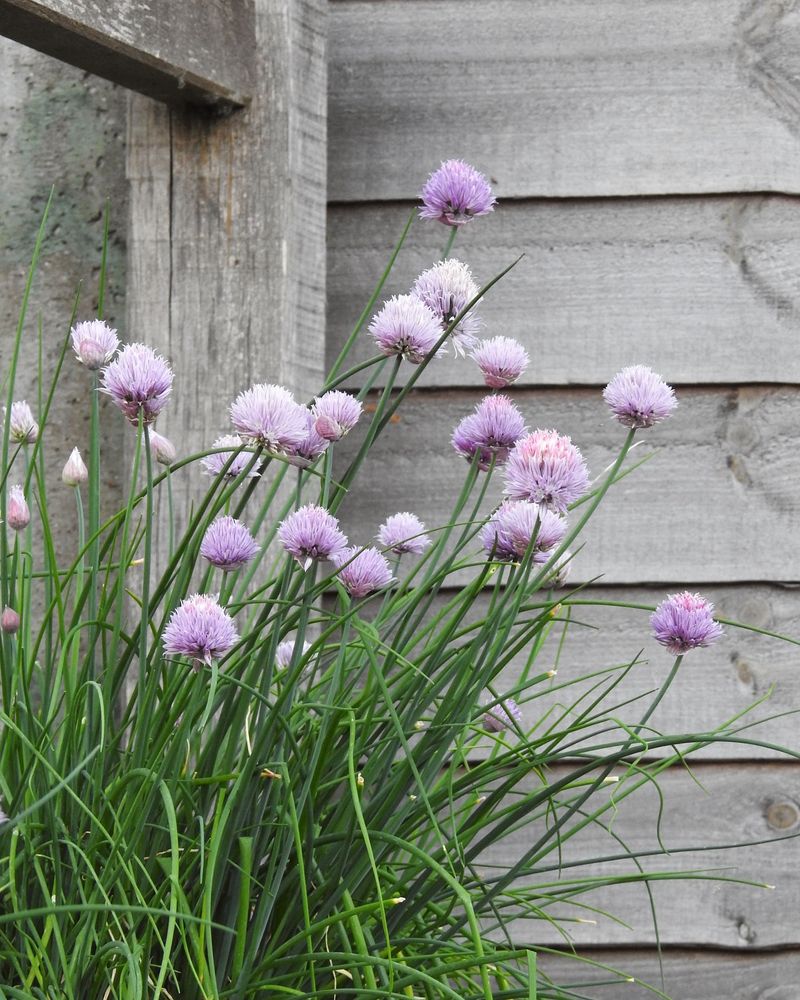
Chives are tougher competitors than most gardeners expect. They form tight, dense clumps that expand steadily each season, and when planted near slow-growing rosemary, that competition can become a real problem over time.
Rosemary is not a fast grower, especially in its first year. A young rosemary plant in Georgia needs space to establish its roots without fighting for soil real estate.
Chives spread outward from a central clump, and their fibrous root systems can occupy a surprising amount of ground. That leaves less room for rosemary to spread its own roots comfortably.
Above ground, chives can also create unwanted shade when they grow tall and flop over neighboring plants. Rosemary needs full, direct sun to develop its signature flavor and aromatic oils.
Even partial shading from a neighboring chive clump can reduce rosemary’s vigor over a growing season in Georgia’s intense summer heat.
Chives also reproduce through seeds if you allow them to flower. In Georgia’s long growing season, a single chive plant can scatter seeds widely before you notice.
Those seedlings can pop up throughout your herb bed, including right at the base of your rosemary, creating even more crowding over time.
Dividing chives regularly and keeping them in a separate container or bed section reduces these problems.
Rosemary grows much more confidently when it has open soil around its base and does not have to compete for light, water, or nutrients with a fast-establishing neighbor like chives.
5. Dill Can Shade Rosemary As It Grows Tall
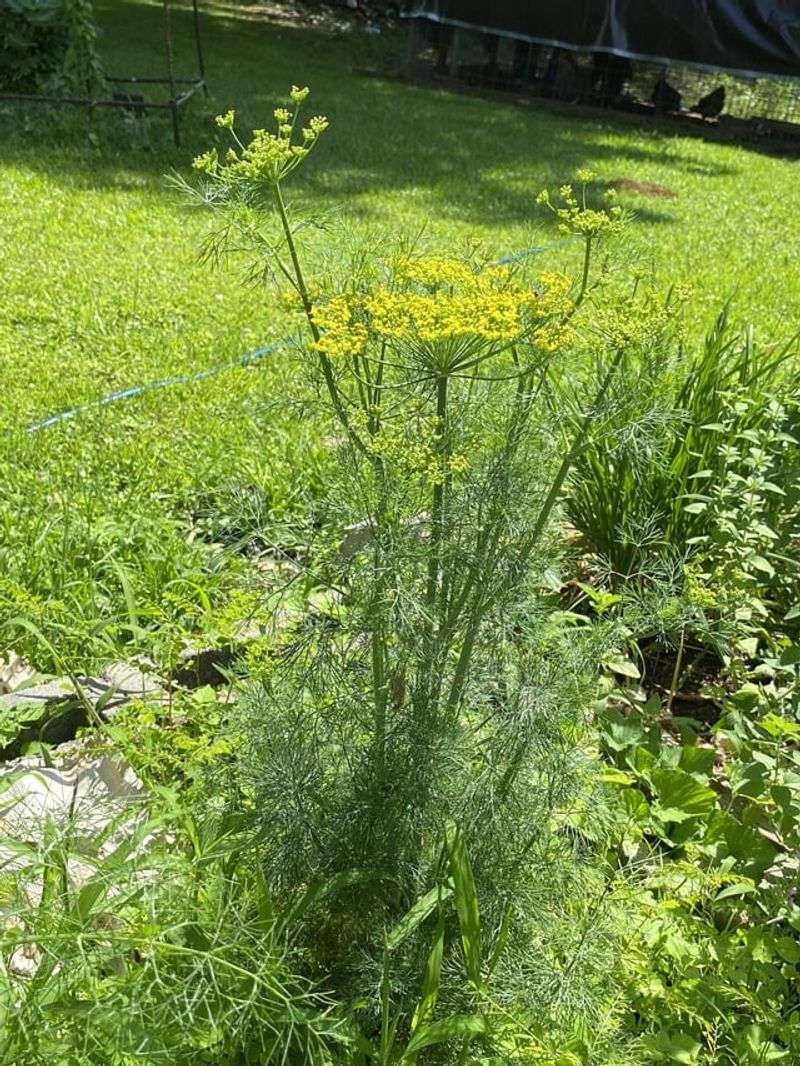
Dill shoots up fast. In a Georgia garden during late spring, a dill plant can reach three to four feet tall within just a few weeks of planting.
Rosemary, growing low and bushy, ends up sitting in the shadow of a plant that arrived in the same bed at the same time.
Rosemary needs at least six hours of direct sunlight daily to stay healthy and flavorful. When dill grows tall and feathery beside it, those long, lacy fronds can block a meaningful portion of that light.
Over several weeks, reduced sun exposure leads to leggy, less aromatic rosemary growth, which is exactly what Georgia gardeners want to avoid heading into summer.
While the research is not fully settled, many gardeners observe that rosemary planted near mature dill shows slower growth. Keeping them apart removes any potential negative interaction.
Water needs add another layer of conflict. Dill prefers moderate, consistent moisture during its growth phase.
Rosemary wants dry intervals between waterings. Planting them together forces a compromise that rarely satisfies either herb fully, particularly during Georgia’s unpredictable spring rain patterns.
Placing dill toward the back of a garden bed, away from shorter herbs like rosemary, solves the shading problem naturally.
Dill can grow freely to its full height without blocking sunlight from the herbs around it, and rosemary gets the open sky access it genuinely needs to perform well throughout the Georgia growing season.
6. Tarragon Needs Different Soil Conditions
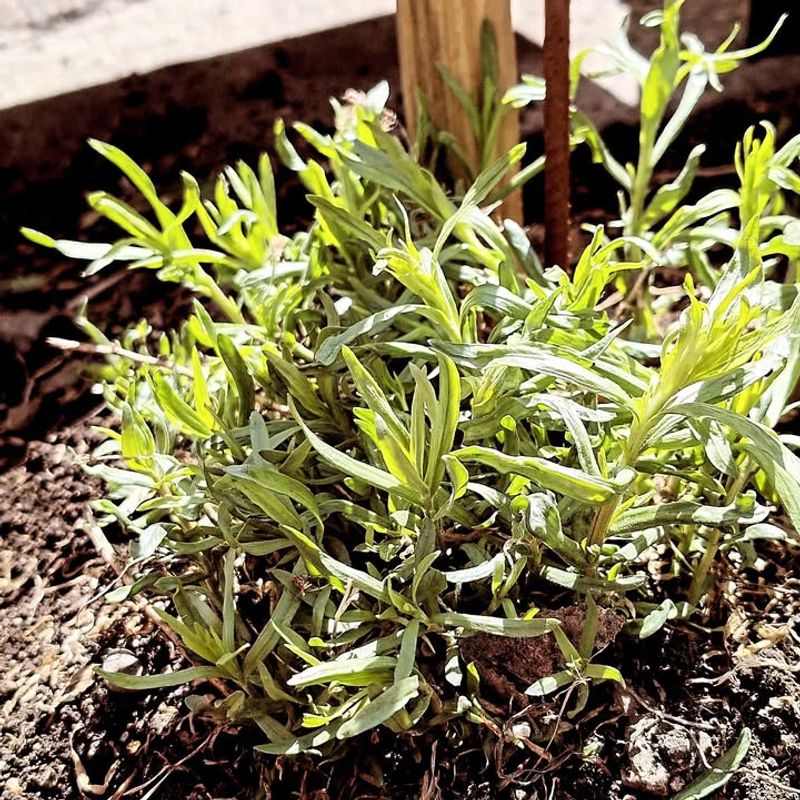
French tarragon is a finicky herb with specific needs that clash directly with what rosemary requires. Putting them in the same bed in Georgia often means one plant thrives while the other quietly struggles without obvious signs of what went wrong.
Tarragon prefers rich, fertile soil with decent organic matter and consistent moisture. Rosemary wants the opposite: lean, fast-draining, slightly sandy or gravelly soil that mimics its Mediterranean origins.
Amending a shared bed to satisfy tarragon will hold too much water around rosemary’s roots, raising the risk of root rot during Georgia’s humid summer months.
Soil pH is another point of conflict. Tarragon grows best in slightly acidic to neutral soil.
Rosemary mainly prefers fast-draining soil and tolerates slightly acidic soil reasonably well.
Georgia’s native soil already tends toward acidity, which means both herbs may need pH adjustments, but in opposite directions. Managing that in a shared space is unnecessarily complicated.
Over time, those rhizomes can encroach on rosemary’s root zone, creating competition that neither plant benefits from.
Growing tarragon in a separate container with tailored soil is the practical move for Georgia gardeners who want both herbs. Each plant gets exactly what it needs without compromise.
Rosemary stays in its preferred dry, lean environment, and tarragon gets the richer, moister conditions it needs to produce flavorful leaves consistently throughout the growing season.
7. Fennel Can Disrupt Nearby Herb Growth
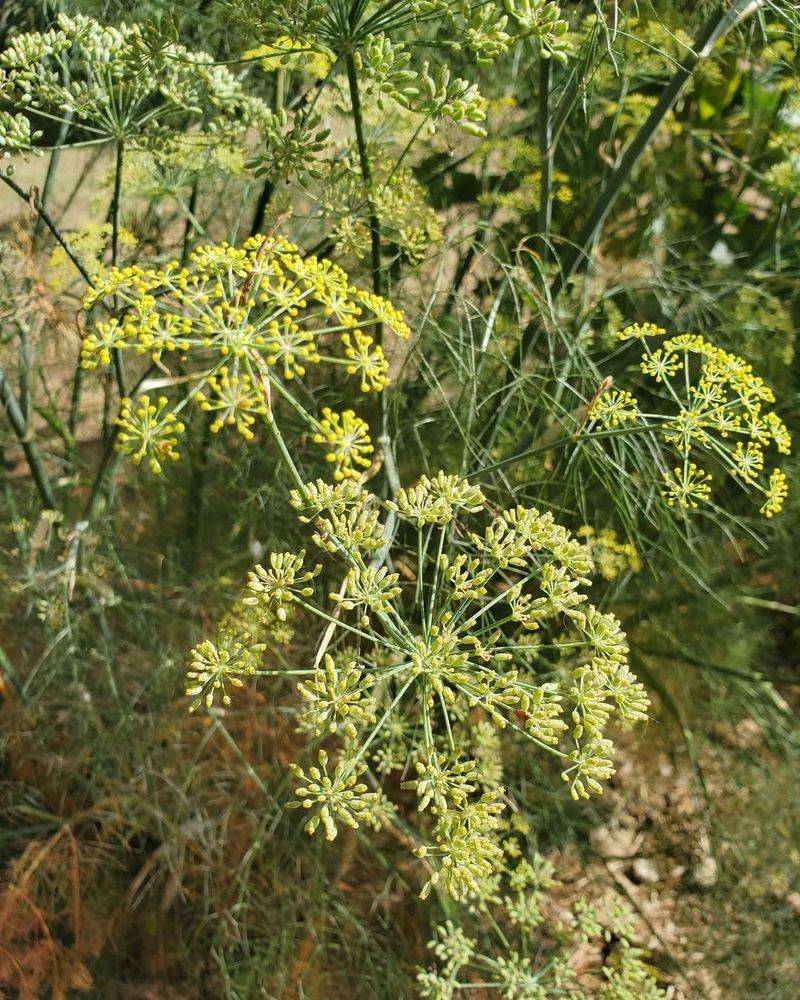
Fennel has a well-known reputation among experienced gardeners for being a poor neighbor to almost everything. Rosemary is no exception.
Planting fennel near rosemary in a Georgia garden is a combination that tends to produce disappointing results for both plants over time.
Fennel releases allelopathic compounds through its roots and into the surrounding soil. Allelopathy refers to the way certain plants chemically inhibit the growth of nearby plants.
Rosemary, while hardy, can show reduced vigor when grown in close proximity to fennel for an extended period. These effects build gradually, so the connection is easy to miss at first.
Fennel also grows tall and wide, similar to dill, and can create significant shade over shorter herbs. In Georgia’s full-sun gardens, rosemary depends on uninterrupted light to develop its aromatic oils and maintain dense, healthy growth.
A neighboring fennel plant can interrupt that light access during peak growing months.
Water preferences add yet another layer of friction. Fennel handles moderate moisture reasonably well but can tolerate drier conditions better than basil or cilantro.
Even so, fennel’s size and root depth mean it competes aggressively for soil resources in a way that puts rosemary at a disadvantage.
Fennel genuinely does better on its own. Many Georgia gardeners give it a dedicated corner of the garden or a large container where it can grow without affecting nearby plants.
Keeping it isolated protects rosemary and improves outcomes for every other herb growing in the same bed.
8. Parsley Prefers Wetter Soil Than Rosemary
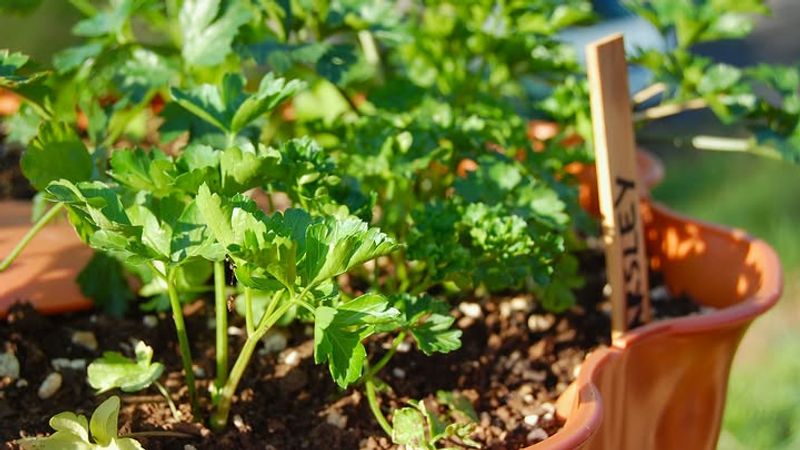
Parsley is one of the most popular herbs in Georgia home gardens, and for good reason. It is versatile, productive, and relatively easy to grow.
But putting it right next to rosemary creates a watering conflict that is hard to resolve without shortchanging one of the two plants.
Parsley needs consistently moist soil to produce its signature lush, leafy growth. In Georgia’s hot summers, that means watering deeply and regularly, especially during dry stretches in July and August.
Rosemary, grown under the same watering schedule, will receive far more moisture than its root system can comfortably handle.
Overwatered rosemary in Georgia’s warm, humid climate is at higher risk for fungal issues and root stress. The combination of heat, humidity, and excess soil moisture creates conditions that rosemary simply was not built to handle.
Even well-draining Georgia soil has its limits when you are watering frequently to keep parsley happy.
Parsley also benefits from soil enriched with compost and organic matter, which helps retain moisture between waterings. Rosemary, by contrast, performs best in leaner soil.
Mixing organic matter into a shared bed to satisfy parsley will increase water retention around rosemary’s roots in ways that can cause long-term stress.
Giving parsley its own raised bed or container with moisture-retentive soil is a straightforward solution that many Georgia gardeners already use.
Rosemary can stay in its preferred dry, sunny spot, and both herbs produce far better results when each gets the specific growing conditions it actually needs.