This Is The Best Native Plant To Grow Instead Of Hostas In Ohio
Hostas earn their place in Ohio shade gardens without much argument. Bold leaves, reliable returns every spring, and an easy temperament that suits almost any shaded bed.
For decades they have been the default answer to what to plant under trees or along north-facing borders. That default is worth questioning.
Not because hostas fail, but because a native alternative exists that does the same job and then some. It grows naturally in Ohio woodlands.
It brings ornamental foliage, spring blooms, and genuine value for local pollinators without demanding anything different from the soil or the gardener. It fits the same shady spots hostas occupy and most people have never tried it.
Every garden has its own needs, and this plant will not suit every situation. For gardeners open to a shade-friendly native with real ecological purpose, it is one of the most underused options growing right here in the state.
1. Meet American Alumroot, Ohio’s Native Hosta Alternative
Tucked into the shady edges of Ohio woodlands, American alumroot has been quietly growing for centuries. Known botanically as Heuchera americana, this native perennial belongs to the saxifrage family.
It is naturally found in forested areas, rocky slopes, and woodland borders across much of the eastern United States, including many parts of our state.
For gardeners who love the look of hostas but want something with deeper roots in local ecology, alumroot is a strong candidate.
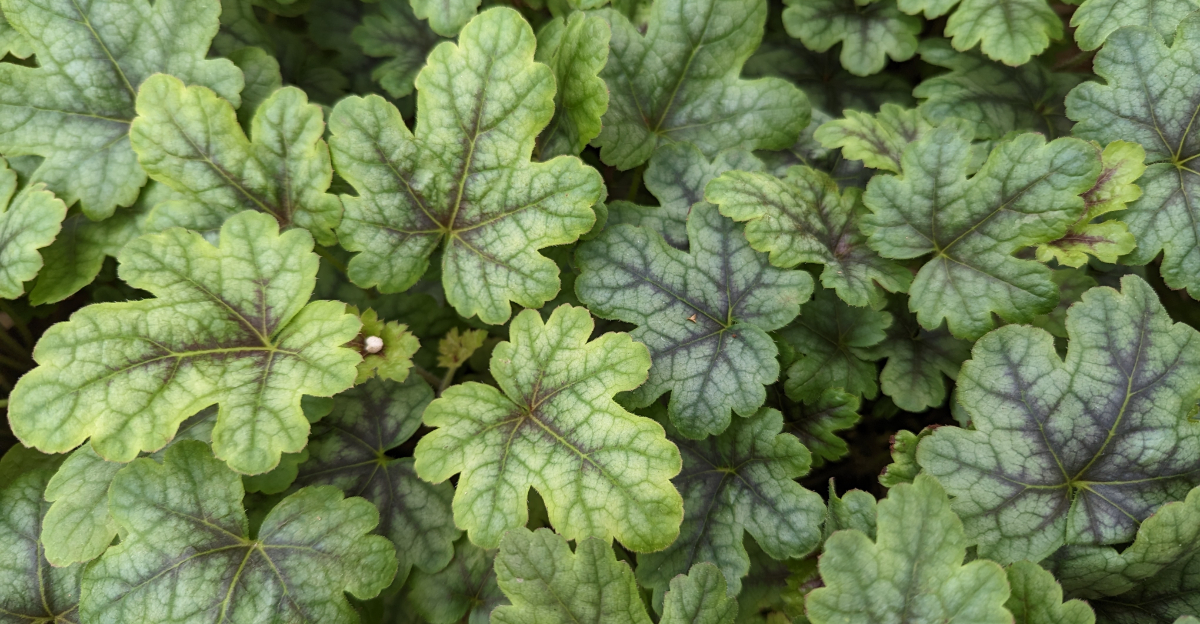
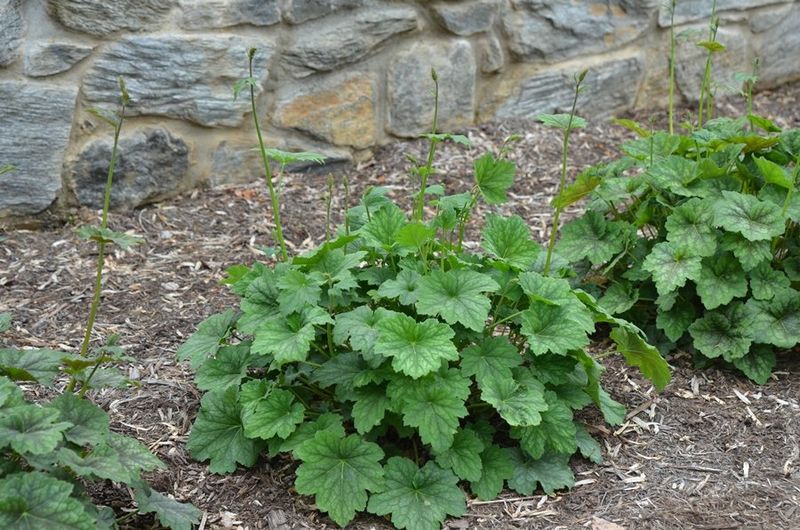
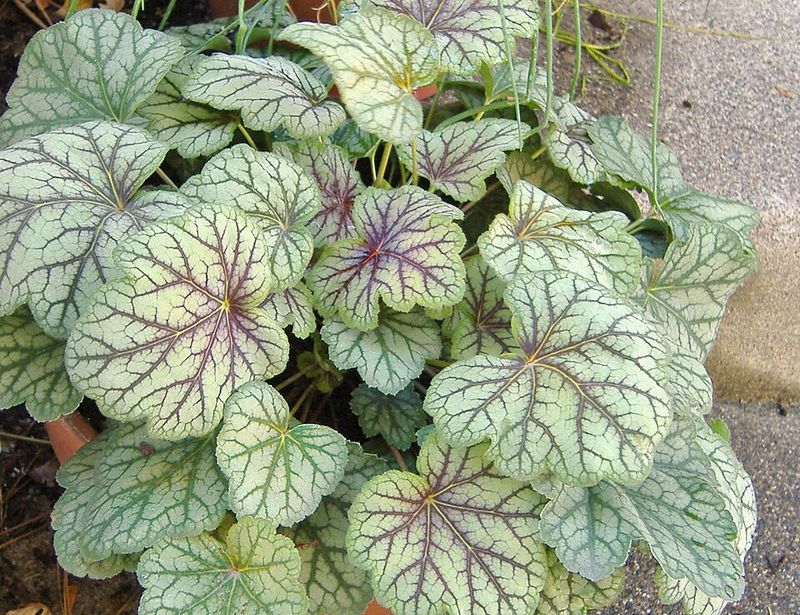
It forms a low, mounded clump of lobed, rounded leaves that can range from silvery green to rich bronze depending on the season and the cultivar.
The foliage is its main draw, much like a hosta, but it carries the added bonus of being native to this region.
Native plants like alumroot have evolved alongside local insects, birds, and soil organisms. That means they tend to fit into the local garden ecosystem more naturally than non-native ornamentals.
Alumroot is not a perfect copy of a hosta. The leaves are smaller and more intricately shaped, and the plant has a different texture and scale.
Think of it less as a swap and more as an upgrade for gardeners who want native character in their shade beds. It works especially well in part shade, where it gets a few hours of filtered or indirect light each day.
Full, deep shade can reduce its vigor and foliage color, so a spot with some dappled light is ideal.
Alumroot is cold-hardy across Ohio and returns reliably in suitable, well-drained sites. It is a dependable, low-maintenance perennial that earns its place in any native-focused shade garden.
2. Use Its Foliage To Brighten Shady Beds
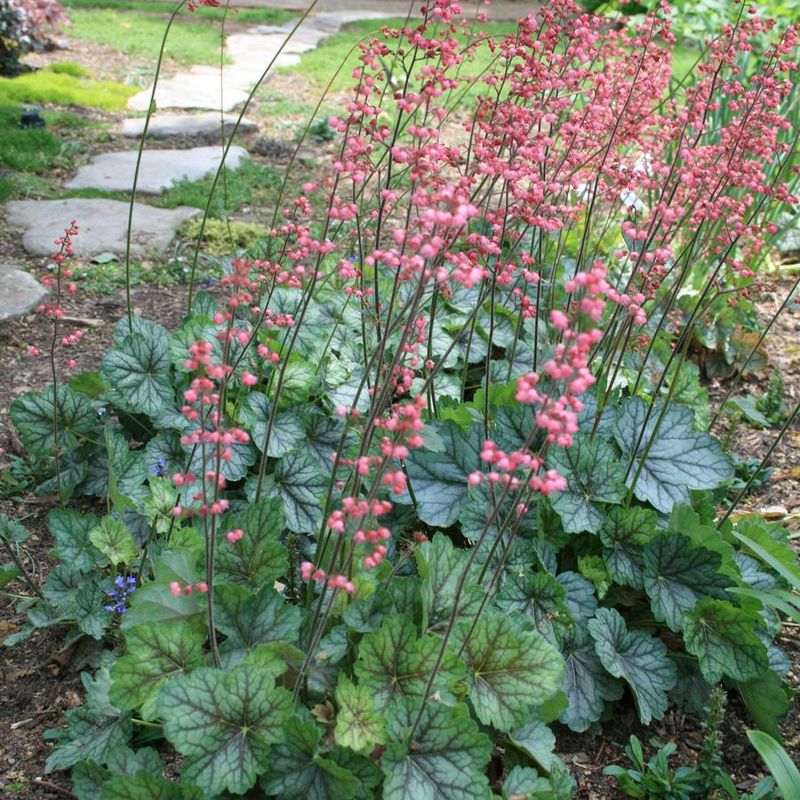
Foliage is the real reason most gardeners fall for alumroot. The leaves come in a surprisingly wide range of colors and patterns, from silvery pewter overlays to deep burgundy tones, depending on the selection.
Species plants tend toward green with subtle silver mottling, while many cultivars push the color further into bronze, purple, and reddish tones.
In a shaded bed, those colors do a lot of work. Light-colored leaves reflect what little sun reaches the ground, making a dark corner feel brighter and more inviting.
Your Ohio Garden Changes Every Week. Your Plan Should Too.
Gardening in Ohio changes quickly throughout the season. Every Friday you’ll receive a simple weekly plan showing exactly what to plant, prune, fertilize, harvest, and protect so you never miss the right timing.
Darker-leaved selections add richness and contrast when paired with lighter foliage plants nearby.
The leaf shape itself is worth appreciating. Alumroot leaves are rounded with scalloped or lobed edges, giving them a more refined, delicate texture compared to the broad, smooth surface of a hosta leaf.
That textural difference is actually a design asset. Planting alumroot near hostas or other bold-leaved plants creates contrast that makes both plants look better.
Part shade is the sweet spot for foliage performance. A spot under an open-branched tree, along a shaded foundation, or at the edge of a woodland bed works well.
It gives alumroot the filtered light it needs to hold strong color through the growing season. Morning sun with afternoon shade tends to work well in local gardens, especially during hot summers.
Avoid placing it in spots with harsh afternoon sun, which can bleach or scorch the leaves.
Deep, dry shade under dense evergreens is also less than ideal, as alumroot performs best with some light and reasonable moisture.
As a foliage plant, it stays attractive from spring through fall, giving the bed visual interest across most of the growing season without much effort from the gardener.
3. Let Spring Flowers Bring In Small Pollinators
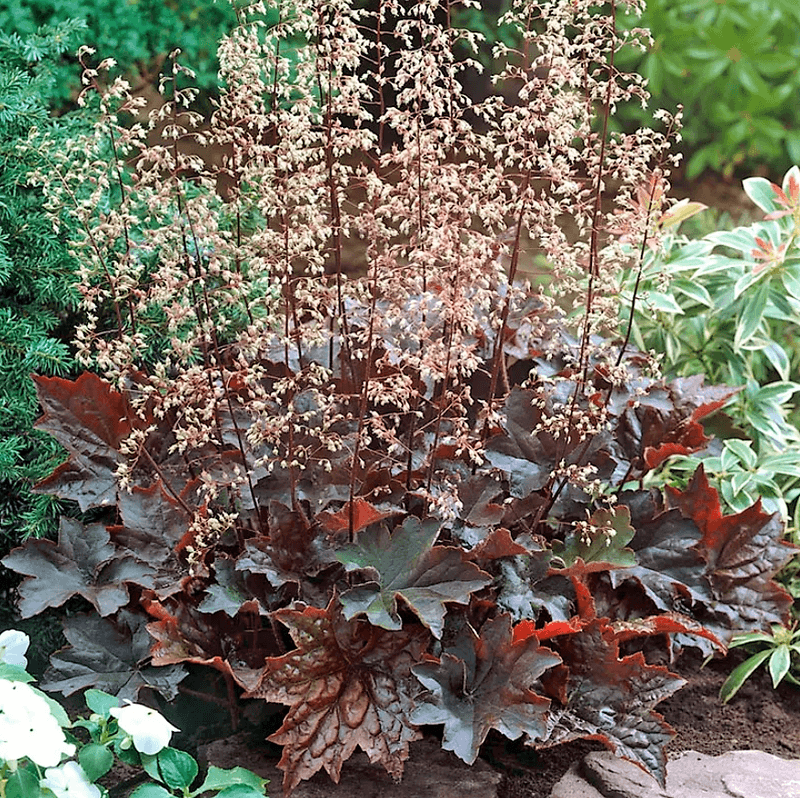
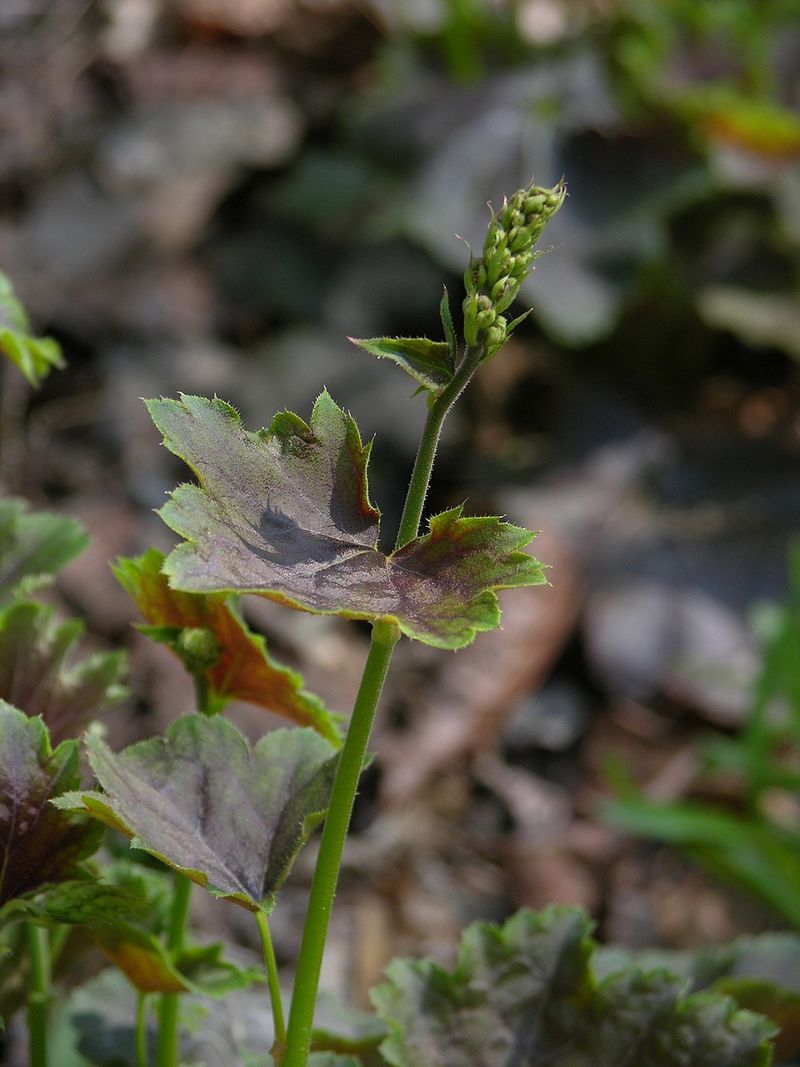
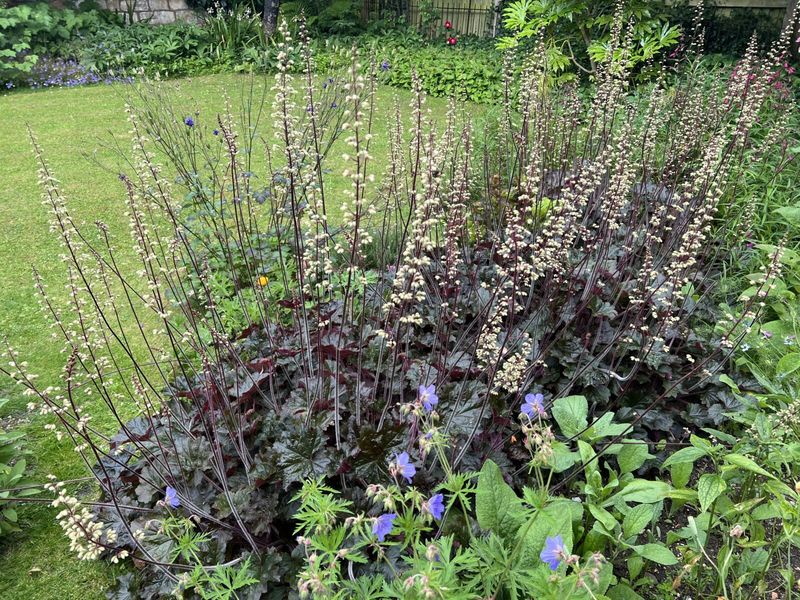
Every spring, alumroot sends up something hostas never offer: tall, wiry flower stalks covered in tiny bell-shaped blooms. The flowers are small and airy, not the kind of showy display that stops people in their tracks.
But that understated quality is part of what makes them interesting in a naturalistic garden.
The blooms typically appear from late spring into early summer, rising well above the foliage on slender stems that can reach 18 to 24 inches tall.
The flowers are usually greenish-white to pale cream, and they move gently in the breeze, adding a delicate, almost wild quality to the bed.
Small native bees are among the most frequent visitors to alumroot flowers. The blooms also attract other beneficial insects, including small wasps and flies that serve as natural pest controllers in the garden.
While alumroot is not the most powerful pollinator plant in a native garden, it adds a useful early-season resource when many other plants are not yet blooming.
Ruby-throated hummingbirds have also been observed visiting Heuchera flowers, drawn by the tubular shape and accessible nectar. Adding alumroot to a shaded border gives hummingbirds one more reason to pass through the yard during migration or nesting season.
After flowering, the stalks can be left in place for a while to provide minor seed interest, or trimmed back once they begin to look ragged. Removing spent stalks keeps the plant looking tidy without harming its overall health or next year’s bloom potential.
For gardeners who want their shade bed to do more than just look pretty, those spring flower stalks are a simple, low-key choice. They give back to the local insect community without adding a lot of extra work or fuss to the garden routine.
4. Plant It In Rich, Well-Drained Soil
Soil prep makes a real difference with alumroot. It performs best in rich, well-drained soil that holds some moisture without staying soggy.
In its natural woodland habitat, it grows in soil loaded with decomposed leaf matter, which creates a loose, fertile, well-aerated root zone. Replicating that in a home garden gives alumroot the best possible start.
Heavy clay soil, which is common across much of the state, can cause problems if it stays wet for long periods. Roots sitting in waterlogged soil are vulnerable to rot, especially during wet Ohio springs and winters.
Before planting, work several inches of compost or aged leaf mold into the planting area to improve drainage and add organic matter.
If your site has particularly poor drainage, try planting alumroot slightly higher than the surrounding soil level. Mounding the planting area by a couple of inches encourages water to drain away from the crown rather than pooling around it.
This simple adjustment can make a big difference in how well the plant establishes and persists over time.
Soil pH is another factor worth checking. Alumroot generally prefers a slightly acidic to neutral pH, roughly in the 6.0 to 7.0 range.
A basic soil test from your local OSU Extension office can tell you where your soil stands and whether lime or sulfur adjustments are needed before planting.
Once established, alumroot does not need constant fertilizing. A light top-dressing of compost each spring is usually enough to keep the soil healthy and the plant growing well.
Avoid high-nitrogen fertilizers, which can push leafy but weak growth.
Mulching around the plants with shredded leaves or wood chips helps retain moisture and moderate soil temperature. It also slowly feeds the soil as the mulch breaks down through the season.
5. Tuck It Along Borders And Woodland Edges
One of the best things about alumroot in a home landscape is how versatile it is as a design plant. Its low, mounded form and attractive foliage make it easy to place in a variety of shaded spots without much guesswork.
A few well-placed clusters can completely change the feel of a dull, bare bed.
Shaded borders along the north or east side of a house are classic spots for alumroot. It also works well under open-branched trees like serviceberry, redbud, or white oak, where filtered light reaches the ground.
Woodland edges, where the garden transitions from lawn to a more naturalistic planting, are another natural fit for this plant.
Along walkways and near patios, alumroot adds soft texture and seasonal foliage color without getting too large or blocking sight lines. Its compact size, typically 12 to 18 inches tall in leaf, makes it easy to work into tight spots or use as a front-of-border plant in front of taller natives.
Spacing plants about 18 inches apart gives each clump room to fill out without overcrowding. In a new planting, the bed may look a little sparse at first, but grouping three or more plants together creates a fuller, more intentional look right away.
Repeating the same plant in clusters of odd numbers, like three or five, is a classic design trick that creates rhythm and visual cohesion in a border.
Avoid planting alumroot in low spots where water collects after rain. Even a few hours of standing water can stress the roots.
A gentle slope or a raised bed edge gives the drainage it needs while still keeping it visible and accessible in the landscape.
Seasonal interest is another design bonus. The foliage often takes on richer color in fall, and the plant holds its leaves well into late autumn before going dormant.
6. Pair It With Other Native Shade Lovers
A single plant rarely makes a garden. Alumroot really shines when it is surrounded by other native plants that share its preference for shade, moisture, and rich woodland soil.
Building a layered native planting around it creates a bed that looks full, feels natural, and supports more garden life than a single-species planting ever could.
Foamflower, or Tiarella cordifolia, is one of the most natural companions for alumroot. Both plants are low-growing, shade-tolerant, and native to Ohio woodlands.
Foamflower adds frothy white spring blooms and spreads gently to fill gaps, while alumroot holds its mounded shape and provides contrasting leaf texture.
Wild ginger, Asarum canadense, is another excellent pairing. Its broad, heart-shaped leaves create a dense, low carpet that complements alumroot’s more upright mounded form.
Wild ginger spreads slowly, fills in bare soil, and suppresses weeds once established, making it a practical as well as attractive companion.
Woodland phlox, Jacob’s ladder, and native violets all work well in similar light and soil conditions. They add seasonal color through spring and early summer, which extends the visual interest of the bed beyond what foliage alone can provide.
Native sedges, particularly species like Carex pensylvanica, add fine texture and year-round structure to the planting.
Native ferns are excellent background or mid-border companions. Christmas fern and cinnamon fern both tolerate shade and add vertical texture that contrasts nicely with alumroot’s low mounds.
Together, these plants create a layered look that feels like a natural woodland floor rather than a traditional ornamental bed.
Before choosing companions, always match plants to your specific site conditions. Moisture levels, light intensity, and soil type vary from yard to yard.
Choosing plants suited to your actual conditions, rather than an ideal, gives the whole planting a much better chance of thriving together long-term.