Small Native North Carolina Trees That Provide Big Shade Without The Root Damage
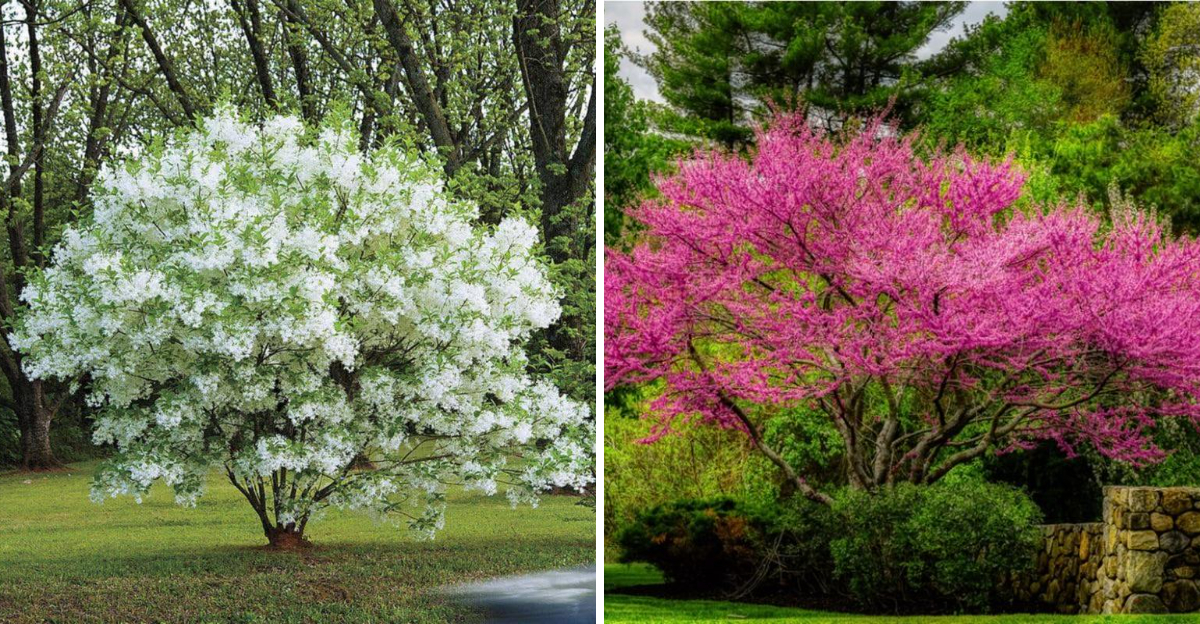
Let’s be real: there is nothing better than having a shady tree in your North Carolina yard when August shows up and the heat gets truly ridiculous. But then your brain starts asking uncomfortable questions.
What about the driveway? The patio? The foundation? Suddenly that dreamy shady tree starts feeling like a potential headache.
Good news though: smaller native trees can give you genuine, satisfying shade without turning your yard into a root damage situation. And honestly, native trees are kind of overachievers.
They support local wildlife, they need less maintenance once established, and they look like they genuinely belong in a North Carolina landscape because, well, they do.
Just keep in mind that smart planting placement matters just as much as the tree species you pick.
Location is everything, friends.
1. Flowering Dogwood Brings Shade With Native Charm
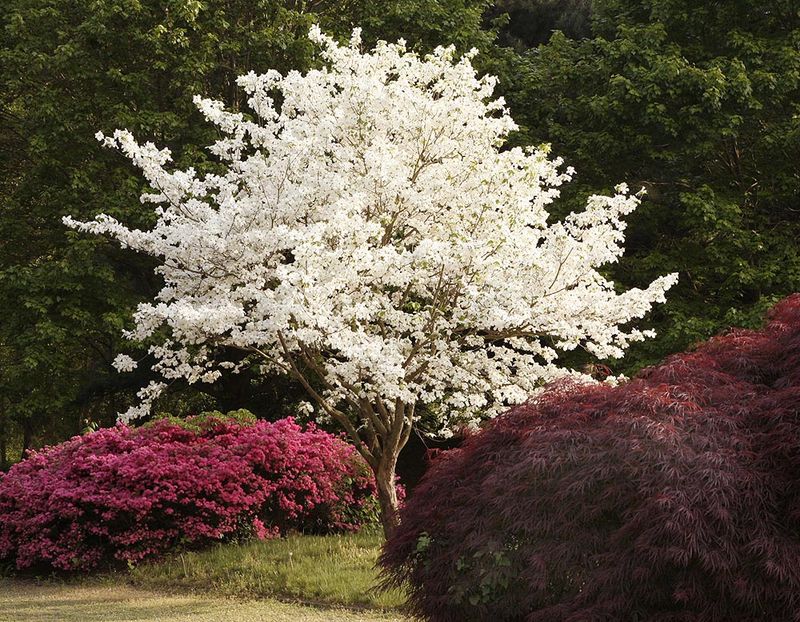
Few trees are as closely tied to the North Carolina landscape as the Flowering Dogwood, and for good reason.
With its wide, horizontal branching habit and low, spreading canopy, it casts the kind of filtered, dappled shade that feels genuinely comfortable on a warm afternoon.
The canopy typically spreads 15 to 25 feet wide at maturity, which makes it a real contributor to yard shade without needing a massive trunk or enormous root system to do it.
Flowering Dogwood generally reaches 15 to 30 feet tall, making it a manageable fit for front yards, side yards, and spaces near patios where a larger tree would feel out of scale.
Its roots tend to stay relatively shallow and fibrous rather than forming thick, aggressive surface roots, though giving it adequate space from pavement and structures still matters.
Planting it at least 10 to 15 feet from driveways, walks, and foundations is a reasonable starting point.
Beyond shade, this tree earns its keep through every season. Spring brings the iconic white or pink blooms that gardeners look forward to each year.
Summer offers dense green foliage and cooling canopy cover. Fall delivers brilliant red and burgundy color along with bright red berries that birds genuinely love.
Even in winter, the sculptural branching pattern holds visual interest. It prefers well-drained, slightly acidic soil and does best with some protection from harsh afternoon sun, especially in hotter parts of North Carolina.
2. Eastern Redbud Adds Color And Canopy
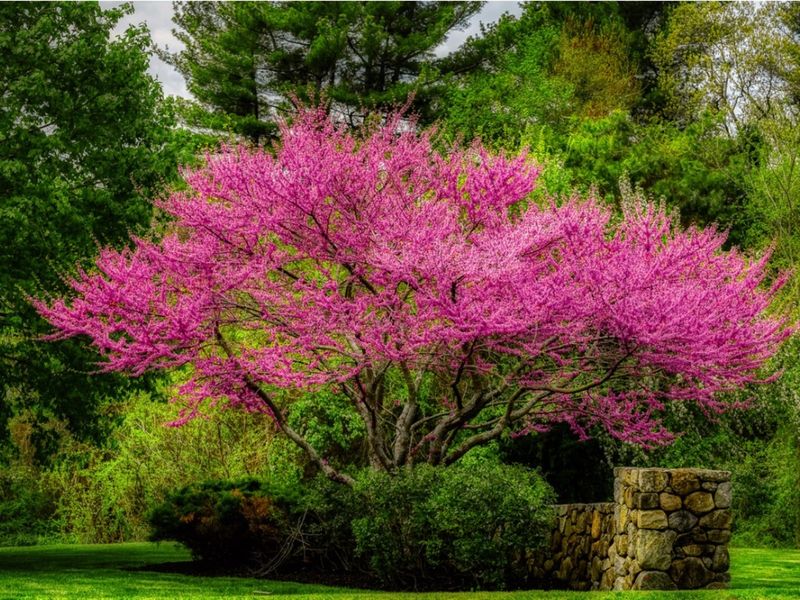
Walk through almost any North Carolina neighborhood in early spring and you will spot the Eastern Redbud lighting up the landscape before most other trees have even leafed out.
Those vivid magenta-pink blooms appear directly on the branches and trunk in late winter to early spring, creating a show that is genuinely hard to miss.
But once the blooms fade, the Eastern Redbud transitions into a solid shade producer with a rounded canopy that can spread 25 to 35 feet wide at maturity.
At a mature height of roughly 20 to 30 feet, the Eastern Redbud fits comfortably into smaller residential lots, driveway edges, and front yard plantings where a very large tree would feel overwhelming.
Its root system is generally considered moderate and manageable, but like any tree, it benefits from being planted with enough distance from driveways, foundations, and sidewalks to allow the roots to spread naturally without causing pressure on hardscape.
Your North Carolina Garden Changes Every Week. Your Plan Should Too.
Gardening in North Carolina changes quickly throughout the season. Every Friday you’ll receive a simple weekly plan showing exactly what to plant, prune, fertilize, harvest, and protect so you never miss the right timing.
The heart-shaped leaves that follow the spring blooms are a standout feature on their own, turning yellow in fall before dropping cleanly.
Eastern Redbud tolerates a range of soil conditions found across North Carolina, though it performs best in well-drained soil with decent moisture.
It handles partial shade reasonably well, which makes it flexible for spots that get morning sun and afternoon shade.
Gardeners also appreciate that it supports native bees and other pollinators, adding ecological value alongside its ornamental appeal throughout the growing season.
3. Fringetree Keeps Shade Soft And Elegant
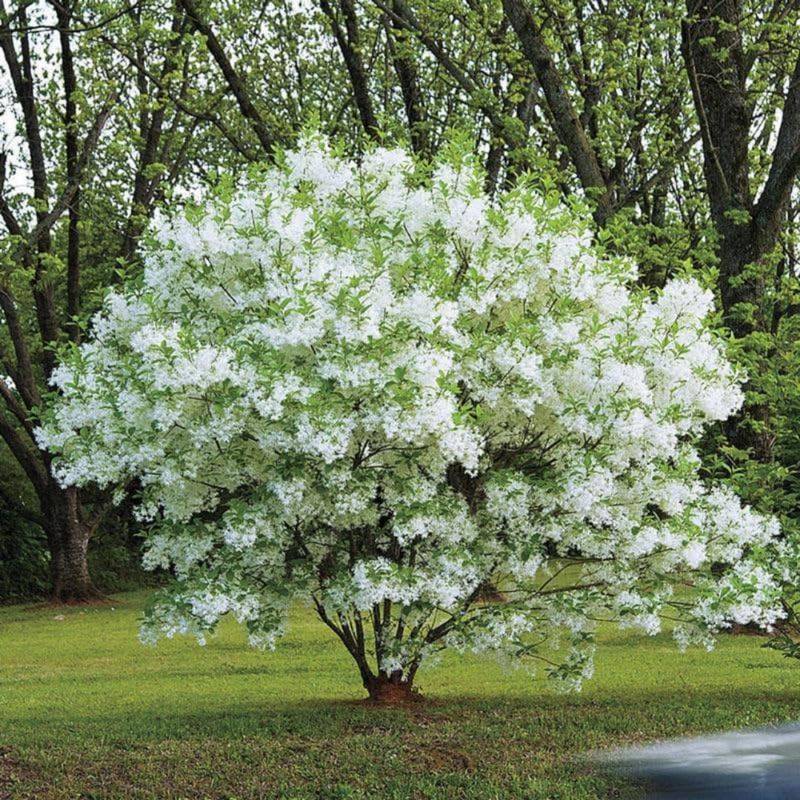
Soft, airy, and quietly spectacular in bloom, the Fringetree is one of those native trees that tends to stop people in their tracks when they first see it flowering in late spring.
The clusters of white, thread-like petals hang loosely from the branches, giving the whole tree a feathery, cloud-like appearance that feels almost too delicate to be real.
It blooms later than Dogwood and Redbud, which extends the native tree flowering season in a North Carolina yard nicely.
Fringetree typically matures at 12 to 20 feet tall with a spread of similar width, making it one of the more compact options on this list.
That smaller size translates into a root system that is generally less likely to cause problems near patios, walks, or structures, though proper planting distance still applies.
Its slow to moderate growth rate also means it takes time to develop a full canopy, so patience is part of the deal with this one.
The shade it casts is soft and filtered rather than deep and dense, which suits it well for spots near garden beds, seating areas, or front entries where you want cooling cover without blocking all light.
In fall, female trees produce dark blue-black berries that attract birds, adding another layer of wildlife value.
Fringetree adapts to a range of soil conditions across North Carolina, from moist lowland spots to drier upland sites, though it generally looks its best with consistent moisture and decent drainage throughout the growing season.
4. American Hornbeam Builds Shade In Smaller Spaces
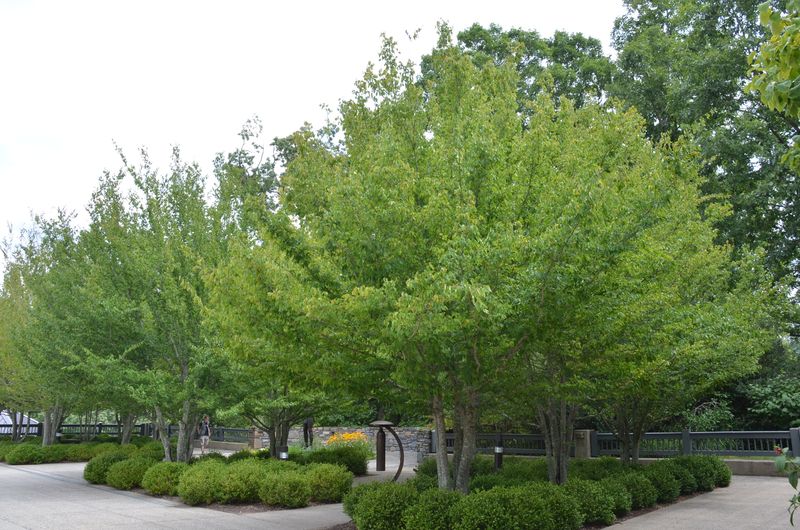
Tucked naturally into the understory of North Carolina forests, the American Hornbeam knows how to work with limited space and filtered light better than almost any other native tree.
Its smooth, gray, muscle-like bark is one of the most distinctive features of any tree in the eastern United States, making it an interesting focal point in a residential landscape even when it is not in bloom or in fall color.
Gardeners sometimes overlook it in favor of showier trees, but those who plant it rarely regret the choice.
American Hornbeam typically grows 20 to 30 feet tall with a similar spread, though many specimens in residential settings stay on the smaller end of that range.
It tends to grow slowly, which actually works in its favor near homes, driveways, and smaller yards where a fast-growing tree might outpace the available space before you realize it.
Its root system is generally fine-textured and not known for aggressive surface rooting, making it a reasonable option for planting near patios or garden edges with adequate spacing.
The shade it produces is genuine and useful, especially in smaller North Carolina yards where a large canopy tree simply will not fit. Fall color runs from yellow to orange and red depending on the season and site conditions.
It also produces interesting hop-like fruit clusters in late summer that add textural appeal.
American Hornbeam prefers moist, well-drained to occasionally wet soils and handles shade well, making it a strong fit for spots under taller trees or along the north side of a home.
5. Eastern Hop-Hornbeam Handles Tough Spots Well
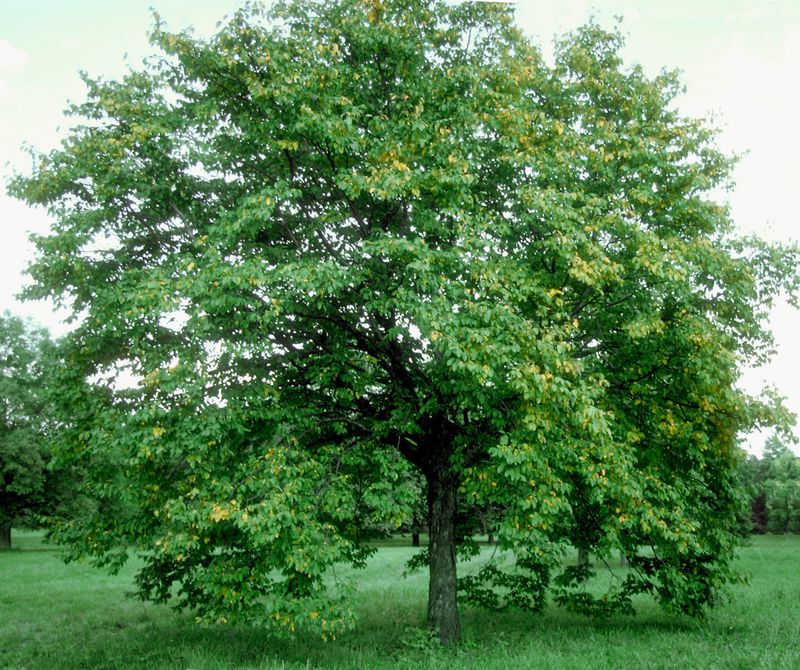
Dry, rocky, or shallow soils that seem to challenge most trees are exactly where Eastern Hop-Hornbeam tends to hold its ground.
Related to American Hornbeam but adapted to drier conditions, this native North Carolina tree fills a useful niche in residential landscapes where soil drainage is sharp, slopes are steep, or summer moisture is unreliable.
That kind of site tolerance is genuinely valuable when you are trying to get shade into a spot that other trees struggle to survive in.
At maturity, Eastern Hop-Hornbeam typically reaches 25 to 40 feet tall, though many residential specimens stay closer to the lower end of that range, especially in tougher growing conditions.
The canopy spreads moderately and provides real shade, though it is not as wide-spreading as some other trees on this list.
Its root system is generally non-aggressive and well-behaved, which makes it a thoughtful choice near driveways or walks when planted with appropriate distance from hardscape edges.
The common name comes from the papery, hop-like fruit clusters that hang from the branches in late summer and fall, adding a textural quality that most ornamental trees cannot match.
Bark has a shreddy, fine-grained texture that provides winter interest after the leaves drop.
Fall color tends toward soft yellow, which is quieter than some native trees but still pleasant.
Eastern Hop-Hornbeam grows slowly, so it rewards patience, but gardeners dealing with challenging dry or rocky spots will find it one of the more dependable native shade options available for those difficult areas of the yard.
6. Sourwood Brings Shade And Season-Long Interest
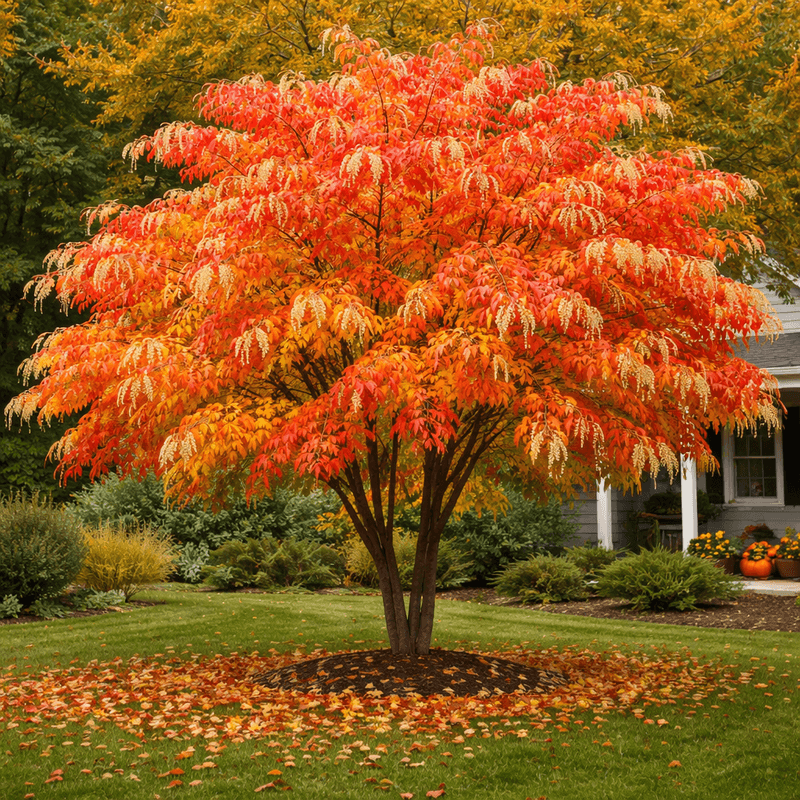
Ask any North Carolina beekeeper about Sourwood and you will get an enthusiastic response, because Sourwood honey is considered one of the finest honeys produced in the region.
That connection to pollinators and local food culture adds a layer of meaning to planting this native tree that goes beyond simple shade.
The long, drooping clusters of white flowers that appear in midsummer are genuinely beautiful and arrive at a time when most other flowering trees have already finished their show for the year.
Sourwood typically grows 20 to 30 feet tall with a relatively narrow, upright to slightly oval canopy, which makes it a practical fit for tighter planting spaces where a wide-spreading tree would crowd structures, walks, or neighboring plants.
The shade it casts is moderate rather than dense, but it is still meaningful on a hot afternoon, especially when the tree reaches its full size.
Root behavior is generally considered non-aggressive, though maintaining reasonable distance from foundations and paved surfaces remains good practice regardless of species.
Fall color is one of the best reasons to plant Sourwood in a North Carolina yard.
The foliage turns a deep, glossy red that rivals many trees far more commonly planted for fall interest, and it often colors up earlier than surrounding trees, extending the visual season nicely.
The persistent dried seed capsules add winter texture after leaf drop. Sourwood prefers well-drained, acidic soil and tends to perform best in full sun to partial shade, conditions that are reasonably easy to find across much of North Carolina.