Most New Jersey Homeowners Mistake Grubs For Drought And Here’s Why
One week your lawn looked great, and now it looks like it gave up on life.
Brown patches, crunchy grass, and a sinking feeling that summer just won your yard.
Before you drag out the hose and start watering everything in sight, stop, because you might be solving the wrong problem entirely.
Here is what most New Jersey homeowners get wrong.
Grub damage and drought stress look almost identical from where you are standing.
Same brown patches, same sad-looking grass, same urge to blame the July heat.
But water a grub-infested lawn all summer and you will not save it, you will just have a very hydrated disaster on your hands.
The fix depends entirely on the diagnosis.
Keep reading and you will know exactly what you are dealing with before the day is out.
Why This Mistake Happens So Often
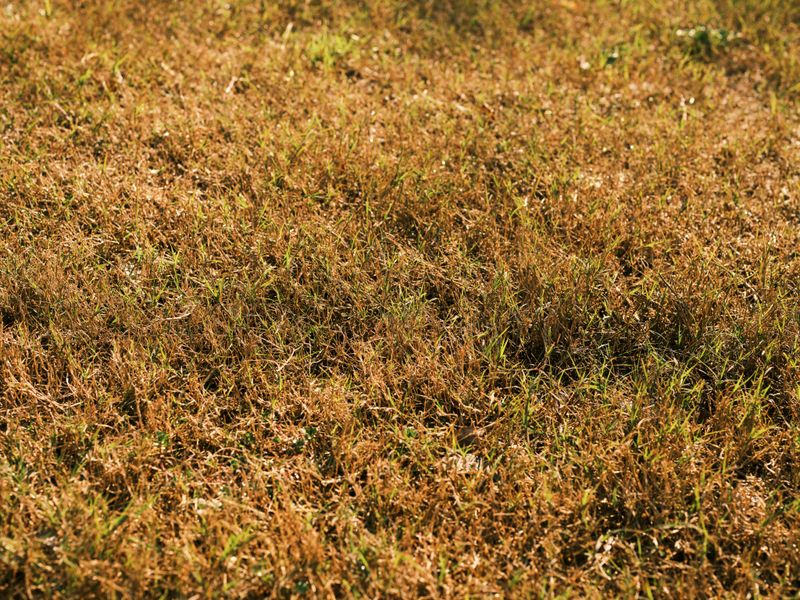
Brown grass is one of those problems that looks the same no matter what caused it.
A lawn that is bone dry and a lawn being chewed underground both turn the same shade of tan.
And that is where the confusion starts.
The confusion is not a sign of carelessness, it is a sign that grubs are genuinely sneaky.
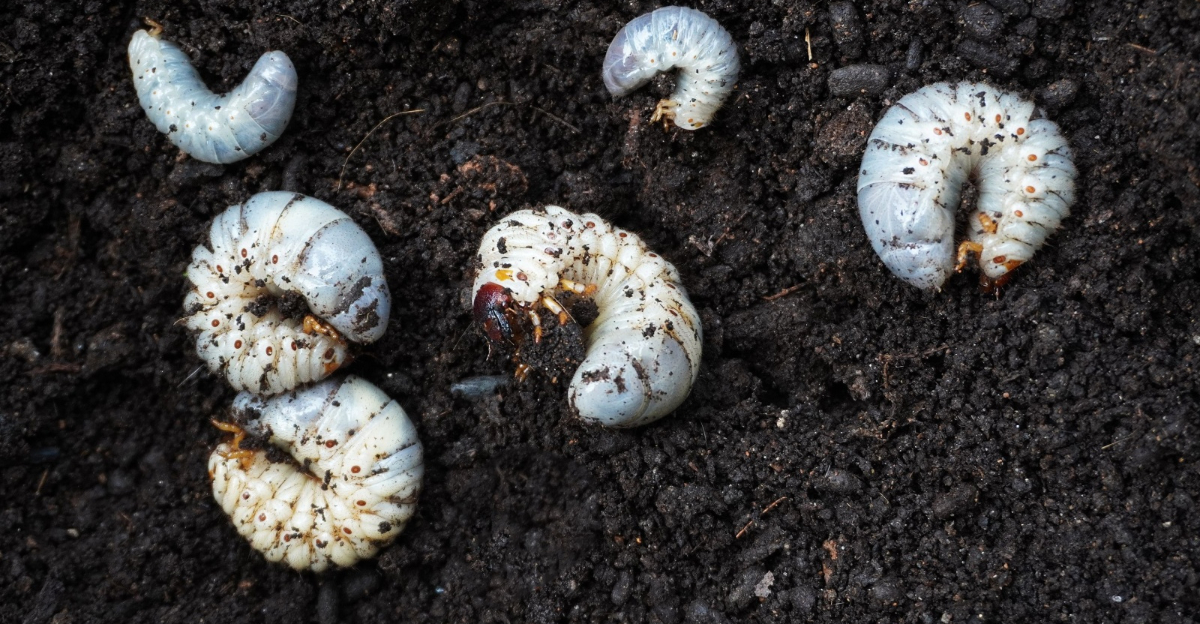
Grubs feed on grass roots, which means all the damage happens underground where nobody can see it.
By the time the surface shows symptoms, the roots are already gone.
Drought does the same visual trick from the opposite direction, cutting off water access so the blades shrivel from the top down.
New Jersey summers do not help matters either.
Heat waves and dry spells hit right around the same time grubs are most active, usually late July through September.
The hose feels like the right answer.
It is usually the wrong one.
How A Thirsty Lawn Gives Itself Away
Drought stress has a signature look, and once you know it, you will spot it from across the yard.
The browning tends to spread evenly across the whole lawn rather than showing up in random, irregular patches.
If your entire front yard looks like a wheat field, drought is a strong candidate.
One of the clearest signs is how the grass blades respond to foot traffic.
When a lawn is drought-stressed, footprints stay visible for a long time because the blades lack the moisture to spring back up.
Try walking across your lawn in the morning and look back at your path.
If the impressions linger for more than a minute, the grass is telling you it is thirsty.
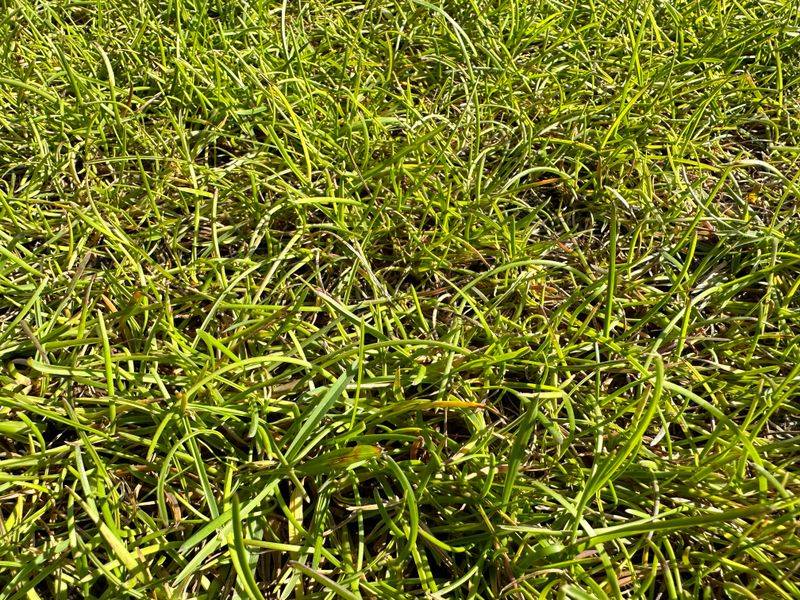
Drought-stressed grass also tends to curl lengthwise, almost like a tiny taco shell.
The color is usually a uniform straw-yellow rather than a patchy mix of green and dead zones.
Another clue is that the soil beneath drought-stressed grass tends to feel firm and dry to the touch.
Pull back a small section of turf and you will see the roots are still intact, just dry and struggling.
If the roots are still there, you are not too late.
Your New Jersey Garden Changes Every Week. Your Plan Should Too.
Gardening in New Jersey changes quickly throughout the season. Every Friday you’ll receive a simple weekly plan showing exactly what to plant, prune, fertilize, harvest, and protect so you never miss the right timing.
That is the detail that matters most.
How To Spot Grub Damage Before It Spreads
Grubs leave clues, and once you know what they are, the lawn basically diagnoses itself.
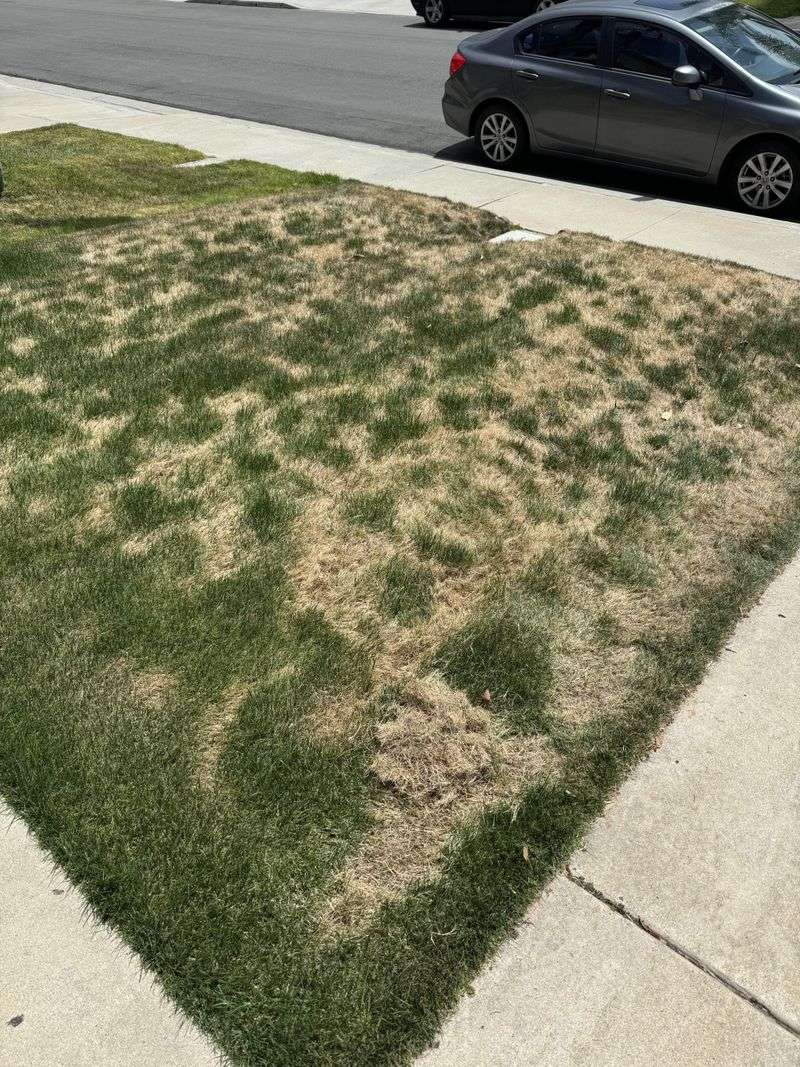
Instead of an even browning across the whole yard, grub-damaged lawns show up in irregular, random patches that look almost like someone dropped a series of dead islands into otherwise healthy grass.
The contrast between green and brown is often sharp and strange-looking.
Here is the part that should stop you in your tracks: the dead patches in a grub-infested lawn will feel spongy or loose underfoot.
That is because the roots holding the turf down are gone.
In severe cases, you can literally roll back the dead turf like a piece of carpet.
No healthy lawn does that.
Grubs also attract attention from above ground in ways drought never does.
Skunks, moles, raccoons, and crows will dig aggressively into your lawn searching for a meal.
If you are waking up to fresh holes and torn-up turf every morning, something underground is drawing them in.
Birds pecking at the same spots repeatedly is another red flag most homeowners overlook entirely.
At that point, the lawn is not asking for water.
It is asking for help.
Pull Up A Patch And You Will Have Your Answer
Forget expensive tools and complicated soil tests for a moment.
There is a two-second check that will tell you almost everything you need to know, and it requires nothing but your hands.
Grab a fistful of brown grass and pull upward with steady pressure.
Healthy grass, even drought-stressed healthy grass, will resist your pull.
The roots are still attached to the soil and they hold firm.
You might get a few blades but the turf stays put.
That resistance is your first clue that drought is the more likely culprit.
Now try the same test on a suspicious brown patch.
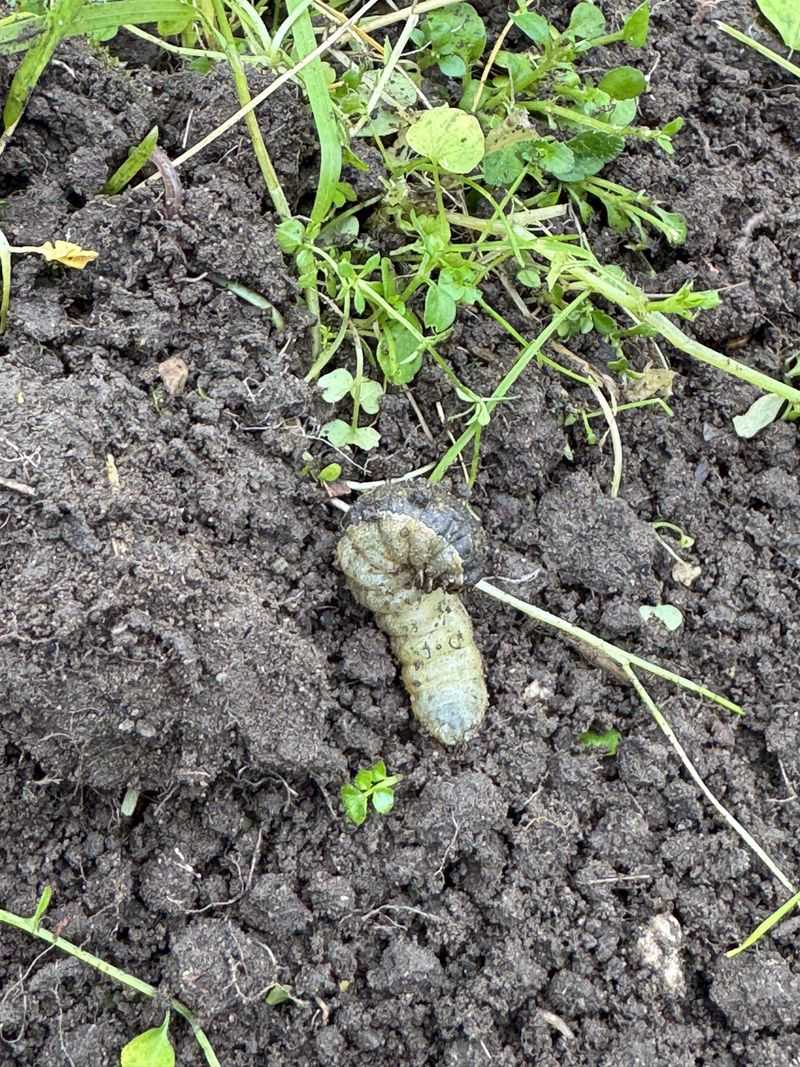
If the turf peels back like a loose rug with almost no effort, grubs have almost certainly eaten through the root system below.
There is nothing anchoring the grass to the earth anymore.
Peel back that section and look directly at the exposed soil.
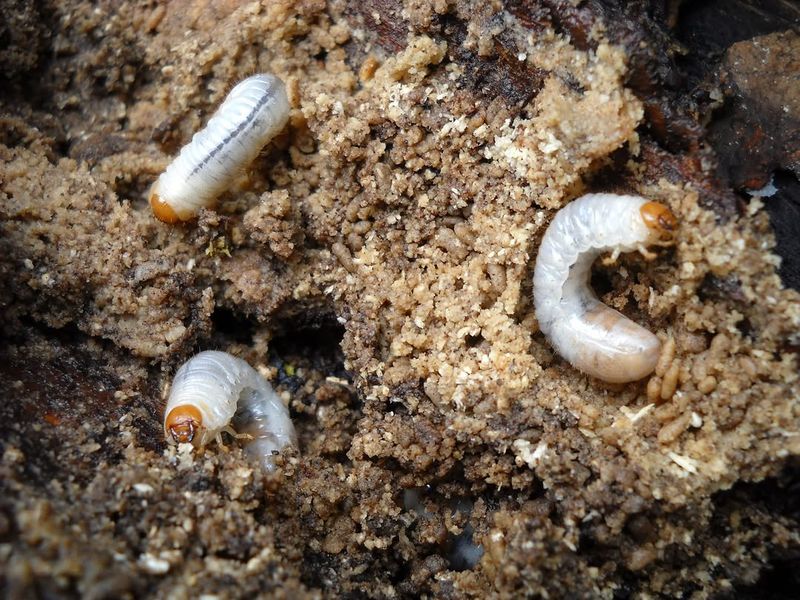
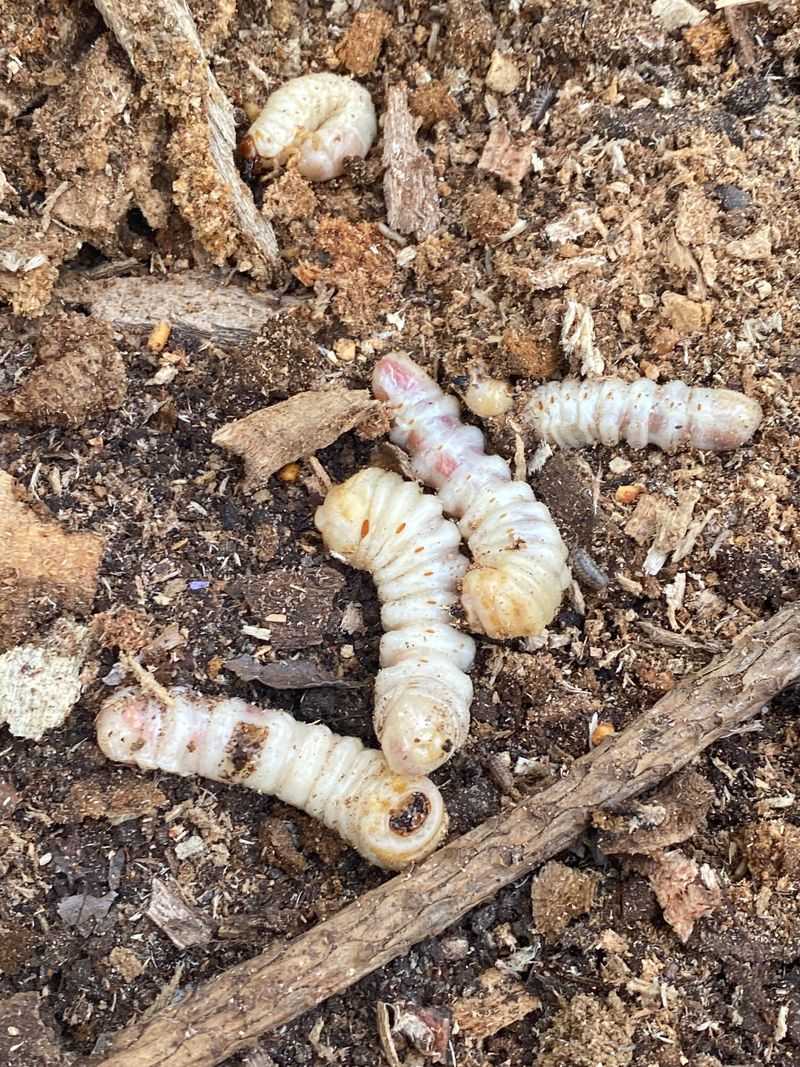
Count the grubs you see in a one-square-foot area.
Finding six or more in that space is considered a damaging infestation by most turf specialists.
Finding zero means drought is far more likely the problem.
If it is good enough for the pros, it is good enough for a Saturday morning in your backyard.
When Grubs Are Most Active In New Jersey
Grubs do not cause damage on your schedule, they cause it on theirs.
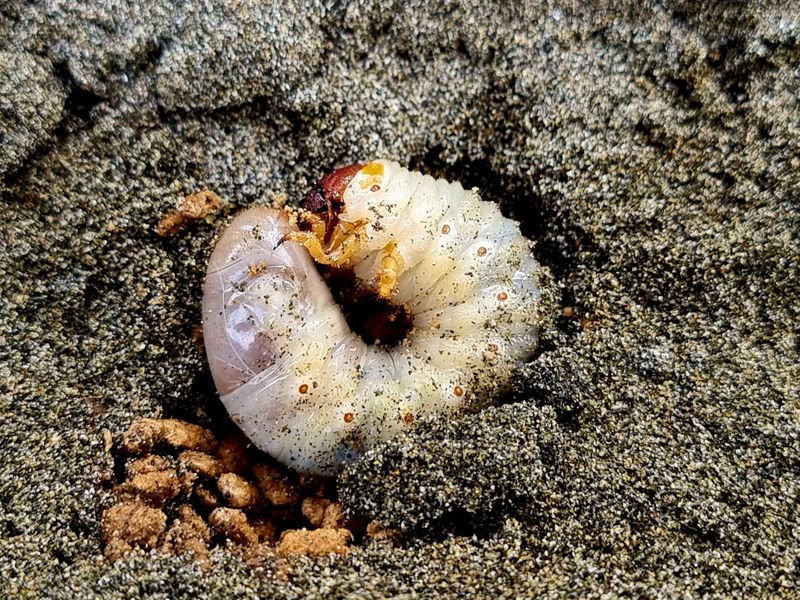
In New Jersey, Japanese beetle grubs are the most common cause of grub damage in home lawns.
They also happen to follow a schedule you can plan around.
Adult beetles lay eggs in the soil during late June and July, often choosing moist, well-irrigated lawns.
Those eggs hatch in late July and August, releasing tiny larvae that immediately begin feeding on grass roots.
This is the most destructive phase, and it coincides almost perfectly with summer heat and potential dry spells.
That overlap is exactly why so many people assume drought is to blame when their lawn starts declining in August.
By mid-October, grubs burrow deeper into the soil to escape the cold and go dormant for winter.
They return to feeding briefly in spring before transforming into adult beetles.
The fall feeding window is actually a second opportunity to catch and address an infestation before winter sets in.
If your lawn looked rough in August and never recovered by October, grubs may have had a second meal at your lawn’s expense.
Knowing this annual rhythm puts you ahead of the problem before it even starts showing up on the surface.
What To Do If It’s Drought
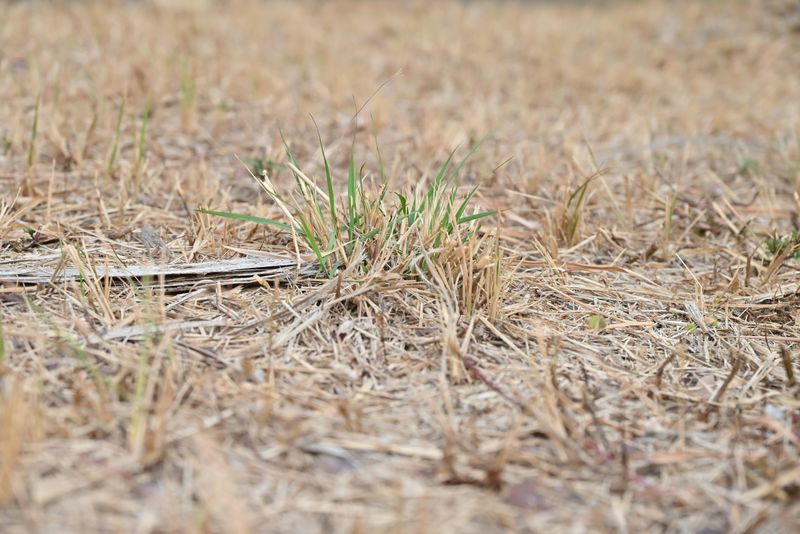
Good news: drought-stressed grass is one of the most forgiving problems a lawn can have.
Most cool-season grasses found in New Jersey, like tall fescue and Kentucky bluegrass, go dormant during heat and dryness as a survival strategy.
That brown color is not a sign of permanent damage, it is a temporary pause.
The most effective response is deep, infrequent watering rather than light daily sprinkles.
Aim for about one inch of water per week, applied in two sessions.
Watering early in the morning, ideally before 10 a.m., gives the moisture time to soak in before the heat evaporates it.
Shallow watering trains roots to stay near the surface, making the lawn more vulnerable next time.
Avoid fertilizing a drought-stressed lawn.
Pushing growth when the grass is already struggling adds unnecessary stress and can cause more harm than help.
Raise your mower height to at least three and a half inches so the longer blades shade the soil and reduce moisture loss.
With consistent deep watering, most dormant lawns begin showing signs of recovery within a few weeks.
The timeline looks different for every yard.
A drought stressed lawn is not gone.
It is just waiting for you to show up.
What To Do If It’s Grubs
Unlike drought recovery, grub control has a window and missing it means waiting a full year to try again.
If you confirmed an infestation through the tug test and a head count, you have two main treatment options: curative and preventive.
For an active late-summer infestation, a curative product containing trichlorfon or carbaryl can reduce grub populations quickly.
Curative treatments work best when applied in August or September while grubs are still young and feeding near the surface.
Older, deeper grubs are much harder to reach and treat effectively.
Always water the product into the soil immediately after application, because grub control products need to reach the root zone to work.
Biological options like beneficial nematodes are also available and work without synthetic chemicals.
Milky Spore is sometimes mentioned as an option, though results against Japanese beetle grubs in New Jersey tend to vary.
Nematodes are microscopic organisms that seek out and infect grubs in the soil.
They work best when the soil is moist and warm, making late August an ideal application window.
After treatment, overseed the damaged areas with a quality grass seed blend suited for New Jersey’s climate.
Fertilize lightly in fall to help new grass establish before winter arrives.
Treat it now and next spring your lawn will not even remember this summer.
How To Prevent Grubs Next Season
Prevention is dramatically easier than treatment, and the window for doing it right is earlier than most people expect.
The best time to apply preventive grub control is late May through June.
Products containing imidacloprid, clothianidin, or thiamethoxam are the most effective options during that window.
Applying too late means the eggs have already hatched and the damage has already begun.
Preventive products work by creating a treated zone in the soil that larvae encounter as they hatch and begin moving downward toward roots.
Watering the product in thoroughly after application is non-negotiable for effectiveness.
A dry application sitting on top of the soil does almost nothing.
Beyond chemical prevention, there are cultural habits that make your lawn less attractive to egg-laying beetles in the first place.
Avoid overwatering during late June and July, because moist soil is exactly what adult beetles prefer for laying eggs.
Maintaining a healthy, dense turf through proper mowing and fall fertilization also helps the lawn resist minor infestations on its own.
A thick lawn is simply harder for grubs to devastate.
A little prevention in spring saves you an entire summer of watching your lawn fall apart.