Why California Citrus Stops Producing Fruit After Years Of Heavy Harvests
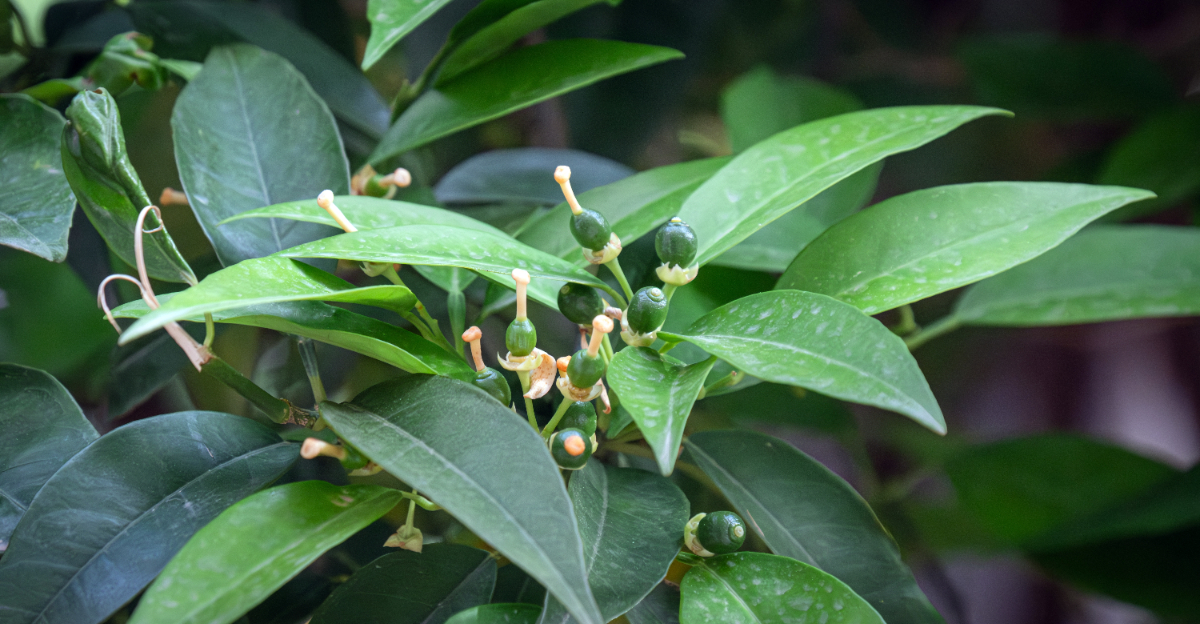
A citrus tree that once gave basket after basket of fruit can feel confusing when it suddenly slows down. One year it is loaded with oranges, lemons, or mandarins.
Then the next season, it barely offers enough to brag about. California gardeners often notice this after several strong harvests, and it can make the tree seem like it changed its mind overnight.
The truth is usually more layered. A citrus tree can get stressed, tired, shaded, or thrown off by care habits that seemed fine for years.
Weather can also play a bigger role than many people expect. The tricky part is that the leaves may still look healthy, so the real problem is not always obvious.
Before blaming the tree, it helps to understand what heavy fruiting can do over time. A quiet season may be a warning sign, or it may be the tree asking for a better reset.
1. Heavy Harvests Can Exhaust The Tree
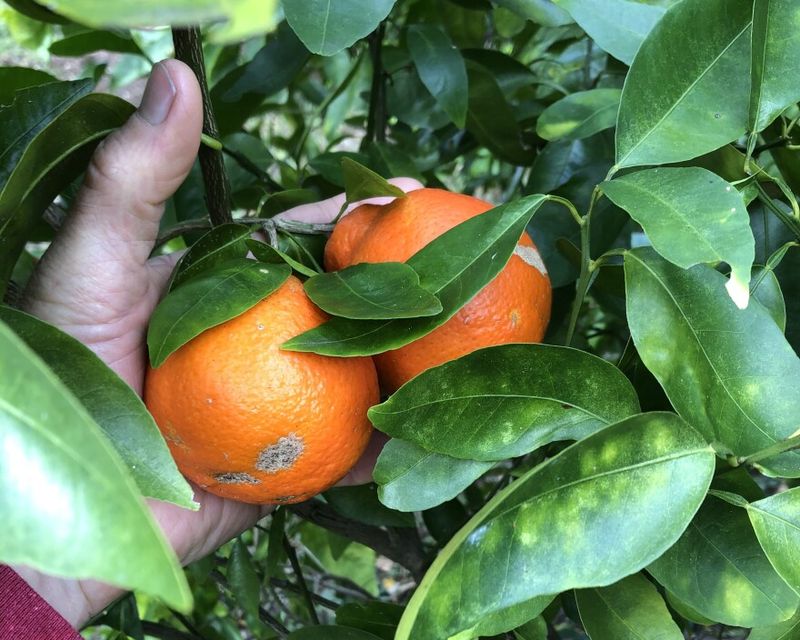
Think of a citrus tree like an athlete who runs a marathon every single year without a proper rest period.
After years of producing massive amounts of fruit, the tree uses up a huge portion of its stored energy.
That energy comes from carbohydrates built up in the roots, trunk, and branches. When those reserves run low, the tree simply has nothing left to push out a new crop.
Heavy harvesting puts a serious demand on the tree. Every fruit that grows requires water, nutrients, and sugars the tree has worked hard to produce.
Over time, if the tree is not given the chance to recover, its internal energy bank gets depleted. You might notice smaller fruit, fewer blossoms, or even bare branches where fruit once grew in abundance.
The fix starts with giving the tree some breathing room. Cut back on fertilizer that pushes fast growth and instead focus on balanced nutrition that supports root health.
Reduce the harvest slightly in a heavy year to let the tree hold onto some of its energy. Mulching around the base helps retain moisture and keeps roots from working overtime.
With a little care and patience, a tired tree can rebuild its reserves and return to strong production within one to two growing seasons.
2. Citrus May Slip Into Alternate Bearing
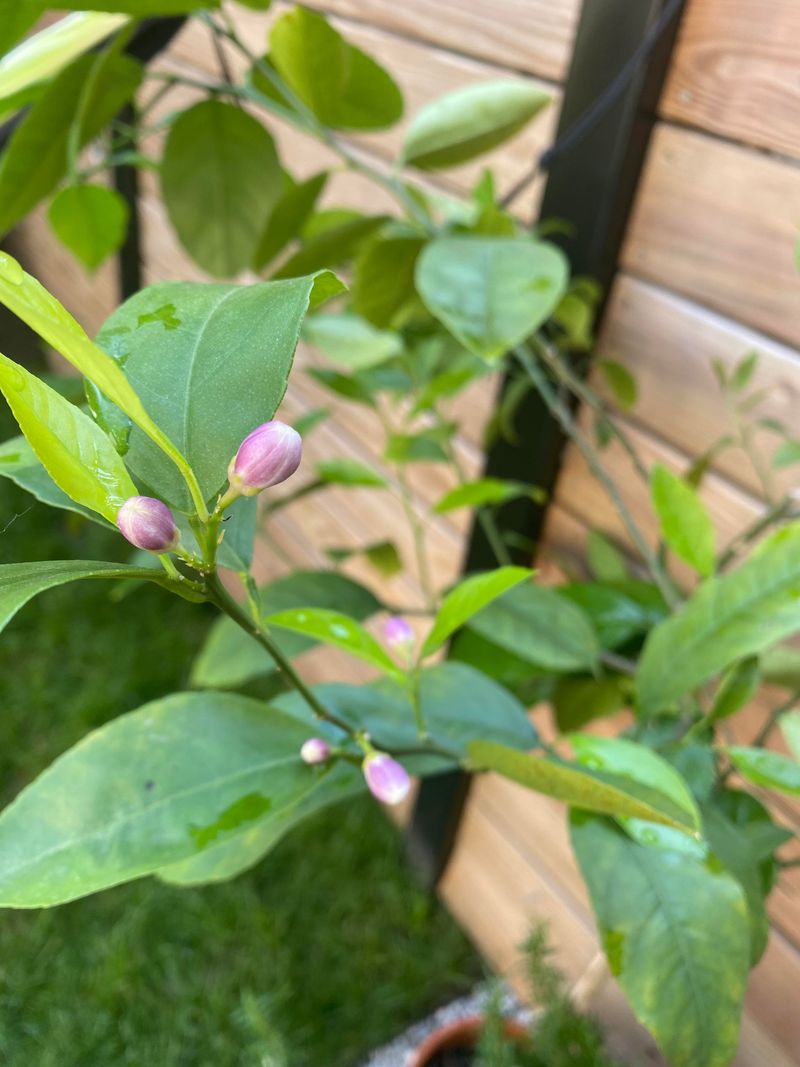
One year the tree is absolutely loaded with fruit, and the next year it barely produces anything at all. Sound familiar?
That pattern has a name: alternate bearing. It is a natural cycle that many citrus varieties fall into, especially after several consecutive years of heavy yields.
Alternate bearing happens because the tree invests so much energy into one big crop that it cannot recover fast enough to produce another one the very next season. The tree essentially takes a year off to rebuild.
Navel oranges and certain mandarin varieties are especially prone to this cycle. Growers who do not know about this pattern often worry that something is seriously wrong with their tree.
Managing alternate bearing is absolutely possible with the right approach. Thinning the fruit early in a heavy year is one of the most effective strategies.
Your California Garden Changes Every Week. Your Plan Should Too.
Gardening in California changes quickly throughout the season. Every Friday you’ll receive a simple weekly plan showing exactly what to plant, prune, fertilize, harvest, and protect so you never miss the right timing.
When you remove some of the developing fruit in spring, you reduce the energy drain on the tree. This allows it to stay strong enough to bloom again the following year.
Consistent fertilizing, proper irrigation, and light pruning also help keep the tree in a steady rhythm.
The goal is to even out production so you get a reliable moderate harvest each year instead of one giant crop followed by almost nothing. Patience and consistency are your best tools here.
3. Too Little Nitrogen Can Reduce Bloom
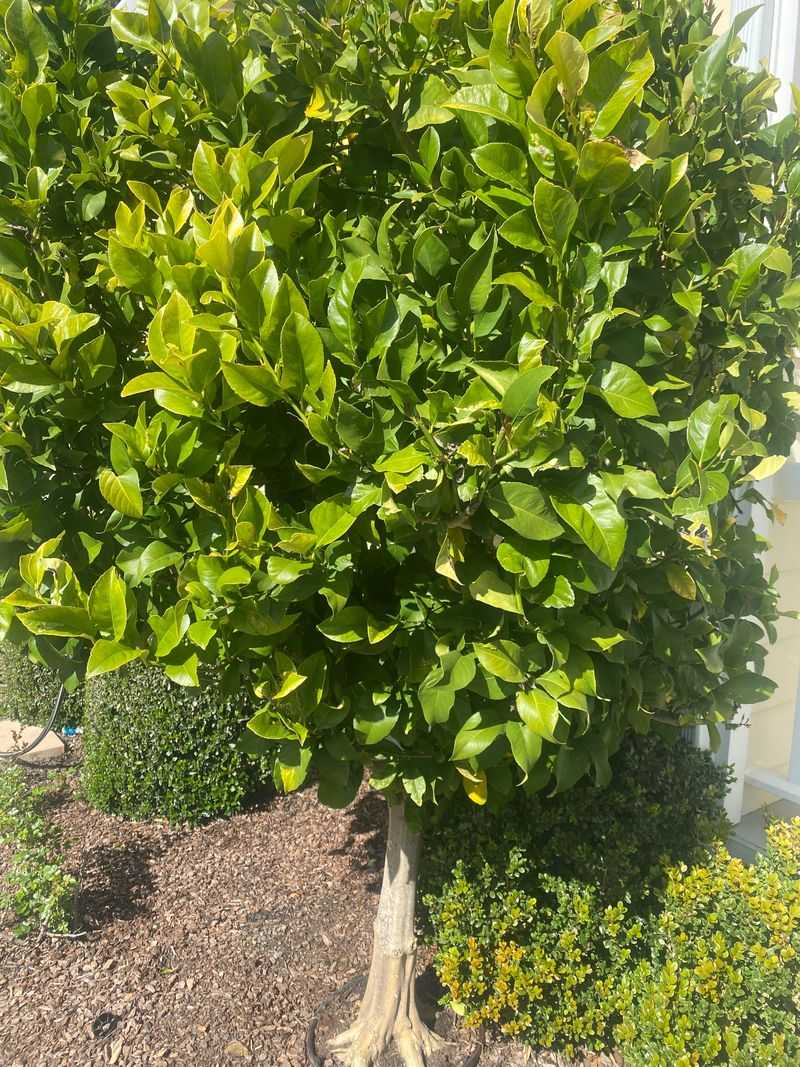
Nitrogen is like fuel for a citrus tree. Without enough of it, the tree cannot build the proteins and chlorophyll it needs to grow strong leaves and push out flowers.
Fewer flowers means fewer fruits, and that is a problem that sneaks up on growers slowly over time.
After years of heavy harvests, the soil around a citrus tree can become seriously depleted of nitrogen. The tree pulls this nutrient out of the ground year after year, and if it is not replaced through fertilizing, the soil ends up running low.
Signs of nitrogen deficiency include pale or yellowish leaves, slow growth, and a noticeable drop in the number of blossoms each spring.
Fixing a nitrogen shortage is straightforward. A balanced citrus fertilizer applied in late winter, spring, and early summer gives the tree the boost it needs right when it is preparing to bloom.
Look for a product specifically labeled for citrus trees because these contain the right mix of nutrients. Avoid over-applying nitrogen though, since too much can push leafy growth at the expense of flowers.
Organic options like composted manure or blood meal can also work well and improve soil health at the same time.
Testing your soil every few years helps you understand exactly what it needs and prevents guessing games that waste time and money.
4. Poor Watering Can Interrupt Fruit Set
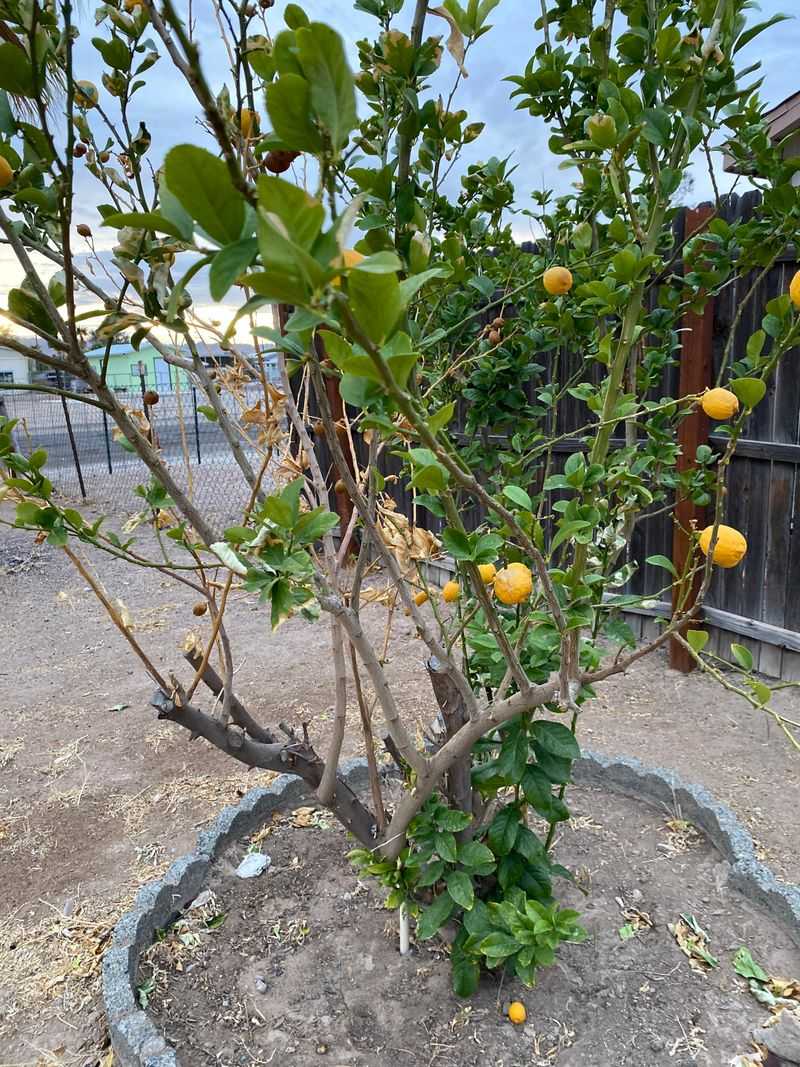
Water is everything when it comes to fruit development. A citrus tree that does not get the right amount of water at the right time will struggle to set and hold onto its fruit.
Both too little and too much water can cause serious problems, and many growers do not realize they are making a watering mistake until the fruit count drops sharply.
During the fruit set stage in spring and early summer, the tree needs consistent moisture to keep the tiny developing fruits attached to the branches.
If the soil dries out too much during this critical window, the tree will drop its fruit as a stress response.
On the other hand, overwatering can suffocate roots and prevent them from absorbing the nutrients needed to support a crop.
Deep, infrequent watering is the gold standard for citrus. Instead of light daily sprinkles, water deeply once or twice a week and let the soil dry out slightly between sessions.
A drip irrigation system works really well because it delivers water slowly right to the root zone. Check the soil a few inches below the surface before watering.
If it still feels moist, wait another day or two. Mulching around the base of the tree also helps the soil hold moisture longer, which means less watering stress during those hot summer months when fruit is actively growing.
5. Heat Stress Can Cause Flower And Fruit Drop
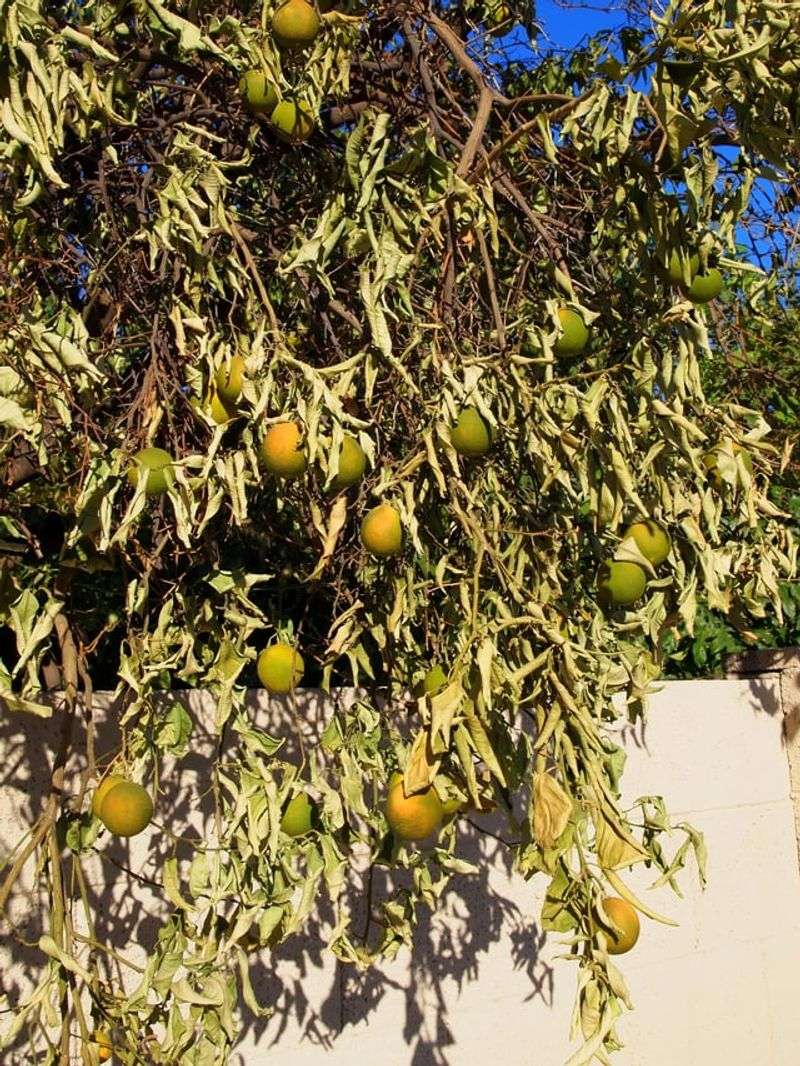
Summers in this state can be brutal, and citrus trees feel every degree of it. When temperatures climb above 100 degrees Fahrenheit for extended periods, the tree goes into survival mode.
One of the first things it does is drop its flowers and young fruit to reduce the energy load it needs to survive the heat.
Heat stress is one of the sneakiest reasons for poor fruit production because it happens fast and the damage is not always obvious right away. You might notice a carpet of tiny green fruits under the tree after a heat wave.
That is the tree making a hard choice: let go of the fruit to conserve water and energy. Over several years of repeated heat stress, the tree can become less and less willing to hold onto a full crop.
There are several ways to protect your tree during hot spells. Shade cloth draped over the canopy during peak summer heat can reduce leaf and fruit temperatures significantly.
Deep watering before a heat event helps the tree stay hydrated when it needs it most. Applying a thick layer of mulch around the base keeps the roots cooler and retains soil moisture.
Whitewashing the trunk with diluted white latex paint can also prevent sunscald on exposed bark.
These steps add up and make a real difference in how well the tree handles heat season after season.
6. Overloaded Branches May Need Thinning
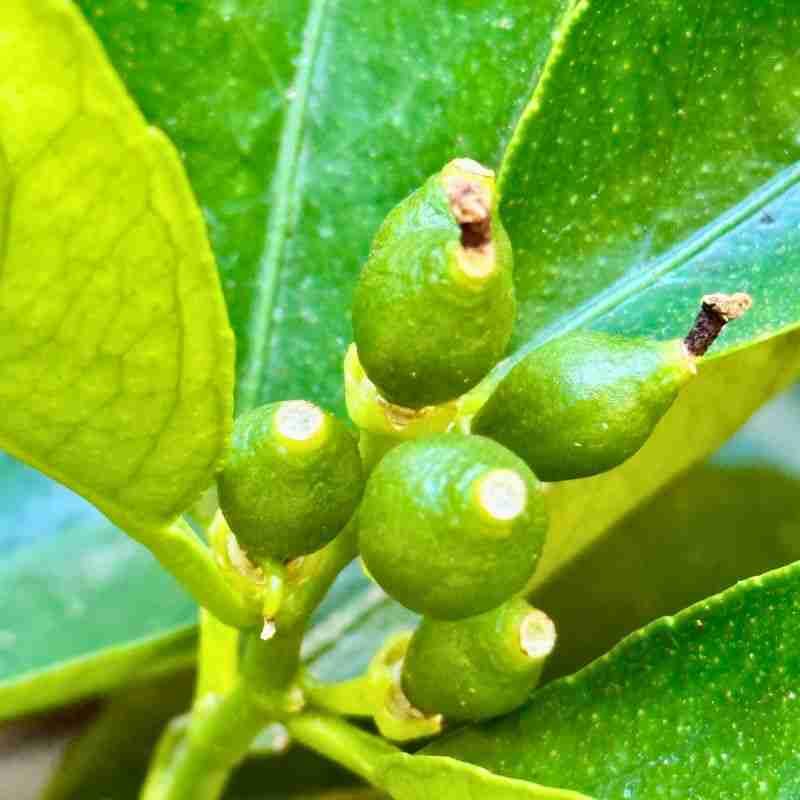
When a citrus tree sets more fruit than it can realistically support, something has to give. Branches get weighed down, nutrients get spread too thin, and the individual fruits end up small and low quality.
Worse, the tree burns through its energy reserves so fast that it struggles to produce a decent crop the following season.
Thinning fruit might feel counterintuitive. Why would you remove perfectly good fruit from a tree?
But experienced growers know that taking off some of the early fruit leads to a better overall harvest.
When the tree has fewer fruits to feed, each one gets more water, sugars, and nutrients. The result is larger, juicier fruit and a tree that stays healthier long-term.
The best time to thin citrus is in late spring after the natural fruit drop has already occurred. At that point, you can see which fruits are developing well and which ones are crowded.
Remove the smallest or most clustered fruits by hand, leaving space between the remaining ones. For most varieties, aim to have about four to six inches between fruits on the same branch.
It takes a little time to do, but the payoff is worth it. Thinning also reduces branch breakage, which protects the tree from wounds that can invite pests and disease into the wood over time.
7. Hard Pruning Can Delay The Next Crop
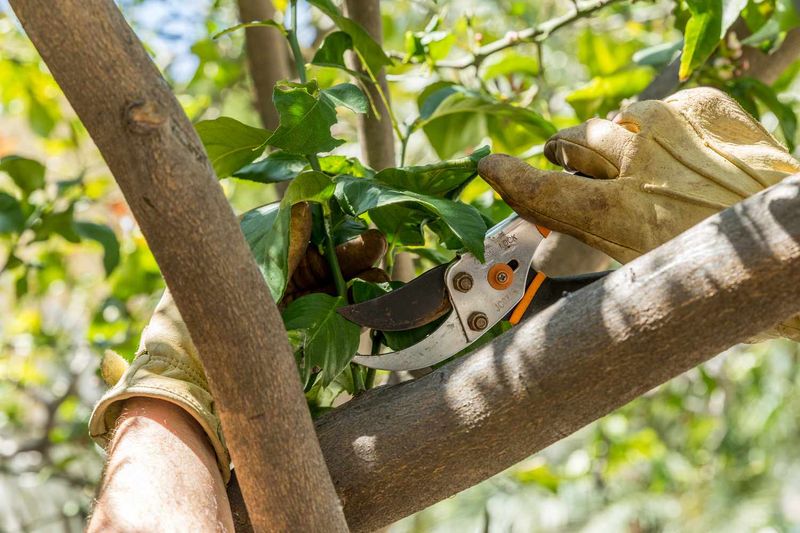
Pruning is an important part of caring for a citrus tree, but there is such a thing as too much of a good thing.
When a tree gets cut back severely all at once, it shifts all of its energy away from fruit production and into rebuilding its canopy. That can mean one or even two full seasons with little to no fruit.
Hard pruning removes a large portion of the tree’s leaf area. Leaves are where photosynthesis happens, and photosynthesis is how the tree makes the sugars it needs to flower and fruit.
When you cut away too many leaves at once, the tree has to start over from scratch. It grows new shoots, builds new leaves, and restores its canopy before it can even think about producing fruit again.
A smarter approach is to prune gradually over two or three seasons rather than all at once. Remove dead, crossing, or diseased wood first.
Then, in a later season, shape the canopy and open it up for better light penetration. Light pruning done every year is far less disruptive than a major cutback every few years.
Always use clean, sharp tools to make smooth cuts that heal quickly. Avoid pruning in late summer or fall, since that can stimulate new growth right before cooler temperatures arrive, which weakens the tree heading into the slower winter months.
8. Old Wood May Be Blocking New Growth
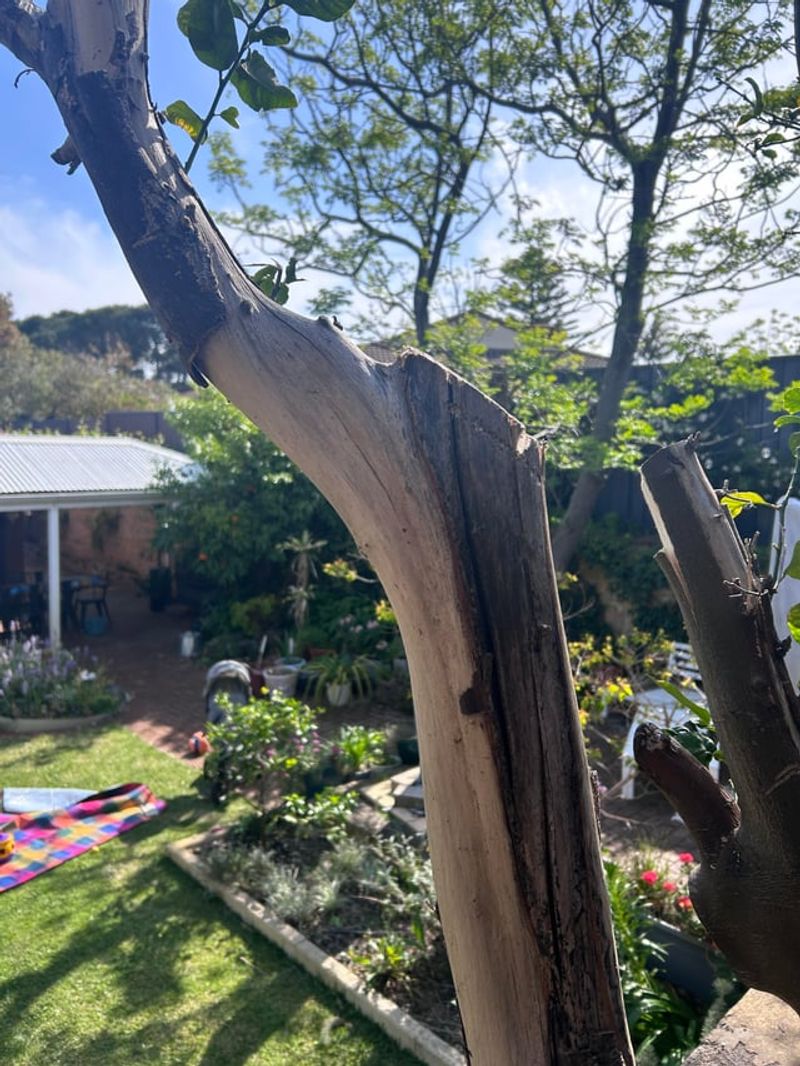
As citrus trees age, the interior of the canopy can become a tangled mess of old, woody branches.
These branches do not produce much fruit on their own, but they take up space and block sunlight from reaching the younger, more productive wood lower in the tree. Over time, this shading effect reduces the tree’s overall fruiting capacity.
Citrus trees produce the most fruit on wood that is one to three years old. Older wood gradually becomes less productive.
When the canopy is packed with aging branches, there is not enough room or light for fresh new growth to develop properly.
The tree ends up putting energy into maintaining old wood instead of pushing out the vigorous new shoots that would carry next year’s blossoms.
Opening up the canopy is the solution here. Selectively remove branches that are crossing each other, growing inward, or shading the center of the tree.
The goal is to let sunlight reach deep into the canopy so new growth can develop on the lower and inner branches. Think of it as renovating the inside of the tree rather than just trimming the outside edges.
After a season or two of careful selective pruning, you should see a noticeable increase in new shoot growth and, shortly after, a better bloom and fruit set. Timing these cuts for late winter gives the tree a full growing season to respond well.
9. Pests Can Weaken Productive Trees
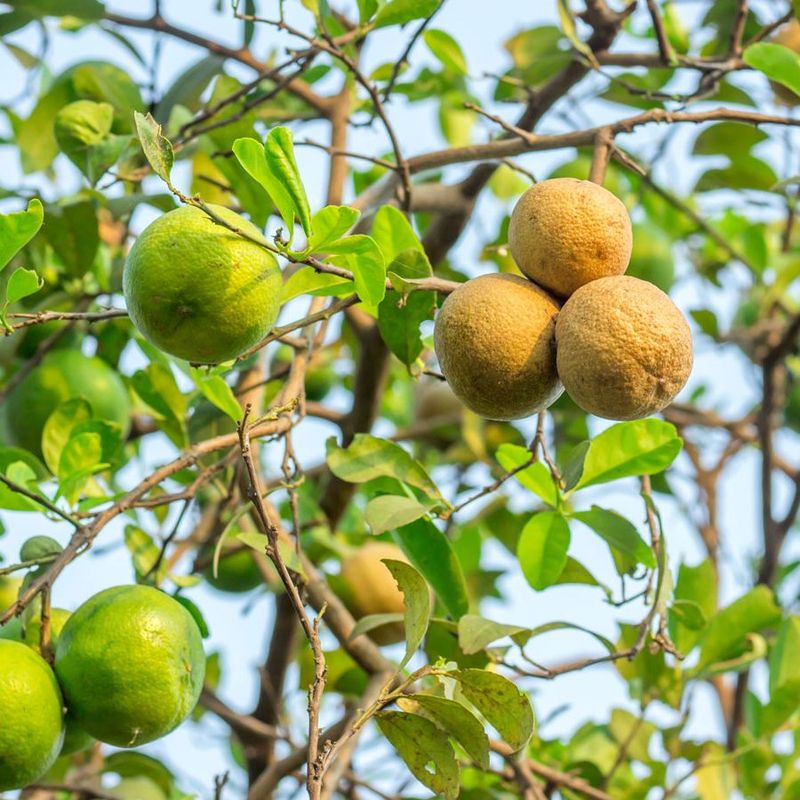
A pest problem that starts small can quietly grow into something that seriously impacts fruit production. Bugs like citrus scale, aphids, spider mites, and citrus leaf miners all feed on different parts of the tree.
Over time, they drain the tree’s energy and interfere with its ability to produce a healthy crop.
Scale insects are especially sneaky because they look like small bumps on branches and stems rather than obvious bugs. They suck sap from the tree continuously, weakening it from the inside out.
Aphids cluster on new growth and distort young leaves. Spider mites thrive in hot, dry conditions and can cause widespread leaf damage before you even notice them.
Each of these pests reduces the tree’s ability to photosynthesize and build the energy it needs for fruiting.
Regular inspection is your best defense. Walk around your tree every couple of weeks and check the undersides of leaves, the stems, and the bark for signs of pest activity.
Sticky residue, distorted leaves, or sooty black mold are all warning signs. Horticultural oil sprays are very effective against scale and mites and are safe to use on citrus.
Insecticidal soap handles aphids well. For serious infestations, a local nursery or farm advisor can recommend treatments suited to the specific pest.
Keeping the tree healthy through proper watering and fertilizing also makes it naturally more resistant to pest damage over time.