The Best Native Michigan Trees For Small Backyards That Stay Under 25 Feet
Choosing a tree for a small Michigan backyard is a long term decision, and getting it wrong is expensive to fix. A tree that looks manageable at the nursery and reaches 50 feet in fifteen years creates problems that pruning alone cannot solve.
Native Michigan trees that stay under 25 feet offer a genuinely better fit for tight spaces, and they bring something most ornamental imports cannot match.
They support local birds, native bees, and insects through every season while providing real shade, seasonal color, and structure that improves the yard year after year.
Michigan has a strong selection of native trees in this size range, and the best ones deliver multiple seasons of visual interest without outgrowing their space or creating maintenance work that cancels out the reward of having them.
1. American Hazelnut
Few native plants pull double duty quite like the American Hazelnut (Corylus americana). It brings ornamental beauty and practical wildlife value to small Michigan backyards without ever outgrowing its welcome.
Most plants settle comfortably between 10 and 16 feet tall, making it one of the most manageable native options available.
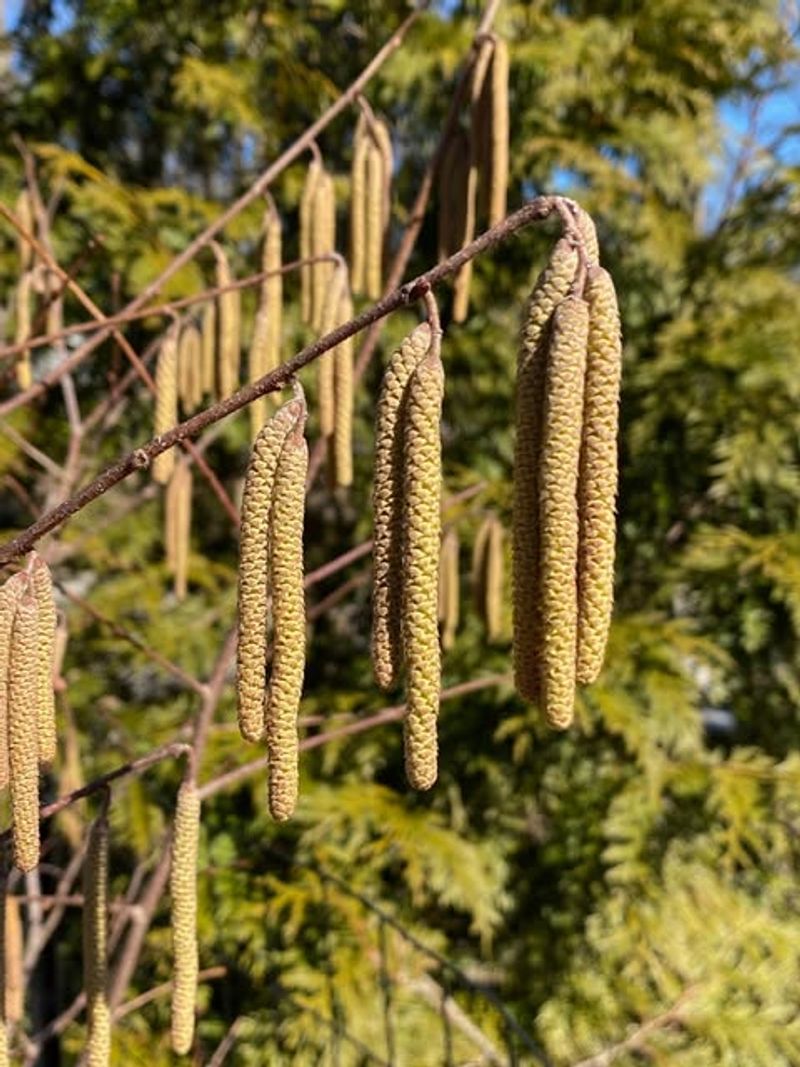
Spring arrives with a show of dangling yellow catkins that appear before the leaves even unfurl. By late summer, small edible nuts form inside papery husks, attracting squirrels, deer, and a wide range of songbirds.
Fall color shifts to warm shades of orange, red, and yellow, giving you three seasons of genuine interest.
American Hazelnut thrives in full sun to part shade and adapts well to a wide range of Michigan soils, including clay. It prefers consistently moist but well-drained ground and handles both sandy and loamy conditions without complaint.
Plant it at least 6 feet from structures to allow for its naturally spreading, multi-stemmed form.
Pruning is simple. Remove older, crowded stems every few years in late winter to keep the plant open and vigorous.
Because it naturally spreads by suckering, occasional removal of new shoots keeps the footprint tidy.
For gardeners who want a dense privacy screen, grouping several plants 5 feet apart creates a lush, wildlife-friendly hedge that feels completely at home in any Michigan landscape.
2. Witch Hazel
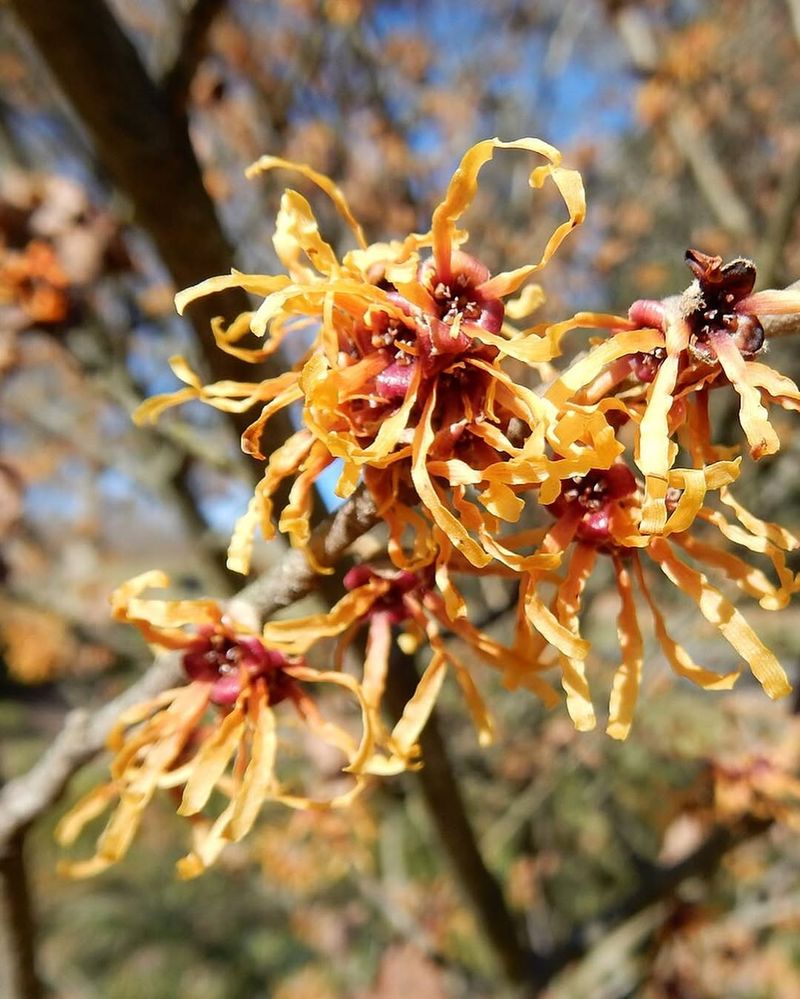
Witch Hazel (Hamamelis virginiana) does something almost no other tree in Michigan can claim: it blooms in November.
While every other plant in the yard has gone quiet for the season, this understory gem bursts out with fragrant, spidery yellow flowers that look like tiny golden fireworks clinging to bare branches.
It is genuinely one of the most surprising and rewarding native trees you can grow. In garden settings, Witch Hazel typically reaches 15 to 20 feet tall with a similar spread, fitting comfortably into smaller yards when given the right spot.
It naturally grows at woodland edges and thrives in part shade, making it ideal for the shadier corners of your yard where few other flowering trees succeed.
Morning sun with afternoon shade is a sweet spot for strong flowering and healthy growth. Moisture matters with this tree. It prefers consistently moist, well-drained, slightly acidic soil and does not appreciate prolonged drought once established.
Your Michigan Garden Changes Every Week. Your Plan Should Too.
Gardening in Michigan changes quickly throughout the season. Every Friday you’ll receive a simple weekly plan showing exactly what to plant, prune, fertilize, harvest, and protect so you never miss the right timing.
Mulching around the base helps retain soil moisture and keeps roots cool through Michigan summers.
Pruning needs are minimal. A light trim after flowering in late winter keeps the shape tidy without sacrificing next season’s blooms.
Wildlife value is solid too, as the seeds attract small mammals and the dense canopy offers excellent bird cover. For a tree that brings genuine late-season magic to a compact yard, Witch Hazel earns every square foot it occupies.
3. Alternate Leaf Dogwood
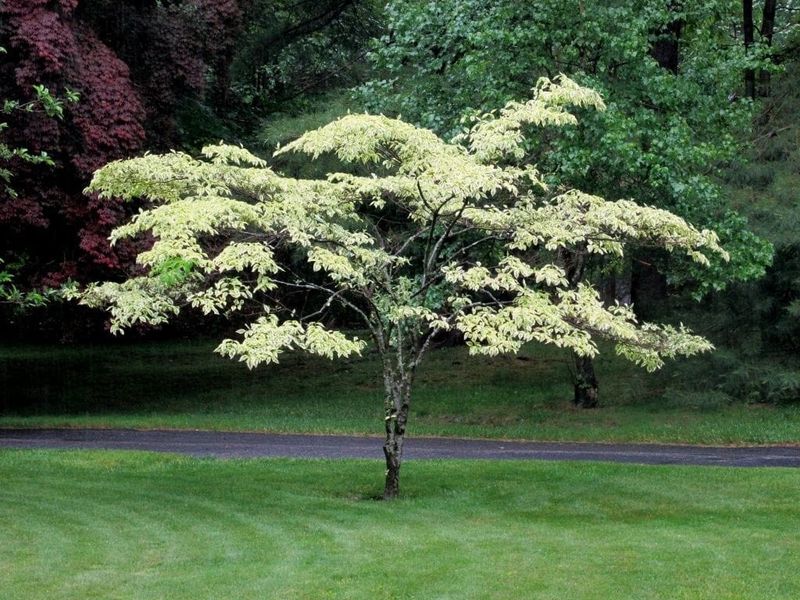
There is something almost architectural about the Alternate Leaf Dogwood (Cornus alternifolia). Its wide, horizontal branches stack in graceful tiers, creating a layered silhouette that looks like it was designed by a landscape architect.
This is a tree that earns admiring glances even in winter when the branching structure stands fully exposed.
Most plants in Michigan landscapes stay between 15 and 20 feet tall, with a spread that can match or slightly exceed the height. That layered canopy creates beautiful dappled shade below, making it a wonderful companion for shade-loving perennials and ferns.
Flat-topped clusters of small white flowers appear in late spring, followed by dark blue-black berries that birds absolutely love through summer and into fall.
Part shade is the preferred growing condition, ideally under a high tree canopy or on a north-facing slope. Alternate Leaf Dogwood appreciates moist, rich, well-drained soil with plenty of organic matter.
It can handle brief wet periods but struggles in compacted or chronically soggy ground, so good soil preparation before planting pays off.
Good airflow around the plant reduces the risk of fungal leaf spot, which can affect dogwoods in humid Michigan summers. Avoid crowding it against fences or dense plantings.
Pruning is rarely needed beyond removing any crossing or damaged branches in early spring. For a small backyard that values both beauty and wildlife, this graceful native tree delivers on every front.
4. Serviceberry
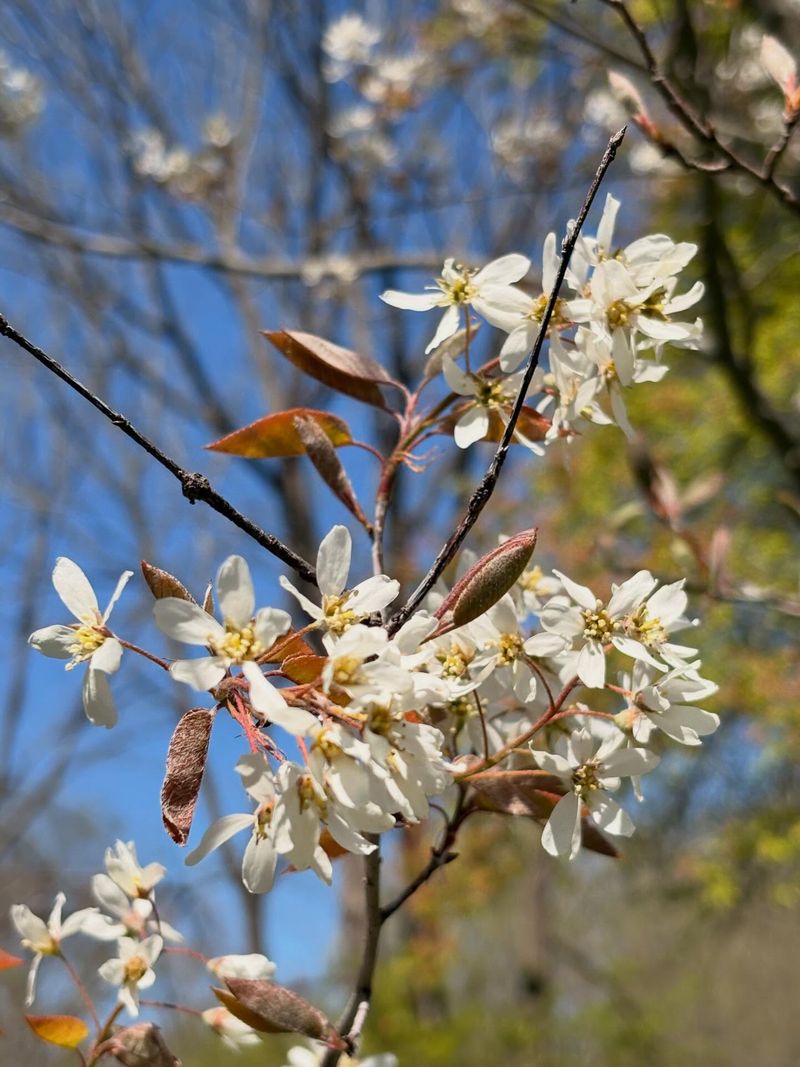
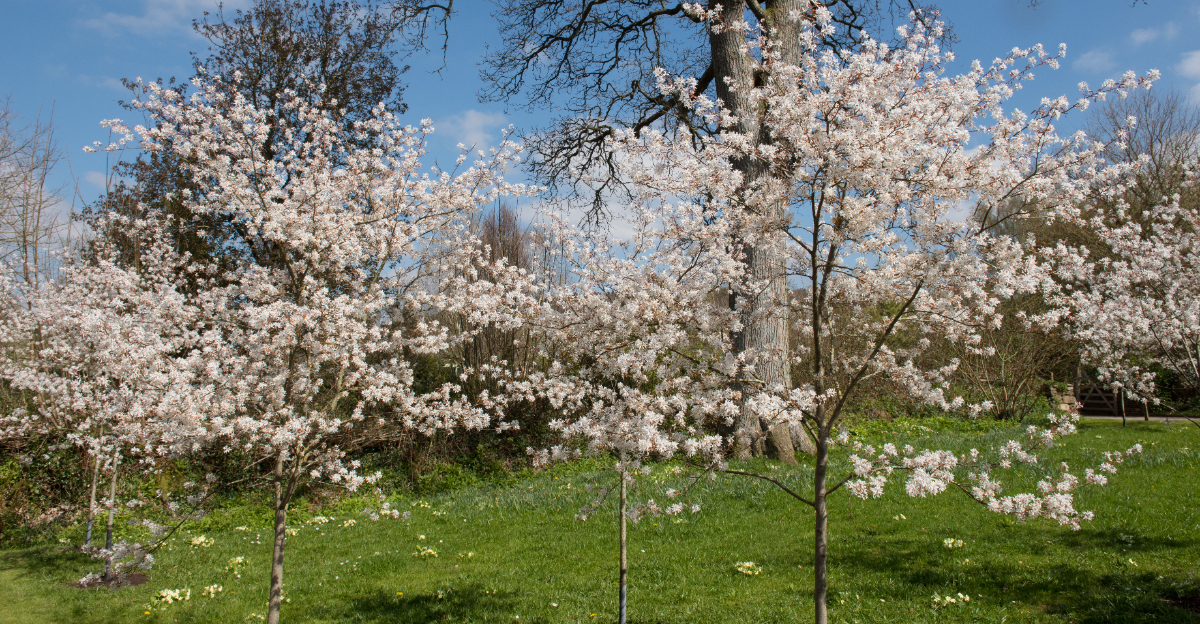
Serviceberry might just be the most complete small tree a Michigan gardener can plant. It covers every base: gorgeous spring flowers, edible summer berries, brilliant fall color, and year-round wildlife value.
Amelanchier arborea, Amelanchier laevis, and Amelanchier canadensis are all excellent native options that perform beautifully across Michigan’s varied climates.
Most serviceberries in landscape settings settle between 15 and 20 feet tall, though some multi-stemmed forms stay closer to 12 feet with selective pruning.
Spring flowering happens early, often before most other trees have leafed out, covering the branches in clouds of delicate white blossoms.
The berries that follow in early summer taste similar to blueberries and are popular with cedar waxwings, robins, and dozens of other bird species.
Full sun to part shade works well, and serviceberry adapts to a wide range of Michigan soils as long as drainage is reasonable. It tolerates clay better than many ornamental trees and handles both moist streamside conditions and drier upland sites with impressive flexibility.
Consistent moisture during the first two growing seasons helps establish a strong root system.
Pruning is straightforward. Remove competing or crossing stems in late winter to maintain an open canopy and encourage good air circulation.
Fall color ranges from orange to deep red, making this tree a true four-season performer. For gardeners who want maximum return from a single small tree, serviceberry rarely disappoints and consistently earns its place in the landscape.
5. Nannyberry
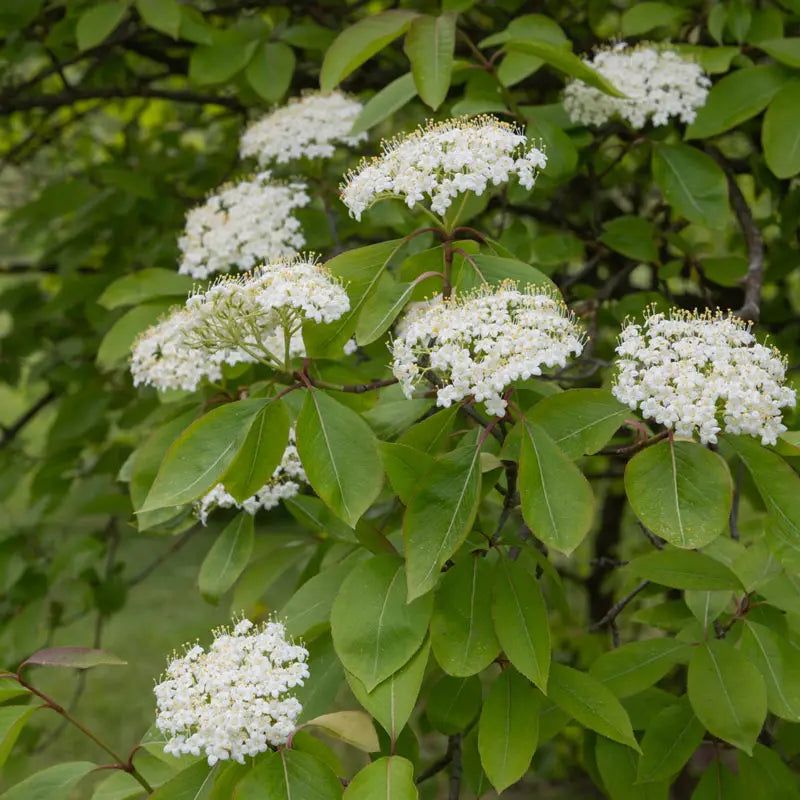
Nannyberry (Viburnum lentago) is one of those native plants that proves versatility is a serious asset in a small yard.
Naturally a large multi-stemmed shrub, it can be trained into a handsome single-trunk small tree with a little early pruning, giving it a more refined appearance without losing any of its ecological value.
Trained specimens typically reach 15 to 20 feet, so placement in the yard matters from the start.
White, flat-topped flower clusters appear in late spring and fill the air with a sweet fragrance that draws in pollinators by the dozens.
By fall, those flowers become clusters of dark blue-black berries that ripen through September and October, feeding migrating birds at exactly the right time of year.
Fall foliage turns rich shades of red and purple, capping off a genuinely impressive seasonal display.
One of Nannyberry’s strongest qualities is its shade tolerance. Unlike many fruiting shrubs and small trees, it performs well in shadier spots under larger trees or along the north side of a home.
It adapts to a wide range of Michigan soils, including clay and periodically wet areas, making it one of the most forgiving native options available.
Minimal pruning is needed once the basic form is established. Remove suckers at the base annually to maintain the tree shape and prevent the plant from spreading beyond its intended space.
For gardeners working with challenging sites, Nannyberry handles conditions that would stress many other small trees without missing a beat.
6. American Plum
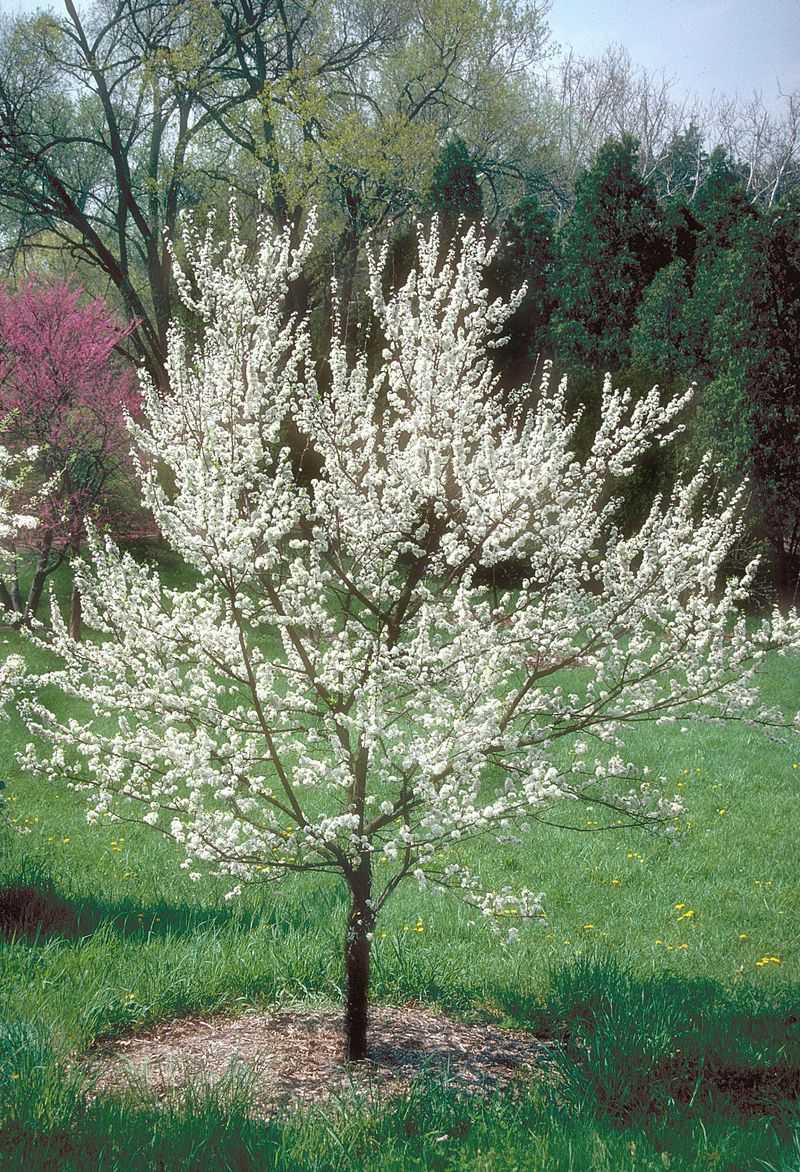
When American Plum (Prunus americana) blooms in early spring, it stops people in their tracks. The branches explode with dense clusters of bright white flowers before a single leaf appears, creating one of the boldest floral displays of any native Michigan tree.
The fragrance is sweet and noticeable, and pollinators arrive in waves almost immediately after the flowers open.
American Plum typically stays between 15 and 25 feet tall in landscape settings, fitting within small yard scale when given enough room to spread. The key word there is spread.
This tree naturally produces root suckers and can slowly expand into a small colony over time, which makes it a better fit for naturalized edges, back corners, or wildlife gardens than for tight foundation beds near structures.
Full sun brings out the best flowering and fruit production. The small red-yellow plums that ripen in late summer are edible for people and absolutely irresistible to deer, foxes, raccoons, and birds.
American Plum tolerates a wide range of soils, including dry, sandy ground where other trees struggle, and it handles Michigan winters without any issues.
Pruning suckers regularly is the main maintenance task. Removing them in early summer keeps the plant contained and prevents unwanted spread into lawn areas.
For a naturalized corner of the yard that attracts wildlife, feeds pollinators in spring, and delivers genuine seasonal drama, American Plum brings energy and ecological richness that few other small trees can match.
7. Hop Tree
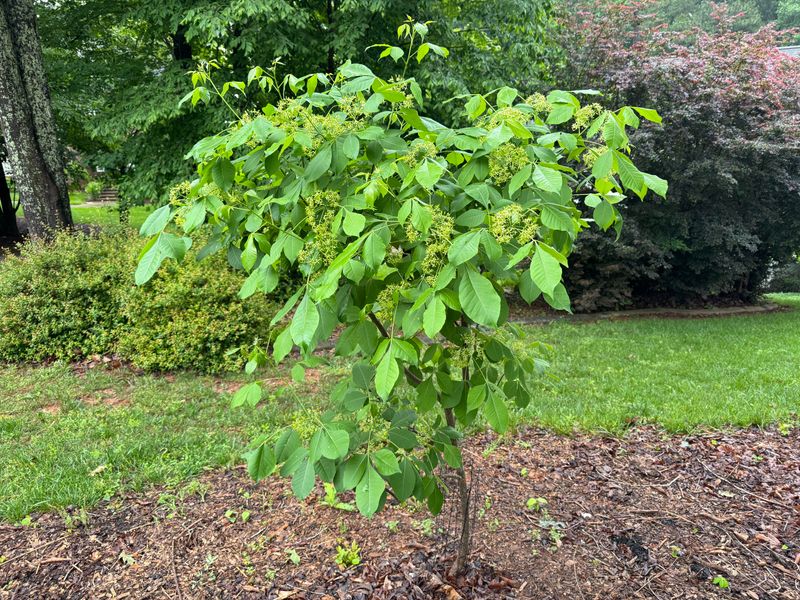
Hop Tree (Ptelea trifoliata) is one of Michigan’s best-kept native secrets, and once you know what it offers, it is hard to overlook.
Compact by nature, it typically stays between 10 and 20 feet tall, making it one of the most reliably small native trees for tight backyard spaces.
The fact that it thrives in part shade gives it a huge advantage in yards where sunlight is limited.
Clusters of small greenish-white flowers appear in late spring and carry a surprisingly strong, sweet fragrance up close.
By midsummer, the flowers give way to clusters of distinctive round, wafer-like seed clusters that hang on the branches through fall and into winter.
These seeds give the tree its common name, since they resemble hops used in brewing, and they add genuine visual interest during the quieter months of the year.
Hop Tree holds a special ecological distinction as a host plant for the giant swallowtail butterfly, one of the largest and most striking butterflies in North America.
Planting one in your yard can directly support the giant swallowtail’s life cycle, which is a meaningful contribution to local biodiversity.
Soil adaptability is one of this tree’s strongest traits. It handles clay, sandy loam, rocky ground, and dry conditions with equal ease.
Pruning needs are minimal, typically just the removal of any awkward branches in late winter. Low maintenance, wildlife-friendly, and genuinely beautiful, Hop Tree deserves far more attention in Michigan backyard gardens.