What Yellow Leaves On Your Michigan Cucumber Plants Are Actually Trying To Tell You
Yellow cucumber leaves usually make Michigan gardeners reach for more water or fertilizer. While that quick fix works just often enough to feel reliable, it completely misses the real cause of the problem the rest of the time.
Cucumber leaves turn yellow for many reasons, from overwatering and viral infections to the natural aging of lower leaves. Each cause has a distinct pattern that you can easily spot if you know what questions to ask.
Which leaves are yellowing, how fast the yellowing spreads, whether the veins stay green or fade with the rest of the leaf, and what the rest of the plant is doing at the same time all point toward a specific diagnosis that actually leads somewhere useful.
1. The Soil Is Too Dry Below The Surface
Cucumbers are thirsty plants, and Michigan summers can fool you. The top inch of soil might look fine after a light rain, but dig down a few inches and you could find bone-dry dirt that is starving your plant of the moisture it needs to stay healthy and green.
Cucumber plants use a surprising amount of water, especially once fruits start forming on the vine. At that stage, the plant is working overtime, and if the root zone runs short on moisture, the leaves are usually the first place you will notice the stress.
Yellow patches, especially on younger growth, can be a clear sign the plant is not drinking enough.
The smartest move is to stick your finger or a wooden dowel about three to four inches into the soil near the base of the plant. If it comes out dry, your plant needs water right away.
Surface checks alone will lead you astray every single time.
Consistent watering is your best tool here. Aim for about one to two inches of water per week, and try to water at the base of the plant rather than from above.
Drip irrigation or a soaker hose works really well for cucumbers because it keeps moisture right where the roots need it most.
Mulching around your cucumber plants with straw or wood chips can also make a huge difference.
A good layer of mulch slows evaporation, keeps the soil cooler during hot Michigan afternoons, and helps your plants stay hydrated between watering sessions without much extra effort on your part.
2. The Root Zone Is Staying Too Wet
Too much of a good thing can absolutely work against you in the garden. Michigan is known for stretches of heavy summer rain, and if your garden bed does not drain well, your cucumber roots can end up sitting in water for hours or even days at a time.
Roots need both moisture and air to function properly. When soil stays waterlogged, the air pockets in the ground fill up with water, and roots begin to struggle.
Without enough oxygen, roots cannot absorb nutrients effectively, and the plant starts showing that stress through yellowing leaves, often starting at the base of the vine.
Your Michigan Garden Changes Every Week. Your Plan Should Too.
Gardening in Michigan changes quickly throughout the season. Every Friday you’ll receive a simple weekly plan showing exactly what to plant, prune, fertilize, harvest, and protect so you never miss the right timing.
You might notice the soil feels spongy or muddy when you press on it near the plant. Standing water around the base of your cucumbers after rain is a pretty reliable warning sign that drainage is an issue worth addressing before it gets worse.
Improving drainage does not have to be complicated. Raised garden beds are one of the easiest solutions and work especially well in Michigan clay-heavy soils that tend to hold water longer than sandy soils.
Adding compost to your existing beds can also improve soil structure over time.
If raised beds are not an option, try planting cucumbers on a slight mound or ridge so excess water drains away naturally. Avoid watering again until the top two to three inches of soil have dried out a bit.
Giving roots time to breathe between waterings makes a noticeable difference in overall plant health and leaf color throughout the growing season.
3. Older Lower Leaves Are Running Short On Nitrogen
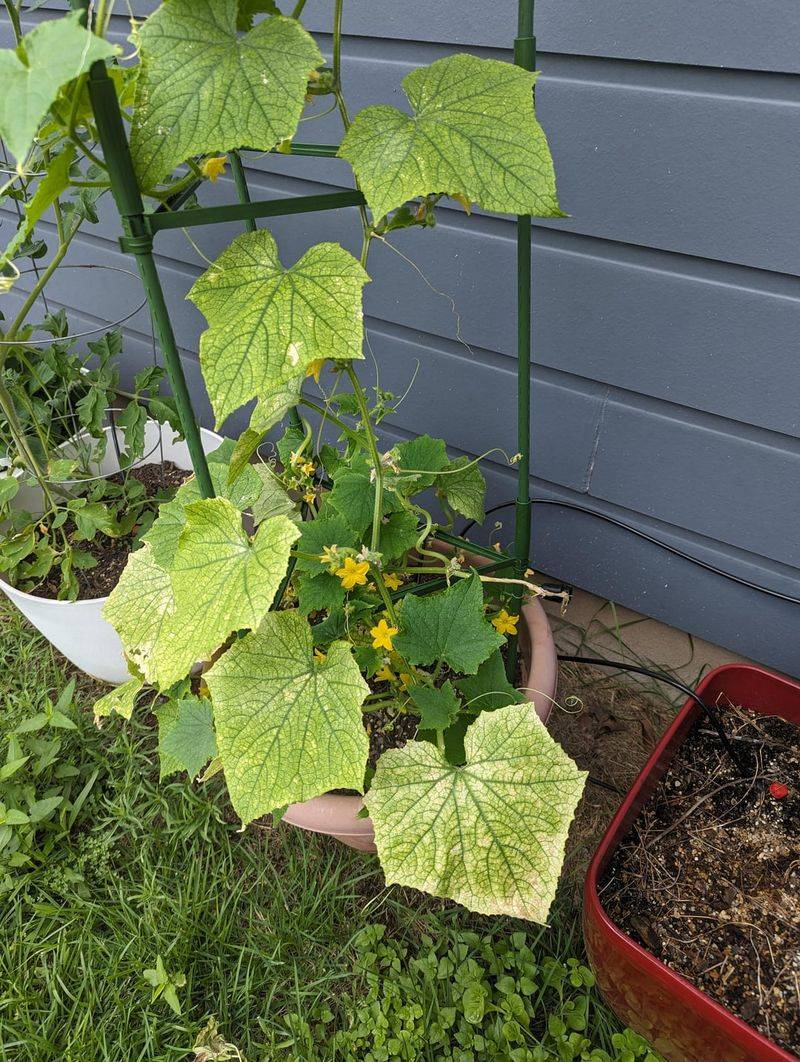
Pay close attention to where the yellowing starts on your cucumber plant. When the lower, older leaves turn yellow first while the newer growth at the top stays green, nitrogen shortage is often the culprit.
Nitrogen moves within the plant, and when supplies run low, the plant pulls it from older leaves to feed new growth.
Nitrogen is one of the most important nutrients for leafy green growth. Cucumbers growing in sandy Michigan soils are especially prone to running low because nitrogen leaches out of light soils faster during heavy rains.
Even gardeners who added compost in spring may find nitrogen levels drop as the season heats up and the plant grows quickly.
Before you reach for a fertilizer bag, it is worth doing a simple soil test. Michigan State University Extension offers affordable soil testing kits, and knowing your actual nutrient levels helps you make smarter decisions instead of guessing.
Over-fertilizing with nitrogen can actually cause its own set of problems, including lush leaves with little fruit.
If a soil test confirms low nitrogen, a balanced vegetable fertilizer applied according to label directions can help turn things around within a week or two.
Liquid fertilizers tend to work faster because they are absorbed quickly through both roots and sometimes foliage.
Compost side-dressing is another great option. Simply spread a one to two inch layer of finished compost around the base of your cucumber plants and water it in.
Compost releases nutrients slowly and steadily, which is exactly what cucumbers need during their long Michigan growing season.
4. Angular Yellow Spots May Point To Downy Mildew
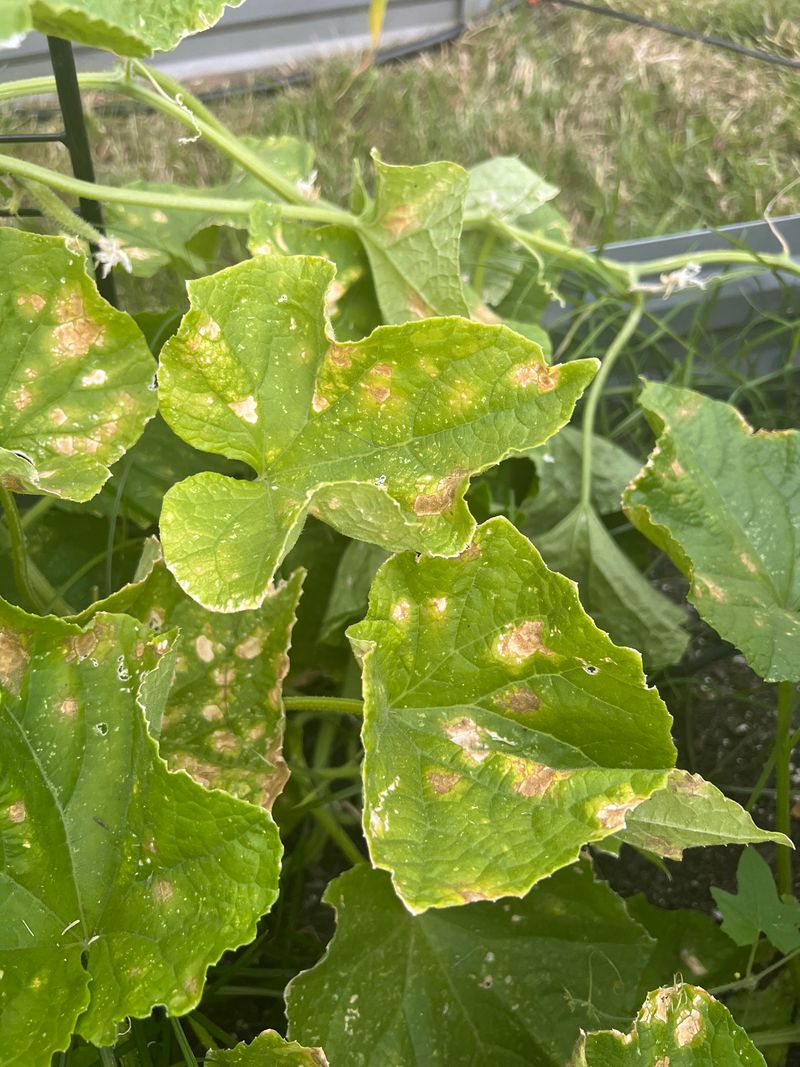
Not all yellow on cucumber leaves looks the same, and the shape of the discoloration can tell you a lot.
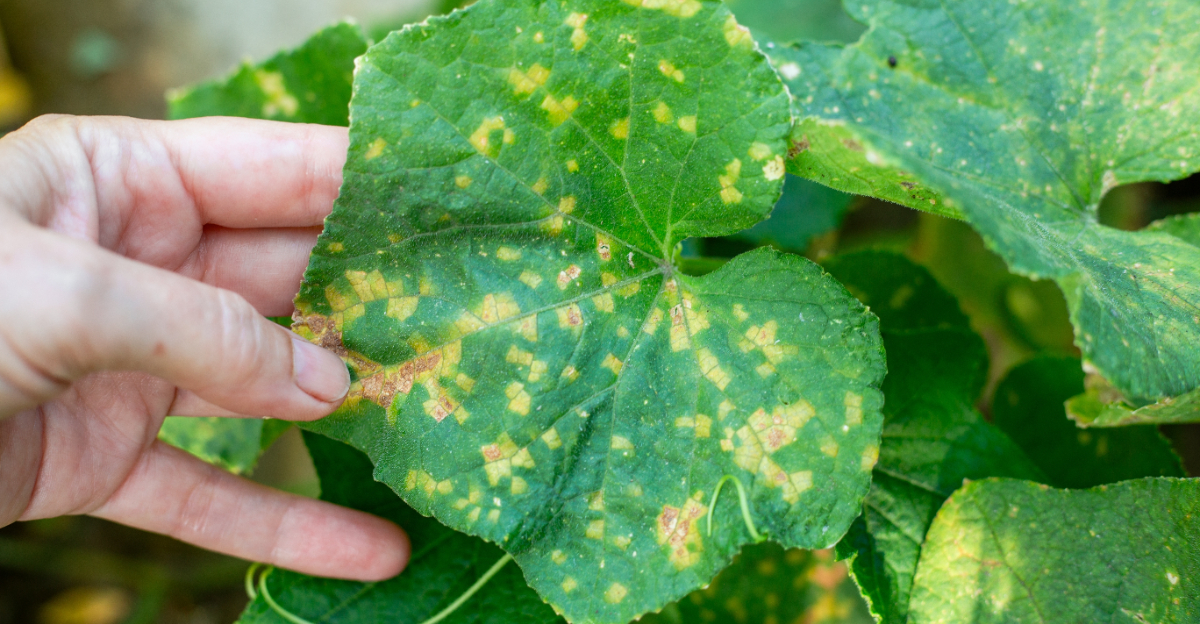
Angular yellow spots that seem to follow the lines of leaf veins are a classic early warning sign of downy mildew, a fungal-like disease that thrives in cool, humid conditions.
Michigan gardeners are no strangers to downy mildew. The state’s humid summers and frequent morning dew create ideal conditions for this disease to take hold and spread quickly across a planting.
Once established, it can move through a cucumber patch surprisingly fast if left unchecked.
Flip the leaf over when you spot those yellow patches on top. Downy mildew often produces a grayish or purplish fuzzy growth on the underside of the leaf directly below the yellow spots.
That fuzzy coating is actually the spores of the disease, and it is a pretty reliable way to confirm what you are dealing with.
Catching it early gives you the best chance of slowing the spread. Remove and dispose of heavily affected leaves, and avoid composting them since that can spread spores.
Improving air circulation by training vines properly and thinning overcrowded growth also helps reduce humidity around the leaves.
Fungicide sprays labeled for downy mildew on cucumbers can help protect healthy leaves when applied early. Look for products containing copper or other approved active ingredients available at Michigan garden centers.
Always read the label carefully and follow timing guidelines for the best results. Planting disease-resistant cucumber varieties in future seasons is also one of the smartest long-term moves you can make.
5. Tiny Yellow Speckles Can Mean Mites Or Sap Feeding Pests
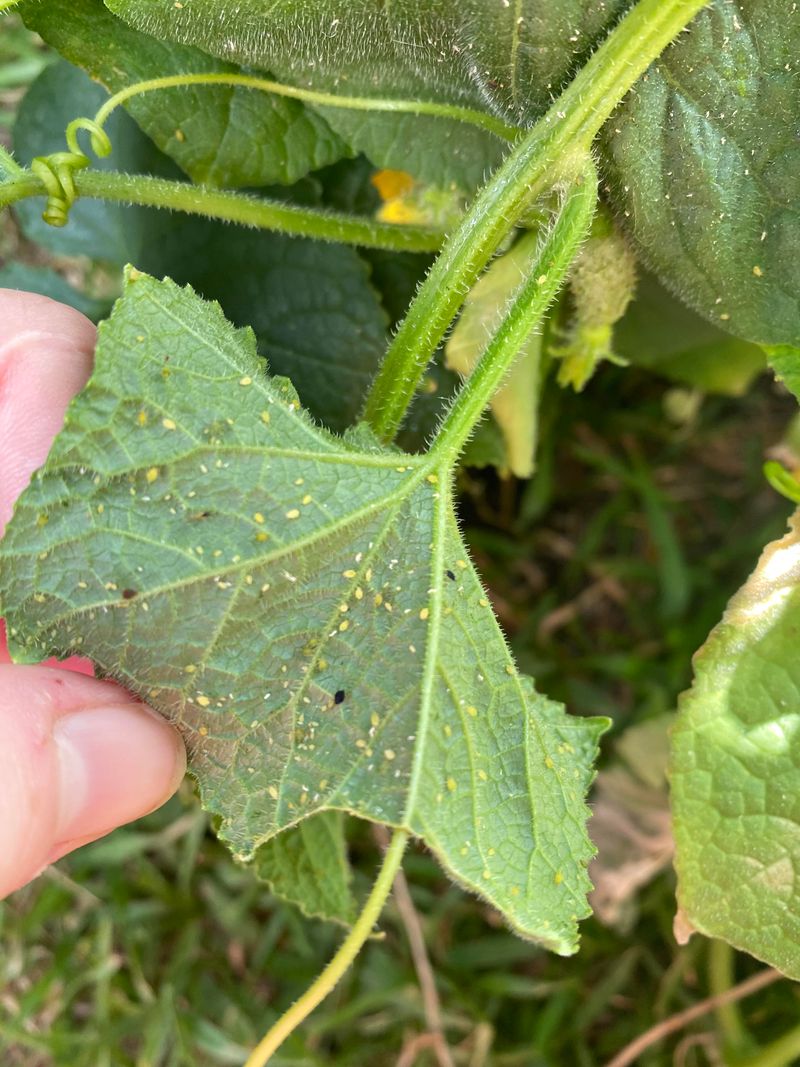
Tiny yellow speckles scattered across cucumber leaves are easy to overlook at first glance, but they are worth a closer look.
That kind of stippling pattern is a telltale sign that something small is feeding on your plant, and it usually means pests rather than disease or nutrient problems.
Spider mites are one of the most common culprits, especially during hot and dry Michigan summers. These tiny creatures are barely visible to the naked eye, but their damage adds up fast.
A heavily infested leaf will look pale, almost bleached, and you might notice fine webbing on the undersides or between stems if populations have grown large.
Aphids are another frequent visitor to cucumber plants. These soft-bodied insects cluster on new growth and leaf undersides, sucking out plant sap and leaving behind a sticky residue called honeydew.
That stickiness can also attract ants, which is sometimes the first clue that aphids have moved in.
Always check the undersides of leaves when you suspect pest activity. Most sap-feeding insects prefer to hide on the shaded underside where they are harder to spot and safer from rain and direct sun.
A hand lens or magnifying glass can be really helpful for a thorough inspection.
For spider mites, a strong spray of water from a garden hose can knock them off and reduce numbers quickly. Insecticidal soap or neem oil sprays work well for both mites and aphids and are safe to use on vegetable plants.
Repeat applications every five to seven days until the problem is under control and your cucumber leaves start looking healthy again.
6. Yellowing Along With Wilting Can Signal Cucumber Beetle Trouble
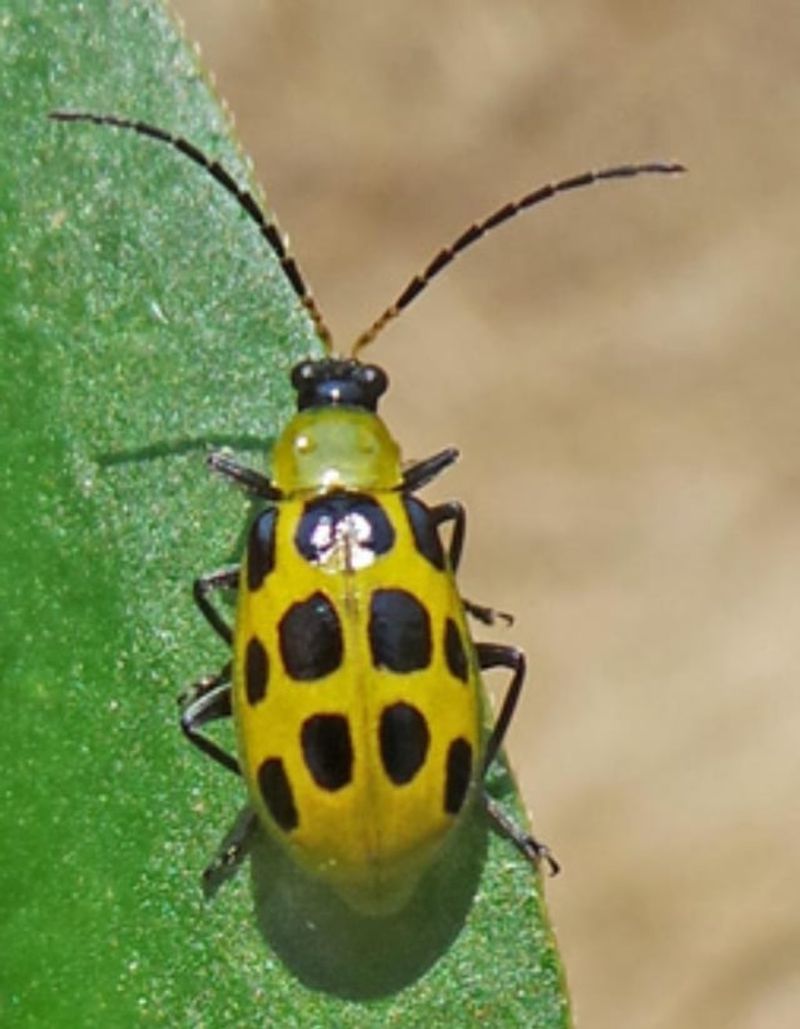
When cucumber leaves turn yellow and the vines also look wilted or weak even after watering, something more serious might be going on.
This combination of symptoms is one worth investigating quickly, especially if you garden in Michigan where cucumber beetles are a well-known seasonal pest. Cucumber beetles come in two common forms in Michigan: striped and spotted.
Both types feed on cucumber foliage, flowers, and stems, but the striped variety is especially problematic because it can carry and spread a bacterial disease called bacterial wilt.
Once bacterial wilt gets into a plant through beetle feeding, the vine can collapse rapidly and there is no cure once infection sets in.
Checking your plants regularly for beetles is one of the most effective ways to stay ahead of the problem. Look closely at flowers, which beetles love, as well as the undersides of leaves and new tender growth at the tips of vines.
Adult beetles are small but noticeable with their distinctive yellow and black striped or spotted markings.
Row covers placed over young transplants early in the season can physically block beetles before they reach your plants. Remove the covers once flowers open so pollinators can reach the blossoms.
Yellow sticky traps placed near the garden can also help monitor beetle activity and catch adults before they cause too much harm.
Kaolin clay applied to leaves creates a physical barrier that makes plants less appealing to beetles without harming beneficial insects.
For heavier infestations, pyrethrin-based sprays approved for vegetable gardens can be effective when applied in the early morning or evening to protect pollinators.
Catching beetle pressure early keeps your cucumber harvest on track all summer long.
7. A Few Old Yellow Leaves Can Be Normal Late In The Season
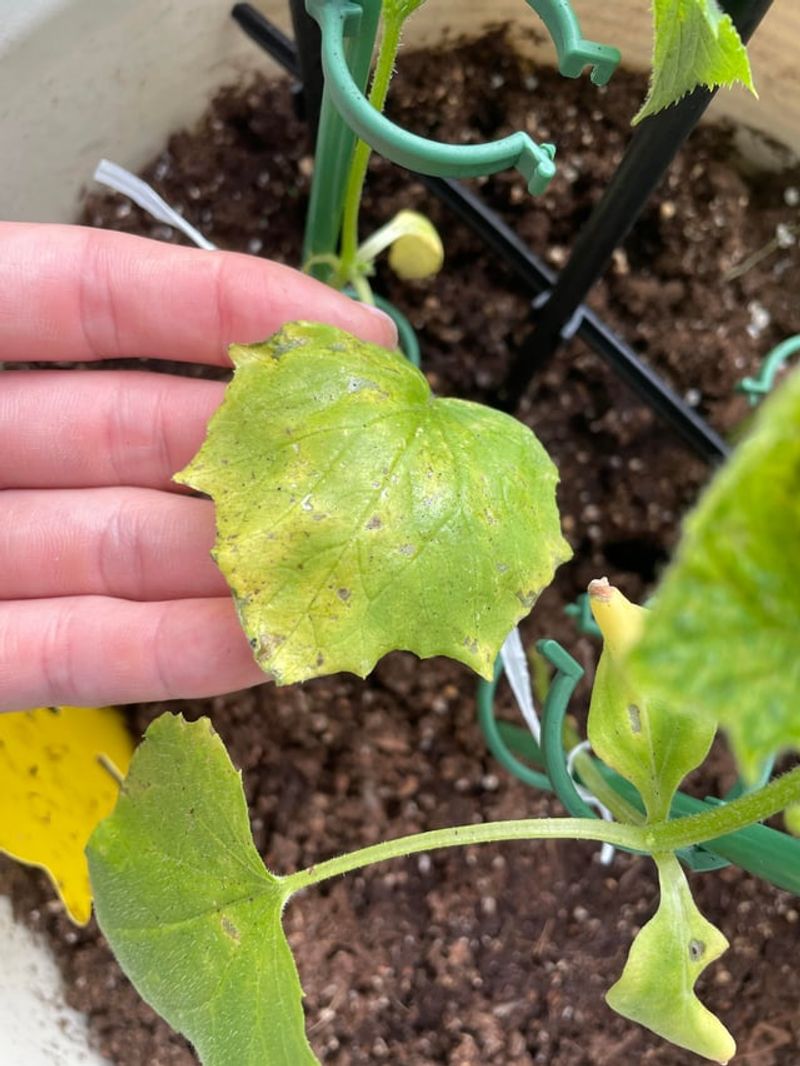
Sometimes yellow leaves are not a warning sign at all. As cucumber plants mature and the season moves toward late summer, it is completely normal for the oldest leaves near the base of the vine to start turning yellow and looking a bit ragged.
The plant simply redirects its energy toward fruit production rather than maintaining every leaf.
Think of it like a natural housekeeping process. Older leaves at the bottom of the vine have already done their job earlier in the season.
As the plant ages, those leaves receive less energy and nutrition, and yellowing is the expected result. A few yellowing leaves here and there near the base are nothing to stress over if the rest of the plant looks strong.
The key is knowing the difference between normal aging and a real problem. Normal end-of-season yellowing moves slowly, starts at the very bottom of the vine, and does not come with spots, fuzzy growth, pests, or a bad smell.
If the yellowing is spreading fast, moving upward, or showing up alongside wilting or unusual markings, that is worth investigating right away.
You can remove older yellow leaves to improve air circulation around the base of the plant and keep the garden looking tidy. Just use clean scissors or pruners and avoid tearing leaves off by hand, which can create rough wounds on the stem.
Keep watching for new fruit forming on healthy upper vines, and continue your regular watering and feeding routine.
A cucumber plant that is producing well with only a few yellow leaves at the base is doing exactly what a healthy, productive plant should do at this stage of the season.