Small Native Trees That Belong In Central Texas Front Yards
Central Texas front yards have a tree problem that does not get talked about enough. Most of the trees people plant there are either too big for the space, too thirsty for the climate, or both.
Watching a tree slowly outgrow a front yard or struggle through a dry summer on a heavy watering schedule is one of the more common and preventable frustrations in Central Texas landscaping. Native small trees solve both problems at once.
They are scaled for residential spaces, adapted to Central Texas soil and rainfall, and once established they require almost no intervention to look good and stay healthy.
Several of them bloom in ways that make a real impression in spring, and a few offer fall color or wildlife value that keeps the front yard interesting well beyond the growing season.
If your front yard needs a tree that actually belongs there, Central Texas natives deserve a much longer look than they usually get.
1. Texas Redbud
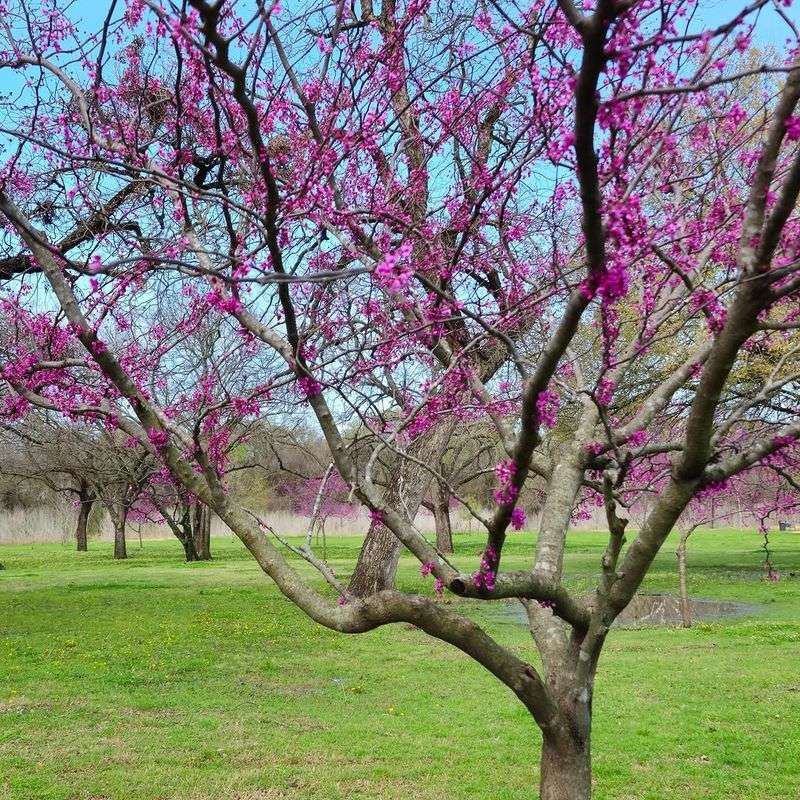
Every spring, the Texas Redbud puts on a show that stops people in their tracks. Before a single leaf appears, the branches burst into clouds of bright pink and magenta blooms. It is one of the most eye-catching sights in any Central Texas neighborhood.
Texas Redbud (Cercis canadensis var. texensis) is a smaller, tougher version of the Eastern Redbud. It grows between 12 and 15 feet tall, making it a perfect fit for front yards where space is limited.
The heart-shaped leaves that follow the blooms are thick and glossy, giving the tree a lush look even during dry spells.
One big reason gardeners love this tree is its toughness. It handles rocky limestone soil, intense heat, and dry summers better than most ornamental trees.
Once established, it needs very little extra watering. That makes it a smart, low-maintenance choice for Central Texas homeowners who want beauty without a big water bill.
Birds and pollinators love the spring flowers too. Bees flock to the blooms early in the season when other food sources are scarce.
The tree also offers dappled shade during summer, which can help cool your front porch area naturally.
Plant Texas Redbud in a spot that gets full sun to partial shade. It does best with well-draining soil, which is easy to find in the Hill Country region.
Give it a good watering during its first year, and after that, nature mostly takes over. Few trees reward so little effort with so much seasonal beauty.
2. Mexican Plum
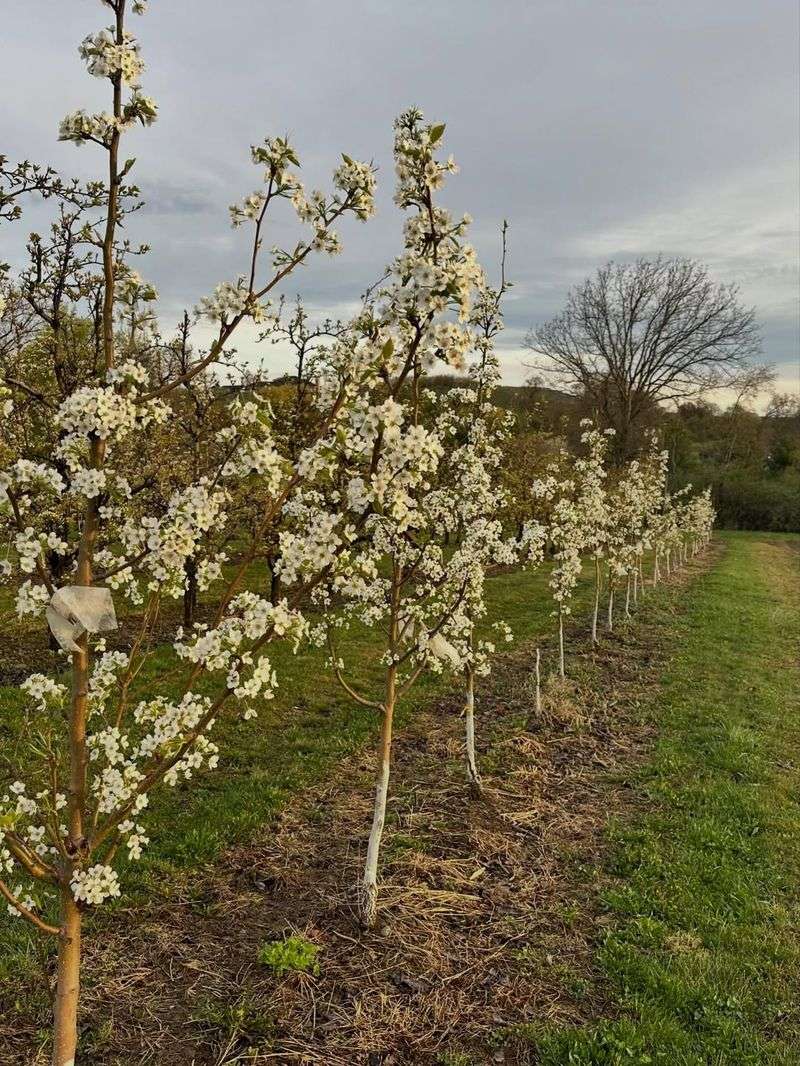
Walk past a Mexican Plum in early spring and you will notice the sweet, almost almond-like scent before you even see the flowers.
White blossoms cover the branches in late February or March, often making it one of the first trees to bloom each year in Central Texas. That early burst of life feels like a gift after a long winter.
Mexican Plum (Prunus mexicana) is a native small tree that usually grows between 15 and 25 feet tall. Its bark is one of its most interesting features.
As the tree matures, the bark breaks into rough, scaly plates of gray, brown, and orange, giving it a rugged, artistic look even in winter when the leaves are gone.
Your Texas Garden Changes Every Week. Your Plan Should Too.
Gardening in Texas changes quickly throughout the season. Every Friday you’ll receive a simple weekly plan showing exactly what to plant, prune, fertilize, harvest, and protect so you never miss the right timing.
Beyond its looks, Mexican Plum produces small, dark purple fruits in late summer. The fruits are edible and taste tart and sweet.
Wildlife absolutely loves them. Birds, deer, and small mammals are drawn to the tree during fruiting season, which brings extra life and movement to your front yard.
Did you know that Mexican Plum is considered one of the best native trees for supporting pollinators in Texas? Its early blooms provide critical food for bees at a time when few other plants are flowering.
That ecological role makes it more than just a pretty yard tree. For best results, plant it in full sun with good drainage. It tolerates poor, rocky soils without complaint.
Water regularly during the first growing season to help it get established, and then step back and let this tough native do its thing.
3. Eve’s Necklace
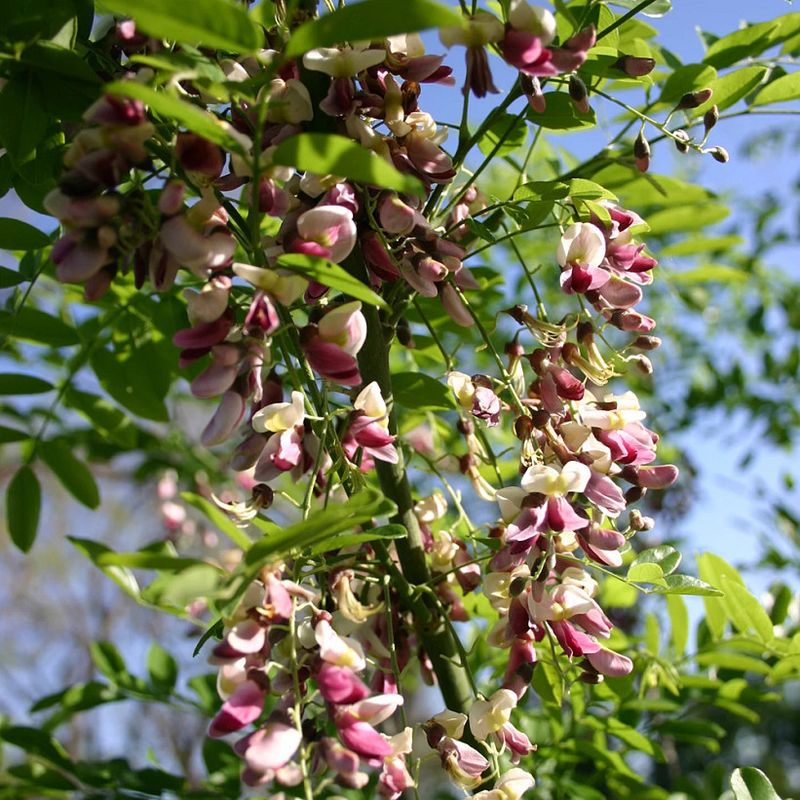
Not many people have heard of Eve’s Necklace, but once you see it, you never forget it. The name comes from the strings of shiny black seeds that hang from the branches in long, beaded pods after flowering.
Those pods look just like a strand of dark pearls, which makes the tree a conversation starter in any front yard.
Eve’s Necklace (Sophora affinis) produces soft pink flower clusters in spring that look a lot like wisteria blooms. The flowers hang in loose, drooping bunches and give off a light fragrance.
Bees and butterflies visit them regularly, turning the tree into a small pollinator hotspot during bloom season.
Size-wise, this tree fits perfectly into smaller front yard spaces. It typically grows between 10 and 20 feet tall and has a graceful, open canopy.
The fine-textured, compound leaves give it an airy, delicate appearance that softens the look of a home’s exterior. It does not feel heavy or overwhelming, even in a modest yard.
Drought tolerance is one of its strongest qualities. Once established, Eve’s Necklace handles the dry Central Texas summers with ease.
It grows naturally along creek beds and rocky slopes in the Hill Country, so it is already adapted to the region’s unpredictable rainfall patterns.
Plant it in full sun for the best flowering. Well-drained soil works best, and it actually prefers the alkaline, limestone-heavy soils common across Central Texas.
Minimal pruning is needed to keep it tidy. For a tree that looks exotic but demands very little, Eve’s Necklace is a hidden gem worth planting.
4. Possumhaw Holly
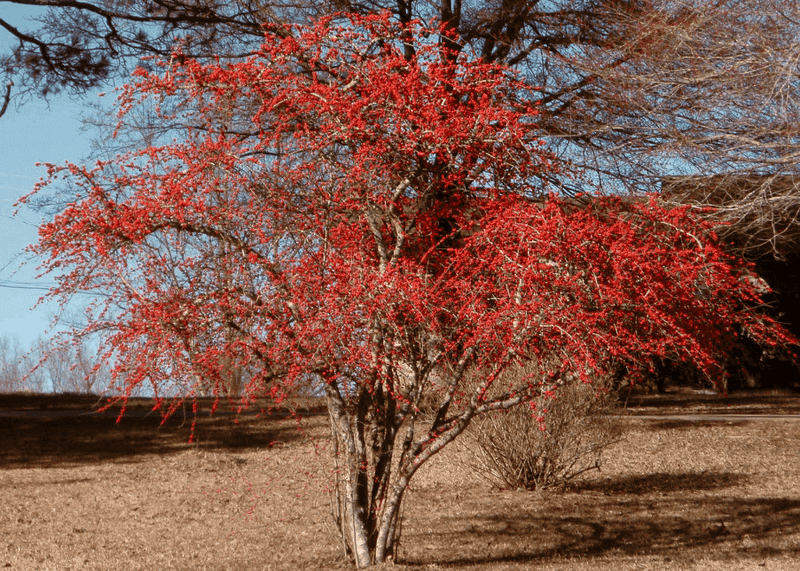
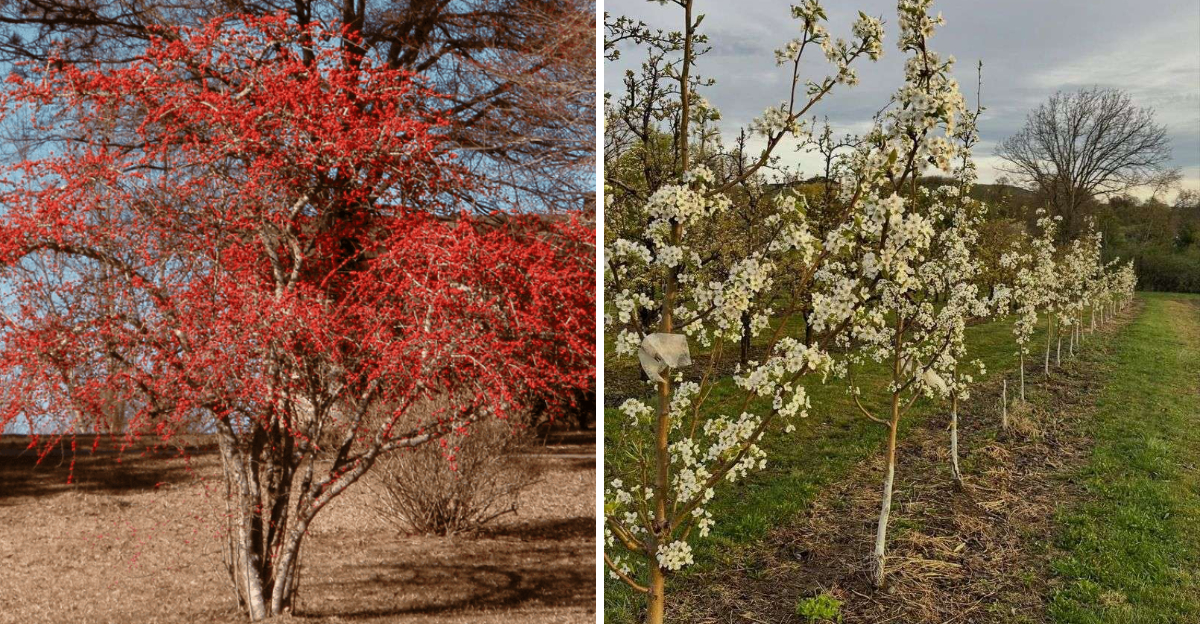
When most plants look bare and dull in winter, Possumhaw Holly is just getting started. The branches are absolutely covered in bright red, orange, or yellow berries from late fall through the coldest months of the year.
Against a gray winter sky, those berries practically glow, making it one of the most cheerful front yard trees you can plant in Central Texas.
Possumhaw Holly (Ilex decidua) is a deciduous native holly, which means it drops its leaves in fall. But losing its leaves is actually part of what makes it so special.
Without foliage blocking the view, the berry-covered branches become a stunning winter display. Robins, cedar waxwings, and mockingbirds flock to the tree for the fruit, bringing welcome wildlife activity to your yard during the quietest season.
The tree typically grows between 7 and 15 feet tall, staying compact enough for most front yard situations. It handles Texas heat, drought, and poor soil without much fuss.
Established trees are surprisingly tough and require little intervention once they find their footing.
One thing to keep in mind is that Possumhaw Holly is dioecious, meaning you need both a male and a female plant nearby to get berries. Most nurseries sell named female varieties like “Warren’s Red” or “Council Fire” that berry heavily.
Having a male pollinator within a reasonable distance, even from a neighbor’s yard, is usually enough to get good fruit production.
Plant it in full sun for the best berry display. It tolerates partial shade but may produce fewer berries.
With almost zero fuss and a spectacular winter show, Possumhaw Holly earns its place in any Central Texas front yard.
5. Desert Willow
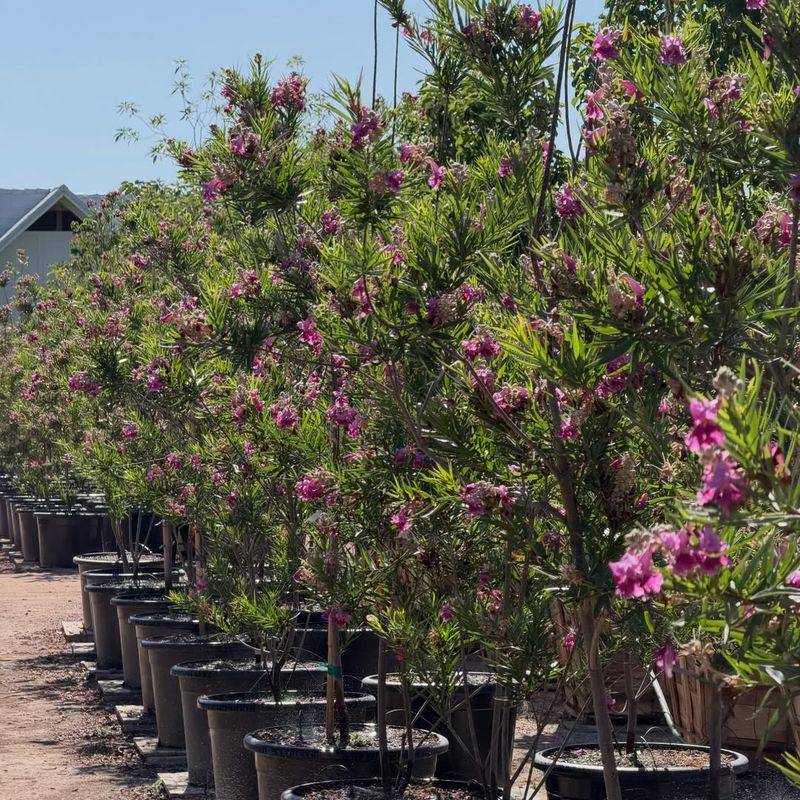
If there is one tree that seems almost too beautiful to be this tough, it is the Desert Willow. From late spring all the way through fall, it produces large, trumpet-shaped flowers in shades of pink, purple, white, and burgundy.
The blooms look like something out of a tropical garden, yet this tree thrives in some of the hottest, driest corners of Central Texas.
Desert Willow (Chilopsis linearis) is not actually related to true willows. It gets its name from the long, narrow leaves that give it a willow-like appearance.
The tree grows between 15 and 25 feet tall and develops an open, graceful shape over time. Its airy canopy casts light, dappled shade without blocking too much of your home’s curb appeal.
Hummingbirds absolutely love the tubular flowers and will visit repeatedly throughout the long blooming season.
Having a Desert Willow in your front yard practically guarantees regular hummingbird sightings from summer into early fall. That kind of wildlife interaction makes the yard feel alive and dynamic.
Drought tolerance is where this tree truly shines. It evolved in dry washes and rocky slopes across the Chihuahuan Desert and Trans-Pecos region, so it is built for low water conditions.
Once established, it can survive almost entirely on natural rainfall in Central Texas. Give it full sun and fast-draining soil for the best results. Avoid planting it in areas that stay wet or have heavy clay.
Light pruning in late winter helps maintain a clean shape and encourages more vigorous flowering the following season. For a front yard tree that delivers nonstop color with minimal water, Desert Willow is hard to match.
6. Anacacho Orchid Tree
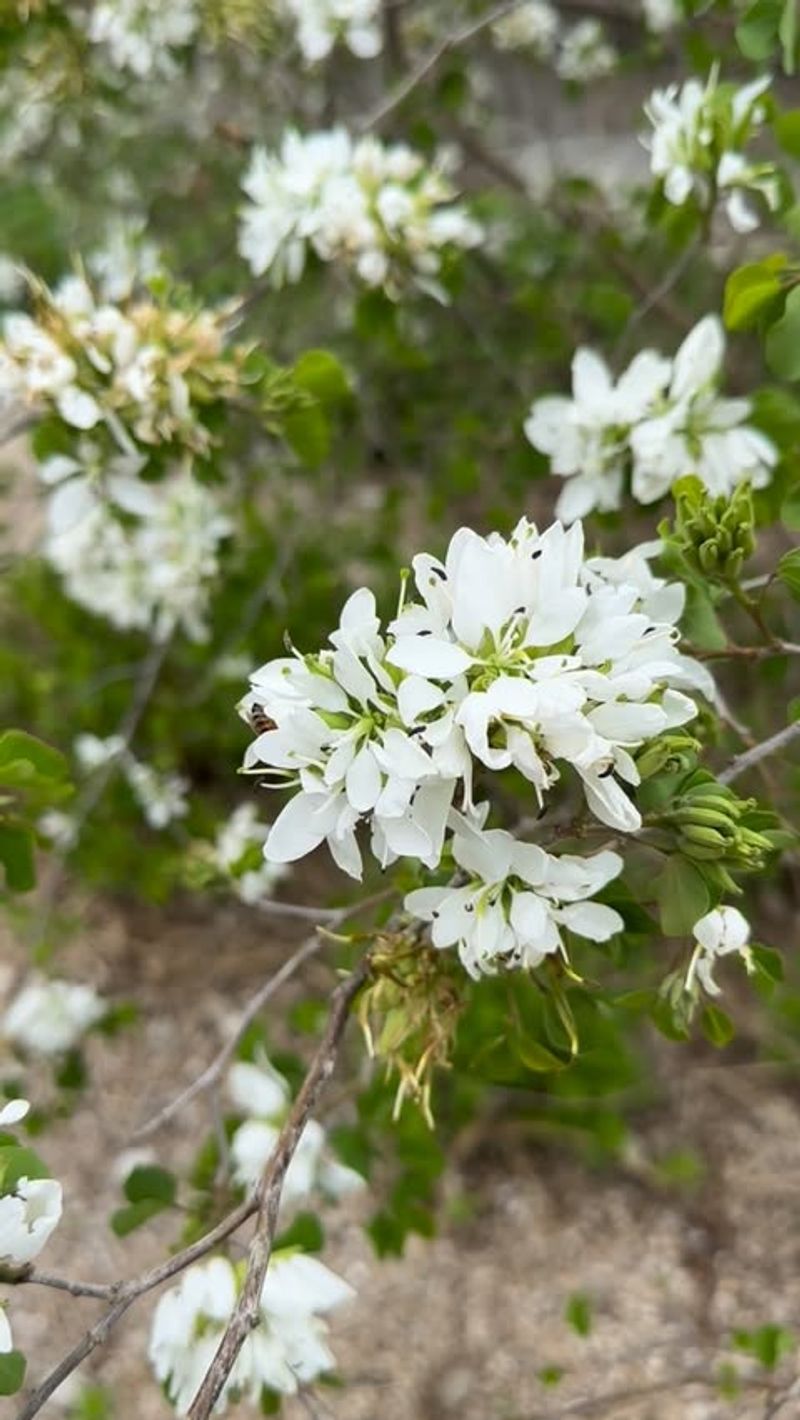
Rare, refined, and surprisingly easy to grow, the Anacacho Orchid Tree is one of Central Texas’s best-kept secrets.
Its flowers genuinely look like small orchids, with white to pale pink petals that appear in clusters from spring through early summer. Seeing it in bloom for the first time tends to make people stop and ask, “What is that tree?”
Anacacho Orchid Tree (Bauhinia lunarioides) is native to a small region of the Texas Hill Country and northern Mexico, making it truly local to this part of the world. It grows between 8 and 12 feet tall, sometimes a bit taller with age.
The small, two-lobed leaves are distinctive and give the tree a fine texture that looks elegant against a home’s exterior.
Because of its compact size, it fits beautifully in front yards without overwhelming the space. It can be grown as a multi-trunk shrubby tree or trained into a single trunk for a more formal look.
Either way, it brings a refined, almost exotic quality that few other native trees can offer at this scale.
Pollinators are strongly attracted to the flowers. Bees and butterflies visit regularly during bloom periods, and the tree can re-bloom lightly in fall if conditions are right. That extended floral interest adds long-season value to the landscape.
Plant Anacacho Orchid Tree in full sun to partial shade. It prefers well-drained, alkaline soil, which is exactly what most Central Texas yards already have.
Water it through the first summer to help it get established, and after that, it needs very little extra care. For front yards that want something truly special, this native tree delivers every time.