Native North Carolina Plants That Keep Goldfinches Coming Back Through Summer And Fall
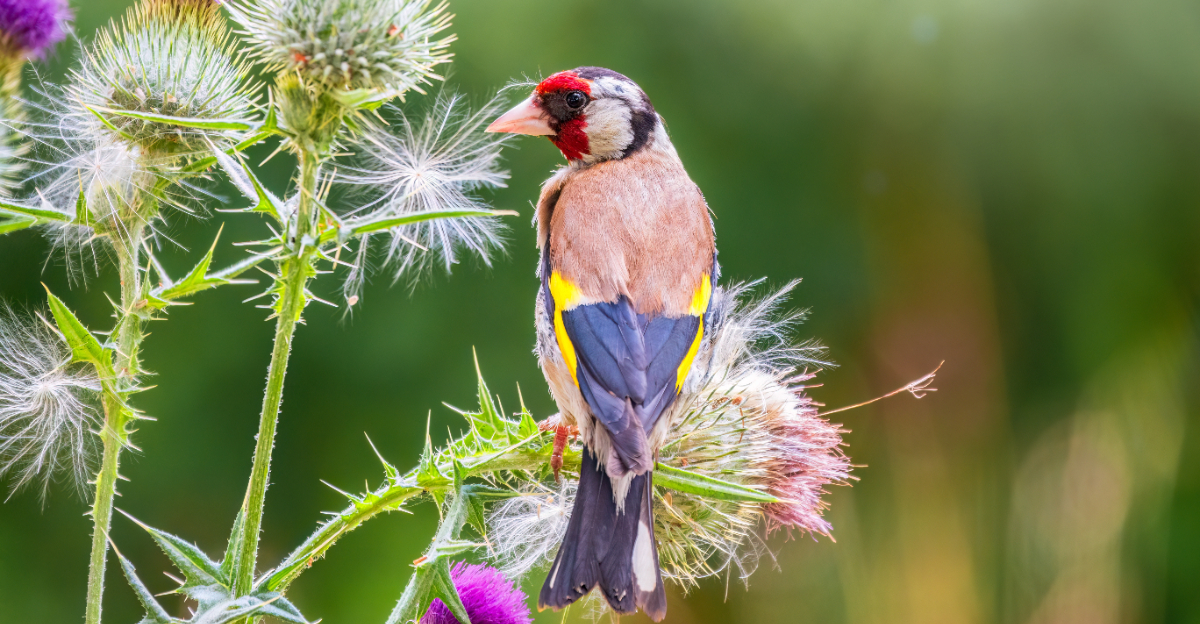
Goldfinches are one of the more reliable visitors in a North Carolina garden, but they are also selective about where they spend their time. They are not drawn in by feeders alone.
What keeps them returning through summer and into fall is seed. Specifically, the kind of seed that comes from plants that are allowed to finish their full cycle without being deadheaded or cut back before the birds have had their turn.
Native plants are particularly good at this because they have developed alongside the birds that depend on them over a very long stretch of time.
A yard with the right native plantings becomes a regular stop on the goldfinch circuit from midsummer onward, and the activity it brings in is worth planning around.
1. Purple Coneflower
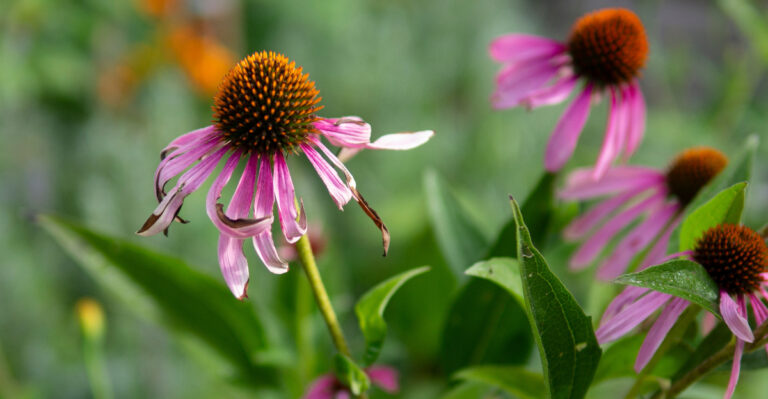
Few plants earn their place in a North Carolina garden quite like Purple Coneflower. Echinacea purpurea blooms from early summer through midsummer, filling the garden with rich pink-purple petals that bees and butterflies absolutely swarm.
The real magic for goldfinches, though, comes after the petals drop and the spiky seed heads mature into late summer and fall.
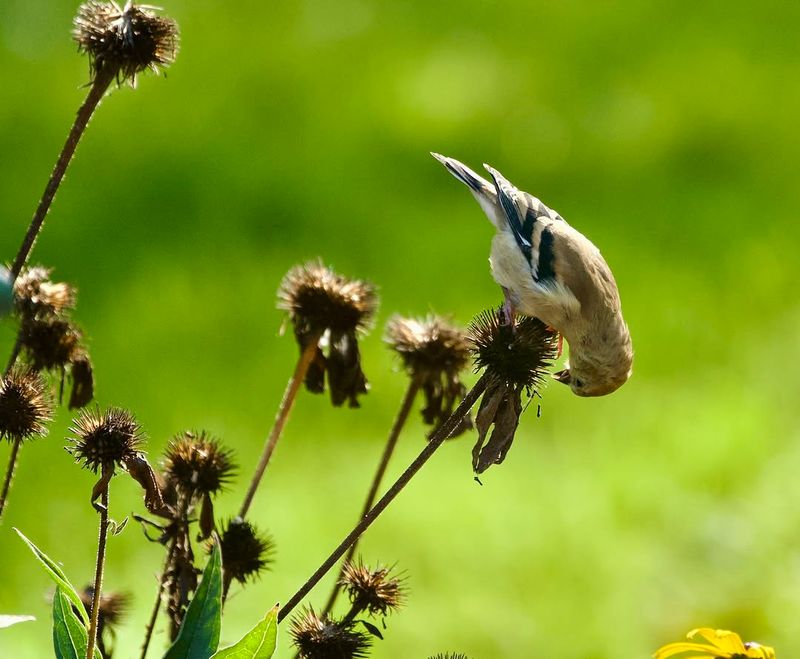
Goldfinches cling to those cone-shaped seed heads with impressive acrobatic skill, picking out seeds one by one. That is exactly why skipping the removal of spent flowers on at least some of your coneflowers makes such a big difference for birds.
Removing every spent bloom means removing every food source those birds were counting on.
Growing Echinacea purpurea in North Carolina is genuinely easy. It thrives in full sun to light partial shade and handles average to slightly dry soils without complaint.
Good drainage matters more than soil richness, and once established, this plant handles summer drought with confidence.
Spacing plants about 18 to 24 inches apart gives each one room to fill out and produce maximum seed heads. You can cut some early blooms to extend the flowering season, but always leave a good number of seed heads standing through fall.
Birds will reward that small decision with regular visits from August through November, making every untouched seed head completely worth it.
2. Native Sunflowers
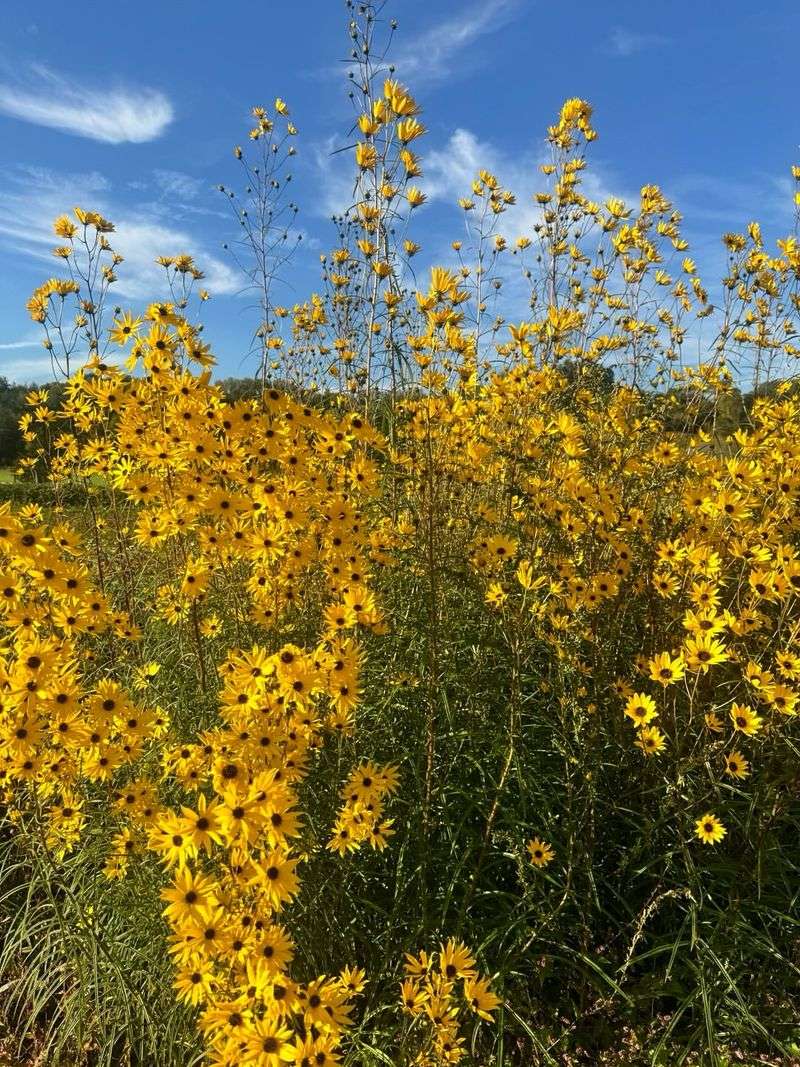
Native sunflowers bring a bold, generous energy to any wildlife garden, and goldfinches respond to them like they have found a treasure chest.
Helianthus angustifolius, commonly called swamp sunflower, and Helianthus divaricatus, the woodland sunflower, are both native to North Carolina and produce abundant seeds that small birds rely on from late summer well into fall.
Swamp sunflower is the showier of the two, reaching six to eight feet tall and erupting in hundreds of small yellow blooms in October.
Helianthus divaricatus is somewhat shorter and tolerates drier woodland edges better, making it a solid choice for shadier spots along fence lines or garden borders.
Both species spread gradually by rhizomes, which suits naturalized areas and meadow-style plantings perfectly.
Full sun brings out the best performance from both plants. Helianthus angustifolius appreciates moist to wet soils and works beautifully near rain gardens or low spots in the yard.
Helianthus divaricatus handles drier conditions with more flexibility. Taller plants may need light staking in exposed spots where wind is an issue.
Your North Carolina Garden Changes Every Week. Your Plan Should Too.
Gardening in North Carolina changes quickly throughout the season. Every Friday you’ll receive a simple weekly plan showing exactly what to plant, prune, fertilize, harvest, and protect so you never miss the right timing.
Spacing these sunflowers three to four feet apart gives them room to spread naturally over time. Pollinators feast on the flowers through the blooming season, and once the seeds mature, goldfinches move in fast.
Leaving the seed heads standing through fall keeps the birds visiting consistently and adds real wildlife value to your landscape.
3. Native Thistles
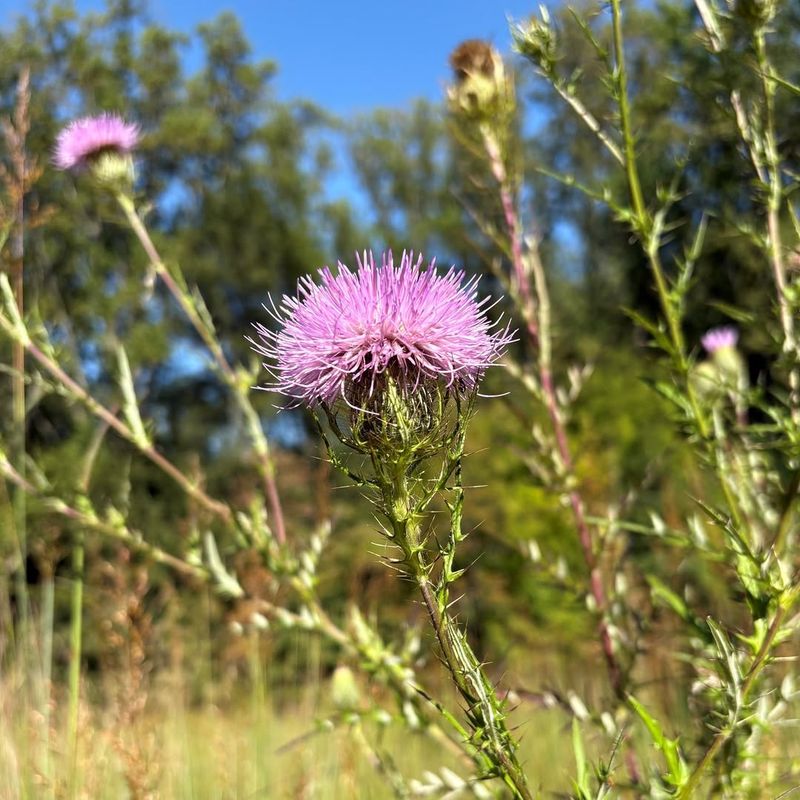
Thistles get an unfair reputation in many gardens, but native species like Cirsium discolor and Cirsium altissimum are genuinely valuable plants for North Carolina wildlife.
Field thistle and tall thistle are both native to the region and serve goldfinches in two remarkable ways: their seeds provide high-quality food, and their fluffy seed down is one of the most sought-after nesting materials goldfinches use during breeding season.
Telling native thistles apart from invasive species is worth the effort. Cirsium discolor and Cirsium altissimum have deeply lobed leaves with white woolly undersides, and their stems are not as aggressively winged as the nonnative bull thistle or Canada thistle.
Placing them in naturalized areas, meadow edges, or open corners of the yard keeps them from feeling out of place in more formal garden settings.
Pollinators absolutely love native thistles. Bumblebees, painted lady butterflies, and many native bee species visit the purple blooms consistently through summer.
That dual-purpose value, supporting both pollinators and birds, makes these plants genuinely hard to replace in a wildlife-focused landscape.
Managing native thistles responsibly means allowing seed heads to mature fully before any cutting back. Removing plants before seeds ripen removes the entire food and nesting material benefit for goldfinches.
Letting a small colony establish in a sunny, open area of your yard creates a reliable goldfinch magnet every single season without much effort on your part.
4. Cutleaf Coneflower
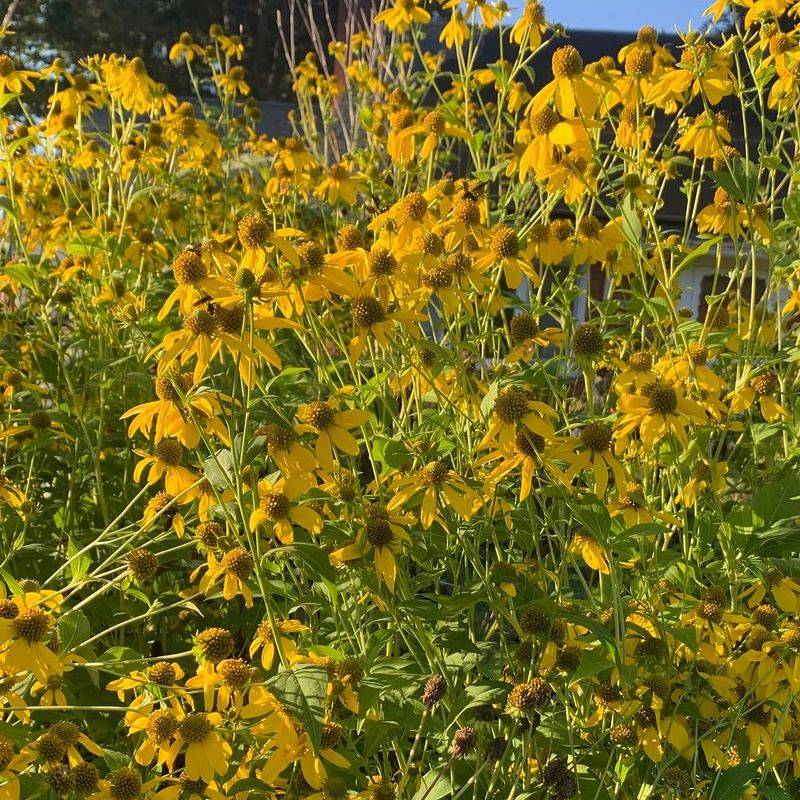
Rudbeckia laciniata is one of those plants that makes a statement the moment it comes into bloom. Cutleaf Coneflower can reach six to nine feet tall in ideal conditions, producing cheerful yellow flowers with distinctive drooping petals throughout mid to late summer.
Pollinators visit the blooms enthusiastically, while the sturdy seed heads that follow become valuable food sources for goldfinches and other seed-eating birds later in the season.
This plant genuinely thrives in moist to wet soils, making it an excellent choice for rain gardens, streamside plantings, and low spots in naturalized borders. Partial shade is tolerated well, though full sun with consistent moisture produces the most vigorous plants.
The deeply cut, lobed foliage gives this species an attractive texture that stands out even before the flowers open.
Spreading by both rhizomes and self-seeding, Cutleaf Coneflower works best in larger native beds where it has room to move around without crowding smaller companions.
Giving each plant at least two to three feet of space at planting keeps the colony manageable in the early years. In smaller gardens, occasional division keeps growth in check.
Leaving the seed heads standing through fall and into early winter is the most important thing you can do for the birds. Goldfinches visit the mature seed heads regularly from September onward, often in small flocks that make the garden feel wonderfully alive.
The tall, upright stems also add real structural interest to the late-season garden long after most other plants have faded.
5. Black Eyed Susan
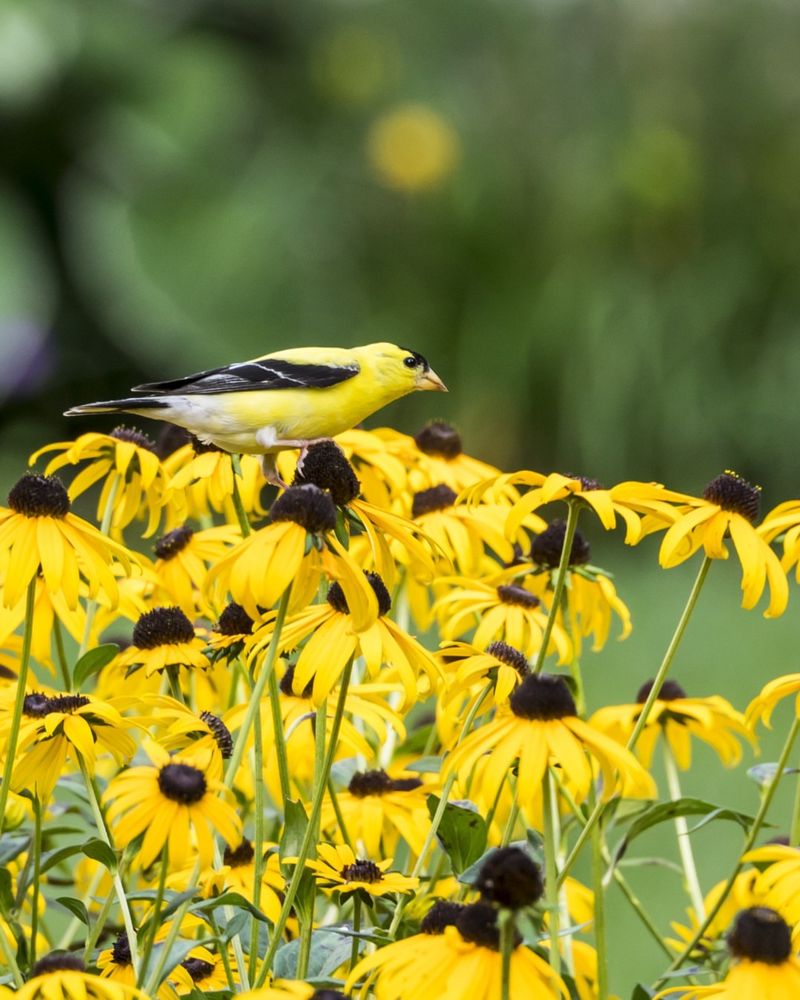
Black Eyed Susan might be one of the most recognized wildflowers in North Carolina, and for good reason.
Rudbeckia fulgida produces waves of golden-yellow blooms with dark chocolate centers from midsummer into fall, creating one of the most reliable pollinator shows in the native garden.
Bees, butterflies, and beneficial insects cover these flowers through the warmest months of the season.
When the blooms fade and the dark seed cones mature, goldfinches and other small seed-eating birds begin paying close attention. The seeds are small but nutritious, and birds like goldfinches have no trouble extracting them from the upright cones.
Leaving seed heads standing rather than cutting everything back in late summer makes a real difference in how often birds visit your garden through fall.
Growing Rudbeckia fulgida in North Carolina is about as low-maintenance as perennial gardening gets. It handles full sun beautifully and tolerates average to clay soils without complaint.
Good drainage helps, but this species is more forgiving of heavier soils than many native perennials, which makes it useful across a wide range of North Carolina garden conditions.
Space plants about 18 inches apart and expect them to spread gradually into tidy clumps over time. You can remove some early blooms to encourage continued flowering, but always let the last round of blooms mature fully into seed heads for the birds.
A well-established patch of Black Eyed Susan rewards you with color, pollinators, and bird activity across multiple seasons without demanding much in return.
6. Coreopsis
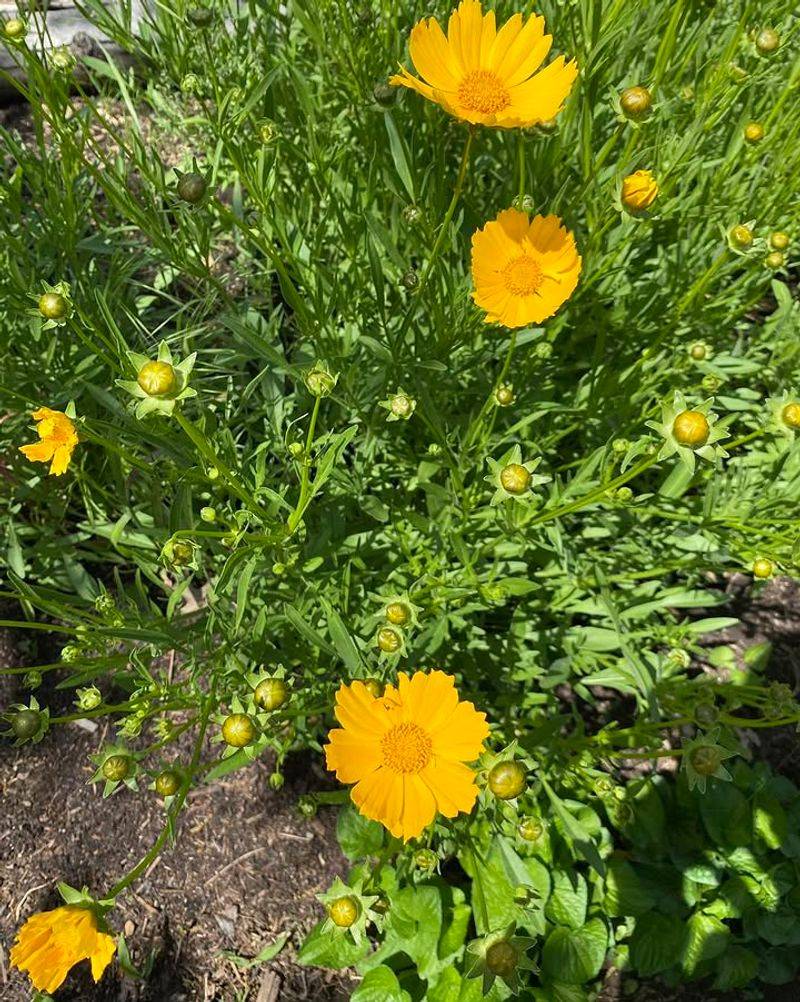
Sunny, cheerful, and surprisingly tough, Coreopsis is one of those native wildflowers that earns its spot in the garden from the very first season.
Coreopsis lanceolata, the lanceleaf coreopsis, and Coreopsis verticillata, the threadleaf coreopsis, are both native to North Carolina and produce masses of bright yellow daisy-like flowers that light up the garden from late spring through summer.
Bees and butterflies are drawn to the blooms consistently through the flowering period, making these plants excellent pollinator companions for the rest of your native plantings.
As the season progresses and seed heads begin to mature, small seed-eating birds including goldfinches will visit and pick through the spent flower heads.
Leaving a portion of the plants untrimmed through late summer gives birds reliable access to those seeds.
Both species prefer full sun and well-drained soils. Coreopsis lanceolata handles sandy and lean soils with ease and reseeds readily, which means a small planting can expand naturally over time into a generous wildflower patch.
Coreopsis verticillata forms tighter, more compact clumps with finely textured foliage that looks polished even in more formal garden settings. Spacing plants about 12 to 18 inches apart works well for both species.
Trimming back about one-third of plants after the first big flush of blooms can encourage a second round of flowering, but saving some seed heads on the remaining plants keeps food available for birds.
These two coreopsis species together extend both the blooming season and the bird-feeding season beautifully in any sunny North Carolina garden.
7. Blazing Star
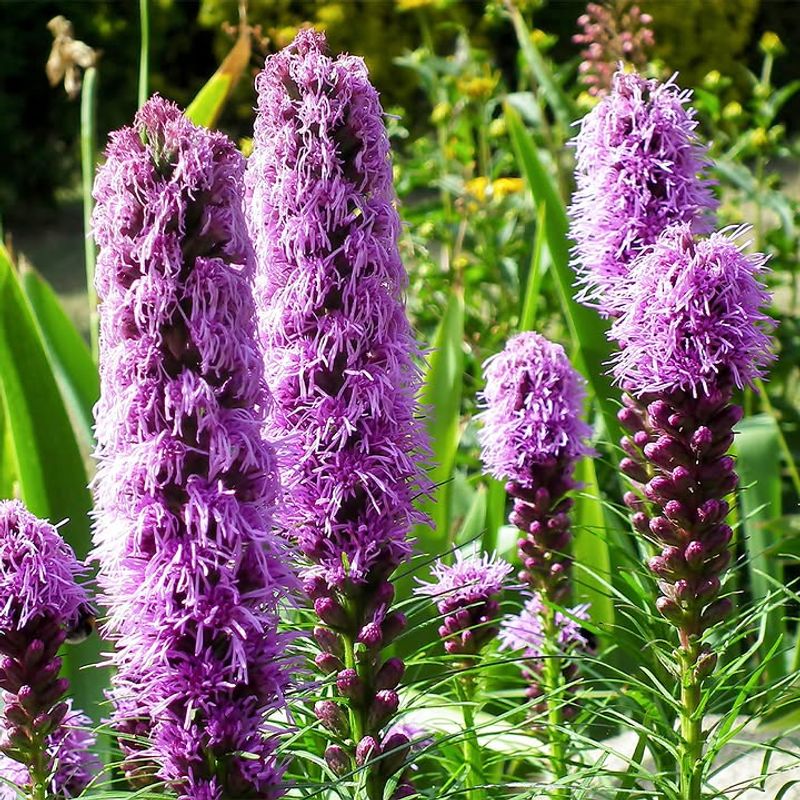
There is something genuinely exciting about watching a Blazing Star come into bloom. Liatris spicata sends up tall, slender spikes covered in vivid purple-magenta flowers from midsummer into early fall, and butterflies respond almost immediately.
Monarchs, swallowtails, and bumblebees are among the most enthusiastic visitors, making this one of the most pollinator-productive native plants you can grow in a North Carolina garden.
What makes Liatris spicata especially interesting for bird gardeners is what happens after the flowers fade. The fluffy seed heads that follow are attractive to goldfinches and other small birds through the fall months.
Leaving the spent flower spikes standing rather than cutting them back right after bloom gives birds a reliable food source during a period when garden seeds are becoming increasingly important.
Growing Blazing Star in North Carolina is straightforward. It performs best in full sun with well-drained to average soils and actually prefers lean conditions over rich, heavily amended beds.
Good drainage is the most critical factor, as Liatris spicata does not tolerate soggy roots well, especially through winter months.
Plant corms about three to four inches deep and space them 12 to 15 inches apart for a full, natural-looking colony.
Blazing Star works beautifully in the middle of a mixed native border, paired with coneflowers, black eyed susans, and native grasses for a layered wildlife planting.
The combination of pollinator support in summer and bird-feeding potential in fall makes this plant a genuinely well-rounded addition to any North Carolina wildlife garden.
8. Switchgrass
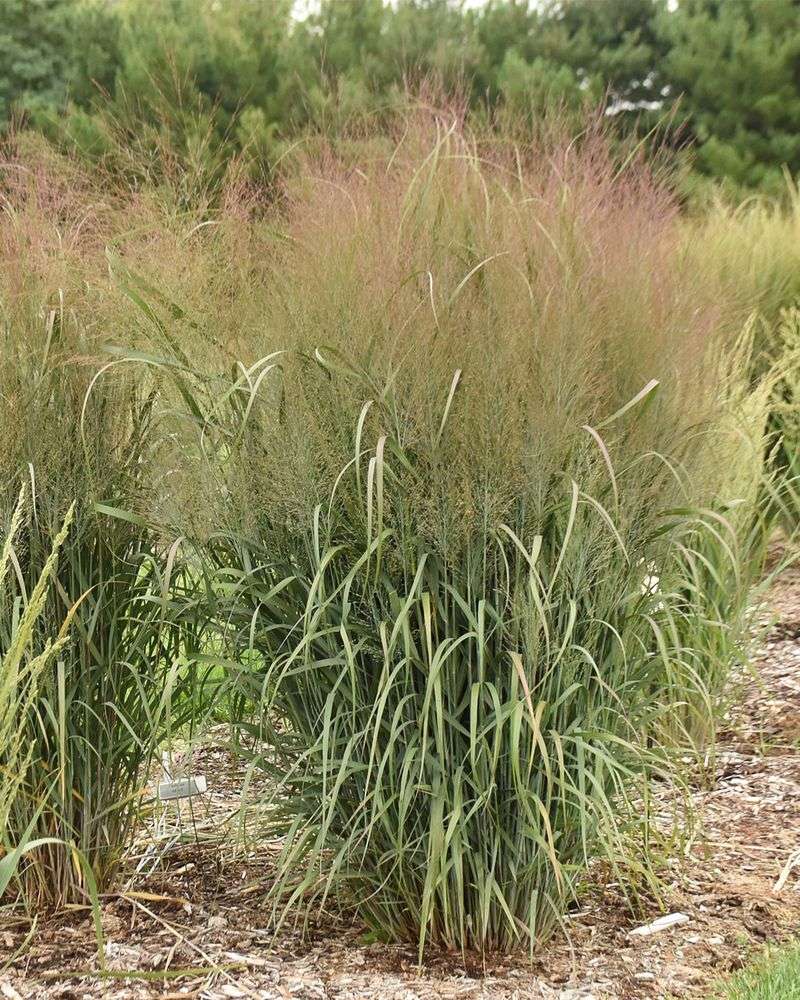
Switchgrass might be the hardest-working plant in a North Carolina wildlife garden that most gardeners overlook.
Panicum virgatum is a native warm-season grass that produces clouds of airy, reddish seed heads from late summer into fall.
Those seeds are a consistent food source for goldfinches, juncos, sparrows, and many other small birds through the cooler months of the year. Beyond seeds, Switchgrass provides something equally valuable: structure and shelter.
The upright clumps stay standing through fall and winter, offering cover for birds during cold snaps and providing visual interest in the garden long after flowering perennials have faded.
That combination of food and shelter in one plant is genuinely hard to beat from a wildlife gardening standpoint.
Panicum virgatum thrives in full sun and adapts to a wide range of soil types, from sandy and dry to moist and clay-heavy. That flexibility makes it useful across nearly every garden situation North Carolina gardeners encounter.
Several cultivars like Shenandoah and Northwind offer reliable performance with attractive fall color ranging from burgundy to gold.
Plant switchgrass clumps about two to three feet apart for a natural-looking mass planting. Cutting the plants back in late winter rather than fall is important because it preserves both seeds and shelter for birds through the coldest months.
Waiting until late February or early March to cut back to about four inches gives birds maximum benefit from the plants while still keeping the garden tidy heading into the new growing season.
9. Cup Plant
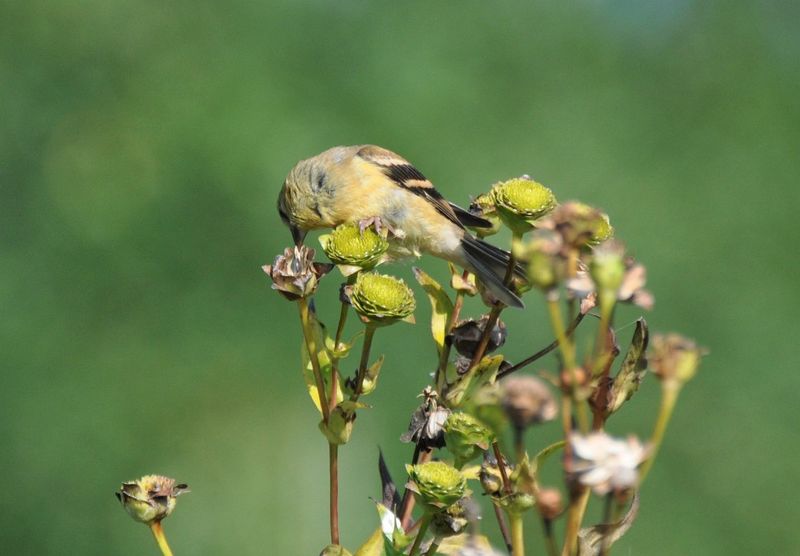
Cup Plant is one of the most architecturally dramatic native perennials you can grow in a North Carolina wildlife garden.
Silphium perfoliatum gets its common name from the way its opposite leaves fuse around the stem, forming small cups that collect rainwater and dew, which birds and insects actually drink from.
That quirky feature alone makes it one of the most interesting plants in any naturalized border.
The sunflower-like yellow blooms open from midsummer onward, attracting bees, butterflies, and a wide range of pollinators.
As the season shifts toward fall and the flowers give way to flat, disc-shaped seeds, goldfinches and other seed-eating birds begin working through the seed heads methodically.
The seeds are substantial enough to be genuinely satisfying food for larger songbirds too.
Cup Plant is not a small garden plant. Silphium perfoliatum regularly reaches six to eight feet tall and spreads steadily by rhizomes, which means it needs space to perform well without overwhelming smaller companions.
Full sun and moist to average soils suit it best, and it handles clay soil better than many tall natives. Meadow edges, rain garden borders, and the back of large native beds are ideal placements.
Spacing plants three to four feet apart at planting gives each one room to establish before they begin spreading. Once a colony gets going, it is impressively self-sufficient.
Leaving the seed heads standing through fall keeps goldfinches coming back reliably, and the tall upright stems add striking structural interest to the winter landscape long after the growing season wraps up.
10. Little Bluestem
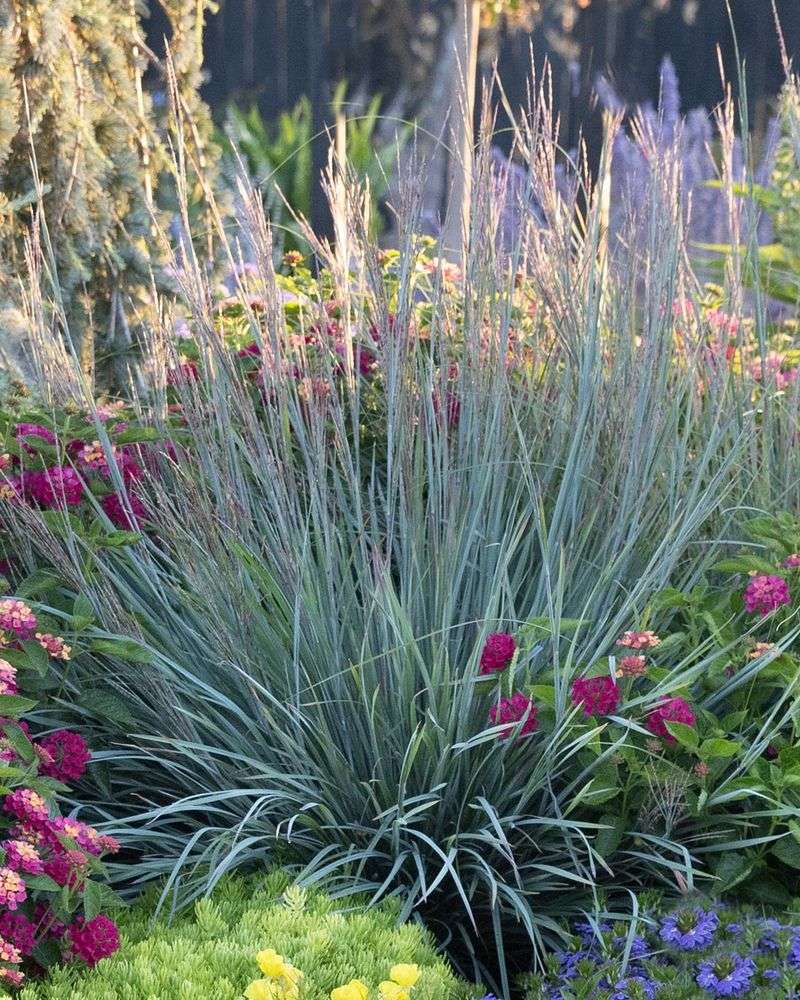
Little Bluestem has one of the most beautiful seasonal transformations of any native plant in North Carolina.
Schizachyrium scoparium starts the growing season as a soft blue-green clump of upright foliage, then shifts through copper, russet, and deep burgundy as fall arrives, all while producing small, fluffy white seed heads that catch the light like tiny sparklers.
Those seed heads are exactly what goldfinches and other small birds come looking for through the fall and into early winter.
The seeds are modest in size but produced in impressive numbers across a well-established clump, giving birds a consistent reason to visit regularly. The upright structure of the stems also provides cover and perching spots for small birds working through the garden.
Pairing Little Bluestem with native coneflowers and black eyed susans creates a layered seed buffet that keeps goldfinches active in your yard from August through January.
Schizachyrium scoparium is perfectly suited to lean, well-drained soils and full sun. It actually performs better in lower-fertility soils than in rich garden beds, where stems can become floppy.
Sandy soils, dry slopes, and sunny open borders are where this grass genuinely thrives with minimal care once established.
Space plants 18 to 24 inches apart for a natural meadow effect. Drought tolerance is excellent after the first season, making Little Bluestem one of the most water-efficient wildlife plants available to North Carolina gardeners.
Leaving the stems standing through winter preserves both seeds and shelter for birds, and the warm fall colors add months of real visual interest to the late-season landscape.