8 Native Florida Shrubs To Plant Instead Of Viburnum Along Fence Lines
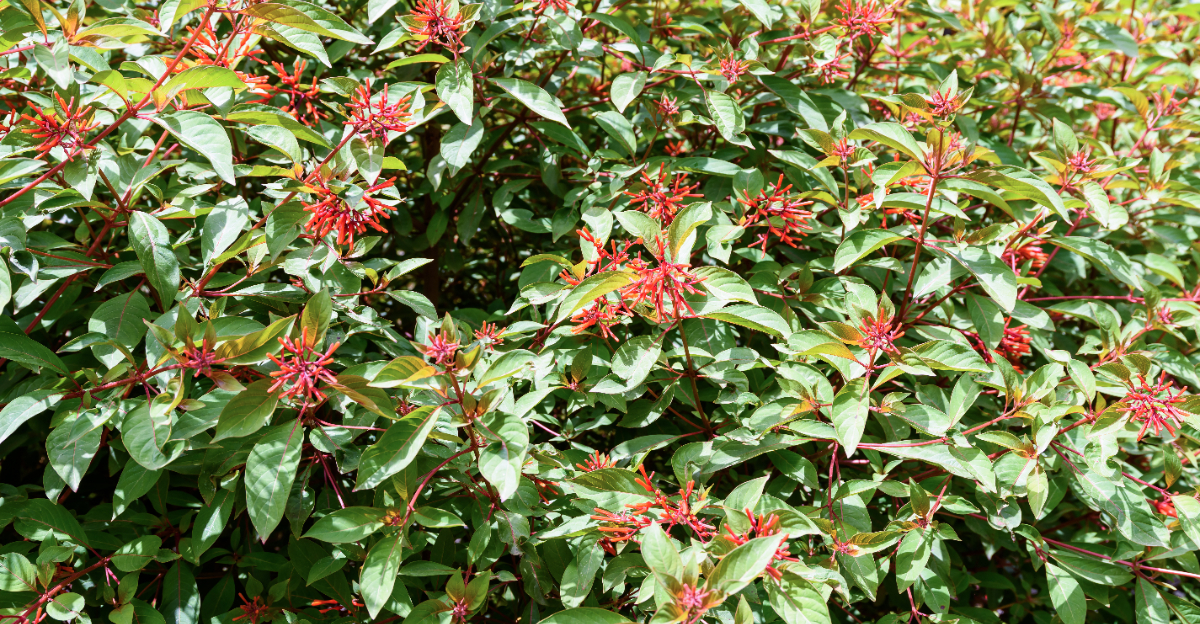
Viburnum has become the safe fence-line answer in Florida. It is familiar, easy to find, and often sold as the obvious choice when a homeowner wants a quick green screen.
But familiar does not always mean best. Plenty of Florida fence lines need something more specific than the standard hedge-row solution.
Some need a shrub that handles wet soil. Some need better drought tolerance.
Some need berries for birds, flowers for pollinators, or a softer look than a clipped wall of green. That is where native shrubs change the conversation.
They bring privacy and structure, but they also bring habitat value, regional resilience, and a better fit for the conditions that actually exist along your fence.
The best part is that the right replacement is not always a complete departure from what people already know.
Sometimes the smarter choice is simply the native version gardeners should have been looking at all along.
1. Walter’s Viburnum Builds A True Native Hedge
What comes to mind when someone says viburnum? For many Florida homeowners, it is sweet viburnum, sandankwa viburnum, or another familiar nursery hedge planted in a straight line along a fence.
Those shrubs are popular for a reason. They are green, dense, and easy to find.
But here is the twist: one of the best viburnums for a fence line is not the standard hedge most people picture at all.
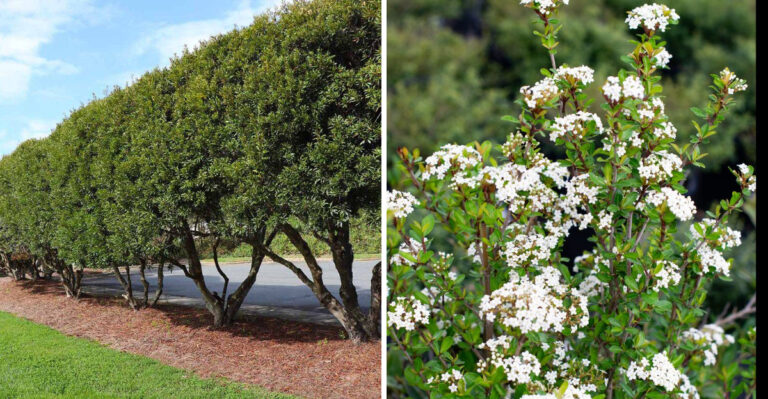
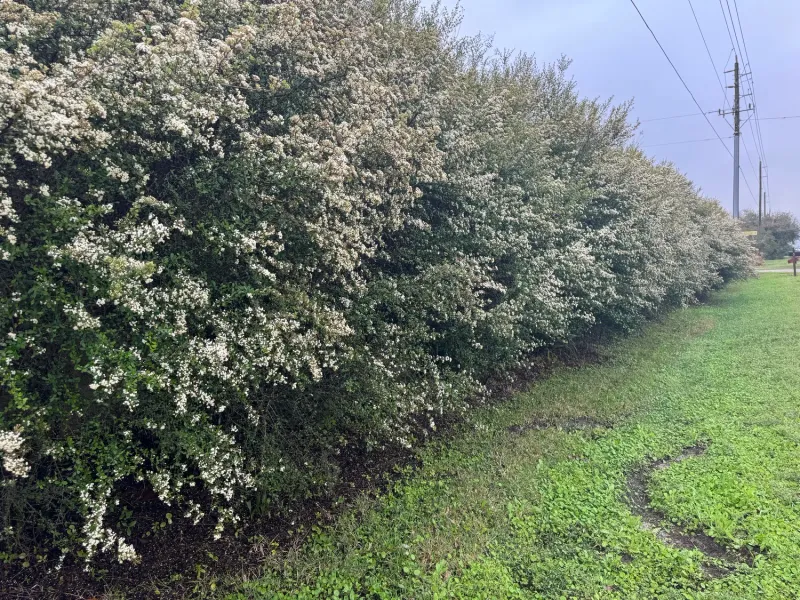
Walter’s viburnum, Viburnum obovatum, is the Florida-native answer hiding in plain sight. It gives gardeners much of what they wanted from the usual fence-line hedge in the first place: evergreen structure, dense growth, spring flowers, and bird-friendly fruit.
It also has enough flexibility to work as either a clipped hedge or a looser natural screen.
This is the plant to consider when you want a more traditional hedge look without relying on the usual non-native options. Standard forms can grow into a large shrub or small tree, while compact cultivars stay lower and tighter.
That makes plant selection especially important. If privacy height is the goal, avoid dwarf forms and look for a taller selection that can actually build a screen along the fence.
In late winter to spring, Walter’s viburnum produces clusters of small white flowers that attract pollinators. The dark berries that follow are eaten by birds, adding wildlife value beyond basic screening.
The foliage stays green through the year in most landscapes, which gives the fence line structure even when the plant is not blooming.
Full sun to part shade works well, and Walter’s viburnum adapts to a range of soil conditions once established.
It can be pruned into a formal hedge, shaped lightly as an informal screen, or allowed to grow into a small multi-trunk tree depending on the space.
Spacing depends heavily on the cultivar and desired look, so check mature width before planting.
For gardeners who like the reliability of viburnum but want the native version, Walter’s viburnum is one of the strongest choices available.
Your Florida Garden Changes Every Week. Your Plan Should Too.
Gardening in Florida changes quickly throughout the season. Every Friday you’ll receive a simple weekly plan showing exactly what to plant, prune, fertilize, harvest, and protect so you never miss the right timing.
It belongs in the conversation not as an alternative to every viburnum, but as the native viburnum worth planting on purpose.
2. Simpson’s Stopper Creates A Polished Native Screen
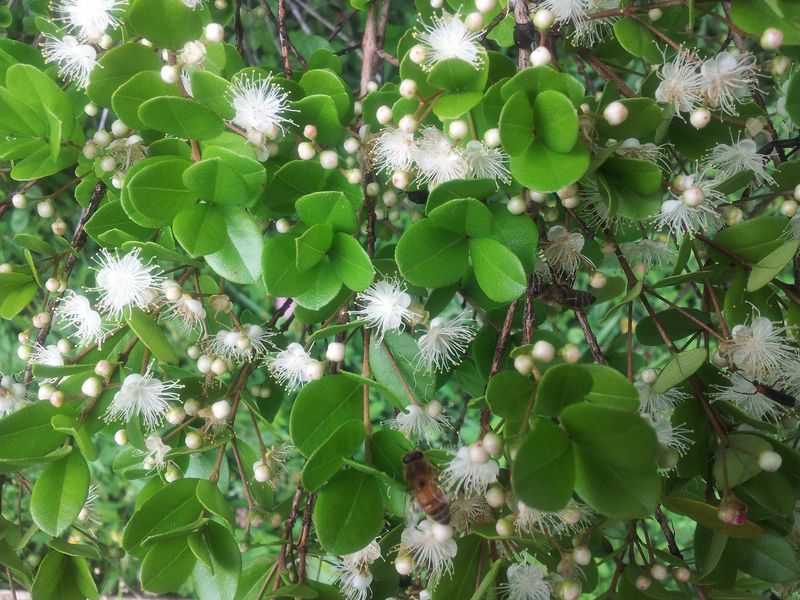
A fence line can look polished and purposeful without relying on a standard clipped hedge. Simpson’s stopper, known botanically as Myrcianthes fragrans, is a native that earns its place in more formal or semi-formal landscapes.
It forms a dense, upright evergreen screen with attractive peeling bark, small fragrant white flowers, and orange-red berries that birds genuinely seek out.
Mature size can vary, but many plants reach somewhere between eight and fifteen feet in height when left unpruned. That range makes it useful along fence lines where you want real vertical presence without a fast-spreading plant.
Spacing plants around four to six feet apart typically allows them to knit together into a solid screen over time. Checking the mature size of the specific nursery stock before planting is always worth doing.
Sun to part shade works well for this shrub. It handles full sun in most parts of the state, though some afternoon shade in hotter inland areas can help it stay looking its best.
Soil drainage matters here. Simpson’s stopper prefers well-drained to moderately moist soils and does not perform as well in consistently waterlogged spots.
For gardeners who want a native screen that feels refined rather than wild, this plant is a genuinely strong candidate. It responds well to light pruning if shaping is needed, and it does not sucker or spread aggressively.
The berries attract mockingbirds, robins, and other native species, adding wildlife value that a plain clipped hedge simply cannot match. It is native to South and Central regions and may be less cold-hardy in the northernmost parts of the state.
3. Yaupon Holly Makes A Tough Evergreen Fence Line
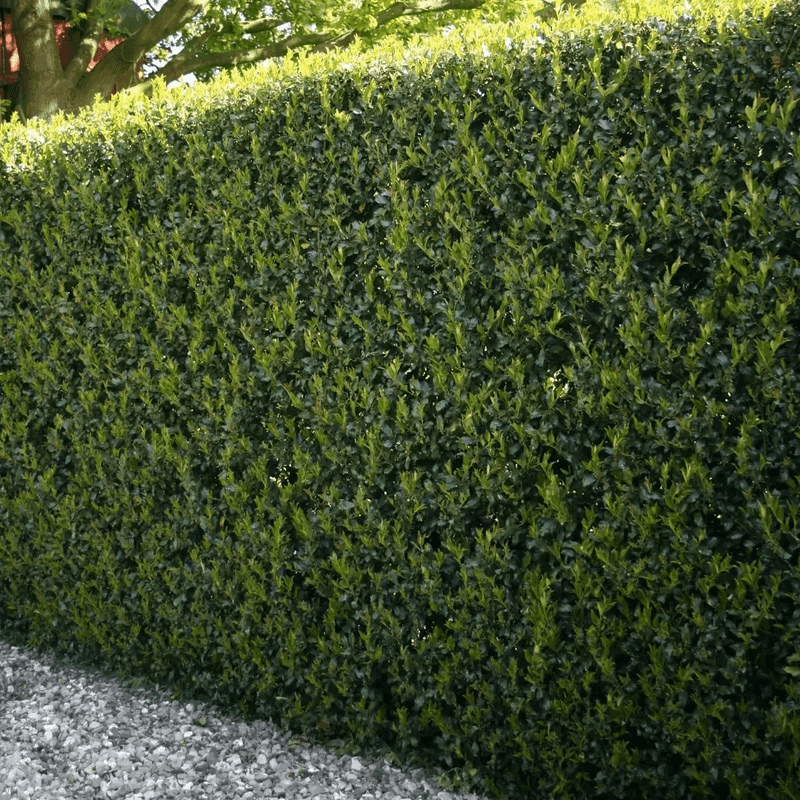
Evergreen structure matters when privacy is the goal, and yaupon holly delivers that structure with a toughness that few native shrubs can match. Ilex vomitoria is native across much of the state and much of the southeastern United States.
It tolerates drought, poor soils, salt exposure, and a wide range of light conditions, making it one of the most adaptable native options for fence lines across the state.
Cultivar and form selection makes a real difference here. Some yaupon hollies grow into small multi-stemmed trees reaching twenty feet or more, while compact and dwarf selections stay much shorter and shrubby.
For a fence-line privacy screen, look for upright selections rather than the low mounding dwarf types. Cultivars like ‘Will Fleming’ or ‘Pendula’ offer distinct forms, so reading the plant tag carefully before buying is a smart move.
The small red or orange berries on female plants are a major wildlife draw. Cedar waxwings, mockingbirds, and other birds feed heavily on the fruit in late fall and winter.
To get berries, you typically need at least one male plant nearby for pollination.
Pruning yaupon holly is straightforward. It tolerates shearing if a more formal look is wanted, but it also looks attractive when allowed to grow in its natural form.
Spacing depends on the cultivar chosen, so confirming mature width before planting helps avoid crowding against a fence. This shrub is statewide-adapted and handles the humidity and heat of local landscapes without complaint.
It is genuinely one of the most reliable native screening plants available to gardeners today.
4. Wax Myrtle Fills Space Fast With Soft Native Texture
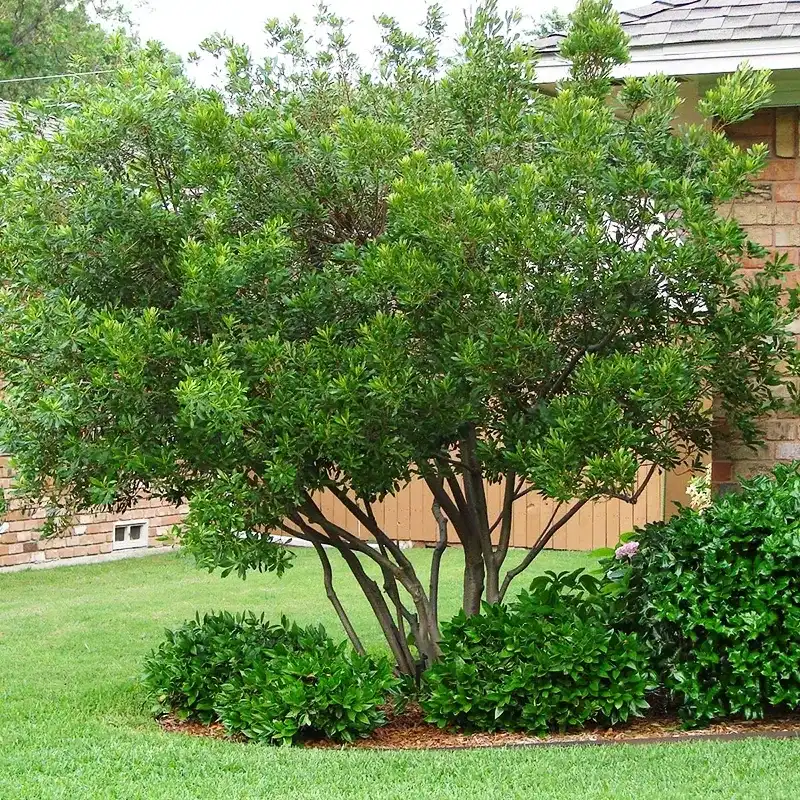
Fast coverage works best when the bed has room to breathe, and wax myrtle is the kind of plant that rewards gardeners who give it space. Morella cerifera is commonly called wax myrtle or southern bayberry.
This native shrub grows quickly and creates a soft, layered privacy screen with aromatic gray-green foliage. It is not a tight clipped hedge, and trying to force it into one usually leads to more work than the result is worth.
Given enough room, wax myrtle can reach ten to fifteen feet in height, sometimes more in ideal conditions. It can spread and sucker in some sites, gradually forming a thicket-like mass rather than a single tidy row.
That quality makes it excellent for naturalistic fence lines or larger properties where informal screening is the goal. In narrow or tightly managed beds, it may need more frequent attention to stay in bounds.
Sun to part shade suits this plant well. It handles a range of soil types, including moist or periodically wet areas, and it tolerates coastal conditions better than many shrubs.
The waxy bluish-gray berries attract a wide range of birds, including yellow-rumped warblers, tree swallows, and bluebirds.
One practical note worth keeping in mind: wax myrtle can be pruned into a multi-stemmed small tree if the lower branches are removed over time. This opens up the base and gives the planting a different character.
For gardeners who want quick native screening without a formal look, it is hard to beat. Just plan for its natural enthusiasm and give it the room it genuinely needs to perform well.
5. Florida Privet Forms A Dense Wildlife-Friendly Hedge
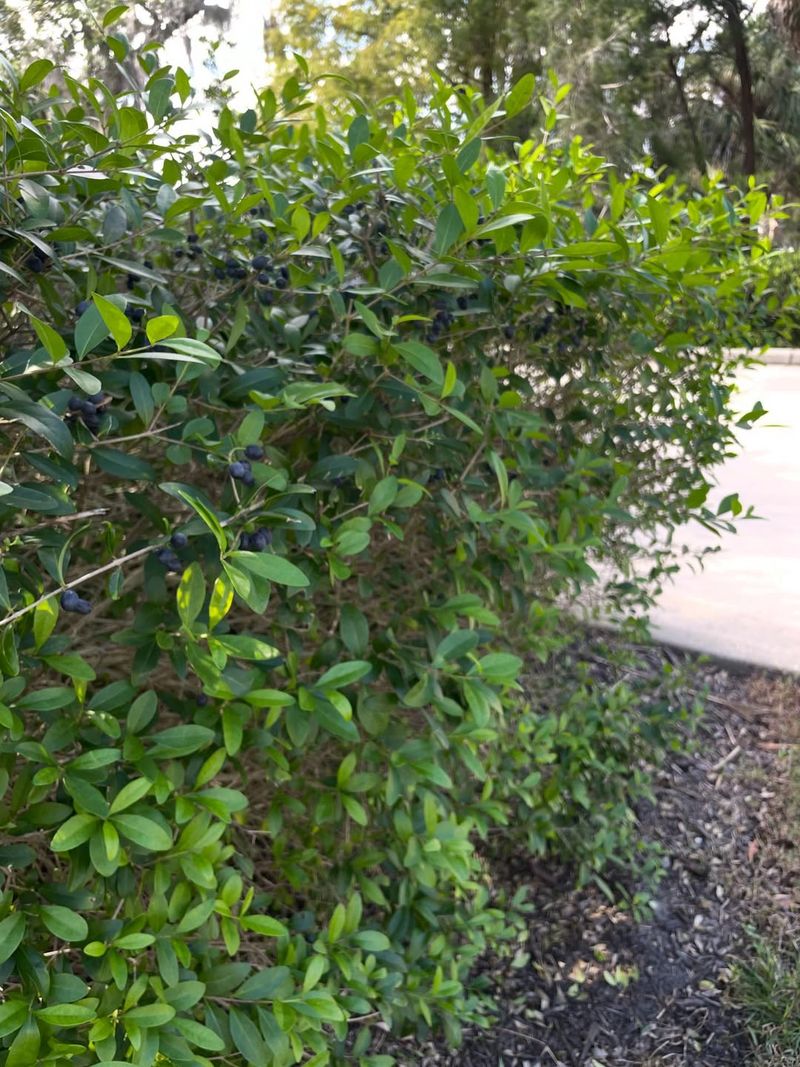
A dense native hedge can do more than hide a fence – it can feed birds, support pollinators, and add seasonal interest all at once. Florida privet, Forestiera segregata, is a native shrub that forms a tight, twiggy screen.
It produces small flowers in late winter or early spring and dark berries that wildlife quickly find. It has a naturally dense branching habit that lends itself well to hedging without requiring aggressive shaping.
Mature size typically falls somewhere in the range of six to twelve feet in height, though growth can vary depending on site conditions, moisture, and pruning.
It handles full sun and tolerates drought once established, which makes it a practical choice for sunny fence lines with average to dry soils.
Part shade is also tolerated, though growth may be a bit looser in lower light conditions.
One important reminder before buying: confirm the botanical name at the nursery. The word privet is used for both native and non-native species, and non-native privets have invasive potential in some regions.
Forestiera segregata is the native species. Asking specifically for the botanical name protects you from bringing home the wrong plant.
The flowers appear before the leaves flush in late winter, providing early nectar for pollinators. The small dark berries ripen in summer and attract songbirds reliably.
Pruning after the fruiting season allows you to shape the plant without losing the berry crop. For gardeners who want a native hedge that earns its keep ecologically, Florida privet is a strong choice.
It still provides solid fence-line structure and remains a genuinely useful, underused option in local landscapes.
6. Marlberry Adds Glossy Privacy In Warm Regions
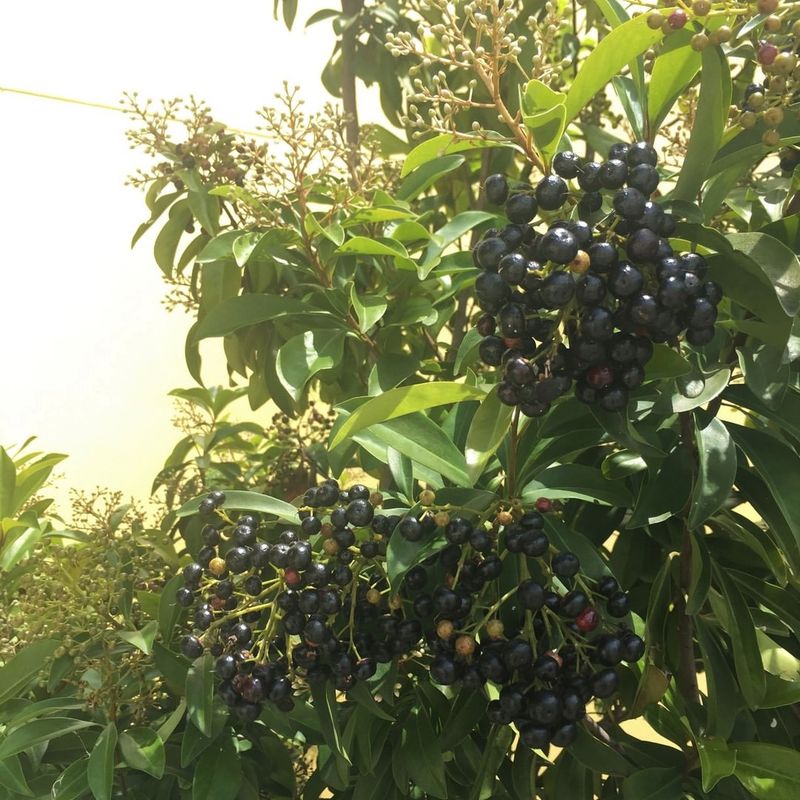
Glossy foliage gives privacy a softer look, and marlberry brings exactly that quality to the right fence line. Ardisia escallonioides is a native shrub with rich, deep green leaves that catch the light beautifully in part shade settings.
It has a layered, upright growth habit that can create a lush, tropical-feeling screen without the aggressive spread of some faster-growing shrubs.
Regional fit matters more with marlberry than with some of the other plants on this list. It is best suited to South Florida and warmer parts of Central Florida.
Frost and hard freezes can set it back significantly, so gardeners in northern regions or areas that see regular cold winters should consider a hardier alternative.
In protected sites, such as near a building or fence that blocks cold north winds, it may perform better than in open exposed locations.
Part shade to filtered light tends to suit this plant well. It can handle some sun, especially in southern regions, but it often looks its best with some protection from harsh afternoon exposure.
Soil should be well-drained, and it does not do well in poorly drained or consistently wet spots.
The small white to pinkish flowers appear in clusters and are followed by dark purple to black berries that birds find attractive. It is not the fastest grower, so patience is part of the deal with marlberry.
But for gardeners in warm regions who want a glossy, refined native screen with real wildlife value, it is a genuinely rewarding choice.
Spacing plants about four to six feet apart gives each plant room to develop its naturally layered form along the fence line.
7. Dahoon Holly Works Where Soil Holds More Moisture
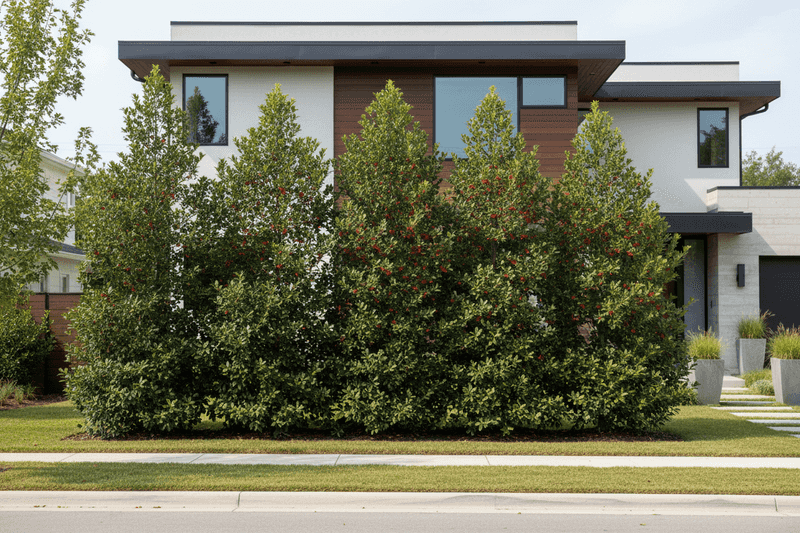
Moist soil calls for a different screening plant. Dahoon holly is one of the best native options when a fence line sits near low-lying ground or a spot that holds water after rain.
Ilex cassine is a native evergreen that grows naturally along stream edges, wetland margins, and moist flatwoods throughout much of the state.
Along a fence line with similar conditions, it can provide year-round green structure and outstanding wildlife value.
Dahoon holly tends to grow in a more upright, tree-like form over time rather than spreading wide like a traditional hedge shrub.
Mature specimens can reach fifteen to thirty feet in some conditions, though many landscape plants stay considerably shorter depending on soil, water, and pruning.
For a fence-line screen, it may look more like a row of small multi-stemmed trees than a clipped wall, and that natural quality can actually be a strength in the right setting.
The bright red or orange berries are produced on female plants and are among the most valuable native berry sources for wintering birds. Robins, cedar waxwings, and bluebirds are regular visitors when the fruit is ripe.
A male plant nearby is typically needed for reliable berry production.
Full sun to part shade suits dahoon holly well, and it is more cold-tolerant than some other native screening shrubs, making it useful across a wider range of the state.
For gardeners with a soggy or reliably moist fence-line bed, this plant offers a practical solution.
It is especially useful where other shrubs struggle and brings strong wildlife value as well.
8. Firebush Brings A Looser Flowering Screen
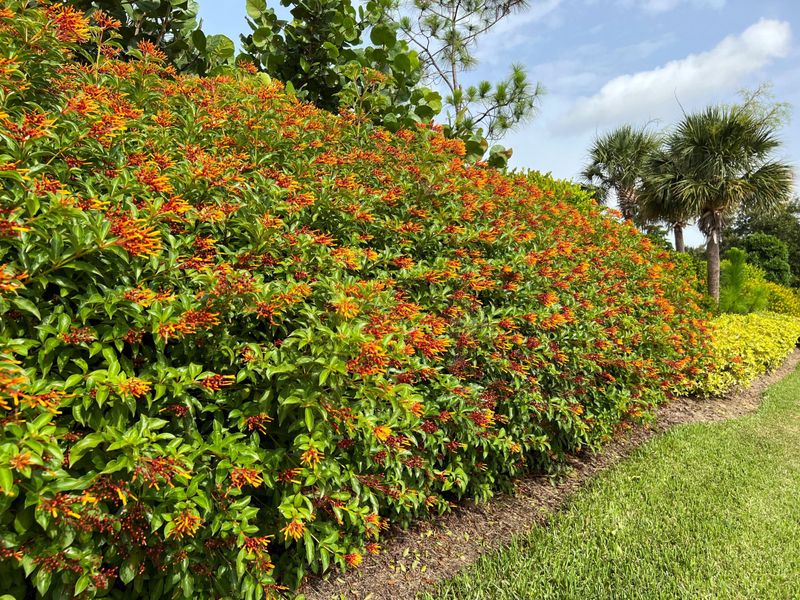
A flowering screen feels less formal but more alive, and firebush is one of the most energetic native shrubs you can plant along a fence line.
Hamelia patens var. patens – the true native species – produces clusters of tubular orange-red flowers nearly year-round in warm regions.
It attracts hummingbirds and butterflies with reliable enthusiasm. It is not a dense formal hedge, and it should not be chosen with that expectation in mind.
Think of firebush as a bold, colorful backdrop rather than a tight privacy wall. The stems are upright but loose, and the plant tends to have an open, arching quality that gives a fence line energy and movement.
In South Florida and warm parts of Central Florida, it can reach six to ten feet in height and stay relatively full. In northern parts of the state, hard winters may cut it back significantly, and it often re-sprouts from the roots in spring.
One important note for buyers: confirm you are purchasing the native variety rather than a non-native or hybrid form. Some nurseries sell a compact hybrid that looks similar but has less wildlife value.
Asking for Hamelia patens var. patens and double-checking with the nursery staff helps ensure you get the real native plant.
Full sun brings out the best flowering performance, though firebush tolerates some light shade. Soil does not need to be rich or amended.
Once established, it is quite drought-tolerant and low-maintenance. For gardeners who want color, wildlife activity, and a relaxed native look along a fence line, firebush is a lively choice.
It works better as a natural screen than a clipped wall and earns attention all season long.