These Ohio Plants Bring Goldfinches In Droves From June Through September
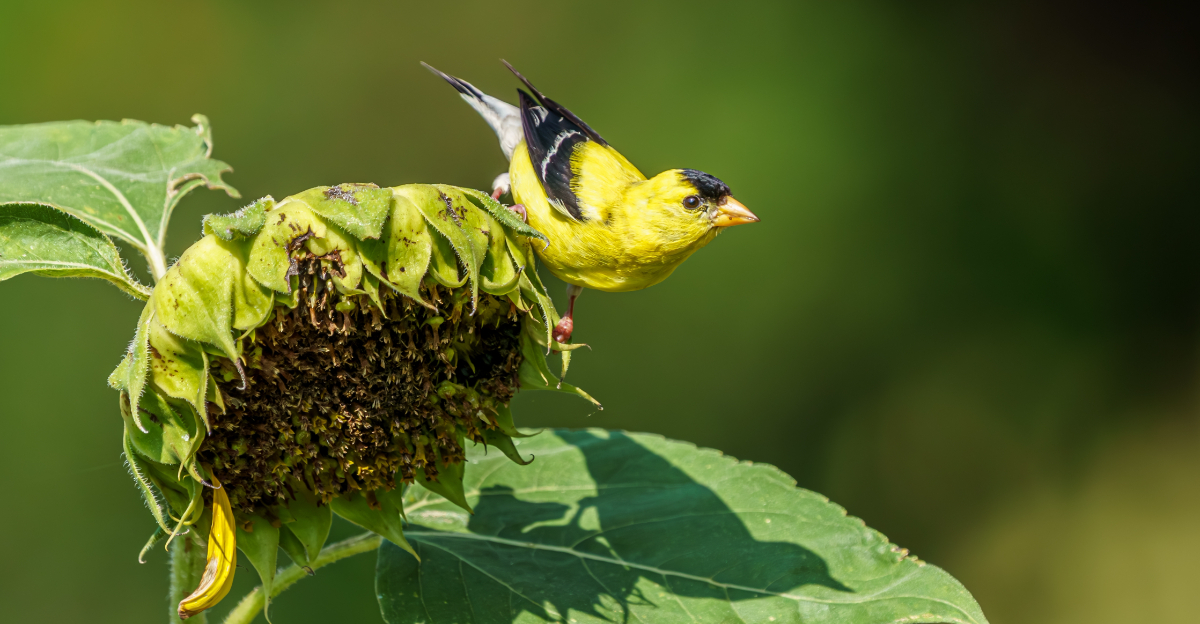
Goldfinches don’t show up on demand. Put out the wrong seed in the wrong spot and they’ll pass right over a yard without a second look.
But get the planting right and they arrive in numbers that stop people in their tracks. Bright yellow against green foliage, they work through seed heads with the acrobatic efficiency that makes them one of Ohio’s most satisfying backyard birds to watch.
The secret isn’t a feeder. It’s plants.
Goldfinches are seed specialists, and they have strong preferences about where that seed comes from. Native Ohio plants that produce the right kind of seed heads can turn a yard into a reliable goldfinch destination.
The timing matters too, carrying that appeal from June straight through September. The birds find these plants on their own once they’re established.
The only question is which ones to put in the ground.
1. Purple Coneflowers Offer Seeds Goldfinches Love
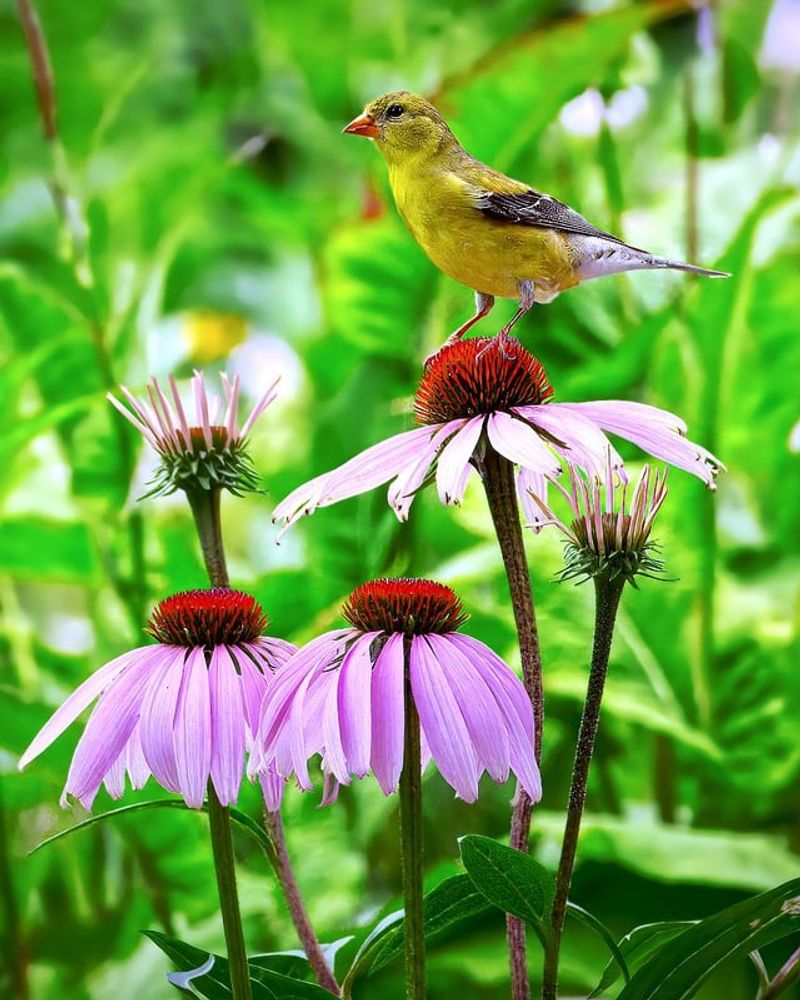
Few plants do double duty as beautifully as purple coneflower. From June into July, the blooms bring color and pollinators to sunny borders.
Then, as the petals fade and the spiky brown seed heads form, goldfinches start to pay attention. These birds have a strong preference for seeds, and coneflower seed heads can become a reliable snack bar later in summer and into early fall.
The key is restraint with trimming. Cutting off every faded bloom keeps the garden tidy, but it removes exactly what goldfinches are looking for.
Leave at least some seed heads standing, especially in late July and August, and you give birds a reason to land.
Goldfinches often cling sideways to the seed heads, picking seeds with quick, precise movements that are fun to watch from a kitchen window or porch chair.
Purple coneflowers grow well in full sun with well-drained soil and are native across much of the eastern and central United States, including many parts of our state.
New plants need regular watering until their roots settle in, usually through the first growing season.
After that, established plants are fairly drought-tolerant and low-maintenance. Planting in groups of three or more gives birds a fuller feeding area and makes the garden look more natural and inviting overall.
2. Black-Eyed Susans Keep Seed Heads Busy In Summer
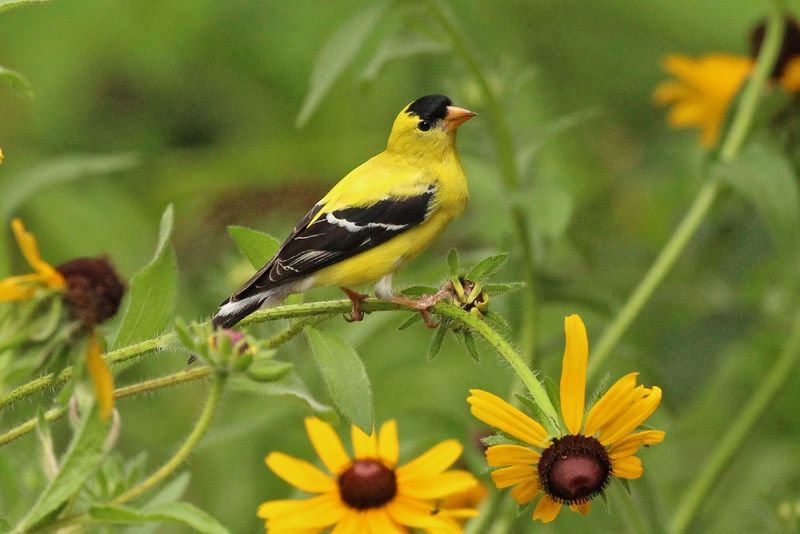
Cheerful and tough, black-eyed Susans are a staple of sunny Ohio gardens for good reason. Their bright yellow petals and dark centers bloom from late June through August, drawing pollinators and adding bold color to borders and meadow-style plantings.
Once those flowers begin to fade, the seed heads that remain can attract goldfinches looking for a quick meal during their busy summer season.
Gardeners who want both color and bird value can find a middle ground with selective trimming. Remove some spent blooms to encourage fresh flowering, but leave others standing to mature into seed heads.
Goldfinches are more likely to visit when seed heads are plentiful and easy to reach, so a patch of black-eyed Susans is more useful than a single plant tucked in a corner.
Your Ohio Garden Changes Every Week. Your Plan Should Too.
Gardening in Ohio changes quickly throughout the season. Every Friday you’ll receive a simple weekly plan showing exactly what to plant, prune, fertilize, harvest, and protect so you never miss the right timing.
These plants thrive in full sun and well-drained soil, and they are adaptable across most of the state, from the flat western farmland areas to hillier southern regions.
One extra benefit is that black-eyed Susans can reseed naturally in spots where conditions suit them, slowly spreading to fill a border or meadow edge over a few seasons.
That natural spread means more seed heads over time, which only adds to their value for seed-eating birds like goldfinches visiting from July through September.
3. Sunflowers Turn Gardens Into Goldfinch Feeding Stations
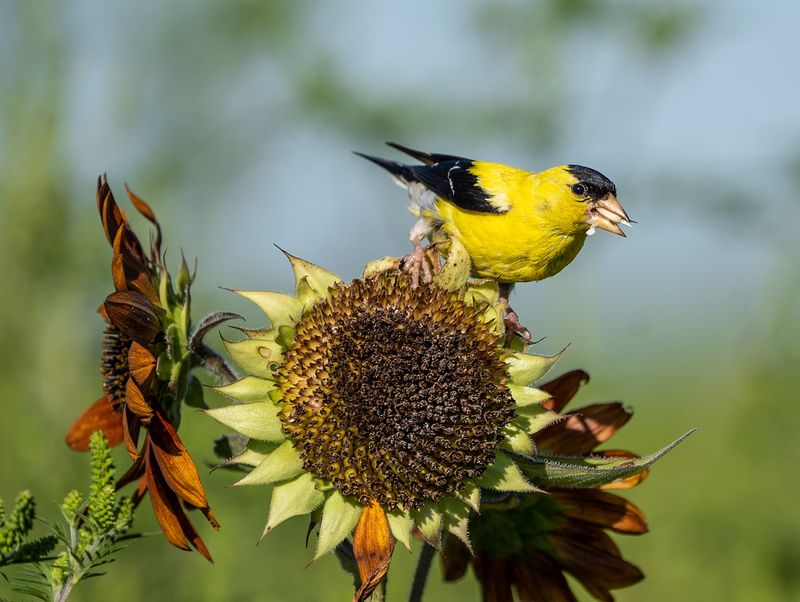
Planting sunflowers for goldfinches is one of the most satisfying moves a backyard gardener can make.
When sunflower heads mature and seeds ripen, usually from late July into September, goldfinches often show up in small groups to work the seed heads from top to bottom.
Watching a bright yellow bird cling to a giant sunflower face while picking out seeds is a simple backyard pleasure. It makes gardening feel completely worth it.
Annual sunflowers like Helianthus annuus are the most common choice, and they are easy to grow from seed sown directly in the garden after the last frost. Taller varieties may need a stake or support if summer storms are common in your area.
The most important step for bird value is leaving the heads standing after petals drop. Cutting them down early means losing the seed crop that goldfinches are waiting for.
Native perennial sunflowers, such as Helianthus strumosus or Helianthus divaricatus, can also work well in larger sunny borders. They are especially useful in naturalized areas where they have room to spread.
These perennials come back each year and can form bold clumps over time. All sunflowers prefer full sun and reasonably well-drained soil.
Avoid using pesticides anywhere near sunflower plantings, since goldfinches and other birds may also feed on insects around the plants during the growing season.
4. Coreopsis Adds Small Seeds To Sunny Borders
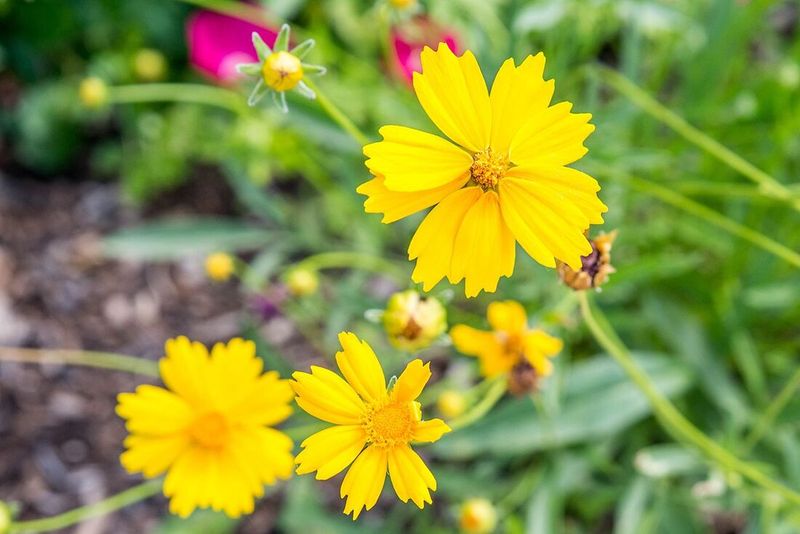
Bright, long-blooming, and low-fuss, coreopsis brings weeks of yellow flowers to sunny borders from late spring well into summer. Most gardeners know it as a cheerful color plant.
But the seed heads that form after flowers fade can also attract small seed-eating birds, including goldfinches, later in the season.
The seeds are small, so coreopsis is not the powerhouse feeder that a sunflower or coneflower can be, but it adds variety to a seed-rich garden.
Trimming does extend bloom time on many coreopsis types, which is a real advantage if you want color all summer. The nuanced approach is to trim some spent flowers while leaving others to go to seed.
Different species and cultivars behave differently, so pay attention to how your particular plants perform. Tickseed coreopsis, Coreopsis tinctoria, and threadleaf coreopsis each have slightly different seed head structures and timing.
All coreopsis types generally prefer full sun and well-drained to average soil. They are fairly drought-tolerant once established, which makes them practical for hot, dry spots in the yard where other plants struggle.
Planting coreopsis alongside coneflowers or black-eyed Susans creates a layered seed-head garden that offers birds multiple options in one sunny patch.
That kind of variety is what keeps goldfinches returning to check the garden throughout late summer and into September.
5. Cup Plant Brings Height, Seeds, And Perching Spots
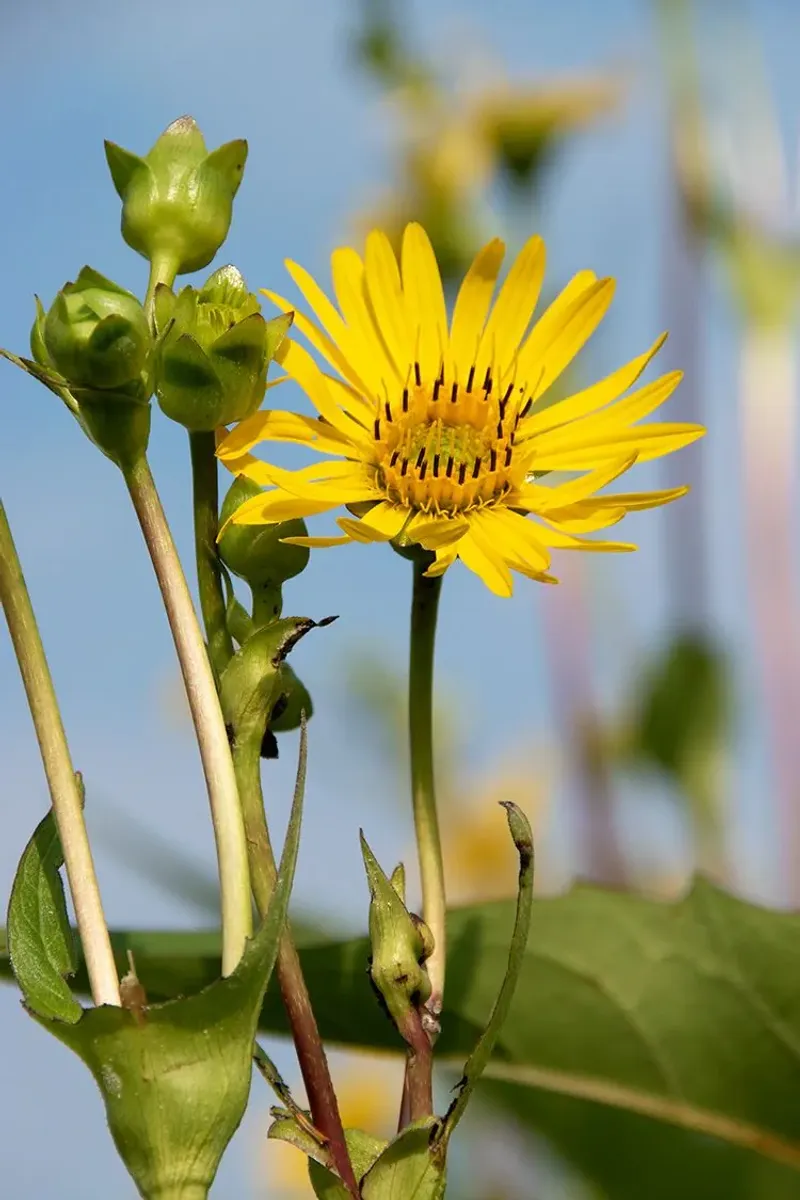
Cup plant, known botanically as Silphium perfoliatum, is not a plant for small or tidy yards. It can reach six to eight feet tall in a single season, and it spreads assertively once established.
That said, in a larger sunny border, a naturalized area, or a meadow-style planting, cup plant earns its space. It provides tall stems that act as natural perches and bright yellow flowers that pollinators love in July and August.
As summer winds down, its seed heads may also draw birds, including goldfinches.
The leaves of cup plant grow in a way that forms small cups where they meet the stem, and these can collect a bit of rainwater. It is a neat botanical quirk, but gardeners should not count on it as a meaningful bird water source.
A proper birdbath nearby does far more for the birds in your yard than leaf cups can.
The strong warning with cup plant is site selection. Put it in the wrong spot and it will crowd out smaller plants and spread far beyond its intended area.
It belongs in big borders, rain garden edges, or naturalized sections where size and spread are welcome. In the right place, though, it adds bold height, structure, and late-season seed value that complements the other plants in a wildlife-friendly garden.
Full sun and average to moist soil suit it best.
6. Joe-Pye Weed Draws Insects Before Seeds Form
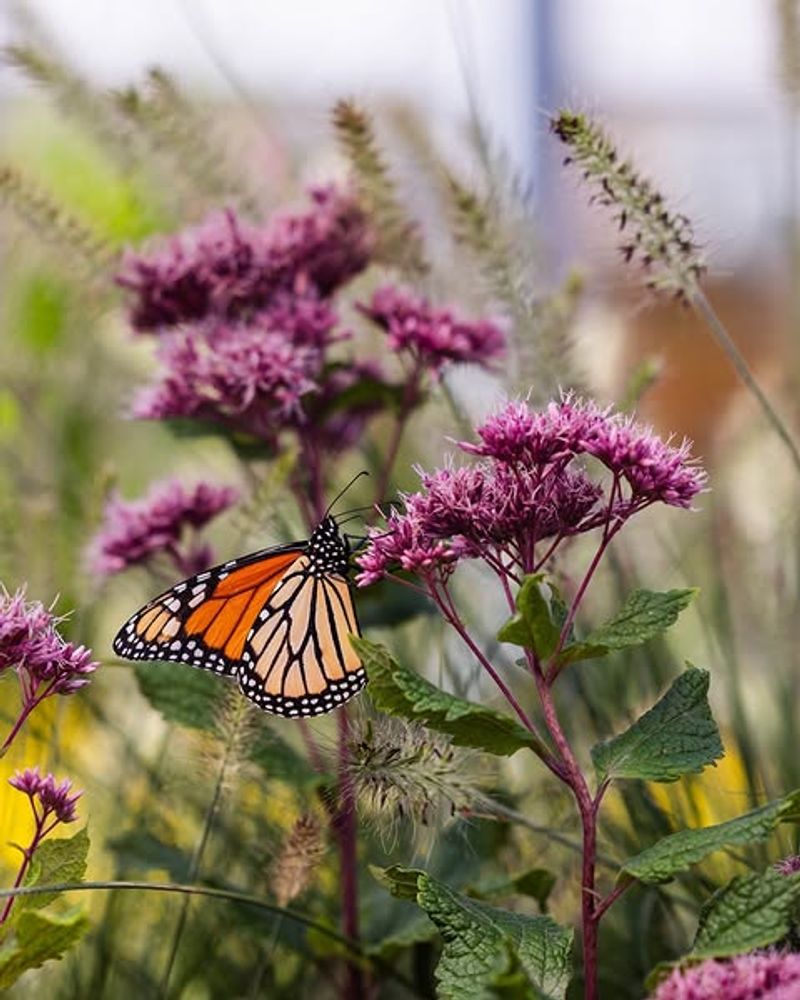
Joe-Pye weed is not a seed-head plant in the way that sunflowers or coneflowers are, but it earns a spot on this list for a different reason.
When its large, dusty-pink flower clusters open in July and August, they become one of the most pollinator-active spots in the garden.
Butterflies, bees, and other insects crowd the blooms for weeks. A garden buzzing with insect life feels more alive and welcoming to birds in general, even seed-focused ones like goldfinches.
After the flowers fade, Joe-Pye weed does form seed heads, though they are not as heavily targeted by goldfinches as coneflower or sunflower seeds. The real value here is the overall habitat contribution.
A yard with tall, native, insect-supporting plants is a healthier and more complex environment than one planted only with traditional garden varieties. That complexity tends to support more bird activity across the board.
Joe-Pye weed needs room. Depending on the species, it can reach five to seven feet tall and spreads to form substantial clumps over time.
It performs best in full sun to part sun with consistent moisture, making it a natural fit for damp garden areas, rain garden edges, or the back of a large border. Avoid planting it in tight, dry spots.
In the right location, it carries the garden from midsummer into fall with impressive, wildlife-friendly presence and reliable native value throughout the season.
7. New England Asters Feed Pollinators Before Fall Seeds Arrive
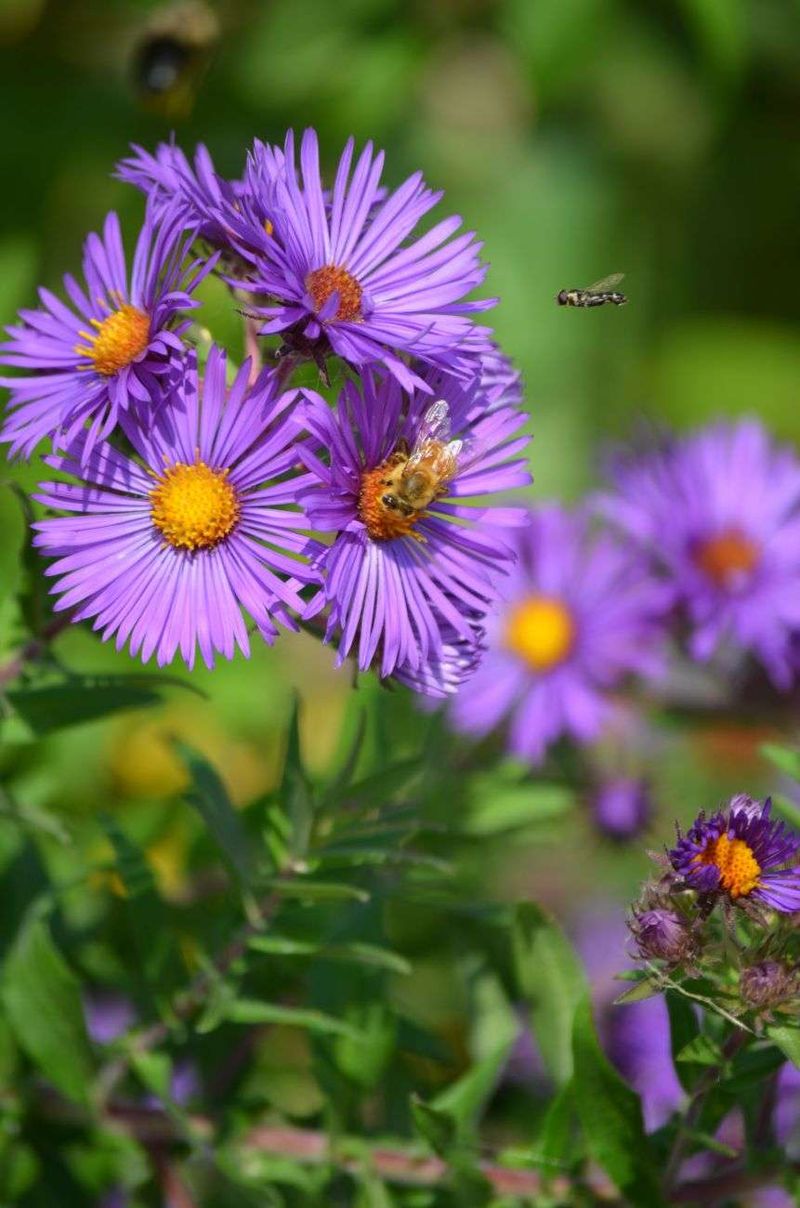
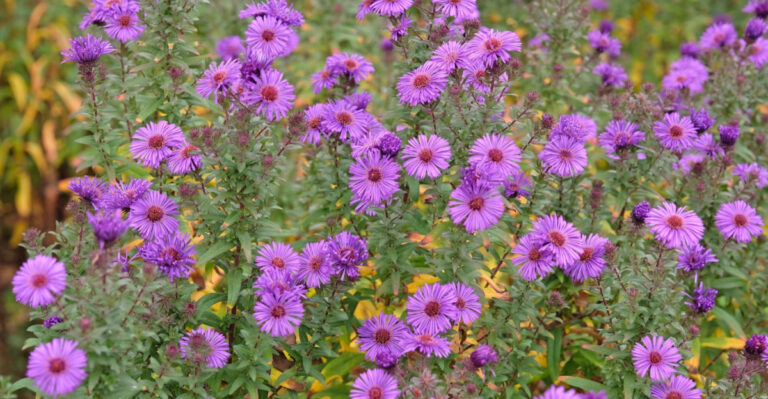
September in an Ohio garden can feel like things are winding down, but New England asters have other ideas. These tall native perennials burst into bloom just as many other garden plants are finishing up.
In late summer and early fall, they cover themselves in purple, pink, or violet flowers that pollinators absolutely flock to. That late bloom is genuinely valuable for bees and butterflies preparing for colder months ahead.
For goldfinches, the main draw comes a bit later, after the flowers fade and small seed heads begin to form.
Asters are in the composite family, related to coneflowers, and their seed heads can attract finches looking for late-season food before migration patterns shift.
Goldfinches that linger into September and October may visit aster seed heads as part of their foraging routine. That is especially likely in gardens where other seed sources are also available nearby.
New England asters can get quite tall, sometimes reaching four to six feet, and they may flop or lean without support.
A late spring cutback, trimming plants back by about half in May or early June, can encourage bushier, sturdier growth that holds up better by fall bloom time.
These plants prefer full sun and tolerate average to moderately moist soil. They work best in larger borders or naturalized areas where their height and spread feel at home rather than crowded or out of place.
8. Native Thistles Give Goldfinches Food And Nesting Fluff
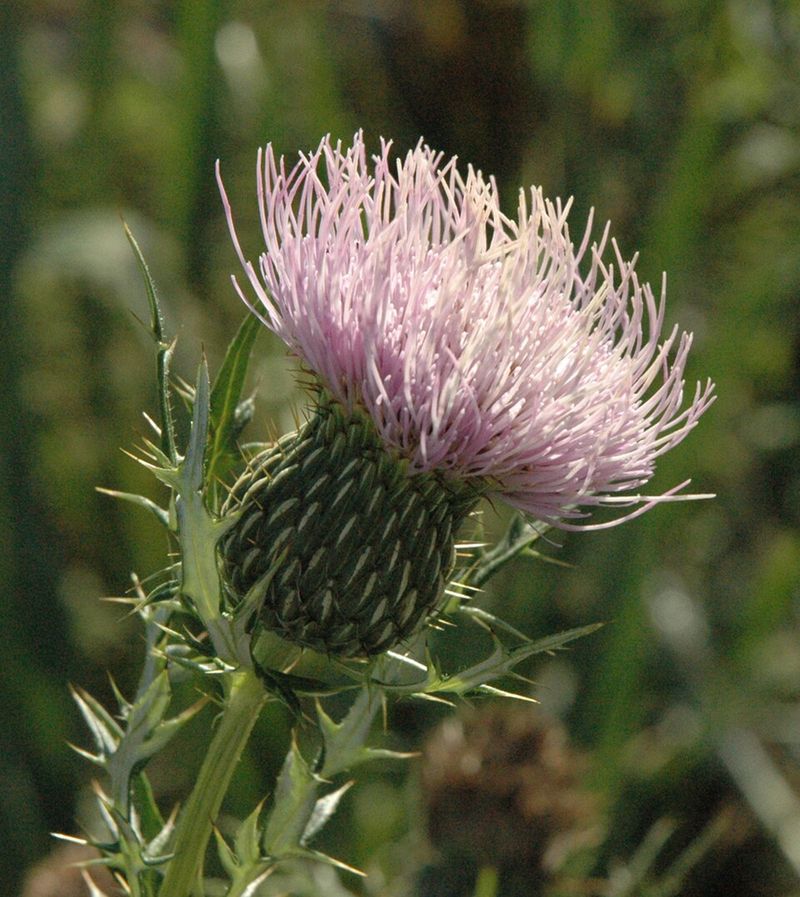
Goldfinches and thistles have a relationship that goes back long before backyard bird feeders existed. Thistle seeds are among the most sought-after foods for American goldfinches.
The silky, cottony fluff attached to thistle seeds is also famously used by goldfinches as nesting material. Their nests are so tightly woven with plant down that they can actually hold water.
That is why goldfinches nest later in summer than many backyard birds, timing their breeding to match when thistle fluff becomes available.
The critical point here is species selection. Gardeners should never plant invasive or noxious thistles such as Canada thistle, bull thistle, or musk thistle.
These species cause real problems in natural areas and are regulated as noxious weeds in many parts of the state. Instead, look for native species like pasture thistle, Cirsium discolor, or tall thistle, Cirsium altissimum.
Buy them from reputable native plant nurseries or seed sources that specialize in regional native plants.
Native thistles are spiny, sometimes quite tall, and can be assertive in the garden. They are not a good fit for small, formal beds or yards where tidiness matters most.
In a wildlife garden, a meadow-style planting, or a naturalized area with room to breathe, a native thistle can be genuinely valuable.
Pair it with coneflowers, sunflowers, and asters for a late-summer seed garden that gives goldfinches real reasons to stop and stay awhile.