The Meaning Behind Seeing A Screech Owl Near Your Ohio Home
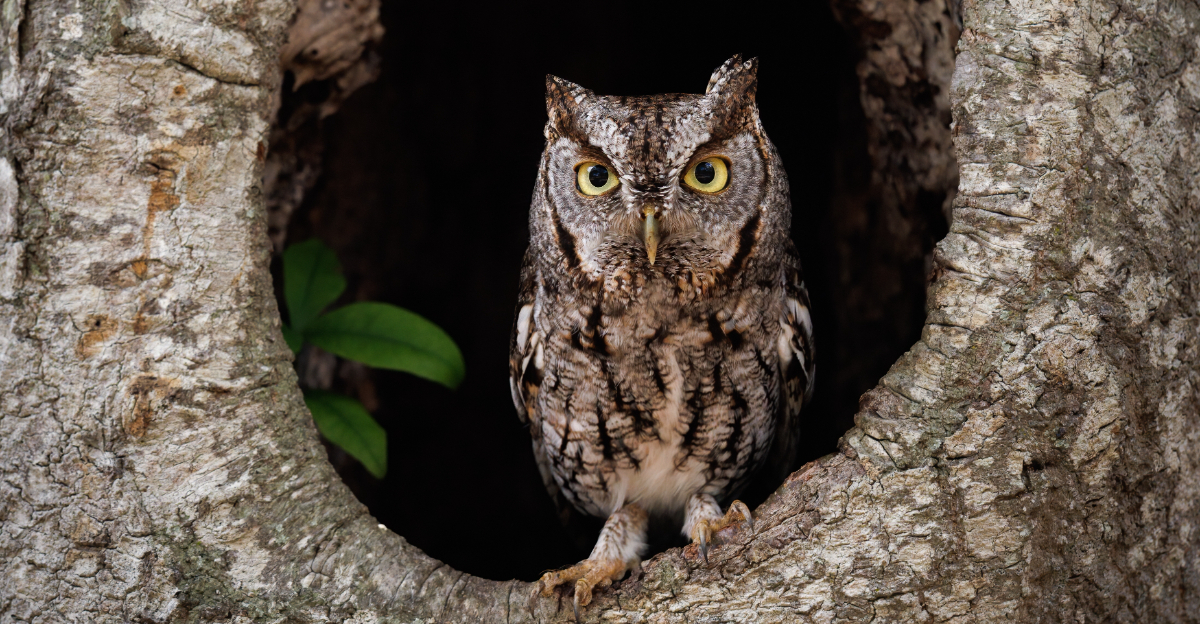
A screech owl near your Ohio home is easy to miss and impossible to forget once you actually encounter one. That small silhouette on a fence post or branch and those eyes catching light in the dark are hard to forget.
So is the call that gives it a name most people recognize before they ever see the bird that makes it. Screech owls do not show up randomly.
A sighting close to the house says something real about the habitat your property has become and the prey activity happening nearby at night. The meaning behind a screech owl visit pulls from more than one direction.
Natural history, Ohio and Midwestern folklore, and Indigenous tradition all have something to say about this particular bird. They also shape what its presence near a home has meant to people across generations.
Both the ecological story and the symbolic one are worth knowing. Neither one disappoints.
1. A Screech Owl Nearby Means Your Yard Has Nighttime Value
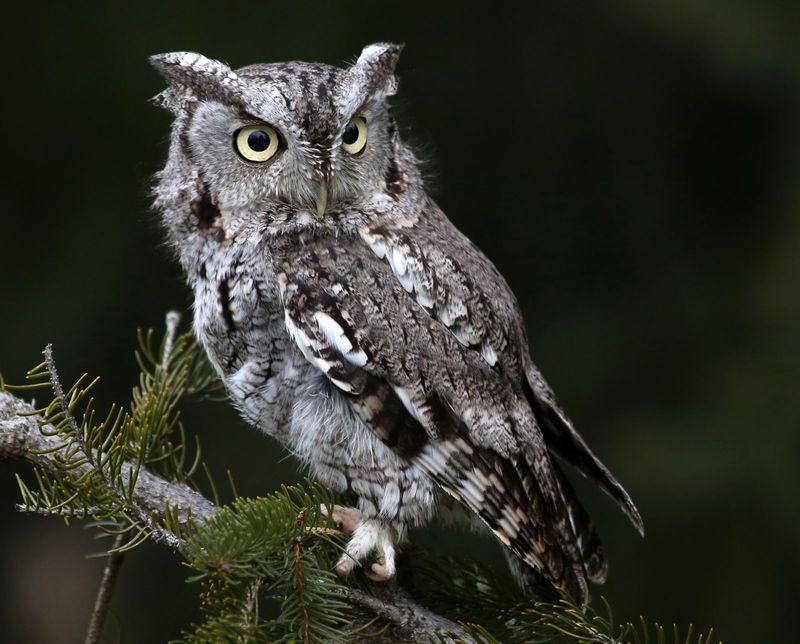
A soft call from the maple can make a familiar yard feel suddenly awake after dark. When an Eastern screech owl shows up near your home, the most grounded explanation is that your yard or neighborhood is offering something useful after the sun goes down.
That is not folklore. It is bird behavior.
Screech owls are cavity-nesting birds that also need reliable hunting ground. They tend to stay in areas that offer perches for watching, cover for resting, and enough prey movement to make a stop worthwhile.
A yard that has mature trees, shrubby edges, leaf litter, or a nearby stream corridor can check several of those boxes at once.
These owls do not wander randomly. According to the Cornell Lab of Ornithology, Eastern screech owls are highly territorial and tend to use the same home range consistently.
Seeing one near your house more than once suggests the area holds real value for that bird. It does not mean the owl has claimed your home as a permanent base.
It means the landscape is supporting nocturnal wildlife in a way that many suburban yards simply do not.
Paying attention to what your yard offers after dark is a useful starting point. Trees, quieter corners, and reduced light pollution all play a role in whether nighttime wildlife finds a place worth returning to.
2. Mature Trees May Be Offering Cavities And Perches
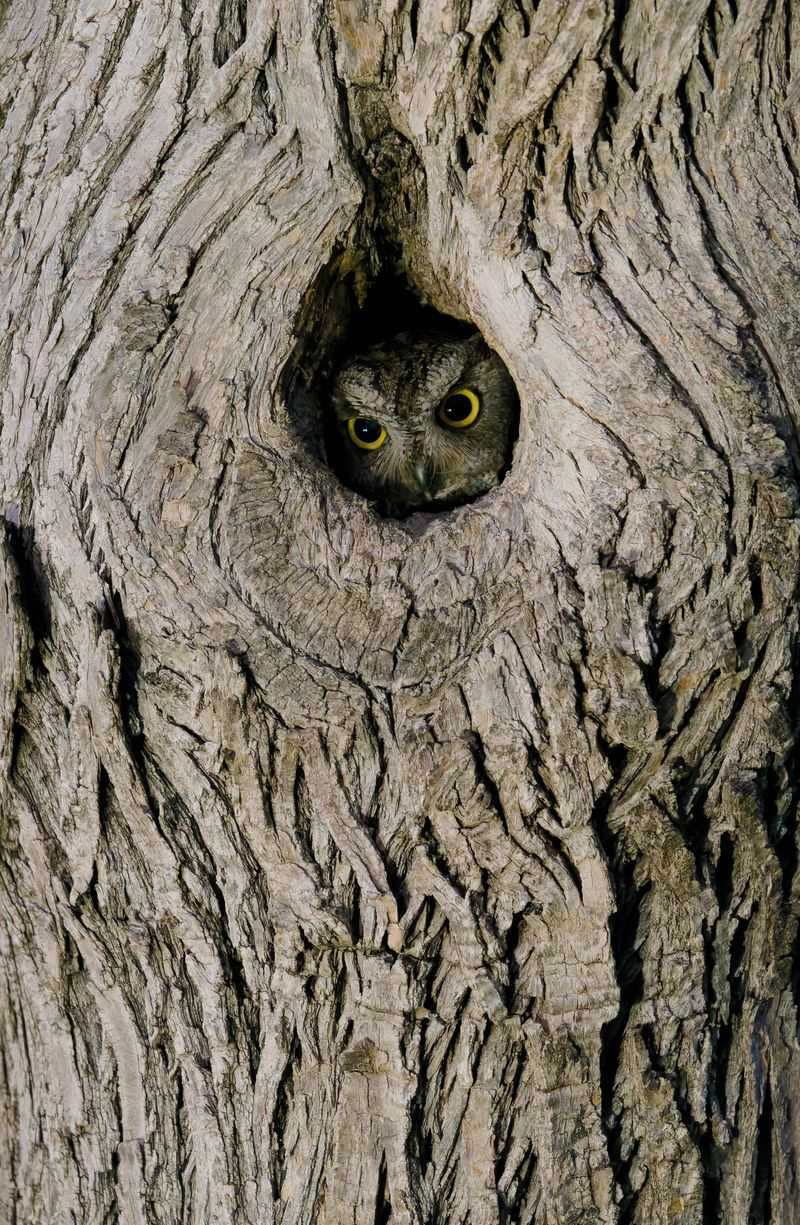
A hollow limb or an old woodpecker hole in a backyard oak can mean far more to a screech owl than it might seem at first glance. Eastern screech owls are cavity-dependent birds.
They do not build nests from scratch. Instead, they rely on existing cavities in mature trees, old snags, or abandoned woodpecker holes to roost and raise young.
Mature trees with rough bark, broken limbs, and natural hollows are especially valuable. A yard that still has older trees with some character tends to attract more cavity-nesting wildlife overall.
Screech owls may use a cavity for roosting during the day, staying tucked inside while the rest of the neighborhood goes about its business.
Your Ohio Garden Changes Every Week. Your Plan Should Too.
Gardening in Ohio changes quickly throughout the season. Every Friday you’ll receive a simple weekly plan showing exactly what to plant, prune, fertilize, harvest, and protect so you never miss the right timing.
Perches matter too. Screech owls hunt from elevated spots, scanning the ground below for movement.
A low, open branch over a grassy edge or a garden bed gives them a useful vantage point. Even a fence post near a brushy corner can serve that purpose.
If you have mature trees on or near your property, they may be providing both cavity access and hunting perches. Removing every old or hollow tree is not always necessary, though any tree that poses a safety risk near a structure should be assessed by a certified arborist.
Keeping safe, structurally sound older trees where possible supports more than just owls.
3. Small Prey Could Be Drawing It Closer After Dark
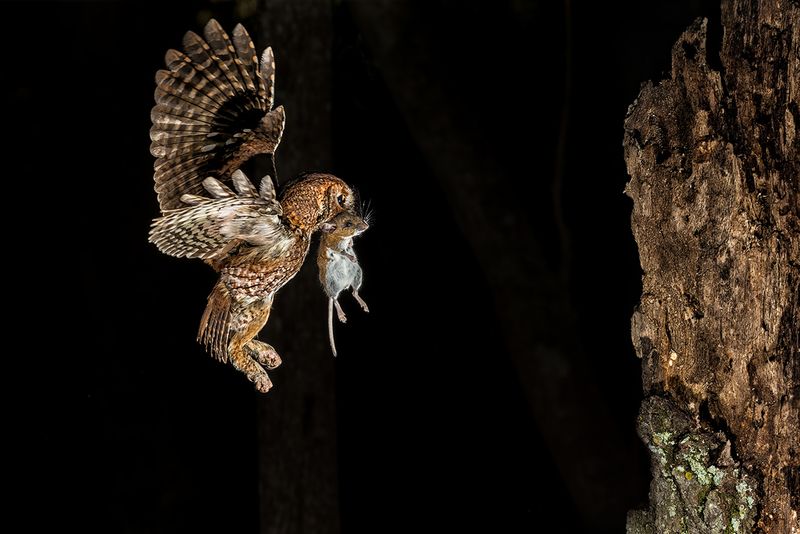
Not every owl that appears near a house is tracking a rodent problem. That is worth saying clearly, because the assumption tends to run ahead of the facts.
Eastern screech owls eat a wide variety of prey, and the menu shifts depending on the season and what happens to be available.
Insects make up a meaningful part of their warm-season diet. Beetles, moths, and large crickets are all fair game.
Small mammals such as mice and voles are taken when available. Screech owls also eat small birds, earthworms, crayfish, and even small frogs or salamanders near wet edges.
Cornell Lab of Ornithology notes that this dietary flexibility is part of what makes them successful across so many habitat types.
An Ohio yard with active leaf litter, a garden bed, a compost area, or a low wet spot near a downspout can support invertebrate and small-mammal activity. That kind of activity can draw in hunting owls.
That does not signal an infestation. It signals a functioning yard ecosystem with enough living pieces to support a predator.
One owl sighting is not a pest alarm. If you are genuinely concerned about rodent activity around the house, look for signs such as droppings, gnaw marks, or entry points near the foundation.
An owl nearby is just one piece of a larger nighttime picture.
4. A Soft Trill Or Whinny May Reveal Its Hiding Spot
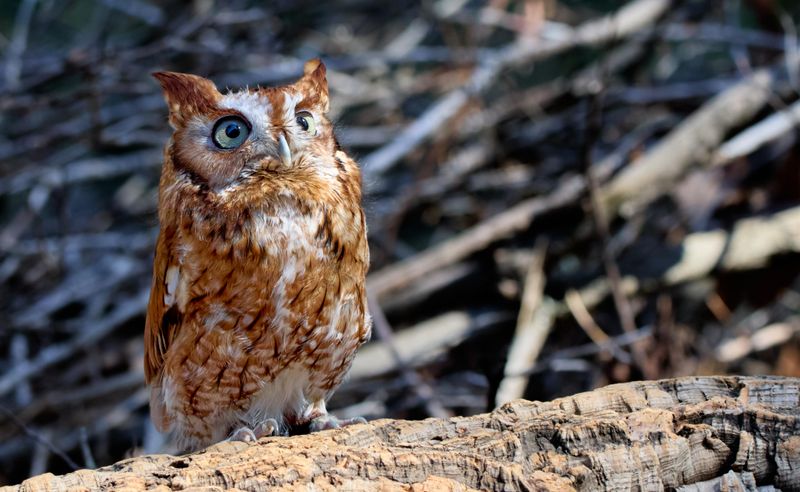
Most Ohioans hear a screech owl long before they ever see one. The Eastern screech owl produces two calls that are easy to recognize once you have heard them.
The first is a long, descending whinny that sounds a little like a tiny horse. The second is a long, steady trill on one pitch that can last several seconds.
Neither call sounds like what most people expect from an owl. There is no deep hoot.
The sounds are softer, more wavering, and surprisingly easy to miss if you are not paying attention. Both calls are used for territory communication and mate contact, especially from late winter through early spring when nesting activity picks up.
If you hear one of these calls in your yard after dark, resist the urge to play recordings back repeatedly to draw the bird closer. Repeated call playback near a roosting or nesting area can stress the bird and disrupt its normal behavior.
A single quiet listen from indoors or from a still position on the porch is a much better approach.
Screech owls, like all raptors in this country, are protected under the Migratory Bird Treaty Act. That means disturbing, trapping, or handling them without proper permits is not legal.
Enjoying the call from a respectful distance is both the safest and the most rewarding option for most backyard listeners.
5. Porch Lights Can Change How Night Hunters Move
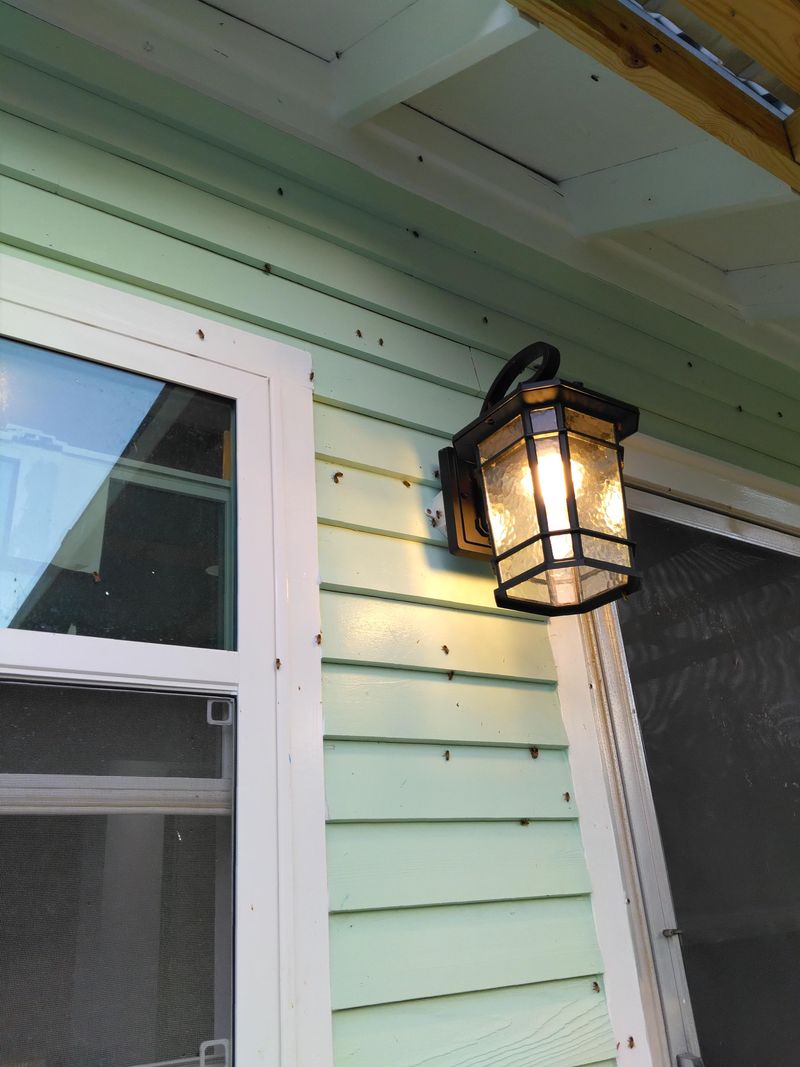
A porch light left on all night does more than illuminate the front steps. Bright outdoor lighting draws insects toward the house, which can shift where small prey gathers after dark.
That shift, in turn, can influence where a hunting owl decides to spend its time.
Some screech owls have been observed hunting near lit areas where insects concentrate. Others prefer the darker edges of a yard where prey moves without the exposure of bright light.
The relationship between lighting and nocturnal wildlife is genuinely complex, and it varies by individual bird and local conditions.
What is consistent is that excessive artificial light at night disrupts the natural patterns of many species. The International Dark-Sky Association and wildlife researchers both recommend reducing unnecessary outdoor lighting where practical.
Shielded fixtures that direct light downward rather than outward help. Motion-sensor lights that stay off until needed are another useful option.
Reducing light pollution near wooded edges or garden areas does not mean leaving the property unsafe. Pathway lighting at low intensity and downward-facing fixtures near entryways can keep the yard functional.
Timers on decorative lights also reduce the spill that disrupts nocturnal activity. A yard with softer, targeted lighting tends to feel more settled after dark, for both the people who live there and the wildlife passing through.
6. A Nest Box May Help Only In The Right Habitat
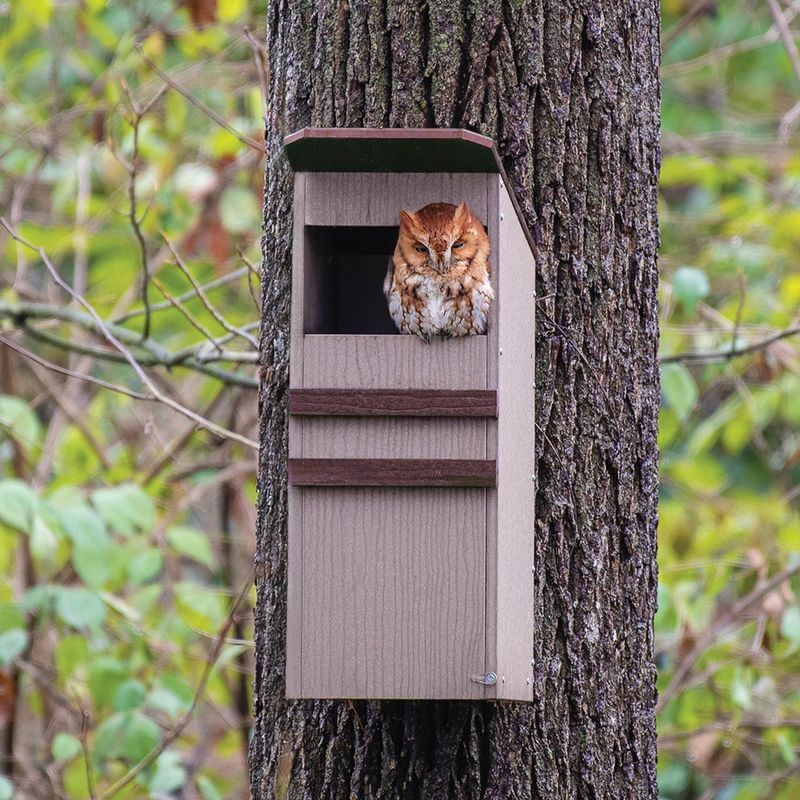
Putting up a nest box for screech owls sounds like a straightforward idea, but the box is only one piece of a larger puzzle. A well-built box mounted in the wrong spot, or in a yard that lacks the right habitat, is unlikely to attract an owl and may sit empty for years.
Eastern screech owls need more than a box. They need nearby trees for cover and perching, along with enough prey activity in the area to support a nesting pair.
They also need a box that matches the species in size and entrance-hole diameter. Cornell Lab of Ornithology and the Ohio Department of Natural Resources both offer guidance on appropriate box dimensions for screech owls.
The entrance hole should be approximately three inches in diameter, and the box should be mounted roughly ten to thirty feet above the ground on a tree or post.
Placement matters. A box facing a yard edge with open hunting ground nearby works better than one tucked against a dense wall of shrubs.
The box should also be checked and cleaned out each season, since accumulated nesting material can harbor parasites.
Competing cavity users such as starlings and squirrels may also claim a box before an owl does. Using a predator guard on the mounting pole helps.
A nest box is a worthwhile project in the right yard. Match the setup to the habitat first, and the chances of real use go up considerably.
7. Small Pets Need Extra Care During Nighttime Activity

A screech owl is a small bird. Most adults weigh somewhere between four and nine ounces, roughly the size of a large fist.
That size matters when thinking about risk to pets. A screech owl is not capable of carrying off a medium or large dog, and even a small dog of ten or more pounds is generally outside what this bird would attempt to take.
Very small pets are a different consideration. Toy-breed dogs, kittens, and small rabbits kept outdoors after dark face a wider range of potential predators, not just owls.
Foxes, raccoons, coyotes, and larger raptors such as great horned owls all move through suburban and semi-rural yards at night across this state. Screech owls are not the primary concern, but they are part of a broader nocturnal landscape.
The practical advice is consistent regardless of which predator you are thinking about. Keep very small pets on a leash when outside after dark.
Stay close rather than letting them roam the yard unsupervised. Bring cats indoors at night, which protects both the cats and the local wildlife they might otherwise disturb.
Backyard chickens and small rabbit hutches benefit from secure enclosures with hardware cloth rather than standard chicken wire. Solid roofs on runs and latching doors help keep nighttime visitors out.
These steps protect animals without creating conflict with protected wildlife.
8. One Tiny Owl Points To A Wilder Backyard Food Web
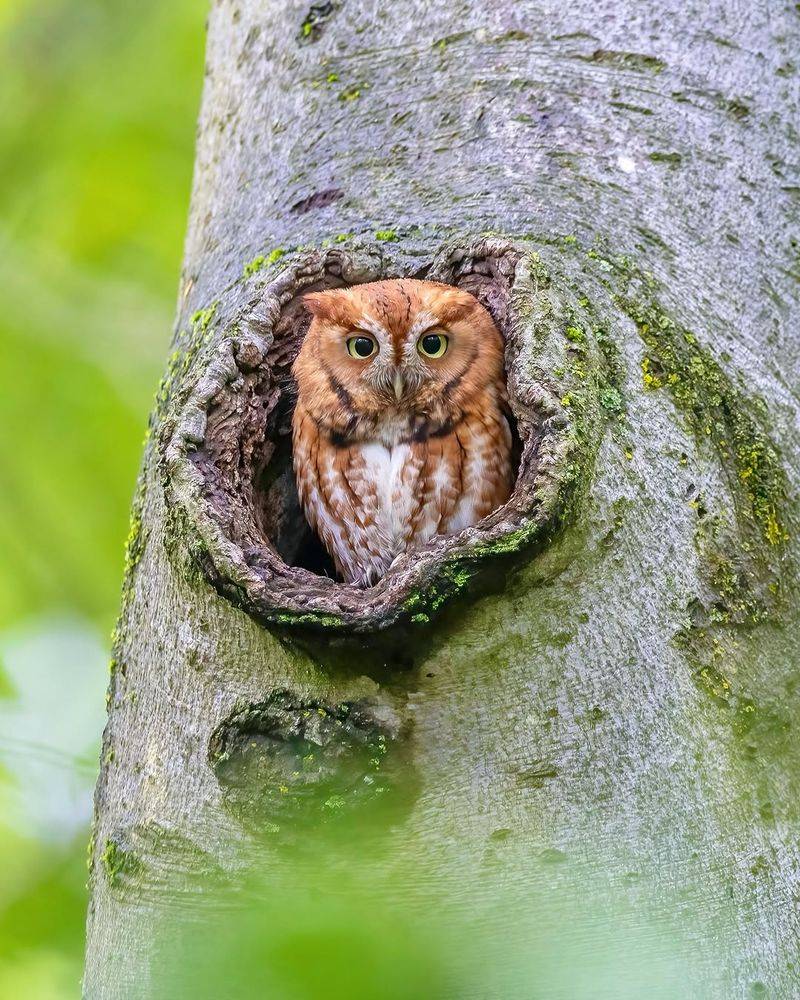
Noticing a screech owl near your home is a small moment that points toward something larger. A single owl passing through or settling in for a night suggests the landscape around your house is connected to a functioning nighttime food web.
That kind of connection does not happen in every yard.
It takes trees with some age and structure. It takes ground-level activity, insects moving through leaf litter, small mammals using the edges, maybe a low wet spot where frogs call in spring.
It takes some quieter corners where nocturnal wildlife feels comfortable enough to move through. A yard that supports all of that is doing something genuinely useful for local biodiversity.
Eastern screech owls sit in the middle of that web. They eat what is available and, in turn, they are part of the landscape that larger predators use.
Their presence is a signal that several layers of the local food web are working. It is not a sign of infestation, a spiritual message, or a reason for alarm.
The most useful response to a screech owl near your home is simply to pay attention. Notice what the yard offers after dark.
Keep older trees where it is safe to do so. Reduce unnecessary light.
Protect small pets. Let the yard be a little wilder at the edges.
That approach serves both the owl and the broader community of wildlife that shares the neighborhood.