Stop Planting Knockout Roses In Florida (These Alternatives Bloom Longer)
Knockout roses had their moment. And listen, nobody is going to fault you for falling for the hype.
Every garden center in Florida pushed them like they were the holy grail of low-maintenance landscaping. But let’s be real.
You planted them and babbled about how easy they’d be. Then you spent the next season watching them struggle through black spot, spider mites, and our relentless humidity like a tourist in August.
Sound familiar? Our climate plays by its own rules, and knockout roses just don’t have what it takes to keep up.
The good news? Your yard doesn’t have to suffer through another disappointing season.
There’s a whole lineup of tough, Florida-smart alternatives that bloom longer, shrug off the heat, and actually look like you know what you’re doing out there. Ready to trade frustration for flowers?
Let’s talk about what belongs in your Florida garden instead.
1. Pentas Bloom Longer With Less Rose Care
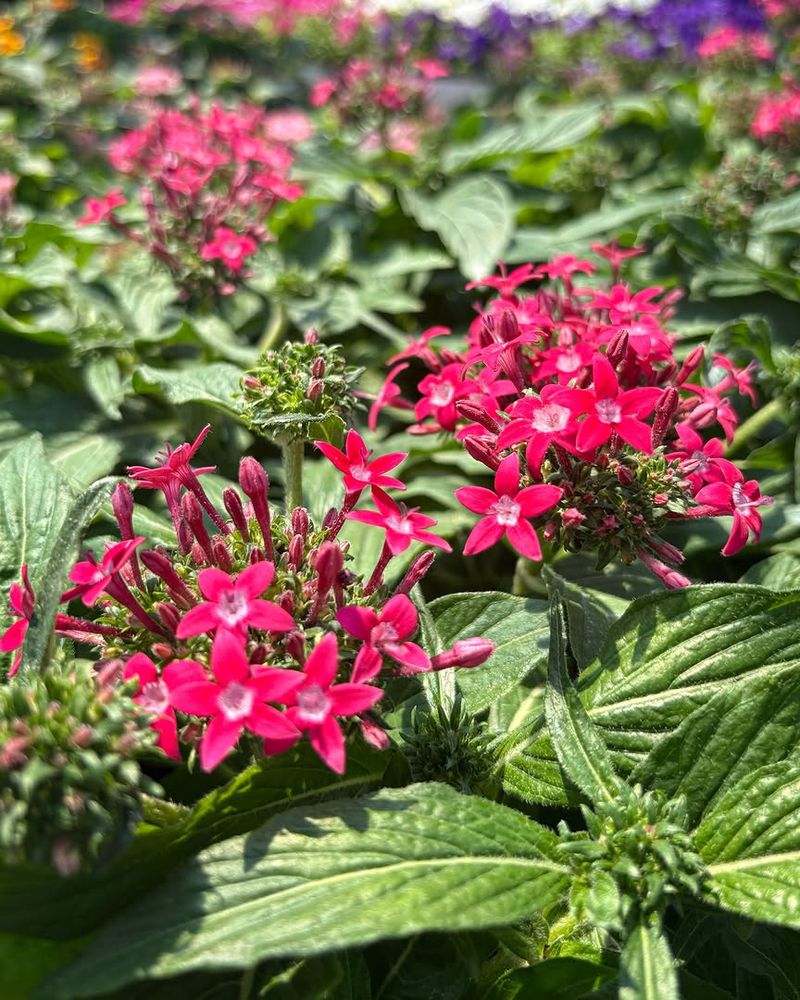
Long color does not have to come from roses, and pentas prove that point every summer in warm gardens. These flowering plants push out dense clusters of small star-shaped blooms in red, pink, white, and lavender.
They often bloom from spring all the way through fall without much fuss. In mild winters along the southern part of the state, they may keep going even longer.
Pentas do best in full sun with steady moisture and well-drained soil. They are not drought-tolerant once established in the same way some native plants are, so consistent watering during dry stretches helps them stay in good shape.
Light trimming of faded flower clusters encourages fresh blooms to follow and keeps the plant looking tidy rather than leggy.
One of the biggest draws for many gardeners is the pollinator activity. Butterflies and hummingbirds visit pentas regularly, making them a useful addition to any pollinator bed.
They are not a rose-shaped replacement, and they have a softer, more casual look than a formal rose shrub. But for gardeners who want reliable warm-season color without black spot, rust, or regular spray schedules, pentas can be a practical swap.
They are also a rewarding choice for many sunny beds across the state.
2. Firebush Brings Native Color And Wildlife Value
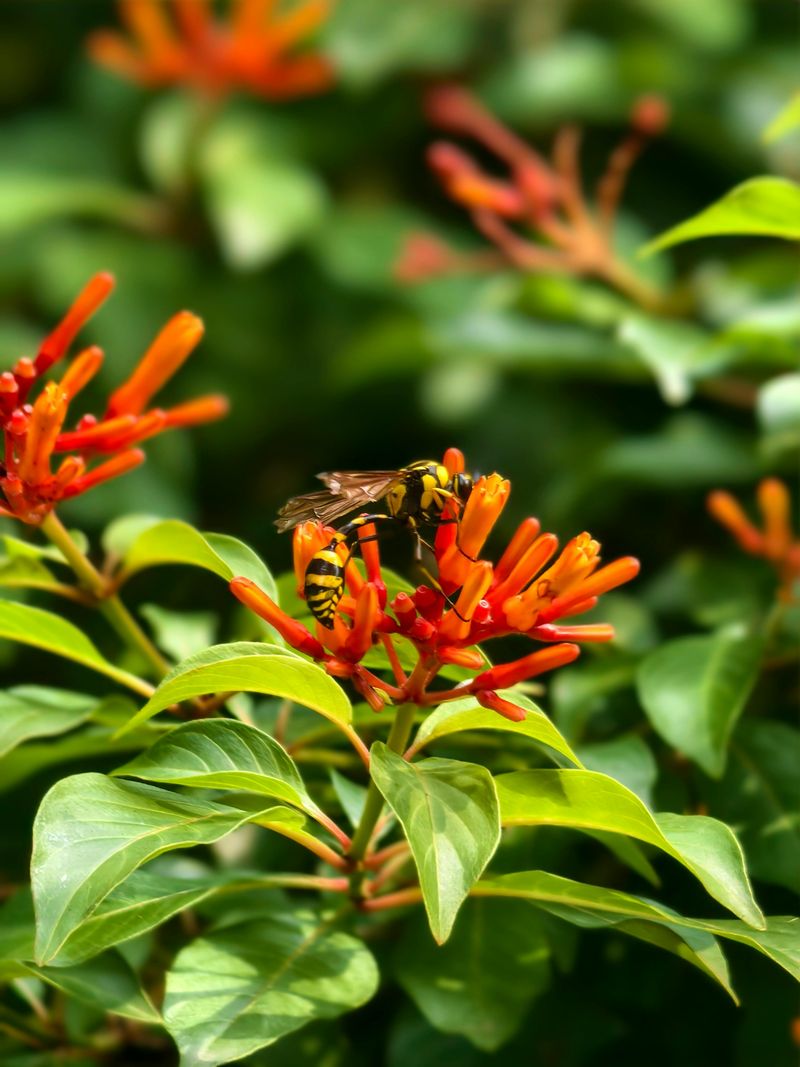
Native color can handle heat in a different way than most cultivated shrubs, and firebush is one of the best examples of that in warm gardens. The tubular orange-red flowers appear in clusters along the branch tips.
They keep coming through the hottest parts of summer when many other plants slow down or look stressed. In frost-free areas of South Florida, firebush can bloom almost year-round.
Butterflies, hummingbirds, and birds that eat small berries are all drawn to firebush at different points in the season. The plant offers more wildlife value than a typical ornamental rose, and it does it without needing a spray program or special soil amendments.
It grows best in full sun to light shade with reasonable drainage and room to spread.
Your Florida Garden Changes Every Week. Your Plan Should Too.
Gardening in Florida changes quickly throughout the season. Every Friday you’ll receive a simple weekly plan showing exactly what to plant, prune, fertilize, harvest, and protect so you never miss the right timing.
That last point is worth repeating: firebush can become a large shrub in warm regions, sometimes reaching six feet or taller with a wide spread if left unpruned. It is not a compact substitute for a rose planted in a tight bed near a walkway.
Gardeners who give it space along a fence line, at a property edge, or as part of a mixed native planting tend to get the best results. Occasional pruning keeps it manageable and often encourages a fresh flush of flowers.
3. Plumbago Gives Months Of Soft Blue Flowers
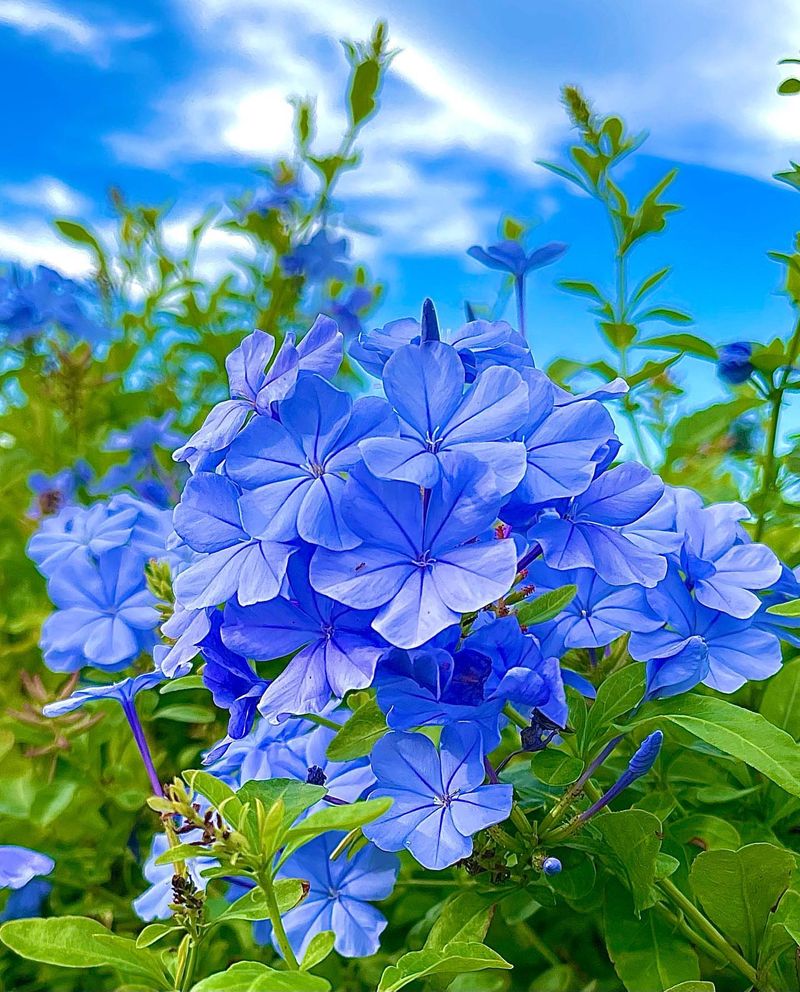
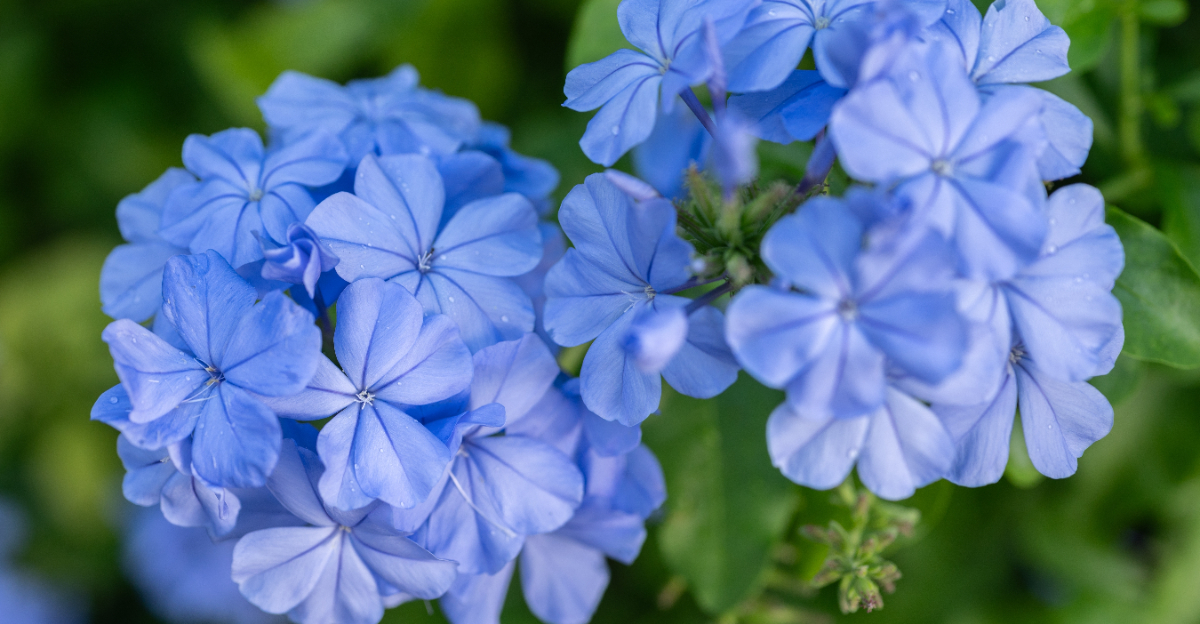
Soft blue flowers change the whole mood of a border, and plumbago delivers that look for months in warm gardens. The pale blue clusters appear almost continuously in full sun during the warm season, and in frost-free areas they may carry on well into winter.
It is one of the few flowering shrubs that offers true blue tones in a hot, humid climate.
That makes it stand out in beds that might otherwise be all red, orange, or yellow.
Plumbago is not a native, but it has a long track record in warm-climate gardens and is widely used in Florida-friendly landscape designs. It thrives in full sun, handles sandy or well-drained soil well, and tends to be more forgiving during dry spells once it is established.
It does not need the kind of regular care that roses often require to stay healthy and blooming.
The growth habit is loose and sprawling rather than upright and formal. Plants can reach four to six feet wide if left alone, so they work best in open beds, along fences, or in foundation plantings where they have room to grow naturally.
Light shaping a few times a year keeps the plant from becoming too rangy and often brings on a fresh round of blooms. It is not a rose substitute in form, but it fills a different and useful role in many warm-climate gardens.
4. Native Blue Porterweed Keeps Pollinators Visiting
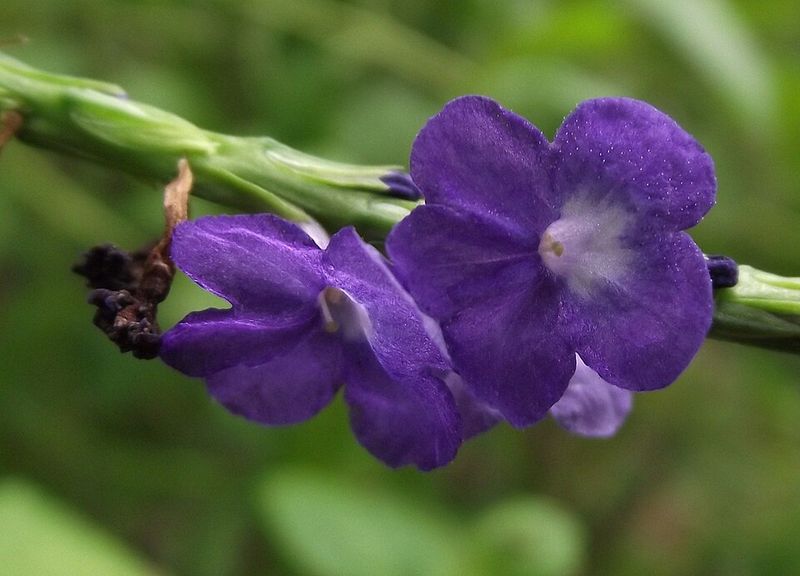
The name matters when buying porterweed. The plant covered here is native blue porterweed, Stachytarpheta jamaicensis, and it is worth checking that botanical name on the tag before purchasing.
Non-native porterweed species are sold in some garden centers, and a few of those have invasive concerns, particularly in South Florida. Buying the correct species makes a real difference for the local ecosystem and avoids potential problems down the road.
Native blue porterweed produces slender spikes of small blue-purple flowers that open progressively along the stem over a long season. Butterflies, especially skippers and swallowtails, visit it consistently, and the plant tends to stay in bloom through the warm months with very little intervention.
It grows best in full sun with good drainage and handles sandy soil well, which makes it a natural fit for many sites where roses might struggle.
The plant has a wilder, more casual look than a formal rose shrub. It works well in pollinator gardens, wildflower beds, or naturalistic plantings where a relaxed appearance is welcome.
It is not large, typically staying under three feet, which gives it some versatility in mixed beds. Gardeners who want steady butterfly activity without a heavy maintenance schedule often find that native blue porterweed earns a reliable spot in the summer garden.
5. Beach Sunflower Spreads Color Through Hot Sunny Beds
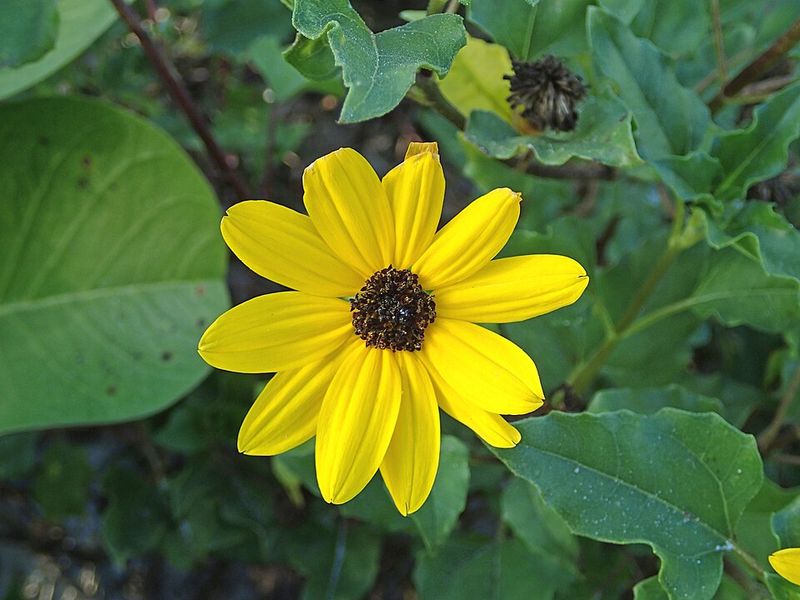
A sunny sandy bed can carry color without roses, and beach sunflower shows that in a very practical way. This native groundcover pushes out bright yellow daisy-like blooms on low spreading stems.
It often covers a large area with cheerful color through the warm season. It handles heat, salt air, and sandy soil better than most ornamental plants.
That makes it especially useful in coastal yards and open sunny sites where other plants struggle.
Beach sunflower is not a formal shrub, and it does not have the upright structure of a rose. It spreads along the ground, filling gaps and covering soil in a way that reduces weeding and adds pollinator value at the same time.
Bees and butterflies visit the flowers regularly, and the plant provides good ground-level cover for small wildlife.
One thing to keep in mind is that beach sunflower can spread or reseed where conditions suit it. In the right open bed this is an advantage, but in a tightly controlled formal planting it may need occasional editing to stay where you want it.
It tends to be low-maintenance once established, needing little supplemental water in most sandy sites. Gardeners who want a tough, cheerful, native option for a hot open area often find it fills that role well without much ongoing effort.
6. Coral Honeysuckle Climbs Where Roses Need Too Much Room
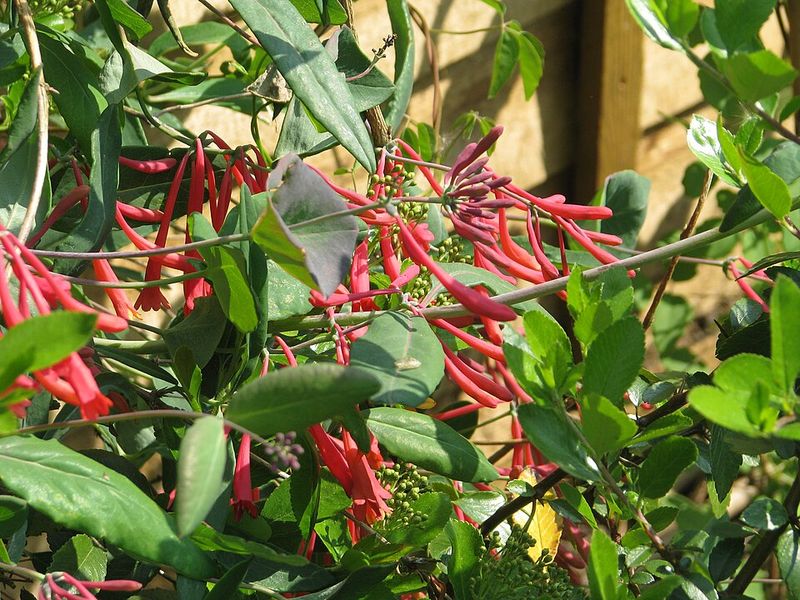
Vertical space can solve a crowded planting problem, and coral honeysuckle uses that space with tubular coral-red flowers that hummingbirds visit regularly. This native vine can cover a trellis, fence, or arbor with color during the warm season.
It offers a flowering display in spots where a wide rose bed simply would not fit. It is a different kind of solution than a shrub, but it is a useful one for gardeners working with limited ground space.
Coral honeysuckle grows best in full sun to partial shade with reasonable drainage. It is not as aggressive as some other vines, which makes it manageable on a structure without constant cutting back.
The red tubular flowers are a natural match for hummingbirds, and the plant also produces small red berries that birds use in fall and winter.
It is important to be clear that coral honeysuckle is not a shrub replacement. It needs support to grow on and does not stand on its own the way a rose does.
But for gardeners who want long-season color on a fence line, along an arbor, or up a porch post, it can provide that without the rose care routine. In many warm gardens, it blooms for an extended season.
It performs especially well in a sunny spot with good air circulation and occasional light trimming to encourage fresh growth.
7. Scarlet Sage Reseeds For Repeat Warm-Season Color
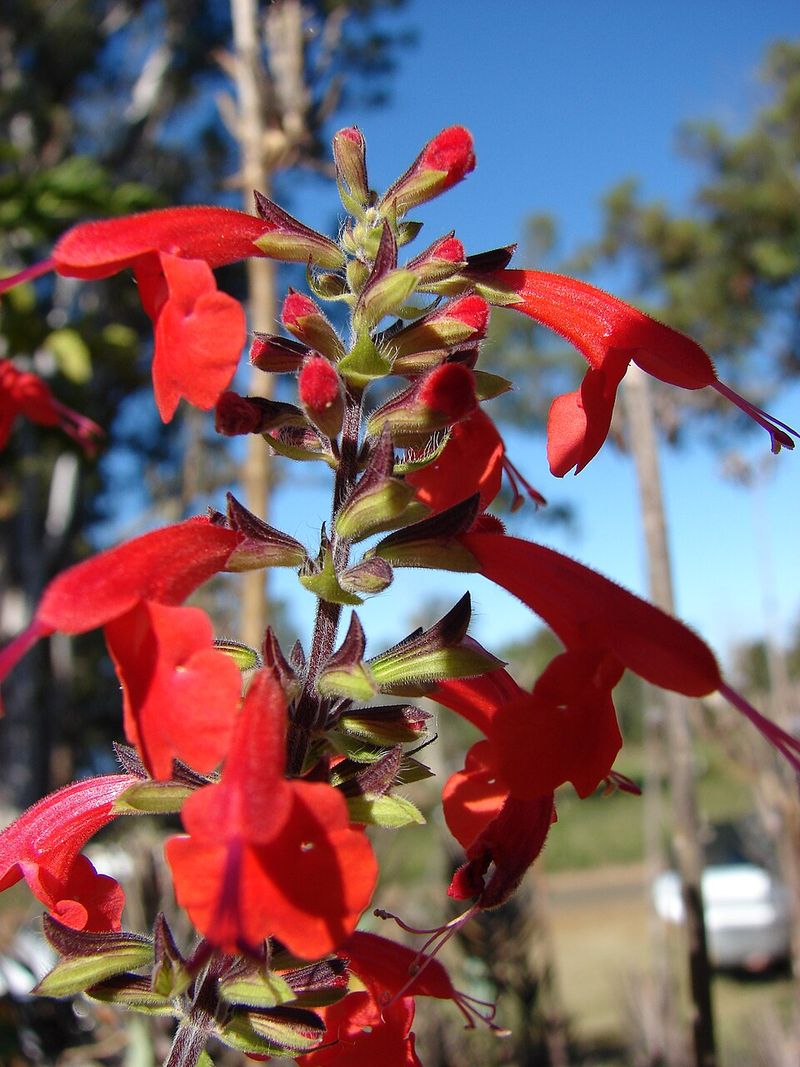
Some flowers return by reseeding instead of staying in one clump, and scarlet sage works exactly that way in many warm gardens. Salvia coccinea is a native wildflower that produces upright spikes of red flowers through the warm season.
It is not a long-lived perennial in the traditional sense, but it tends to reseed itself reliably.
That means new seedlings appear and keep the color coming year after year in informal beds.
Hummingbirds and butterflies visit the red flower spikes regularly.
The plant can provide consistent pollinator activity from late spring through fall in most parts of the state. It grows best in full sun with good drainage and handles sandy soil without complaint.
It does not need rich soil or regular fertilizing to perform well, which keeps the care routine simple.
Because it reseeds, scarlet sage can move around a bit in the garden over time. Seedlings may pop up a short distance from the original plant, which gives the planting a naturalistic look that suits wildflower beds and informal borders well.
Gardeners who prefer a tightly controlled formal bed may find this habit a little unpredictable.
Those who welcome a relaxed, cottage-style planting often appreciate the way it fills in gaps on its own. A light edit of unwanted seedlings keeps it from spreading beyond where it is wanted.
8. Gaillardia Brings Long-Season Color To Sunny Sandy Beds
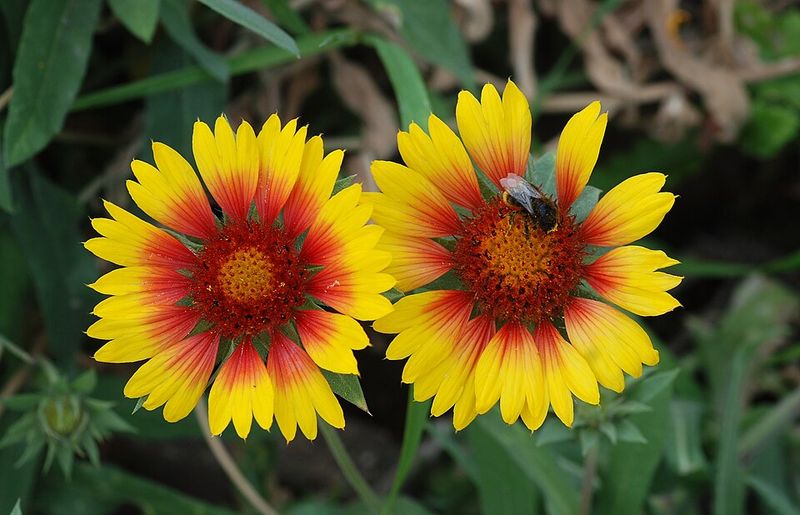
Bright daisy-like color fits hot open sites, and gaillardia, commonly called blanketflower, delivers that in warm, well-drained beds with a boldness that is hard to miss. The flowers come in combinations of red, orange, and yellow with a ring pattern that gives them a striking look from a distance.
They tend to bloom over a long warm-season window, making them a practical choice for gardeners who want color that holds up through summer heat.
Gaillardia performs best in full sun with sandy or well-drained soil. It does not do well in heavy, wet ground, and poor drainage is one of the most common reasons it underperforms in Florida yards.
Once it is in the right site, it tends to be fairly low-maintenance and handles dry spells better than many ornamental plants.
It is worth being careful about native claims with gaillardia. Some species and cultivars sold in our nurseries are not native to the state, even though a few species do have native range here.
Checking the botanical name and source helps gardeners who want a locally native option. Whether native or not, gaillardia can fill a useful role in sunny, sandy beds where the goal is long-season warm-weather color without a complicated care routine.
It is not a formal rose substitute, but it brings a different kind of energy to open garden spaces.
9. Matching The Right Plant To The Right Florida Site
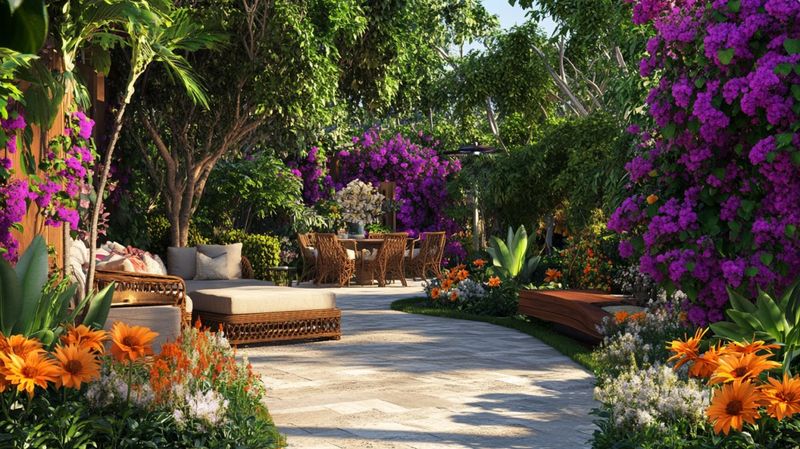
Every plant on this list has a specific kind of site where it tends to do its best work. Pentas and plumbago suit formal-ish beds in full sun.
Firebush and native blue porterweed fit naturalistic plantings with room to grow. Beach sunflower works in open, sandy, sunny sites.
Coral honeysuckle needs a structure to climb. Scarlet sage and gaillardia suit informal beds where a relaxed look is welcome.
Knock Out roses are not bad plants. They can perform well in many yards, and some gardeners will always prefer their classic look and reliable structure.
The point of this list is not to push roses out of every garden. It is to offer a wider view of what is possible when the goal is long-season warm-weather color in a hot, humid climate.
Choosing a plant that matches your soil, your sun exposure, your available space, and your maintenance comfort level matters far more than following any trend. A well-chosen native or Florida-friendly plant in the right spot will usually outperform a poorly placed rose, and vice versa.
Take time to look at your site conditions before planting, and give each new plant a fair chance to settle in before judging its performance. Good matches tend to reward patient gardeners with color that lasts longer than expected.