These Are The PHS Gold Medal Pennsylvania Plants Every Gardener Should Be Growing In 2026
Pennsylvania gardeners know the temptation of falling for a plant that looks amazing in the pot, then acts a little less impressive once it is actually in the ground.
That is part of what makes the PHS Gold Medal picks so appealing.
These plants are not just eye-catching for a week or two. They earn attention because they bring real garden value, which is a lot more exciting than a pretty label and false confidence.
The 2026 selections have a little bit of everything. There is spring beauty, strong shape, bold foliage, late color, and even that breezy movement that makes a planting feel more alive.
Some are elegant, some are striking, and a few have the kind of presence that makes nearby plants look like they need to try harder. For Pennsylvania gardens, that mix of beauty and staying power is hard to ignore.
1. Chionanthus Retusus ‘Tokyo Tower’ Brings Spring Beauty
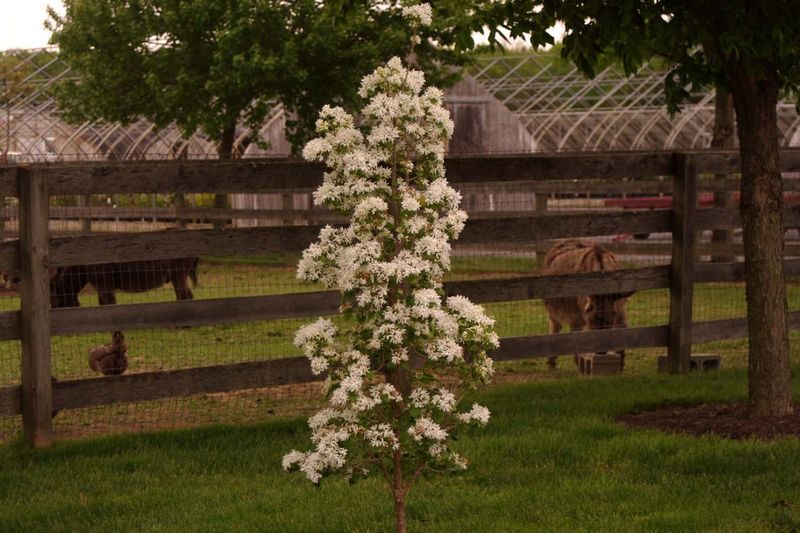
Spring in Pennsylvania can feel like a race to find the most spectacular bloom, and few trees stop people in their tracks the way Chionanthus retusus ‘Tokyo Tower’ does when it is covered in white, fringe-like flowers.
This Chinese fringe tree has earned serious attention from gardeners who want something more distinctive than the usual ornamental cherry or crabapple.
The blooms appear in late spring and create a soft, cloud-like effect that looks stunning against blue sky or a dark evergreen backdrop.
What makes ‘Tokyo Tower’ stand out from the species is its narrow, columnar habit.
Where the standard Chinese fringe tree can spread quite wide, this selection grows in a tight, upright form that works well in smaller yards, along driveways, or near entryways where space is limited.
Mature height tends to reach around 15 to 20 feet, but the spread stays relatively contained, which is a real advantage in modern residential landscapes.
Beyond the flowers, this tree offers glossy dark green leaves that hold up well through summer heat and humidity, which summers can deliver in abundance. Fall color can develop in shades of yellow, adding another season of visual interest.
Birds are also attracted to the small blue-black fruit that follows the flowers on female plants.
For best results, plant ‘Tokyo Tower’ in full sun to partial shade with well-drained, moderately moist soil.
It tends to be adaptable but performs most reliably when given consistent moisture during establishment, especially in warmer parts of Pennsylvania.
2. Daphniphyllum Macropodum Adds Bold Green Texture
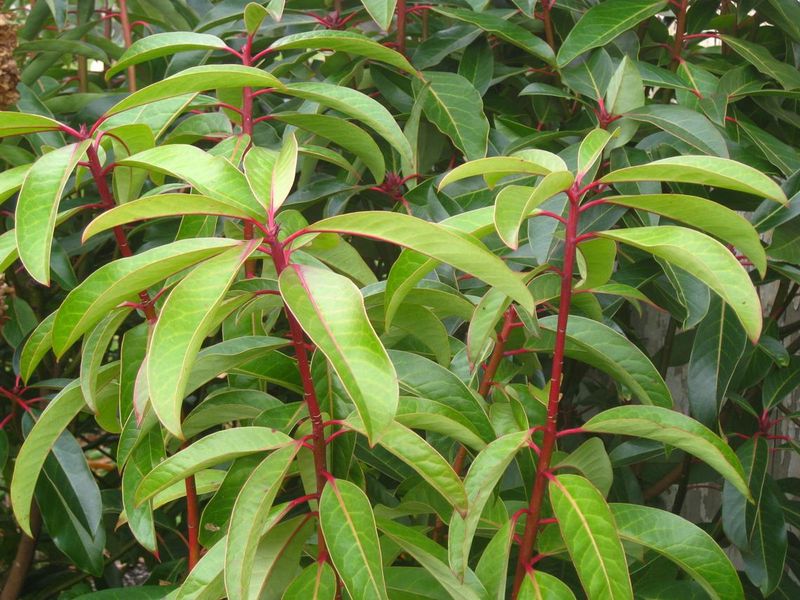
Bold foliage is something many shade gardens genuinely lack, and Daphniphyllum macropodum fills that gap in a way that few other broadleaf evergreens can match.
The large, leathery leaves can reach up to a foot long and have a tropical quality that looks surprisingly at home in a mid-Atlantic garden.
Reddish to pink petioles add a subtle color contrast that makes the foliage even more eye-catching up close.
This plant grows as a large shrub or small multi-stemmed tree and can eventually reach 10 to 15 feet tall and wide under favorable conditions, though growth tends to be gradual.
Your Pennsylvania Garden Changes Every Week. Your Plan Should Too.
Gardening in Pennsylvania changes quickly throughout the season. Every Friday you’ll receive a simple weekly plan showing exactly what to plant, prune, fertilize, harvest, and protect so you never miss the right timing.
That slow, steady development is actually useful in a home landscape because it gives gardeners time to plan around it without worrying about rapid overcrowding.
In Pennsylvania, it tends to perform best in sheltered spots with protection from harsh winter winds.
One of the most appealing qualities of Daphniphyllum macropodum is its ability to thrive in shade.
Deep shade gardens in Pennsylvania, especially those under large deciduous canopies, can be challenging to plant, and this species handles low light conditions with impressive resilience.
It pairs naturally with hostas, ferns, and hellebores for a layered woodland planting.
Soil should be well-drained and slightly acidic, which suits many garden soils without much amendment.
Consistent moisture during the growing season supports healthy foliage, and mulching around the root zone helps regulate soil temperature and moisture through both summer and winter.
This is a plant that rewards patience with lasting textural presence.
3. Juniperus Virginiana ‘Taylor’ Brings Strong Vertical Form
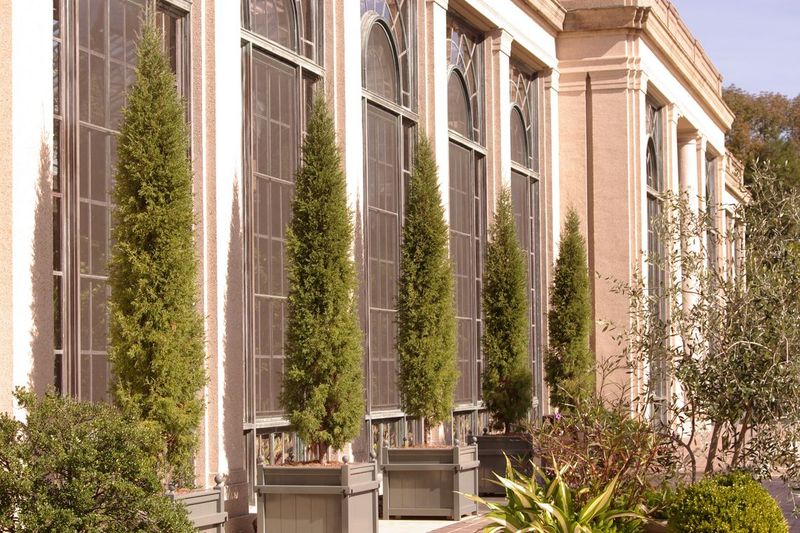
Narrow vertical plants can completely transform a flat or formless landscape, and Juniperus virginiana ‘Taylor’ does exactly that with a clean, architectural presence that holds up through every season.
This eastern red cedar selection grows in a tight columnar form that can reach 20 feet or more in height while staying only 3 to 4 feet wide, making it one of the more useful structural plants available to gardeners working with limited horizontal space.
The blue-green foliage stays dense and attractive year-round, which is a significant advantage over deciduous screening plants that leave gaps during winter months.
For homeowners who want privacy screening, a windbreak, or a strong vertical accent near a fence line or property edge, ‘Taylor’ delivers consistent results without becoming unmanageable.
It holds its narrow form naturally without heavy pruning.
Eastern red cedar is native to eastern North America, and ‘Taylor’ inherits much of that species toughness.
It tolerates drought once established, handles clay soil better than many evergreens, and adapts to a range of light conditions, though full sun brings out the best density and color.
Pennsylvania winters, including periods of ice and snow load, tend not to damage the upright form the way they can with broader junipers.
Cedar waxwings and other birds are drawn to the small blue-purple berries that develop on female plants, adding wildlife value to an already practical plant.
For a low-maintenance evergreen that earns its space in a Pennsylvania garden through sheer reliability and structural clarity, ‘Taylor’ is a strong candidate worth considering.
4. Amsonia Tabernaemontana ‘Storm Cloud’ Adds Flowers And Foliage Interest
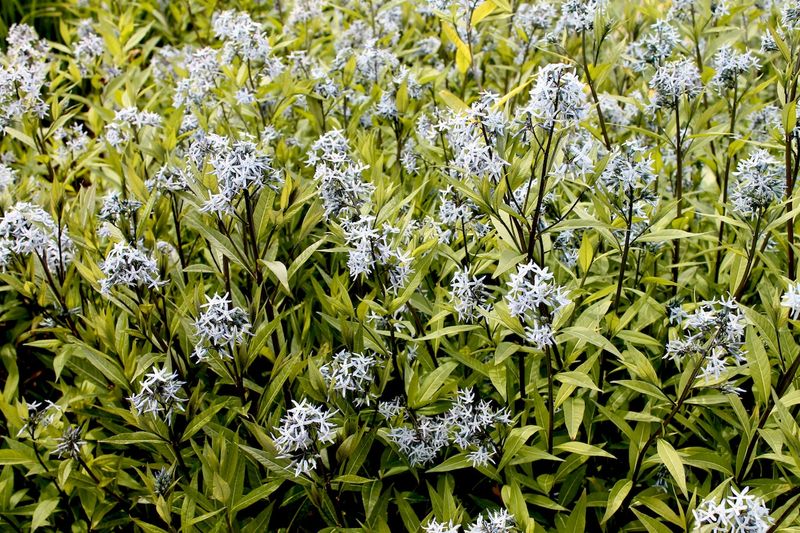
Finding a perennial that looks good in spring, summer, and fall without demanding much attention is something every gardener appreciates, and Amsonia tabernaemontana ‘Storm Cloud’ checks all three seasonal boxes with real style.
The most immediately striking feature is the deep, almost black-purple stem coloration that sets this cultivar apart from the straight species.
Against the pale blue star-shaped flowers that appear in late spring, the dark stems create a contrast that feels bold and refined at the same time.
Bluestar, as Amsonia is commonly called, has long been respected among native plant enthusiasts in Pennsylvania because it is reliably tough, deer-resistant, and well-suited to the region’s variable conditions.
‘Storm Cloud’ takes those baseline qualities and adds the extra visual punch of its distinctive stem color, which remains visible even after flowering ends and the foliage takes center stage through summer.
The fine-textured, willow-like leaves form a tidy, rounded mound that holds its shape well through summer heat. In fall, the foliage turns a brilliant golden yellow that rivals many dedicated fall-interest shrubs.
That autumn color can be genuinely spectacular in a Pennsylvania border, especially when planted alongside ornamental grasses or late-blooming asters.
Plant ‘Storm Cloud’ in full sun to light shade in average to moderately moist, well-drained soil. It tends to be more compact in full sun, which keeps the mound tidy without staking.
Once established, it handles dry spells with reasonable tolerance, making it a sensible low-maintenance choice for mixed perennial plantings across much of Pennsylvania.
5. Symphyotrichum Laeve ‘Bluebird’ Brings Late Blue Color
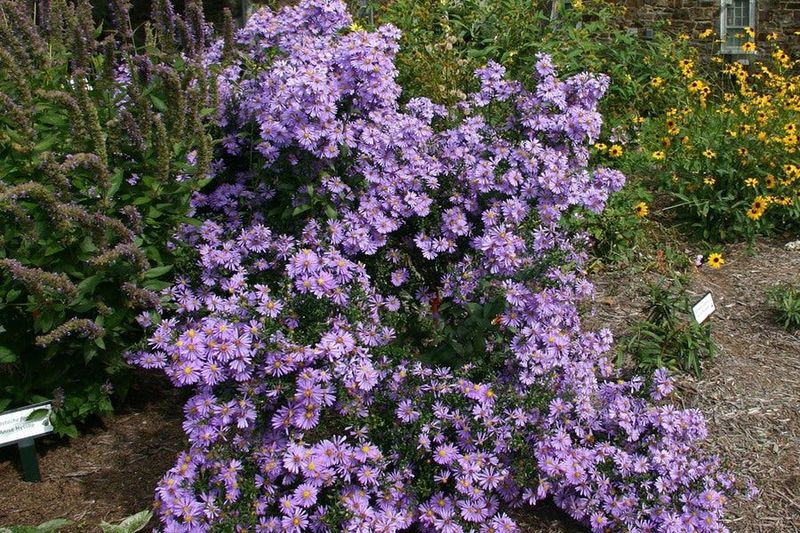
Late-season color is one of the hardest things to maintain in a Pennsylvania garden, and Symphyotrichum laeve ‘Bluebird’ solves that problem with an impressive flush of lavender-blue flowers that arrives just as many other perennials are winding down.
Smooth blue aster, as it is commonly known, blooms from late summer into fall and produces clouds of small, daisy-like flowers with yellow centers that attract butterflies, bees, and other pollinators looking for late-season nectar sources.
What separates ‘Bluebird’ from many other asters is its notably smooth, blue-green foliage that resists the powdery mildew that plagues some other aster species in humid summers.
The leaves have a clean, attractive appearance throughout the growing season, so the plant earns its garden space long before the flowers appear.
Stems tend to be upright and sturdy, reaching roughly 3 to 4 feet tall without flopping badly even in partially shaded spots.
Native asters like Symphyotrichum laeve have strong ecological value in Pennsylvania landscapes. They support specialist native bees that depend on aster pollen and serve as host plants for certain butterfly species.
Planting ‘Bluebird’ near other late-blooming natives like goldenrod or ornamental grasses creates a naturalistic fall display with real wildlife benefit.
This aster thrives in full sun to partial shade and tolerates a range of soil conditions, including average to dry soils, which makes it adaptable to many Pennsylvania planting situations.
Cutting stems back by about half in late spring can encourage a more compact, branching habit and reduce the chance of leaning.
It spreads modestly over time and can be divided every few years to keep clumps vigorous and well-shaped.
6. Sorghastrum Nutans ‘Golden Sunset’ Adds Golden Garden Movement
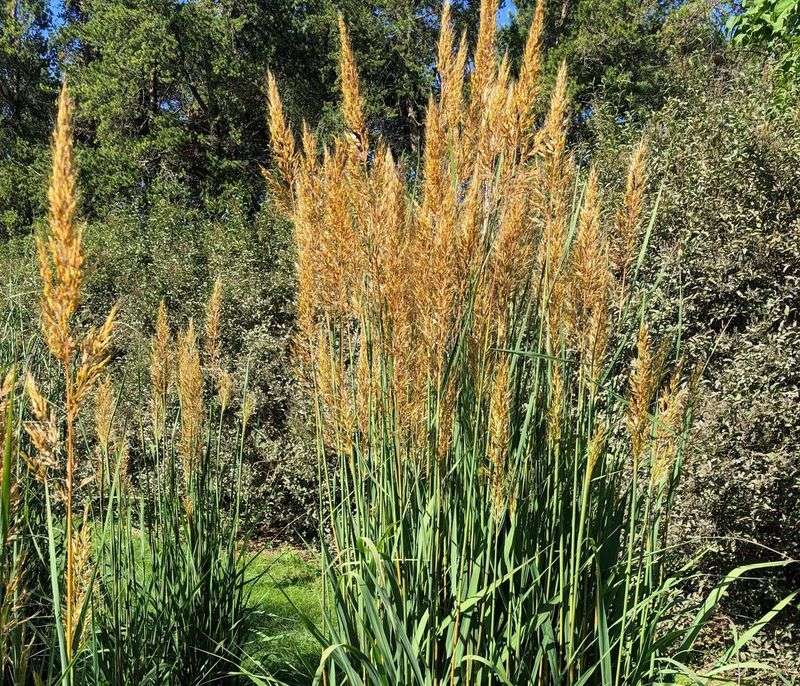
Few plants capture late-season light the way a well-chosen ornamental grass does, and Sorghastrum nutans ‘Golden Sunset’ takes that quality to a level that genuinely earns its place in a Pennsylvania garden design.
Indian grass is a native prairie species with deep roots in the eastern and central United States, and ‘Golden Sunset’ is a cultivar selected specifically for its rich, golden-orange seedheads and warm amber fall foliage that seems to glow when backlit by afternoon sun.
The plant forms upright clumps that typically reach 4 to 5 feet in height, with seed stalks rising above the foliage in late summer.
The movement that comes with even a light breeze gives ‘Golden Sunset’ a dynamic quality that static shrubs and perennials simply cannot replicate.
In a Pennsylvania backyard or border, that sense of motion adds life and dimension to the planting during a time of year when many plants are already fading.
As a native grass, Sorghastrum nutans is well-adapted to Pennsylvania’s climate and soil conditions.
It handles summer heat and humidity without complaint, tolerates periodic drought once established, and tends to be unbothered by the deer pressure that frustrates so many gardeners.
It grows best in full sun and well-drained to average soil, and it tends to flop or lose density in overly rich, moist conditions.
Leaving the seedheads standing through winter adds structure and provides food for birds during cold months. Cutting the clump back to a few inches in late winter before new growth begins keeps the planting looking fresh each spring.
‘Golden Sunset’ works beautifully alongside native asters, coneflowers, and black-eyed Susans in naturalistic Pennsylvania landscapes.