This Is What To Plant Under Texas Trees Where Grass Won’t Grow
Every Texas yard seems to have at least one spot under a tree where grass has quietly given up.
The combination of shade, competing roots, and dry soil creates conditions that turf just cannot handle long term, and re-seeding the same area year after year is one of the more frustrating cycles in Texas lawn care.
The good news is that grass was never the right plant for that spot in the first place.
There are native Texas plants specifically suited to exactly these conditions, ones that work alongside tree roots rather than against them, tolerate low light, and fill in with a kind of natural groundlevel presence that looks far better than patchy struggling grass ever did.
Some of them bloom. Others stay low and spread quietly across the soil. A few do both. Whatever is growing under your trees right now, there is almost certainly a better option waiting to take its place.
1. Horseherb
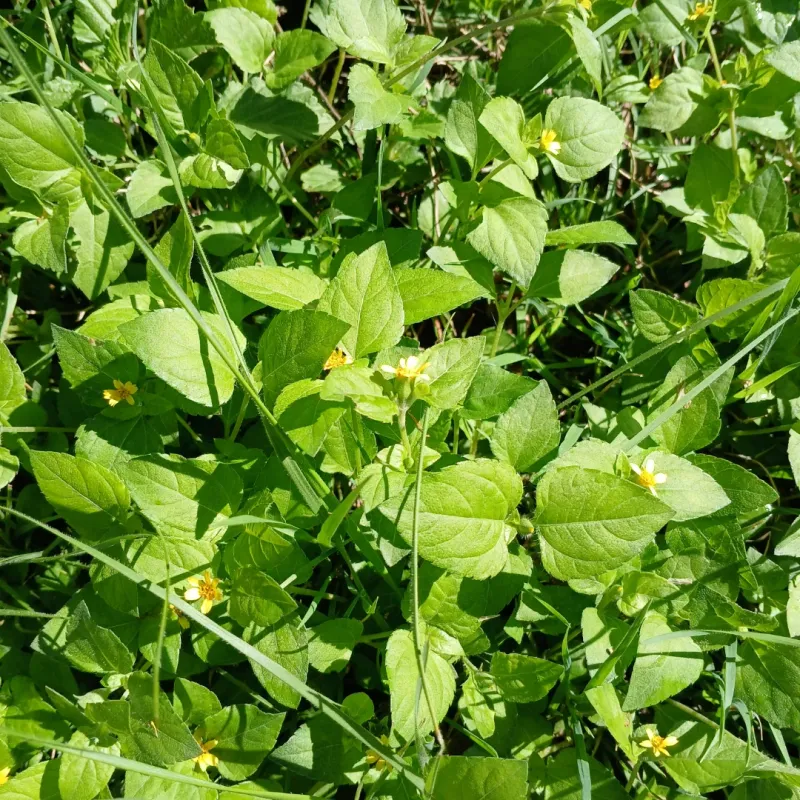
Walk through almost any shaded Texas neighborhood and you might spot a low-growing green carpet hugging the ground beneath old live oaks. That plant is horseherb, and it is one of the most reliable native ground covers in the entire state.
Botanists call it Calyptocarpus vialis, but most Texans just call it a welcome surprise when it shows up on its own.
Horseherb thrives in exactly the conditions that make grass struggle. It loves dry shade, compacted soil, and the kind of root-heavy ground that forms under mature trees.
The plant spreads by creeping stems that root as they go, slowly filling in bare patches without needing any help from you. It stays low, usually only a few inches tall, so it gives you that tidy lawn look without constant mowing.
Watering is rarely needed once horseherb gets settled in. It is naturally drought-tolerant and taps into whatever moisture the soil holds.
The tiny yellow flowers it produces are small but they attract native bees, making it a quiet supporter of your local ecosystem.
One thing to know is that horseherb goes semi-dormant in winter and may look a little tired. But come spring, it bounces back quickly and spreads even further.
Many Texas gardeners stop fighting it and simply let it take over shaded spots completely. If you have been staring at a patch of bare dirt under your favorite shade tree, horseherb might be the easiest fix you have ever tried.
2. Texas Sedge
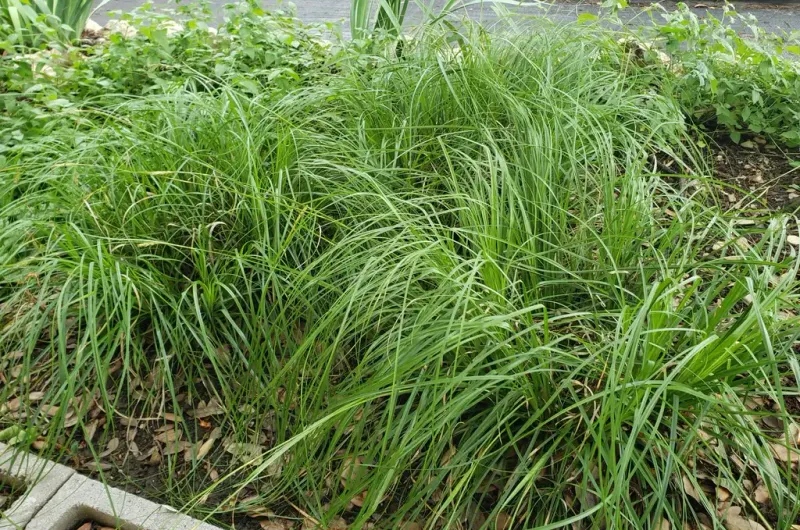
Most people mistake Texas sedge for a type of grass, but it is actually something better. Carex texensis is a native sedge that forms neat, arching clumps of fine green blades.
It looks elegant without any effort, and it handles the tough growing conditions under large trees far better than any turf grass ever could.
Tree roots are one of the biggest reasons grass fails under big trees. They compete aggressively for water and nutrients, leaving almost nothing for shallow-rooted lawn grass.
Texas sedge has adapted over thousands of years to grow alongside these root systems. Its roots go just deep enough to find moisture without picking a losing battle with a massive oak or pecan.
Your Texas Garden Changes Every Week. Your Plan Should Too.
Gardening in Texas changes quickly throughout the season. Every Friday you’ll receive a simple weekly plan showing exactly what to plant, prune, fertilize, harvest, and protect so you never miss the right timing.
Shade is another place where Texas sedge shines. It can handle everything from light filtered sun to fairly deep shade, making it flexible enough for different spots in your yard.
Plant it in groupings or let it spread naturally, and it will slowly knit together into a flowing, soft-textured carpet that moves gently in the breeze.
Maintenance is wonderfully minimal. You can trim it back once a year in late winter to keep it looking fresh, but many gardeners skip even that step.
It rarely needs fertilizer and gets by on natural rainfall for most of the year once established.
If you want something that looks polished and intentional without demanding much attention, Texas sedge is one of the smartest choices you can make for your shaded landscape.
3. Turk’s Cap
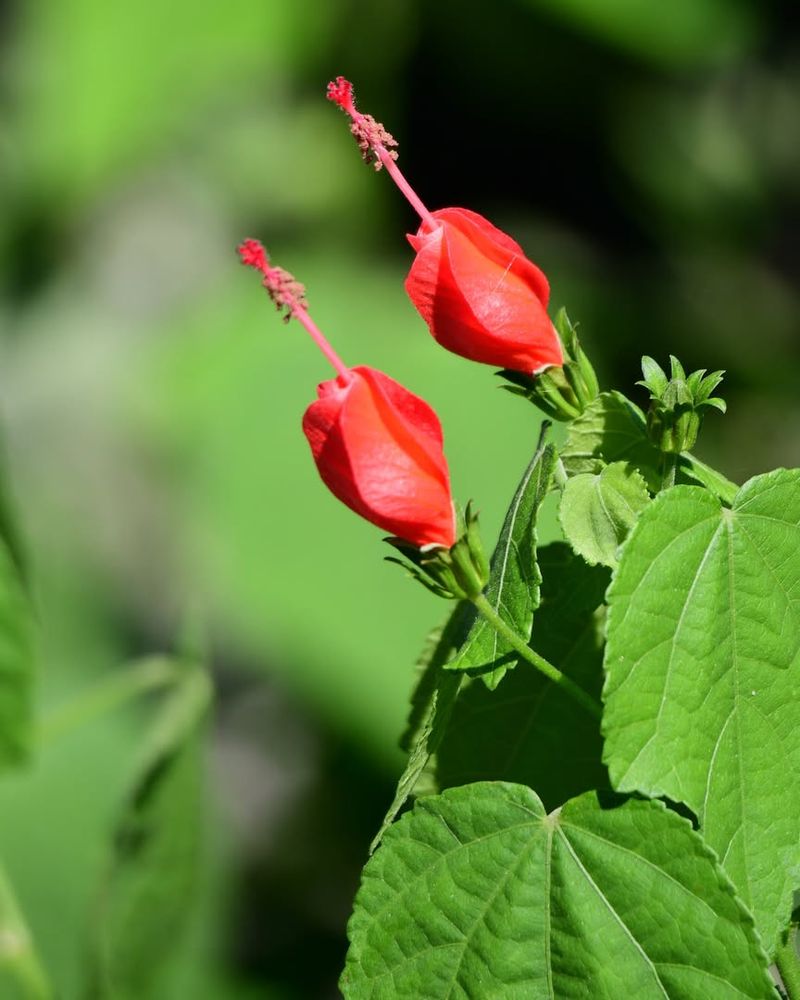
Imagine a plant that blooms in the shade, attracts hummingbirds all summer long, and asks for almost nothing in return. That is exactly what Turk’s cap delivers.
Malvaviscus arboreus var. drummondii is a Texas native that seems almost too good to be true, especially for spots under large trees where most flowering plants give up entirely.
The flowers are genuinely eye-catching. They are a deep scarlet red, and the petals spiral together into a twisted tube shape that never fully opens.
Hummingbirds absolutely love them. Butterflies and bees visit regularly too, so planting Turk’s cap under your trees is like setting up a little wildlife feeding station right in your own backyard.
Growth-wise, this plant can get fairly large. In the right conditions it may reach five or six feet tall and spread just as wide.
That makes it a great choice for filling in big empty areas under mature trees where you want some height and drama. It dies back to the ground in winter but returns reliably each spring with fresh green growth.
Turk’s cap handles both dry and moist soil, which is rare for a shade-loving plant. It does well in clay-heavy Texas soils too, which is a huge bonus for gardeners in Central and South Texas.
Pair it with low ground covers at its feet and taller trees overhead, and you get a layered, natural-looking planting that practically takes care of itself through the long Texas summer.
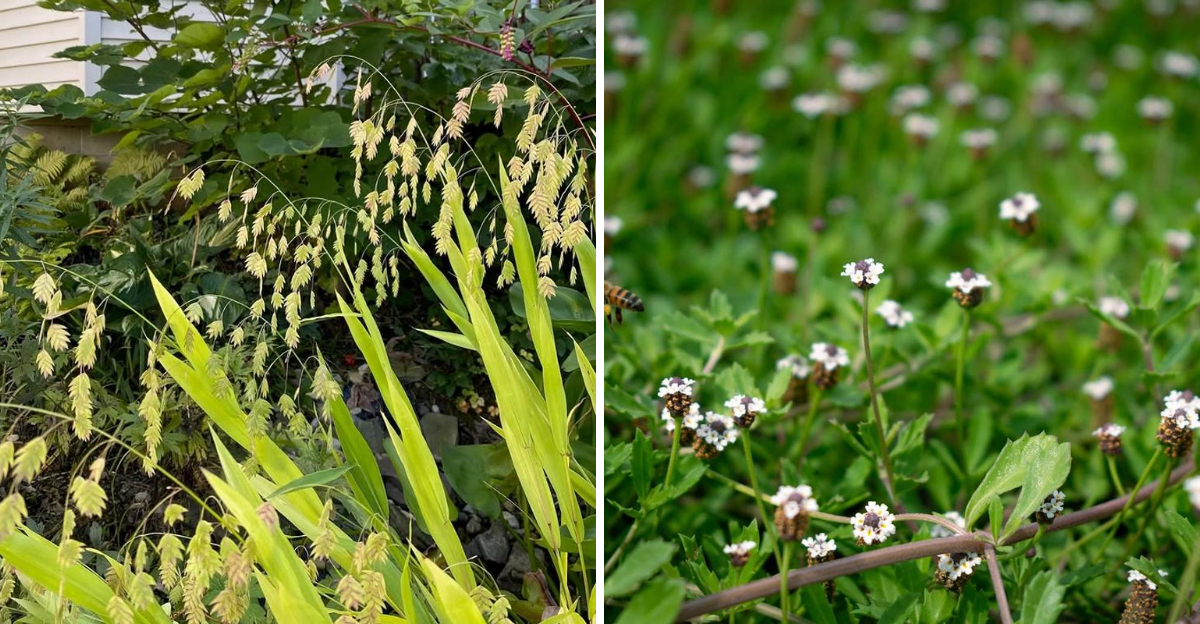
4. Inland Sea Oats
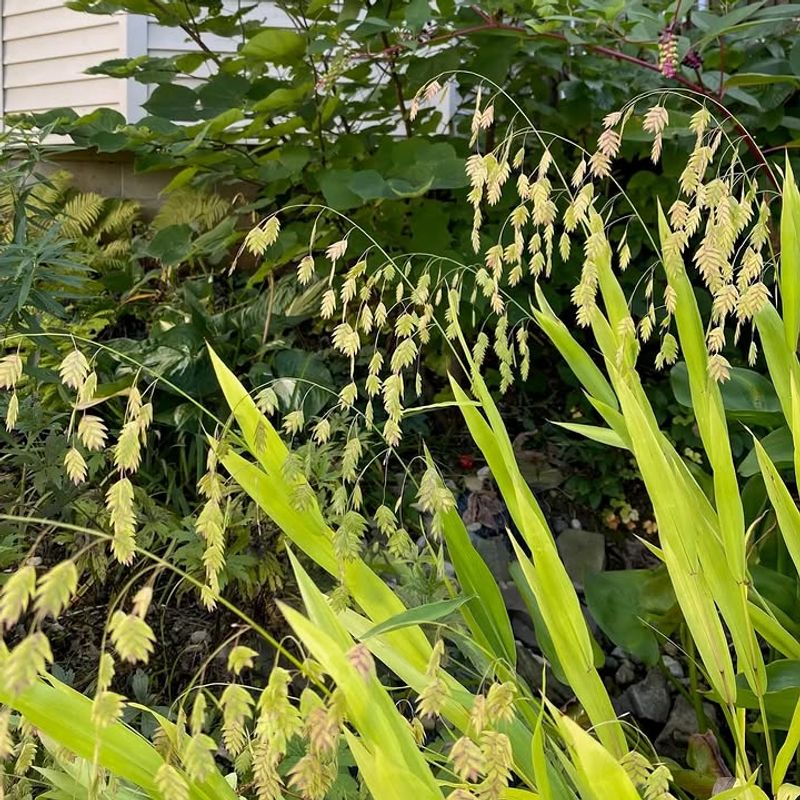
There is something almost poetic about the way inland sea oats move in a breeze. The flat, dangling seed clusters catch even the lightest wind and flutter like tiny green flags.
Chasmanthium latifolium is the botanical name, but most people just call it one of the prettiest native grasses in Texas, and for good reason.
Unlike many ornamental grasses that need full sun, inland sea oats actually prefer shade. They grow naturally along creek banks and in woodland settings, which means the filtered light under your trees feels like home to them.
Plant them in groups and they will form a lush, layered look that reminds you of a natural forest floor.
The seed heads start out green in summer, then shift to a warm copper-bronze as fall arrives. That color change adds seasonal interest to spots in your yard that might otherwise look forgotten.
Birds love the seeds too, so expect to see sparrows and other small birds visiting your planting from late summer through winter.
Inland sea oats spread by self-seeding, which means they will slowly expand their territory over time. Some gardeners love this quality, while others prefer to deadhead the seed clusters before they drop to keep the spread controlled.
Either approach works fine. The plants are easy to pull if they pop up somewhere unwanted.
For a woodland-style yard that feels lush and alive even in deep shade, inland sea oats bring a natural charm that few other plants can match in the Texas landscape.
5. Frogfruit
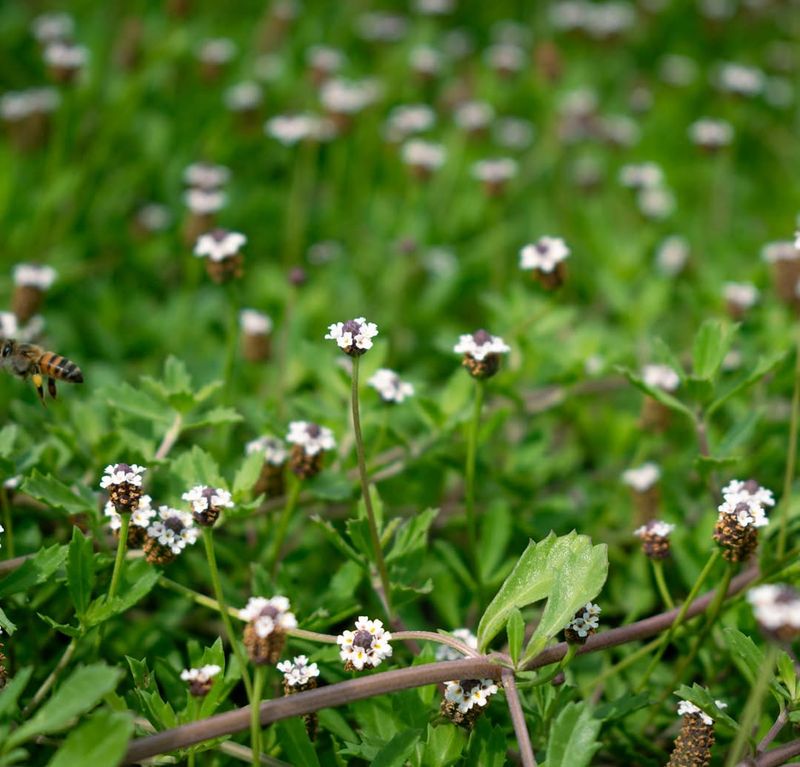
Do not let the quirky name fool you. Frogfruit, known scientifically as Phyla nodiflora, is one of the hardest-working ground covers you can plant in a Texas yard.
It spreads steadily across the ground, roots as it goes, and creates a dense mat that smothers weeds while staying low enough to walk on. That combination of toughness and utility makes it a standout choice for problem areas under trees.
Pollinators are wild about frogfruit. The tiny white and purple flowers may look modest, but they attract an impressive variety of bees, butterflies, and other beneficial insects.
Buckeye butterfly caterpillars actually use frogfruit as a host plant, which means planting it under your trees could bring those beautiful butterflies into your yard season after season.
Frogfruit handles filtered sunlight really well, making it a solid choice for areas that get some dappled light under the tree canopy rather than deep full shade.
It also tolerates occasional foot traffic better than most ground covers, which is helpful if kids or pets cut through your yard regularly.
Once it gets going, frogfruit needs very little water. It is surprisingly drought-tolerant for a plant that looks so lush and green.
It does go dormant in winter, but it comes back strong once temperatures warm back up in spring. If you want a ground cover that actively supports wildlife, holds soil in place, and fills in bare spots under your trees without demanding constant care, frogfruit genuinely earns its place in the Texas garden.
6. Cedar Sage
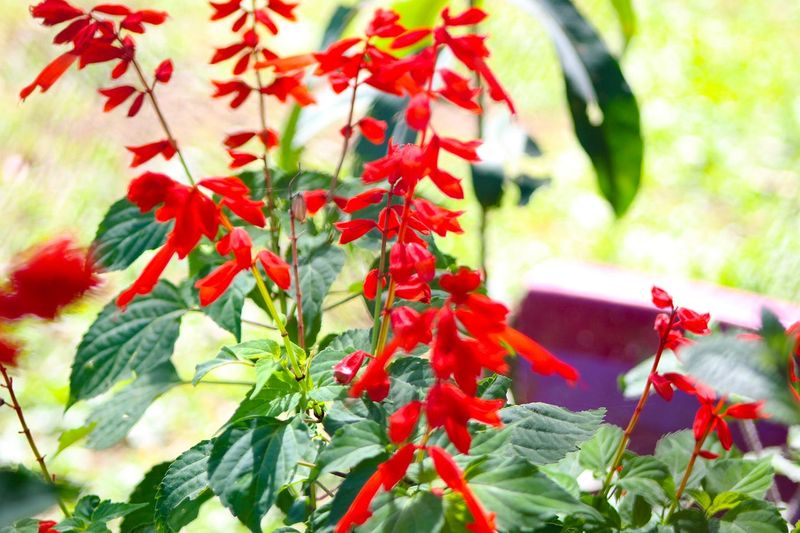
Few plants bring as much color to a shaded Texas garden as cedar sage. Salvia roemeriana is a compact native perennial that produces clusters of vivid red tubular flowers from spring all the way through fall.
It grows naturally under the cedar and oak woodlands of the Texas Hill Country, which tells you everything you need to know about how well it handles dry, rocky, shaded conditions.
Hummingbirds cannot resist those red flowers. If you have ever wanted to attract more of these tiny, fast-moving birds to your yard, planting cedar sage under your trees is one of the most reliable ways to do it.
The flowers are perfectly shaped for hummingbird feeding, and the plants bloom long enough to keep them coming back all season.
Cedar sage stays fairly compact, usually reaching about one to two feet tall. That makes it a great mid-layer plant when you are building out a shaded planting bed.
Pair it with taller shrubs like Turk’s cap behind it and a low ground cover like horseherb in front, and you get a beautiful, layered design that looks professionally planned.
Watering needs are low after the plant establishes itself in its first season. Cedar sage actually prefers to dry out a bit between waterings, and it struggles in soggy soil.
Give it well-drained ground, some shade, and a little patience during establishment, and it will reward you with years of reliable blooms and wildlife activity. For Central Texas gardeners especially, this plant feels like a natural fit.
7. American Beautyberry
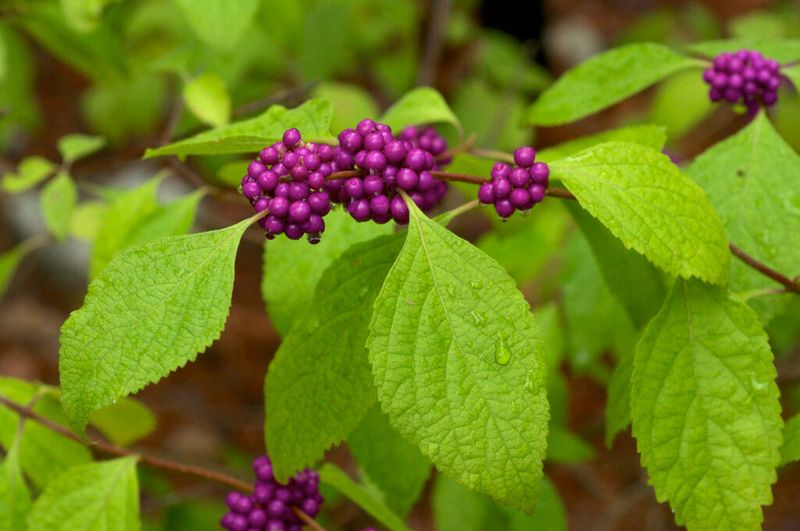
When late summer rolls around and most plants are looking worn out from the Texas heat, American beautyberry is just getting started.
The clusters of vivid magenta-purple berries that line its arching branches are so bright and unusual that people who see them for the first time often cannot believe they are real. Callicarpa americana is a showstopper, plain and simple.
Growing under trees suits beautyberry perfectly. It is a woodland native that naturally grows in the understory of forests across the southeastern United States, including large portions of Texas.
Partial shade keeps the plant looking its best, and it handles the dry, root-filled soil under mature trees with an easygoing toughness that makes it easy to love.
The shrub can grow quite large, sometimes reaching six feet tall and equally wide. That size makes it ideal for filling in big empty spaces under sprawling oak or pecan trees where you want height and presence.
The soft green leaves are large and tropical-looking through summer, then the berries appear in late August and September just as other plants start fading.
Wildlife absolutely flock to beautyberry. More than 40 species of birds eat the berries, including mockingbirds, robins, and cedar waxwings.
White-tailed deer browse the leaves, and the dense branching structure provides cover for small animals.
Beyond its ecological value, beautyberry is simply one of the most visually striking shrubs you can grow in a Texas shade garden. Once you plant one, you will wonder why you waited so long.