Here’s Why A Red-Tailed Hawk Keeps Visiting Your Virginia Yard
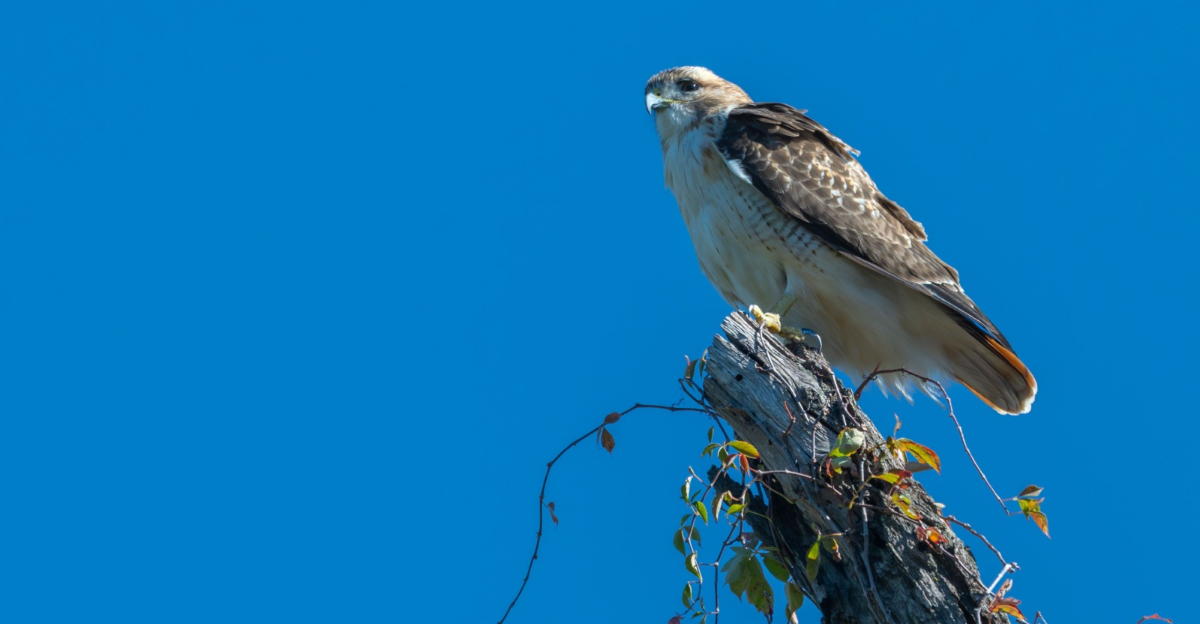
It is back. Same fence post, same piercing stare, same total refusal to acknowledge that this is, technically, your yard.
If a red-tailed hawk has been making regular appearances in your backyard, you are not imagining things, and you are definitely not being haunted.
These birds are calculated about where they spend their time, and if yours keeps showing up, your yard is doing something right.
Red-tailed hawks do not wander randomly. They scout, they evaluate, and they commit.
So the fact that one has chosen your little patch of Virginia is actually a compliment, just a very intense, taloned one.
Once you understand what is pulling it back, you will look at your yard completely differently. Spoiler: it has very little to do with luck and everything to do with what you have quietly built out there.
Your Yard Works Well As A Hunting Ground
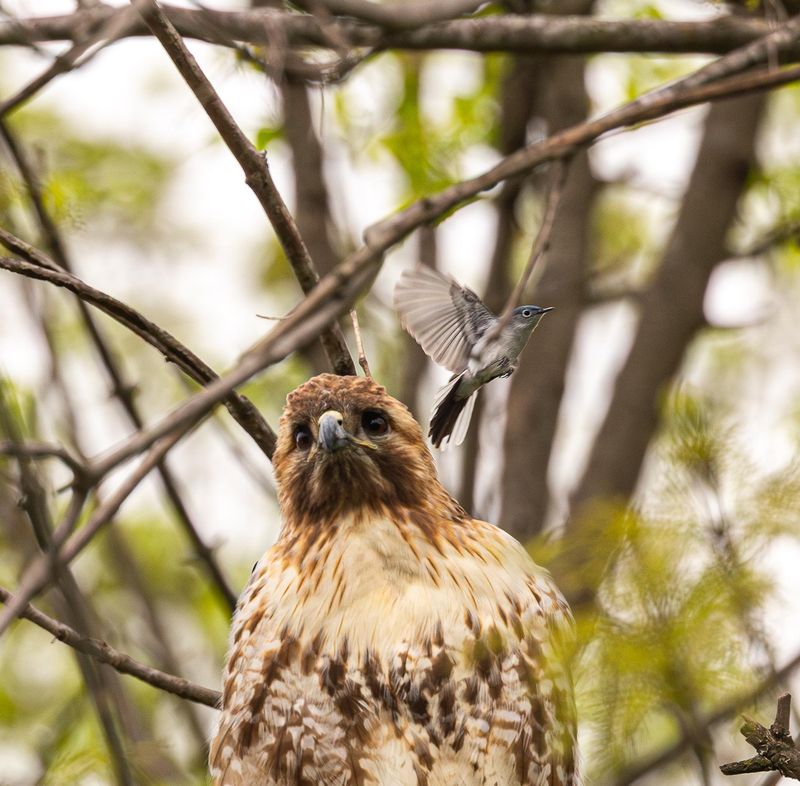
Picture this: a hawk sitting perfectly still on your fence, eyes locked on the grass below like a seasoned pro. That is not random.
Your yard is an open-air cafeteria for a red-tailed hawk, and it knows exactly what it is doing.
Hawks hunt by sight, and they need clear sightlines to spot movement on the ground. An open lawn gives them exactly that kind of advantage.
When your grass is trimmed and the ground is exposed, small animals like mice and voles have nowhere to hide. The hawk can spot movement on the ground from impressive distances overhead.
Red-tailed hawks are ambush hunters at heart. They prefer elevated perches with a wide, unobstructed view of an open area below.
Your fence posts, tall trees, and utility poles near your yard all serve as perfect launch pads. From those spots, the hawk watches, waits, and strikes with incredible precision.
Open lawns in residential neighborhoods actually mimic the meadow habitats these birds love in the wild. Your yard, without you even trying, has become prime hunting real estate.
Once a hawk finds a reliable hunting spot, it will keep returning to that same spot. Your yard has earned a permanent spot on this bird’s daily route.
There’s A Reliable Food Source Keeping It Around
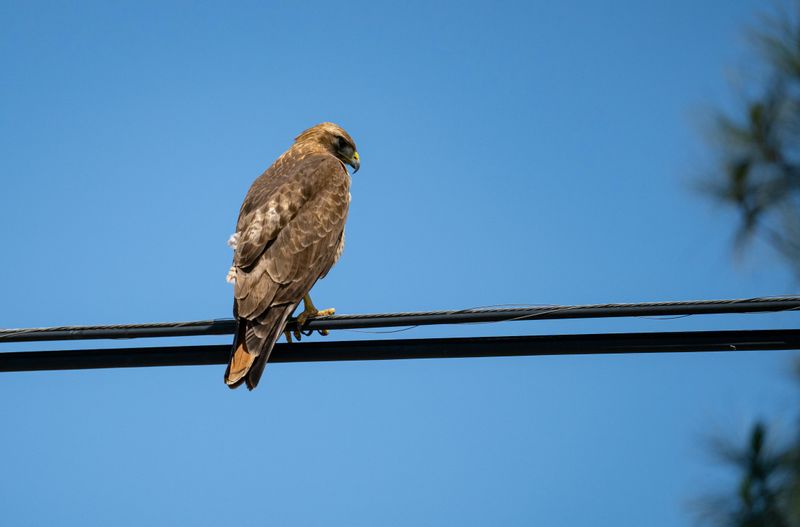
Hungry birds are loyal birds. If a red-tailed hawk keeps showing up at your place, it has almost certainly found a consistent meal there, and it is not about to give that up.
The most common prey for these hawks includes mice, voles, squirrels, rabbits, and the occasional large insect. If your yard has any of these, the hawk has already noticed.
Bird feeders are a sneaky contributor to this cycle. Feeders attract seed-eating birds and small rodents, which in turn attract predators like the red-tailed hawk looking for an easy catch.
Compost piles, leaf litter, and dense garden beds create perfect hiding spots for small mammals. Those mammals are basically a buffet sign for any passing hawk overhead.
Even a simple garden with mulch and ground cover can shelter enough rodent activity to keep a hawk interested for weeks. The food chain is playing out in your backyard every single day.
Your Virginia Garden Changes Every Week. Your Plan Should Too.
Gardening in Virginia changes quickly throughout the season. Every Friday you’ll receive a simple weekly plan showing exactly what to plant, prune, fertilize, harvest, and protect so you never miss the right timing.
If you have noticed fewer squirrels or mice lately, the hawk might already be doing its job. These birds are natural pest controllers, and they are remarkably efficient at it.
Having a red-tailed hawk patrol your yard is honestly a win for your garden. It keeps the rodent population in check without any traps or chemicals needed on your part.
It May Have Claimed Your Yard As Its Territory
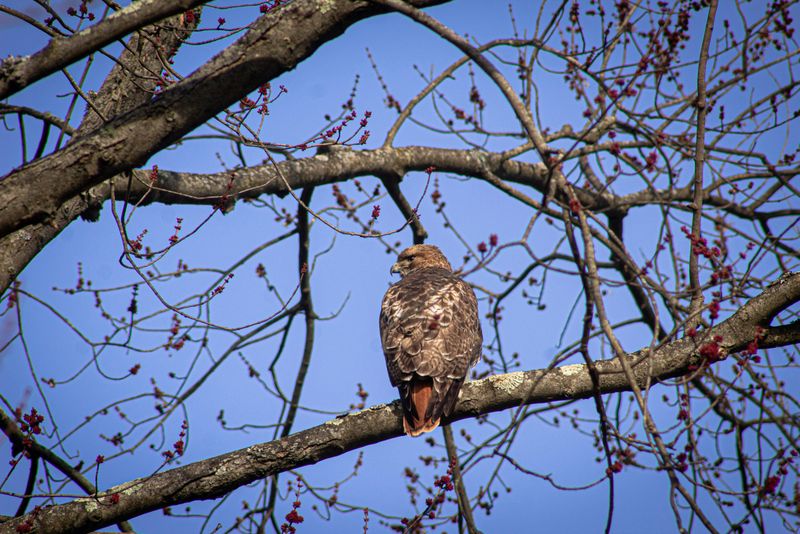
Hawks are not just passing through. When one keeps returning to the same spot week after week, there is a good chance it has mentally drawn a property line around your yard and claimed it as its own.
Red-tailed hawks are strongly territorial. Their home range can stretch several square miles, and your yard may sit right in the center of it.
You might notice the hawk calling out loudly from a high perch, especially in the morning. That piercing scream is not panic, it is a declaration that this space belongs to it.
If you see it chasing off crows, other raptors, or even large dogs, that is territorial behavior in full swing. The hawk is not being aggressive toward you personally, it is just protecting its turf.
Once a hawk establishes a territory, it tends to hold it for multiple seasons. You may have the same bird visiting your yard for years without even realizing it.
Hawks that claim a territory become familiar with every corner of it. They know where the prey hides, where the perches are, and what the daily patterns look like.
Having a territorial hawk in yard is almost like having a resident guardian overhead. That level of consistency is actually a sign of a very healthy local ecosystem around your home.
Nesting Season Could Be Playing A Role
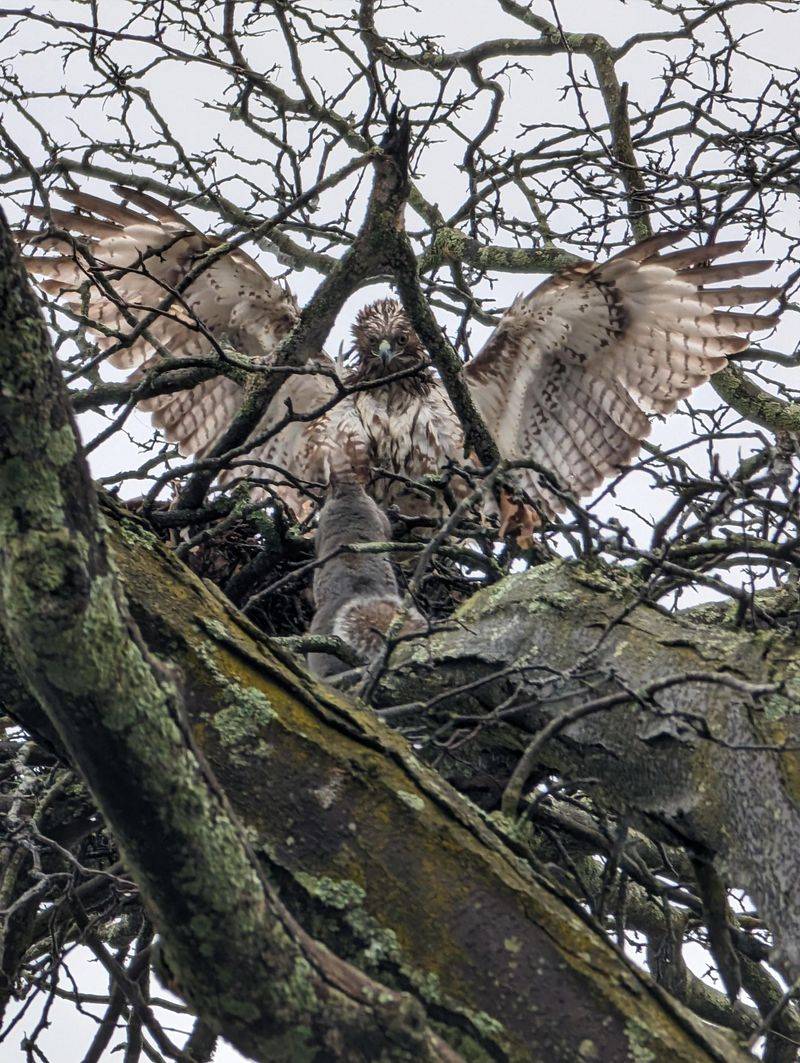
Spring hits differently when a hawk is building a nest nearby. If the hawk has been showing up more often lately, nesting season may well be part of the story.
Red-tailed hawks typically begin nesting in late winter across much of the eastern United States. They choose large, tall trees with strong branches and a commanding view of the surrounding area.
If your yard has mature oaks, pines, or sycamores nearby, it may offer the exact kind of structure these birds look for when choosing a nesting site. Tall trees near open ground are the gold standard.
During nesting season, the pair becomes much more active and visible. Both the male and female will make frequent trips to and from the nest, and you may hear them calling back and forth to each other.
The male often hunts close to the nest to bring food back to the female and, later, to the chicks. Your yard may be serving as the primary hunting ground for the whole family.
Young hawks typically leave the nest somewhere between six and seven weeks, though they stay close and dependent for weeks after that. You might spot a slightly awkward-looking juvenile hawk practicing its skills in your yard.
Nesting hawks are a sign that your yard offers something truly special, shelter, food, and safety all in one place.
Your Yard’s Layout Works In Its Favor
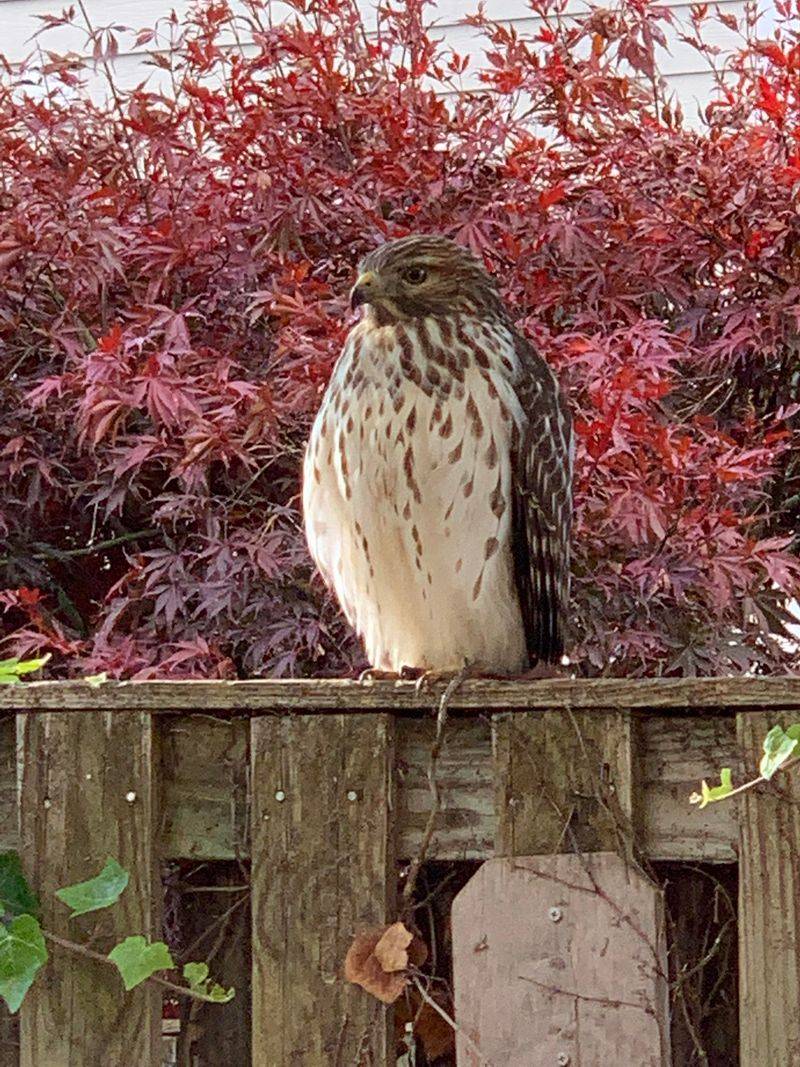
Not every yard gets a hawk visitor. The ones that do tend to share something in common, a layout that naturally suits a predator’s needs.
Your yard might be a better hawk habitat than you think.
The ideal hawk yard has a mix of open space and elevated perches. Think of it as a combination of a runway and a watchtower all in one compact space.
Fence lines, utility poles, and tall trees along the edges of your property give the hawk high spots to scan from. Open lawn or low ground cover in the center gives it a clear field of view.
Yards that back up to woods, fields, or water sources are especially attractive. These transition zones, called edges, are some of the richest wildlife habitats in North America.
If your yard sits between a wooded area and an open space, you are living in what ecologists call an ecotone. Hawks absolutely love these zones because prey animals congregate there.
Even small details like a garden pond, a brush pile, or a stone wall can increase the variety of small animals in your yard. More prey variety means more reasons for the hawk to stick around.
The shape and size of your outdoor space may feel ordinary to you, but to a hunting hawk, it reads like a perfectly designed landscape built just for it.
What The Red-Tailed Hawk Is Telling You About Your Ecosystem
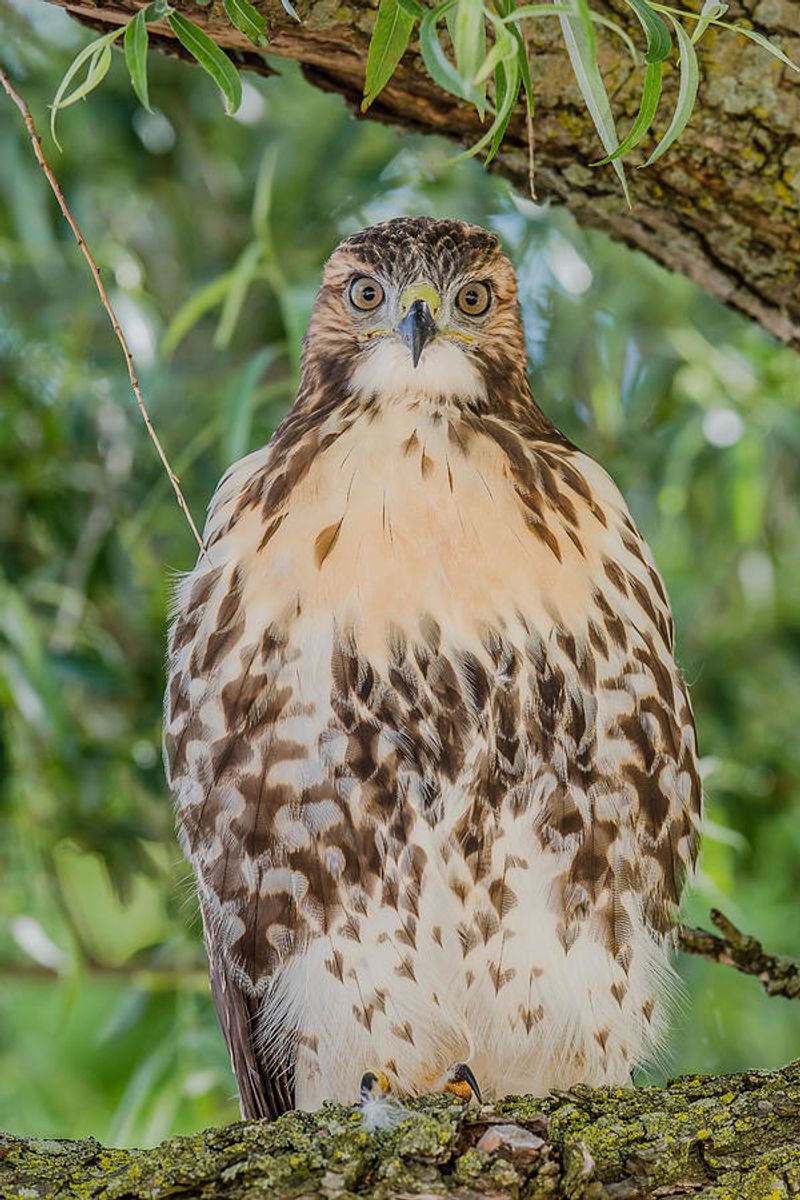
A hawk does not show up in just any yard. When a red-tailed hawk visits regularly, it is sending you a quiet but powerful message about the health of your outdoor space.
These birds sit at the top of a food chain that includes insects, small birds, rodents, and reptiles. If the hawk is thriving in your yard, all those lower layers of the food chain must be thriving too.
A healthy yard supports layers of life. Ground insects feed the songbirds, songbirds and rodents feed the hawk, and the hawk helps keep prey populations in check over time.
Seeing a red-tailed hawk regularly means your yard has enough biodiversity to support a top predator. That is not something every suburban yard can claim, and it is worth appreciating.
Native plants play a huge role in this. Gardens filled with native shrubs, grasses, and flowering plants attract more insects, which attract more small animals, which attract more hawks over time.
If you have been planting native species or avoiding heavy pesticide use, you may have accidentally created one of the best wildlife corridors in your neighborhood. The hawk is your proof.
Think of the hawk as your yard’s report card. A red-tailed hawk choosing your space means the ecosystem you have built, intentionally or not, is genuinely working beautifully.
What You Can Do To Keep It Coming Back
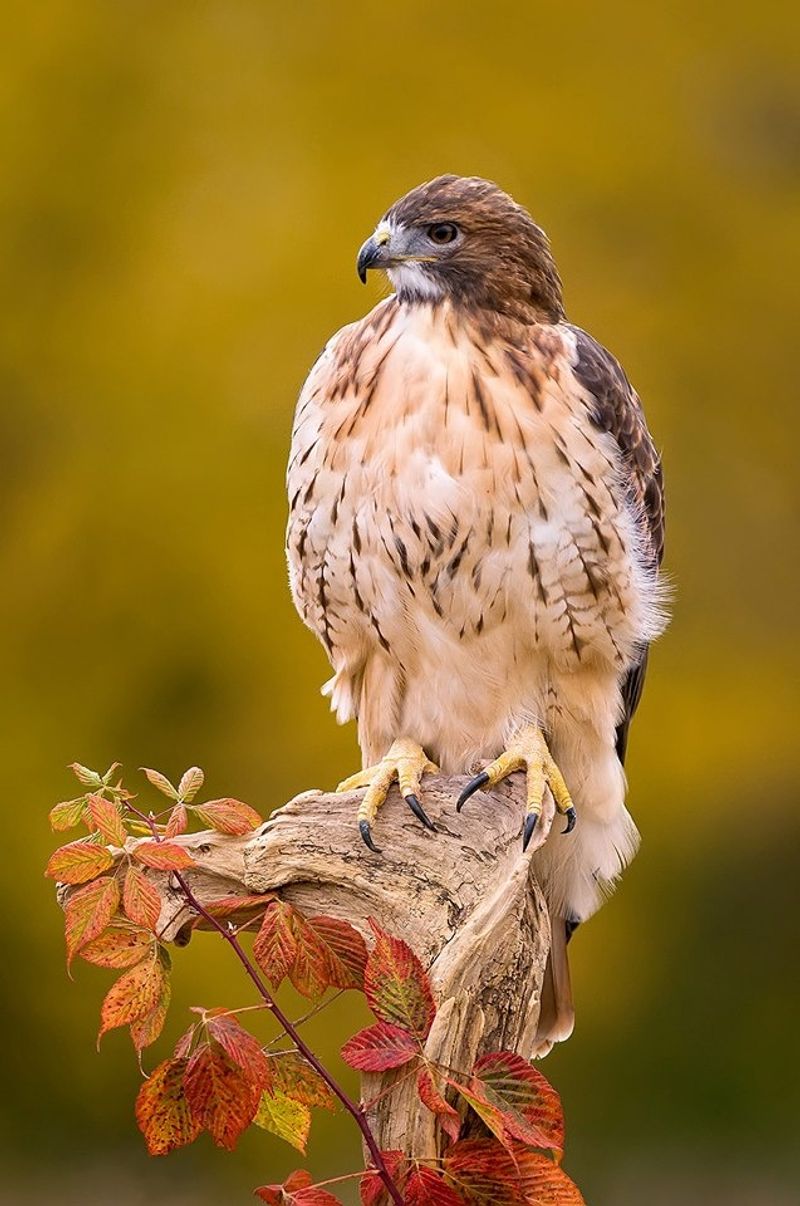
So you want to roll out the welcome mat for your hawk neighbor. Good news, keeping a red-tailed hawk coming back does not require much effort at all.
A few simple choices can make a big difference.
Start by adding a tall perch post to your yard. A sturdy wooden post standing eight to ten feet high gives the hawk a dedicated lookout spot and signals that your yard is open for business.
Keep at least part of your lawn mowed short. Low grass makes it easier for the hawk to spot prey movement and gives it a clear landing zone when it swoops in for a catch.
Avoid using rodent poisons or pesticides around your property. Hawks that eat poisoned prey can become seriously ill, and a contaminated food source will quickly drive the bird away for good.
Plant native grasses and wildflowers along your yard’s edges. These attract the insects and small mammals that fill out the food chain and keep the hawk’s pantry well stocked throughout the seasons.
If you have a birdbath or shallow water feature, keep it clean and filled. Hawks occasionally drink and bathe, and a water source adds one more reason to choose your yard over the neighbor’s.
Your yard is already doing something right if a red-tailed hawk keeps returning. A little encouragement from you could turn an occasional visit into a long-term relationship with one of nature’s most impressive birds.