These Are The Florida Shrubs That Handle Both Flooding And Drought Without Skipping A Beat
Florida cannot make up its mind. Three months of rain that turns your yard into a pond, then a dry stretch that cracks the soil and stresses everything in sight.
Most shrubs pick a lane. They want consistent moisture or they want it dry.
Ask them to handle both and they fall apart fast. That is the gardening trap that catches so many people off guard.
You plant something that looks great in spring, summer floods hit, and suddenly you have a soggy struggling mess. Then the rain stops and the heat moves in and whatever survived the flooding cannot handle the drought that follows.
It feels like the yard is working against you. But certain shrubs actually thrive in exactly this kind of unpredictable cycle.
They have been handling Florida’s mood swings for a long time. Your yard just needs more of them.
1. Simpson’s Stopper Handles Poor Drainage And Dry Spells
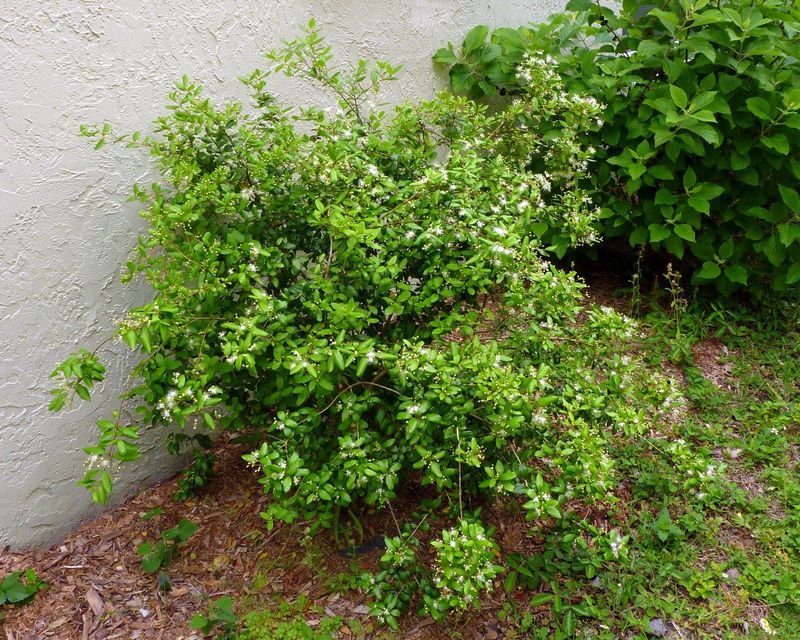
A glossy native screen can handle more than one kind of stress, and Simpson’s stopper, Myrcianthes fragrans, proves that point well. This native shrub or small tree has dense, glossy foliage that holds its color through the seasons.
Small white flowers appear with a faint, spicy fragrance, and the berries that follow attract birds and other wildlife.
What makes it useful for tricky yards is its ability to handle poor drainage without falling apart. During short wet periods after heavy summer rain, it can manage temporarily saturated soil better than many ornamental shrubs.
Once established, it also handles dry spells reasonably well, making it a practical option where soil conditions shift between wet and dry.
It works well as a polished native screen, a front-yard specimen, or a background planting where structure and year-round foliage matter. It can be pruned into a tighter form or allowed to grow into a small tree with a natural shape.
Mature size typically ranges from about 10 to 15 feet, though it can grow larger in ideal conditions.
It is best suited to Central and South landscapes, where winter temperatures stay mild. In northern regions, cold snaps can cause damage.
Full sun to partial shade both work, and it adapts to a range of well-drained to moderately moist soils. It does not perform well in permanently flooded spots, so planting it where drainage eventually improves is important.
For yards that need a tidy, wildlife-friendly native with real flexibility, Simpson’s stopper is a smart fit.
2. Wax Myrtle Adapts To Wet Soil And High Dry Spots
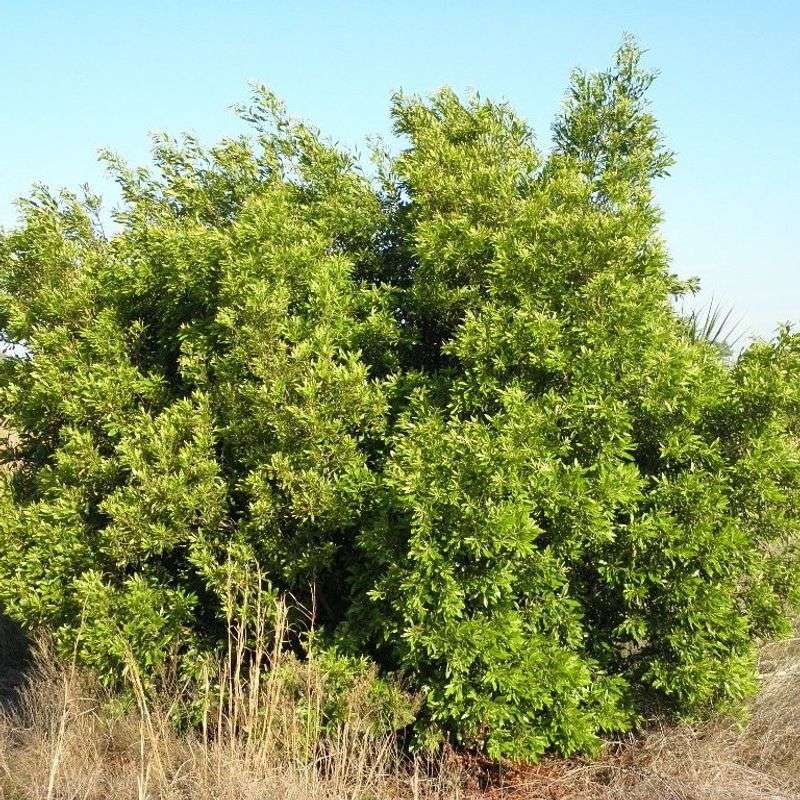
Some shrubs are useful because they adapt instead of sulk, and wax myrtle, Morella cerifera, is one of the most flexible native plants you can put in a yard.
It grows naturally along wet flatwoods edges, pond margins, and coastal areas, but it also handles drier sandy upland soil once it gets established.
That range is rare and genuinely useful.
As a fast-growing native shrub or small tree, it fills in quickly for informal screens, fence lines, and wildlife corridors. The small waxy berries are a well-known food source for migratory birds, especially yellow-rumped warblers in fall and winter.
Your Florida Garden Changes Every Week. Your Plan Should Too.
Gardening in Florida changes quickly throughout the season. Every Friday you’ll receive a simple weekly plan showing exactly what to plant, prune, fertilize, harvest, and protect so you never miss the right timing.
Foliage has a pleasant aromatic quality when brushed or pruned.
It works across most of the state, from North to South, and tolerates a variety of soil types including clay, sand, and moist loam. It can handle temporary flooding and then bounce back when soil dries out.
In wetter spots, it may grow more vigorously than expected.
The main thing to plan for is its spreading habit. Wax myrtle sends up root suckers and can spread outward over time.
That works well in naturalistic plantings or large yards, but it can become a management task in small, formal beds.
It responds well to pruning and can be shaped into a small tree by removing lower branches, but it grows back quickly and may need attention more than once a year.
For yards that have both wet low spots and drier raised areas, wax myrtle often bridges both zones better than most plants on the market.
3. Walter’s Viburnum Handles Temporary Wet Soil And Drought
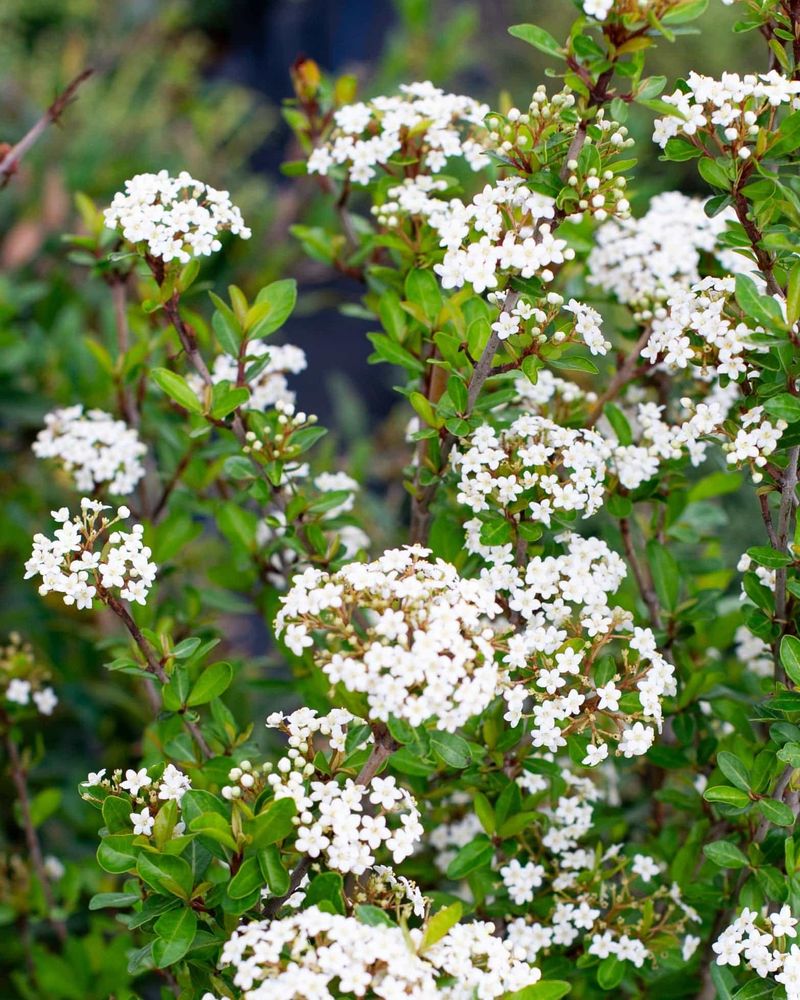
Temporary wet soil does not have to end a hedge plan. Walter’s viburnum, Viburnum obovatum, is a native that can handle short bouts of wet feet and then transition through dry spells without losing much ground.
It is one of the more underused native hedge plants in the state, and it deserves a closer look from anyone dealing with inconsistent drainage.
In spring, it puts out clusters of small white flowers that attract pollinators before most other plants have woken up for the season.
The foliage is semi-evergreen to evergreen depending on the winter and the region, and it stays fairly dense with regular pruning.
It can be kept as a tight formal hedge, a loose informal screen, or trained into a small multi-trunk tree over time.
Mature size and density can vary depending on the cultivar, the pruning schedule, and the site. Compact cultivars like ‘Densa’ stay smaller and work well in tighter spaces.
Standard forms can reach 10 to 15 feet or more without pruning. Birds use the berries in fall and winter, adding wildlife value through the cooler months.
It grows well across North and Central parts and into the northern parts of South Florida. Full sun to partial shade suits it, and it handles sandy soil, loamy soil, and moderately moist conditions.
It does not perform well in permanently waterlogged areas, but it recovers from temporary flooding better than many comparable hedge plants. For yards that flood briefly after rain and then dry out, it is a reliable and attractive native option worth planting.
4. Yaupon Holly Thrives In Wet Or Dry Native Hedges
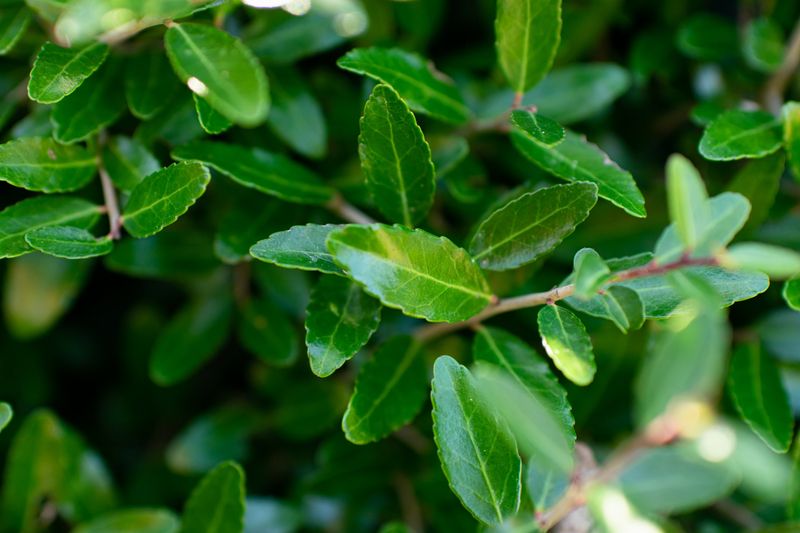
Wet-or-dry sites need plants with flexible roots, and yaupon holly, Ilex vomitoria, has exactly that. It is one of the toughest native evergreen shrubs available for our gardens.
Once it gets past the establishment phase, it tolerates a surprisingly wide range of conditions.
Wet soil after summer storms, dry sandy patches between rain events, even coastal exposure in some areas – yaupon holly manages where other hedge plants struggle.
It clips well into formal hedges and topiaries, but it also works as a loose screen or small tree with minimal pruning. The small, glossy leaves stay dense and green year-round, giving it good structure through every season.
Female plants produce clusters of small red berries that birds find attractive in fall and winter. However, berry production depends on having a male plant nearby for pollination.
Yaupon holly is native across North and Central Florida and grows well into parts of South Florida. It handles full sun and partial shade and adapts to clay, sand, and moist soils.
For gardeners who want a native alternative to non-native hedge plants that need frequent irrigation, it offers a smaller-scale option. It is also lower-input and does not sacrifice appearance.
Growth rate is moderate, and mature size varies by form. Standard plants can reach 15 feet or more, while weeping and compact cultivars stay smaller and suit tighter spaces.
It responds well to heavy pruning and bounces back without much fuss. For front yards, fence lines, and property borders where both wet spells and dry stretches are common, yaupon holly is a consistent, low-drama choice.
5. Saw Palmetto Tolerates Wet Conditions And Dry Sandy Soil
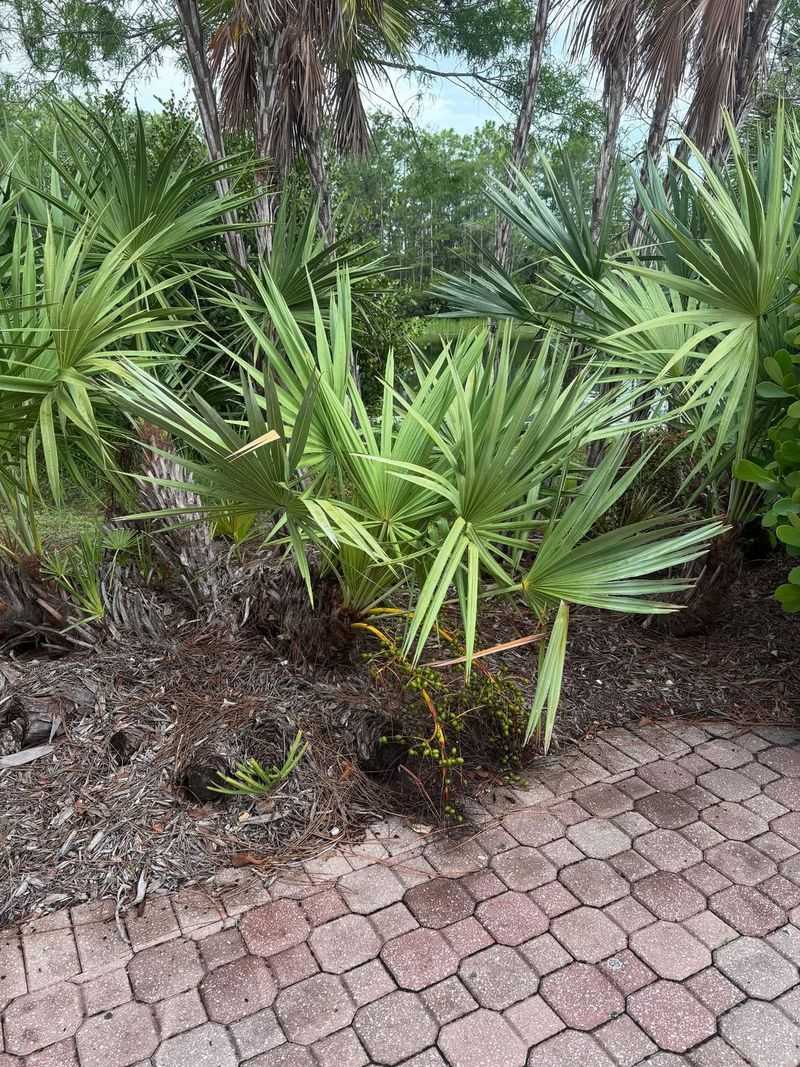
Palm-like texture can be tougher than it looks. Saw palmetto, Serenoa repens, is one of the most resilient native plants in the state.
It handles wet conditions and dry sandy soil better than almost any other low-growing shrub in the landscape. It grows naturally across flatwoods, scrub, and wet prairies, which tells you a lot about its range of tolerance.
The fan-shaped fronds give it a bold, textural look that works well in naturalistic beds and large sunny borders. It also suits open areas where a tough groundcover or low shrub layer is needed.
It grows slowly and spreads outward over time, forming broad clumps that can eventually reach 5 to 10 feet wide or more in ideal conditions.
Wildlife relies on it heavily – the berries are an important food source, and the dense fronds provide cover and nesting habitat.
It is not a plant for small formal beds or tight spaces where growth needs to stay controlled. It does not clip into a tidy hedge, and trying to keep it small with frequent pruning is a frustrating exercise.
The stems are low and often sprawling, with sharp serrated leaf stems that can scratch, so placement matters.
Saw palmetto grows well across all regions in full sun to light shade. It handles temporary flooding in low spots and then manages extended dry periods without much visible stress once established.
Sandy, well-drained soil is where it really thrives, but it adapts to heavier soils with reasonable drainage. For large-scale native plantings, it brings both toughness and genuine ecological value to the yard.
6. Cocoplum Works In Flood-Prone South Florida Yards
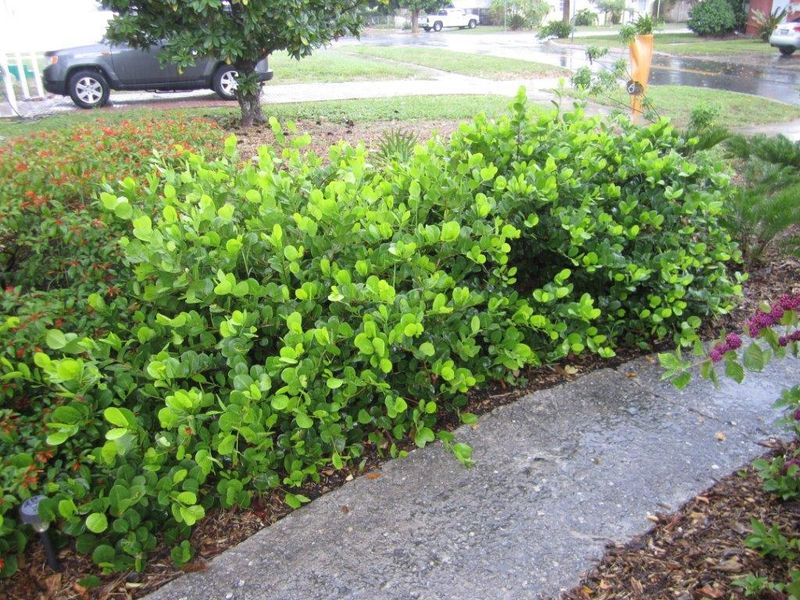
South Florida yards need shrubs built for warm extremes, and cocoplum, Chrysobalanus icaco, fits that description well.
It is a native shrub that handles the heat, the occasional flooding, and the coastal conditions that come with living in the southern part of the state.
In flood-prone yards where drainage is slow and soils stay wet after heavy rain, cocoplum manages better than many alternatives.
The foliage is round, glossy, and attractive year-round, making it a popular choice for formal hedges and front-yard structure. It clips cleanly and holds a tight shape with regular pruning.
Left unpruned, it can grow into a larger informal mass or small tree, depending on the form. The fruit is edible and has been used in jellies and traditional foods, adding a small practical bonus to an already useful plant.
It handles salt spray reasonably well in many coastal settings, which extends its usefulness in yards close to the water. Full sun suits it best, though it tolerates partial shade.
It prefers moist to wet soils and handles periods of poor drainage better than most ornamental hedges. However, it does not perform well in permanently flooded conditions, and it needs soil that eventually drains between rain events.
Cocoplum is not a statewide shrub. It is not cold-hardy enough for northern regions and can suffer damage in central parts during hard freezes.
It belongs in South Florida landscapes, particularly from roughly the Miami area south and along warm coastal corridors.
For homeowners dealing with low, flood-prone yards and the need for a polished, wildlife-friendly native hedge, cocoplum is a genuinely strong fit.
7. Beautyberry Bounces Back From Wet And Dry Extremes
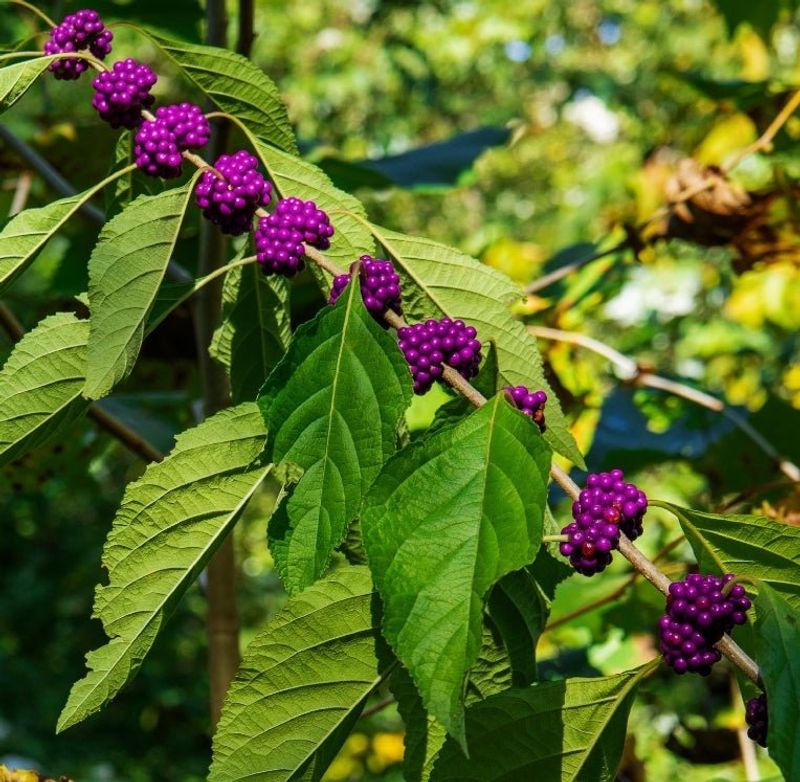
Not every tough native shrub has to look rugged. American beautyberry, Callicarpa americana, is one of the most visually striking natives in the region.
It also handles the wet-to-dry swings that come with our summers better than its showy appearance might suggest.
The clusters of vivid purple berries that appear in late summer and fall are genuinely hard to miss, and birds strip them quickly once they ripen.
It grows naturally in forest edges, disturbed areas, and flatwoods understories, which means it is comfortable in partial shade as well as full sun. In shaded spots, the plant tends to be more open and arching.
In full sun, it grows fuller and produces heavier berry clusters. Either way, it brings seasonal color that few native shrubs can match in fall.
Beautyberry handles temporarily wet soil reasonably well and bounces back after short flooding events in many local gardens. Once established, it also manages dry spells without significant decline.
It is not a plant for permanently saturated areas, but for yards with occasional low spots that drain within a few days, it holds up well.
It grows across North, Central, and much of South Florida in a variety of soil types including sandy, loamy, and moist soils. Mature size is typically 4 to 8 feet tall and wide, and it can be cut back hard in late winter to keep it tidy and encourage strong new growth.
For gardeners who want a native shrub that handles tough conditions while also delivering a genuine seasonal display, beautyberry covers both bases without much fuss.