These Are The Ohio Lawn Weeds Worth Keeping Because They Feed Pollinators Better Than Grass Does
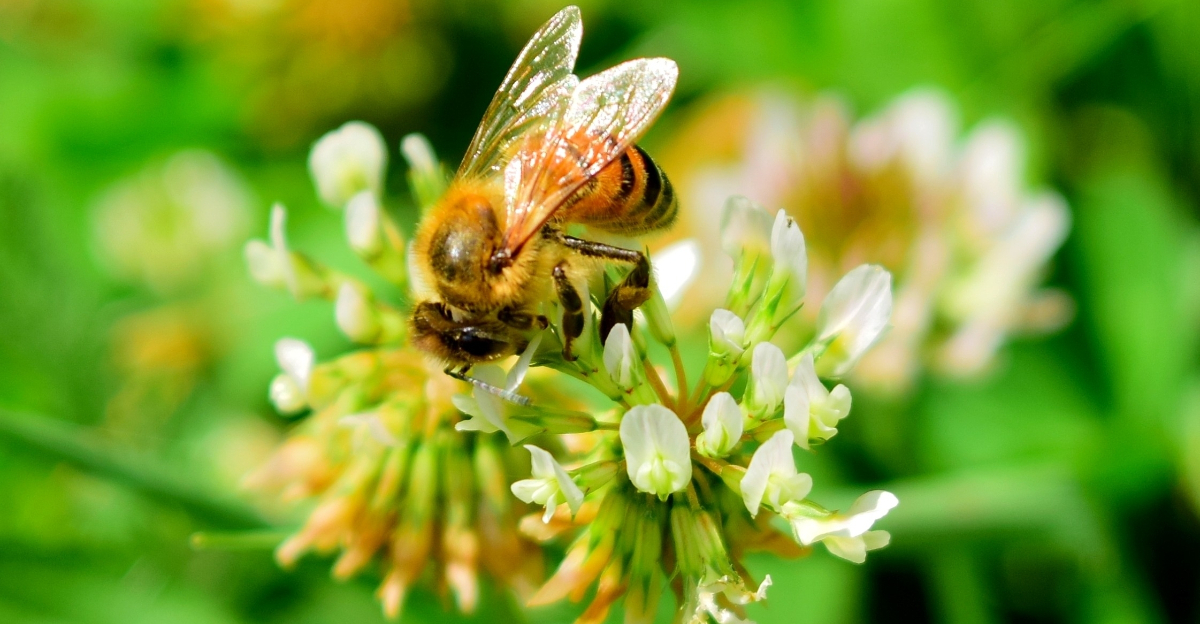
The perfect Ohio lawn is costing local pollinators more than most people realize. Wall to wall turf grass is essentially a food desert for bees, butterflies, and beneficial insects that need something to actually eat.
Meanwhile, homeowners routinely spray and pull a handful of these plants without a second thought. Those plants are quietly doing more pollinator work than any ornamental flower bed in the neighborhood.
Native bees cannot feed on grass. They need blooms, and some of the most nutritious ones in Ohio are growing right now in lawns across the state, labeled as weeds and sentenced accordingly.
Not all lawn weeds deserve a pass. Some genuinely are problems worth managing.
But a few of them earn their spot on the evidence, and once you see how much wildlife activity they support, pulling them starts to feel like the actual mistake. Your lawn might already be doing something right.
1. White Clover Turns Plain Turf Into A Pollinator Stop
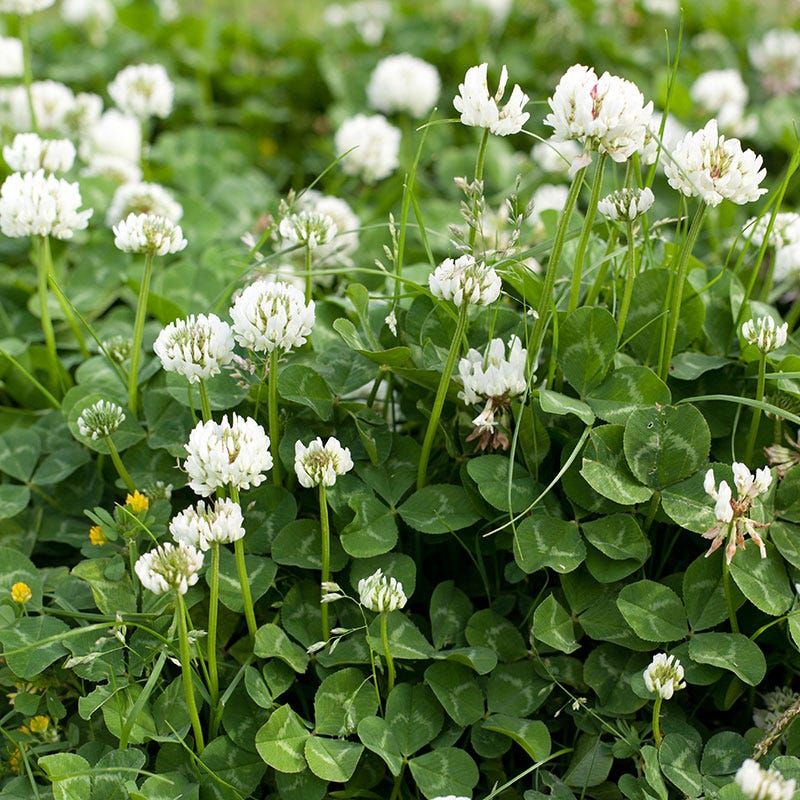
Walk through almost any mixed lawn in the Buckeye State during summer and you will likely feel something soft and round underfoot. That is probably white clover, and bees are not far behind.
White clover (Trifolium repens) produces small, round flower heads that attract honeybees, bumblebees, and other native bees looking for both nectar and pollen. Plain turfgrass, maintained only for its blades, offers none of that floral value.
Ohio State University Extension notes that white clover was once commonly included in lawn seed mixes before broadleaf herbicides made it an unwanted guest.
Letting it return to parts of your lawn can restore some of that lost feeding ground for local pollinators.
It also fixes nitrogen in the soil, which can reduce the need for fertilizer in mixed lawn areas.
That said, white clover is not a fit for every yard. Formal lawns, HOA-managed properties, high-use play zones, and areas where children run barefoot should be managed carefully.
Bees actively visiting clover flowers may sting if stepped on accidentally. Think zone by zone: keep clover blooming in low-traffic corners, side yards, or pollinator-friendly strips.
Maintain cleaner turf near walkways, patios, and play areas.
Broadleaf herbicides remove white clover quickly, so avoid spraying any area where you want it to bloom. Mowing higher, around 3.5 to 4 inches, lets clover coexist with grass without being scalped.
Let patches bloom for a week or two before mowing to give pollinators a real feeding window. Spot-manage clover rather than eliminating it from your entire lawn.
2. Self-Heal Brings Purple Blooms To Low-Mow Lawns
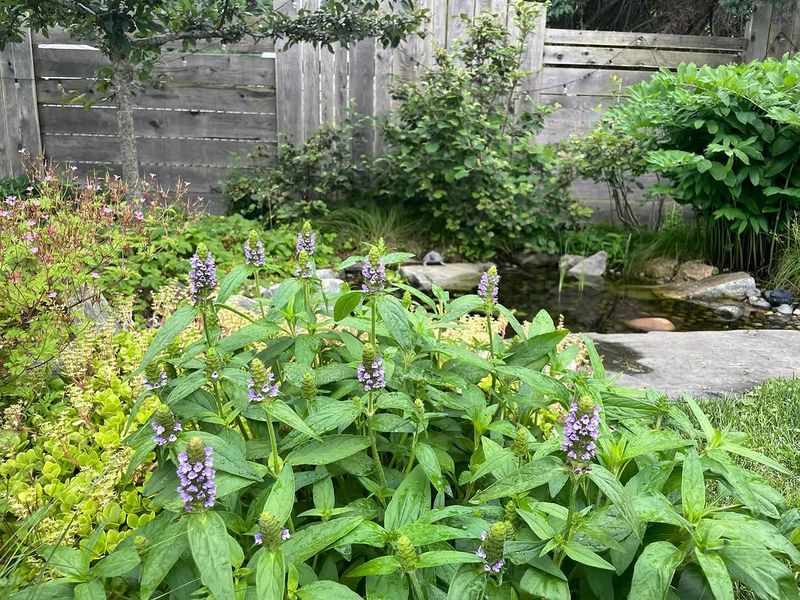
Tucked low against the ground with small spikes of purple blooms, self-heal (Prunella vulgaris) is easy to overlook until a bumblebee lands right on it.
This plant thrives in lawns that are mowed less frequently or in areas where grass has thinned out near trees, fences, or garden edges.
Its flowers are small but real, offering nectar and pollen to smaller native bees and other visiting insects.
Self-heal is considered native or naturalized across much of the eastern United States. It grows throughout our state in disturbed areas, lawn edges, and partly shaded spots.
Your Ohio Garden Changes Every Week. Your Plan Should Too.
Gardening in Ohio changes quickly throughout the season. Every Friday you’ll receive a simple weekly plan showing exactly what to plant, prune, fertilize, harvest, and protect so you never miss the right timing.
Ohio State University Extension lists it among the low-growing flowering plants that can appear in mixed or unmaintained turf.
It stays flat enough that it often survives regular mowing at standard heights, but it blooms best when mowing is delayed or raised.
The catch is that close, frequent mowing removes the flower spikes before they can do much good. Self-heal works best in low-mow strips, relaxed side yards, lawn edges near naturalized areas, or intentional pollinator patches.
These are places where mowing happens every few weeks rather than every few days. It is not the right fit for formal turf or areas maintained for a uniform look.
If self-heal appears in a spot where you want denser grass, you can manage it by overseeding with competitive turfgrass and mowing regularly to suppress flowering. Where it blends well and traffic is low, leave it alone and let it bloom.
Avoid broadleaf herbicides in those zones, since that is what removes it fastest from a lawn.
3. Wild Violet Offers Early Color For Visiting Pollinators
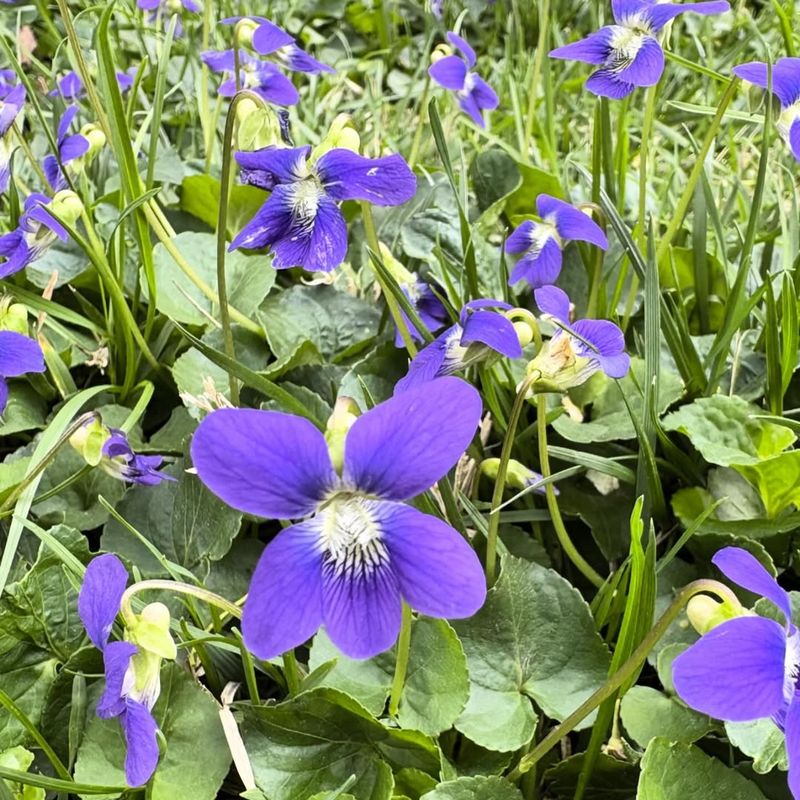
Before most lawn flowers wake up for the season, wild violet is already blooming. It appears in shaded corners and moist lawn patches across the state.
These small purple or blue-violet flowers appear very early in spring. They give emerging queen bumblebees and early native bees a food source when yard options are still limited.
That early timing matters more than people realize.
Wild violets are also host plants for several fritillary butterfly species. Fritillary caterpillars feed on violet leaves.
That means keeping some violet patches in your yard supports adult pollinators and the next generation of butterflies. Ohio Department of Natural Resources and native plant resources recognize violet species as valuable components of naturalized yards and woodland edges.
The honest reality is that wild violets frustrate many homeowners. They spread in moist, shaded turf where grass already struggles, and they can be persistent.
Broadleaf herbicides do control them, but using those products eliminates the early flowers that pollinators depend on. If perfect turf in shade is your goal, managing violets makes sense.
If that shaded corner near a tree is already thin and patchy, letting violets fill it is a practical and pollinator-friendly choice.
Violets work well in relaxed lawns, naturalized areas, shady edges, and spots where uniform grass is not realistic anyway. Keep them where they blend and manage them where you truly need cleaner turf.
Mark patches with a small flag or stone in early spring so family members know not to mow those spots until flowers have finished and foliage has matured.
4. Dandelions Feed Bees Before Many Flowers Open
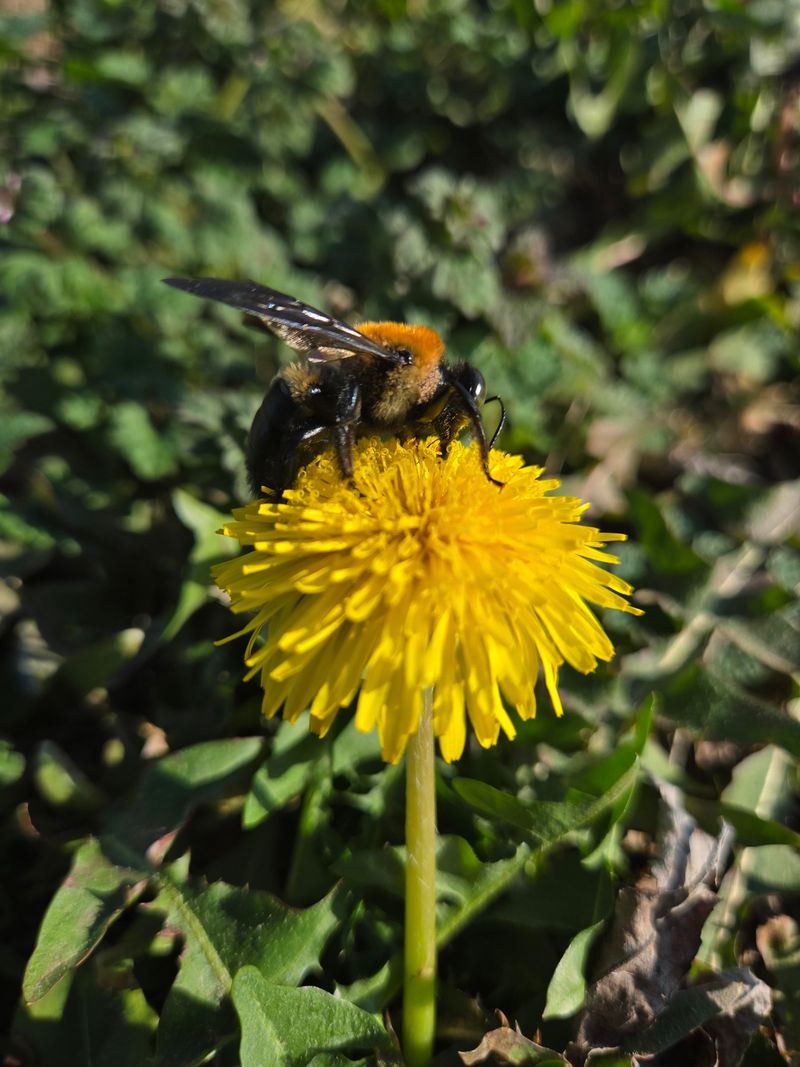
Few plants get as much lawn hatred as the dandelion, but ask a beekeeper in early April what their hives are feeding on and dandelions will likely come up.
Dandelions (Taraxacum officinale) bloom early, often before many garden plants or native wildflowers are open.
They offer both pollen and nectar to bees, beetles, and early butterflies. That early food matters when colonies are just ramping up for the season.
That said, dandelions should not be treated as a complete pollinator solution. A yard with native spring wildflowers, flowering shrubs, and diverse plantings will always support more pollinator species than a lawn full of dandelions alone.
The goal is not to grow as many dandelions as possible. Instead, tolerate some blooms in low-use areas instead of reflexively reaching for the herbicide sprayer every spring.
Homeowners who want a cleaner look can manage dandelions thoughtfully. Mowing after the flowers finish but before seedheads fully open reduces spread without removing every plant from the yard.
Hand-removing seedheads before they disperse is another option for homeowners who want some balance. Avoid broad herbicide applications across areas where any pollinator feeding is happening.
Do not feel guilty about removing dandelions from formal front lawns, entryways, or areas where appearance really does matter to you or your neighbors. The point is to be intentional: let some bloom in a back corner, a side yard, or a low-use strip, and manage the rest.
Even a small patch of dandelions allowed to flower in spring adds something meaningful to your local pollinator landscape.
5. Creeping Thyme Fits Sunny Spots Where Grass Struggles
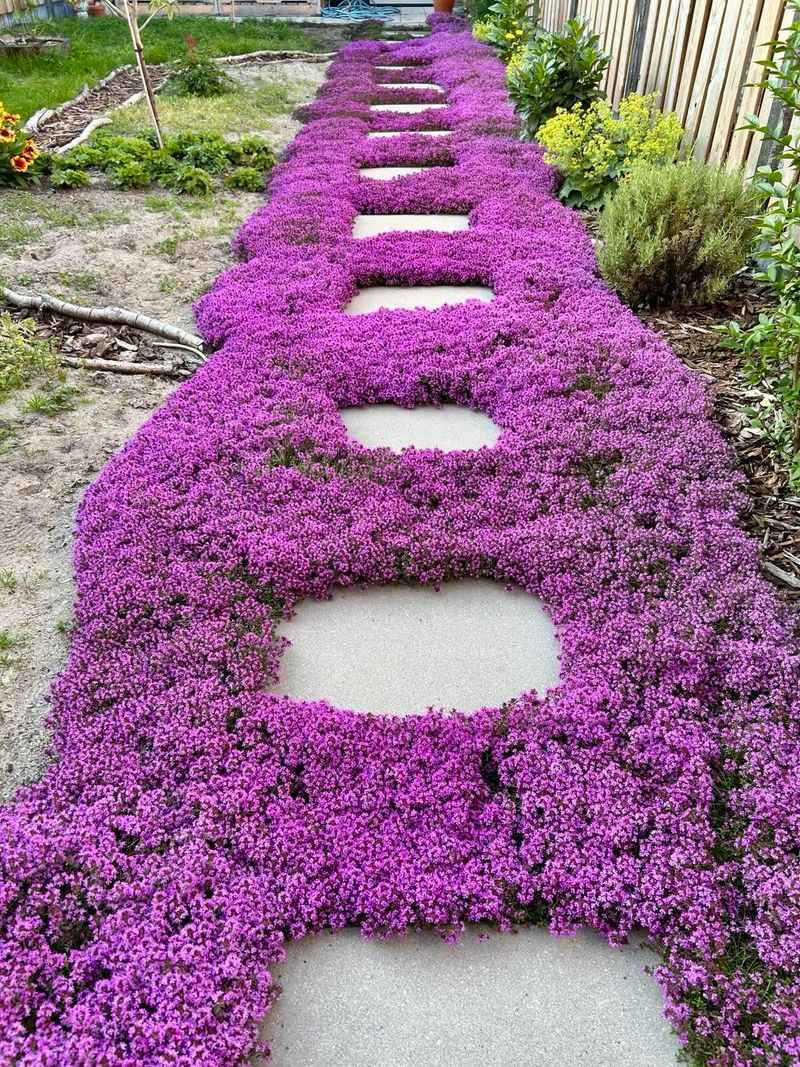
There are spots in almost every yard where grass just refuses to cooperate – rocky slopes, sandy strips along driveways, sunny path edges baked by afternoon heat.
Creeping thyme (Thymus serpyllum and related varieties) is one of the better low-growing options for those difficult areas.
It produces small flowers that attract bees when it blooms in late spring and early summer.
Be upfront about what creeping thyme is and is not. It is not native to our state.
It originated in Europe and is used as a cultivated ground cover and lawn alternative rather than a true lawn weed. Because it is not native, it should not be promoted as a native pollinator plant.
It does attract pollinators when blooming. However, the ecological relationship is different from that of native flowering plants, which often support specialist bee species.
Creeping thyme works best as an intentional planting in well-drained, sunny spots where turf has failed. It handles light foot traffic better than many ground covers, stays low enough to look tidy, and needs little watering once established.
It does not perform well in clay soils, shaded areas, or spots with heavy lawn use. Plant it where you want it and edge it to keep it from wandering into garden beds or adjacent lawn zones.
If you choose creeping thyme for a tough sunny patch, pair it with native flowering plants nearby to give specialist pollinators better options. Use it as one tool in a diverse yard plan, not as a replacement for native plants.
Mow or trim it lightly after blooming to keep it dense and tidy going into fall.
6. Wild Strawberry Adds Small Blooms To Bare Lawn Patches
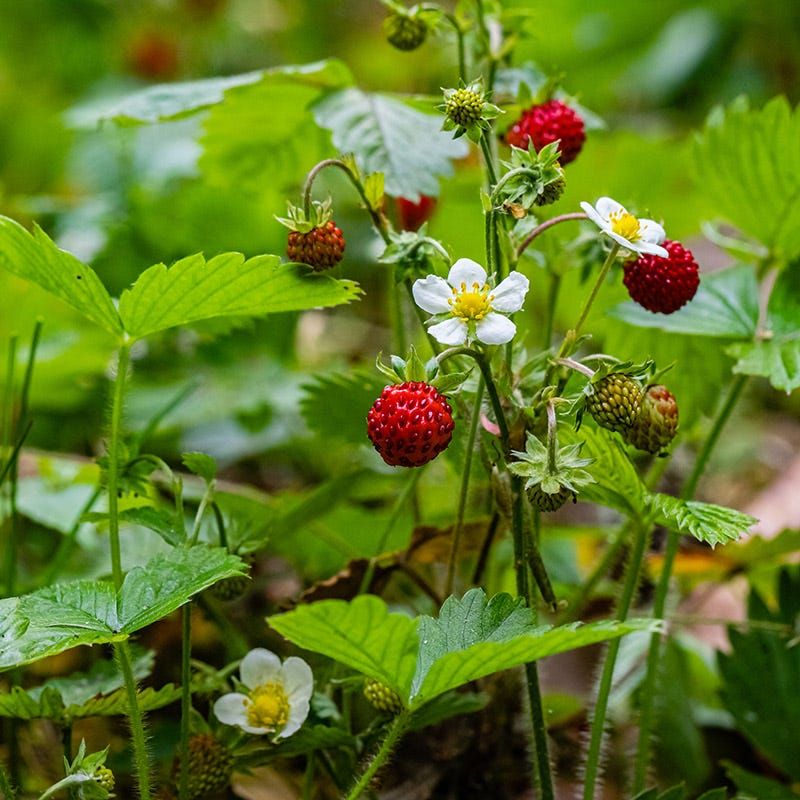
Spotting a low-growing plant with three-part leaves, small white flowers, and tiny red fruits in a thin lawn patch? That could be wild strawberry (Fragaria virginiana), a native plant that spreads by runners and fills in bare or struggling turf areas where grass has given up.
Its small white flowers offer pollen and nectar to native bees, small butterflies, and other visiting insects during spring bloom.
Wild strawberry is native to eastern North America, including our state, which makes it more ecologically meaningful than many introduced ground covers.
It tends to appear naturally in thin, sunny to partly shaded lawn areas and along edges where foot traffic or soil conditions have weakened turfgrass.
Rather than fighting it in those spots, many low-maintenance and pollinator-minded homeowners choose to let it fill in.
One practical note: confirm your identification before deciding to encourage a spreading plant. Mock strawberry (Potentilla indica), an introduced species with yellow flowers, also appears in lawns and produces a bland, dry fruit.
Wild strawberry has white flowers and a sweet edible fruit, while mock strawberry has yellow flowers. Both stay low and spread similarly, but only wild strawberry is native.
Wild strawberry can spread vigorously by runners, so keep an eye on it near garden beds, walkways, and areas where you want clear boundaries. Edging along beds and paths a couple of times per season is usually enough to keep it where you want it.
In thin, low-traffic areas and sunny lawn edges, it fills space usefully, offers spring blooms, and requires very little from you in return.
7. Spring Beauty Belongs In Lawns That Rest Before Mowing
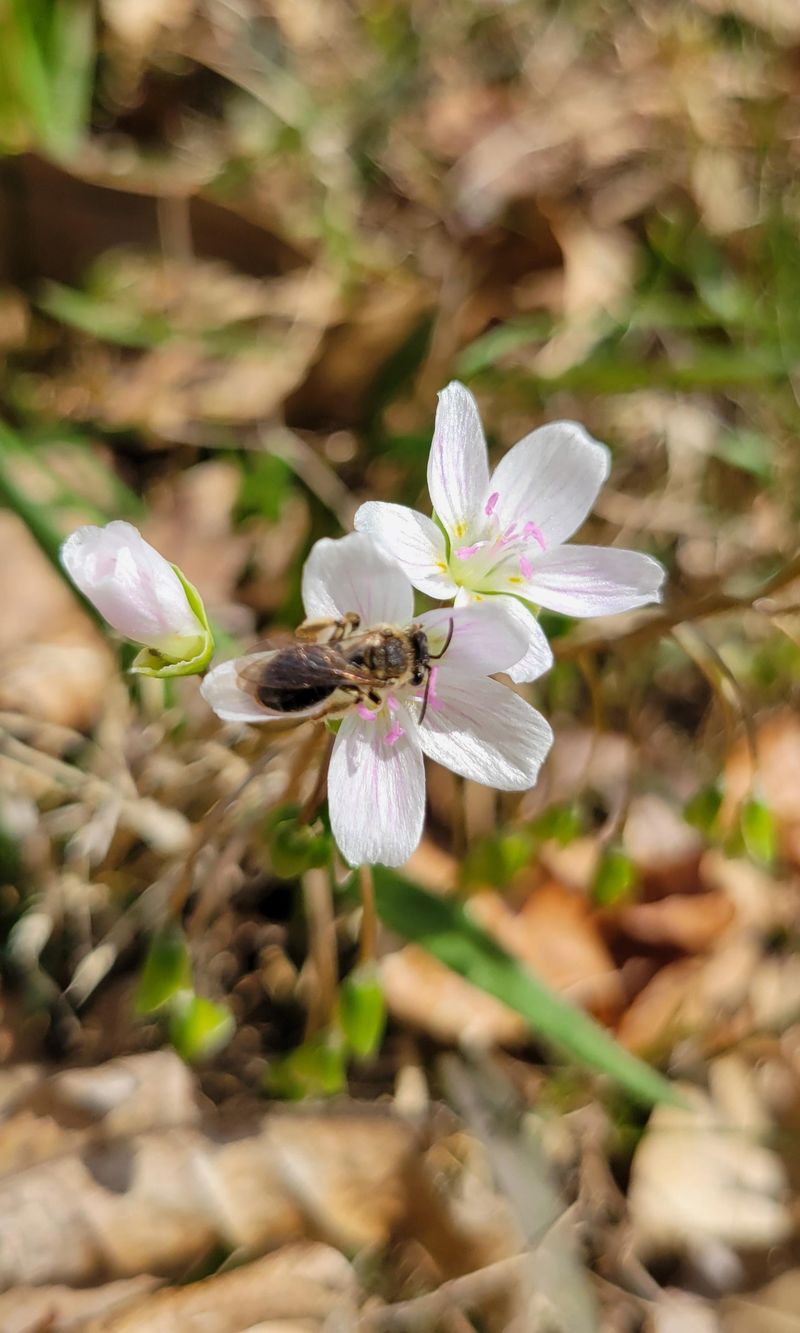
Claytonia virginica, commonly called spring beauty, is one of those native wildflowers that rewards patient homeowners. It pushes up through the lawn in early spring and opens small white flowers with pink veins.
It finishes its entire above-ground life cycle before most people have made their first mowing pass of the season. If you mow early, you miss it entirely and the plant loses its chance to bloom and set seed.
Spring beauty is native to eastern North America and is recognized by Ohio native plant resources as a valuable early bloomer for pollinators.
A specialist native bee, Andrena erigeniae, is known to rely heavily on spring beauty pollen, making this plant more ecologically specific than many common lawn flowers.
Supporting spring beauty in your yard is a direct way to support a native bee that depends on it.
This plant is not suited for actively managed, frequently mowed turf. It belongs in naturalized lawn areas, open spaces under deciduous trees, relaxed yard zones, and pollinator-minded patches.
These are places where mowing can be delayed until late May or early June. Once the foliage yellows and withers naturally, the area can be mowed without harming the underground corm that will return next spring.
Mark spring beauty patches with small flags, stones, or garden markers in early spring so family members and lawn care crews know to avoid those spots. Communicate clearly with anyone who mows your lawn about the delayed mowing plan for those areas.
Spring beauty pairs well with other early native wildflowers like trout lily and trillium in naturalized lawn edges. Together, they create a short but meaningful pollinator window each year.