What Ohio Gardeners With Heavy Clay Soil Have That Most Gardeners In Other States Are Missing
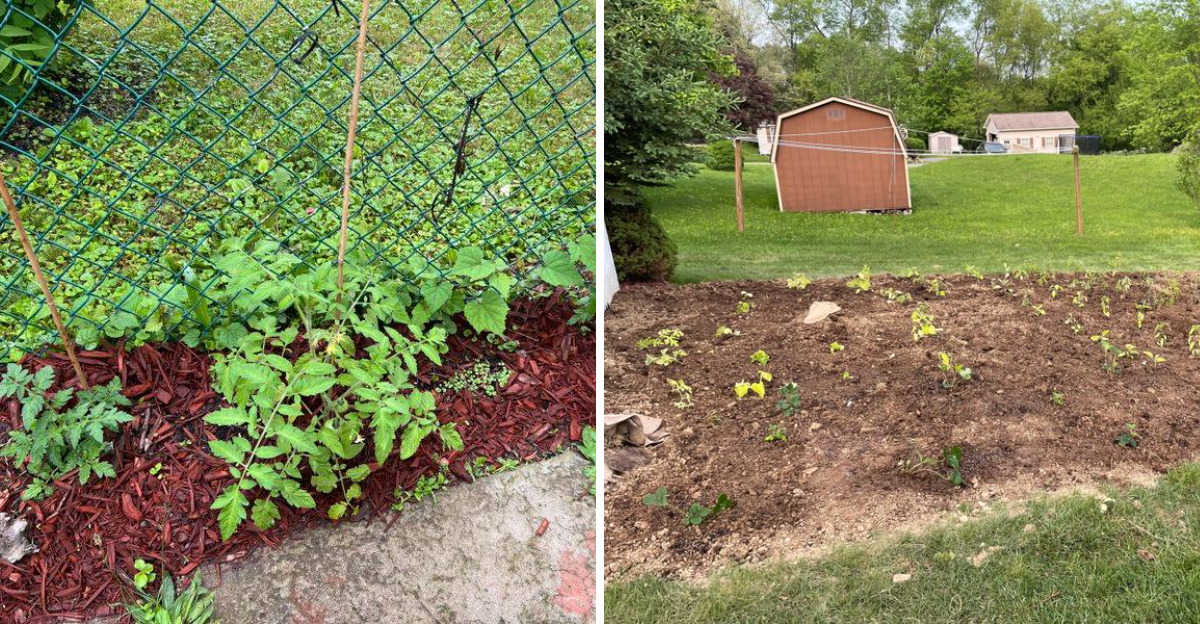
Ohio clay soil has a reputation that precedes itself into every gardening conversation.
Heavy. Sticky. Impossible to work after rain. The kind of soil that swallows boots in April and turns into concrete by August.
Many Ohio gardeners have stood in their backyard after a storm, looked down at that dense, muddy ground, and wondered why they could not have gotten something easier to work with.
Here is what the gardening world rarely says out loud.
Gardeners in Florida, Arizona, and the Carolinas are working with light, fast-draining sandy soil that cannot hold nutrients, loses moisture within hours of watering, and requires constant irrigation just to keep plants functioning through a dry week.
Many of them would probably trade for Ohio clay.
Not because clay is easy. It is not. But because underneath the frustration and the mud is a growing medium with natural advantages that sandy-soil states simply cannot replicate.
So, here are a few reasons to reconsider the soil you have been complaining about.
1. See Clay As A Nutrient Bank
Sandy soil gardeners water their plants and the nutrients leave with the water. That is not a metaphor.
In light, sandy soils, nutrients like calcium, magnesium, and potassium literally leach out through the profile with every significant rain event. The fertilizer that went in on Monday is largely gone by Thursday.
Ohio clay does the opposite, and the reason is electrochemistry.
Clay particles carry a negative electrical charge. That charge attracts and holds positively charged nutrient ions, including the ones plants need most.
Clay soils have a much higher cation exchange capacity than sandy soils, which is the technical measure of how many nutrients a soil can hold at any given time.
Every time compost, fertilizer, or organic matter goes into Ohio clay, those nutrients stay. They do not disappear with the next thunderstorm. They wait in the soil until plant roots come looking for them.
That nutrient-holding ability means Ohio gardeners often fertilize less frequently than gardeners working in sandy or loamy soils.
Tomatoes, peppers, and perennials especially benefit from the steady, consistent nutrient supply that well-managed clay provides across a full growing season.
The catch is compaction. Compacted clay blocks root access to those stored nutrients.
Once structure improves through organic matter additions, that nutrient bank starts paying out returns every season without requiring constant deposits.
Sandy-soil gardeners are fertilizing the drainage ditch. Ohio clay gardeners are building a reserve.
2. Use Its Moisture Holding Power
A July afternoon with no rain for two weeks looks very different depending on which state you are gardening in.
A Florida or Arizona gardener with sandy soil is watering daily just to keep things functional. An Ohio clay gardener who has managed the soil well might water twice that week and still have plants producing comfortably.
Clay soil holds significantly more water than sandy or loamy soils. The tiny particle size and layered structure create microscopic spaces that trap and store moisture far more effectively than coarser soils.
Your Ohio Garden Changes Every Week. Your Plan Should Too.
Gardening in Ohio changes quickly throughout the season. Every Friday you’ll receive a simple weekly plan showing exactly what to plant, prune, fertilize, harvest, and protect so you never miss the right timing.
Clay soils hold two to three times more plant-available water than sandy soils under the same conditions, which is a meaningful advantage during any dry stretch longer than a few days.
That stored moisture is what keeps roots hydrated and plants productive when the surface of the soil looks completely dry.
Gardeners in drier states spend significant money on irrigation systems and water infrastructure trying to replicate what Ohio clay does naturally and passively.
The goal is getting clay to drain just enough that roots are not sitting in soggy ground while still retaining enough moisture to carry plants through dry spells.
Organic matter improves drainage without sacrificing retention. That balance is achievable and once reached, the water bill drops and the plants stop responding to every weather fluctuation.
Ohio clay is a built-in moisture management system that most sandy-soil states cannot afford to build from scratch.
3. Let Clay Protect Roots In Dry Spells
When Ohio clay is properly amended and structured, it creates a root environment that buffers plants against drought stress better than lighter soils.
The moisture stored in deeper clay layers works like a slow-release reservoir that roots tap into when the surface dries out completely.
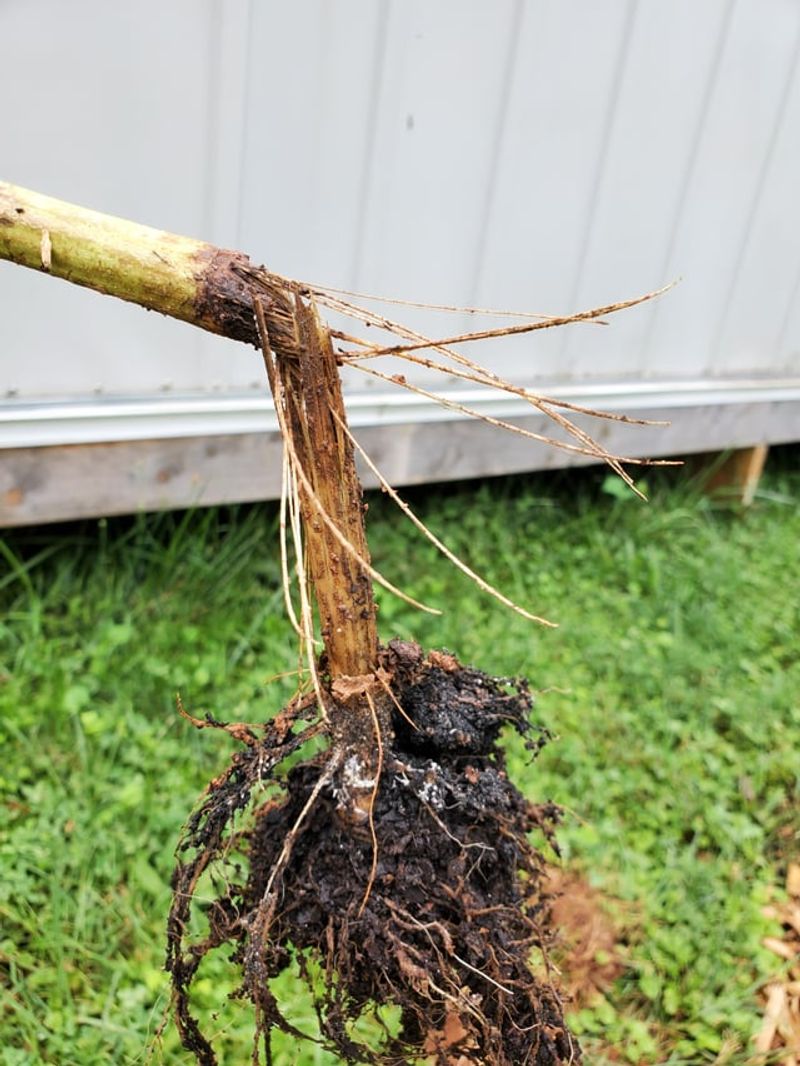
Roots are opportunistic. They follow moisture. In sandy soils, that moisture disappears quickly and roots have nowhere to go during a dry stretch.
In structured clay, moisture lingers deeper in the soil profile. Roots that have been encouraged to grow downward through improved clay layers access that stored water long after the top several inches feel completely dry.
This deep moisture reserve allows well-rooted Ohio plants to continue functioning and producing during a two-week dry stretch that would visibly stress or stunt the same plant growing in sandy ground.
That is not a small difference. It is the difference between a garden that stays productive and one that requires intervention every time the rain takes a break.
The prerequisite is adequate root depth, which requires loose, amended clay that roots can actually penetrate. Compacted clay blocks this system entirely and turns the drought protection advantage into a liability.
Ohio gardeners who work their clay correctly have a natural underground drought protection system running quietly beneath their beds, keeping plants alive and productive when conditions above ground get genuinely difficult.
4. Build Better Structure With Compost
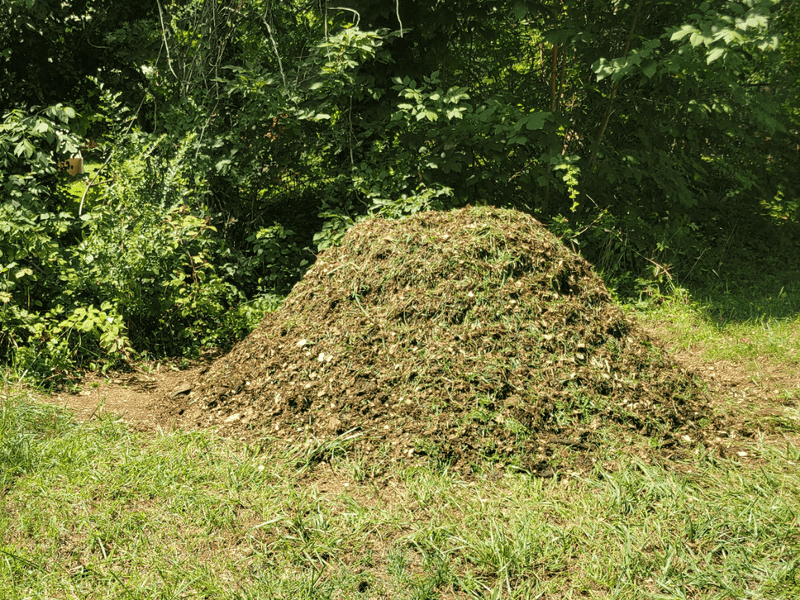
Walk into any Ohio garden center in April and bags of sand appear near the checkout. Gardeners grab them convinced that sand is the solution to clay problems.
The real solution is usually right next to those sand bags in the compost section, and it works through an entirely different mechanism.
Compost physically separates tightly packed clay particles when worked into the soil. Over time it creates aggregates, which are small clumps of particles that stick together loosely.
Those aggregates open up air pockets and drainage channels that roots, water, and beneficial organisms can move through freely.
Two to four inches of compost worked into the top six to eight inches of clay beds changes texture, drainage, and workability noticeably.
The transformation does not happen in one season. Each year of compost addition builds on the previous year and the improvement compounds over time.
Homemade compost, store-bought compost, aged manure, and leaf mold all contribute. The material matters less than the consistency.
Ohio gardeners who commit to annual compost additions watch their clay beds transform from sticky compacted slabs into something that crumbles, drains, and grows exceptional plants season after season.
The structure that compost builds in clay is actually more stable and longer-lasting than the structure found in lighter soils.
That stability is the quiet advantage that makes well-managed Ohio clay gardens increasingly productive over time rather than requiring constant rebuilding.
Every bag of compost is a deposit. The soil keeps the interest.
5. Skip Sand And Feed The Soil
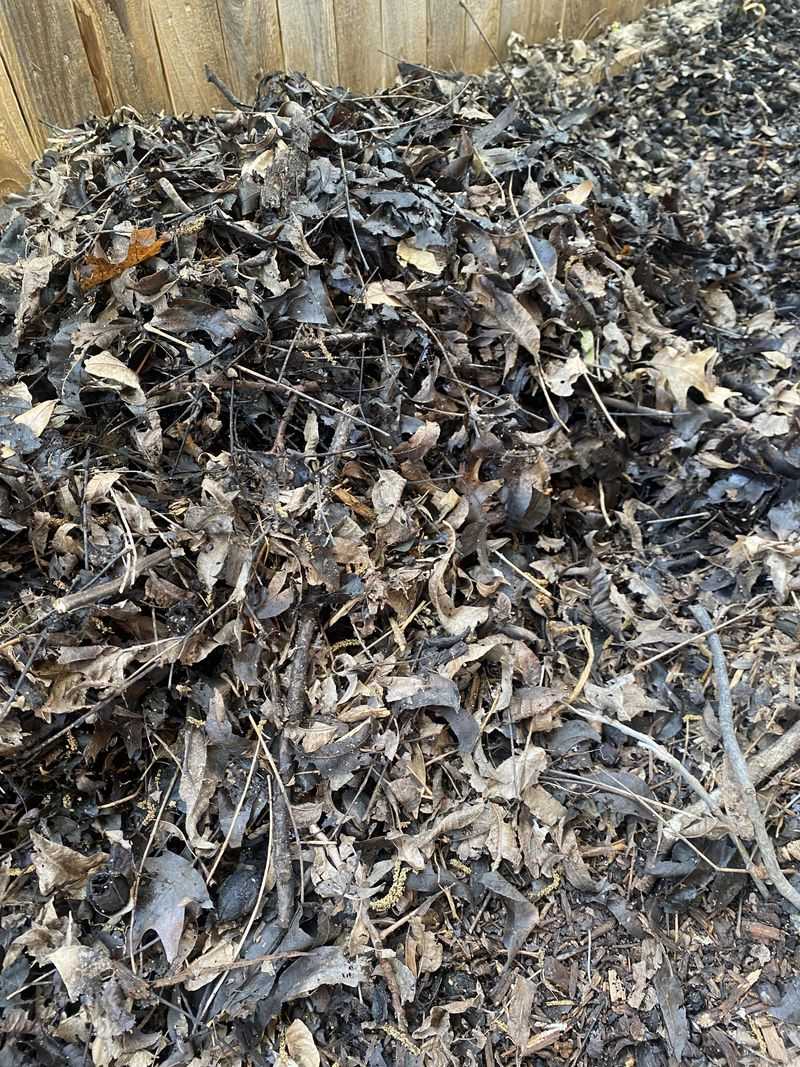
A gardener once mixed a full bag of coarse sand into a clay bed, watered it in, and felt genuinely pleased with the improvement. Two seasons later that bed was harder than the original clay had ever been.
The math behind why this happens is straightforward. To actually improve clay drainage with sand, enough sand must be added to fundamentally change the texture of the entire soil matrix.
Changing clay to a workable sandy loam requires more than fifty percent sand by volume according to multiple soil science sources.
Anything less, and the sand particles settle into the spaces between clay particles, making the entire mixture denser and less permeable than before.
Most gardeners add a bag or two, nowhere near the threshold required, and end up with a worse situation than they started with.
Organic matter works through a completely different mechanism. It does not try to overpower clay structure.
It works with it, feeding soil microbes, improving aggregation, and gradually loosening the structure from the inside out over multiple seasons. Compost, shredded leaves, wood chip mulch, and cover crop residue all contribute to this process.
Ohio gardeners who skip the sand and focus entirely on organic matter end up with soil that improves measurably year after year.
The biology of clay soil responds genuinely well to organic inputs. Earthworms, bacteria, and fungi all thrive in organically amended clay.
Their activity creates natural channels and structure that no quantity of sand from a garden center can replicate.
Feed the soil biology and the soil biology improves the clay. That is both cheaper and more permanent.
6. Keep Roots Working Through Clay
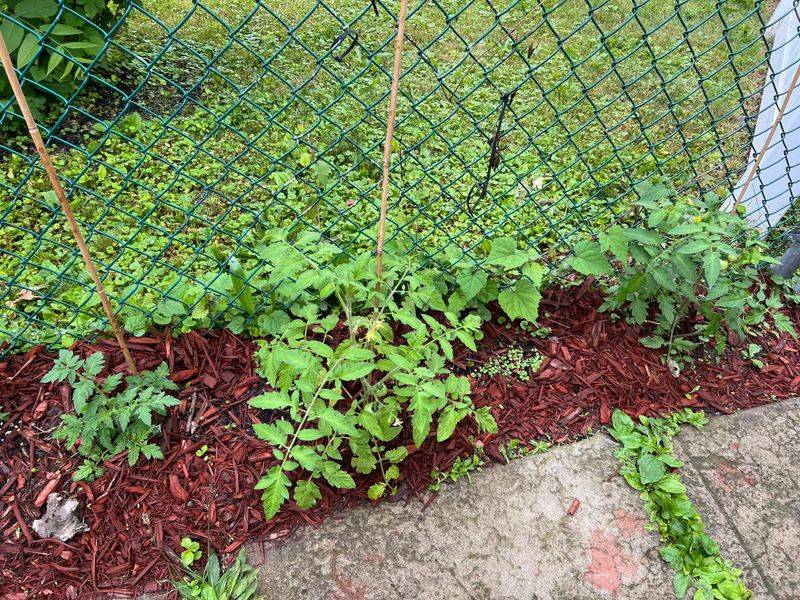
Roots are not passive riders in the soil. They are active explorers constantly pushing outward and downward in search of water, nutrients, and oxygen.
In compacted clay, that exploration stops immediately. The soil is too dense to penetrate and plants growing on top suffer for it even when the surface appears completely healthy.
Roots themselves are part of the long-term solution to clay soil problems.
As roots grow through the soil and eventually break down, they leave behind channels and organic material that improve clay structure.
Living roots also release compounds that feed soil microbes, and those microbes produce substances that help bind soil particles into stable aggregates.
The root system is rebuilding the soil around itself while the plant above is simply growing.
Diverse root systems contribute to this process at different depths. Cover crops, perennials, and annual vegetables grown in rotation break up different layers of the soil profile over multiple seasons.
Each root architecture addresses a different zone of the clay.
Earthworms amplify the effect considerably. They tunnel through clay creating natural drainage channels and depositing castings rich in nutrients and beneficial microbes.
Ohio clay soils receiving consistent organic matter inputs support healthy earthworm populations, and more earthworms mean more tunnels, better aeration, and easier root penetration the following season.
The system compounds. Better roots create better conditions for more roots.
Avoiding heavy foot traffic on garden beds protects that developing structure so the biological progress each season carries forward rather than getting compressed back to the starting point.
7. Cover Bare Clay Before It Crusts
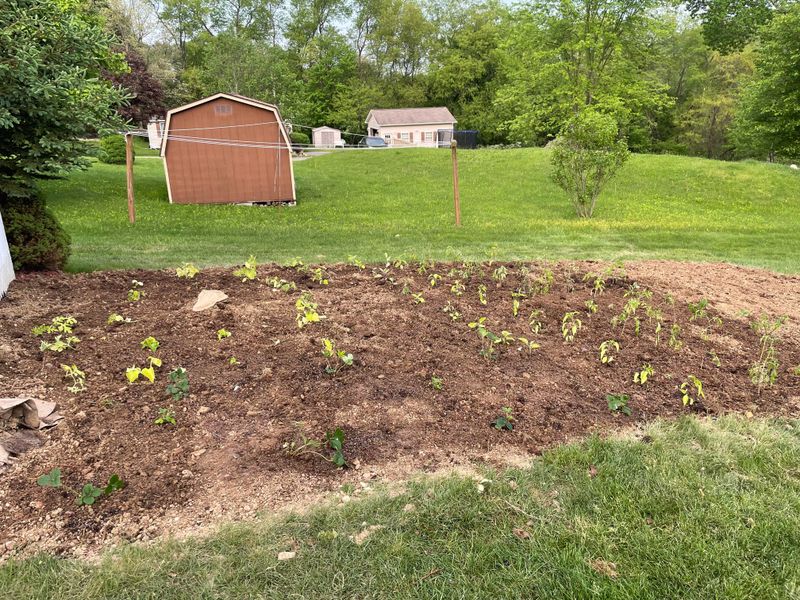
Leave Ohio clay bare for a week after rain and the outcome is predictable.
The surface dries into a hard, cracked crust that sheds water like pavement and blocks seedling emergence as effectively as a physical barrier.
That crust forms when clay particles dry out and pack tightly together without any organic buffer on the surface.
Mulch addresses this problem consistently and inexpensively. A two to four inch layer of wood chips, straw, shredded leaves, or grass clippings over bare clay beds prevents the surface from drying and crusting.
It also moderates soil temperature, reduces evaporation between waterings, and feeds soil life as it breaks down gradually across the season.
Cover crops provide the same protection with additional benefits. Winter rye, crimson clover, or buckwheat protect soil between growing seasons while their roots break up shallow compaction and their above-ground growth absorbs the impact of rainfall.
Raindrops hitting bare clay at speed actually compress the surface and create a seal. Cover crops absorb that impact entirely and prevent the sealing from happening.
Ohio winters create a specific additional challenge for bare clay. Repeated freeze-thaw cycles heave and churn the surface leaving it rough and compacted by spring.
A layer of mulch or a standing cover crop insulates the soil, reduces freeze-thaw disruption, and keeps beneficial biological activity running longer into fall.
Covering bare clay is one of the simplest habits in the Ohio garden. It costs very little and protects everything that has been built below the surface across the entire season.
8. Let Organic Matter Change The Game
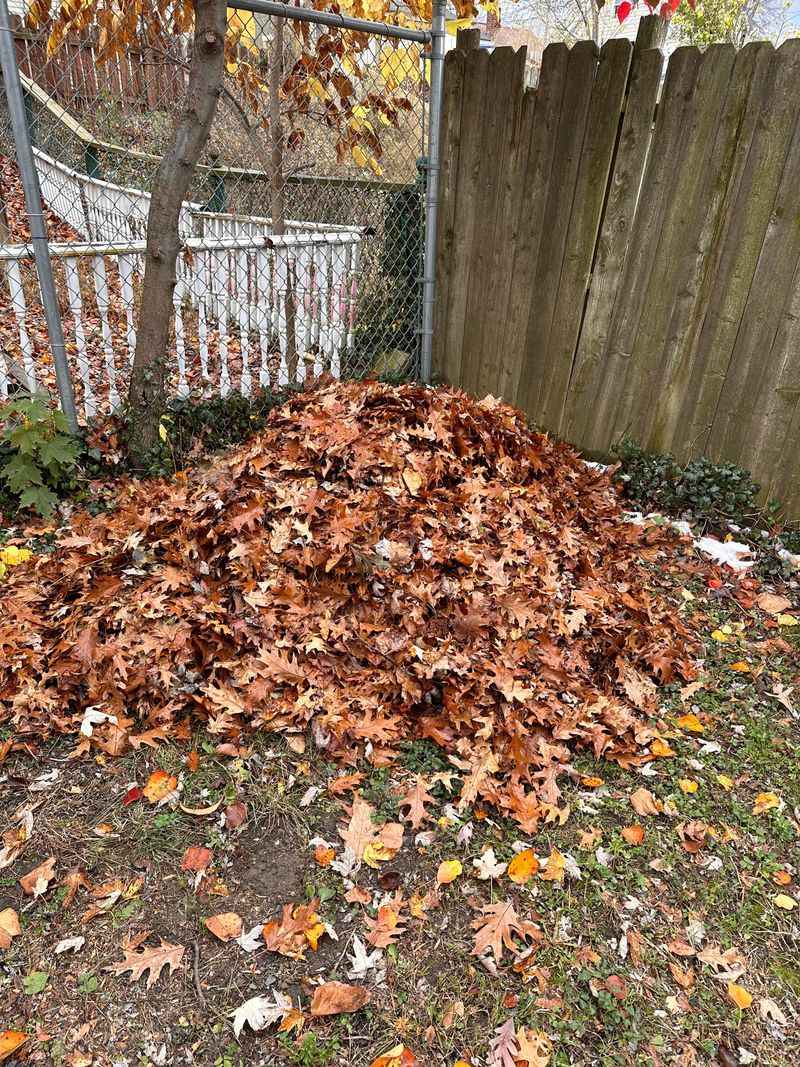
Fall arrives in Ohio and many gardeners rake leaves to the curb for pickup.
For a clay soil gardener who understands what is actually happening, those leaves represent a free soil amendment that sandy-soil states would pay significant money to import.
Organic matter is the engine of long-term clay soil improvement. Shredded leaves, finished compost, wood chip mulch, kitchen scraps composted correctly, and the residue from spent garden plants all contribute.
Each addition feeds the microbial community living in the clay. That community breaks down the organic material into humus, a stable form of organic matter that physically and chemically improves clay structure in ways that no synthetic input can replicate.
Humus particles bind to clay particles and create the aggregates that make clay manageable. More humus means better drainage, better aeration, and better root penetration across the entire bed.
Increasing organic matter content by even one percent can dramatically improve clay soil workability and water management over time.
The timeline for this transformation is measured in years rather than weeks. That is actually an advantage for Ohio gardeners who commit to it early.
Every season of consistent organic matter addition builds on the previous one.
After three to five years of regular inputs, Ohio clay beds reach a level of richness and productivity that gardeners starting with poor sandy soils cannot match regardless of how much they amend and irrigate.
The leaves at the curb in October are solving next summer’s soil problem for free.