8 Small-Yard Landscaping Trends Florida Homeowners Are Embracing
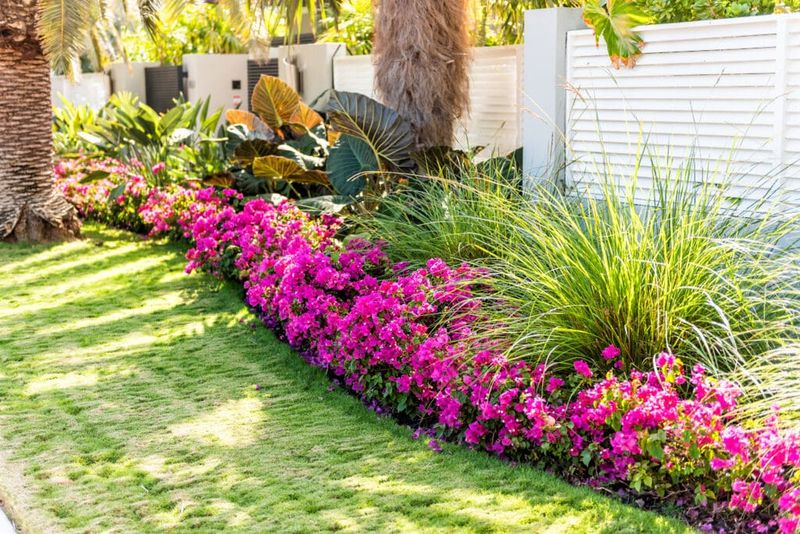
Some Florida yards do not give you much to work with. A narrow strip by the fence. A side yard that functions more like a hallway than an actual outdoor space.
It is easy to look at a compact yard and feel like the design possibilities stopped at the property line. They did not.
The best small yards are not scaled-down versions of big yards. They are something else entirely, and they tend to feel more intentional, more personal, and honestly more enjoyable.
The question worth asking is not how to make your yard bigger. It is what your yard is actually asking for.
Maybe it needs shade to make it usable past ten in the morning. Maybe it just needs one sharp idea to shift the whole feeling of the space. Your square footage is fine. Let’s talk about what to do with it.
1. Micro-Landscapes Turn Tiny Yards Into Useful Zones
A small yard can feel confusing at first. There is not enough room for everything. But somehow, there is still enough room for clutter, awkward corners, and that one patch of grass nobody enjoys.
That is where micro-landscaping gets interesting. Instead of treating the yard as one open leftover space, you break it into small zones.
Each zone gets a job. For example: a sitting spot, a planting bed, or grilling corner. Suddenly, the yard has a plan.
This approach works especially well in Florida, where outdoor space is useful for much of the year. Even a tiny yard can become a little extension of the house if it is divided thoughtfully.
Start by watching how you already use the space. Where do you walk without thinking? Where does rain collect? Where does afternoon sun feel too strong? Where do you naturally want to sit? Those clues matter more than a random design photo.
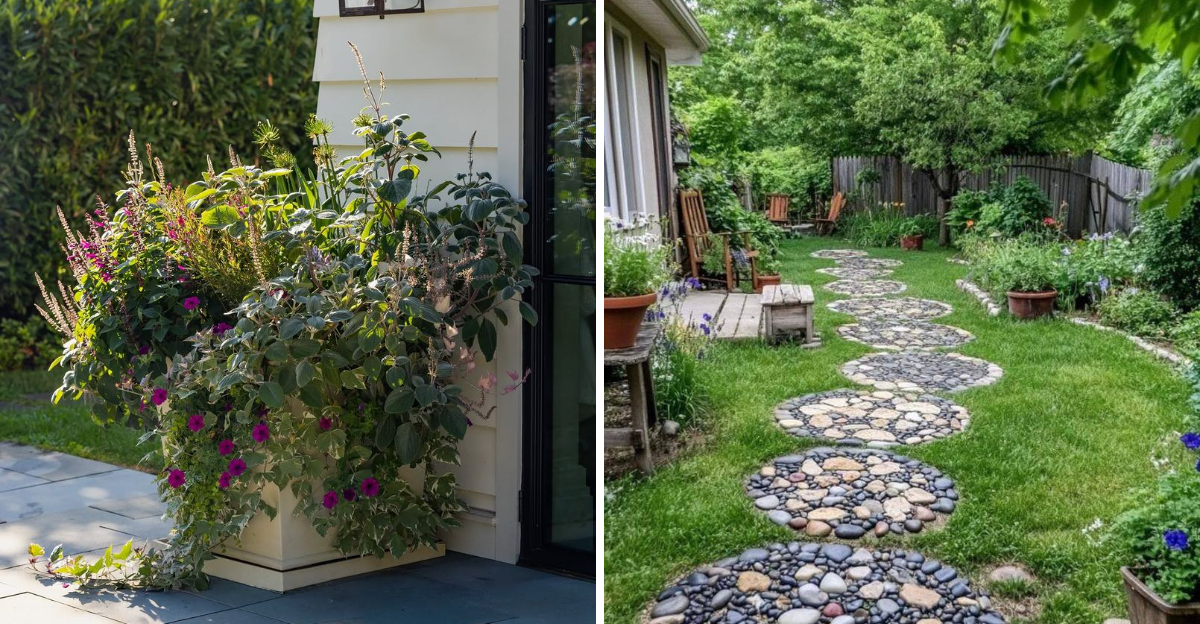
A narrow gravel path can guide movement. A small paver pad can create a seating nook. A raised bed can define a planting zone without taking over the yard.
You do not need walls to create rooms. A row of plants, a change in surface, or a curved edge can suggest separation.
The best part is the visual trick. A yard with zones often feels bigger because your eye moves from one area to the next. It becomes a little journey, not one quick glance. If your backyard feels like one flat sentence, micro-landscaping adds punctuation.
2. Florida-Friendly Plants Reduce Care In Tight Spaces
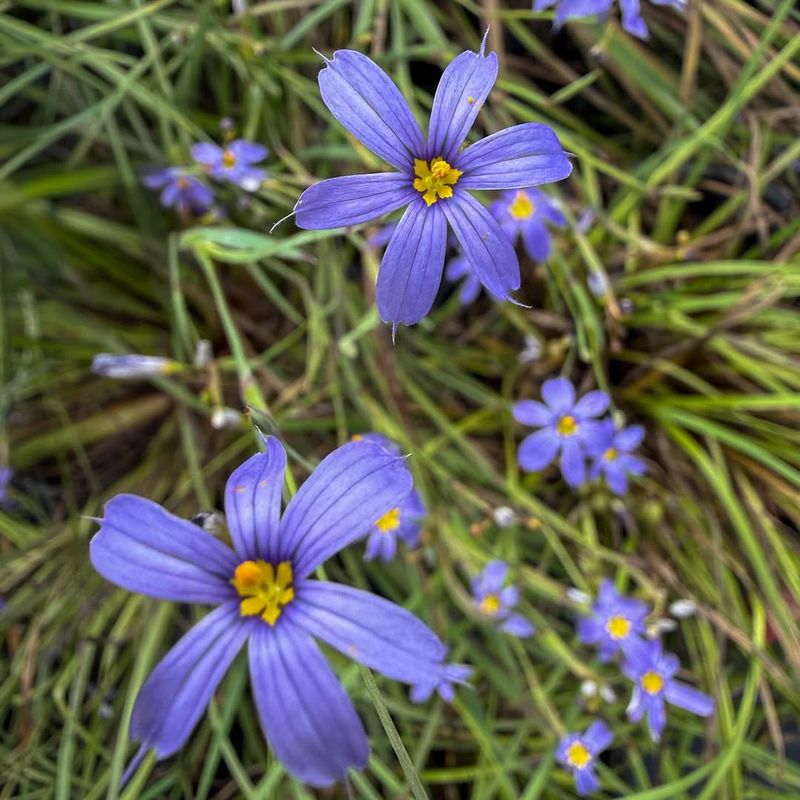
Small yards do not forgive plant mistakes easily. A shrub that looks cute at the nursery can become the boss of the whole bed. A fast grower can make a narrow path feel even tighter.
That is why plant choice matters so much in compact Florida landscapes. The goal is not just pretty. The goal is pretty with manners.
Florida-friendly planting starts with matching the plant to the spot. Look at sun, shade, soil, drainage, mature size, and water needs before buying.
In a small yard, mature size is especially important. That tiny one-gallon plant may have a much bigger future. Check the tag, then imagine it at full size beside your walkway, window, or fence. Still fits? Great. Feels risky? Keep shopping.
Your Florida Garden Changes Every Week. Your Plan Should Too.
Gardening in Florida changes quickly throughout the season. Every Friday you’ll receive a simple weekly plan showing exactly what to plant, prune, fertilize, harvest, and protect so you never miss the right timing.
Compact plants can save you time and space. Coontie can bring bold texture while staying relatively low. Muhly grass adds softness and seasonal color without feeling heavy. Firebush can bring pollinator action when it has enough room. Walter’s viburnum can work well where a tidy native shrub is needed.
The key is spacing. Plants need air around them, especially in Florida humidity. Crowding may look full on day one, but it can create maintenance headaches later.
Leave breathing room between plants and structures. This helps the yard look intentional rather than stuffed.
Group plants with similar water needs together. That makes care simpler and helps avoid overwatering one plant while trying to support another.
Think of this as plant matchmaking. Right plant, right place, less drama. A small yard does not need a plant crowd. It needs a cast that knows its role. That is how you keep the landscape lush without letting it turn into a leafy traffic jam.
3. Pocket Pollinator Beds Add Life Without Crowding
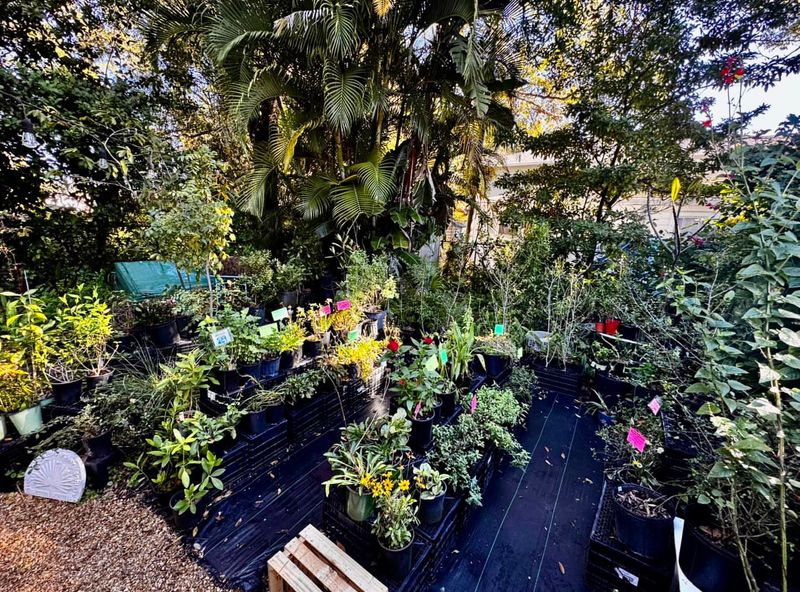
A small bed can still feel alive. You do not need a meadow to invite butterflies, bees, or hummingbirds. Sometimes a pocket-sized planting can do more than you expect.
That is why pocket pollinator beds are becoming such a smart trend in Florida yards. They fit into places that might otherwise go unused. The secret is layering.
Put taller plants toward the back. Use medium-height bloomers in the middle. Let lower plants or groundcovers soften the front edge. This gives the bed depth without making it feel crowded.
Choose plants that bloom at different times if you can. That keeps the bed interesting and gives pollinators more reasons to visit through the season.
Milkweed can support monarchs when chosen and placed carefully. Pentas can bring steady color in warm months. Blue porterweed is loved by many small pollinators. Firebush can bring hummingbird energy when allowed to bloom freely.
Plant in small groups instead of single scattered plants. Groups of three or five often look more natural and are easier for pollinators to find.
Do not leave too much bare soil between plants. Bare soil heats up, dries out, and invites weeds. Mulch between young plants while they fill in. A two-to-three-inch layer can help hold moisture and keep the bed tidy.
This is one of those trends where the reader gets a reward quickly. You plant it, then you start noticing movement.
A wing here, a hum there. A little flash of color you almost missed. Small bed, big welcome. Feels amazing.
4. Gravel Paths Make Small Yards Feel Designed
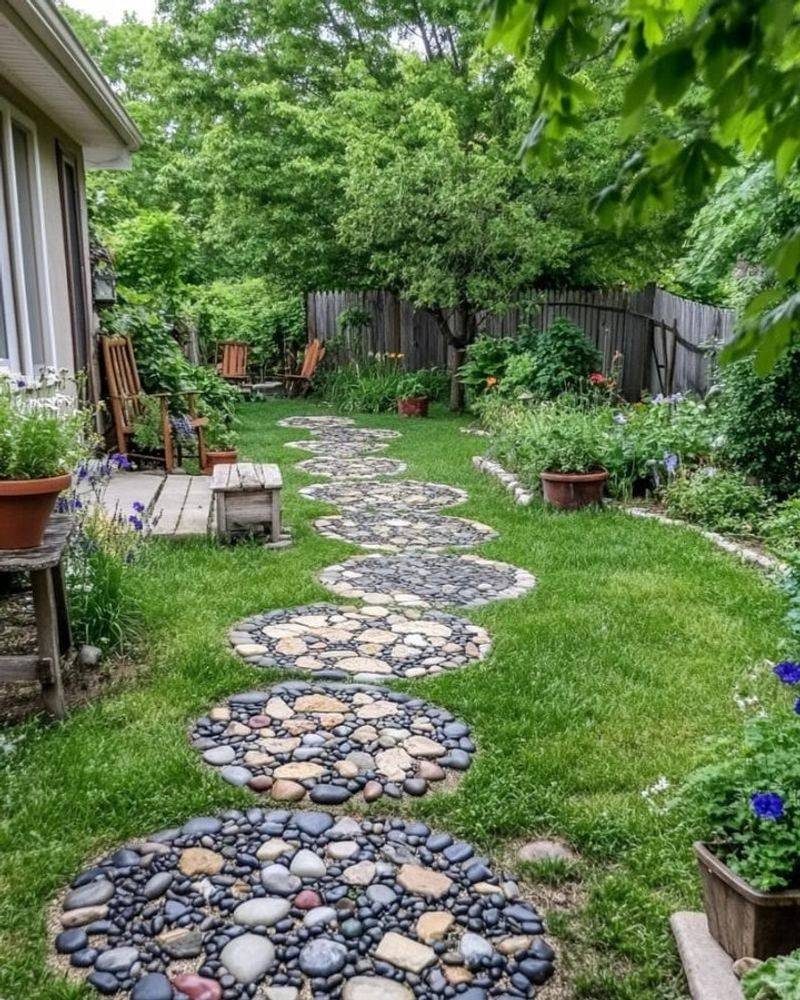
A small yard without a path can feel unfinished. You walk across the same area again and again, but nothing guides the eye. The space feels like leftover ground instead of an outdoor room.
Add a gravel path, and the whole mood can shift. A path tells the yard where to go. It creates movement, structure, and purpose. Even a short path can make a compact space feel more designed. That is the quiet magic of gravel.
It is less permanent than concrete and often more budget-friendly than stonework. It also drains better than solid paving when installed well, which can help during Florida downpours.
Pea gravel, crushed shell, and small stone can all work, depending on the look you want. Crushed shell feels coastal and bright. Pea gravel feels softer and classic. Angular gravel may stay in place better underfoot.
Use edging to hold the material where it belongs. Metal, stone, brick, or sturdy plastic edging can keep gravel from drifting into beds.
A base layer helps too. Use a permeable fabric or proper base material to reduce weeds while allowing drainage. Fabric can help weeds short-term but may clog or complicate maintenance over time.
Add stepping stones if the path gets regular foot traffic. They make walking easier and keep the surface steadier.
The shape matters. A slight curve can make a small yard feel deeper. A straight path can feel clean and modern. A diagonal path can make the space feel wider.
Think about where the path leads. A chair, a gate, a container grouping, or a small focal plant gives the eye a destination. Without a destination, a path can feel random. With one, it feels intentional.
Call it gravel with travel. It takes a tiny yard from “just space” to “come this way.” That is a big design move in a small footprint.
5. Compact Privacy Plants Screen Neighbors Without Bulk
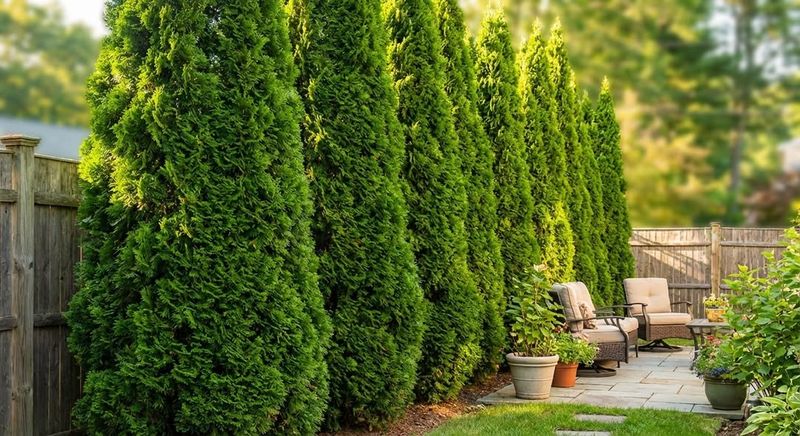
Privacy is tricky in a small Florida yard. You want a little separation. You do not want to feel boxed in. The answer is usually not the fastest-growing plant on the shelf.
Fast can become too much, too soon. In tight spaces, the better choice is often narrow, compact, and manageable.
Look for plants that grow upward more than outward. Vertical shape gives you screening without swallowing the yard.
This is helpful along patios, side yards, pool enclosures, and narrow fence lines. A well-placed screen can make a tiny yard feel calmer and more private.
Simpson’s stopper can be a strong native option where space allows. It offers flowers, berries, and wildlife value in a tidy form. Clusia is popular in many Florida landscapes, especially in warmer coastal areas. Some ornamental grasses can also create seasonal privacy without feeling heavy.
Containers can help too. Large pots with tall grasses, narrow shrubs, or tropical foliage can create movable screens. That is perfect for renters or homeowners who like flexibility.
Before planting, measure the space. Then check the mature width of the plant. Do not rely on nursery size. That young plant is only the opening chapter.
Leave room between the plant and the fence or wall. Air circulation matters in Florida’s humid climate. A little space behind the plant can also make trimming easier.
For a softer look, stagger plants instead of lining them up like soldiers. Layering different heights can create privacy with more movement and less bulk.
You are not building a green wall. You are creating a little breathing room. That is screen time your yard can actually use.
6. Micro-Irrigation Keeps Small Beds Efficient In Heat
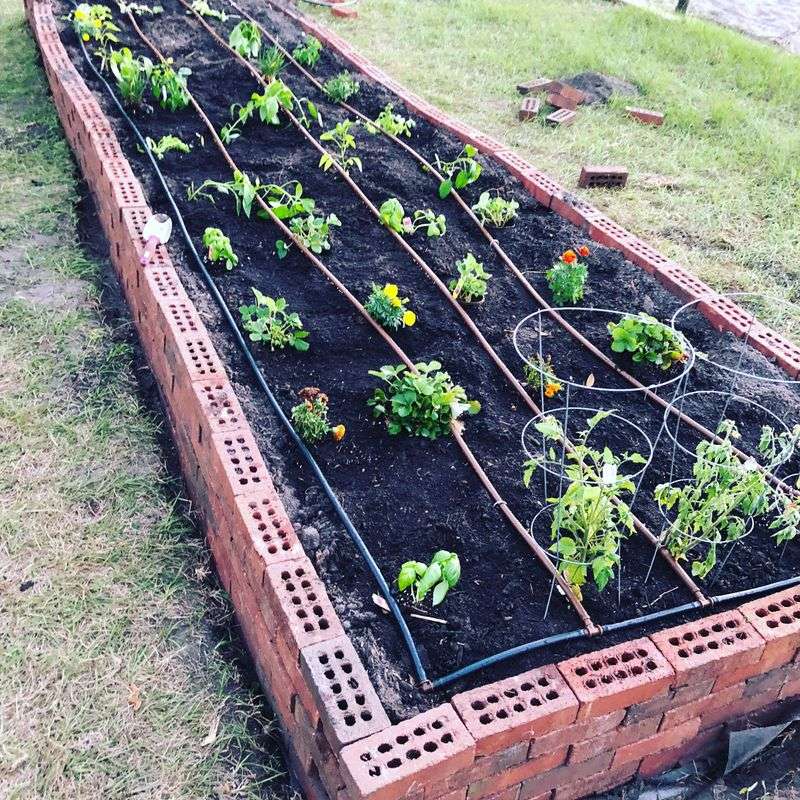
Florida heat can make a small bed thirsty fast. A narrow strip by the driveway may dry out before you notice. A sunny foundation bed can go from fresh to stressed in one hot afternoon.
Overhead sprinklers are not always the best answer. They can water sidewalks, fences, walls, and leaves more than roots. Micro-irrigation takes a smarter route.
Drip lines and micro-sprays deliver water close to the soil. That puts moisture where plants can actually use it. It also reduces waste, which matters in a small yard where every gallon should count.
This setup can be especially helpful in beds with mixed plants. You can place emitters near root zones and avoid soaking empty spaces.
A simple kit can work for many small beds. Most include tubing, emitters, connectors, and sometimes a timer. Attach it to an outdoor faucet, arrange the tubing, and adjust the flow.
A timer makes the system even easier. It can water early in the morning while you are still inside with coffee. Morning watering gives plants a better start before the day heats up.
Mulch makes micro-irrigation work even better. A two-to-three-inch layer helps slow evaporation and keeps soil temperatures steadier.
Check the system often. Tiny emitters can clog and tubing can shift. A plant can grow and need an adjusted line.
This is not a set-it-and-ignore-it forever situation. It is a low-effort system that still appreciates a quick check.
Think of micro-irrigation as sip service for your plants. No splashy waste. No sidewalk watering. Just targeted moisture where it matters. For small Florida beds, that can be a major heat-season upgrade.
7. Layered Containers Add Depth To Patios And Entries
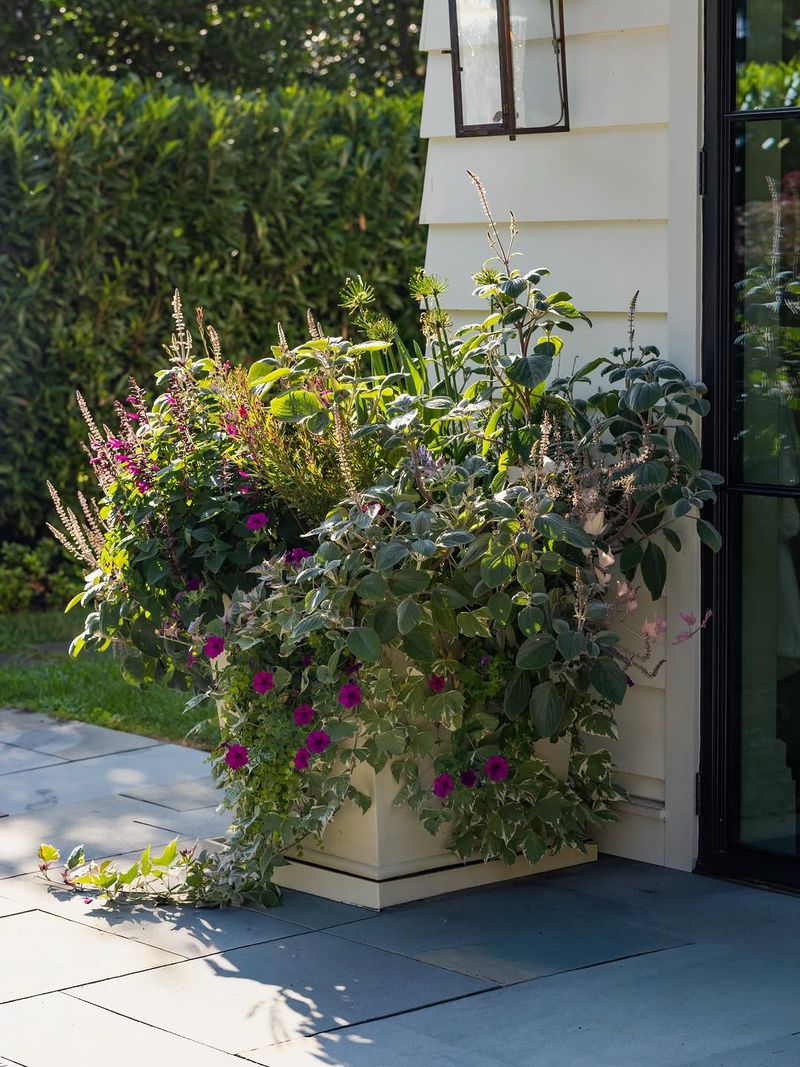
One lonely pot can look like an afterthought. A layered container grouping can look like a design moment.
That difference is why Florida homeowners are using containers in smarter, more layered ways. Small patios, porches, balconies, and entries can all benefit from this trick.
The idea is simple. Use different heights, shapes, colors, and textures together. Start with an anchor plant. This could be a croton, ti plant, dwarf palm, or bold foliage plant. It gives the grouping height and personality.
Then add medium pots with bloomers or compact shrubs. Pentas, angelonia, begonias, or small tropicals can bring color and fullness.
Finish with trailing plants in smaller pots. Sweet potato vine, creeping Jenny, or trailing herbs can soften edges and connect the grouping. Use stands, steps, stools, or overturned pots to vary height. This keeps the display from looking flat.
In Florida, containers also offer flexibility. If a patio gets too much afternoon sun in July, you can move the pots. If a tropical storm is coming, you can tuck smaller containers into a safer spot. That mobility is a huge advantage in small spaces.
Drainage matters. Every pot should have a hole so water can escape. Use quality potting mix rather than garden soil, which can compact in containers.
Check moisture often during hot months. Containers dry faster than in-ground beds, especially on patios and near walls.
Group containers close enough to feel connected. Too far apart, and they look scattered. Together, they create a mini landscape.
A patio can feel fuller, deeper, and more welcoming without changing the square footage. Small space, big container confidence.
8. Mini Rain Gardens Help Manage Florida Downpours
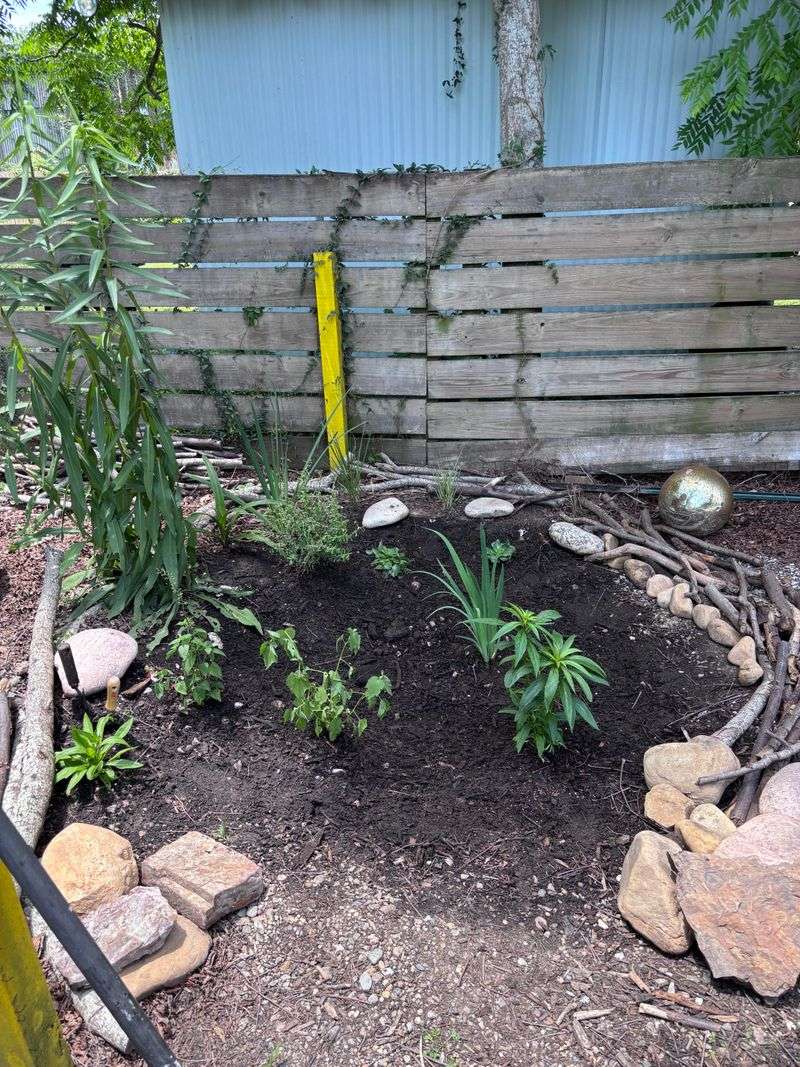
Florida rain does not always arrive politely. Sometimes it pours hard, fast, and all at once. In a small yard, that water usually doesn’t have anywhere useful to go.
But a mini rain garden can turn that problem area into a feature. The idea is simple. Create a shallow planted basin where rainwater can collect briefly and soak into the soil.
Instead of sending runoff straight across hard surfaces, the garden slows it down. This can work surprisingly well in compact yards.
A rain garden does not have to be huge. Even a small bed can help capture runoff from a roof edge, patio, or driveway corner.
Location matters. Place it where water naturally flows, but keep it away from the foundation. You want to manage water, not invite it toward the house.
Choose plants that can handle both wet and dry moments. Rain gardens may be soggy after a storm, then fairly dry between rains.
Blue flag iris, muhly grass, swamp sunflower, and other moisture-flexible plants can work well in the right spot.
Dig a shallow depression, often several inches deep. Loosen the soil and mix in compost if drainage needs help. Then plant, mulch lightly, and watch how water moves during the next storm.
Do not make the basin so deep that water lingers too long. The goal is temporary collection and gradual soaking.
This is where you become a rain detective. After a storm, step outside and watch the flow. Where does water travel? Where does it pause? Those clues can guide your design.