These Georgia Plants Create A Dense Privacy Screen That Works In Both Sun And Shade
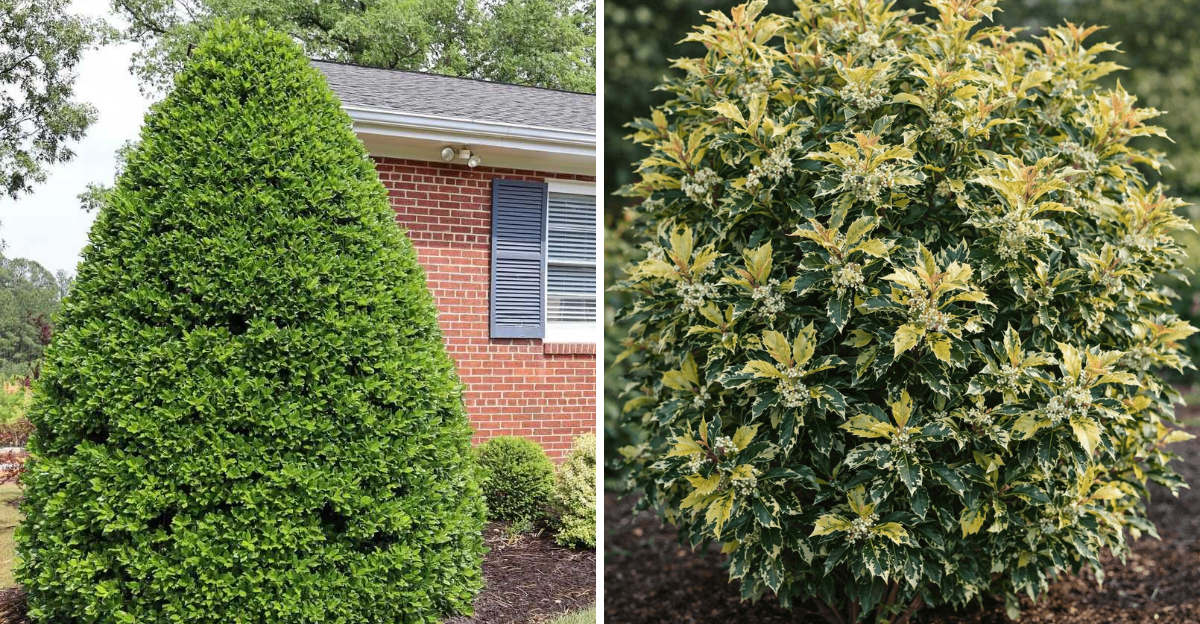
A good privacy screen can completely change how a yard feels, and finding the right shrubs to make it happen is honestly one of the more satisfying gardening projects you can take on.
The tricky part is that not every shrub is built for what Georgia actually throws at it: intense summer heat, stubborn humidity, and clay-heavy soil that makes establishment harder than it looks in the catalog photos.
Add in a yard that shifts between sun and shade throughout the day and the options can start feeling pretty limited pretty fast.
The sweet spot here is partial or semi-shade, since even the toughest screening shrubs need some light to stay dense and full.
But several reliable shrubs handle exactly these conditions across Georgia landscapes and deliver solid, year-round cover that genuinely holds up season after season.
1. Nellie R. Stevens Holly Makes A Tall Green Screen
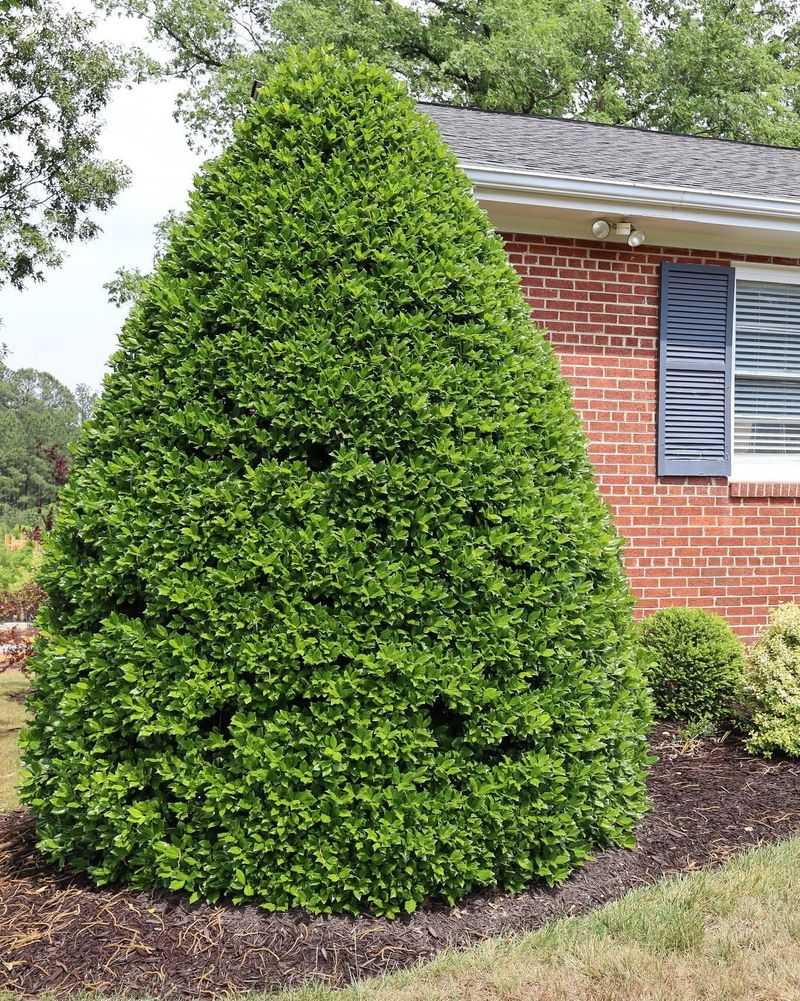
Property lines with nosy neighbors or busy roads call for something tall, reliable, and evergreen, and Nellie R. Stevens Holly checks all those boxes in Georgia landscapes.
This hybrid holly is one of the most widely planted screening shrubs across the state for good reason.
It grows quickly, sometimes adding two to three feet per year under good conditions, and it reaches mature heights of fifteen to twenty-five feet without much fuss.
The glossy, dark green leaves stay on the plant all year, giving you solid cover through every season. In fall and winter, bright red berries add a pop of color that makes the hedge look attractive rather than just functional.
The berries also bring birds to your yard, which is a bonus many homeowners appreciate.
Nellie R. Stevens Holly handles full sun well and can manage partial shade, though it tends to stay fuller and denser in sunnier spots.
It adapts reasonably well to Georgia clay soil as long as drainage is decent. Spacing plants about five to six feet apart gives the hedge room to fill in while still creating a solid screen within a few growing seasons.
Light pruning helps keep the shape tidy over time.
2. Foster’s Holly Adds Year-Round Cover
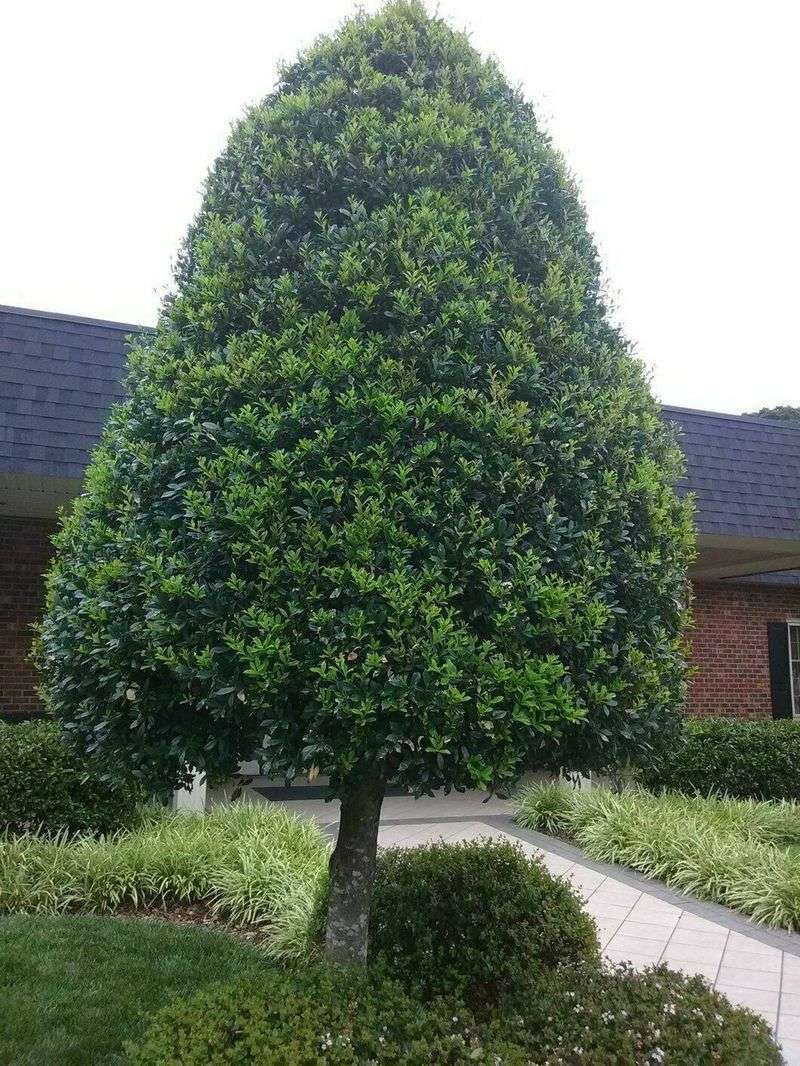
Narrow side yards and tight spaces along fences are exactly where Foster’s Holly earns its reputation as one of the most useful screening plants.
Unlike some hollies that spread wide, Foster’s Holly grows in a naturally upright, columnar form that fits into spots where space is limited.
It typically reaches fifteen to twenty feet tall while staying relatively narrow, which makes it easy to work into foundation beds or along property lines without crowding.
The leaves are smaller and more refined than some other hollies, giving the hedge a tidy, polished appearance that works well in both formal and casual Georgia landscapes.
Red berries appear in fall and persist through winter, keeping the plant interesting even after the growing season slows down.
Foster’s Holly handles full sun and tolerates partial shade reasonably well, which gives it some flexibility in yards with mixed light conditions.
Your Georgia Garden Changes Every Week. Your Plan Should Too.
Gardening in Georgia changes quickly throughout the season. Every Friday you’ll receive a simple weekly plan showing exactly what to plant, prune, fertilize, harvest, and protect so you never miss the right timing.
It performs solidly across most of Georgia, though gardeners in the colder northern parts of the state should check hardiness ratings before planting.
Regular watering during establishment helps it settle into clay or loamy soils. Once rooted in, it becomes a low-maintenance, year-round screen that rarely needs much intervention beyond occasional shaping.
3. Needle Point Holly Forms A Thick Hedge
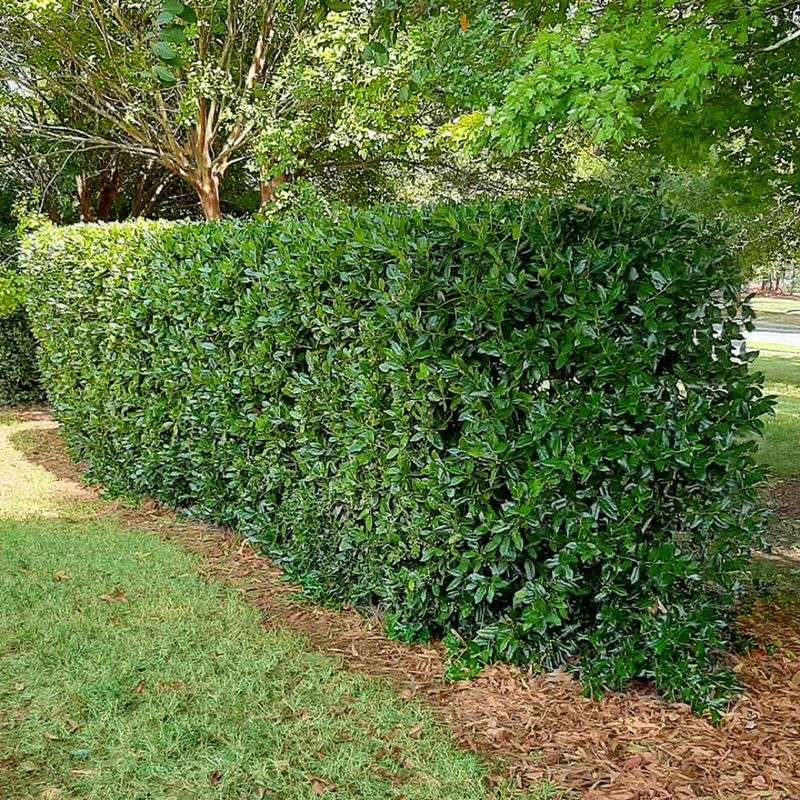
Few shrubs form a hedge as physically impenetrable as Needlepoint Holly, which makes it a smart choice for homeowners who want both privacy and a natural barrier along their Georgia property lines.
The leaves are narrow with a sharp, pointed tip that discourages people and animals from pushing through the planting.
This physical density adds a layer of security that purely decorative shrubs simply cannot match.
Needlepoint Holly grows at a moderate pace, eventually reaching eight to ten feet tall and spreading several feet wide. The dark, glossy foliage holds its color through Georgia’s hot summers and mild winters, providing consistent year-round screening.
Clusters of red berries appear in late fall and often linger into winter, which brightens the hedge during the quieter months of the year.
This holly does well in full sun and handles partial shade without losing too much of its density, which is helpful in yards where tree canopy creates mixed light throughout the day.
It tolerates clay soil reasonably well, though improving drainage at planting time gives it a better start.
Spacing plants about four to five feet apart encourages the hedge to knit together tightly. Minimal pruning is needed to maintain its naturally compact, rounded shape over time.
4. Yaupon Holly Handles Sun And Part Shade
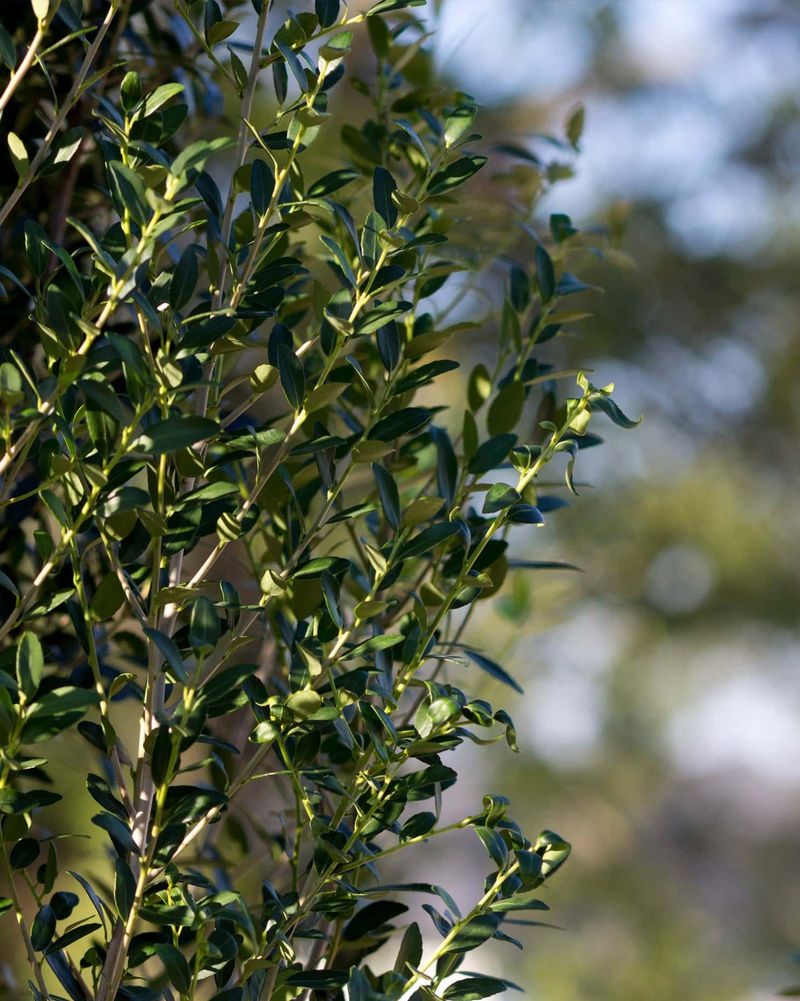
Tough, adaptable, and native to the Southeast, Yaupon Holly is the kind of plant that makes gardeners breathe a sigh of relief.
Unlike some exotic screening shrubs that struggle with Georgia’s heat, humidity, and difficult soils, Yaupon Holly evolved in this region and handles local conditions with ease.
It tolerates everything from full sun to partial shade, which gives it real flexibility in yards where light conditions change throughout the day.
Yaupon Holly can be grown as a large shrub or small tree, and it responds well to pruning if you want to maintain a specific hedge height. Left to grow more naturally, it reaches ten to fifteen feet tall with a dense branching habit that creates solid visual screening.
The small, dark green leaves stay on the plant year-round, and female plants produce abundant red berries that attract wildlife through the fall and winter months.
One of the biggest advantages for homeowners is Yaupon Holly’s tolerance of clay soil, drought once established, and even occasional wet periods. It grows across most of Georgia without cold hardiness concerns.
Planting in groups with spacing of about four to six feet allows individual plants to grow together into a continuous, low-maintenance screen that fills in reliably over time.
5. Burford Holly Creates A Dense Privacy Hedge
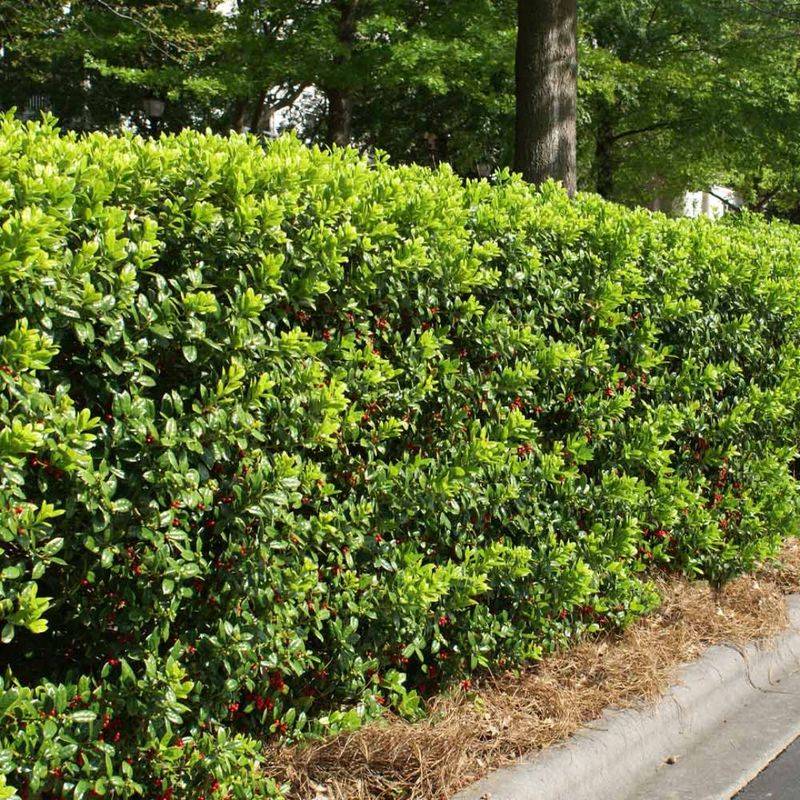
Walk past a mature Burford Holly hedge in a Georgia neighborhood and you quickly understand why so many homeowners have been planting it for decades.
The rounded, glossy leaves are slightly less spiny than many other hollies, making it easier to work around during pruning and planting.
Yet the dense branching structure still creates a thick, full hedge that blocks views and muffles neighborhood noise effectively.
Burford Holly grows at a moderate to fast rate and can reach ten to fifteen feet tall at maturity. In Georgia landscapes, it often fills in faster than expected when planted in well-amended soil with consistent moisture during the first growing season.
The foliage stays rich and green year-round, and the plant produces heavy crops of bright red berries in fall that make the hedge look especially attractive heading into winter.
Full sun brings out the best growth and berry production, but Burford Holly manages partial shade reasonably well without becoming thin or leggy.
It handles Georgia clay soil with decent drainage and is considered quite heat-tolerant, which matters during long summers.
Spacing plants five to six feet apart at planting allows enough room for healthy root development while still producing a continuous screen within two to three growing seasons.
6. Southern Wax Myrtle Fills In Fast
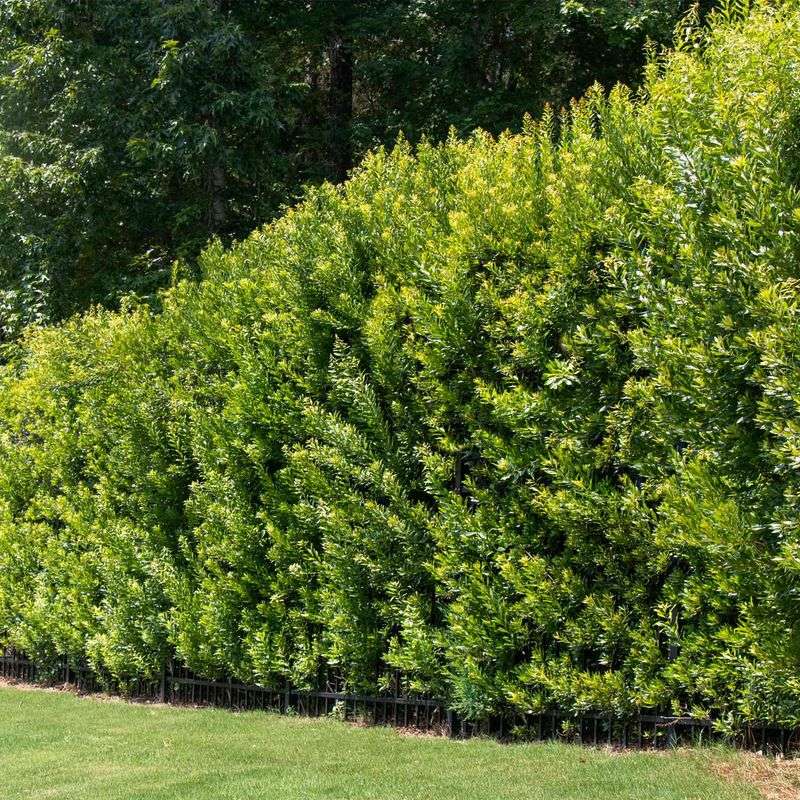
Speed matters when you want privacy sooner rather than later, and Southern Wax Myrtle is one of the fastest-growing evergreen screening plants available to homeowners.
This native shrub can put on three to five feet of growth in a single season under favorable conditions, which means a newly planted row can start delivering real screening within the first year or two.
That kind of pace is hard to find in plants that also stay full and attractive over the long term.
Southern Wax Myrtle naturally reaches ten to fifteen feet tall and can spread just as wide, so it works best in landscapes where there is room for a more informal, naturalistic hedge.
The aromatic, gray-green foliage stays on the plant year-round and has a pleasant fragrance when brushed or pruned.
Small waxy berries appear on female plants and attract birds, adding ecological value to the screening planting.
One of this plant’s standout qualities is its ability to handle wet, poorly drained Georgia soils that would stress many other shrubs. It also tolerates drought once established and grows in full sun or partial shade without losing density.
Across most of Georgia, Southern Wax Myrtle is reliably evergreen and cold-hardy. Cutting it back hard if it outgrows its space encourages dense regrowth from the base.
7. Japanese Cleyera Adds Glossy Green Cover
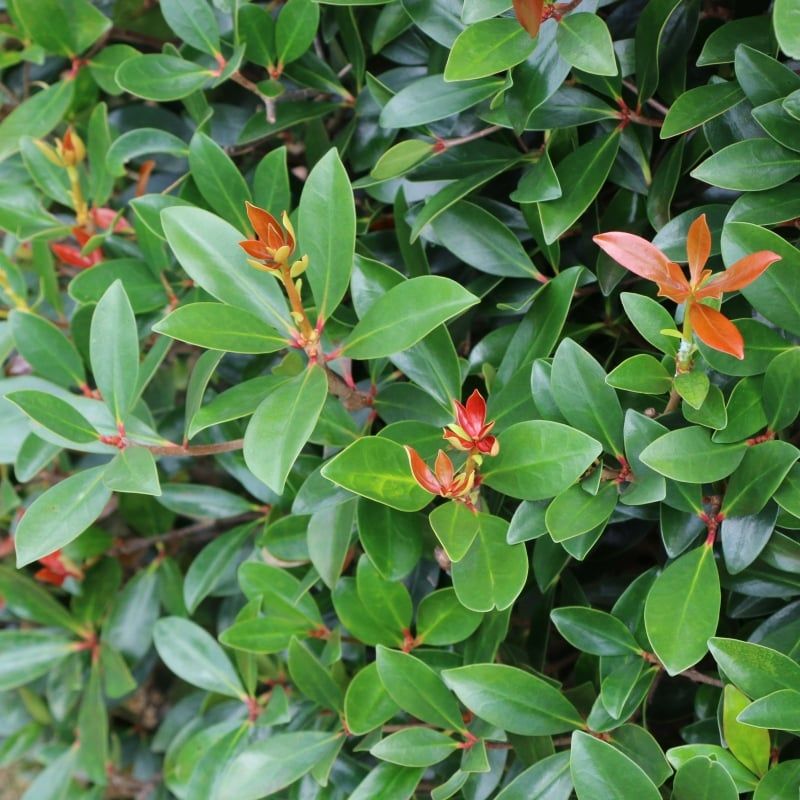
Shaded side yards and partially covered foundation beds can be tough spots to fill with a reliable privacy screen, which is exactly where Japanese Cleyera tends to outperform many other options.
This handsome evergreen shrub thrives in partial shade and holds its deep, glossy foliage through Georgia’s winters without skipping a beat.
New growth often emerges with a warm reddish or bronze tint before maturing to a rich, dark green, giving the plant a layered, interesting look throughout the growing season.
Japanese Cleyera grows at a moderate pace and typically reaches eight to ten feet tall with a naturally upright, slightly spreading form.
It responds well to shaping, which makes it easy to maintain as a formal hedge or let grow into a more relaxed, layered screen depending on your landscape style.
Small, fragrant white flowers appear in late spring, adding a subtle seasonal detail that most homeowners enjoy noticing.
Across Georgia, Japanese Cleyera is valued for its adaptability to the clay-heavy soils common in the Piedmont and for its tolerance of summer heat and humidity.
It grows well in partial shade but can handle morning sun with afternoon shade, which describes many Georgia foundation beds and side yards.
Spacing plants about four to five feet apart allows the hedge to fill in smoothly. Minimal maintenance keeps it looking neat and full year after year.
8. Sweet Viburnum Makes A Lush Screen
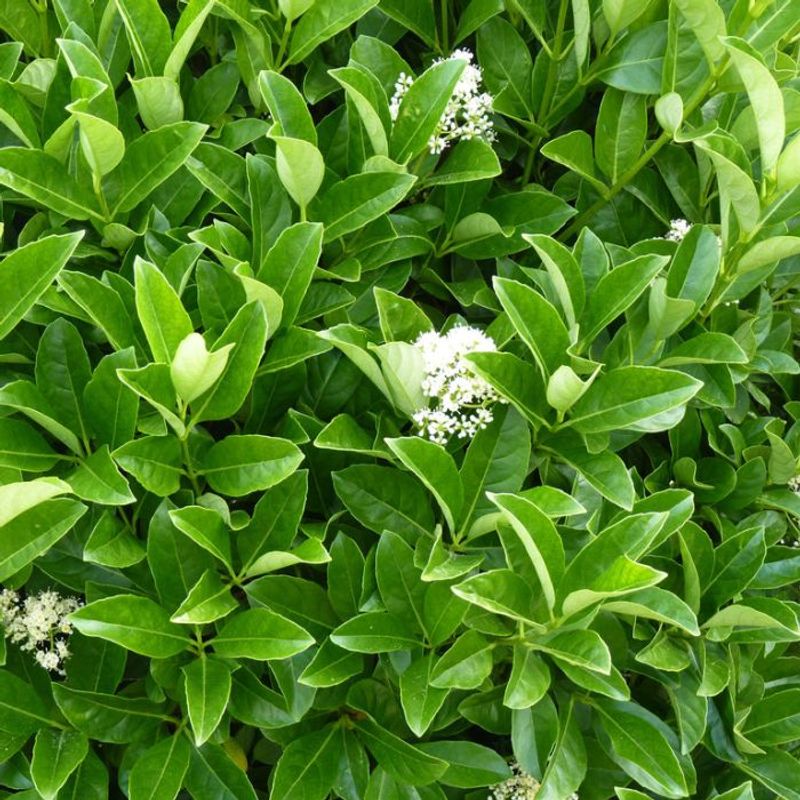
Large, glossy leaves and a naturally full growth habit make Sweet Viburnum one of the most visually impressive privacy screens available for Georgia landscapes.
The foliage is bold and tropical-looking, with leaves that can reach four to six inches long and give the hedge a lush, layered appearance that feels more like a living wall than a simple shrub planting.
Fragrant white flower clusters appear in spring and are noticeable from several feet away.
Sweet Viburnum grows at a moderate to fast rate and can reach ten to twenty feet tall at maturity, making it well-suited for screening along property lines where height is needed.
The evergreen foliage holds through Georgia winters in most parts of the state, though gardeners in the northern mountains should note that it may be less reliably evergreen in colder zones.
In central and southern Georgia, it stays green and full year-round.
This viburnum handles full sun and partial shade, which gives it flexibility in yards where light shifts through the day. It prefers well-drained soil and benefits from some organic matter worked in at planting time, especially in areas with heavy clay.
Spacing plants six to eight feet apart allows each one to develop fully while still creating a continuous screen. Light pruning after flowering helps maintain a tidy shape.
9. Fortune’s Osmanthus Gives Steady Evergreen Cover
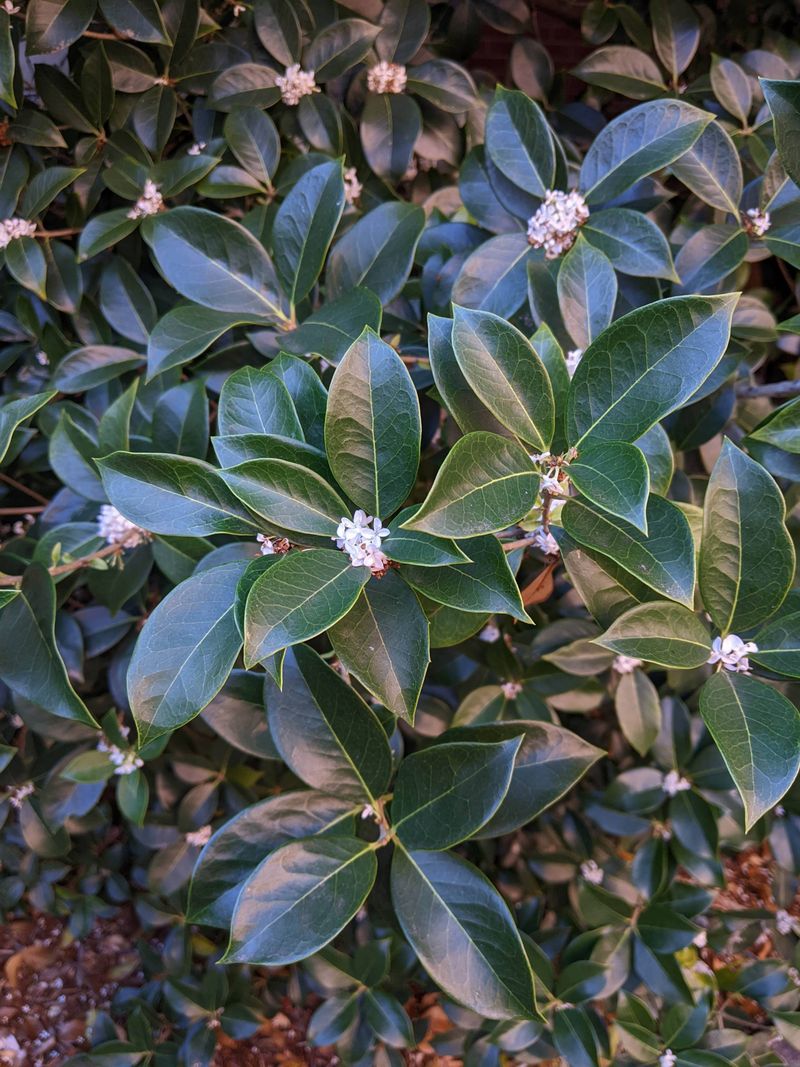
Homeowners who want a privacy screen that quietly does its job year after year without demanding much attention often find themselves drawn to Fortune’s Osmanthus.
This large evergreen shrub grows at a measured, steady pace and builds into a dense, substantial hedge over time.
The bold, dark green leaves have spiny edges similar to holly, which adds a physical deterrent quality to the screening planting along with solid visual coverage.
Fortune’s Osmanthus typically reaches ten to fifteen feet tall and nearly as wide at maturity, so it fits best in landscapes where there is room for a substantial planting.
In fall, the shrub produces small, intensely fragrant white flowers that are easy to miss visually but impossible to ignore by scent.
That seasonal fragrance is one of the details that makes this plant memorable in Georgia gardens.
It performs well in full sun and tolerates partial shade, which makes it useful in yards with mixed light conditions under tree canopy or along structures.
Fortune’s Osmanthus adapts to clay soils without major issues and holds up well through summer heat and humidity.
Cold hardiness is generally solid across most of Georgia, though northern mountain areas may see occasional cold damage in harsh winters. Spacing five to six feet apart creates a hedge that fills in reliably.
10. Holly Osmanthus Works As A Compact Screen
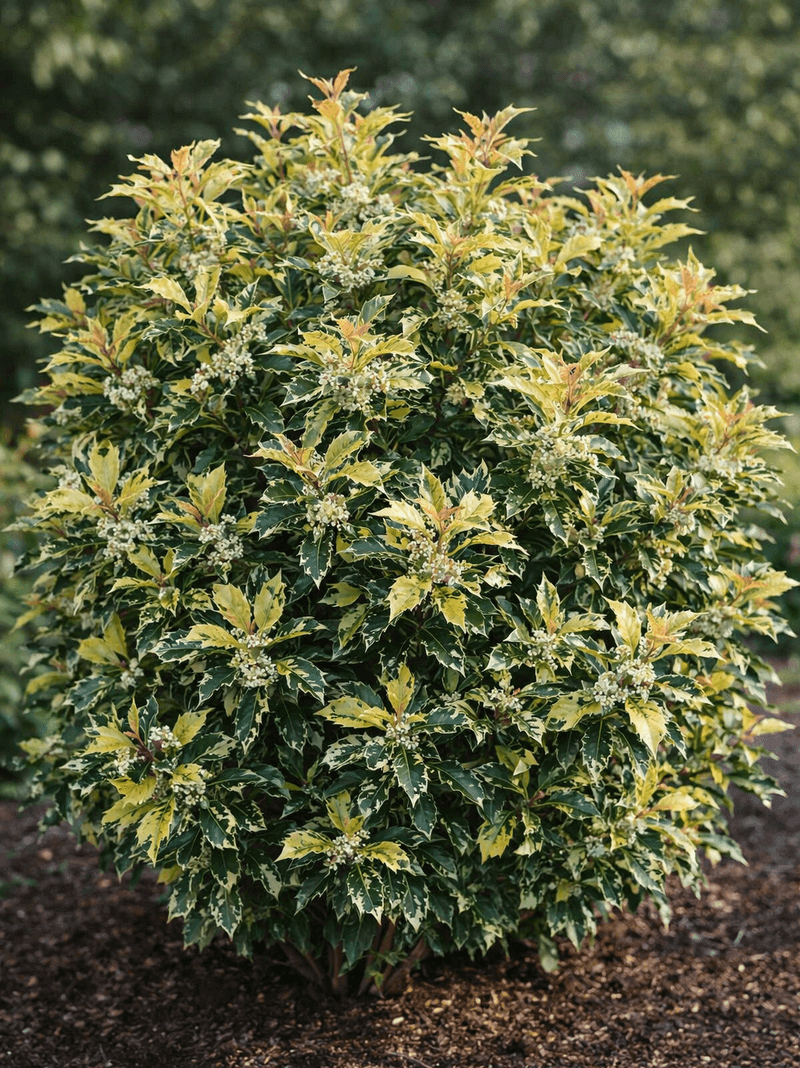
Smaller yards and tighter spaces along fences or building foundations often need a screening plant that stays compact without losing its density, and Holly Osmanthus fits that role well in Georgia landscapes.
Often mistaken for a true holly at first glance, this evergreen shrub has stiff, spiny leaves that create a visually solid and physically dense hedge.
The look is formal and structured, which suits landscapes where a clean, maintained appearance matters.
Holly Osmanthus grows slowly to a moderate pace and typically reaches six to ten feet tall, making it easier to manage in smaller spaces than some of the larger screening options.
The dark, leathery foliage stays rich green through Georgia’s winters and holds up well against summer heat and humidity.
Small, fragrant white flowers appear in fall, which is a pleasant surprise for a plant that looks primarily structural and formal.
In Georgia landscapes, Holly Osmanthus performs well in full sun and handles partial shade without becoming thin or open. It adapts to clay soils found across much of the state and is considered quite cold-hardy across Georgia’s growing zones.
Spacing plants about three to four feet apart creates a tighter hedge that fills in sooner. Occasional pruning keeps the shape neat and encourages denser branching from the base upward, which improves the screening quality over time.