These Are The Florida Poolside Plants That Handle Both Splash And Summer Heat Without Looking Rough
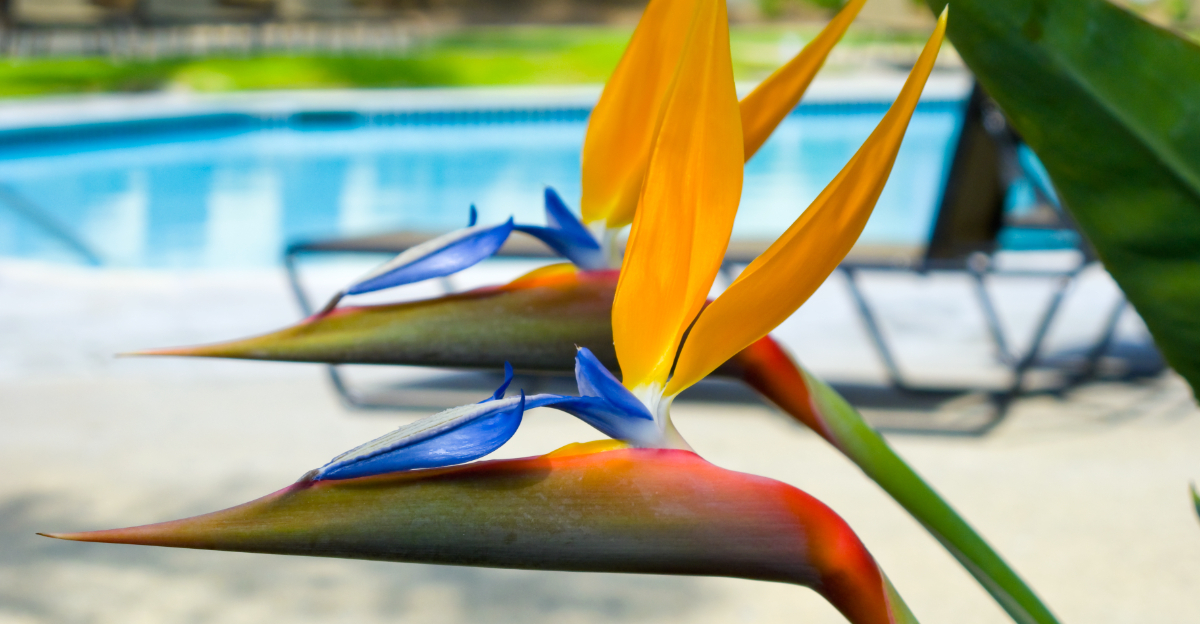
Poolside plants in Florida have one brutal summer ahead of them. Splash, reflected heat off the deck, pool chemicals drifting onto leaves, soil that goes from soaked to parched in the same week.
Most plants that look great at the nursery in May start showing the strain by July. Leaves burn, plants thin out, and the area that should look its best all summer starts looking like an afterthought.
Pool owners replace the same plants year after year without ever questioning the selection. But certain plants genuinely do not care about any of those conditions.
Splash lands on them and they shrug it off. Heat cranks up and they keep going.
They look just as good in September as they did in June without any babying in between. So which plants actually belong next to a Florida pool?
That list is shorter than most people think and more interesting than you would expect.
1. Plant Bird Of Paradise For Low-Litter Poolside Color
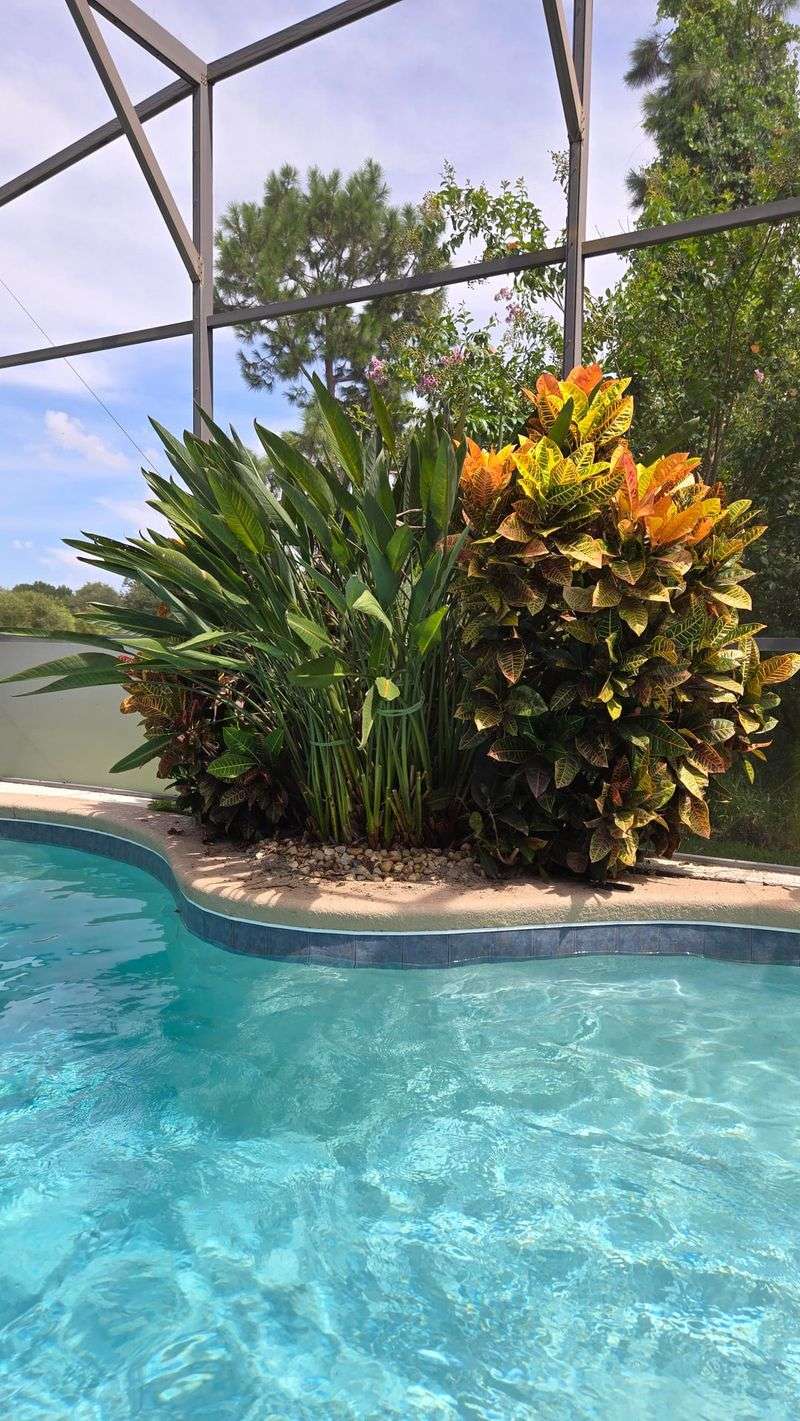
Wanting tropical color near the pool without spending every evening fishing fallen leaves off the water is a completely reasonable goal. Bird of paradise delivers exactly that kind of drama without the constant cleanup.
According to UF/IFAS, this plant performs well in warm, sunny, well-drained sites and is valued for its bold flowers and relatively tidy growth habit near pool landscapes.
UF/IFAS notes that bird of paradise has some light salt-spray tolerance and drought tolerance once established. That makes it a smart fit for bright, exposed poolside beds.
Its large paddle-shaped leaves stay on the plant instead of shedding constantly, so litter near the pool edge stays manageable compared to flowering trees or heavy canopy shrubs.
Give it enough room to reach its mature size, which can be several feet wide, so do not crowd it against pool equipment or narrow walkways. Occasional splash landing on the leaves is very different from sitting in chemical-heavy runoff every day.
Plant it in a raised or well-drained bed, keep it a comfortable distance from the pool edge, and rinse the foliage after big splash events when you can.
Southern regions and protected warm sites are ideal, but this plant can also perform well in central areas with the right placement and a warm microclimate.
2. Use Coontie Where Splash Meets Hot Patio Edges
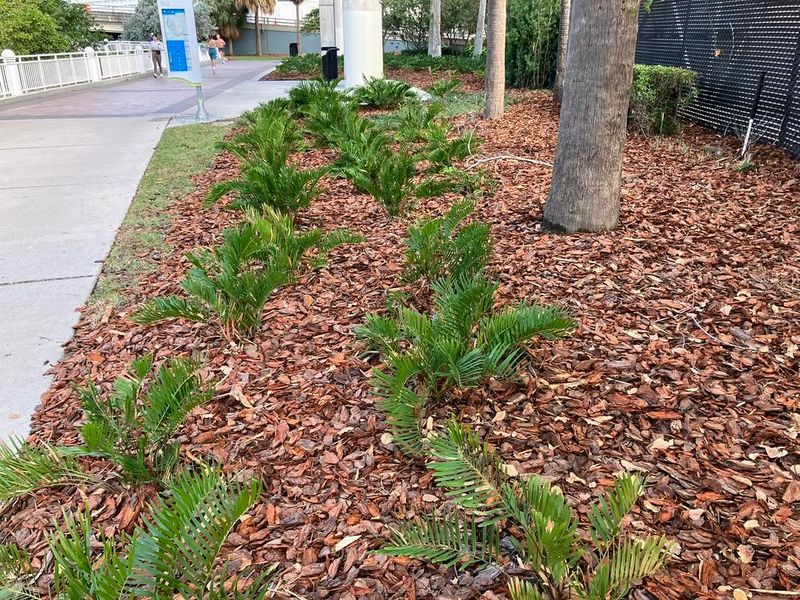
That narrow strip between the pavers and the fence line can be one of the hardest spots in any pool yard to fill. The soil bakes, the reflected heat is intense, and most soft ornamentals just melt.
Coontie, a native cycad, is one of the toughest low-profile plants you can put in that kind of spot.
UF/IFAS describes coontie as drought tolerant once established and well suited to hot, sunny or lightly shaded landscape sites. It stays low and tidy, which means it does not create a canopy that sheds debris into the water.
As an added bonus, it serves as the only larval host plant for the atala butterfly, a native species that has made a comeback largely because of coontie plantings in local landscapes.
Your Florida Garden Changes Every Week. Your Plan Should Too.
Gardening in Florida changes quickly throughout the season. Every Friday you’ll receive a simple weekly plan showing exactly what to plant, prune, fertilize, harvest, and protect so you never miss the right timing.
Before placing coontie near a pool area, read this clearly: the plant is toxic if eaten, including its seeds and all plant parts. That means thoughtful placement is a must in yards with pets, children, or curious guests who might handle the plant.
Set it along patio edges where occasional splash may reach it rather than beside pool steps or high-traffic seating zones. Good drainage is essential.
Coontie handles heat and dry spells well once its roots are settled, making it a low-maintenance choice for tough patio edge conditions.
3. Choose Muhly Grass For Soft Heat-Tough Texture
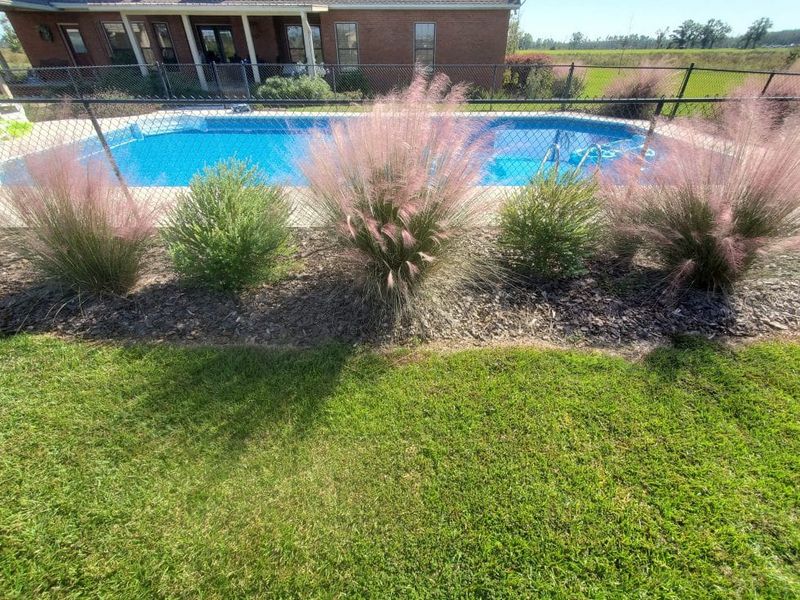
On a blazing August afternoon, the heat radiating off the pavers and the fence line can make even the toughest plants look stressed.
Muhly grass is one of the few native plants that can bring soft movement and airy texture to those bright, open beds without wilting under the pressure.
According to UF/IFAS, muhly grass is a native clumping grass that thrives in sunny, well-drained sites. It also shows solid heat and drought tolerance once established.
Its seasonal pink-purple plumes are a genuine showstopper in fall, adding color and softness to an otherwise hard pool landscape without creating a heavy canopy overhead.
Placement matters with muhly grass near a pool. Position it where the plumes and blades will not shed directly into the water or block a walkway during the growing season.
A bed set back from the pool edge, along a fence line or open border, gives the plant room to do its thing without creating a maintenance headache.
This is not a plant marketed as chemical-tolerant, so keep it out of areas where splash is constant and drainage is poor.
Think of it as a heat-tough border plant that earns its spot through resilience and seasonal beauty, not through any special relationship with pool water.
4. Plant Saw Palmetto For Rugged Poolside Structure
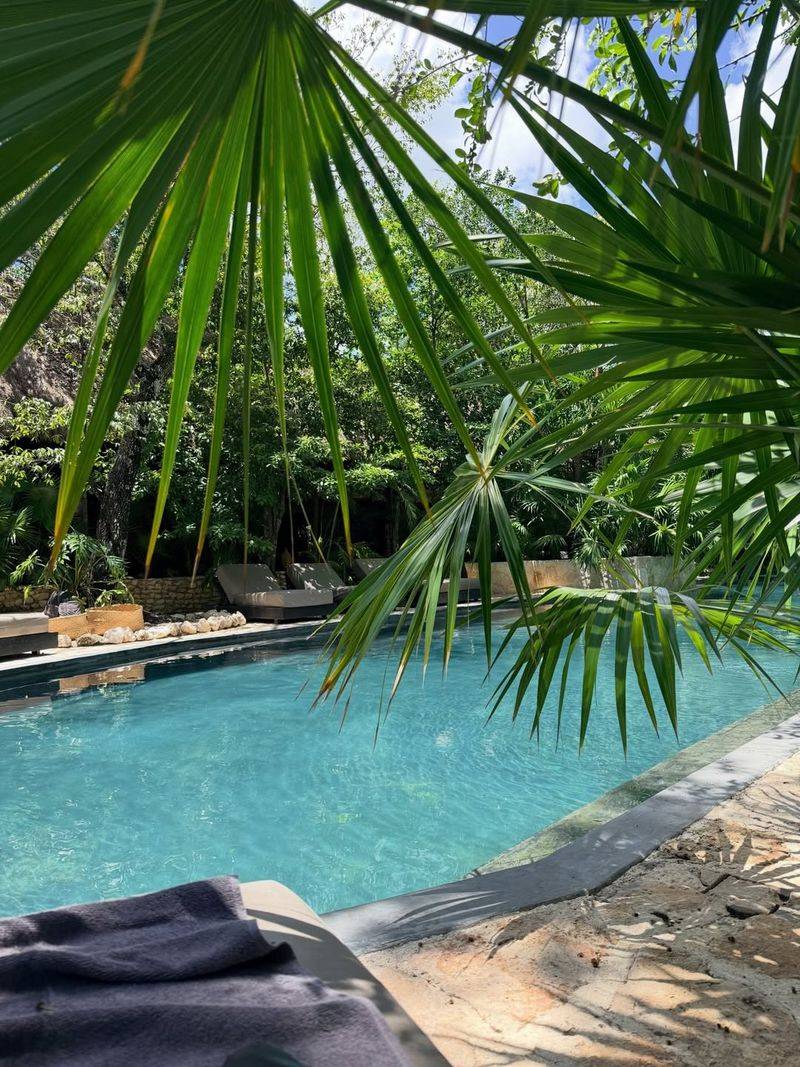
Beyond the splash zone, past the lounge chairs and the pool steps, there is often a wide bed or a back corner that needs something tough and long-lasting. Saw palmetto is the kind of plant that earns its place there and holds it for decades without drama.
UF/IFAS identifies saw palmetto as a native species with strong drought tolerance once established and a rugged evergreen structure that holds up in hot, sunny Florida landscapes.
Its fan-shaped fronds create year-round density, and its slow, reliable growth makes it a practical choice for background beds where you want structure without constant pruning or replanting.
Here is the part that matters most for pool areas: saw palmetto has sharp, saw-toothed leaf stems that can cut skin. Do not plant it beside pool steps, narrow paths, lounge-chair zones, or any area where people regularly brush past plants.
It belongs in wide background beds, along fences, or in open corners where people are not walking close to it. Set it back from the pool edge, give it space to spread naturally, and let it do what it does best.
Central and northern regions can support saw palmetto well, and it handles heat and reflected light without complaint. It is structure, not softness, and that is exactly the point.
5. Use Dwarf Clusia For Dense Screening In Warmer Regions
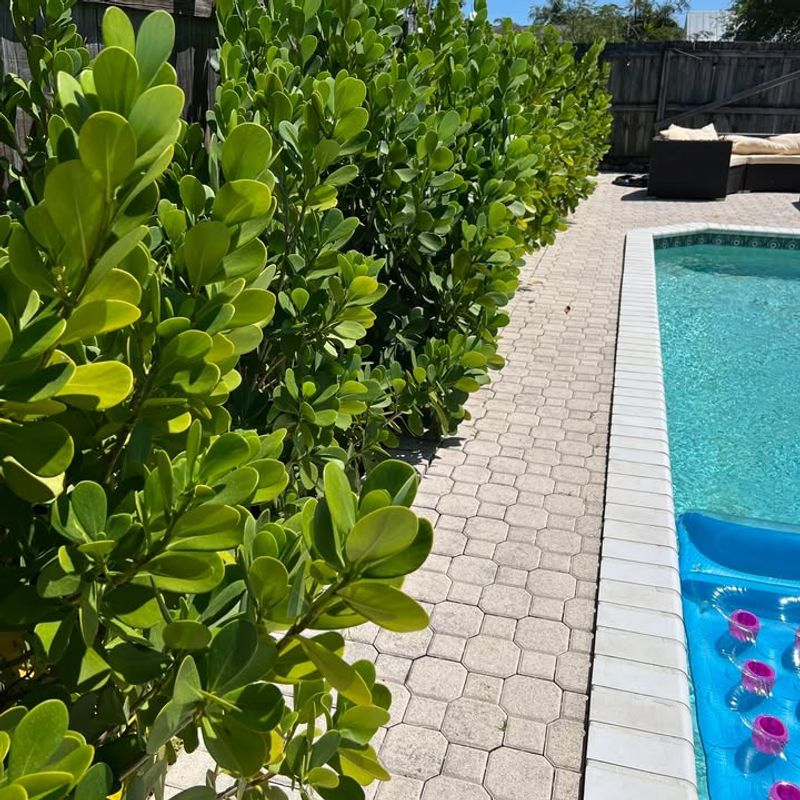
Privacy near a pool is something most homeowners want and few plants actually deliver without becoming a maintenance burden.
Dwarf clusia has built a solid reputation in warmer poolside landscapes for exactly that reason: dense, clean screening without constant trimming battles.
UF/IFAS references clusia as a plant used for hedging and screening in warm, sunny landscapes, noting its thick leaves and tolerance for coastal conditions in suitable sites.
Its growth habit stays relatively tidy compared to larger screening plants, and it does not create the kind of heavy litter drop that sends debris floating across the pool surface.
The regional caveat here is real and worth taking seriously. Dwarf clusia performs best in southern regions and protected warm coastal sites.
Farther north, cold snaps can damage or set back the plant significantly. If you are in a central region, a sheltered spot near a screen enclosure or a south-facing wall may help, but check with your local Extension office before committing to a large planting.
Space plants for air movement to reduce humidity buildup between the shrubs and the pool structure. Keep them trimmed away from pool equipment and filters.
Occasional splash reaching the outer leaves is generally manageable, but the plant should not sit in pooled runoff or poor drainage. Good soil prep before planting makes a real difference in long-term performance.
6. Choose Crown Of Thorns For Sunny Splash-Prone Containers
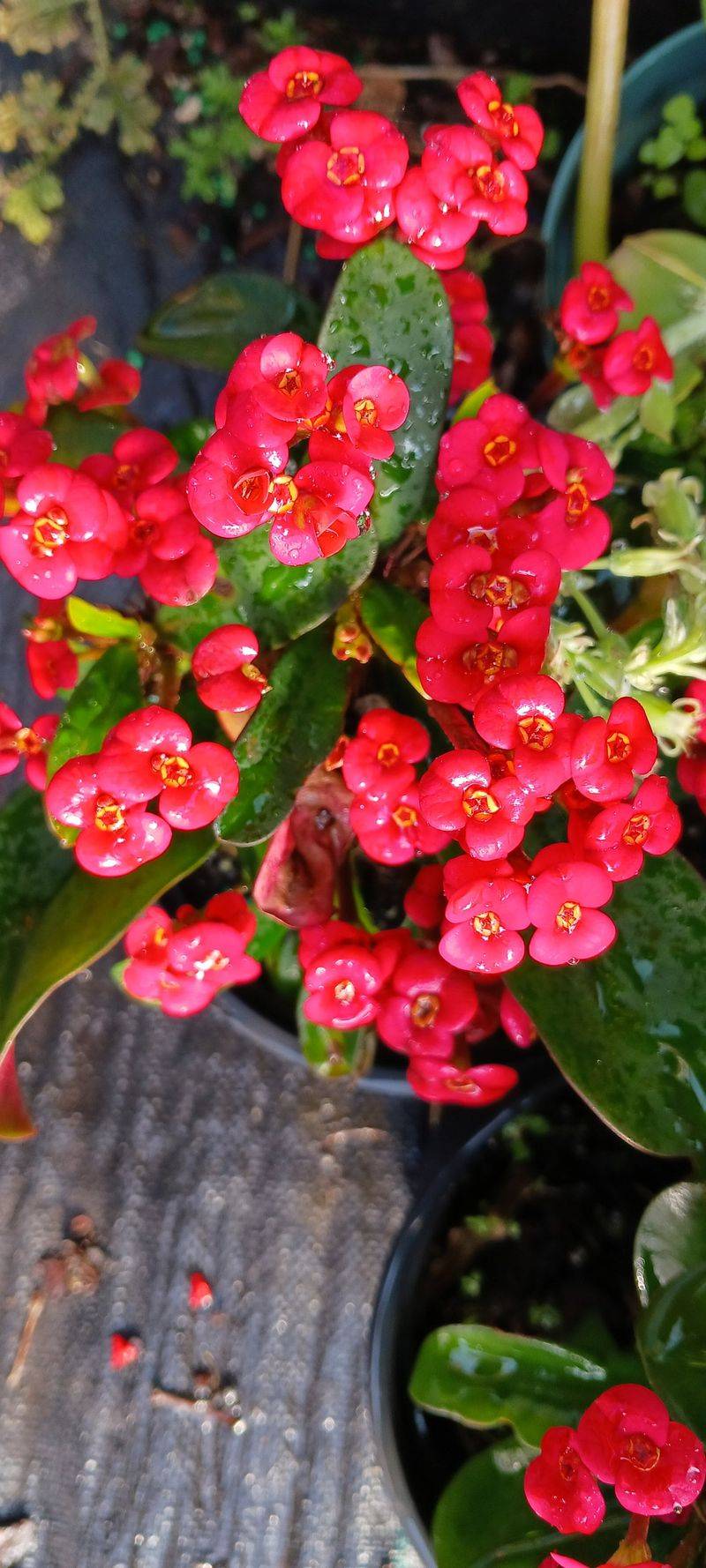
A sunny poolside pot that needs color without daily watering is a very specific problem, and crown of thorns solves it in a way that few other container plants can match. The flowers are cheerful, the plant is genuinely tough in heat, and it does not need much water to keep performing.
UF/IFAS describes crown of thorns as a plant well adapted to hot, sunny conditions with strong drought tolerance, making it a reasonable container choice for bright pool decks where other flowering plants would quickly stress out.
Its colorful bracts add a tropical accent that holds up through summer heat without demanding constant care.
Read this before placing it anywhere near the pool: crown of thorns has real thorns and a milky sap that can irritate skin and eyes. This plant does not belong beside pool ladders, steps, tight walkways, or anywhere children or pets move through regularly.
Set it back on a wide ledge, a raised corner, or a patio table where it will be admired rather than bumped into. Containers must have drainage holes so the roots do not sit in water, including splash that collects in a saucer.
Move the container away from the pool edge during heavy-use weekends if needed. With the right placement, it delivers reliable color in spots where most flowering plants simply cannot survive the heat.
7. Plant Agave Where Reflected Heat Gets Intense
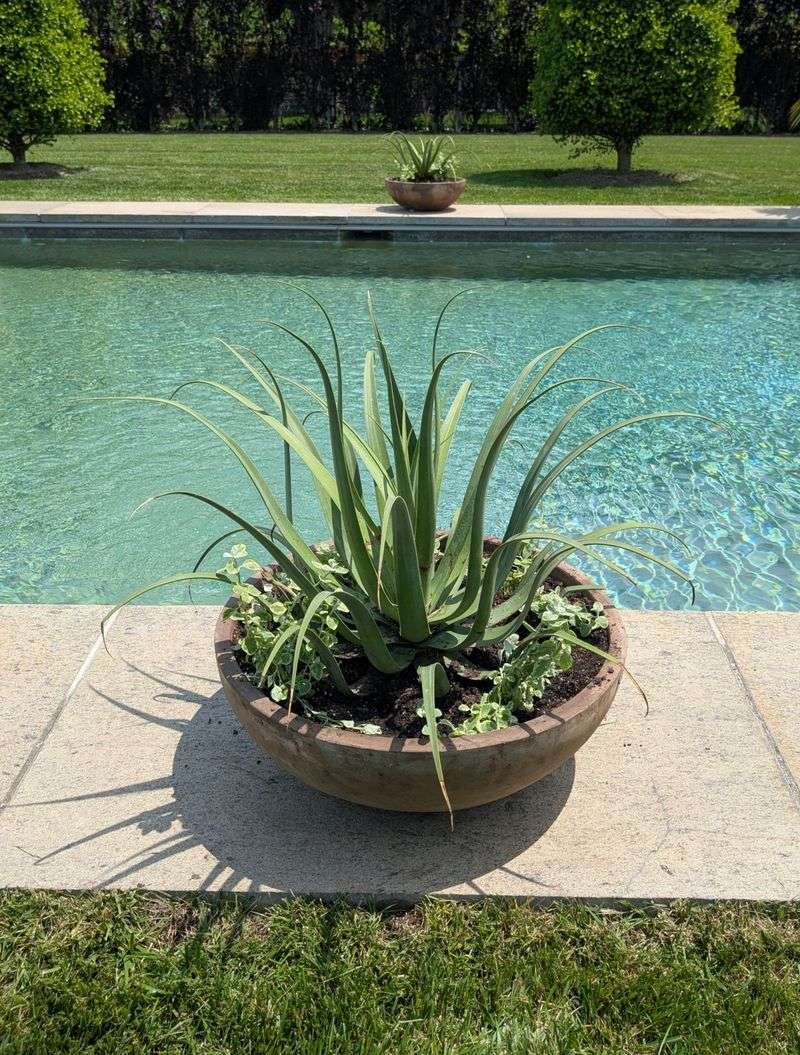
There is a corner in almost every pool yard that gets brutal by afternoon. The glare bounces off the screen enclosure, the pavers radiate stored heat, and softer plants start looking rough within weeks.
Agave is one of the few plants that actually looks sharper in those conditions rather than worse.
UF/IFAS notes that agave handles bright sun, dry conditions, and heat well when planted in a site with excellent drainage. Its bold, architectural rosette shape adds structure to a hot corner without needing irrigation, fertilizer, or much attention once it is established.
That low-input profile makes it genuinely practical for tough poolside spots.
Sharp tips and edges are the non-negotiable part of the agave conversation for pool areas. Do not place agave near pool steps, swim entries, tight walkways, or areas where children and pets play.
The tips can cause serious injury to anyone who stumbles or brushes against the plant. Wide, set-back beds or large containers positioned away from foot traffic are the safest options.
Containers also make it easier to move the plant if a layout changes. Agave is not maintenance-free, and older plants can send up a tall flower spike before the rosette ends its cycle.
Plan for that eventual size and weight when choosing a container or bed location. Proper placement makes agave a striking, heat-proof asset rather than a hazard.
8. Use Sea Grape Only Where Poolside Space Is Wide
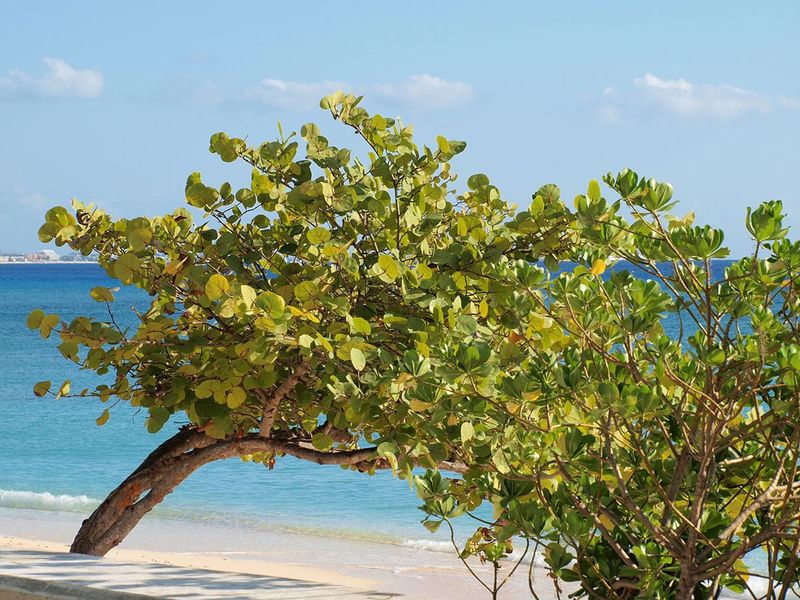
Wide poolside properties along coastal areas sometimes need a plant that can handle wind, salt, and full sun while still looking bold and tropical.
Sea grape fills that role in a way that few other native plants can, with rounded leaves the size of dinner plates and a presence that reads as genuinely dramatic from across a yard.
UF/IFAS describes sea grape as a native coastal shrub or small tree with strong salt tolerance. It also has a bold tropical form suited to warm, sunny coastal landscapes.
Its large, leathery leaves hold up to wind and salt spray better than most ornamentals, and it can be shaped over time into a screening hedge or left to grow more naturally as a specimen plant.
The size and litter question matters a great deal for pool placement. Sea grape can grow quite large, and it does drop leaves and fruit.
Placing it too close to the pool deck, drain areas, or seating zones will create a cleanup burden that cancels out its visual appeal. Use it along a wide property edge, well away from the water surface and deck.
It performs best in southern regions and protected coastal sites. Farther north, cold sensitivity can be a real problem, so check with a local Extension office before planting.
When space is generous and the site is right, sea grape is one of the most wind-tough, visually striking native plants available for a poolside border.