Why Pennsylvania Peonies Get Botrytis Blight In June And What To Do Immediately
Pennsylvania peonies have a flair for the dramatic, and honestly they have earned it. Those big, fragrant blooms showing up in late May and early June are one of the genuine highlights of the gardening year.
The problem is that Pennsylvania’s late spring weather has its own flair for the dramatic too, and it is not always working in your favor.
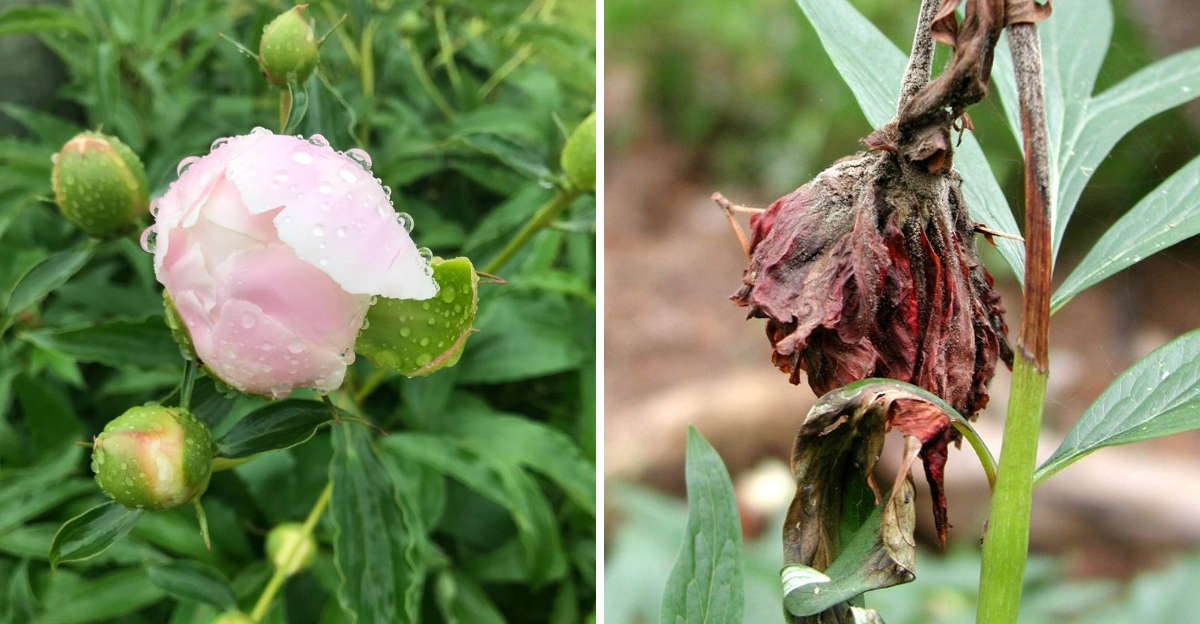
Persistent rain, cool nights, and humid conditions create a very comfortable setup for botrytis blight, a fungal disease that can turn promising buds black and coat stems in gray mold before a single flower gets the chance to open.
It is as frustrating as it sounds. The encouraging part is that botrytis is very manageable when you know what to look for and act quickly.
A few smart habits can make a real difference in protecting your plants through the season.
1. Damp, Rainy Weather Encourages Botrytis Blight
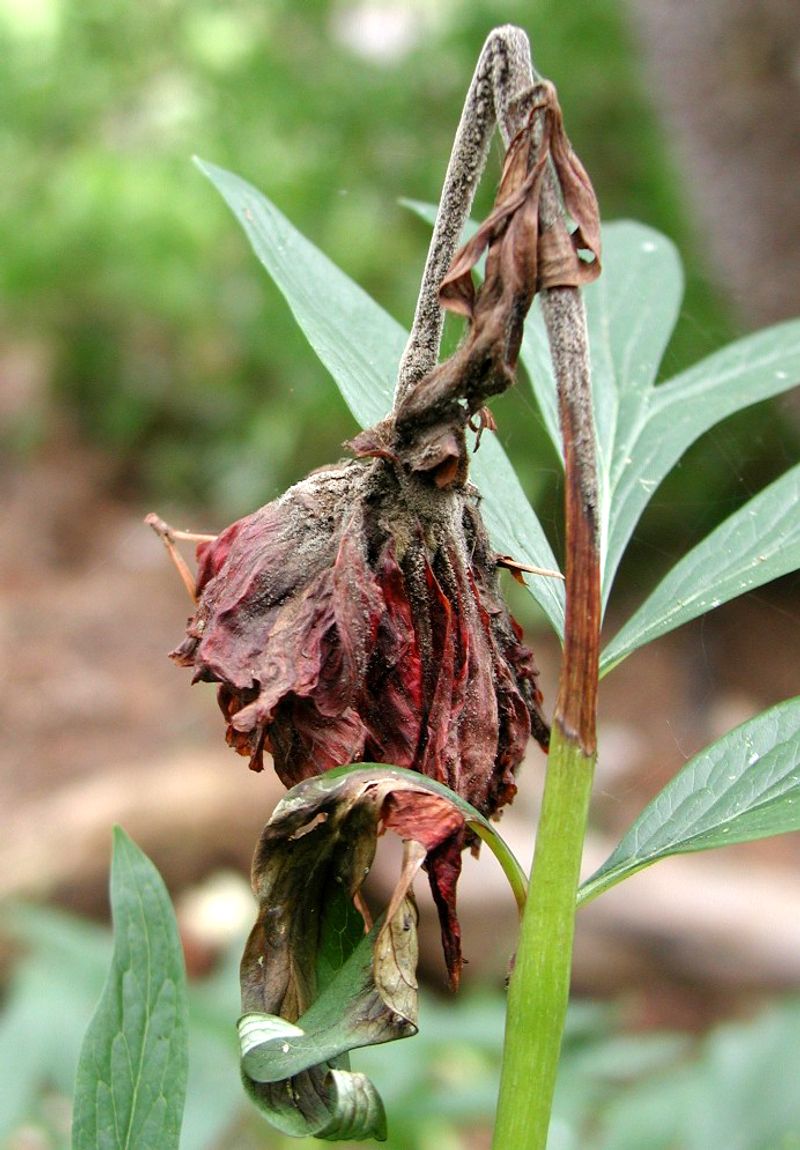
June rain in Pennsylvania can be relentless, and peony beds that stay wet for long stretches become easy targets for botrytis blight.
The fungus that causes this disease, Botrytinia fuckeliana, thrives when temperatures hover in the cool-to-mild range and moisture lingers on plant surfaces for hours at a time.
Those conditions show up regularly across Pennsylvania in early summer.
When rain falls steadily and skies stay overcast for days, peony foliage and blooms simply do not dry out fast enough. Wet surfaces give fungal spores the foothold they need to germinate and begin infecting plant tissue.
Once established, the disease can move quickly through a planting, especially if conditions remain humid and rainy.
Gardeners often notice the first signs of botrytis blight shortly after a stretch of wet weather, typically around the time peonies reach full bloom. Blackened buds, wilting shoots, and a fuzzy gray coating on stems are early warning signs.
Checking plants after rainy periods and removing affected material right away can help limit how far the disease spreads.
Improving drainage in low spots of the garden where water tends to pool around peony crowns is also a practical step worth taking before the rainy season picks up.
2. Wet Leaves And Flowers Help The Disease Spread
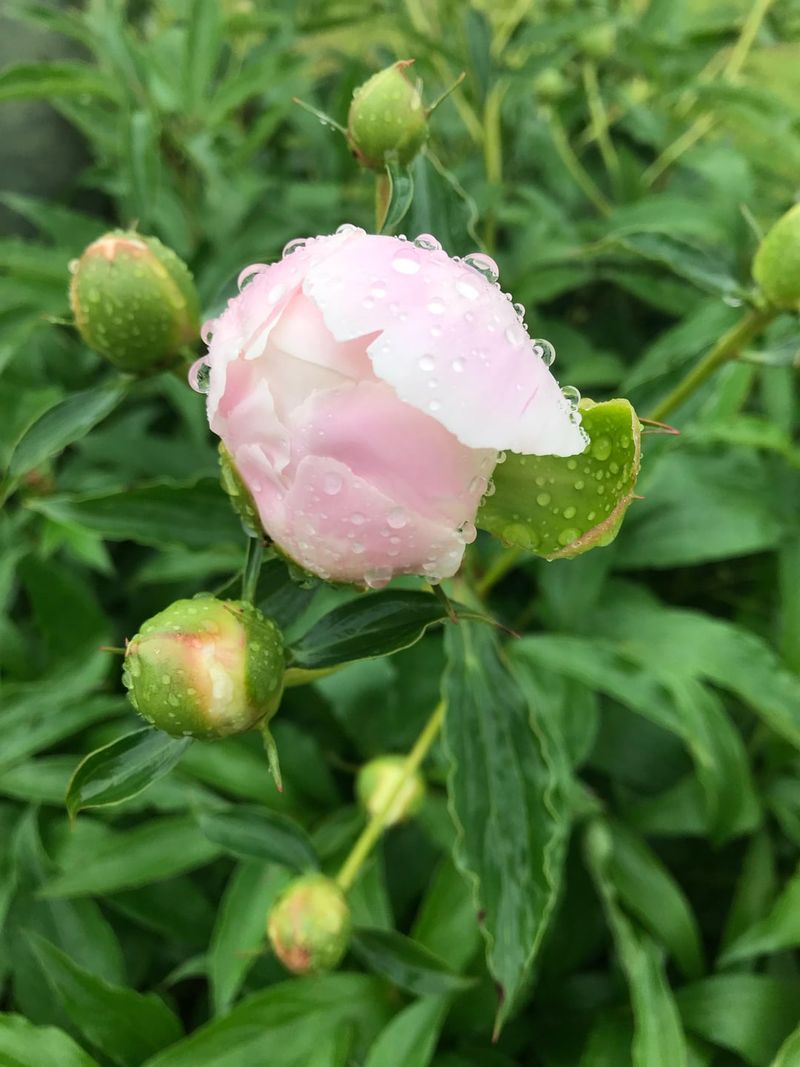
Heavy peony blooms are stunning, but those big, layered flowers act like bowls during a rainstorm, collecting water and holding it against petals and foliage for a long time.
That trapped moisture creates a warm, wet microclimate right inside the flower head, which is exactly the kind of environment where botrytis blight spores settle in and begin to spread.
Once spores land on wet plant surfaces, they can germinate within hours if conditions stay damp. Rain splash is one of the main ways this disease moves from one part of a plant to another, and from one plant to a neighboring one.
A single infected bloom dropping petals onto healthy foliage below can introduce spores to new surfaces quickly.
In Pennsylvania’s mixed perennial borders and cottage-style gardens, peonies are often planted close to other flowering perennials, which can slow air movement through the bed and keep foliage wet longer after rain.
Your Pennsylvania Garden Changes Every Week. Your Plan Should Too.
Gardening in Pennsylvania changes quickly throughout the season. Every Friday you’ll receive a simple weekly plan showing exactly what to plant, prune, fertilize, harvest, and protect so you never miss the right timing.
Avoiding overhead watering when possible and watering at the base of plants instead can help reduce how much moisture ends up sitting on leaves and flowers.
Picking off spent blooms before they begin to rot is another small step that makes a real difference in limiting where spores have a chance to take hold during a wet June.
3. Old Infected Plant Debris Can Carry The Problem Forward
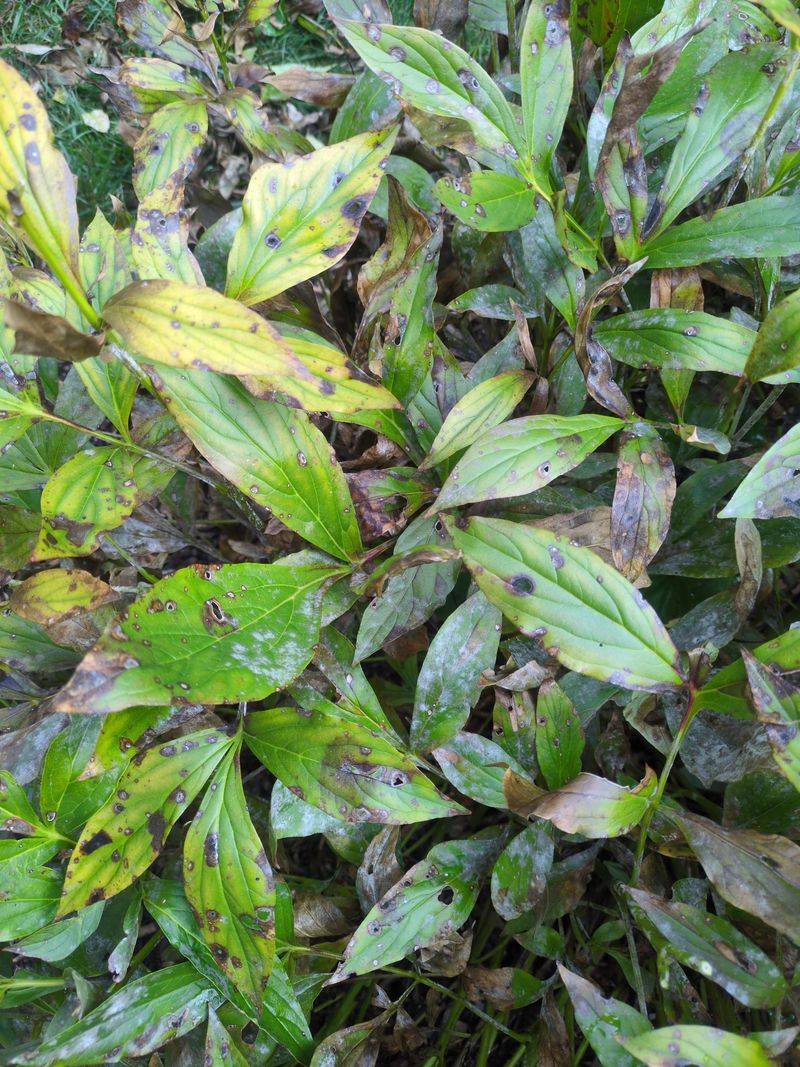
Botrytis blight does not simply go away when the growing season ends. The fungus overwinters in infected plant debris left on the ground, including old stems, fallen petals, and rotting foliage that was never cleaned up after the previous season.
In Pennsylvania gardens where fall cleanup gets skipped or rushed, that leftover material can become a source of new infections the following June.
Fungal structures called sclerotia can survive in old, decaying plant tissue through cold winters and become active again when warm, wet spring conditions return.
As new peony shoots emerge and blooms begin to open, spores released from overwintered debris can land on fresh growth and start the cycle all over again.
Gardeners who had botrytis problems one year often see them return in roughly the same spot the next year if old debris was not removed.
Cutting peony stems down to just above the soil line in fall and removing all that material from the garden, rather than leaving it as mulch, is one of the most effective ways to reduce disease pressure going into the next season.
Bagging or composting infected debris away from the garden bed helps prevent spores from blowing back onto the planting.
A clean garden bed heading into winter gives Pennsylvania peonies a noticeably better start when June rolls around again.
4. Crowded Peonies Dry Too Slowly

Peonies planted too close together create a dense canopy of foliage that traps moisture and slows drying after rain or morning dew.
In a crowded bed, air simply cannot move freely between plants, which means wet leaves and stems stay wet far longer than they would in a more open planting.
That extended dampness is a reliable recipe for botrytis blight in Pennsylvania’s humid June garden beds.
Many gardeners underestimate how large peonies eventually become. A plant that looked fine with its neighbors in its second year can easily crowd them out by its fourth or fifth season.
When foliage from multiple plants overlaps heavily, the interior of the planting stays shaded and damp even on days that start out sunny.
Spacing peonies at least three feet apart is a general guideline that supports better airflow and faster drying.
In established beds where plants have already grown together, thinning nearby perennials or removing some competing plants can open up the space enough to make a difference.
Pruning back surrounding shrubs or tall perennials that block morning sun from reaching the peony bed can also help.
Pennsylvania gardeners who have struggled with recurring botrytis blight often find that improving air circulation around their peonies reduces the severity of the problem even without changing anything else about their care routine.
5. Faded Flowers And Infected Buds Can Keep Spores Around
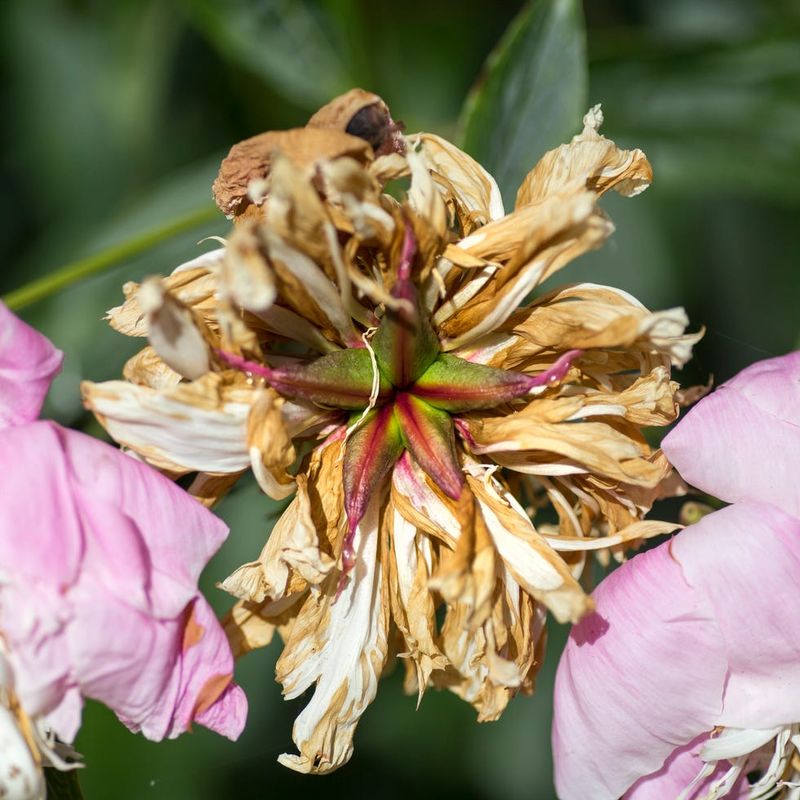
Spent peony blooms are more than just an eyesore. As petals fade, soften, and begin to break down, they become a food source for botrytis blight and a staging ground for new spore production.
A single rotting flower head left on the plant can generate millions of spores that spread to healthy buds, leaves, and stems nearby, especially during wet June weather in Pennsylvania.
Infected buds that never fully opened are another source of concern. Buds that turn brown, feel soft, or show a gray fuzzy coating are likely already infected.
Leaving them in place allows the fungus to continue developing and releasing spores into the surrounding garden. Removing those buds promptly, along with any spent flowers, is one of the most straightforward ways to slow the disease during the blooming season.
When removing faded flowers or infected buds, cutting the stem back to a healthy leaf rather than just snapping off the bloom head helps reduce the amount of damaged plant tissue left behind.
Placing removed material directly into a bag rather than dropping it on the soil prevents spores from being knocked loose during cleanup.
In a Pennsylvania June with frequent rain in the forecast, checking peonies every few days and removing spent or suspicious-looking blooms quickly can help keep botrytis blight from building up across the planting.
6. Gray Mold, Blackened Buds, And Collapsed Shoots Need Fast Cleanup
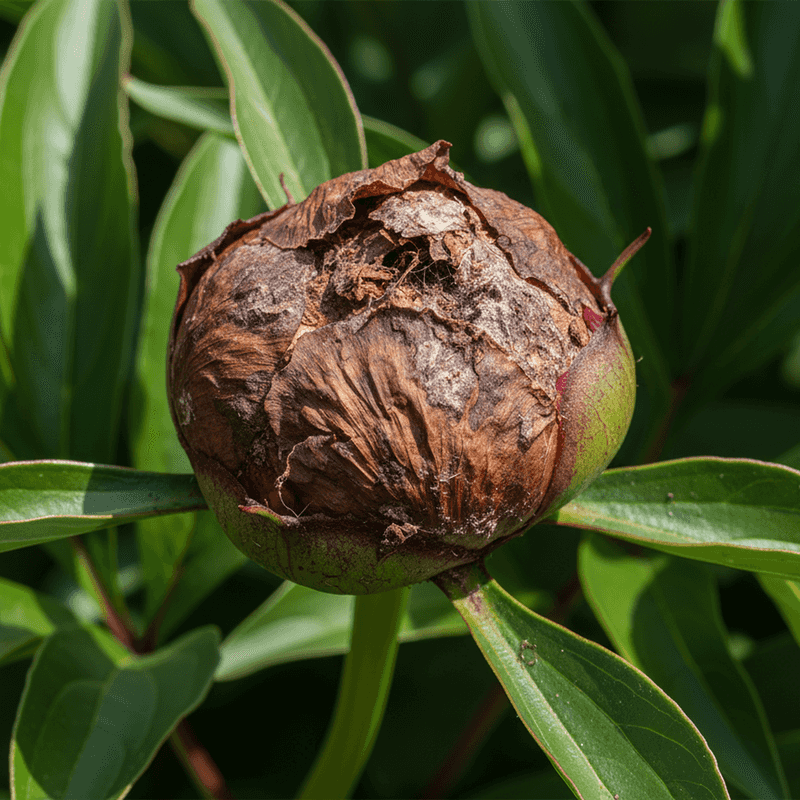
Seeing gray, fuzzy growth on peony stems or finding buds that turned black before they could open is a clear sign that botrytis blight has already taken hold.
That gray coating is actually masses of fungal spores, and any disturbance, like wind, rain, or even brushing against the plant, can send those spores drifting onto healthy tissue nearby.
Acting quickly when these symptoms appear is one of the best ways to limit damage.
Collapsed shoots near the base of the plant are another symptom worth taking seriously. The fungus can work its way into stems close to the soil line, causing them to rot and fall over.
In Pennsylvania’s wet June conditions, this kind of stem rot can move through a planting faster than gardeners expect if infected material is left in place.
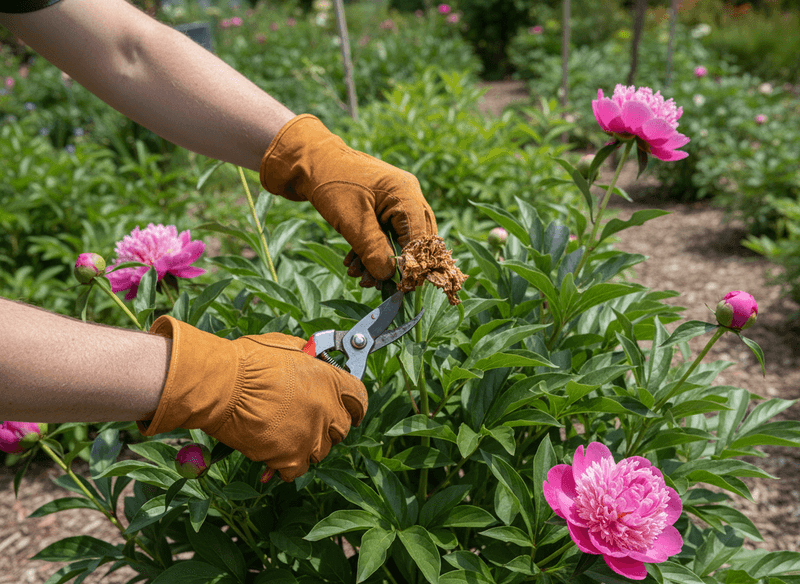
Removing affected stems, buds, and foliage with clean pruning tools and placing the material into a sealed bag right away helps prevent spore spread during cleanup.
Wiping tool blades with a disinfecting solution between cuts is a practical habit that reduces the chance of moving the fungus from one part of the plant to another.
After removing infected tissue, avoid wetting the remaining foliage unnecessarily. Giving the plant some breathing room and keeping the area around the base clear of debris supports recovery during the remainder of the growing season.
7. Fungicides Work Best As Protectants

Fungicides can play a supporting role in managing botrytis blight on peonies, but they work best when applied before infection takes hold rather than after heavy symptoms have already appeared.
By the time gray mold and blackened buds are visible across the planting, a fungicide alone is unlikely to reverse the damage already done.
Timing matters more than most gardeners realize.
Products containing active ingredients such as chlorothalonil, thiophanate-methyl, or iprodione have been used for botrytis management on ornamentals, but reading and following label directions carefully is essential before applying any product.
Labels specify application rates, timing, safety precautions, and the number of applications allowed per season.
Applying a fungicide during a wet Pennsylvania June, when the risk of infection is at its highest, can help protect healthy tissue that has not yet been affected.
Fungicide applications are most useful when combined with good sanitation, proper spacing, and improved airflow, rather than used as a standalone solution.
Rotating between fungicide products with different modes of action can also help reduce the chance of the fungus developing resistance over time.
For home gardeners in Pennsylvania dealing with recurring botrytis blight on peonies, starting protective applications early in the season, just as buds begin to develop, tends to give better results than waiting until symptoms are already widespread across the bed.
8. Fall Cleanup Helps Reduce Next Year’s Risk
Once Pennsylvania peonies finish blooming and summer fades into fall, the work that happens in the garden before the first frost can have a real impact on how much botrytis blight shows up the following June.
Cutting stems down to just above the soil line and removing all foliage, stems, and any dropped petals from the garden bed takes away the overwintering sites where the botrytis fungus can survive through winter.
Leaving old peony stems standing through winter might seem harmless, but infected tissue left in the garden gives the fungus a place to persist and produce spores that can reinfect new growth in spring.
Bagging that material and putting it out with yard waste, rather than leaving it in a compost pile near the garden, is a cleaner approach for beds with a history of disease problems.
Lightly raking the soil surface around the base of peony plants after cutting them back can help remove small bits of infected debris that might otherwise go unnoticed.
Adding a thin layer of fresh mulch around, but not directly against, the crown of the plant can help keep soil splash from reaching new shoots in spring.
Pennsylvania gardeners who make thorough fall cleanup a regular habit often notice fewer botrytis problems the following season, even during wet Junes.
Removing old foliage and spent stems in autumn reduces the amount of fungal material waiting to cause trouble when warm, wet spring conditions return.