The Difference Between Carpenter Bees And Bumblebees Every North Carolina Gardener Should Know
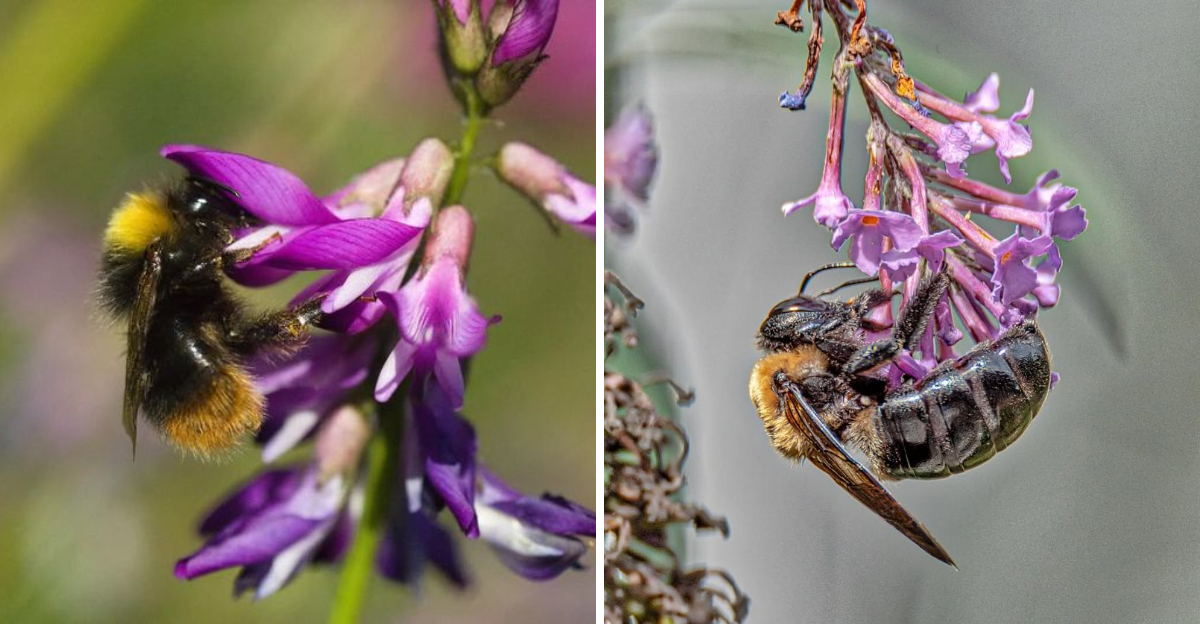
They’re both big, both yellow and black, and both show up in North Carolina yards right around the same time each spring, which is where most of the similarity ends.
Carpenter bees and bumblebees are genuinely different insects with different behaviors, different impacts on your property, and different relationships to your garden, but they get mistaken for each other constantly.
That confusion leads to some real problems, including treating one as the other, misreading the risk level of what’s flying around the porch, and making unnecessary decisions based on which bee people think they’re dealing with.
A few simple visual cues tell them apart immediately once you know what to look at, and understanding the behavioral differences changes how you respond to each one.
For North Carolina gardeners sharing outdoor space with both all season long, knowing which is which is genuinely useful information.
1. Size And Shape
At first glance, these two bees can seem almost identical buzzing around your yard, but a closer look reveals some pretty striking differences.
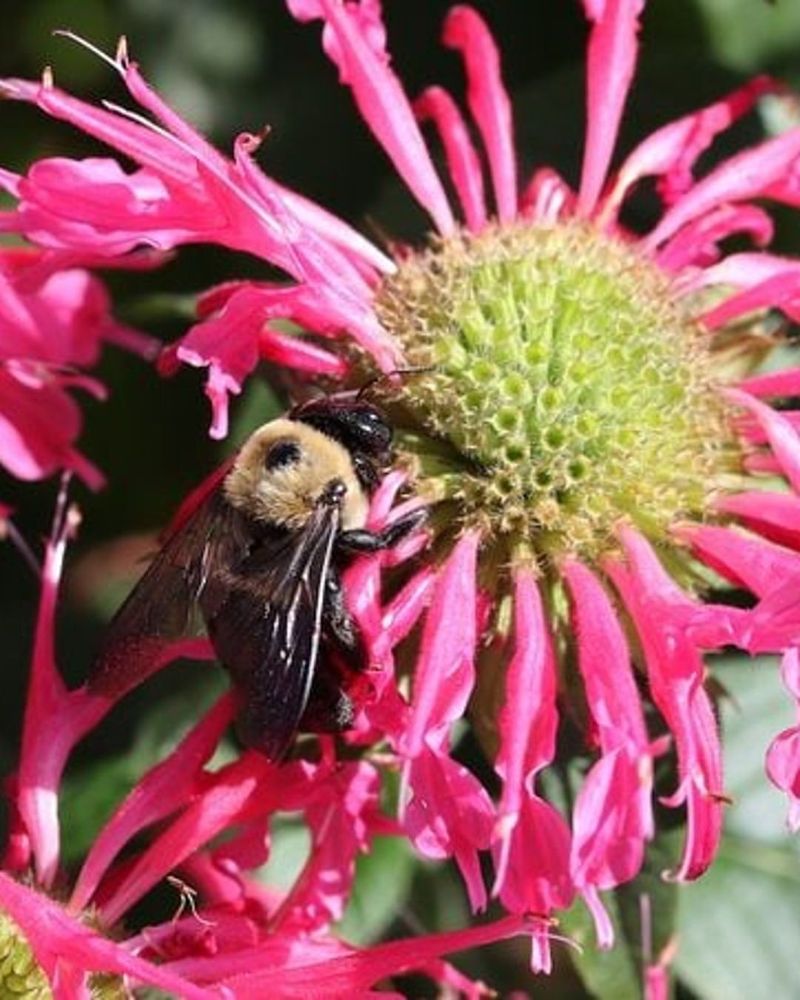
Carpenter bees, scientifically known as Xylocopa virginica, are typically large and stocky, measuring around three-quarters of an inch to one inch long.
Their most recognizable feature is their abdomen, which is shiny, smooth, and almost completely hairless, giving them a sleek, polished appearance that stands out in bright sunlight.
Bumblebees, on the other hand, are rounder and noticeably fuzzier. Their entire body, including the abdomen, is covered in dense, soft hair that gives them that classic fluffy, round look most people picture when they think of a bee.
In North Carolina gardens, you will often spot bumblebees with yellow and black banding, looking almost like a tiny furry football floating between blooms.
A quick trick for telling them apart is to focus on the back half of the body. Shiny and smooth means carpenter bee.
Fuzzy all over means bumblebee. Once you train your eye to catch that detail, identification becomes second nature.
Both bees are large compared to honeybees, so size alone will not help you much here. Shape and texture are your best friends when making a quick visual call in the garden.
2. Nesting Behavior
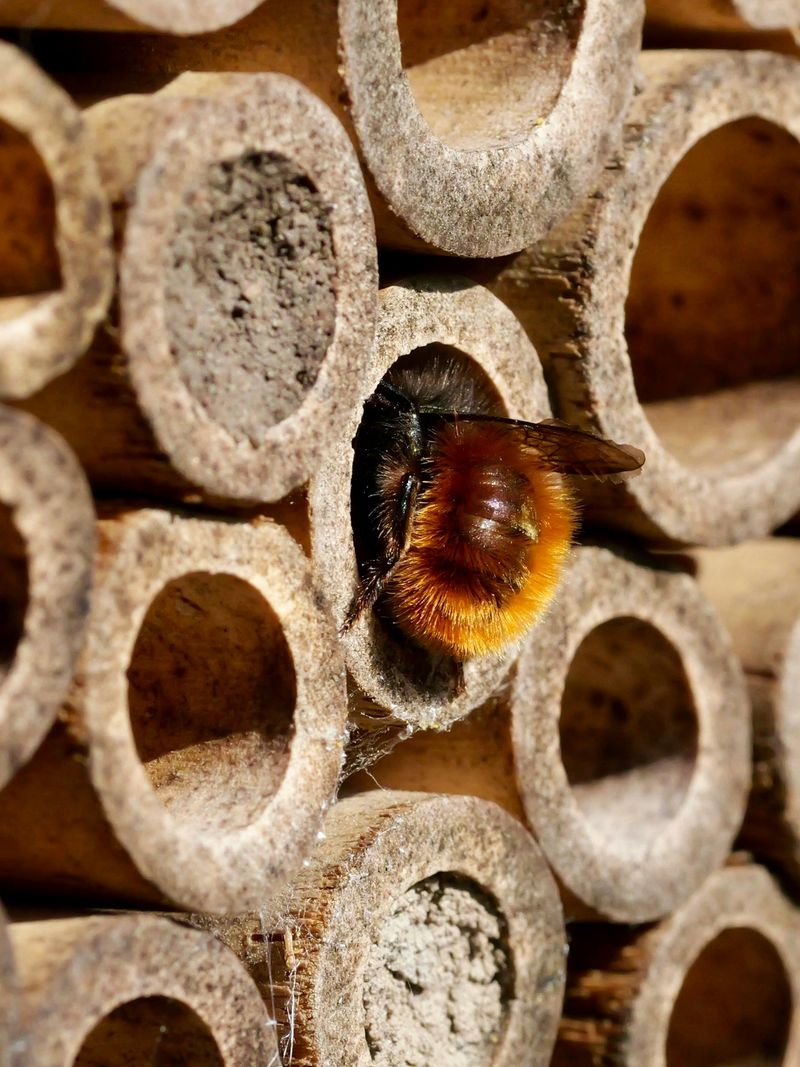
Where a bee chooses to build its home tells you a lot about the species, and these two could not be more different. Carpenter bees are wood borers by nature.
The female uses her strong mandibles to chew perfectly round tunnels into untreated or weathered wood, creating smooth galleries where she lays her eggs.
Wooden decks, fence posts, eaves, and window frames in North Carolina homes are among her favorite targets.
Bumblebees, by contrast, are ground dwellers. They prefer to nest in pre-existing cavities like abandoned rodent burrows, thick clumps of ornamental grass, or piles of leaf litter.
You might find a bumblebee colony quietly humming beneath a garden shed or tucked under a dense shrub without ever realizing it was there. Their nests are soft, organic, and blend right into the natural landscape.
Your North Carolina Garden Changes Every Week. Your Plan Should Too.
Gardening in North Carolina changes quickly throughout the season. Every Friday you’ll receive a simple weekly plan showing exactly what to plant, prune, fertilize, harvest, and protect so you never miss the right timing.
Understanding this key difference helps homeowners respond appropriately. Spotting a perfectly round hole bored into a wooden surface is a clear sign that carpenter bees are nearby.
Finding a fuzzy buzzing near a ground-level opening in your garden suggests bumblebees have moved in. Neither situation requires panic.
Knowing what you are dealing with helps you decide whether to take protective action for your wood or simply give the ground nest a wide berth and let the colony go about its business peacefully.
3. Stinging Tendencies
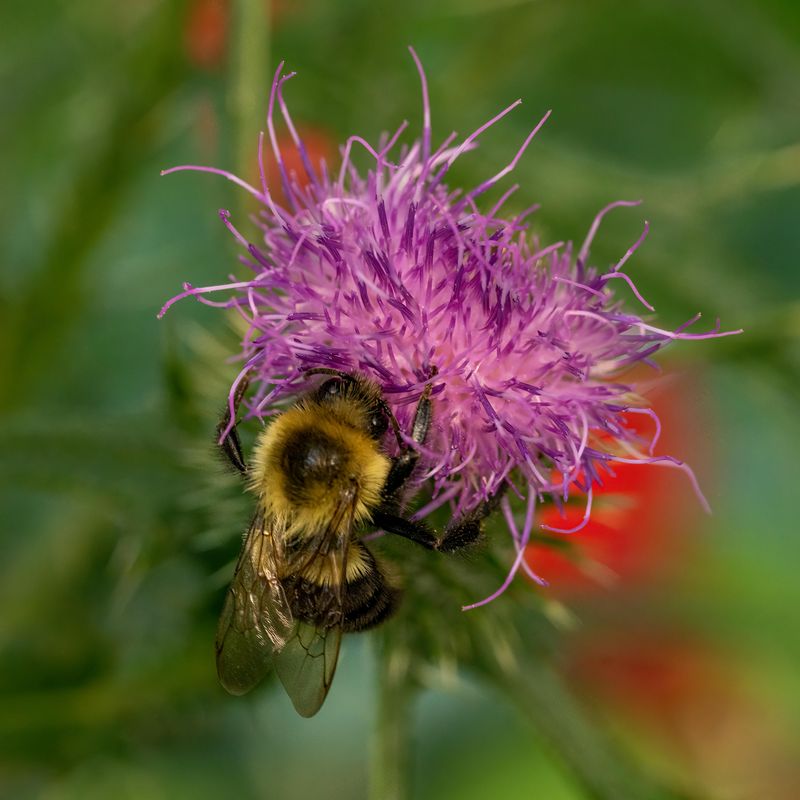
Few things send a gardener running faster than a large bee buzzing right at their face, but knowing which bee you are dealing with can save you a lot of unnecessary stress.
Male carpenter bees are notorious for their bold, hovering behavior, especially near nest entrances.
They will zoom toward your face and hover inches away in what feels like a very serious confrontation. Here is the reassuring part though: male carpenter bees do not have a stinger at all. That intimidating display is purely bluff.
Female carpenter bees do have stingers, but they are remarkably calm insects. A female will only sting if she is physically grabbed or trapped against skin, which almost never happens in normal garden activity.
Bumblebees are a bit different in this regard. Both male and female bumblebees can sting, and unlike honeybees, bumblebees can sting more than once.
That said, bumblebees are genuinely non-aggressive insects that prefer to focus on foraging rather than defending territory.
For North Carolina gardeners, the practical takeaway is simple. Avoid swatting at either bee, keep your movements calm and slow near nesting areas, and never block a nest entrance.
Children should be taught to observe both bees from a respectful distance. Wearing shoes while gardening is always a smart habit, since accidentally stepping near a ground nest could provoke a defensive response from bumblebees protecting their colony.
4. Colony Structure
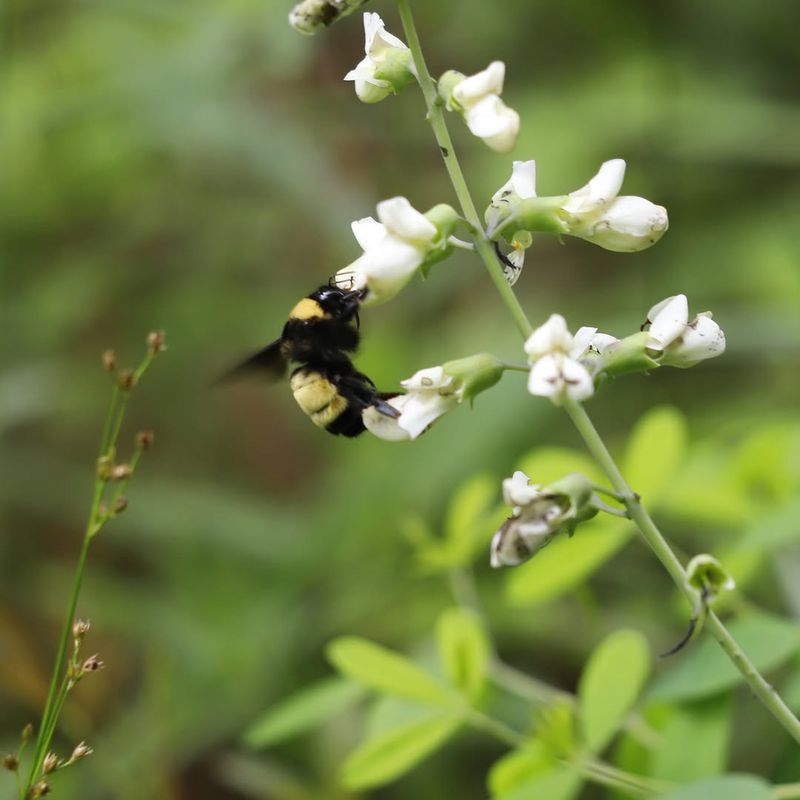
Social life looks very different depending on which bee you are watching. Carpenter bees are solitary insects, meaning each female works entirely on her own.
She bores her tunnel, gathers pollen, lays her eggs in individual cells, and provisions each cell with a food supply before sealing it off. There is no colony, no queen ruling over workers, and no shared nest community.
Just one industrious female handling everything herself. Bumblebees operate on a completely different social model. A single fertilized queen starts a new colony each spring, laying eggs that hatch into worker bees.
Those workers take over foraging and nest-building duties while the queen focuses on reproduction.
A mature bumblebee colony in North Carolina might house anywhere from 50 to a few hundred workers, all buzzing with coordinated purpose through the warmer months.
This difference matters a great deal for gardeners trying to manage bee activity around their property. With carpenter bees, you are typically dealing with one or a few individual females, not a large organized group.
With bumblebees, disturbing the nest means potentially encountering dozens of workers ready to defend their queen and young. Respecting that colony dynamic is key to avoiding unpleasant encounters.
If you discover a bumblebee nest in your garden, the wisest move is simply to give it space and let the natural seasonal cycle run its course without interference.
5. Seasonal Activity
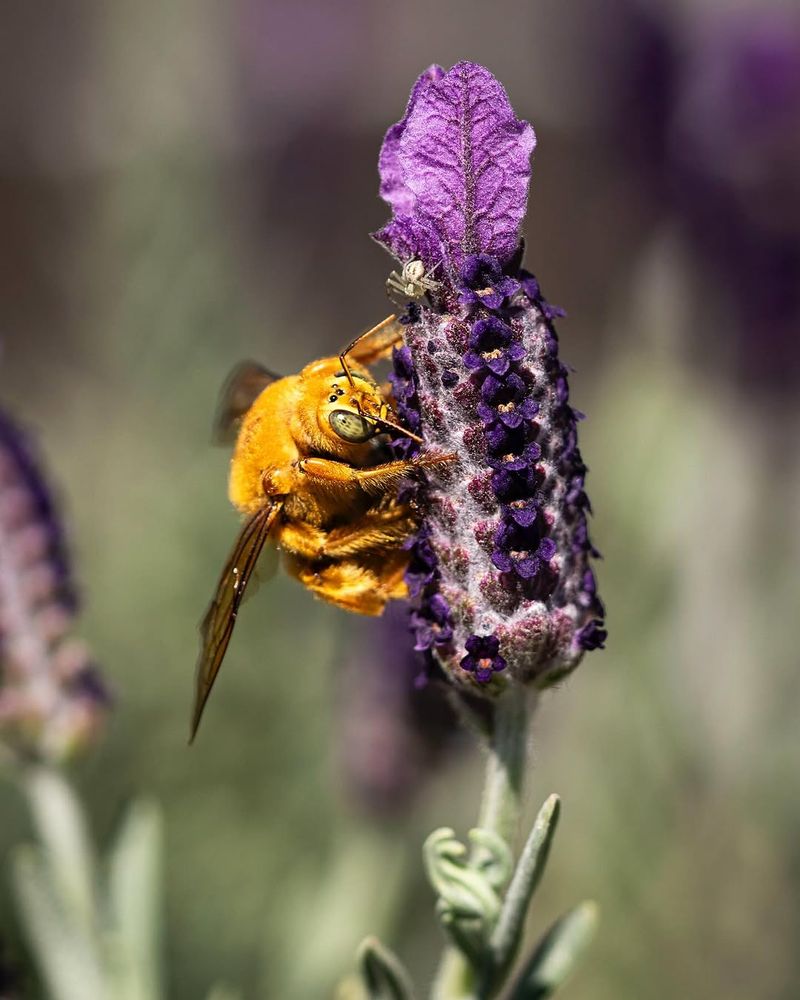
Timing matters when it comes to spotting these bees in your North Carolina garden, and the two species follow noticeably different seasonal schedules.
Carpenter bees tend to emerge with a burst of energy in late spring, typically from April through June.
This is when you will notice males patrolling wooden structures and females actively drilling new tunnels or expanding old ones. Activity peaks during warm, sunny days and then gradually slows as summer deepens.
Bumblebees have a longer window of activity that stretches from early spring all the way through fall.
Queens emerge on the earliest warm days of the year, sometimes as early as March in the Piedmont region of North Carolina, to search for nesting sites.
Worker populations build steadily through spring and reach their peak foraging activity in midsummer. You will still find bumblebees actively visiting flowers well into October, long after carpenter bee activity has wound down significantly.
For gardeners planning a pollinator-friendly landscape, this seasonal difference is genuinely useful information.
Planting early-blooming flowers like native violets and redbud supports carpenter bees and early queen bumblebees alike.
Mid-season bloomers like black-eyed Susans and mountain mint keep bumblebee workers well-fed through summer. Late-season native asters provide crucial fuel for bumblebees preparing for winter.
Matching your planting schedule to bee activity creates a garden that supports pollinators across the entire growing season rather than just a single peak window.
6. Foraging Patterns
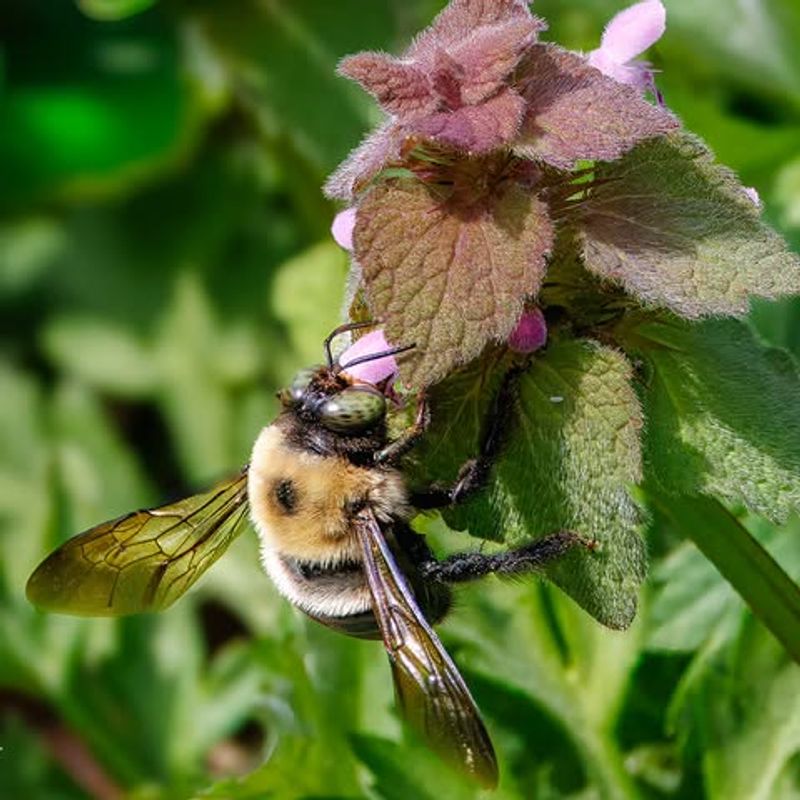
Watching how each bee feeds reveals fascinating differences in strategy and impact. Carpenter bees are known for a clever but controversial foraging trick called nectar robbing.
Rather than entering a flower through its opening, a carpenter bee will sometimes bite a small hole at the base of a tubular flower to access nectar directly, bypassing the pollen-covered stamens entirely.
This means the flower gets no pollination benefit from that visit, which can be a bit frustrating for gardeners trying to maximize fruit and vegetable production.
Bumblebees are more straightforward foragers and are actually among the most effective pollinators in North Carolina gardens.
They use a technique called buzz pollination, or sonication, where they vibrate their flight muscles at a specific frequency to shake pollen loose from certain flowers.
This skill makes them especially valuable for crops like tomatoes, peppers, and blueberries, which release pollen most efficiently through vibration rather than simple contact.
For practical garden planning, consider planting open-faced flowers like sunflowers, zinnias, and native coneflowers that welcome both bee types equally. Carpenter bees are strongly attracted to woody-stemmed plants like wisteria, redbud, and passionflower.
Bumblebees thrive with access to a diverse mix of native wildflowers throughout the season.
Providing a variety of bloom shapes and sizes ensures both species find something rewarding, keeping your garden buzzing with productive pollinator activity from one end of the growing season to the other.
7. Flight Appearance
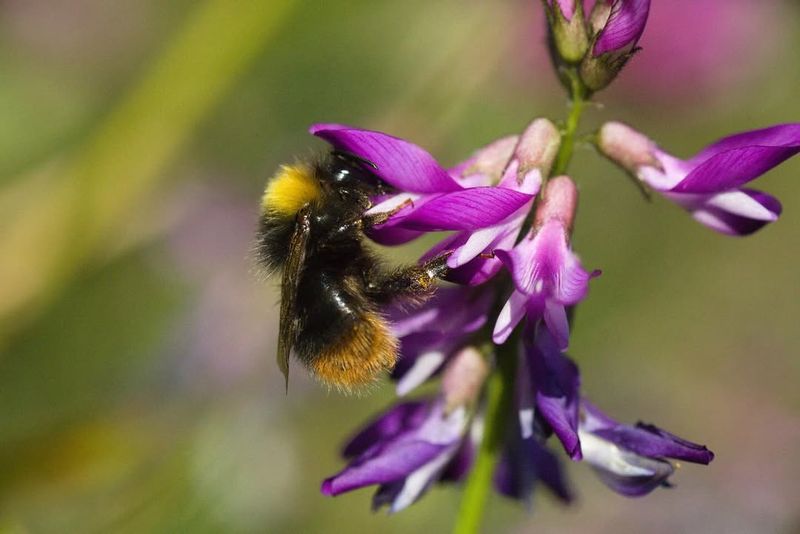
You can often identify which bee is which before you even get a clear look at the body, just by watching how it moves through the air. Carpenter bees are confident, rapid fliers with a distinctive hovering habit.
Males especially will hold perfectly still in midair for several seconds at a time, almost like a tiny helicopter on patrol, before darting off in a straight purposeful line.
Their flight has an assertive, almost mechanical quality that is easy to recognize once you have seen it a few times.
Bumblebees move through the garden with a noticeably different energy. Their flight appears slower, more meandering, and a bit bumbling, which is actually where the name comes from.
They weave between flowers in wide, lazy arcs, pausing frequently to probe deep into blossoms.
Their heavier, rounder bodies create a more labored buzzing sound that is lower in pitch and louder than the sharper buzz of a carpenter bee in flight.
These flight differences are genuinely useful for quick identification from a distance, especially when you do not want to get close enough for a detailed look.
If you see a bee hovering motionless near your porch ceiling or deck beam, that is almost certainly a carpenter bee.
If you spot a fuzzy bee lazily drifting from flower to flower across your garden beds, you are most likely watching a bumblebee at work. Both sights are worth pausing to appreciate.
8. Impact On Structures
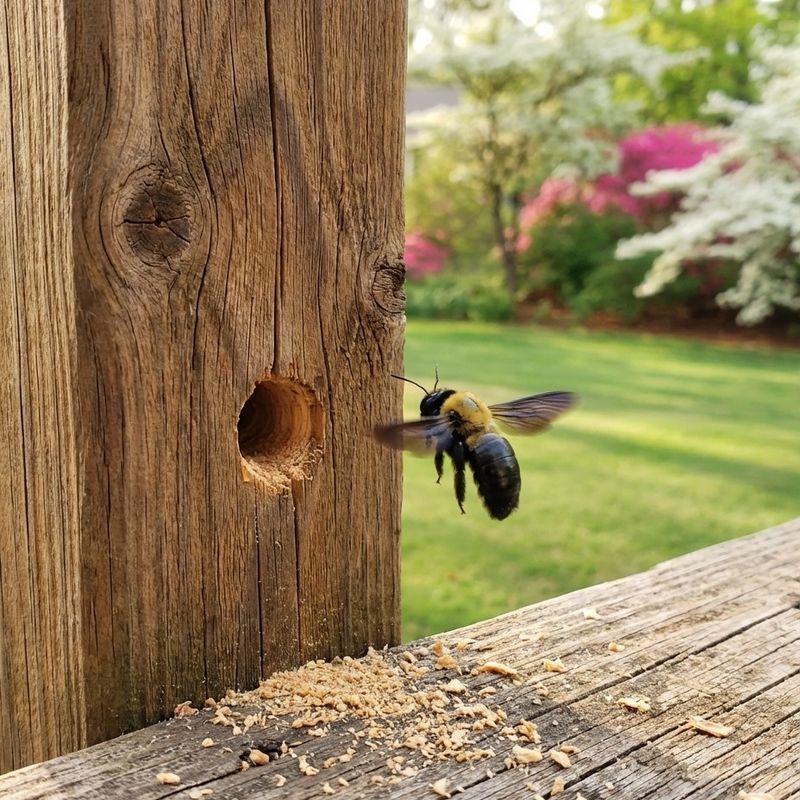
One of the most practical differences between these two bees comes down to what they do, or do not do, to your home and yard structures. Carpenter bees are the only ones you need to worry about from a property standpoint.
Female carpenter bees bore perfectly round half-inch holes into wood to create their nesting tunnels.
Left unaddressed over several years, these tunnels can extend several inches deep and attract woodpeckers looking for larvae, which can cause additional surface damage to wooden structures.
Bumblebees cause zero structural damage. They nest in pre-existing spaces and do not chew or bore into wood, siding, or any part of a home.
From a structural perspective, bumblebees are entirely harmless house guests. If you have bumblebees nesting under your porch or near your foundation, the wood itself is completely safe.
Protecting your North Carolina home from carpenter bee damage is straightforward with a few smart precautions.
Painting or staining all exposed wood surfaces is one of the most effective deterrents, since carpenter bees strongly prefer bare, weathered wood.
Hardwoods like cedar and redwood are less attractive to them than soft pine. You can also fill existing tunnels with steel wool and seal the opening with wood putty to prevent reuse.
Installing pre-made carpenter bee traps near active areas gives females an alternative nesting option that keeps them away from your deck and eaves without harming them.
9. Lifespan And Generational Patterns
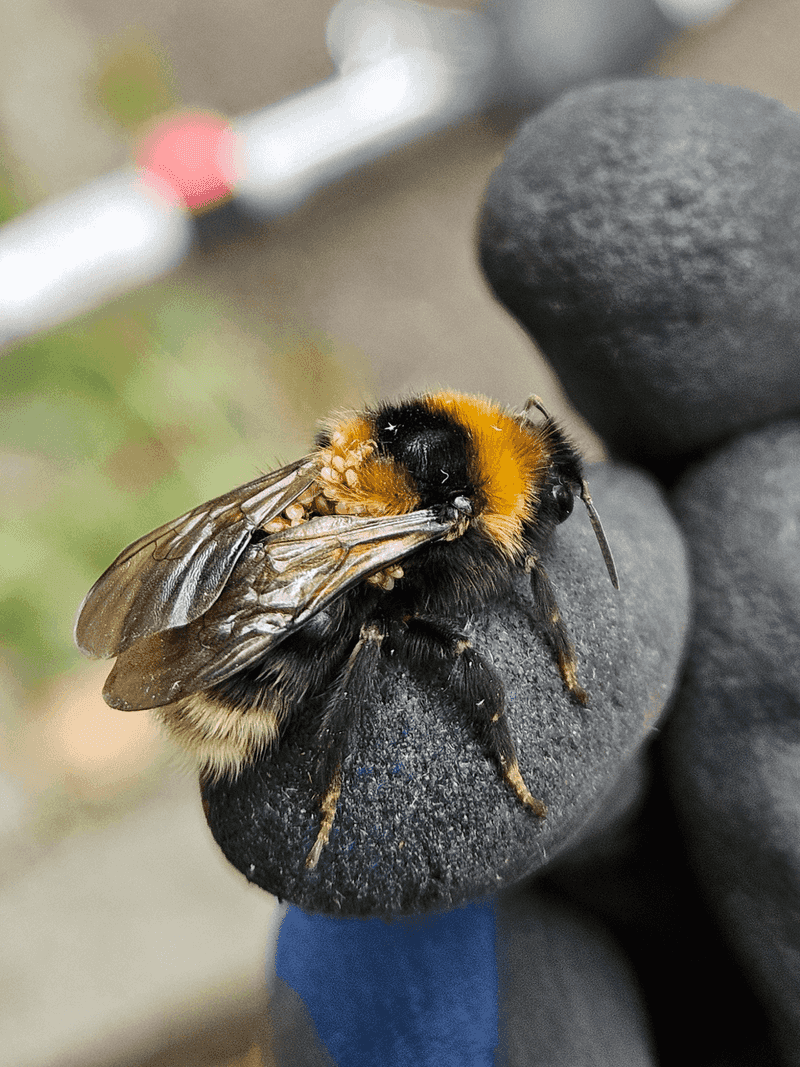
Understanding how each bee moves through its life cycle helps you plan your garden management with much more confidence. Carpenter bees are one of the few bee species that overwinter as adults.
After emerging in spring, mating, and nesting through late spring and early summer, the new generation of adult carpenter bees spends late summer feeding heavily on nectar to build up fat reserves.
They then retreat into their wooden tunnels as temperatures drop and remain dormant through the winter months before emerging again the following spring.
Bumblebee colonies follow a very different annual pattern. As autumn arrives, the colony produces new queens and males.
Those new queens mate and then find protected spots underground or in leaf litter to spend the winter in a dormant state. The rest of the colony, including the founding queen and all workers, does not survive the cold season.
Each spring, those overwintered queens wake up alone and must build an entirely new colony from scratch, starting with just a handful of eggs and no helpers at all.
For North Carolina gardeners, this means bumblebee queens are especially vulnerable in early spring when food sources are scarce.
Planting early-blooming native plants like Carolina jessamine, serviceberry, and native willows gives those solo queens the nutrition they need to successfully launch a new colony.
Supporting that early spring window can have a meaningful ripple effect on your garden pollination throughout the entire growing season ahead.
10. Role In Pollination
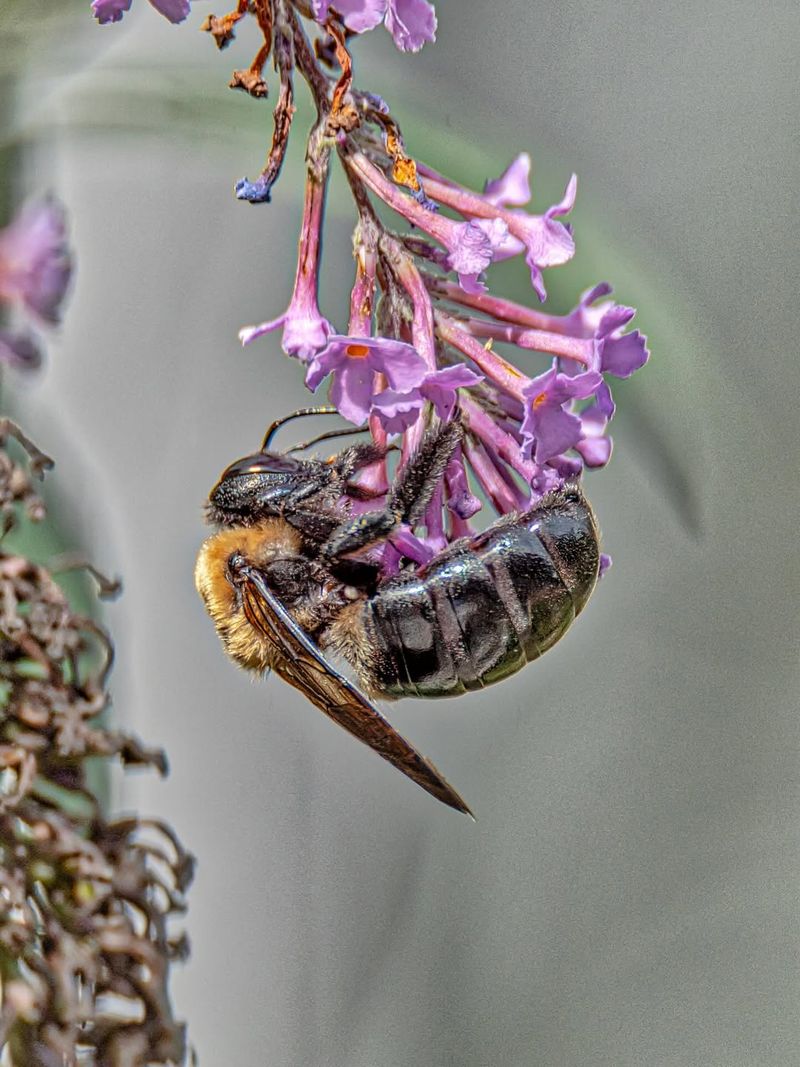
Both of these bees are genuinely valuable contributors to North Carolina gardens, and recognizing that value changes how most gardeners feel about having them around.
Carpenter bees are surprisingly effective pollinators despite their occasional nectar-robbing habit.
When they do enter flowers properly, their large bodies pick up and transfer significant amounts of pollen.
They are particularly important pollinators for native plants like passionflower, redbud, and various native vines that thrive across the Carolinas. Bumblebees bring an extra level of pollination power, especially in vegetable gardens.
Their buzz pollination technique is uniquely effective for crops like tomatoes, eggplants, and blueberries, which require that specific vibrational release to shed their pollen efficiently.
A healthy bumblebee population in your garden can noticeably increase fruit set and harvest yields without any extra effort on your part.
Their colony size also means more individual foragers visiting flowers consistently across a wider range of your garden beds throughout the day.
The smartest approach for any North Carolina gardener is to create a landscape that welcomes both species comfortably.
Protect your wooden structures with paint or sealant to manage carpenter bee activity without removing them from your garden entirely.
Leave patches of bare soil and undisturbed leaf litter to support bumblebee nesting. Plant a diverse mix of native flowering plants that bloom from March through October.
Both bees reward that kind of thoughtful planning with season-long pollination that makes your garden truly thrive.