Cucumber Hacks For Maryland Gardeners Who Want Harvests Worth Talking About
Maryland grows cucumbers on hard mode. Your clay soil drains like wet concrete. Humidity sits thick enough to rot a vine before it even fruits. Both will test every gardener who underestimates this state.
You can build a trellis with real confidence one spring and watch it sit bare through July, vines yellowing from the bottom up, soil compacted like fired brick beneath them.
The culprit is not bugs, drought, or bad seed. Your timing is off by two weeks and the soil never got properly worked.
Most cucumber failures in Maryland trace back to invisible mistakes made before a single seed drops. Your growing window is narrow and oddly specific. Miss it and the season humbles you fast.
Hit it and the vines wake up hungry, stacking fruit faster than your kitchen can absorb it. So what does it actually take to grow cucumbers that perform all season long?
1. Don’t Plant Until Soil Hits 60 Degrees F
Cold soil stops cucumbers cold. Planting too early is one of the most common mistakes backyard gardeners make, and it costs them weeks of progress.
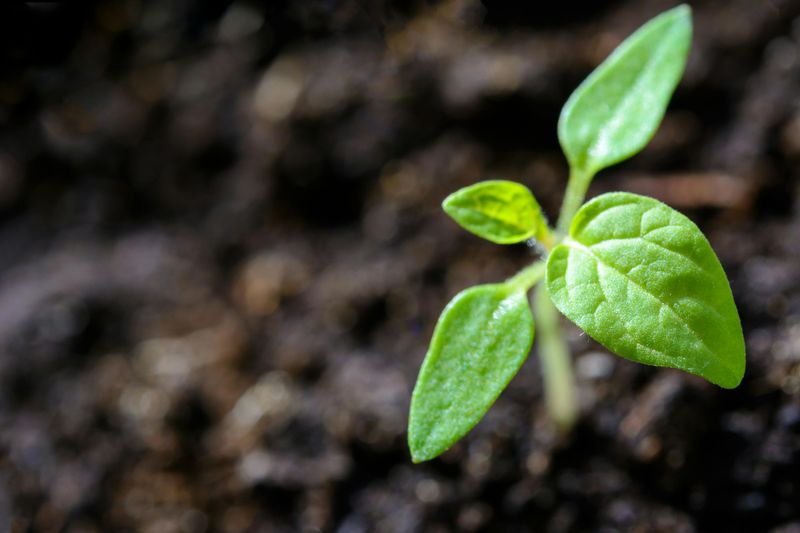
Cucumber seeds refuse to germinate properly when soil temps dip below 60 degrees Fahrenheit. Seedlings planted in cold ground just sit there, sulking.
Maryland springs can fool you. A warm week in April feels like a green light, but soil temps often lag two to three weeks behind air temps.
Grab an inexpensive soil thermometer and check at a depth of two inches before you plant seeds or transplants.
Waiting pays off. Seeds planted in warm soil can germinate in as few as three to five days, compared to ten or more days in cool conditions.
That head start means faster vine growth, earlier flowering, and fruits that arrive right when you want them.
In most parts of Maryland, safe planting soil temps typically arrive between mid-May and early June depending on your county.
Don’t gamble on guesswork when a five-dollar thermometer can confirm the perfect moment. The soil will tell you exactly when it’s ready.
2. Never Skip Disease-Resistant Varieties
Powdery mildew shows up uninvited every single season. In Maryland’s humid summers, fungal diseases can spread rapidly and cause significant damage within weeks.
Choosing disease-resistant varieties is the single most protective move you can make before you ever touch a seed packet.
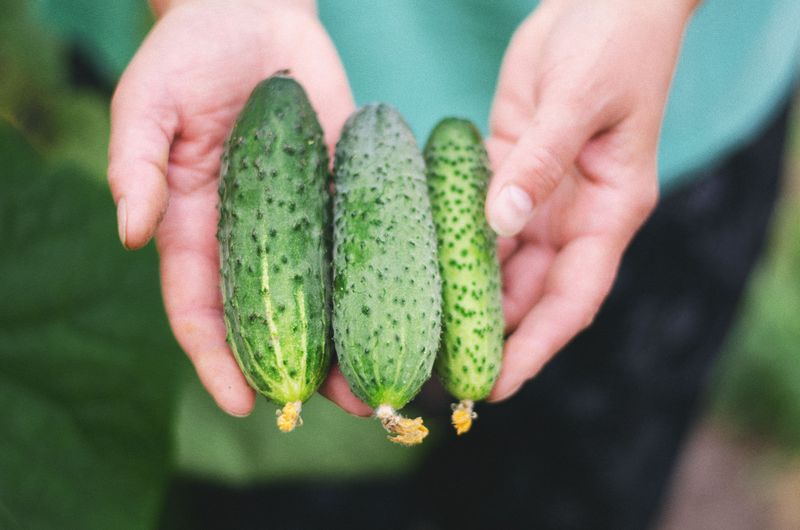
Look for variety names like Marketmore 76, Spacemaster, or Diva. These cucumbers were bred with built-in resistance to common problems like angular leaf spot, scab, and cucumber mosaic virus.
That resistance doesn’t mean they’re bulletproof, but it does mean they fight back when conditions get rough.
Seed packets carry coded letters that tell you what a variety resists. Letters like CMV mean cucumber mosaic virus resistance, while PM signals powdery mildew protection.
Spend thirty seconds reading the back of the packet and you’ll save yourself hours of frustration mid-summer.
Gardeners who skip this step often find themselves spraying fungicides every week just to keep their plants alive.
Your Maryland Garden Changes Every Week. Your Plan Should Too.
Gardening in Maryland changes quickly throughout the season. Every Friday you’ll receive a simple weekly plan showing exactly what to plant, prune, fertilize, harvest, and protect so you never miss the right timing.
Resistant varieties give you more time to enjoy the harvest instead of managing plant problems. Start with the right genetics and the rest of the season becomes far more enjoyable.
3. Avoid Letting Vines Sprawl, Trellis Vertically
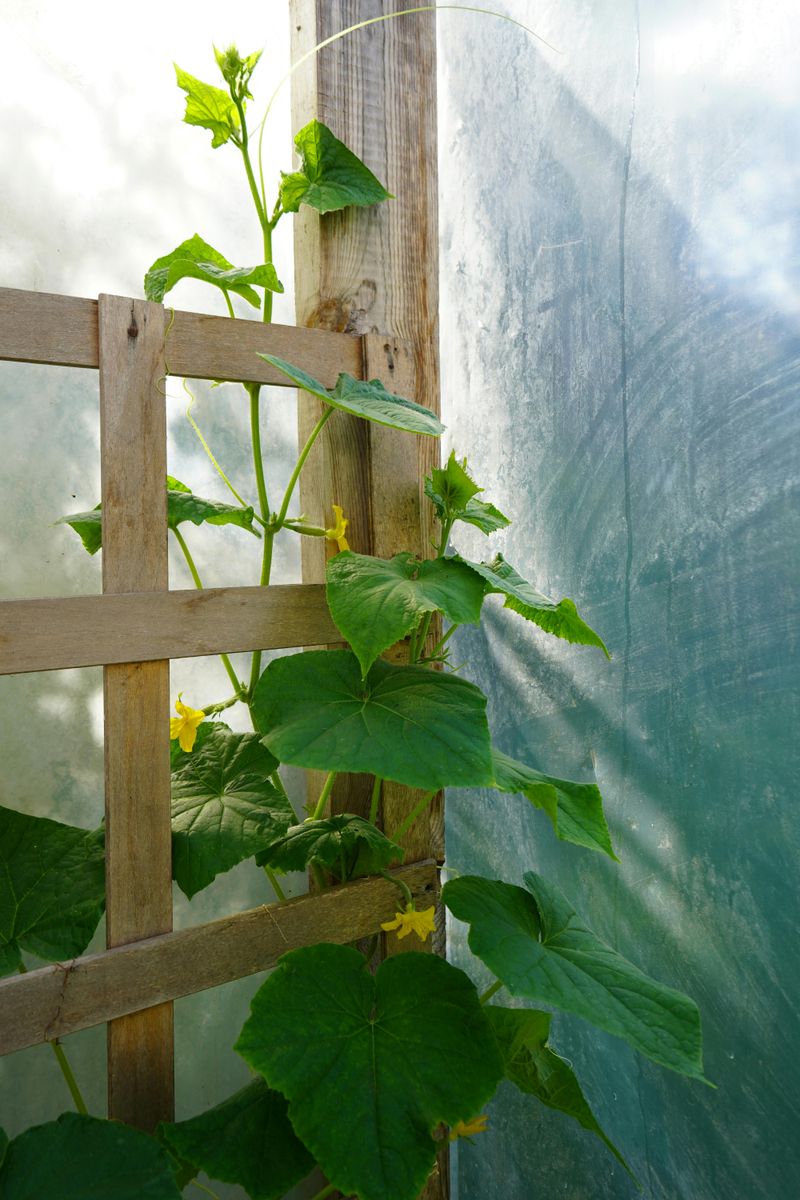
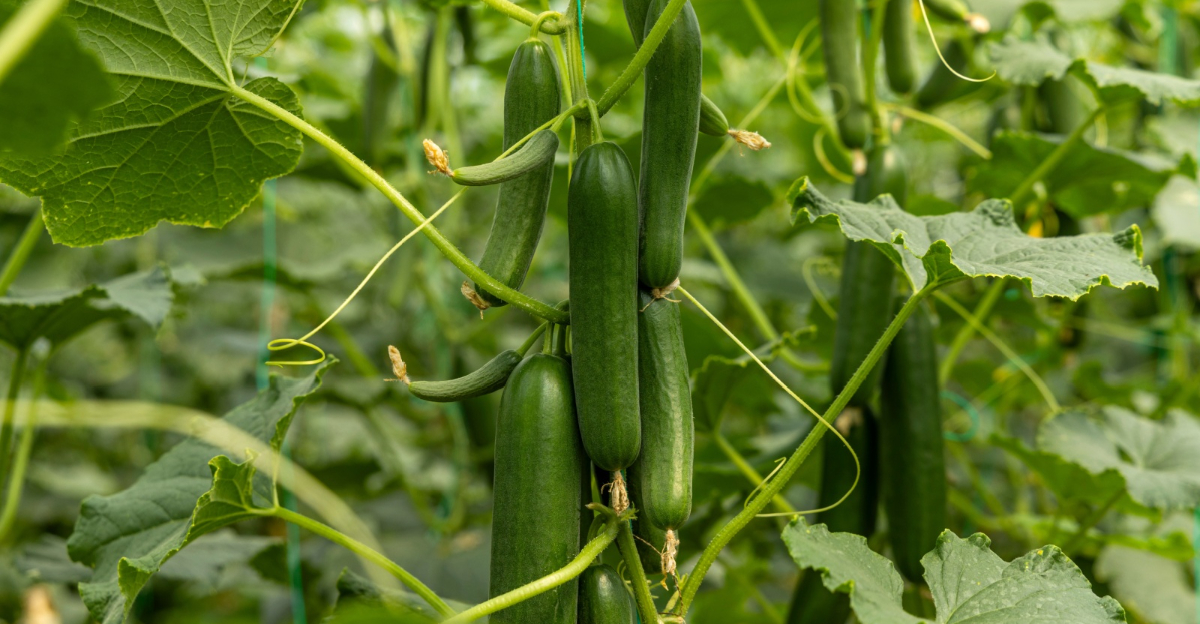
Vines on the ground invite trouble fast. When cucumber plants sprawl across your garden bed, they trap moisture, block airflow, and create the perfect hiding spot for slugs, beetles, and rot.
A simple trellis changes everything about how your plants perform. Growing vertically keeps foliage dry and exposed to moving air.
That dramatically cuts down on fungal problems. Fruits hang straight and stay cleaner, making them easier to spot and harvest before they get too big.
You also save a surprising amount of garden space. For cucumber hacks that work all season long, vertical growing is the one most experienced gardeners swear by.
A six-foot trellis made from wooden stakes and garden netting costs very little and lasts for years. Install it before you plant so you don’t disturb roots later.
Train young vines onto the trellis every couple of days by gently weaving them through the netting. Once they grab on, they climb on their own with little help.
A trellised cucumber plant is easier to manage, easier to harvest, and produces better fruit all season long.
4. Stop Ignoring Pollination, Each Flower Needs 8 To 12 Bee Visits
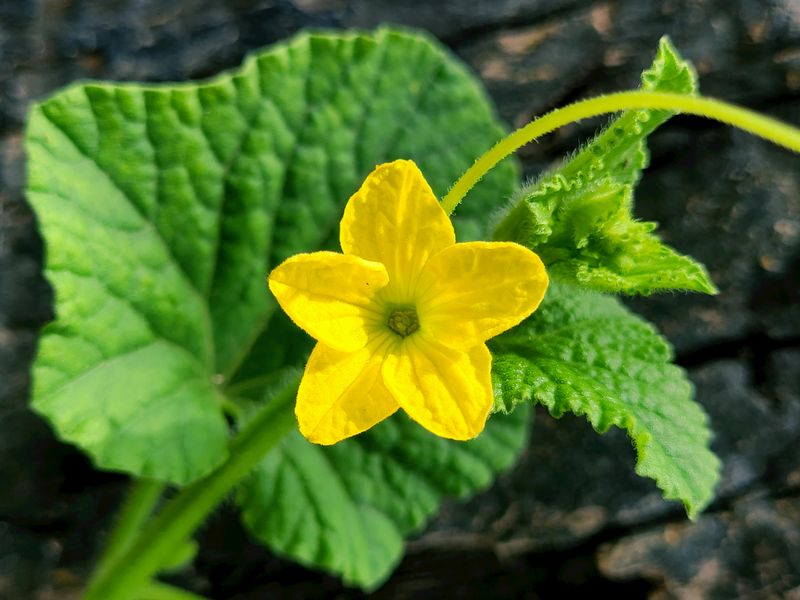
Poor pollination drains your harvest before it ever starts. You notice tiny cucumbers forming and then shriveling up before they reach an inch long, and you wonder what happened.
The answer is almost always poor pollination, and it starts with not having enough bee activity around your plants.
Research suggests each female cucumber flower benefits from multiple bee visits to reach full pollination. Fewer visits often result in undersized or misshapen fruit.
That is not a minor inconvenience. It is the difference between a loaded trellis and a bare one. Attracting more pollinators starts with what you plant nearby.
Bees love borage, nasturtium, and dill, all of which grow easily alongside cucumbers. Skip broad-spectrum pesticide sprays during flowering hours, typically morning, when bees are most active.
Planting pollinator-friendly flowers within ten feet of your cucumber bed can noticeably increase fruit set.
Even a single pot of blooming basil or marigolds near the garden makes a difference. When bees show up consistently, your cucumbers go from frustrating to genuinely prolific.
5. Don’t Rely On Bees Alone, Hand-Pollinate When Scarce
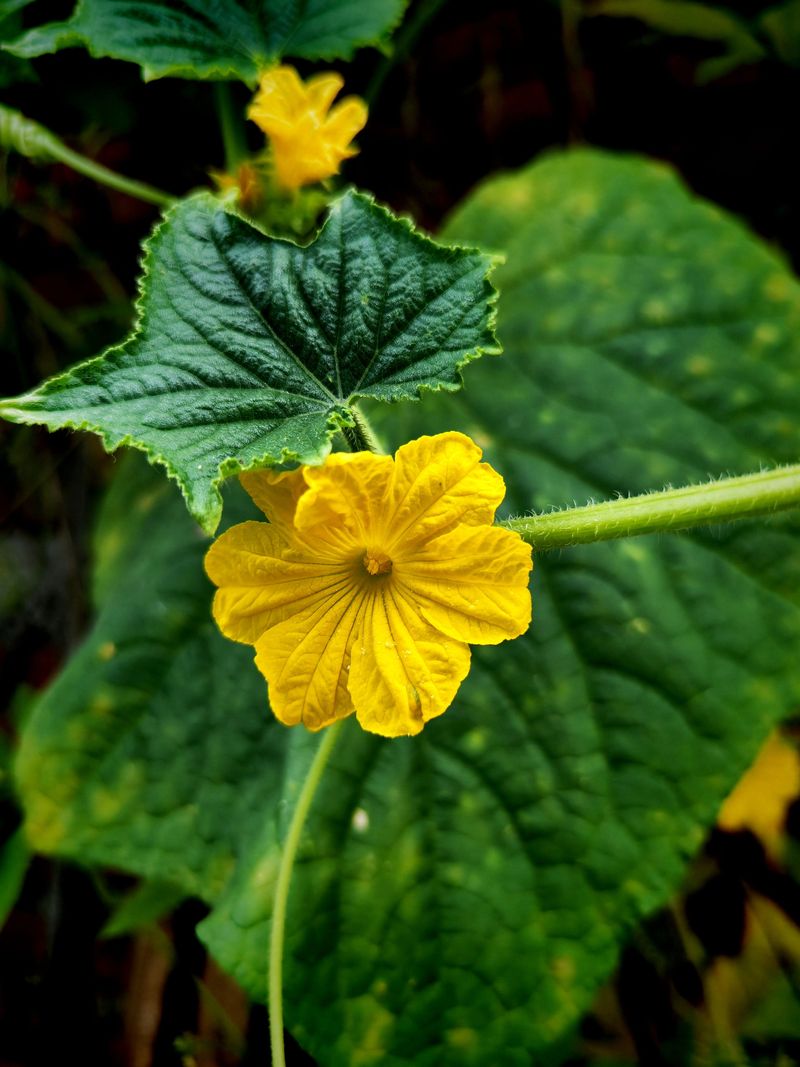
Some mornings, the bees simply do not show. Pollinator activity can vary significantly by location and season, and some Maryland gardens see very little bee traffic on any given morning.
Hand-pollination is a five-minute fix that can save your entire harvest. Identifying male and female flowers is the first step.
Male flowers appear first and grow on a straight, thin stem with no tiny fruit at the base. Female flowers have a miniature cucumber-shaped swelling just behind the petals, which is exactly what you want to develop into fruit.
Use a small, soft-bristled paintbrush or a cotton swab to transfer pollen. Swipe the brush inside a male flower to collect the yellow pollen, then gently dab it inside a female flower.
Repeat across several female flowers each morning for the best results. Some gardeners simply pick a male flower, peel back the petals, and rub it directly against each female bloom.
It sounds odd, but it works surprisingly well. When the bees do not show up, you become the pollinator, and that control over your harvest is genuinely satisfying.
6. Avoid Planting All At Once, Succession Plant Every Two Weeks
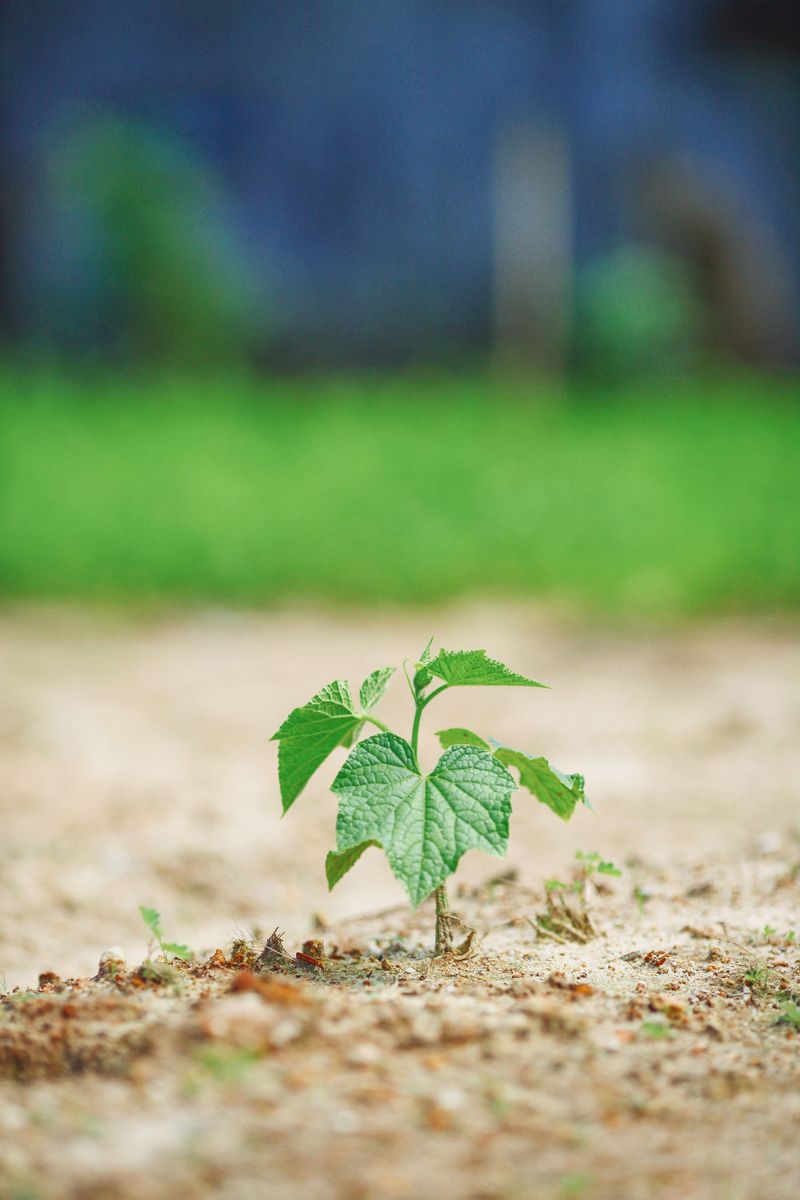
One planting date sets you up to fail. You end up with forty cucumbers in one week and nothing two weeks later, scrambling to give them away before they go soft.
Succession planting solves this completely and keeps fresh cucumbers coming all season. The idea is simple.
Plant a small batch of seeds or transplants every two weeks instead of all at once.
Each wave matures at a different time, spreading your harvest over a much longer window. For Maryland gardeners, you can start your first planting in mid-May and keep going through early July.
Three waves of planting is usually enough to keep a household supplied from late June through September. Label each planting date with a small stake so you can track which batch is which.
This also helps you notice if one group performs better than another. Succession planting also gives you a safety net.
If your first round gets hit by disease or a late pest outbreak, the next wave is already on its way. A garden that staggers its plantings significantly improves your chances of a consistent harvest.
7. Never Overcrowd, Thin Seedlings To 9 To 12 Inches Apart
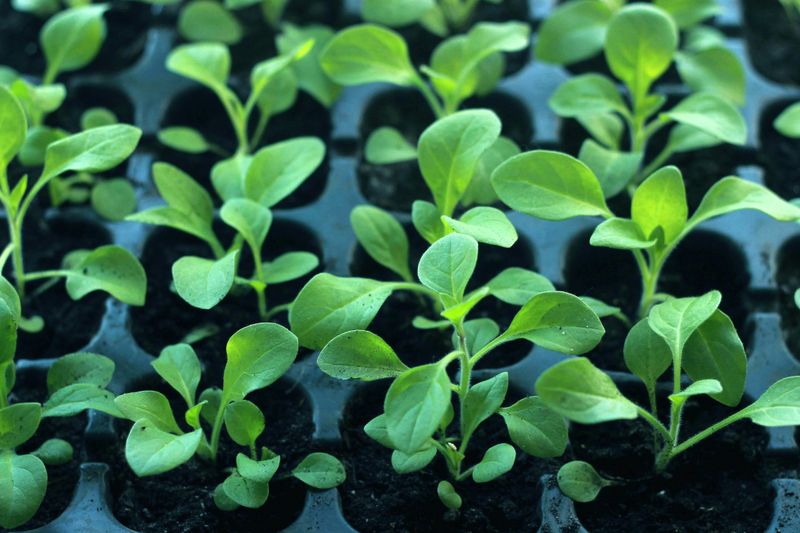
Crowded seedlings compete for everything and nobody wins. When cucumber plants grow too close together, they fight over water, nutrients, and light.
The result is weaker vines and far fewer fruits than properly spaced plants produce. Aim for nine to twelve inches between plants when growing on a trellis, or up to eighteen inches for sprawling varieties.
That spacing allows roots to spread fully and lets air move freely between stems and leaves. Good airflow is one of the most underrated defenses against fungal problems in humid climates.
Thinning is best done when seedlings are about two inches tall. Use scissors to snip the extras at soil level rather than pulling them out, which can disturb the roots of nearby plants you want to keep.
It feels uncomfortable the first time, but the remaining plants respond with noticeably stronger growth within a week or so.
Overcrowded cucumber beds often produce lots of foliage and very little fruit. Proper spacing shifts the plant’s energy from survival mode into productive mode.
Give your cucumbers room to breathe and they will reward you with a harvest that makes the effort worthwhile.
8. Skip Underwatering Once Fruits Appear
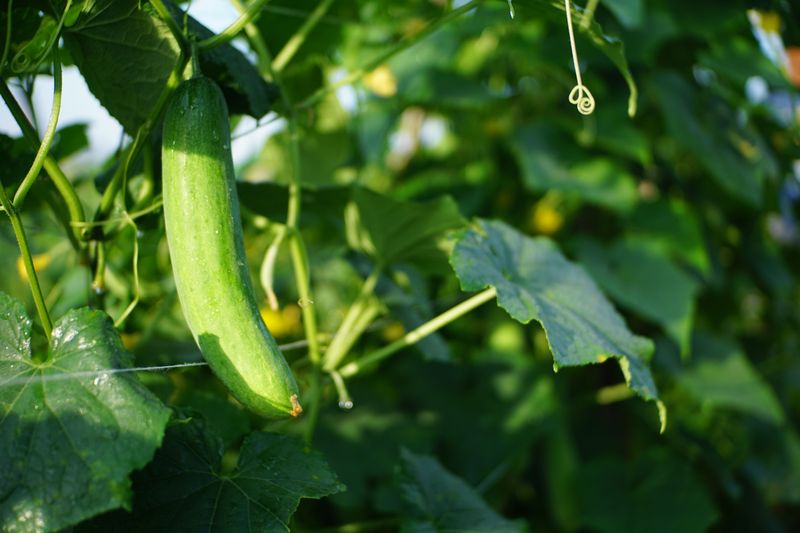
Water is not optional once fruits form. Cucumbers are about 96 percent water, so inconsistent watering causes serious problems fast.
Cutting back on water combined with heat stress at this stage can lead to bitter cucumbers, blossom end drop, and stunted fruits that never reach full size.
Aim for one to two inches of water per week once your plants are actively fruiting. Deep, infrequent watering is better than shallow daily sprinkling, which encourages surface roots that dry out fast.
A soaker hose or drip irrigation system delivers water right where it is needed without soaking the foliage.
Mulching around the base of your plants is one of the best supporting moves you can make.
A two-inch layer of straw or wood chips holds soil moisture between watering sessions and keeps roots cooler during July heat waves.
Less evaporation means your plants stay hydrated longer with the same amount of water. Watch your plants in the morning for early signs of stress.
Slightly wilted leaves that perk back up by noon are normal in summer heat. Leaves that stay droopy by mid-morning signal that your watering schedule needs immediate attention.
Consistent moisture is the secret behind cucumbers that taste clean, crisp, and genuinely refreshing.
9. Resist Stopping At One Planting, Start A Second In Early July
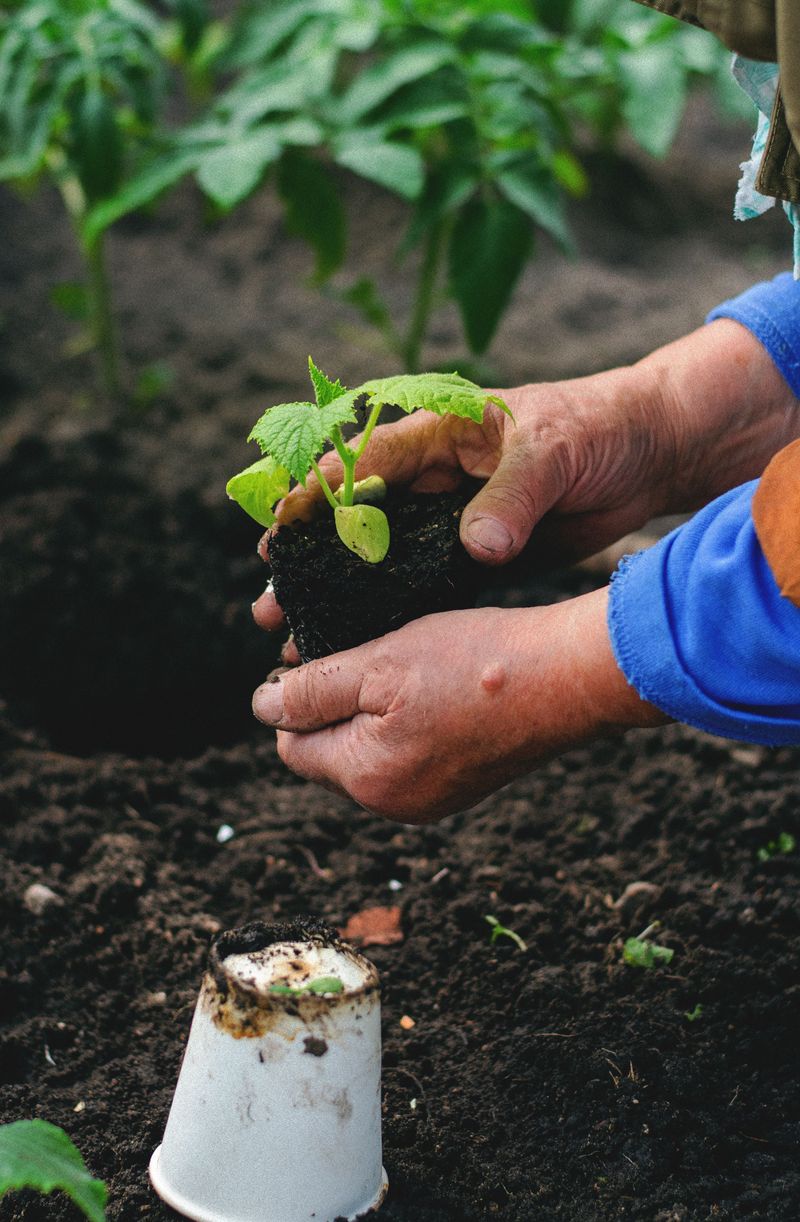
Most gardeners quit too soon. They pack it in after their first cucumber planting, assuming the season is over by midsummer.
Maryland’s growing season stretches well into October, which means a second planting started in early July can produce a full, fresh harvest through early fall.
July plantings benefit from warm, established soil and longer days that push germination along quickly.
Your second-round cucumbers can go from seed to harvest in roughly fifty to sixty days, depending on the variety.
That timing puts ripe fruit on your counter by late August or early September. Start fresh seeds directly in the ground rather than transplants for the July round.
The soil is warm enough that direct seeding works faster than starting indoors and dealing with transplant shock.
Keep the seedbed consistently moist for the first week to encourage quick germination in the summer heat.
A second planting also sidesteps many of the pest and disease pressures that build up over the first half of the season.
Fresh plants, fresh start, and a harvest window that stretches deeper into autumn than most neighbors expect. Keep planting and the season keeps delivering.
10. Avoid Pulling Cucumbers, Always Cut Them Off
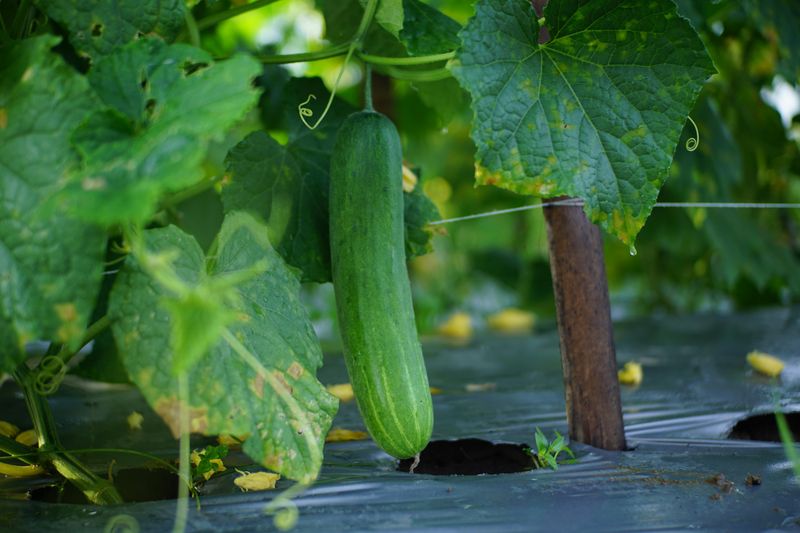
Pulling cucumbers damages more than you think. Yanking on the vine can snap off nearby developing fruits, tear the stem, or stress the plant enough to slow production for several days.
A pair of small garden scissors or pruning snips is the only tool you should use at harvest time. Cut the stem about a quarter inch above the fruit, leaving a small stub attached to the cucumber.
This clean cut heals quickly on the vine and keeps the harvested fruit fresh longer since an intact stub slows moisture loss.
It takes two seconds longer than pulling, and the difference over a full season is significant. Harvesting frequency matters just as much as technique.
Check your plants every one to two days once fruits start forming. Cucumbers turn overripe fast, often within a day or two, and one left too long signals the plant to slow down production.
Frequent cutting keeps the plant in active production mode all season. Each clean harvest tells the vine to keep making more fruits, which is exactly the outcome every gardener wants.
These cucumber hacks, used together from planting to final harvest, are what separate a forgettable garden from one worth bragging about.