The Fast-Growing Tree That Fills Your Maryland Fence Line By Next Summer
A bare fence line is one of those yard problems that quietly bothers you every single day. You notice it in the morning, you notice it when guests arrive, and you notice it every time a neighbour glances over.
Most fast-growing options solve the problem temporarily and create three new ones. But one tree handles Maryland conditions better than almost anything else at the nursery, and most gardeners never think to plant it along a fence.
It adds three to five feet of dense, layered growth in a single season. Birds are often spotted in the lower branches well before the tree reaches maturity.
It handles humid summers and hard winters without complaint, though it does best in well-drained soil. Plant it this season, and by next summer your fence line will look like it was never bare.
One Tree Worth Knowing If You Have a Maryland Fence Line
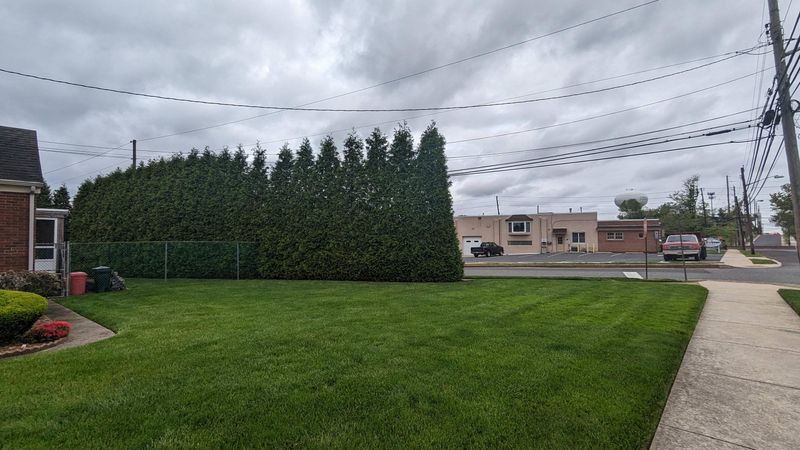
Your neighbors can see everything right now. That open fence line feels exposed, and every season without privacy stings a little more.
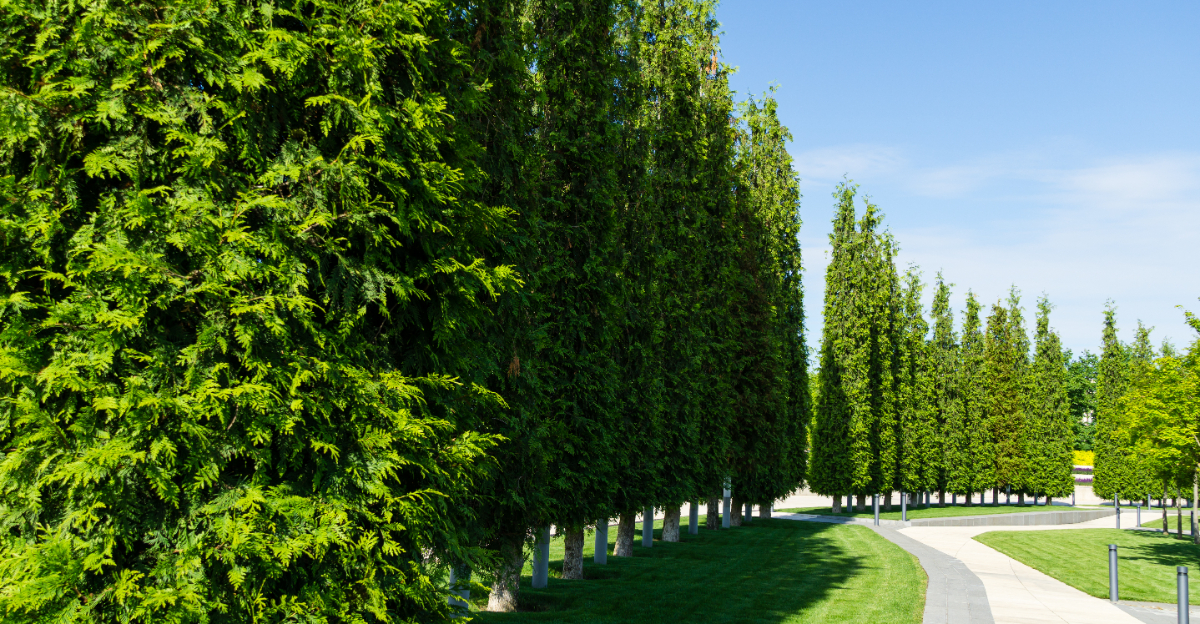
Green Giant Arborvitae is the tree that fixes this problem fast. It adds three to five feet of dense, layered growth per year under good conditions.
Few trees match that pace while also thriving as reliably in Maryland’s climate. It handles the humidity and the hard winters without skipping a beat, though it does best in well-drained soil.
You are not fighting the environment when you plant it. Green Giant has proven exceptionally well-suited to Mid-Atlantic conditions, and its performance across the region reflects that.
It has become one of the most consistently recommended privacy trees across the region.
Soft, feathery foliage grows in dense, overlapping sprays, giving the tree a lush, layered look. It does not look stiff or blocky the way some privacy plantings do.
By next summer, a young tree planted this fall will have visibly expanded. Your fence line will start to feel like a living wall.
Why Green Giant Arborvitae Outperforms The Usual Suspects
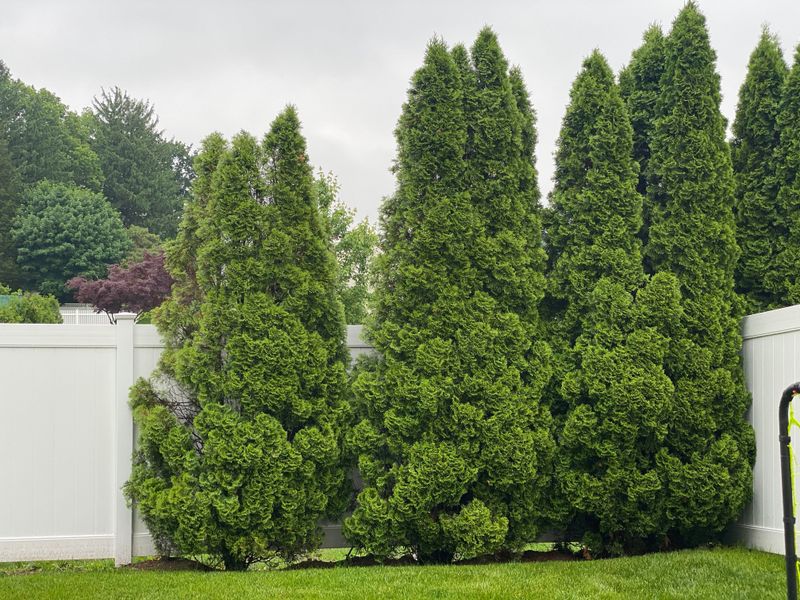
Leyland Cypress gets all the attention, but it has a dirty secret. Heavy snow can cause branch splitting and structural damage in Leyland Cypress, particularly in older specimens, and Mid-Atlantic humidity makes it prone to canker diseases.
Green Giant sidesteps those problems entirely. It handles wet winters and humid summers without skipping a beat, though it does best in well-drained soil.
Eastern White Pine is another option gardeners consider, but deer can cause real damage to young trees and the growth habit is harder to control along a fence line. Green Giant grows just as fast and maintains a naturally dense, columnar shape with no intervention.
The layered, overlapping foliage creates a thick screen that blocks sightlines from the ground up. You get real privacy, not just a suggestion of a screen.
Compared to Leyland Cypress, Green Giant also holds its shape far better over time. It seldom needs corrective pruning to stay looking neat along a fence line.
Green Giant also tolerates partial shade better than most evergreen alternatives. If part of your fence line sits under taller trees, it still performs well.
Your Maryland Garden Changes Every Week. Your Plan Should Too.
Gardening in Maryland changes quickly throughout the season. Every Friday you’ll receive a simple weekly plan showing exactly what to plant, prune, fertilize, harvest, and protect so you never miss the right timing.
The advantage over other popular choices is real and measurable. You get speed, toughness, a naturally dense form, and reliability in one package that Maryland conditions already support.
What To Expect In The First Two Growing Seasons
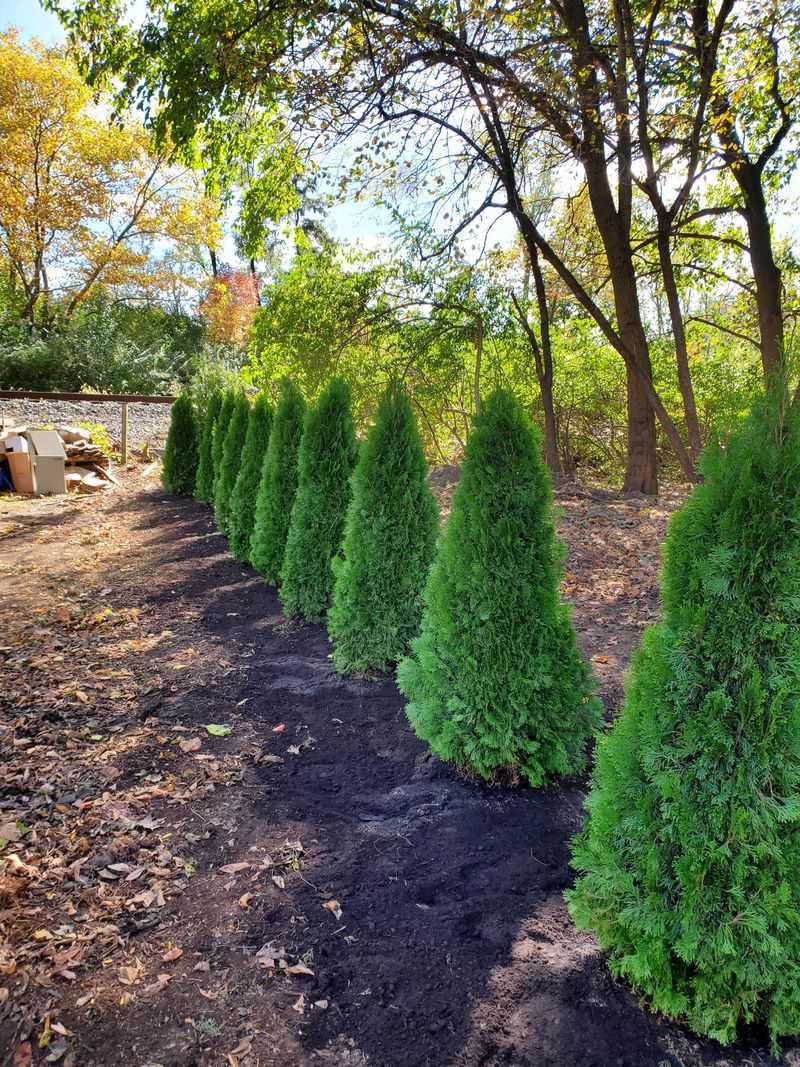
The first season feels slow, and that is completely normal. Green Giant spends its first year establishing roots rather than putting on a show above ground.
Do not panic if height gain seems modest in year one. Underground, the root system is spreading wide and anchoring itself firmly.
Season two is where things shift noticeably. Growth surges and the tree begins to look like the privacy screen you imagined when you planted it.
Expect three to five feet of new growth in year two under average conditions. With good watering and a light fertilizer boost, that number can climb toward the higher end.
New growth emerges as bright, almost lime-green tips in spring. Watching those tips extend across the entire fence line is one of the more satisfying sights in the garden.
By the end of the second growing season, your fence line will feel meaningfully changed. Neighbors will start to notice the difference as the screen fills in.
Patience in year one pays off with confidence in year two. The tree that looked modest in spring will surprise you before the first frost arrives.
How To Plant Green Giant Arborvitae Along A Fence Line
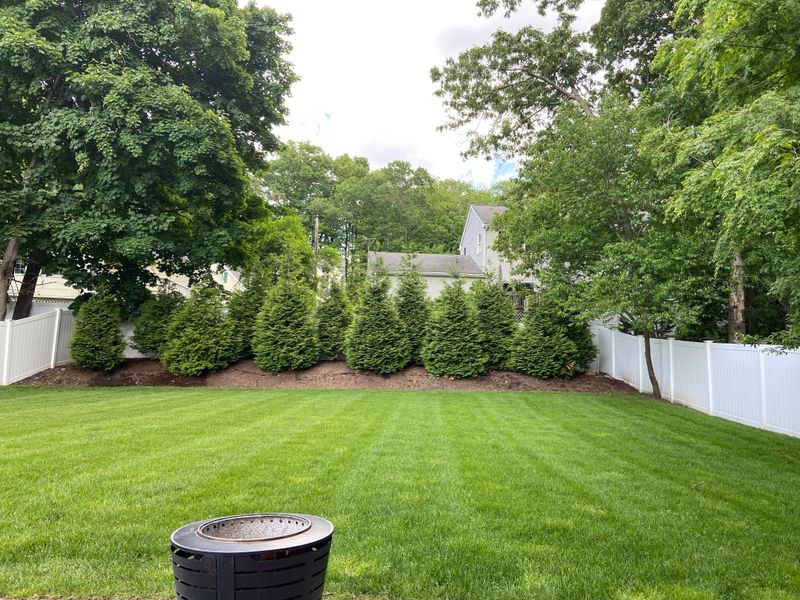
Spacing is the first decision you need to get right. Plant Green Giants five to six feet apart for a full, connected privacy screen over time.
Closer spacing creates faster coverage but tends to lead to crowding later. Give each tree room to develop its naturally dense, columnar shape without competing with its neighbors.
Dig a hole twice as wide as the root ball and just as deep. Wide holes loosen surrounding soil so roots can spread outward with less resistance.
Avoid planting too deep, which is one of the most common mistakes with arborvitae. The root flare should sit at or just above the soil surface.
Water deeply right after planting, soaking the entire root zone thoroughly. Then water once a week for the first full growing season.
A two-inch layer of mulch around the base keeps moisture in and weeds out. Keep it away from the trunk to avoid rot issues.
Fall planting gives roots a head start before summer heat arrives. Spring planting works too, but fall-planted trees tend to establish faster along a fence line.
Keeping It Healthy Without a Lot of Effort
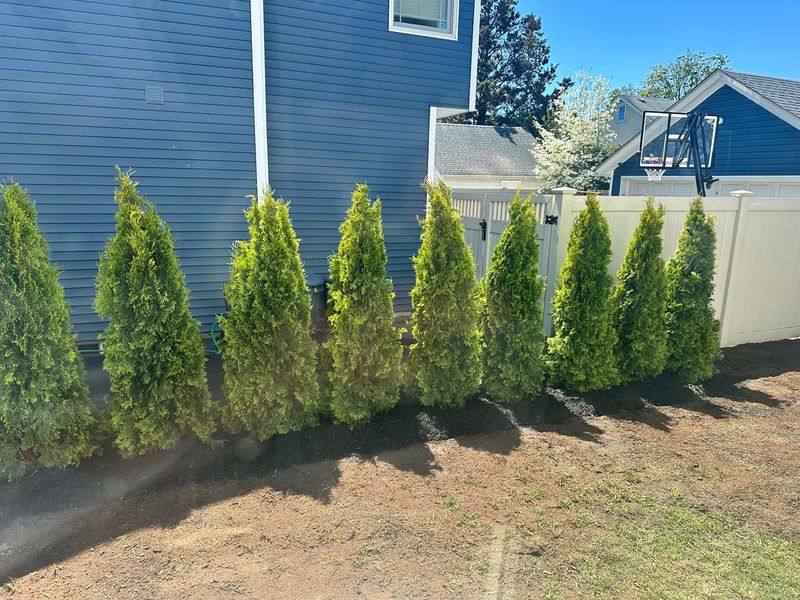
Green Giant Arborvitae is not a high-maintenance tree, and that is part of its appeal. Once established, it asks for very little from you.
The biggest threat in the early years is drought stress. Water during dry spells in the first two summers, and the tree will reward you with accelerated growth.
After year three, supplemental watering becomes mostly optional. The root system will have spread far enough to find moisture on its own.
Bagworms are the pest most likely to cause problems along a Maryland fence line. Catching them early in summer and removing the bags by hand tends to keep infestations manageable.
Canker diseases can appear when trees are stressed by poor drainage or overcrowding, so good spacing and proper planting depth prevent most issues before they start.
Light fertilizing in early spring with a balanced slow-release product helps young trees. Established trees generally need little to no supplemental feeding once they settle into the landscape.
Skip heavy pruning unless you are managing height or shaping the screen. Green Giant holds its natural columnar form well on its own, which means less work for you over time.
The Wildlife That Shows Up Once It Fills In
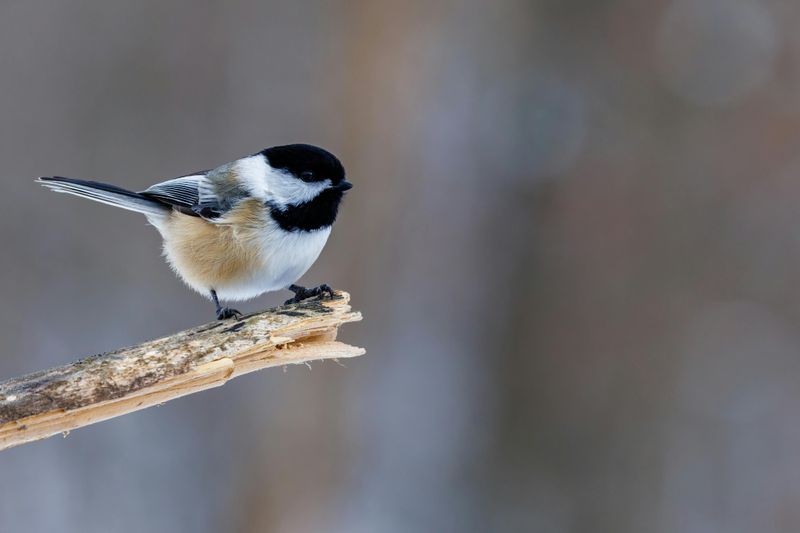
Something shifts when the canopy fills in. Birds appear first, drawn by the shelter and the promise of nesting spots hidden from predators.
Chickadees, nuthatches, and kinglets are regulars in mature Green Giants. They work the dense interior branches for insects and shelter all winter long.
Cedar waxwings and robins are drawn to the thick foliage for nesting in spring and early summer.
Owls favor dense evergreens for daytime roosting. A mature Green Giant along your fence line can become prime real estate for barred owls and screech owls.
Smaller mammals use the base of the trees for cover and movement corridors along the fence line. The dense lower branches create a sheltered zone that stays active year round.
White-tailed deer occasionally browse young arborvitae, which is worth knowing in the first year or two. Once the trees reach a good size, browsing tends to become less of a concern.
Adding a full row of evergreens to your fence line triggers a cascade of wildlife activity. The trees you planted for privacy quietly become a neighborhood ecosystem all on their own.
What Maryland Gardeners Get Wrong About Arborvitae
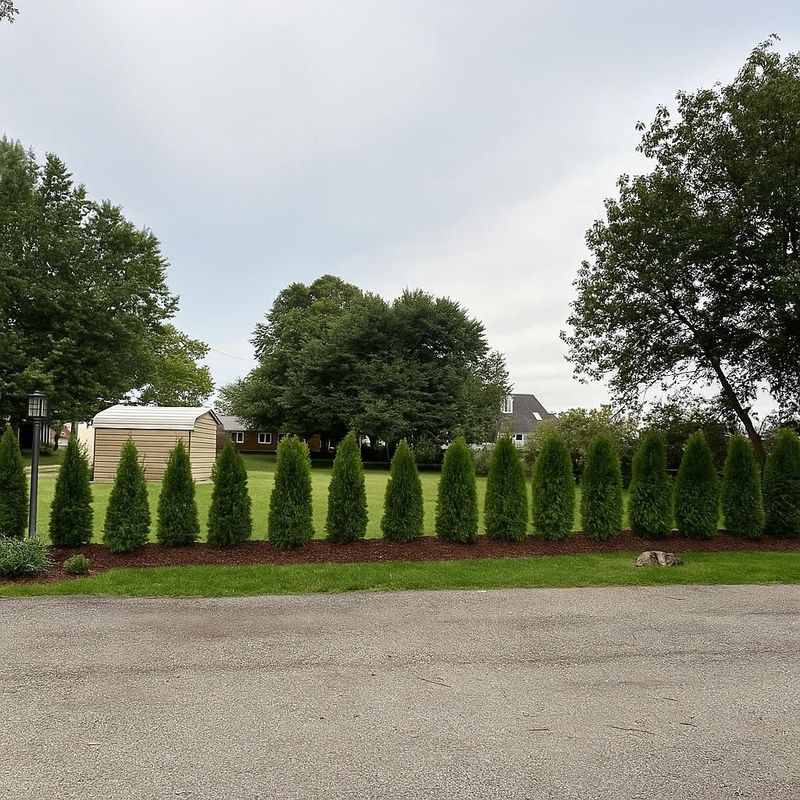
Most people assume arborvitae are overplanted and boring. Green Giant is a different animal from the squat, globe-shaped varieties crowding foundation plantings across the Mid-Atlantic.
Its tall, columnar form and feathery layered foliage give it a presence that reads as elegant rather than generic. Planted along a fence line, a row of Green Giants looks intentional and refined.
Another misconception is that arborvitae only work in large yards. A single row along a fence line fits neatly into average suburban lots without overwhelming the space.
Some gardeners skip Green Giant because they worry about root damage to fences. Roots grow outward toward water rather than toward solid structures, so fence damage is rarely a concern.
People also worry about height, imagining a tree that blocks every view forever. Green Giant responds well to light trimming at the top if height management becomes a priority down the road.
Thinking of Green Giant as just another nursery filler is the biggest misconception of all. Not many trees in this region combine that level of speed, density, and low maintenance as consistently.
The tree filling your Maryland fence line by next summer is not a gamble. Green Giant Arborvitae delivers on its promise season after season, year after year.